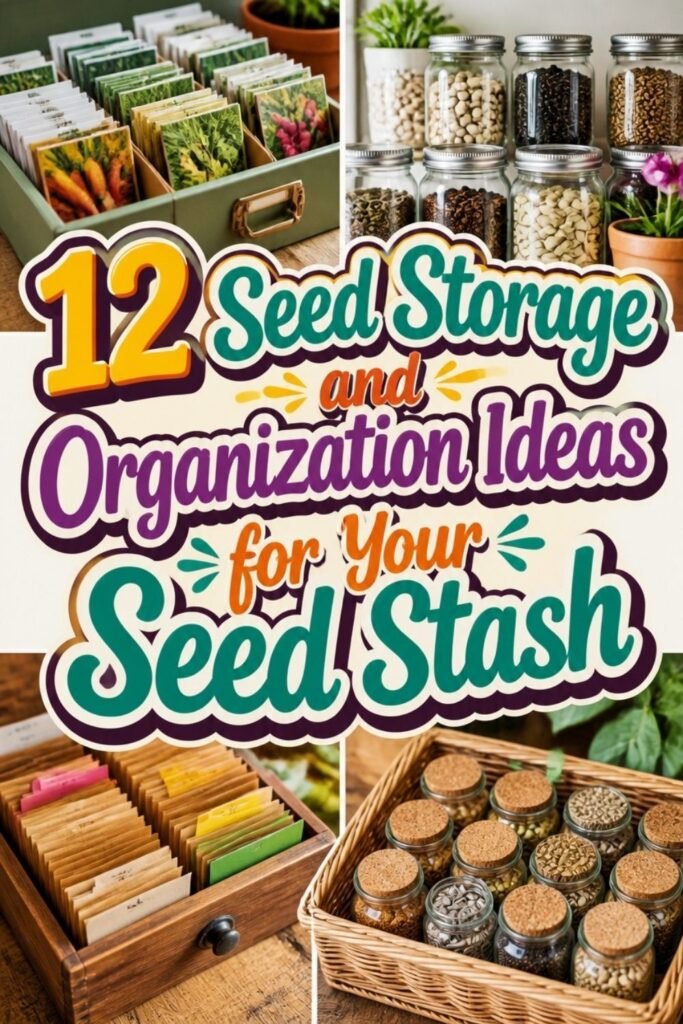
Most gardeners know the familiar scene: seed packets stuffed in drawers, scattered across potting benches, or forgotten in the garage. Over time, this accumulation creates real problems.
Moisture sneaks in, viability drops, and you end up buying varieties you already own.
Refrigerator storage works wonders for long-term preservation, especially when paired with airtight containers and silica gel packets.
Detailed labeling saves future headaches, while a simple inventory spreadsheet prevents those duplicate purchases we all regret. These fundamentals form the backbone of any solid seed organization system.
Beyond the basics, specialized approaches can transform how you manage your collection.
Vertical filing systems, photo storage boxes, and even repurposed library card catalogs offer creative solutions. The key is matching the method to your space constraints and gardening habits.
What works for a balcony grower differs dramatically from what suits a sprawling homestead.
Finding your ideal setup takes some experimentation. Start with one approach, adapt as needed, and let your system evolve alongside your garden.
Store Seeds in the Refrigerator or Freezer
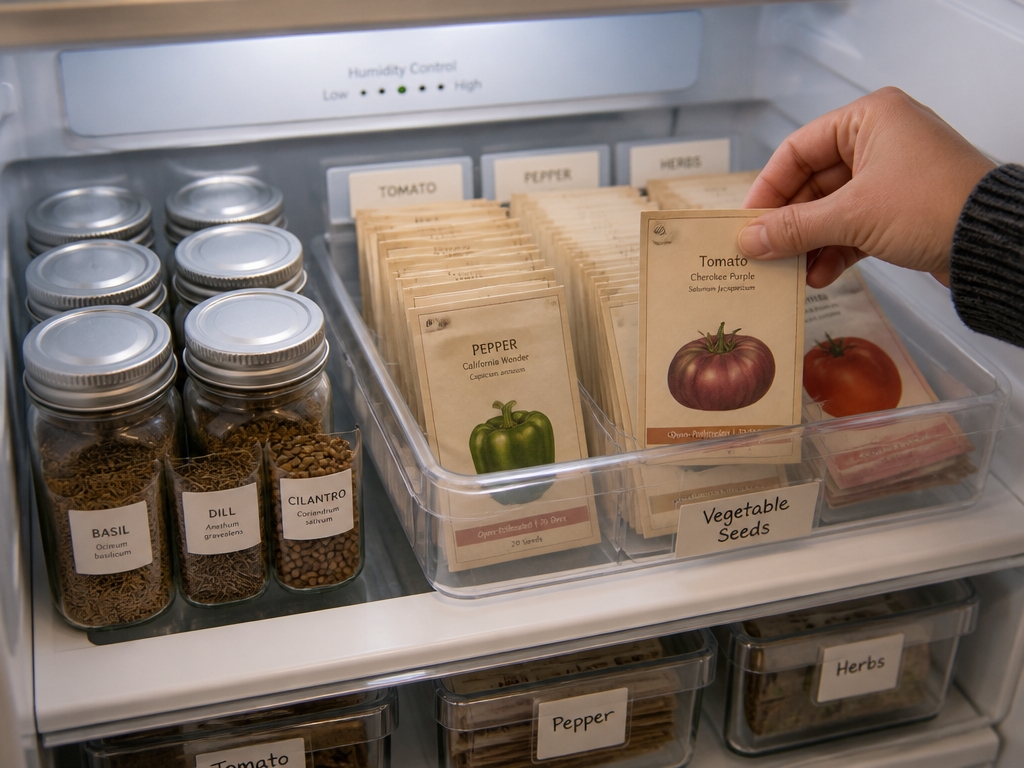
Storing seeds in cold environments considerably extends their viability and germination rates. Refrigerators maintain consistent temperatures around 40°F, ideal for most vegetable and flower seeds. Freezers work well for long-term storage, preserving seeds for several years.
Place seeds in airtight containers or envelopes, then add silica gel packets to reduce moisture. Label all containers with seed names and storage dates for easy identification and rotation.
Keep Seeds Dry With Airtight Containers and Silica Gel
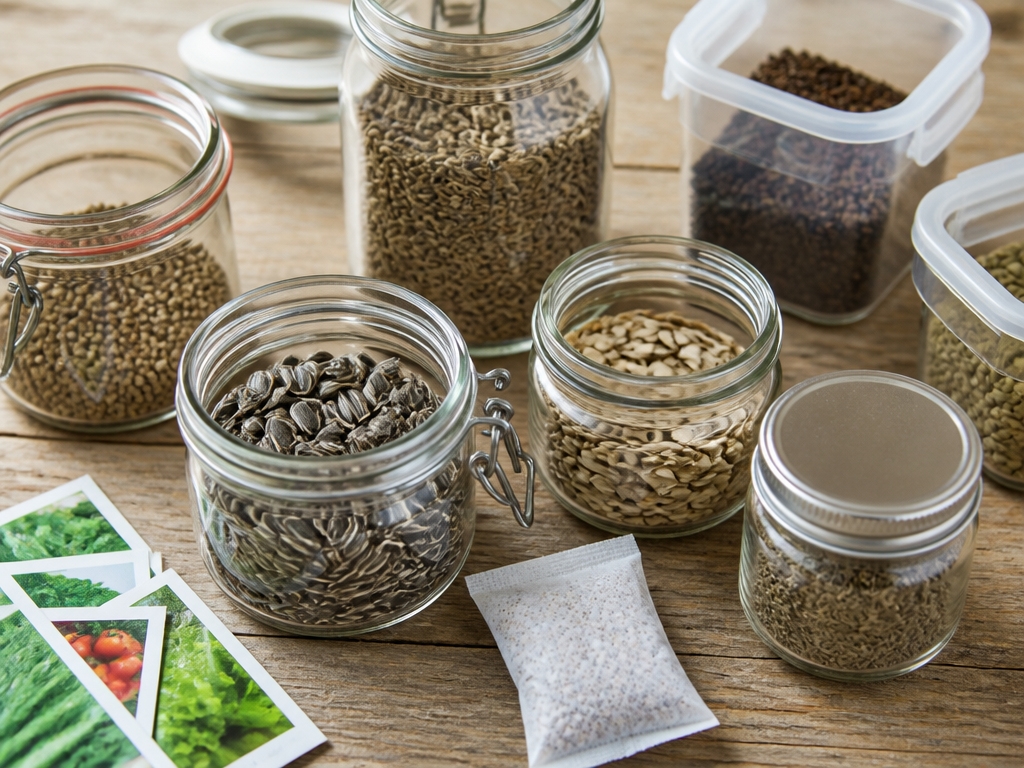
Moisture poses one of the greatest threats to seed longevity, making proper containment essential for maintaining viability. Airtight containers, such as mason jars or plastic vials, effectively seal out humidity.
Silica gel packets absorb remaining moisture inside containers, preserving seed quality over extended periods. Gardeners should replace silica gel when saturated, ensuring continued protection against moisture damage and premature germination.
Label Every Packet With Variety Name and Planting Date
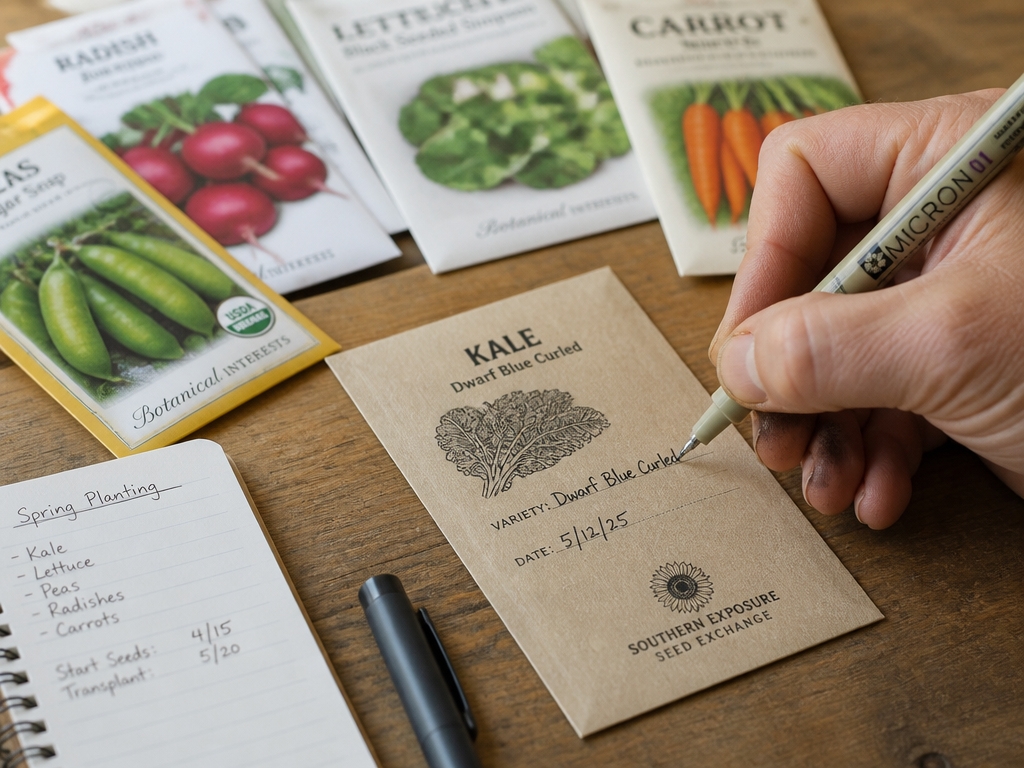
Proper labeling prevents confusion and guarantees gardeners know exactly what seeds they have and when to plant them. Writing the variety name, planting date, and expected harvest date on each packet helps track germination timing. Use permanent markers or waterproof labels on envelopes, jars, and containers.
Include maturity days for reference. Organized labels reduce duplicate purchases and prevent mixing similar varieties during planting season.
Organize by Planting Season for Strategic Planning
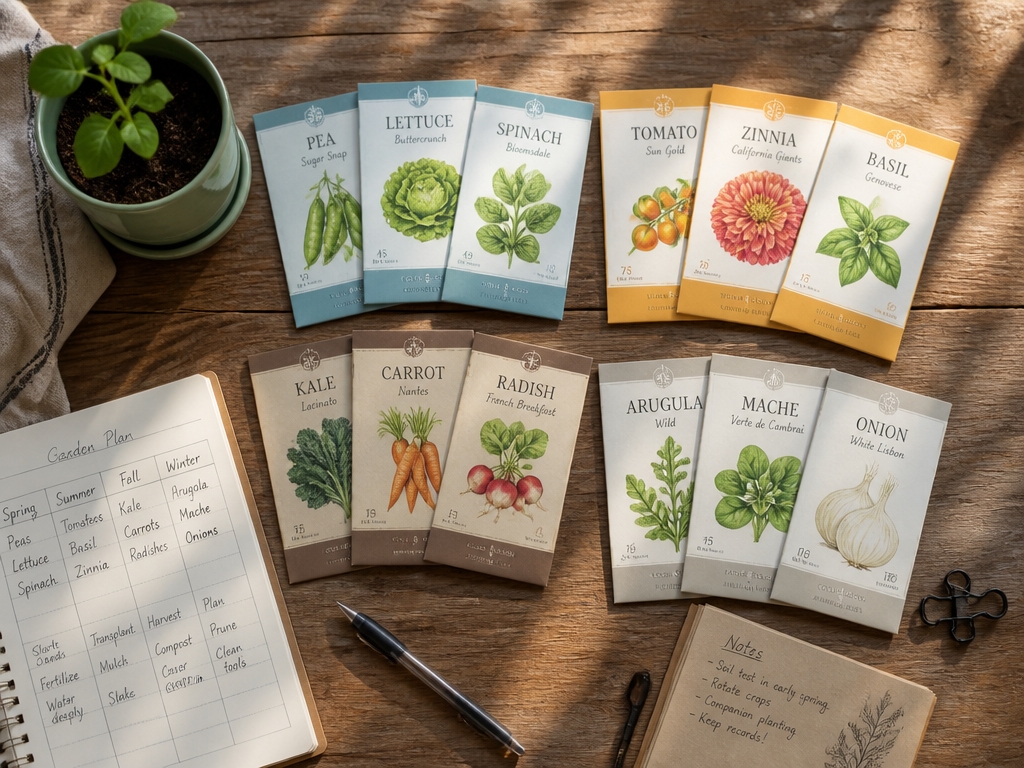
Many gardeners benefit from grouping seeds by their planting season, which creates a practical system for seasonal tasks. Spring seeds, summer seeds, and fall seeds can be separated into distinct containers or sections.
This organization method streamlines planning, reduces searching time, and guarantees gardeners plant appropriate varieties at the correct time. Grouping by season also helps identify which seeds remain available for upcoming planting periods.
Sort Seeds by Plant Type or Garden Location
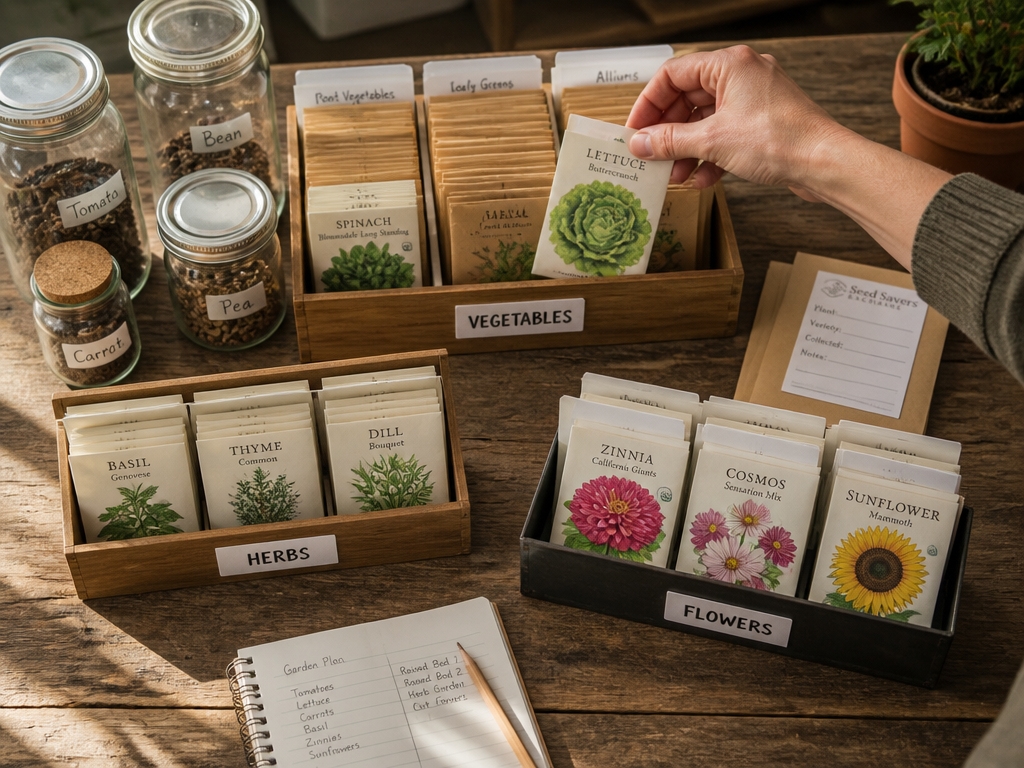
While organizing by season provides a clear timeline for planting, another practical approach sorts seeds according to plant type or intended garden location. Gardeners can group vegetable seeds, herb seeds, and flower seeds into separate containers.
Alternatively, organizing by garden zone, raised bed, or container location streamlines the planting process. This method reduces confusion during planting time and guarantees seeds remain accessible where needed most.
Keep a Seed Inventory Spreadsheet or Notebook
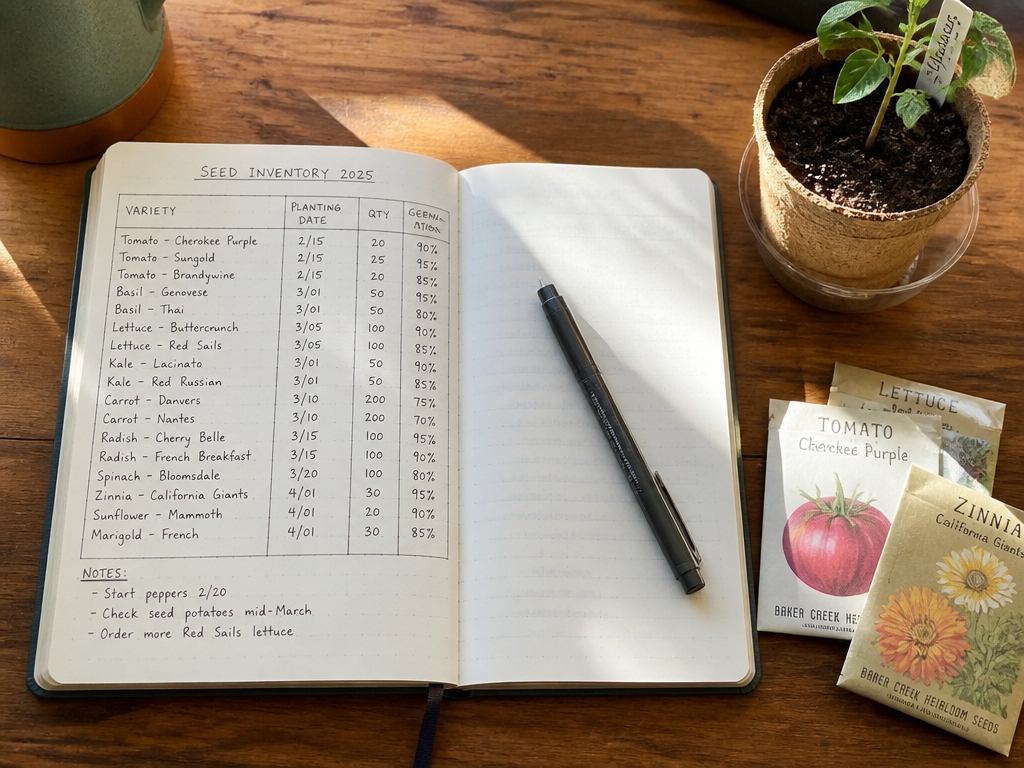
Tracking seeds through a dedicated spreadsheet or notebook prevents duplicate purchases, identifies expired seeds, and documents planting results over time. Gardeners should record seed variety, purchase date, quantity, and location.
Adding germination rates, planting dates, and harvest outcomes creates a useful reference. Digital spreadsheets offer searchability and easy updates, while physical notebooks provide accessible records without technology dependence.
Build a Rotation System to Plant Older Seeds First
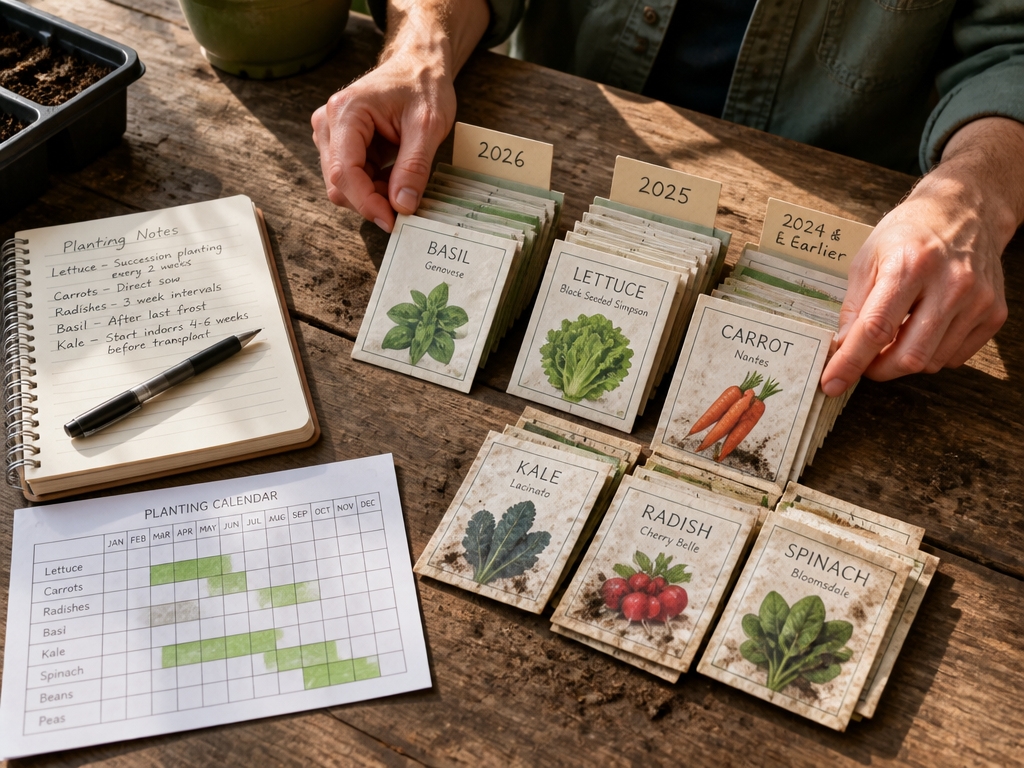
A first-in, first-out approach guarantees that older seeds get planted before newer purchases, reducing waste and maintaining seed viability. Gardeners can mark seed packets with purchase dates, organizing them by year in storage containers.
Planting tomatoes, peppers, and lettuce from older stock first prevents expiration. This system requires minimal effort, yet greatly improves germination rates and garden productivity.
Create a Seed Storage Box With Custom Dividers
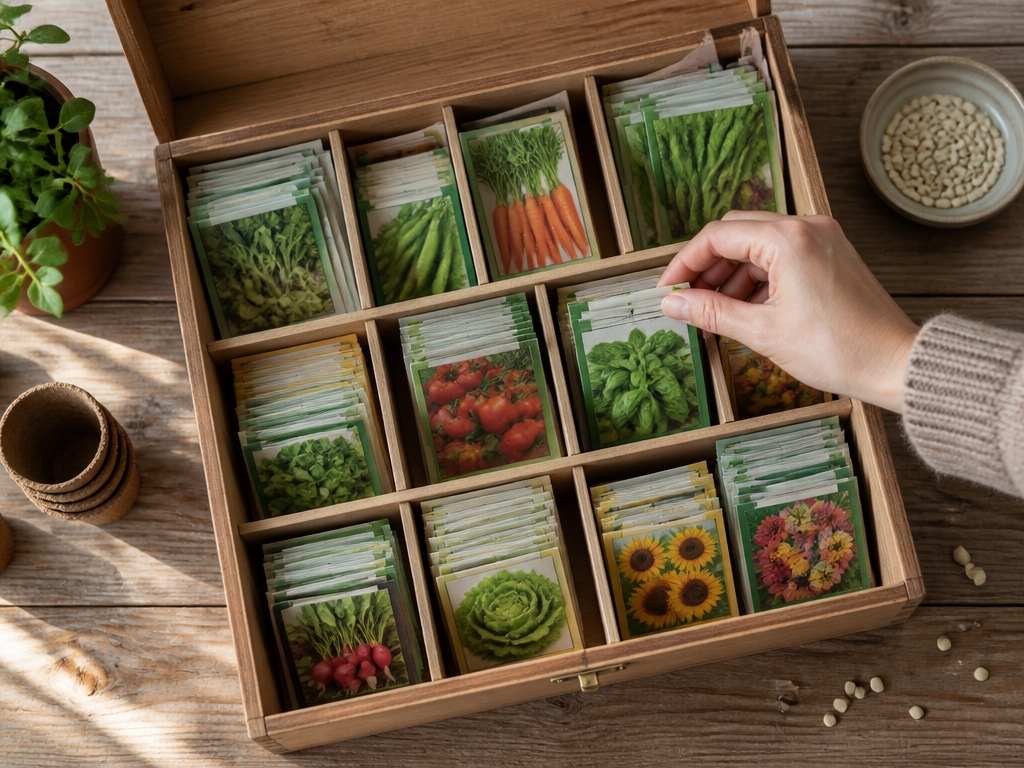
Organizing seeds into compartments within a storage box prevents packets from scattering and makes locating specific varieties straightforward. Gardeners can use small plastic dividers, ice cube trays, or cardboard inserts to create sections. Labeling each compartment by plant type: vegetables, herbs, flowers, or by planting season improves accessibility.
This method keeps seeds protected from moisture and light while maintaining an efficient system for quick identification and retrieval.
Try a Filing System With Packets Organized Flat
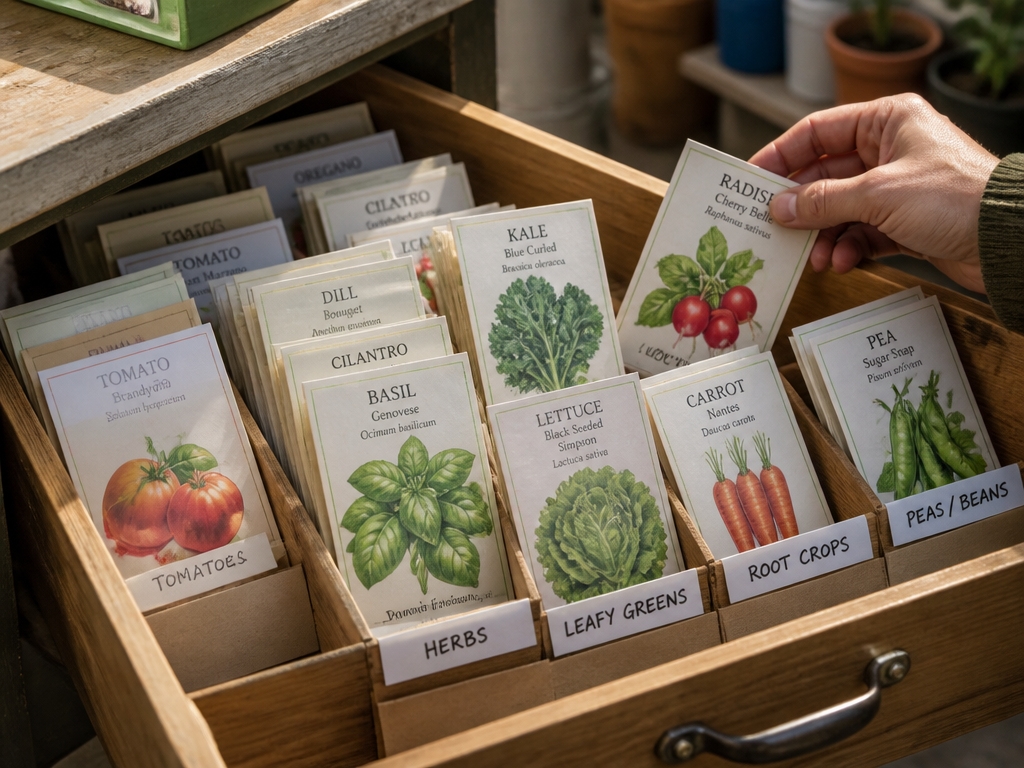
Storing seed packets in a flat, file-like arrangement offers an alternative to compartmentalized boxes, allowing gardeners to flip through packets similarly to filing documents. A shallow drawer, magazine holder, or accordion file organizer accommodates this system.
Gardeners arrange packets vertically by plant type, planting date, or variety. This method provides quick visual access and requires minimal storage space, making it practical for moderate seed collections.
Maximize Visibility With Tiered Shelving
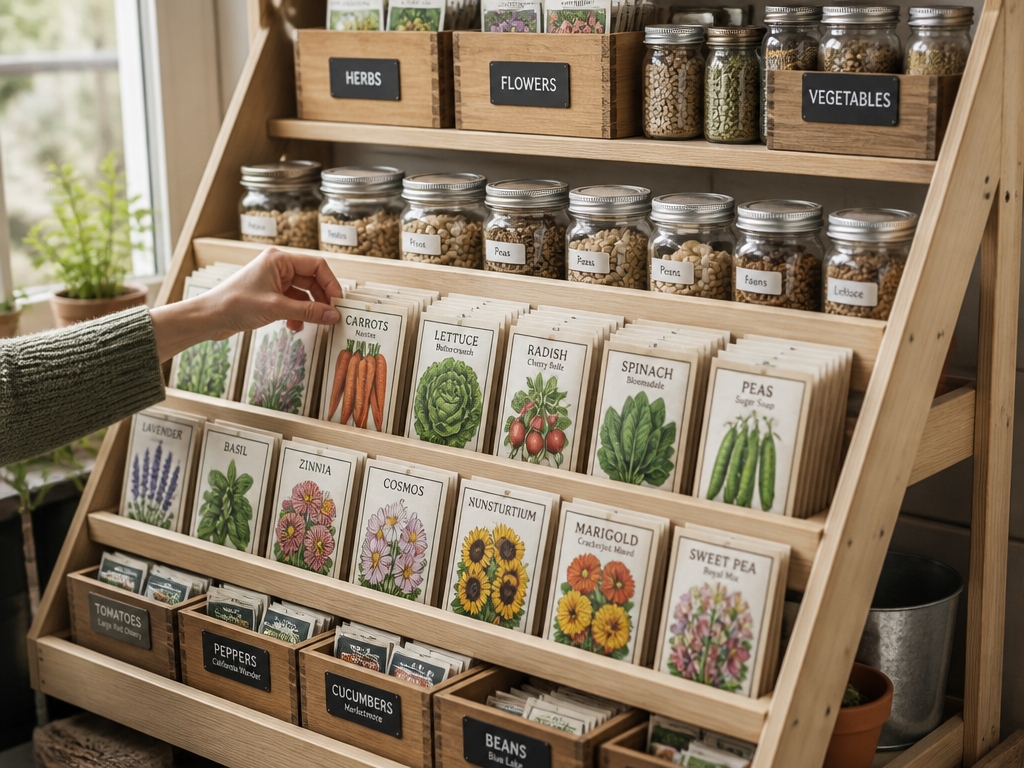
For gardeners with larger seed collections, vertical shelving systems offer advantages beyond the flat filing approach, displaying packets at multiple height levels where each tier remains clearly visible. Tiered shelving, such as metal or wooden units, accommodates numerous seed varieties. Each shelf level functions independently, allowing easy access and inventory tracking.
Rotating shelves can maximize space efficiency further.
Repurpose Household Items for Budget-Friendly Storage
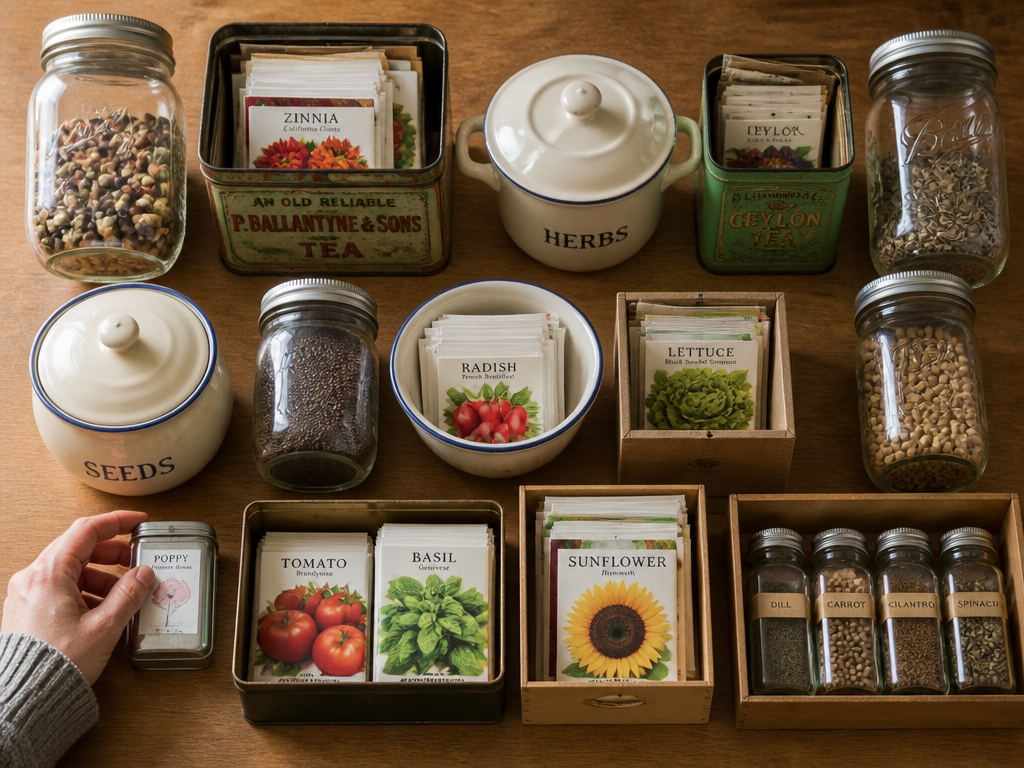
Many common household items can serve as effective seed storage containers without requiring purchases of specialized equipment. Mason jars, film canisters, mint tins, and egg cartons work well for organizing different seed varieties.
Plastic takeout containers, old spice bottles, and repurposed vitamin bottles also function as viable storage solutions. These items provide protection from moisture, light, and pests while keeping seeds sorted by type.
Design a Climate-Controlled Seed Cabinet for Premium Storage
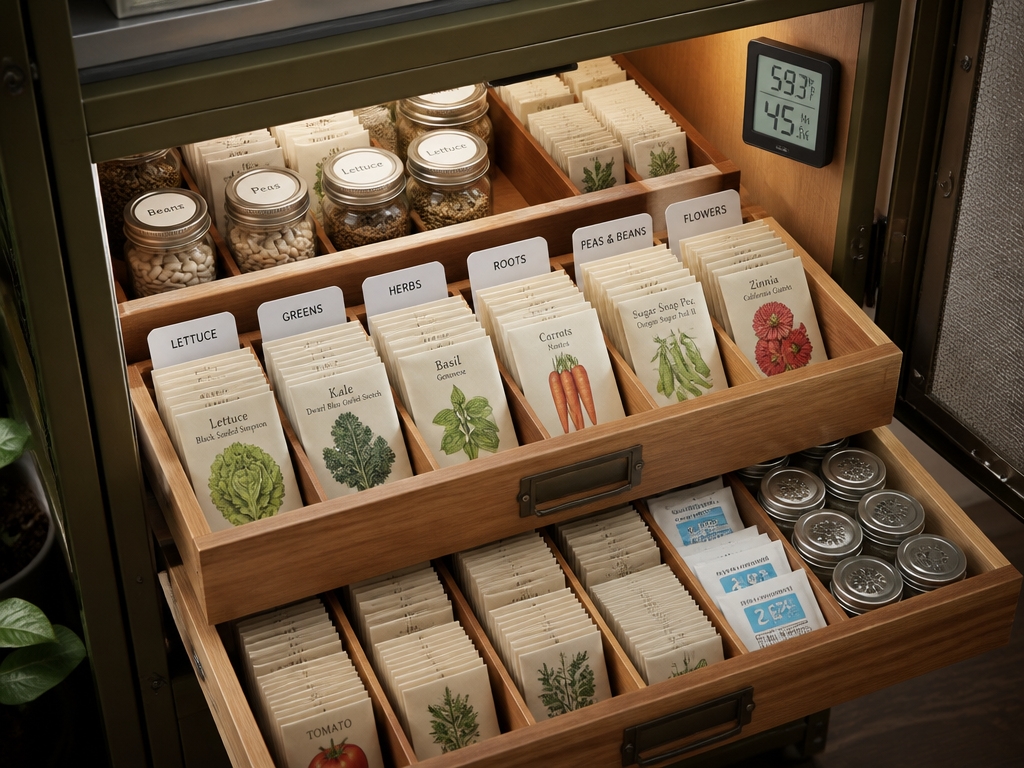
Dedicated seed cabinets offer superior protection compared to household containers, maintaining consistent temperature and humidity levels that extend seed viability. These units typically feature adjustable shelving, airtight compartments, and built-in thermostats.
Quality models include temperature ranges of 32-50°F and humidity controls around 30-40%. Investing in a dedicated cabinet preserves seed germination rates for multiple growing seasons, making it a practical choice for serious gardeners.
Frequently Asked Questions
How Long Do Seeds Typically Remain Viable When Stored Properly?
Seeds typically remain viable for one to five years when stored properly in cool, dry conditions. Most vegetable seeds maintain germination rates of seventy to eighty percent throughout this period. Longevity varies by species and storage conditions.
What Is the Ideal Temperature and Humidity Level for Seed Storage?
A gardener maintaining seeds in a basement achieved 95% germination rates by controlling conditions precisely. Seeds thrive best at 32-41°F with 20-30% humidity, mimicking natural dormancy. Cool, dry environments greatly extend viability across most plant varieties.
Can I Store Seeds From My Own Plants, and How?
One can store homegrown seeds by allowing them to fully mature and dry completely on the plant. After harvesting, they should be cleaned, dried further in a cool location, and stored in airtight containers within ideal temperature and humidity conditions.
How Do I Know if Stored Seeds Are Still Viable Before Planting?
One can perform a germination test by placing seeds in moist paper towels for several days. If a significant percentage sprouts, the seeds remain viable. Alternatively, a float test in water identifies potentially viable seeds, as viable seeds typically sink.
What Should I Do With Expired or Non-Viable Seeds?
One should dispose of non-viable seeds in compost bins or regular trash. Alternatively, they can be offered to community gardens or donated to local agricultural extension offices for educational purposes or composting programs.
Conclusion
Effective seed storage demands simple solutions, yet premium options exist for those willing to invest. Basic refrigerator storage with silica gel protects seeds affordably, while climate-controlled cabinets offer superior long-term preservation. Regardless of method chosen, labeling, inventory tracking, and organizational systems remain essential. Whether using repurposed household containers or custom shelving units, gardeners balance budget constraints against seed viability needs, ultimately determining their storage approach through practical priorities and available resources.