Red roses catching the morning sun. That’s the dream, isn’t it? A front yard that stops neighbors mid-step. Tree roses make it possible. They stand tall. They bloom big. They turn ordinary into unforgettable.
Some choices disappoint, though. A leggy plant with three sad petals. Not exactly the paradise you pictured. The right varieties matter more than you’d think. Color, height, disease resistance—each detail shapes what you’ll actually see from your window.
Picture this: stepping outside with coffee in hand. Your roses are already awake. Pink clusters nodding in the breeze. Cream blooms glowing against green leaves. This isn’t luck. It’s knowing which tree roses earn their spot in your soil.
So where do you start? With proven performers, not pretty tags at the garden center. The ones that deliver season after season. The ones worth the digging, the watering, the waiting. Your future self will thank you. Your mail carrier probably will too.
Classic Red Rose Trees for Timeless Elegance
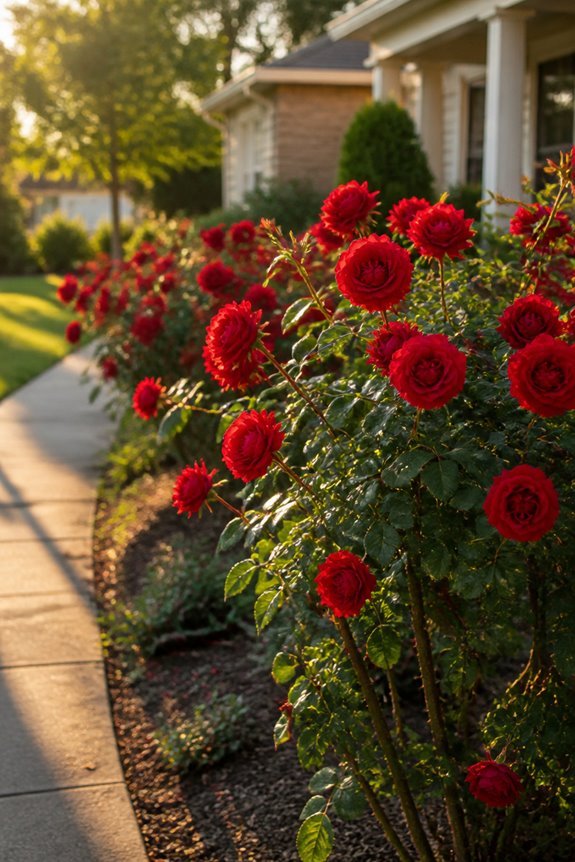
Want your front yard to turn heads without trying too hard? A red rose tree does exactly that. These stunners reach 4 to 6 feet, showing off deep crimson blooms that catch every eye. Picture flowers opening like small fireworks against your home. Neighbors slow down when they walk past. You get all the credit with hardly any effort.
Sunlight matters most here. Plant yours where it gets plenty of direct light, and it blooms for months. The scent alone makes you stop on your front steps just to breathe it in. Clip a few stems for a dinner party, and your guests ask where you bought such beautiful roses. You smile and say, “My front yard.” That’s the kind of simple win a red rose tree delivers.
Also read: 18+ FRONT YARD ENTRANCE Ideas That Feel Welcoming!
Soft Pastel Rose Trees That Add Romance to Your Entry
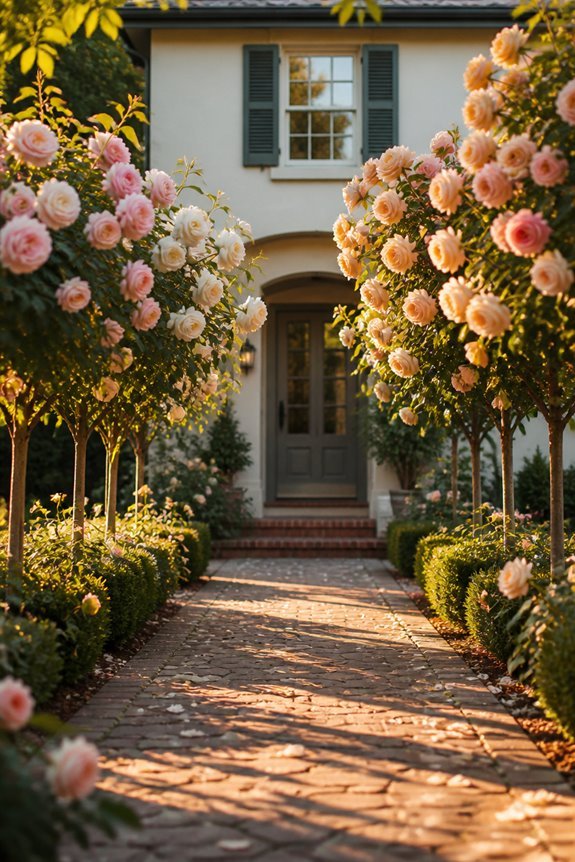
Want curb appeal that feels gentle, not shocking? Soft pastel rose trees deliver exactly that.
Blush pink, cream, and lavender roses work like visual poetry for your entrance. They stand 4–6 feet tall, so they fill space without overwhelming it. Plant one on each side of your door, or tuck a pair near your porch steps. Your hardscaping softens instantly. Visitors slow down without knowing why.
These roses also solve an annoying problem. Pastels photograph beautifully in any light, so your morning coffee shots actually look like morning. No harsh reds blowing out your phone camera. Just consistent, dreamy color that elevates your whole yard.
Vibrant Pink and Magenta Varieties for Bold Color Impact
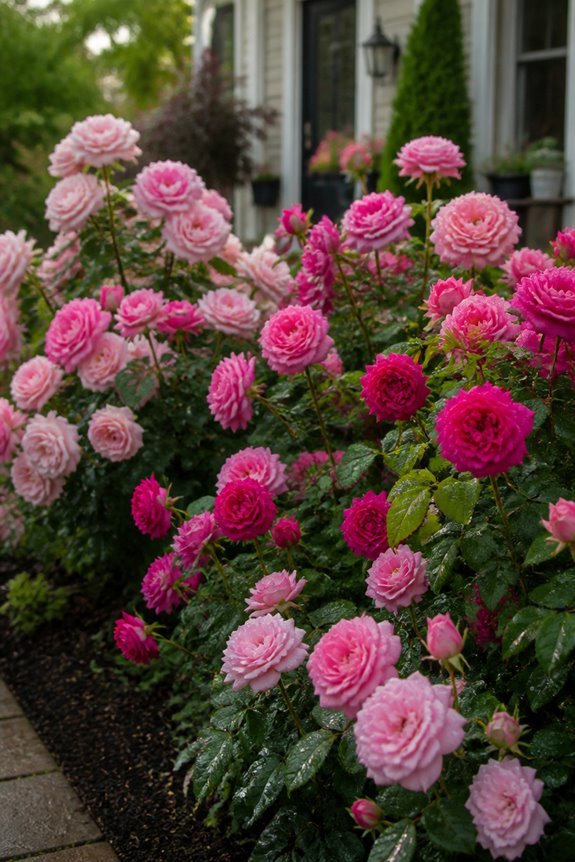
Want your garden to actually get noticed? Pink and magenta rose trees are your answer. They don’t fade into the background. Not even close.
Plant one of these beauties front and center. A mature magenta tree hits 4-6 feet and turns heads instantly. Give it full sun. Watch it steal every glance from passersby.
Try “Knock Out” magenta varieties for blooms that keep coming all season. Pair pink roses with a white fence for contrast that pops. The colors look almost unreal, like someone turned up the brightness on your whole yard.
These trees aren’t shy. They’re for gardeners ready to make a statement. Let your landscaping do the talking. Your front yard will do more than whisper. It’ll sing.
White and Cream Rose Trees for Sophisticated Simplicity
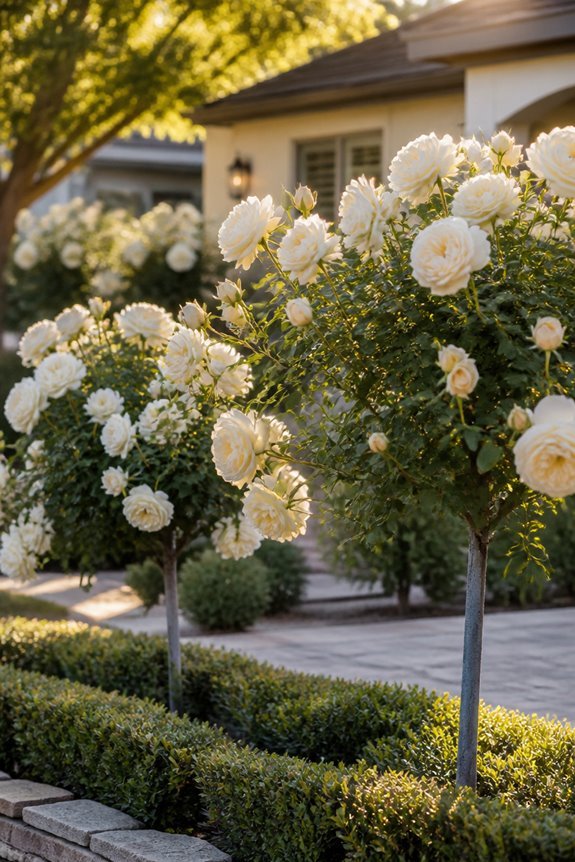
Looking for elegance without the drama? White and cream rose trees deliver exactly that. They bring quiet sophistication to your front yard. No shouting required.
A mature white rose tree stands about 4 to 6 feet tall. Place one near your entrance for instant impact. Pair it with dark green shrubs for a timeless combination. The creamy varieties add subtle warmth without overpowering your space. Plant three together for a look that stops foot traffic. Your neighbors will notice. Even if your garage stays messy, these roses make everything feel pulled together.
Hybrid Tea Roses: Choosing the Best Large-Bloom Varieties
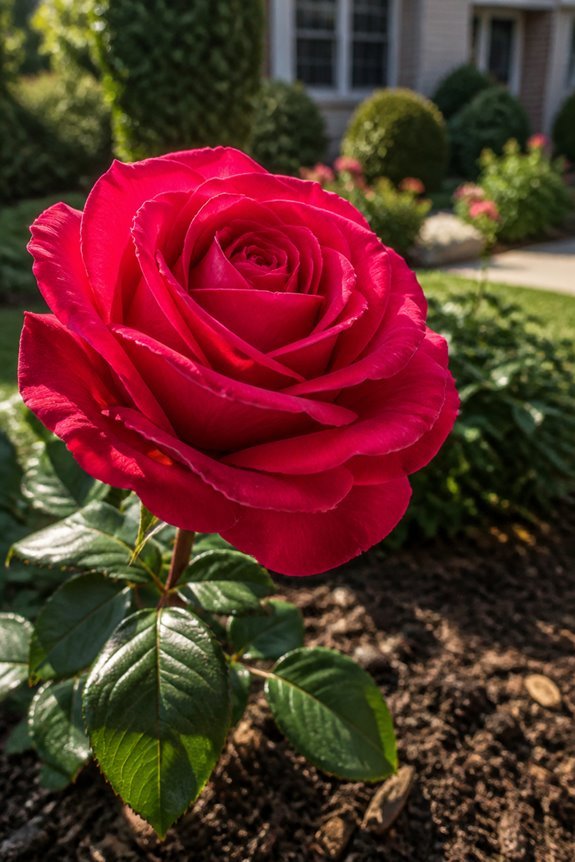
You want roses that stop traffic. You want neighbors to slow down and stare.
Hybrid tea roses deliver exactly that kind of drama. These beauties bloom as wide as dinner plates, often five inches across. They come in colors you didn’t know roses could manage.
Check out ‘Peace’ for petals that glow golden yellow. Try ‘Double Delight’ if you love the look of red edges melting into creamy centers. ‘Ingrid Bergman’ burns deep red and smells like heaven itself.
Here’s what you need to know. Plant these roses in full sun with good drainage. Feed them regularly if you want those showy blooms to return. Pick a spot where people will actually see them.
Treat them like the stars they are. Water deeply. Mulch around the base. Deadhead spent flowers to keep new ones coming.
Think of them as the peacocks of your garden. Loud, proud, and impossible to ignore.
Shrub Roses for Abundant Blooms and Easy Care
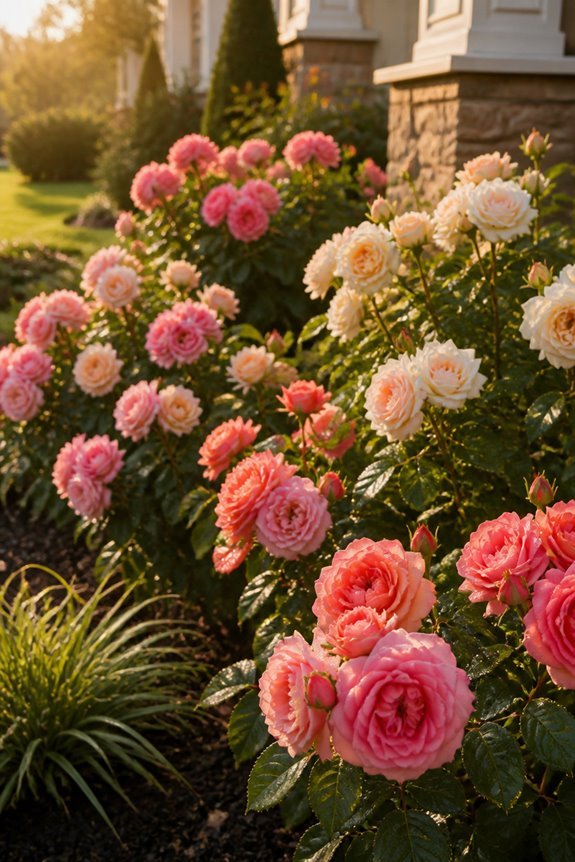
Want stunning roses without the constant upkeep? Shrub roses have your back.
These tough plants grow 3 to 6 feet tall and wide. They fill out naturally. No endless pruning required. Varieties like “Knock Out” bloom all summer in reds and pinks. They barely notice the heat. Their thick leaves hide any bare stems, so they look good from spring through frost. Pests and diseases? Shrub roses hardly flinch. Feed them lightly and forget them occasionally. They won’t hold it against you. Plant them in groups for real impact. Then sit back and enjoy the easiest color in your garden.
Climbing Rose Trees to Frame Your Front Door
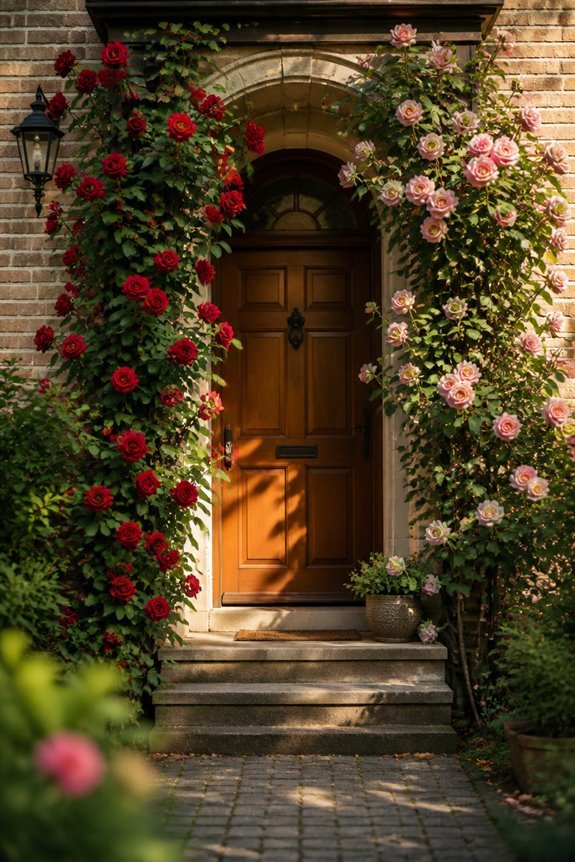
Want your front door to feel like a warm hug? Climbing roses can make that happen. These growers reach 8 to 15 feet tall and turn plain entryways into something special. Picture soft pink petals or rich red blooms greeting you every afternoon. Your neighbors might slow down just to stare.
Here’s what you need to know. Give your roses a strong trellis or arbor to grab onto. Water them regularly, especially in their first year. Plant each one about 18 inches from your door frame. This leaves breathing room for your mailbox, your door swing, and a welcome mat.
You’ll get repeat blooms all summer long. Your entrance will smell amazing and look photo-ready. Most varieties handle cold snaps and heat waves without complaint. Go ahead and treat your door to this kind of charm.
Fragrant Rose Trees: Varieties That Perfume Your Entryway
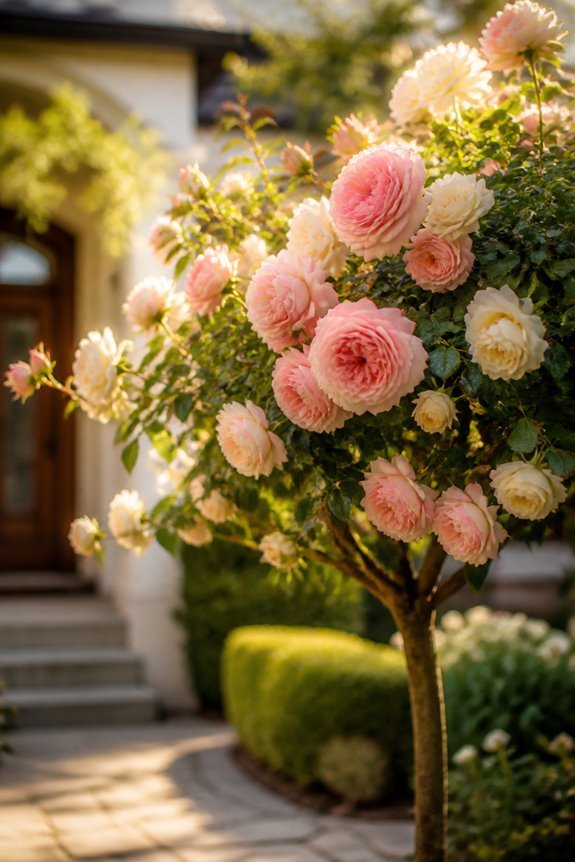
Want to make your front door unforgettable? Fragrant climbing roses can do that. They frame your entryway with color and scent that hits before you even ring the bell.
Some varieties smell better than others. Try ‘Zephirine Drouhin’ for deep magenta blooms with old rose perfume. ‘Constance’ brings creamy-white flowers and a sweet, vintage scent that stops visitors mid-step. For something bolder, ‘Lady of Shalott’ offers coral-orange petals with a fruity, tea-like fragrance. These climbers reach 8-10 feet, perfect for doorways without blocking the view inside.
Plant in full sun and give them sturdy support. Water deeply at first. Then watch your entryway become an aromatic welcome mat. Guests will literally smell your garden before they see it.
Disease-Resistant Roses for Low-Maintenance Front Yards
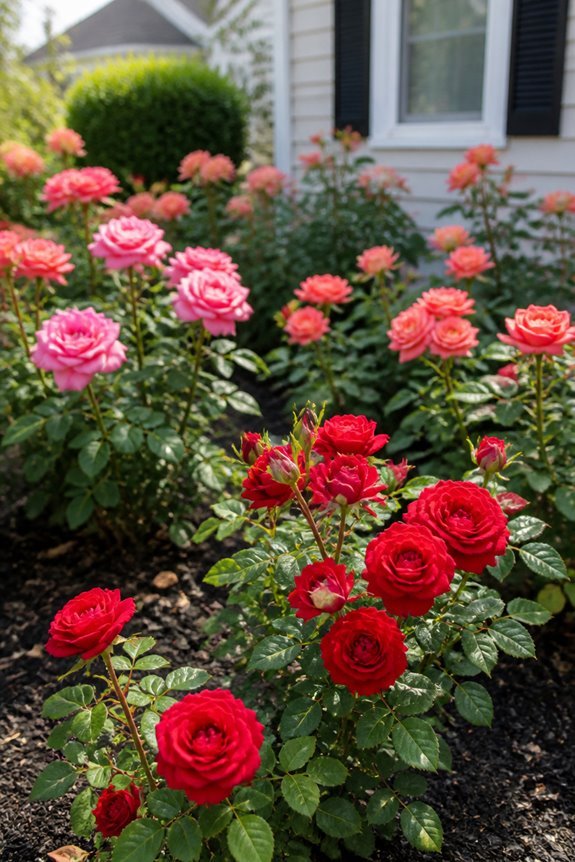
Sick of watching your roses wither before summer even hits? You’re not alone. Most gardeners have battled black spot and powdery mildew more times than they can count.
Knock Out roses are your easiest answer. They bloom nonstop in reds, pinks, and yellows all season long. No begging. No spraying. They hit 3-4 feet tall and keep flowering even when you forget they exist. You get color without the drama. Rugosa roses are another solid pick. Their wrinkled leaves naturally fight off disease, and they pump out gorgeous pink or white blooms that smell incredible. Want something with old-school charm? Try English roses like Abraham Darby. You get peachy-apricot petals, strong fragrance, and modern disease resistance all in one. Your front yard looks polished. Your wallet stays happy. No fungicide budget required.
Standard vs. Shrub Rose Trees: Which Form Fits Your Space?
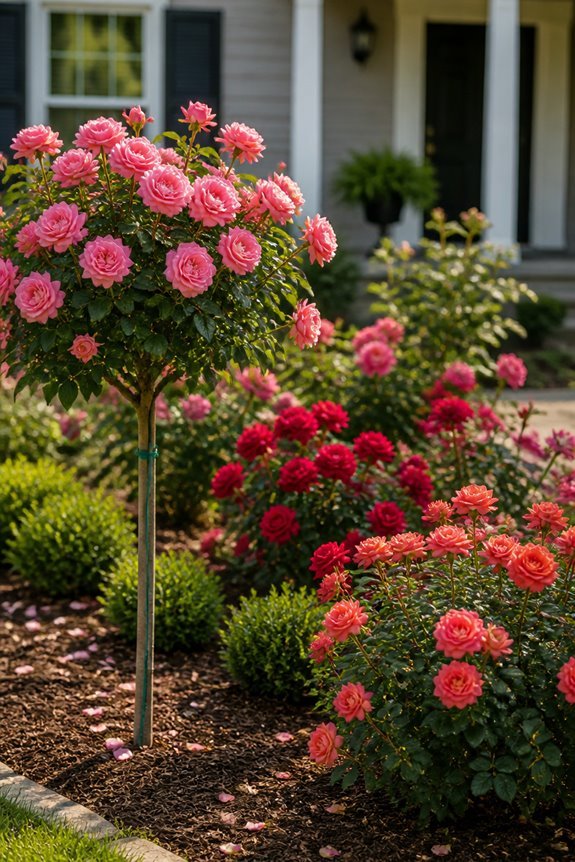
How much vertical room do you actually have to work with?
Standard roses reach 3-4 feet on slim trunks. They look elegant and formal. But they need more attention to thrive.
Shrub roses spread wider instead of taller. They top out around 2-3 feet. You get full, bushy growth without the height competition.
Tight garden? Shrub roses keep sightlines open. Small patios welcome them. Standard roses work better as focal points. They add vertical drama where you want eyes to travel upward.
Your budget shapes the choice too. Standards cost more upfront. You get instant mature presence. Shrubs start smaller but fill in quickly. They forgive rough pruning and bounce back fast.
Choose standards for formal statements and structured beds. Pick shrubs for easy, reliable color that works hard without fuss.
Plant Rose Trees in Full Sun for Best Blooms
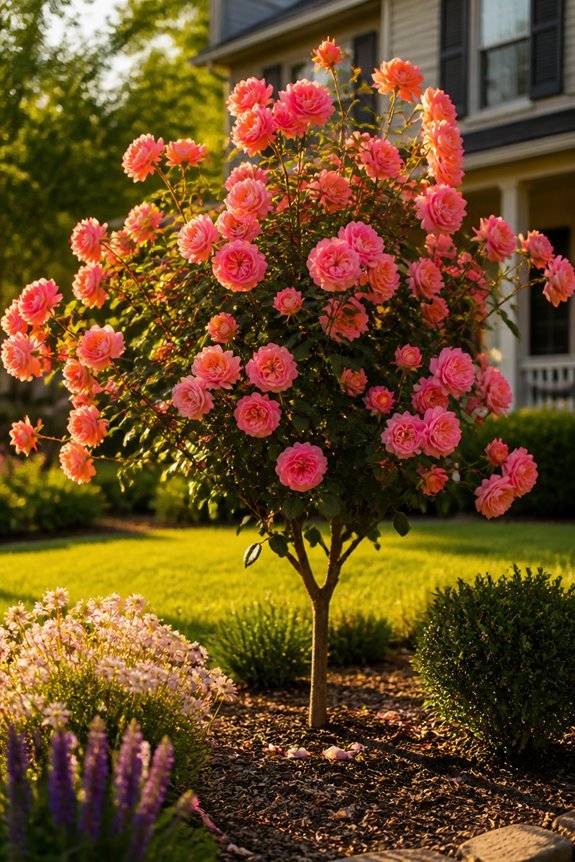
Roses love the sun, and so will you when you see them bloom. You need to give them six to eight hours of direct light every single day.
Morning sun is your best friend here. It dries off dew quickly and keeps fungal problems away. Got scorching hot afternoons? A little shade then won’t hurt. But full shade all day? Your roses will struggle. You’ll get weak stems and tiny blooms instead of the full, lush flowers you’re hoping for.
Think of sunlight as fuel for your rose trees. Less light means less energy, and that means fewer flowers. Plant them where buildings and trees won’t block the rays. Your sunniest spots, front and center, are perfect for these plants.
More sun means more blooms. It’s that simple. Position them well, and you’ll have flowers that turn heads.
Soil Prep and Drainage for Healthy Rose Trees
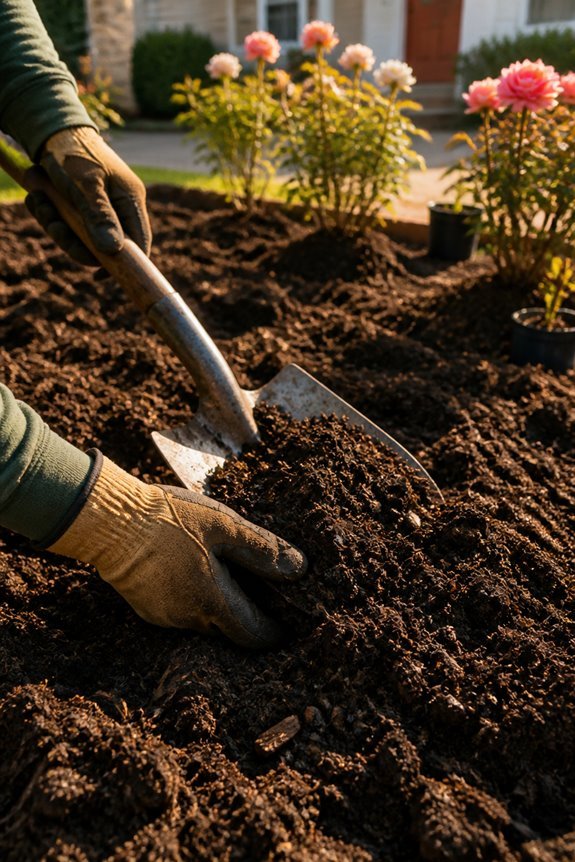
You already know sunlight matters for blooms. But what about what’s happening under your feet? Your rose trees need soil that drains fast. They hate sitting in water. Think of wet roots like wet socks. Uncomfortable, right?
Mix compost or peat moss into your soil. This keeps it light and airy. Test your pH too. Roses want 6.0 to 6.5. Too high or low and they struggle. Got heavy clay or a low spot? Build a raised bed about 12 inches up. Your roots stay dry. Your roses stay alive.
Skip the soggy soil and you’ll skip the root rot. You’ll skip the fungal problems too. Your reward? Healthy leaves and blooms that keep coming back all season.
Prune Rose Trees for Fuller Blooms: Spring and Summer Tips
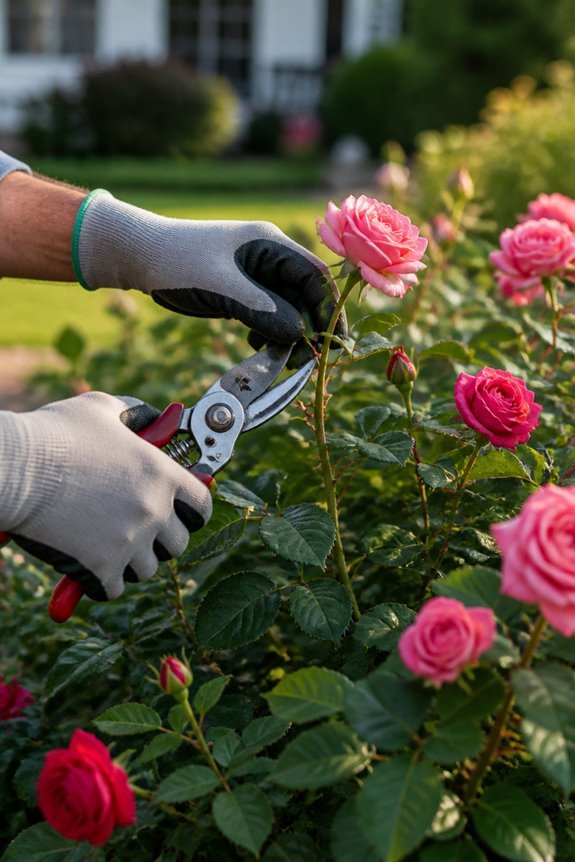
Want a rose bush so full it makes the neighbors jealous? Spring is your moment. Grab those shears and start with the ugly stuff. Snip off anything dead, brown, or clearly sick.
Cut at a 45-degree angle, about a quarter inch above buds that face outward. This tricks your rose into growing wide and bushy instead of tall and awkward. Think of it as redirecting traffic.
Summer means deadheading. Pinch off faded blooms and your plant gets confused. It keeps trying to make seeds. More flowers appear instead.
Thin out crowded spots too. Let air move through those branches. Stagnant air equals mildew and black spot. No one wants spotted leaves on their prize roses.
Keep your tools sharp. Dull blades mangle stems. Open wounds invite trouble. Clean cuts heal fast.
Your roses will reward you. Blooms stack up all season long.
Fertilize Rose Trees to Extend Blooming Seasons
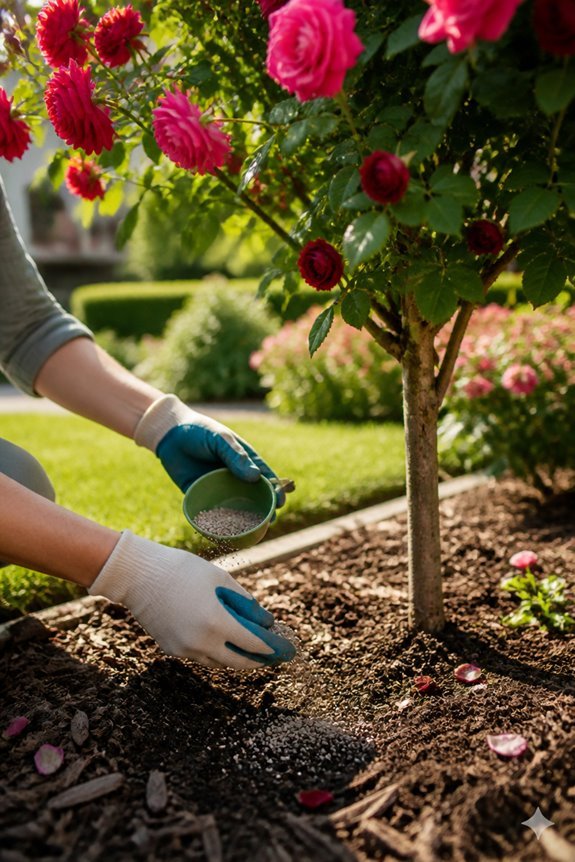
Want flowers that keep coming all season long? Your roses need your help.
Start feeding them in early spring when you spot new growth. A balanced fertilizer like 10-10-10 works great. Just follow the package directions and water first. Dry roots plus fertilizer equals damage you’ll regret.
Feed again every four to six weeks through summer. Your roses are hungry plants, and they’ll show their thanks with wave after wave of blooms. Pinks, reds, yellows, oranges. The color keeps going right into fall if you stay consistent.
Skip the feeding? You’ll get small, sparse flowers and a sad garden. Keep at it, and your front yard becomes the neighborhood showstopper.
Design: Layering Multiple Rose Tree Varieties
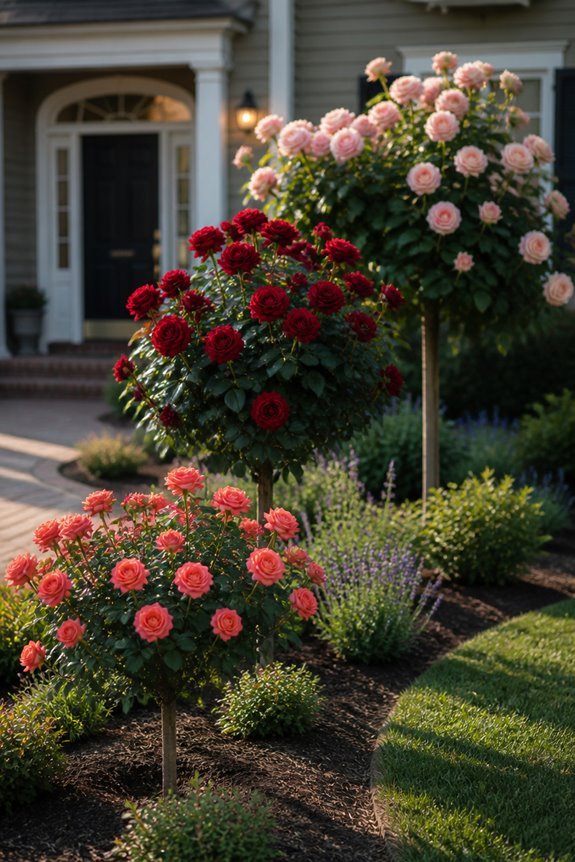
Want a front yard that makes people slow down and stare? You can build serious visual drama by stacking rose trees at different heights.
Start with the backbone. Plant Knock Out roses or another tall variety in your back row. You want these reaching 4 to 6 feet. They anchor everything. Then drop your middle layer. Shrub roses around 3 feet tall work perfectly here. They bridge the gap without stealing the show. Finish with compact miniature roses up front. These little guys hit just 1 to 2 feet and add that crucial low layer.
Now comes the fun part. You get to play with color placement. Try deep reds behind soft pinks, with sunny yellow miniatures catching light up front. The blend just works. Bloom times matter too. Mix early, mid, and late season varieties so something’s always happening. No dead gaps. No boring weeks. Your yard stays alive from spring through fall. That layered look transforms flat space into something that actually feels designed. Neighbors will notice. count on it.
Pair Rose Trees With Companion Plants for Enhanced Beauty
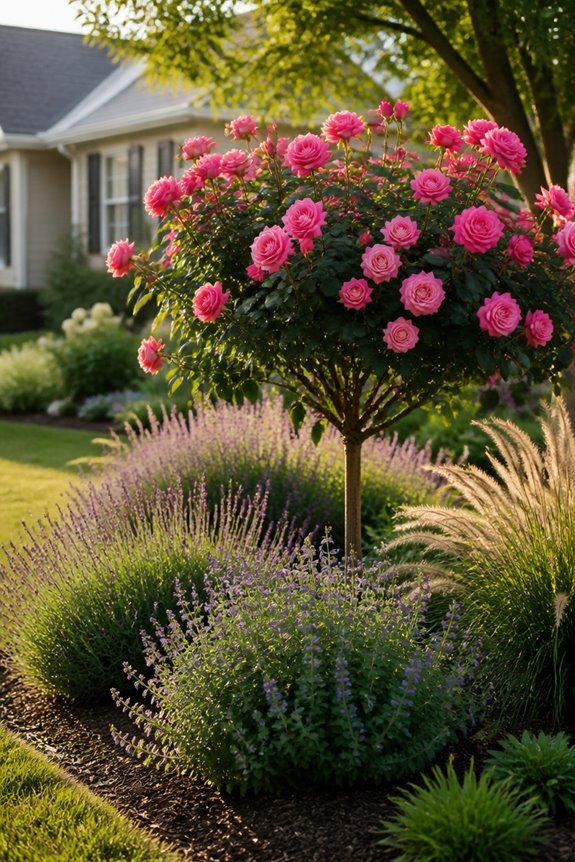
Ever feel like your rose tree is the wallflower of your garden? It stands there. It blooms. But something’s missing. You can fix that with the right friends nearby.
Try lavender at the base. You get fragrance. Butterflies arrive. Everyone wins. Or plant catmint for purple clouds that make pink and red roses pop. Ornamental grasses work too. They sway at two to three feet tall and add life to the scene.
These companions do more than look pretty. They confuse pests that want your roses. They cover bare soil so weeds stay out. Hostas give you leafy backdrops in shade. Salvia adds spires of color in sun. Your garden stops looking like a single rose got lost at the dance. It starts looking like you planned it that way.
Year-Round Care Tips to Keep Your Rose Trees Thriving
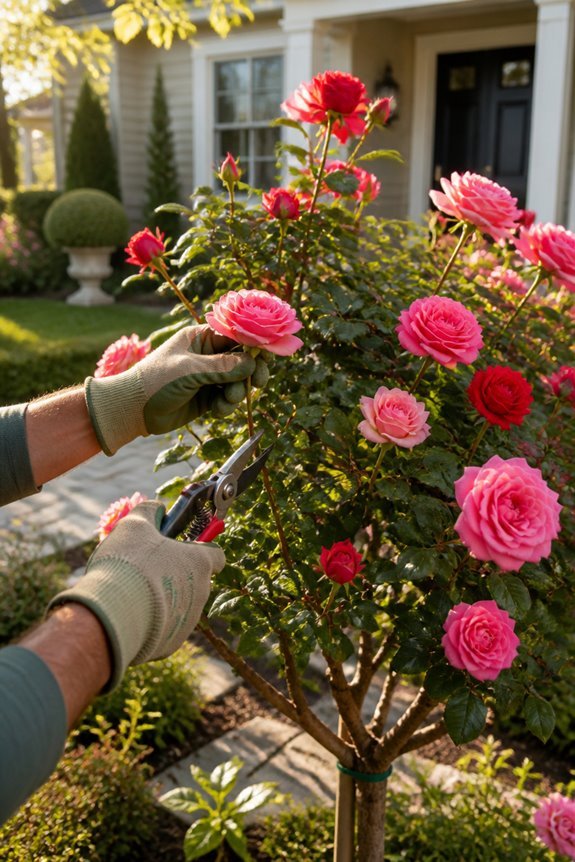
Rose trees ask for a little attention, but they won’t drain your energy. You can keep them happy without turning gardening into a second job.
Water deeply once a week. Aim for about one inch. Your roses will answer with blooms that stop neighbors in their tracks. In early spring, grab your pruners and cut away dead branches. This keeps your trees looking sharp and feeling strong. Feed them monthly during growing season. Pick a rose fertilizer they actually like. Watch for aphids too. These tiny pests latch onto leaves and suck the life right out. A quick check now saves trouble later.
Spread two to three inches of bark mulch around the base. This keeps roots cool and holds moisture where it belongs. Come fall, cut back growth by one-third. Your trees need this heads-up before winter arrives. Stick to these steps and your front yard stays stunning year-round.
Frequently Asked Questions
How Long Does It Take for Rose Trees to Mature and Produce Full Blooms?
Rose trees typically require two to three years to reach full maturity and produce abundant blooms. During the first year, they establish root systems. Subsequent years yield progressively more flowers as the plant develops strength and establishes its flowering cycle.
What Is the Ideal Spacing Between Multiple Rose Trees in Front Yards?
How can gardeners maximize visual impact while ensuring healthy growth? Rose trees require 4-6 feet of spacing between specimens, allowing adequate air circulation and sunlight penetration. Wider spacing of 8 feet suits larger varieties, preventing overcrowding and disease susceptibility.
Can Rose Trees Survive in Areas With Harsh Winter Climates?
Rose trees can survive harsh winters, though success depends on the variety selected. Hardy cultivars like rugosa and shrub roses tolerate cold climates well. Winter protection, including mulching and windbreaks, considerably improves survival rates in freezing regions.
How Often Should Rose Trees Be Watered During Hot Summer Months?
One might wonder if daily watering suffices, but the answer proves more nuanced. During scorching summer months, rose trees typically require deep watering two to three times weekly, depending on soil moisture and temperature conditions.
When Is the Best Time to Plant Rose Trees in Spring?
Rose trees should be planted in spring after the last frost date has passed, typically between mid-April and May. Soil temperatures should reach at least 60 degrees Fahrenheit to guarantee ideal root establishment and healthy growth.
Conclusion
Rose trees transform front yards from boring to breathtaking. Red roses bring drama. Pink ones bring pizzazz. White ones bring class. Layer them together and boom—instant garden magic. Care for them consistently and they’ll reward you with blooms galore. Pair them with companion plants and watch your neighbors get seriously jealous. Your front yard isn’t just a yard anymore. It’s a fragrant, colorful masterpiece that makes everyone stop and stare.