

Finding the right mowing height makes a real difference for any lawn.
Cool-season grasses like Kentucky bluegrass tend to do best when kept between 2.5 and 3.5 inches.
Warm-season options such as bermudagrass usually prefer a shorter range of 1 to 2.5 inches.
Cutting too short might seem efficient, but it actually backfires. The plant becomes stressed, roots grow weaker, and diseases find an open invitation.
Many homeowners learn this lesson the hard way after chasing that overly manicured look.
Matching your mowing habits to your specific grass type sets the foundation for success.
Proper technique matters more than most people expect. Small adjustments to blade height and timing often separate thriving lawns from struggling ones.
Why Cutting Your Grass Too Short Damages Your Lawn
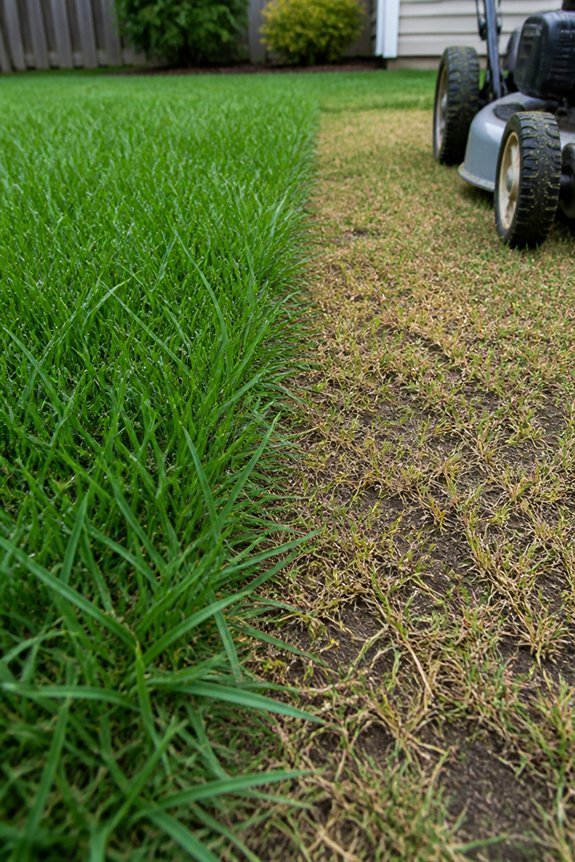
When grass is cut too short, the lawn experiences several damaging consequences that weaken its overall health. The grass blade becomes exposed to direct sunlight, which increases water evaporation from the soil. This stress reduces the plant’s ability to photosynthesize and produce energy for growth.
Short cutting also exposes the soil surface, promoting weed seed germination. Weeds establish faster in bare patches, competing with grass for nutrients and water. Additionally, the lawn becomes more susceptible to disease and insect damage when grass density decreases.
Cutting below two inches typically causes these problems. The grass cannot develop a strong root system, making it vulnerable to drought stress. Recovery requires several weeks of proper growth conditions.
Maintaining adequate cutting height protects lawn density and resilience.
Mowing Heights by Grass Type (Cool-Season vs. Warm-Season)
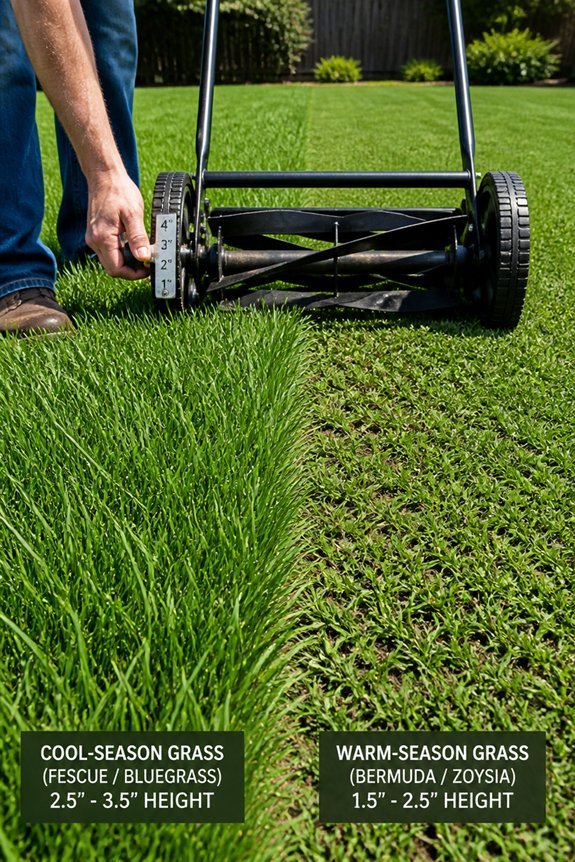
The ideal cutting height varies depending on the grass species in a lawn, since different grasses have different growth patterns and tolerance levels. Cool-season grasses, including Kentucky bluegrass, perennial ryegrass, and tall fescue, thrive when mowed between 2.5 to 3.5 inches tall. These grasses grow most actively during spring and fall months.
Warm-season grasses, such as bermudagrass, zoysia, and St. Augustine grass, require shorter heights of 1 to 2.5 inches. These varieties peak during summer growth periods.
Mowing at appropriate heights for each type prevents stress, reduces disease susceptibility, and promotes denser growth. Lawn owners should identify their grass type first, then adjust mower settings accordingly to maintain ideal health throughout the growing season.
The One-Third Rule: The Golden Standard for Lawn Mowing
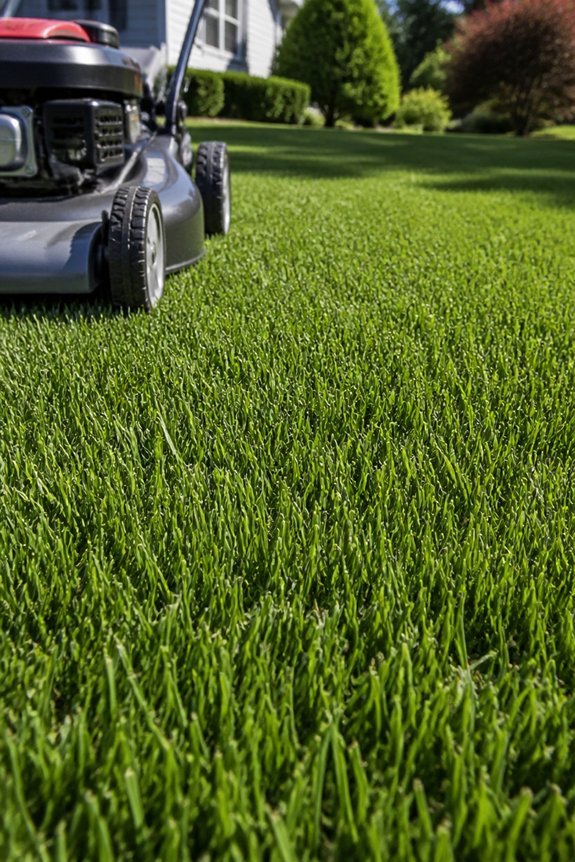
One fundamental principle guides proper lawn mowing: never remove more than one-third of the grass blade in a single cutting.
This rule, known as the one-third rule, prevents stress to the grass plant and maintains lawn health. When mowers cut more than one-third of the blade, the grass becomes weakened, susceptible to disease, and prone to browning.
For example, if grass reaches six inches in height, mowing should reduce it to four inches. If grass reaches nine inches, cutting it to six inches follows the guideline.
Applying this principle requires regular mowing during peak growing seasons. Homeowners should adjust mowing frequency based on growth rate and season. Cool-season grasses typically need more frequent cutting during spring and fall, while warm-season grasses require increased attention during summer months.
Stronger Roots and Disease Resistance: Why Height Matters
Maintaining adequate grass height offers multiple benefits beyond appearance, including stronger root systems and improved disease resistance. Taller grass blades allow plants to develop deeper, more extensive root networks that access water and nutrients more effectively. This strengthened foundation helps lawns withstand drought stress, foot traffic, and environmental pressures.
Longer grass also creates a denser canopy that reduces disease susceptibility. Fungi and pathogens thrive in thin, weak lawns where sunlight penetrates easily and air circulation remains poor. Examples include dollar spot and brown patch, which spread rapidly in short turf.
Maintaining grass at recommended heights, typically two to three inches for cool-season varieties, three to four inches for warm-season types, promotes these protective mechanisms naturally without additional treatments or interventions.
Mower Settings for Consistent Cutting Height
Achieving consistent cutting height begins with understanding mower adjustment mechanisms and their proper use. Most rotary mowers feature individual wheel height adjusters or a single lever system controlling all wheels simultaneously. Checking these settings before each mowing session guarantees accuracy and prevents uneven cutting patterns across the lawn.
Operators should measure cutting height from the ground to the blade’s lowest point, accounting for terrain variations and soil settlement. Deck leveling maintains proper blade alignment, preventing scalping on uneven ground.
Regular blade sharpening contributes to consistent results by reducing resistance during cutting operations. Manufacturers typically provide specific height ranges for different grass types and seasons. Consulting the equipment manual clarifies adjustment procedures and recommended settings. Proper maintenance of adjustment mechanisms prevents slippage and drift during operation.
When to Adjust Your Mowing Height by Season
Grass growth rates and health requirements change throughout the year, making seasonal mower adjustments necessary for ideal lawn care.
During spring, when growth accelerates, operators should set blades to 2.5 to 3 inches, promoting deeper root development. Summer heat demands taller grass, around 3 to 3.5 inches, which shades soil and reduces water loss. Fall requires lowering to 2.5 inches as growth slows, preparing lawns for dormancy.
Winter maintenance depends on grass type; cool-season grasses benefit from 2 to 2.5 inches, while warm-season varieties should remain at 1.5 inches before dormancy. Monitoring weather patterns and local growing conditions helps determine precise timing for height adjustments, ensuring excellent grass health throughout all seasons.
Why Taller Grass Crowds Out Weeds and Reduces Stress
When lawn grass reaches ideal heights of 3 to 3.5 inches, it creates a dense canopy that blocks sunlight from reaching soil. This shading prevents weed seeds from germinating and establishing roots. The shading effect reduces dandelion, clover, and crabgrass populations naturally without chemical intervention.
Taller grass also strengthens individual plants by developing deeper root systems, which improves drought tolerance and nutrient absorption. Deeper roots access water reserves during dry periods, reducing plant stress and wilting.
The crowding effect of dense grass coverage works mechanically. Weeds require space, light, and resources to compete. When grass occupies these growing areas, weeds cannot establish themselves effectively.
Mowing at 3 to 3.5 inches for cool-season grasses and 2.5 to 3.5 inches for warm-season varieties maintains this protective advantage throughout the growing season.
Frequently Asked Questions
How Often Should I Sharpen My Mower Blade for Optimal Cutting Height Results?
One should sharpen mower blades every 20-40 operating hours or approximately every 2-3 months during the growing season. Sharp blades create clean cuts at ideal heights, promoting healthier grass and preventing disease while improving overall lawn appearance.
Can I Use the Same Cutting Height for Both Front and Back Lawn Areas?
Picture uneven patches where sunlight struggles to reach dense turf. One cannot universally apply identical cutting heights to front and back lawns. Varying sun exposure, soil conditions, and traffic patterns necessitate adjusted blade settings for ideal health and appearance in each distinct area.
What Equipment Do I Need to Accurately Measure My Current Grass Cutting Height?
A homeowner needs a ruler or measuring tape to gauge grass height. One should measure from soil level to the grass blade tip at multiple lawn locations, ensuring accurate readings before and after mowing for consistent lawn maintenance.
Does Grass Cutting Height Affect How Frequently I Need to Water My Lawn?
Yes, grass cutting height markedly affects watering frequency. Taller grass retains more moisture and develops deeper root systems, reducing water needs. Shorter grass dries faster and requires more frequent watering to maintain health and prevent stress.
How Long Does It Take for Grass to Recover After Being Cut Too Short?
Grass typically requires two to three weeks to recover from being cut too short. During this period, the grass redirects energy toward root and blade regeneration. Recovery time varies depending on grass type, soil conditions, and environmental factors like temperature and moisture.
Conclusion
A lawn functions like a forest ecosystem. Just as trees need adequate height to gather sunlight and develop strong roots, grass requires proper cutting heights to thrive. Cutting too short weakens the entire system, inviting weeds and disease. Following the one-third rule and maintaining appropriate heights for grass type—whether cool-season or warm-season varieties—sustains a balanced, resilient lawn that resists stress, drought, and pests naturally.