

Those iconic split leaves don’t appear by accident. Monstera plants need the right combination of conditions to develop fenestration, and understanding what actually matters can save years of frustration.
Maturity comes first; young plants simply won’t split no matter how well you care for them.
Light makes the biggest difference once a plant is old enough. Bright, indirect sunlight triggers the hormonal changes that lead to fenestration, while dim corners leave you with solid, heart-shaped foliage. Many growers underestimate just how much light these tropical climbers really want.
Humidity and watering habits round out the essentials. Consistent moisture without waterlogged roots keeps the plant vigorous enough to produce complex leaves.
Skip the misting tricks and focus on stable environmental conditions instead.
What Your Monstera Needs to Split

A healthy Monstera requires several specific conditions before its leaves will develop the characteristic splits and holes, called fenestration. Mature plants, typically at least three years old, are more likely to produce fenestrated leaves than younger specimens. Adequate bright, indirect light proves essential, as plants in low-light conditions rarely develop splits.
The Monstera also needs stable temperatures between 65 and 85 degrees Fahrenheit, consistent moisture without waterlogging, and high humidity levels around 60 percent or higher. Nutrient availability matters considerably, making regular fertilizing during growing seasons important. Additionally, the plant must reach sufficient size and establish strong root systems before directing energy toward fenestration. Plants stressed by poor conditions, pests, or diseases typically delay or skip leaf splitting entirely.
Also read: How to Plan a Small Garden Layout in an Afternoon
Provide Bright, Indirect Light to Trigger Fenestration
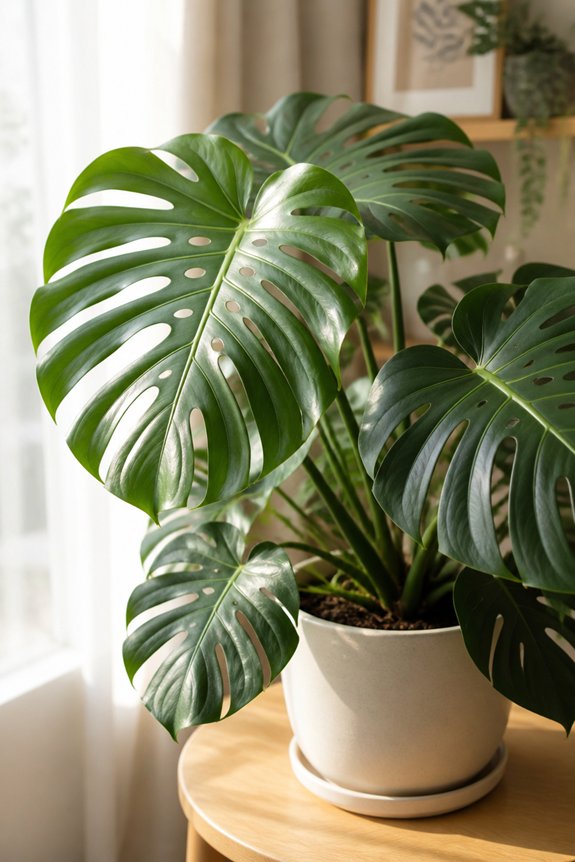
Of the several conditions Monsteras need for fenestration, light stands as one of the most influential factors in triggering leaf splits. Bright, indirect light stimulates the plant to develop fenestrations, the natural holes and slits in mature leaves. Direct sunlight can scorch foliage, while insufficient light slows growth and delays fenestration development.
Place Monsteras near east or west-facing windows with sheer curtains filtering rays, or position them three to six feet from south-facing windows. Artificial grow lights positioned twelve to eighteen inches above the plant work effectively in low-light spaces. The plant requires consistent brightness for ideal fenestration, typically needing twelve to fourteen hours of quality light daily. Rotating the plant weekly guarantees even light exposure and balanced leaf development.
Build a Support System for Larger, Split Leaves
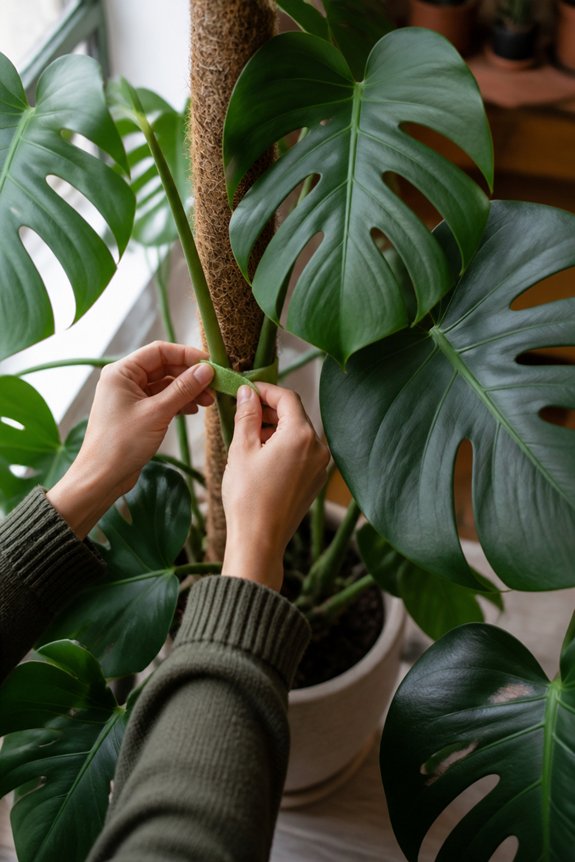
As Monsteras mature and develop fenestrated leaves, their stems and petioles require structural support to handle the increased weight and size. Without adequate support, heavy leaves may bend, break, or damage the plant’s vascular system.
Several support options work effectively. Moss poles, which mimic natural tree bark that Monsteras climb in their native habitat, encourage aerial root development and upward growth. Bamboo stakes tied with soft plant ties offer straightforward support for vertical plants. Trellises work well for spreading varieties that grow horizontally.
Install support early, when the plant is still young and flexible. This prevents stress on mature stems that resist bending. Secure the support structure firmly in soil to prevent tipping.
Check ties monthly, adjusting them as stems thicken to avoid girdling damage.
Water Properly Without Overwatering or Underwatering
Proper watering maintains plant health and prevents the root problems that develop from moisture extremes. Monsteras require water when the top inch of soil feels dry to the touch, typically every one to two weeks depending on light and temperature conditions.
Overwatering causes root rot, a serious fungal issue that kills the plant from below. Underwatering stresses the plant, preventing growth and leaf splitting.
Use room temperature water and guarantee pots have drainage holes to prevent water accumulation. During winter months, reduce watering frequency since the plant grows slower and requires less moisture.
Check soil moisture regularly by inserting a finger into the soil. Allow excess water to drain completely from the pot before returning the plant to its location.
Increase Humidity to Encourage Leaf Development
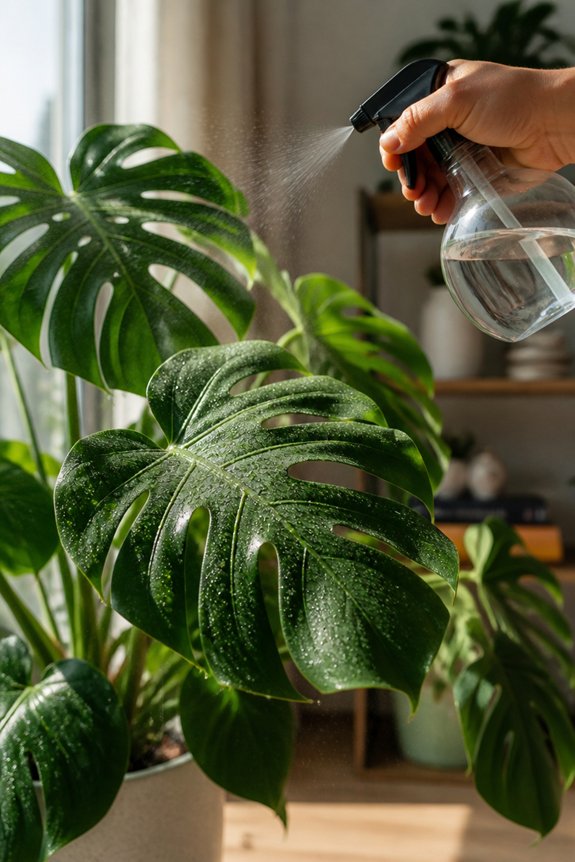
Monsteras thrive in humid environments, where moisture in the air promotes larger leaves and encourages the distinctive fenestration, or leaf splitting, the plant is known for. Indoor spaces typically have humidity levels between 30 and 50 percent, which falls below the 60 percent threshold that Monsteras prefer.
Several methods increase humidity effectively. Misting the leaves with water two to three times weekly adds moisture to the immediate environment. Placing the plant on a pebble tray filled with water creates a humid microclimate as water evaporates.
Grouping multiple plants together generates higher humidity through collective transpiration. A humidifier positioned near the plant maintains consistent moisture levels. Bathrooms and kitchens naturally contain higher humidity, making these locations suitable for Monstera placement.
Feed Your Monstera During the Growing Season
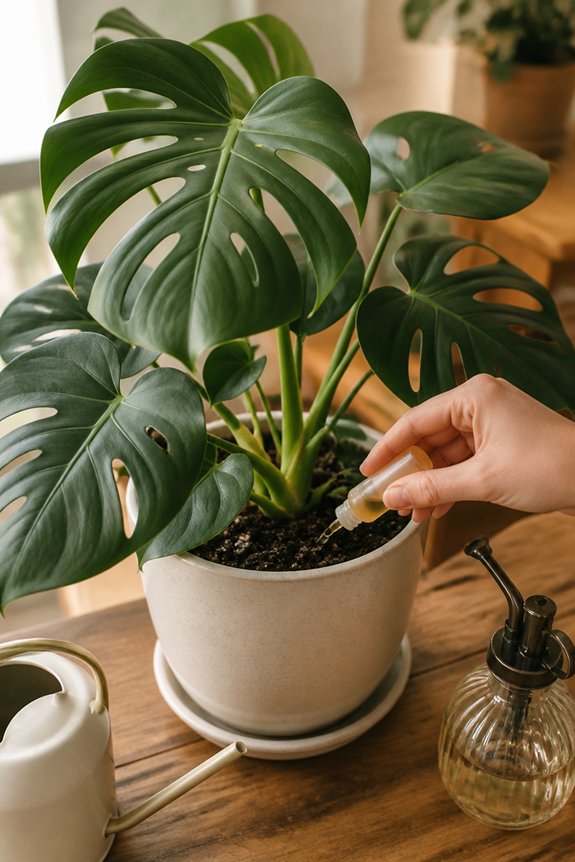
Nutrient delivery becomes essential during spring and summer months, when the plant enters its active growth phase and requires additional resources. A balanced fertilizer with equal nitrogen, phosphorus, and potassium, such as a 10-10-10 formula, supports healthy development.
Apply fertilizer every two to four weeks during these growing seasons, diluting it to half strength to prevent root damage. Liquid fertilizers absorb quickly, while slow-release pellets provide nutrients gradually over time. Stop fertilizing in fall and winter, when growth slows considerably.
Overfertilizing causes salt buildup in soil, damaging roots and yellowing leaves. Monitor the plant’s response to feeding, adjusting frequency based on observed growth rates and leaf condition. Consistent nutrition encourages the robust development necessary for leaf splitting.
Recognize When Your Monstera Is Ready to Split
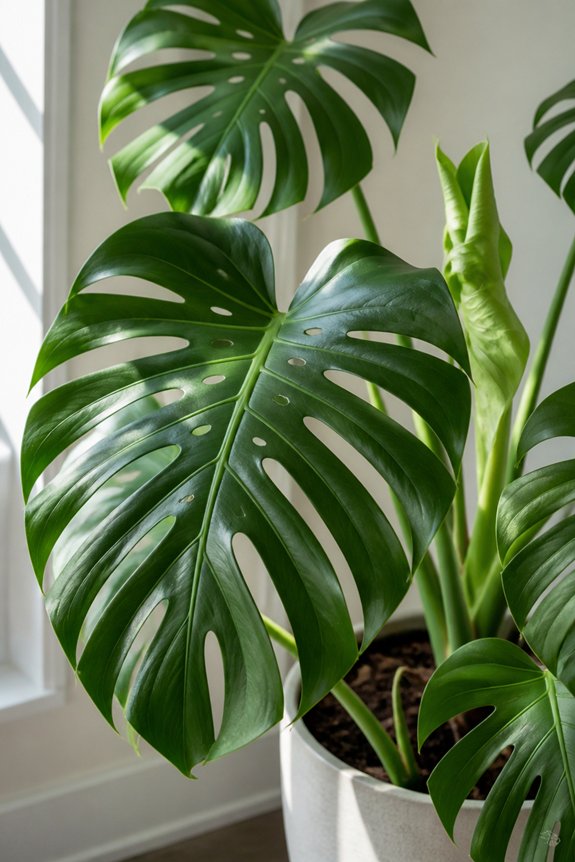
Once the plant reaches maturity and receives adequate light, water, and nutrients, fenestration, the natural splitting of leaves, becomes possible. A Monstera typically requires two to three years of growth before fenestration occurs.
Several indicators signal readiness: the plant should have multiple mature leaves, a sturdy stem at least one foot tall, and robust aerial roots. Leaves will begin showing small holes or splits along the edges and center. Adequate indirect bright light remains essential for this process. Without sufficient lighting, fenestration delays considerably.
The plant’s age, size, and overall health determine the timeline. Younger plants or those in low-light conditions may take longer. Once these conditions align, the characteristic splits and holes develop naturally on new leaf growth.
Frequently Asked Questions
At What Age or Size Does a Monstera Typically Start Developing Fenestrated Leaves?
Like a butterfly emerging from its chrysalis, the monstera plant typically begins developing its signature fenestrated leaves between two and three years of age, once it reaches maturity and achieves sufficient size and strength to support this distinctive adaptation.
Can I Propagate a Monstera Cutting With Splits, and Will It Maintain the Fenestration?
Yes, a monstera cutting with splits can be propagated successfully. The fenestrated leaves typically maintain their split characteristics when the cutting develops roots and establishes itself as an independent plant, preserving the parent’s mature leaf patterns.
Why Does My Mature Monstera Produce New Leaves Without Any Splits or Fenestrations?
It’s not rocket science—mature monsteras occasionally produce new leaves without splits due to insufficient light exposure. When conditions aren’t ideal, the plant conserves energy, prioritizing growth over developing fenestrations. Increasing bright, indirect light typically encourages the desired split-leaf characteristics.
How Long Does It Take for a New Leaf to Fully Develop and Split?
A new Monstera leaf typically requires four to six weeks to fully unfurl and develop. Fenestrations may not appear immediately; they generally emerge as the leaf matures over subsequent weeks or months.
Will Moving My Monstera to a New Location Affect Its Ability to Produce Splits?
One might imagine relocating a monstera requires hiring movers and filing paperwork. Actually, moving it to a new location can temporarily stress the plant, potentially delaying splits. However, if the new spot offers adequate bright, indirect light and stable conditions, splits will eventually resume normally.
Conclusion
Fenestration requires patience and precision. While some plant owners expect splits within months, mature Monsteras—three years or older—need consistent conditions: bright, indirect light, humidity above 60%, and proper watering. Neglecting support systems stunts growth; conversely, installing moss poles encourages upward development and larger leaves. Success depends not on shortcuts, but on maintaining stable temperatures, regular fertilization, and controlled moisture. These combined factors, rather than any single element, determine whether fenestration actually occurs.