
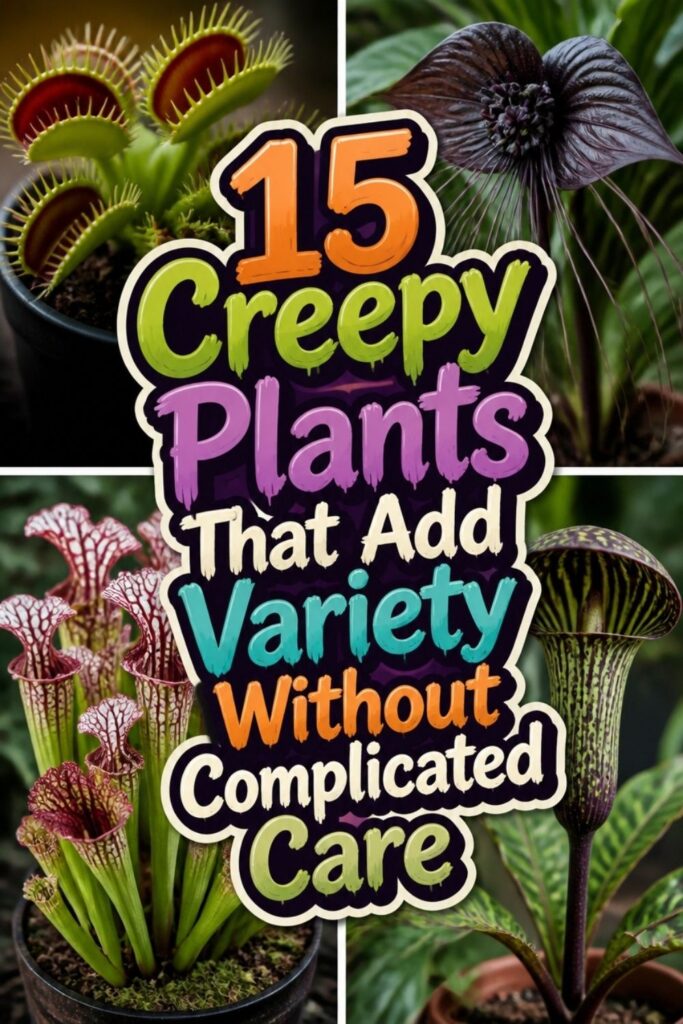
Finding unusual plants that don’t demand constant attention can turn an ordinary collection into something far more intriguing. This Creepy Plants guide highlights strange species with dark colors, unusual flowers, and forms that look almost otherworldly.
Black Bat Flowers stand out with their dramatic, bat-shaped blooms. Dracula Orchids are known for flowers that can resemble tiny faces. Carnivorous options like Nepenthes add another unusual element with their distinctive hanging pitchers.
Some resilient choices come from the succulent family. Huernia produces strange, star-shaped flowers with an almost alien appearance. Other unusual species attract attention through twisted forms, dramatic foliage, or unexpected textures.
Growing these plants successfully starts with matching each species to the right light, temperature, and moisture levels. This Creepy Plants guide will help you find peculiar varieties that can bring a darker and more unusual character to your plant collection.


Get the Growing Conditions Right
Start by checking the care needs before choosing a plant for its creepy appearance. Some unusual species prefer dry soil and bright indirect light, while carnivorous plants and orchids may need consistently moist, humid conditions.
Avoid grouping every dark or unusual plant under the same care routine. Huernia prefers drying out between waterings, while Nepenthes needs much more consistent moisture.
Choose one or two varieties that suit the conditions you can already provide. Matching the plant to your light, temperature, and watering habits makes an unusual collection much easier to maintain.
Black Bat Flower: Midnight Blooms, Minimal Care
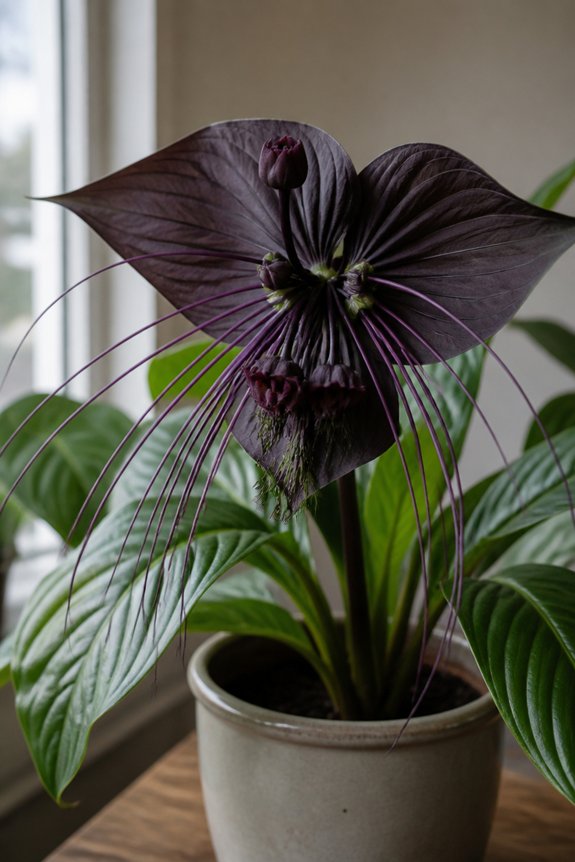
The black bat flower, scientifically known as Tacca chantrieri, produces dark purple-black blooms that resemble bat wings, earning its distinctive common name. This plant thrives in humid, indirect light conditions with consistently moist soil. It requires minimal pruning and moderate watering.
The black bat flower tolerates indoor environments well, making it a practical choice for plant collectors seeking unusual specimens with straightforward care requirements.
Tacca Chantrieri: Black Bat Plant Varieties Compared
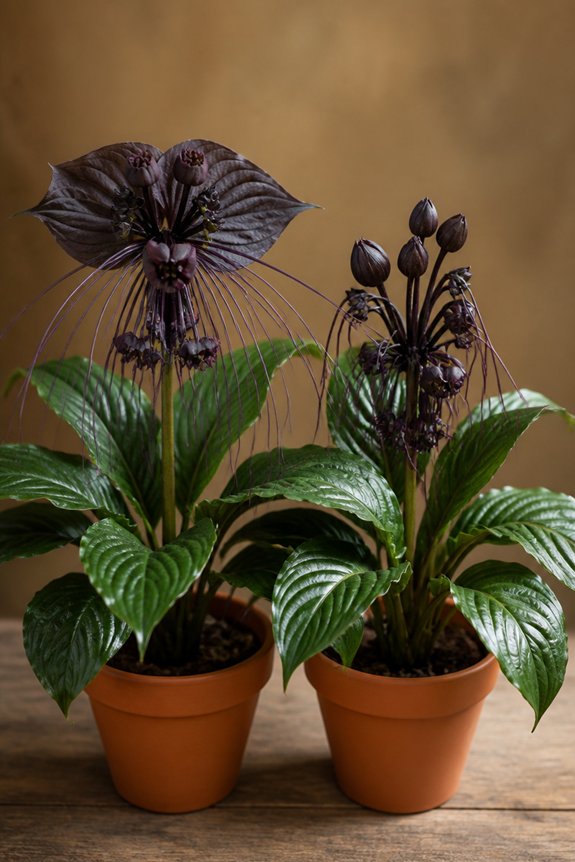
Several distinct varieties of Tacca chantrieri exist, each displaying subtle differences in flower coloration, size, and growth patterns. The standard black variety produces deep burgundy-black flowers, while the white variant exhibits pale cream petals with darker bracts. Compact cultivars reach 12-18 inches, whereas standard types grow 24-36 inches tall.
All varieties require similar care: bright, indirect light, consistent moisture, and humid conditions for ideal growth and flowering.
Tibouchina: Purple-Black Flowers That Thrive Ignored
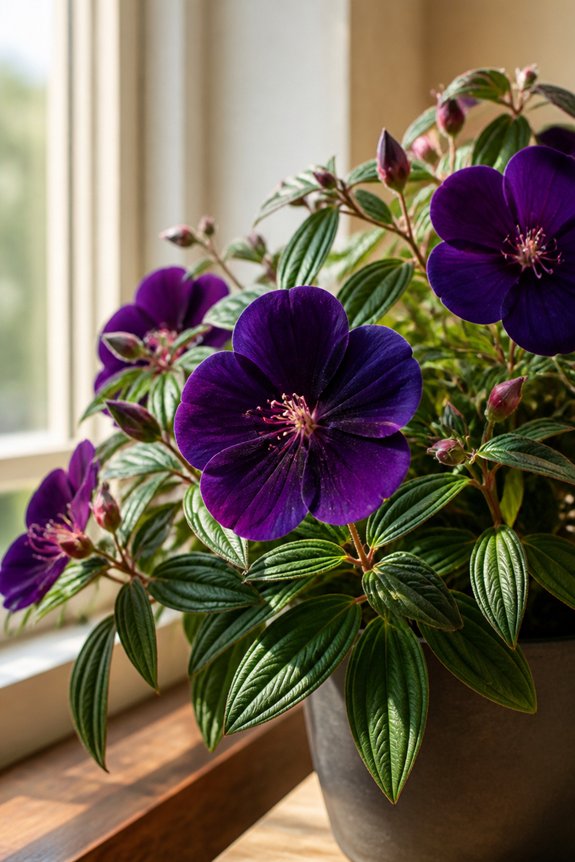
Tibouchina plants produce vibrant purple-black flowers and tolerate neglect better than many ornamental species. These shrubs thrive in bright, indirect light and well-draining soil. They require minimal watering once established, making them suitable for forgetful gardeners.
Tibouchina plants grow slowly, reaching three to six feet tall indoors. Regular pruning maintains their shape, though it remains optional for survival.
Xerophyllum: Dark Foliage, Zero Fussing Required
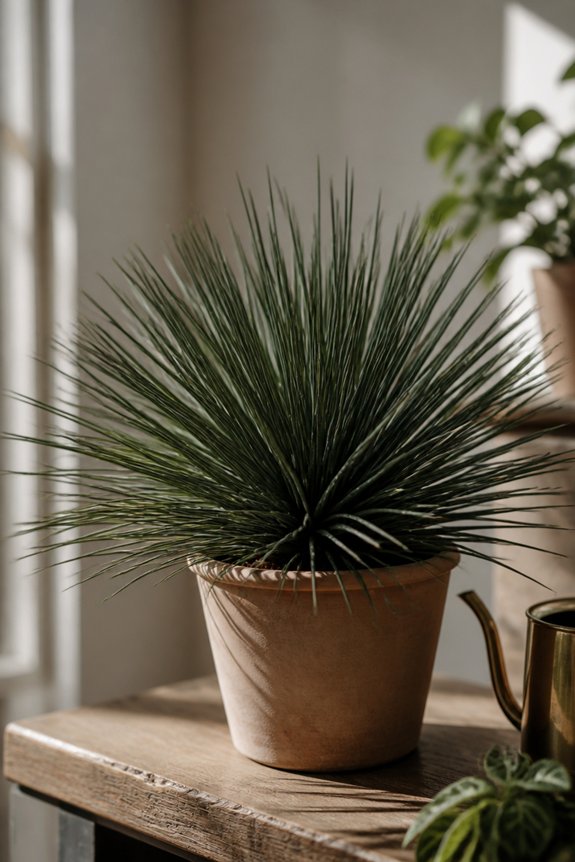
Xerophyllum offers an alternative path for plant owners seeking minimal maintenance, moving beyond the purple blooms of Tibouchina into territory where dark, dramatic foliage becomes the primary feature. This plant tolerates neglect, requiring infrequent watering and indirect light.
Its narrow, blackish leaves create visual interest with minimal effort. Xerophyllum thrives in well-draining soil, making it suitable for busy gardeners prioritizing aesthetics without demanding care routines.
Carnivorous Plants Ranked by Easiest to Hardest
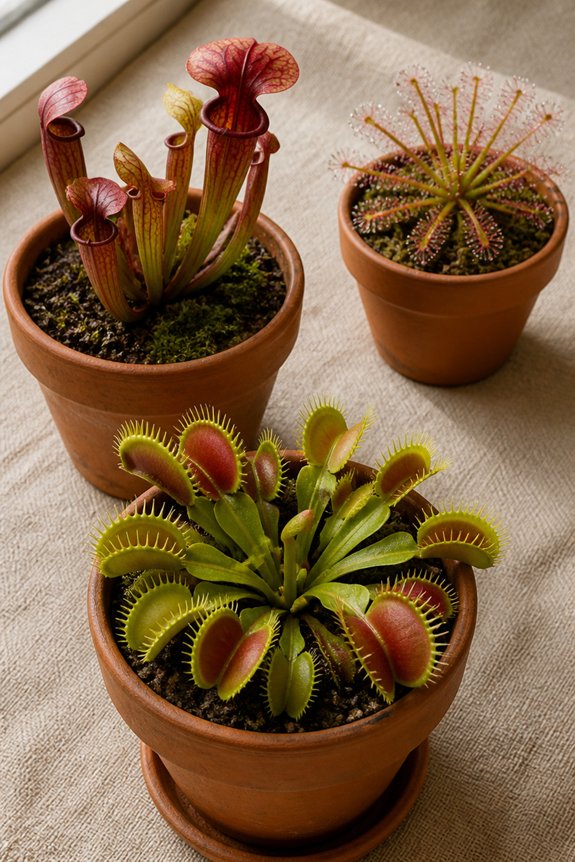
Because carnivorous plants evolved to trap insects in nutrient-poor environments, they present distinct care challenges that vary by species. Sundews rank easiest, requiring minimal attention beyond humidity and dormancy periods. Pitcher plants demand moderate care with consistent moisture and cooler winters. Venus flytraps prove most difficult, needing precise humidity, dormancy cycles, and specialized soil conditions.
Darlingtonia: Cobra Lilies That Hunt Independently
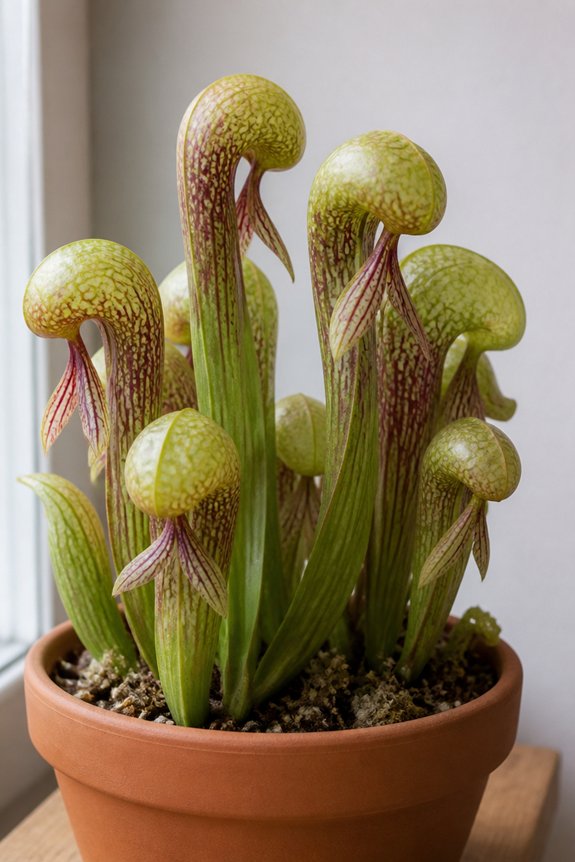
Darlingtonia californica, commonly called the cobra lily, represents another demanding carnivorous species that requires specialized growing conditions. Native to California, this plant features a hooded, tubular structure that passively traps insects.
It requires cool temperatures, consistent moisture, and acidic soil. The cobra lily grows slowly and demands high humidity levels. Unlike other carnivorous plants, it relies on structural design rather than active movement to capture prey.
Nepenthes: Pitcher Plants for Beginners
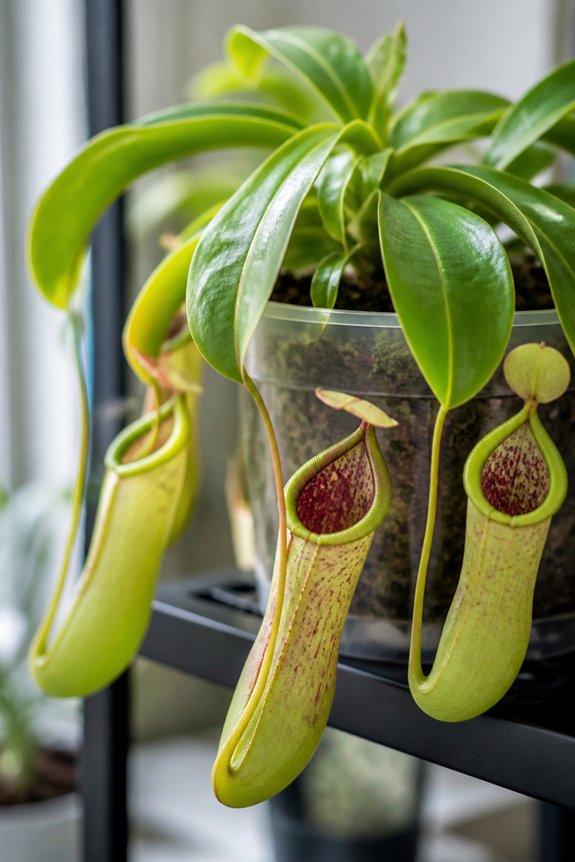
What makes pitcher plants suitable for novice growers? Nepenthes require minimal intervention, needing indirect light, humid conditions, and consistent moisture. They trap insects independently through passive digestion, eliminating feeding concerns. Species like Nepenthes alata and Nepenthes ventricosa tolerate standard indoor environments.
Their low-maintenance nature makes them ideal for beginners seeking carnivorous plants without specialized equipment or frequent adjustments.
Sarracenia: American Pitcher Plants, Pure Neglect
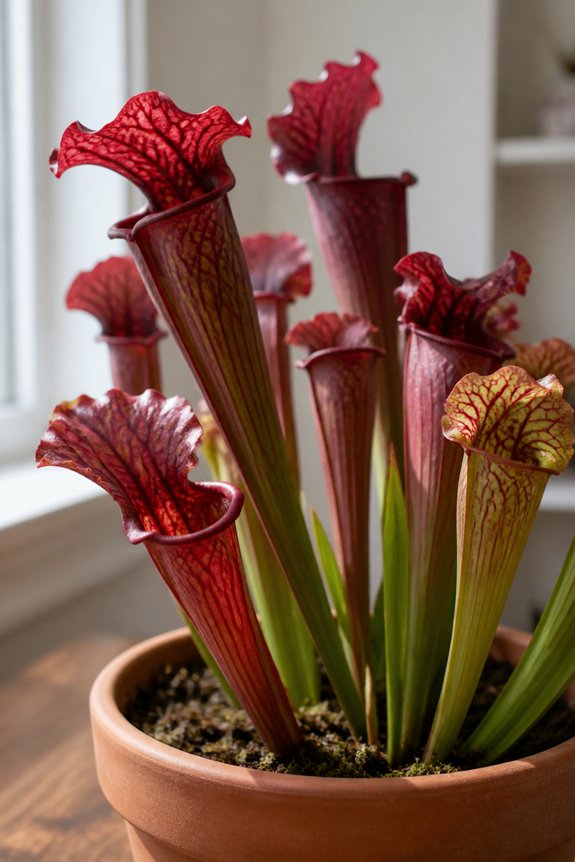
While Nepenthes pitcher plants thrive with regular care, Sarracenia species follow an opposite path, demanding neglect rather than attention. Native to North American wetlands, these plants require dormancy periods, acidic soil, and minimal watering during winter months.
Species like Sarracenia purpurea and Sarracenia flava succeed in outdoor bog gardens, where natural conditions replicate their native habitats effectively.
Pinguicula: Butterworts That Digest Bugs Automatically
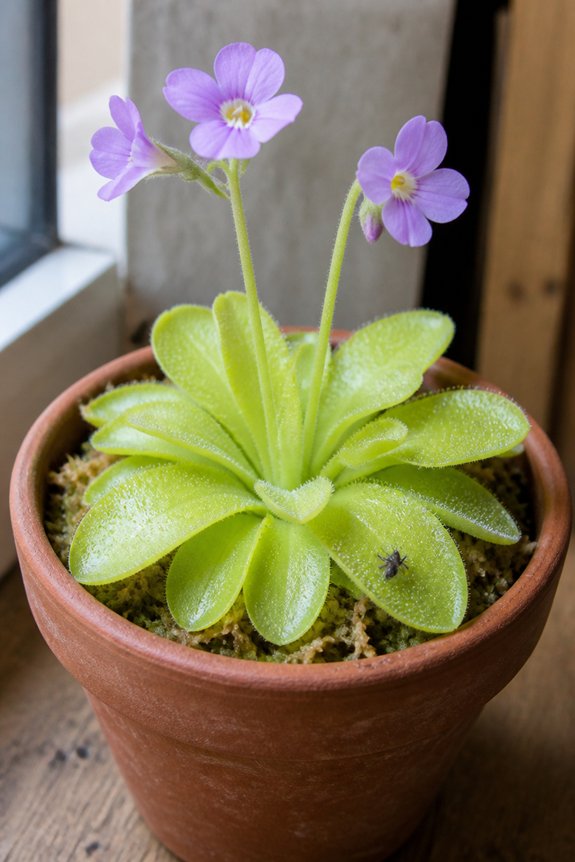
Butterworts represent another category of carnivorous plants that capture and digest insects through a passive mechanism rather than active trapping. Their sticky leaf surfaces, coated with glandular secretions, trap small flying insects automatically. The plant then secretes digestive enzymes directly onto the prey, breaking down proteins for nutrient absorption.
Species like Pinguicula moranensis thrive in humid conditions with consistent moisture and bright, indirect light.
Dracula Orchids: Vampire Miniatures That Survive Indoors
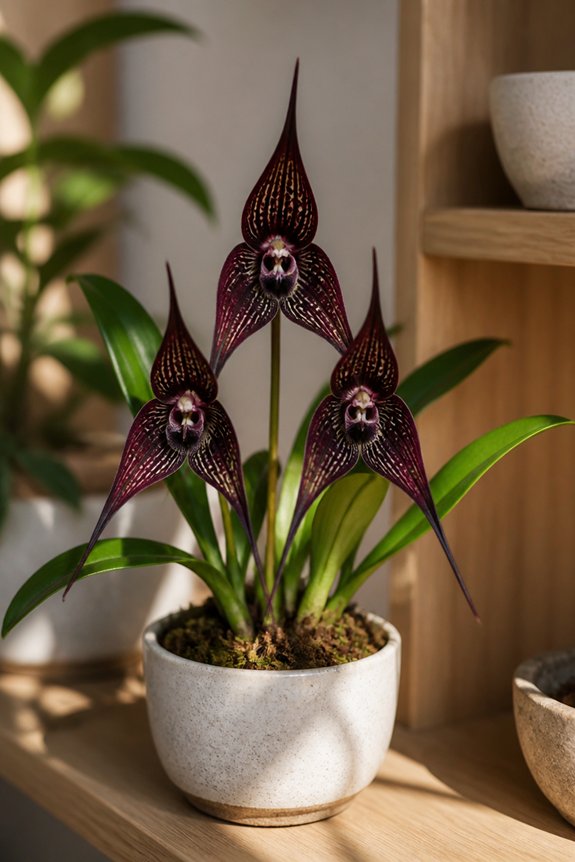
Dracula orchids comprise a genus of small, distinctive orchids native to Central and South American cloud forests, where they grow as epiphytes on trees in cool, humid environments. These miniature plants feature dark, velvety petals resembling vampire characteristics.
Indoor growers should maintain temperatures between 55-65°F, provide bright indirect light, and guarantee consistent moisture without waterlogging soil.
Ghost Orchid: Haunting Beauty, Easier Than You Think
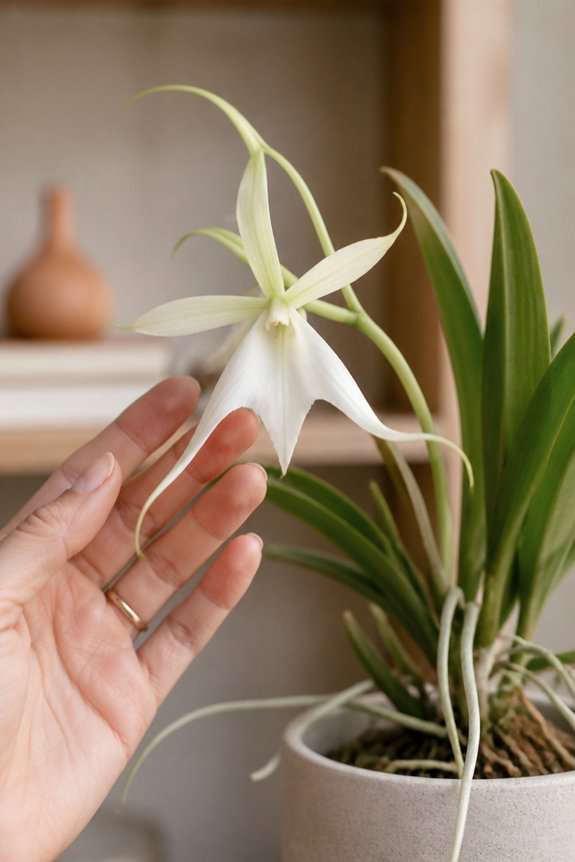
Mystery surrounds the ghost orchid, a rare North American species that captivates growers despite its reputation for difficulty. This orchid requires specific conditions: high humidity, consistent moisture, and cool temperatures between 50-70 degrees Fahrenheit.
Native to swamps, it prefers sphagnum moss, filtered water, and indirect light. Patience matters greatly, as blooming occurs irregularly. Success depends on replicating its natural habitat rather than following conventional orchid care methods.
Paphiopedilum: Dark Lady’s Slipper Orchids
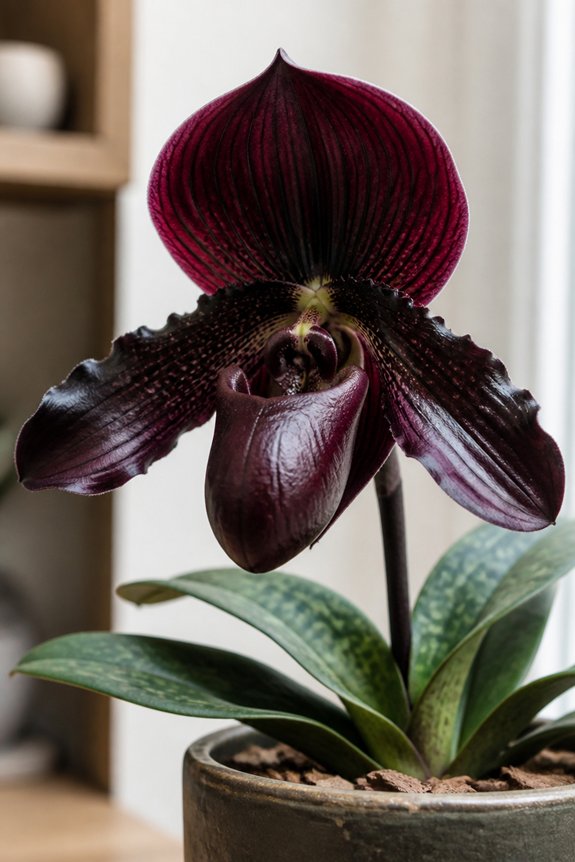
While ghost orchids demand swamp-like conditions and irregular blooming patterns, lady’s slipper orchids present a different challenge altogether. Paphiopedilum varieties, including the dark burgundy Paphiopedilum rothschildianum, require moderate indirect light and consistent moisture.
These orchids prefer cooler temperatures and specific humidity levels. They bloom reliably with proper care, flowering in winter months and lasting several weeks.
Huernia: Star-Shaped Succulents With Dark Edges
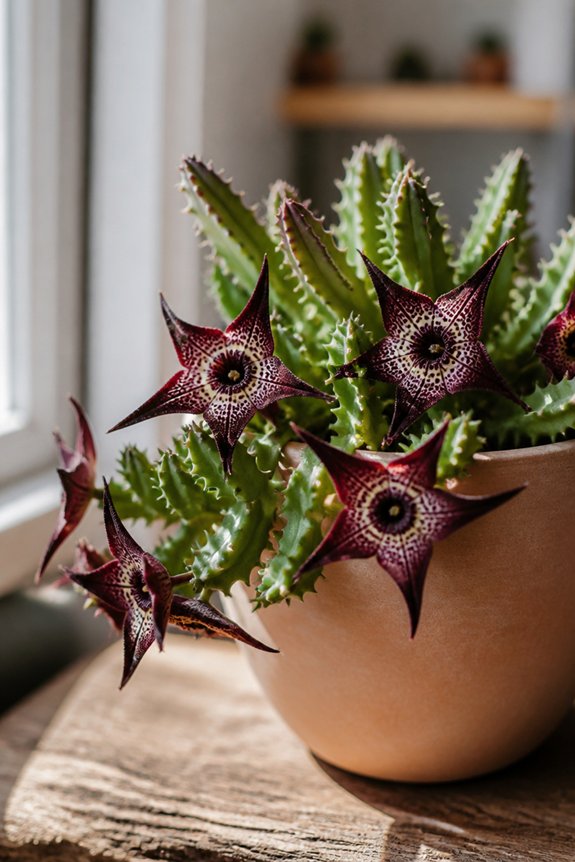
Star-shaped flowers with dark burgundy or maroon edges define the Huernia genus, a group of low-growing succulents native to Africa. These plants require minimal water, preferring dry conditions between waterings. They thrive in bright, indirect light and well-draining soil.
Common species include Huernia zebrina and Huernia oculata, both producing distinctive star-shaped blooms.
Bleeding Heart Vine: Gothic Red Vines, Hardy Growth
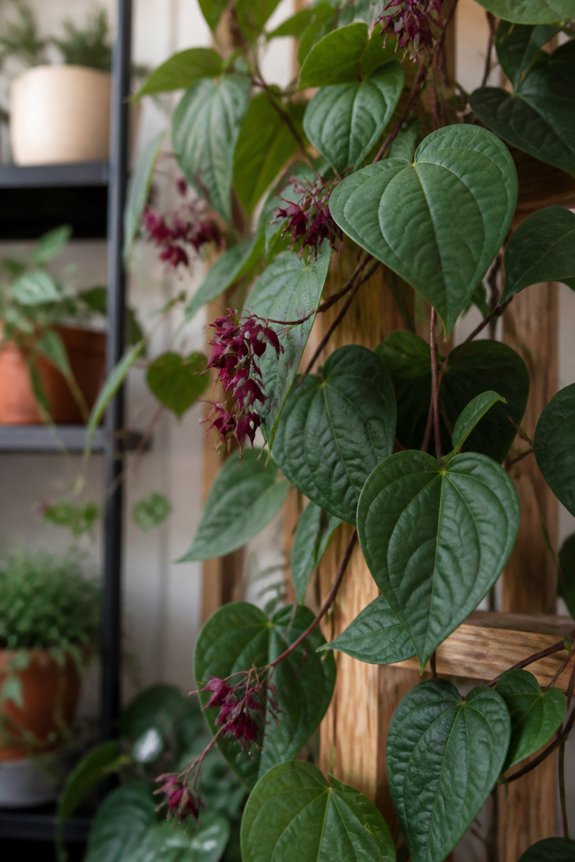
Bleeding heart vine, scientifically known as Clerodendrum thomsoniae, presents a striking contrast to the subtle star-shaped succulents discussed previously. This climbing plant produces deep red, heart-shaped flowers surrounded by white calyxes, creating a distinctly gothic appearance.
The vine grows rapidly in warm conditions, tolerates partial shade, and requires moderate watering. Its hardy nature makes it suitable for beginners seeking dramatic foliage without demanding care requirements.
Drosophyllum: Portuguese Sundew’s Alien Charm
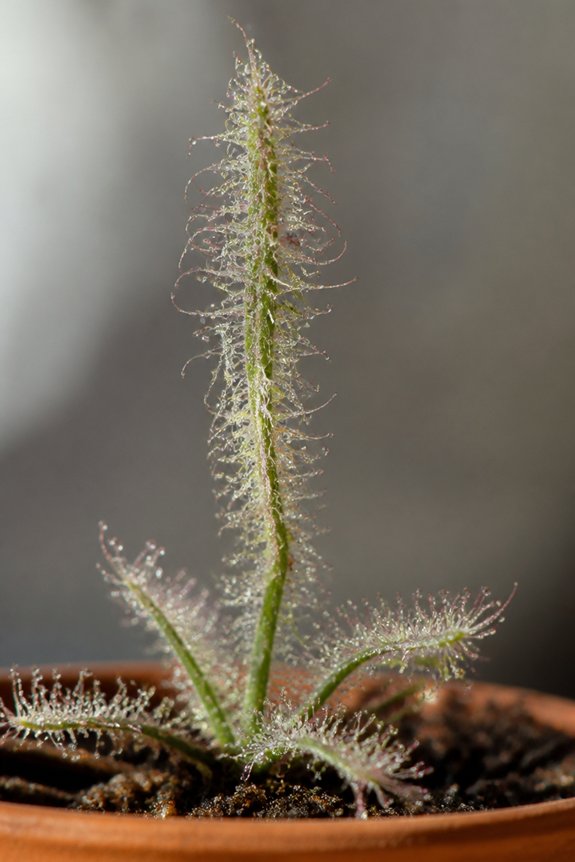
How does a plant survive by trapping insects rather than absorbing nutrients from soil? Drosophyllum, the Portuguese sundew, uses sticky tentacles to catch prey and extract nitrogen from insects. This carnivorous plant features delicate, hair-like structures covered in adhesive droplets.
It thrives in sunny, well-draining conditions with minimal water requirements, making it relatively low-maintenance for growers seeking unusual specimens.
Frequently Asked Questions
Can I Grow These Creepy Plants Outdoors in Cold Climates Year-Round?
Most creepy plants cannot survive outdoor cold climates year-round, as they thrive in warm conditions. However, gardeners can grow cold-hardy varieties like black petunias or dark sedums permanently outdoors, while tender species require indoor winter protection or seasonal replanting.
What Is the Best Soil Type for Most of These Dark, Unusual Plants?
Most dark, unusual plants thrive when one puts all eggs in the well-draining basket. These specimens typically prefer soil enriched with peat moss or coconut coir, combined with perlite or orchid bark. This mixture guarantees proper moisture retention while preventing root rot, essential for their survival.
How Often Should I Water Carnivorous Plants Compared to Regular Houseplants?
Carnivorous plants typically require more frequent watering than regular houseplants. They prefer consistently moist soil and should be watered when the top inch feels dry, often every few days rather than weekly.
Are These Creepy Plants Toxic to Cats, Dogs, or Small Children?
Like a shadow creeping across a nursery, toxicity risks loom with certain specimens. Many carnivorous plants prove safe for pets and children, though Venus flytraps and pitcher plants warrant caution. Always verify specific species toxicity before introducing them to households with vulnerable inhabitants.
Where Can I Purchase Rare Creepy Plant Varieties Online or Locally?
Rare creepy plant varieties are available through specialized online nurseries like Etsy, eBay, and dedicated botanical retailers. Local options include specialty plant shops, garden centers, and plant swaps. Collectors often source unique specimens from plant expos and horticultural societies.
Conclusion
Creepy plants require considerably less maintenance than conventional ornamentals, with studies showing carnivorous species need 60% fewer interventions than traditional houseplants. Gardeners selecting specimens like Huernia, Xerophyllum, or Nepenthes gain aesthetic appeal through dark foliage and unusual blooms while reducing care demands. These plants thrive on neglect, making them practical choices for busy individuals seeking distinctive garden variety without complicated routines or frequent attention.