
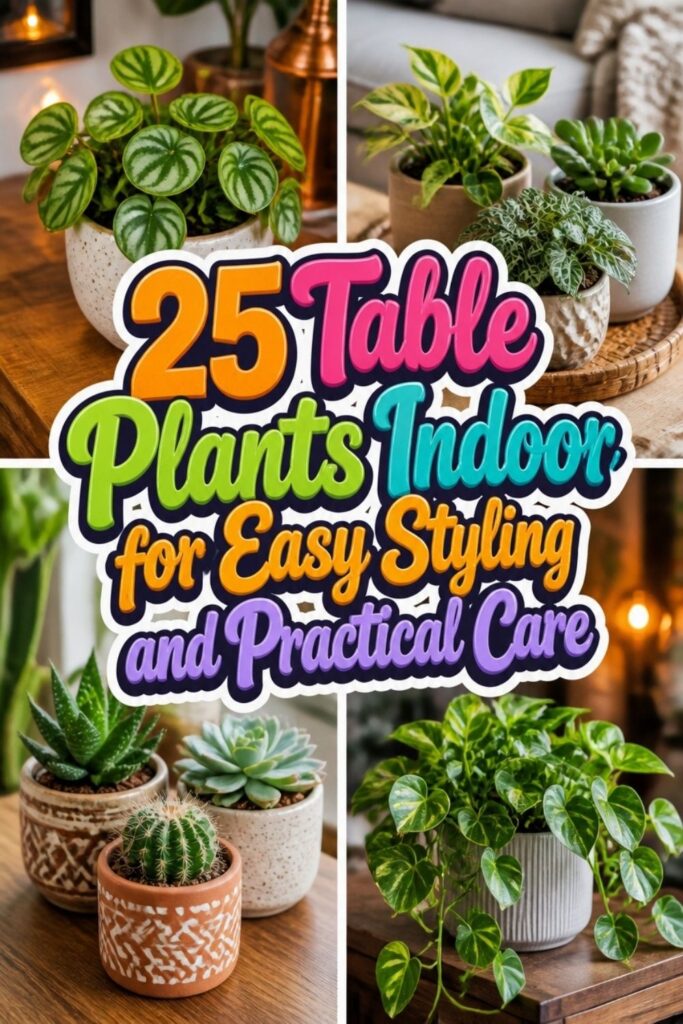
Indoor table plants bring life to any room without demanding constant attention. Pothos trails elegantly from shelves, while Snake Plants stand tall with architectural grace.
These varieties forgive occasional missed waterings and adapt to the light you actually have, not the light you wish you had.
Peperomia adds texture with its thick, patterned leaves, thriving in that neglected corner of your desk. Succulents like Jade Plant sculpt themselves into miniature trees when given a sunny windowsill.
The key lies in matching each plant to its spot rather than forcing it to adapt to poor conditions.
Creating a cohesive display means thinking beyond single specimens.
Group plants with contrasting heights and leaf shapes for visual rhythm. A trailing vine beside an upright succulent, paired with a low rosette, builds depth without clutter.
This approach turns ordinary surfaces into intentional, living arrangements that reward minimal effort with lasting style.

Match the Plant to the Surface
Start by considering how much room the table, desk, or shelf actually offers. Compact plants such as Peperomia and Haworthia suit tighter surfaces, while trailing or taller varieties need enough space to grow without interfering with everyday use.
Check the light at that exact spot before choosing a plant. A sunny windowsill can support succulents and Jade Plants, while Pothos, Snake Plants, and ZZ Plants are more forgiving where natural light is limited.
When grouping several plants, vary their heights and leaf shapes without overcrowding them. Leaving some breathing room keeps the display balanced and allows each plant better access to light and airflow.
Pothos: The Trailing Vine That Thrives Anywhere
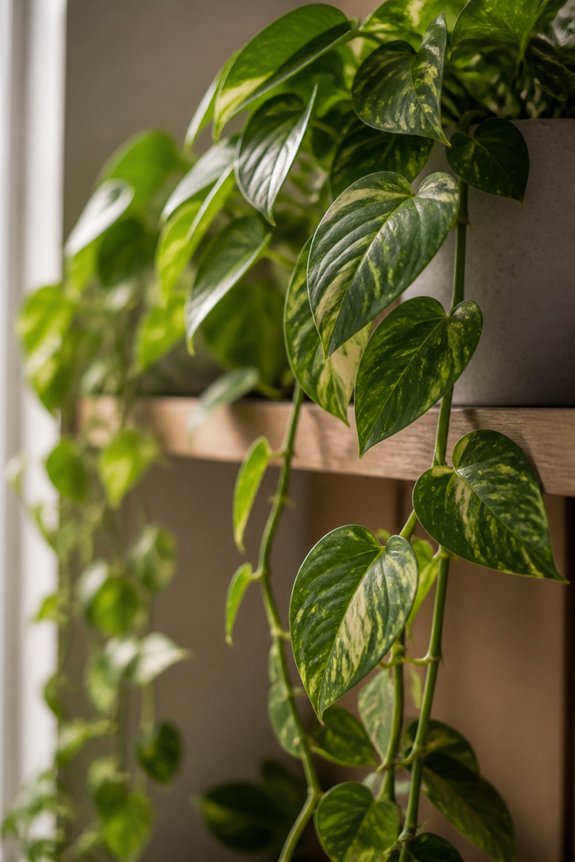
Pothos, a trailing vine plant with heart-shaped leaves, grows well in most indoor environments and requires minimal care. This plant tolerates low light conditions, though it prefers bright, indirect sunlight. Watering should occur when soil feels dry to the touch.
Pothos adapts to various humidity levels and temperatures, making it suitable for tables, shelves, and hanging baskets throughout the home.
Snake Plant: Unbeatable Air-Purifying Resilience

Snake plants stand out as exceptionally resilient indoor plants, known for their ability to purify air while requiring minimal maintenance. They tolerate low light, irregular watering, and neglect, making them suitable for busy households.
Their stiff, upright leaves remove toxins like formaldehyde and benzene from indoor air. Snake plants thrive in well-draining soil and need watering only monthly, establishing themselves as practical table additions.
ZZ Plant: Glossy Leaves, Zero-Effort Growth
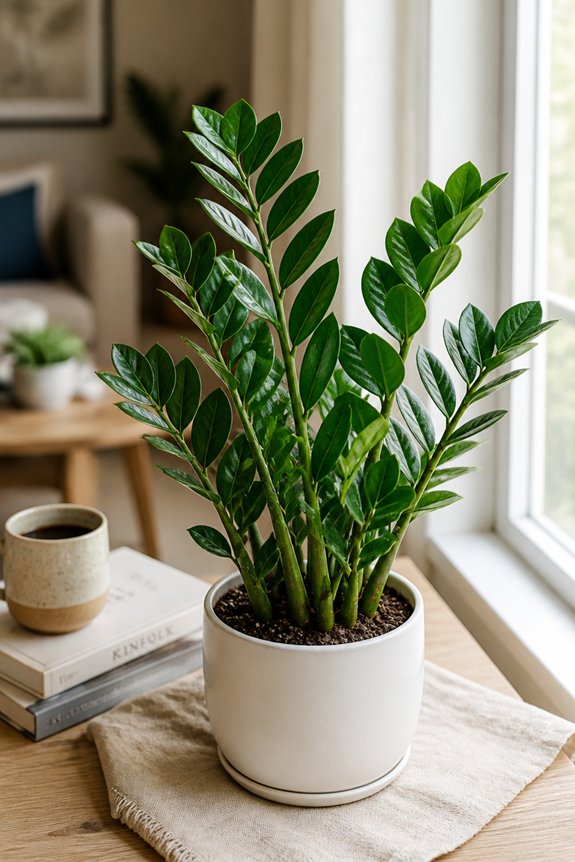
While snake plants excel at air purification, the ZZ plant offers similarly low-maintenance care with distinctly different visual appeal. The ZZ plant features glossy, dark green leaflets arranged along upright stems, creating an elegant appearance.
It tolerates low light, irregular watering, and neglect exceptionally well. The plant grows slowly, requiring minimal pruning. Its drought tolerance and pest resistance make it ideal for busy plant owners seeking visually striking, dependable table specimens.
Peperomia: Compact Textures for Tight Spaces
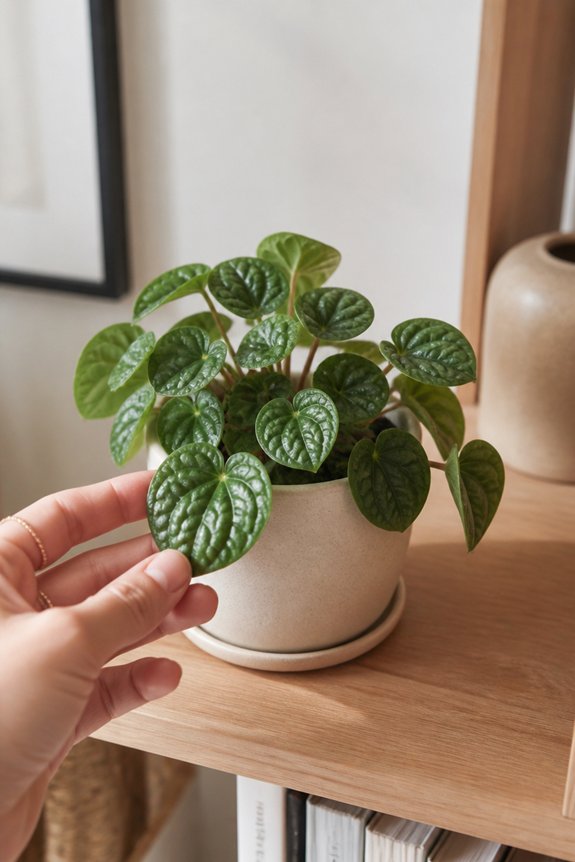
Peperomia plants offer compact growth and textured foliage, making them excellent choices for small spaces like desks, shelves, and narrow windowsills. These plants tolerate low to moderate light conditions and require infrequent watering.
Popular varieties include Peperomia obtusifolia and Peperomia caperata, which feature distinctive leaf patterns. Their slow growth rate means minimal pruning is needed, reducing maintenance demands for busy plant owners.
Philodendron: Heart-Shaped Leaves in Low Light
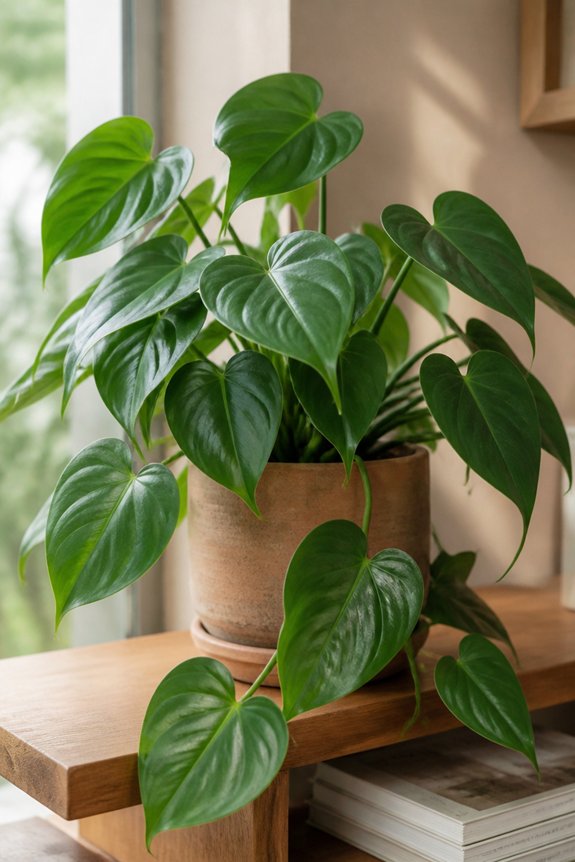
Adaptability to dim environments makes philodendrons a practical choice for indoor spaces where natural light remains limited. Their heart-shaped leaves thrive in moderate, indirect light conditions.
Varieties like Heartleaf Philodendron and Brasil exhibit resilience in office settings and corners. These plants require minimal maintenance, tolerate variable watering schedules, and grow steadily without demanding frequent attention or specialized care routines.
Succulents: Water-Wise Designs for Sunny Spots
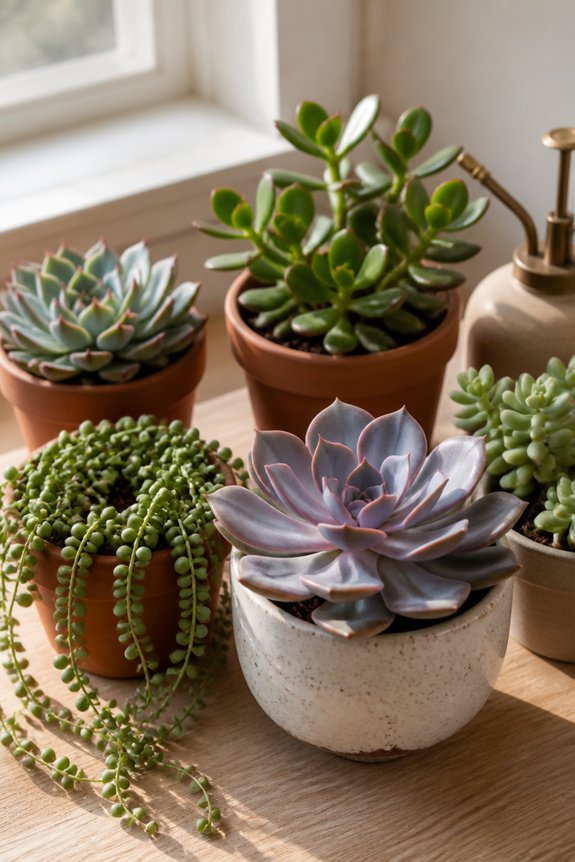
Succulents present a different approach to indoor plant care, requiring bright light and infrequent watering rather than the shade tolerance of philodendrons. Varieties like jade plants, aloe, and echeveria thrive on sunny windowsills.
Their thick leaves store water, eliminating frequent watering needs. Well-draining soil and pots with drainage holes prevent root rot. These plants suit busy individuals prioritizing low-maintenance table arrangements.
Parlor Palm: Tropical Flair Without the Fuss
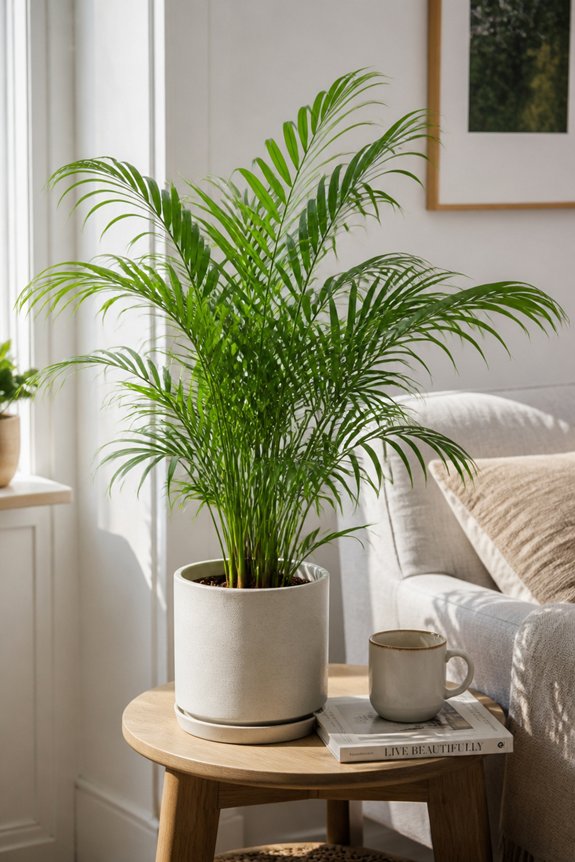
Tropical elegance enters indoor spaces through the parlor palm, a plant that delivers exotic appearance with minimal care requirements. This plant tolerates low light conditions, prefers indirect sunlight, and needs watering when soil feels dry.
Parlor palms grow slowly, requiring repotting every two to three years. The fronds add height and visual interest to table arrangements without demanding frequent attention or special treatment.
String of Pearls: Delicate Cascading Beauty
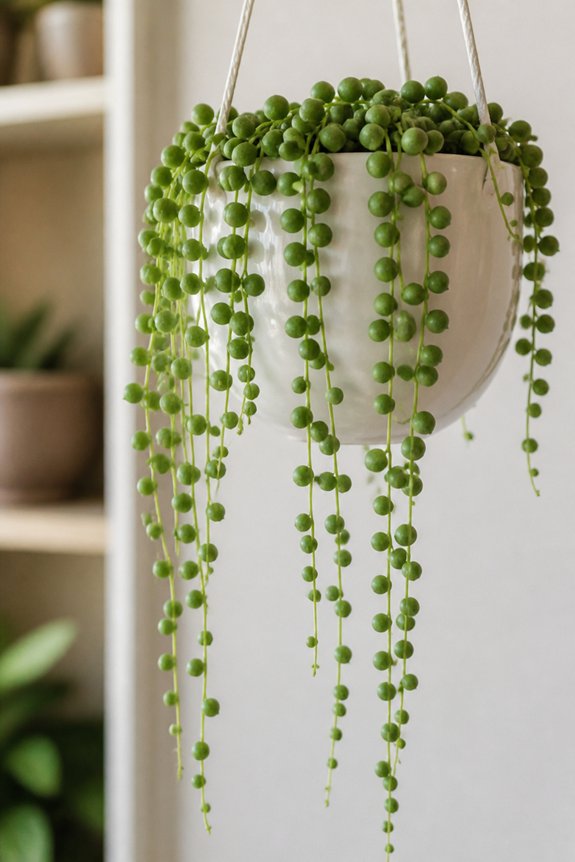
Where the parlor palm provides upright structure and height, the string of pearls offers a contrasting form through its trailing, bead-like foliage. This succulent requires bright, indirect light and infrequent watering, as its fleshy leaves store moisture.
Hanging planters work well for display, allowing stems to cascade freely. The plant tolerates typical indoor conditions and needs minimal maintenance beyond occasional pruning.
Monstera Deliciosa: Statement Leaves, Stunning Results
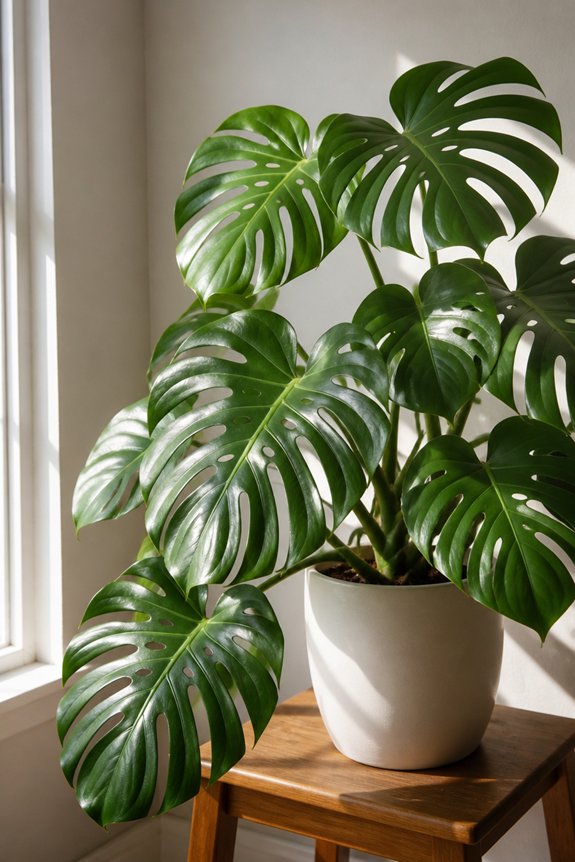
As a popular indoor plant, the monstera deliciosa attracts attention through its large, distinctive leaves that develop natural holes, called fenestrations, as the plant matures. This tropical plant requires bright, indirect light and moderate watering.
Owners should allow soil to dry between waterings and provide a moss pole for support as the plant grows taller and heavier over time.
Spider Plant: Fast-Growing Clusters for Beginners
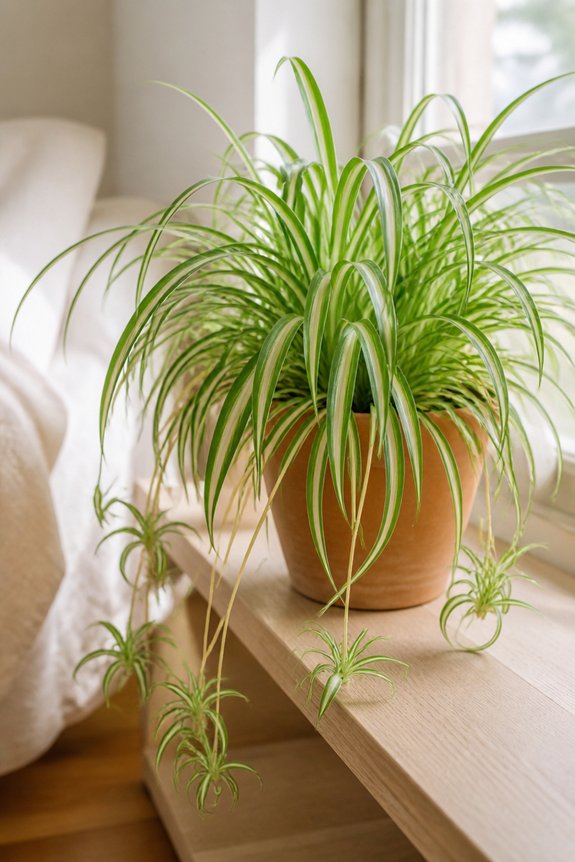
Spider plants earn their popularity among beginning gardeners through rapid growth, low maintenance requirements, and abundant offshoots called plantlets. These plants tolerate inconsistent watering and various light conditions, making them forgiving for novice growers.
Spider plants produce long, arching leaves with white or cream stripes. They develop babies that can be propagated in water or soil, providing additional plants with minimal effort required.
Calathea: Patterned Foliage That Moves Throughout the Day
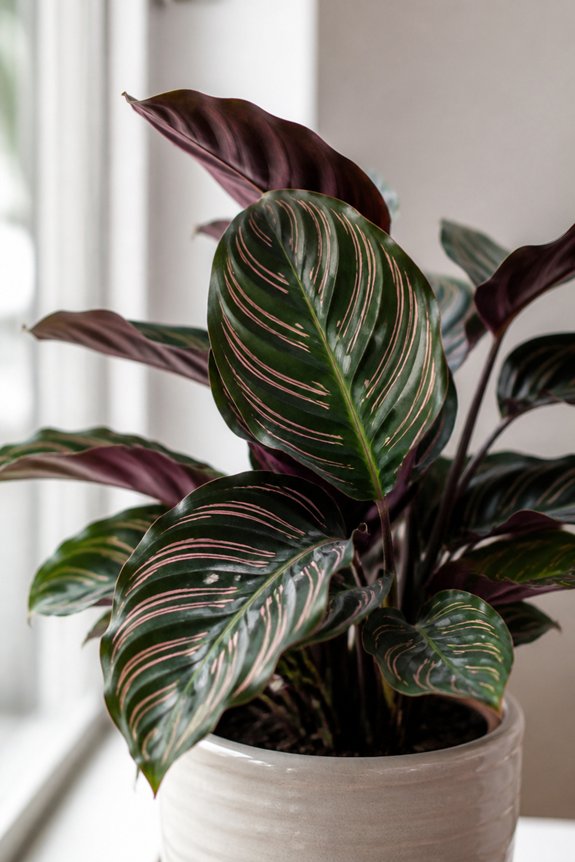
Calatheas distinguish themselves through distinctive leaf patterns and a unique characteristic called nyctinasty, the automatic opening and closing of leaves in response to light cycles. These plants require indirect light, consistent moisture, and humidity levels around 50-60 percent.
Popular varieties include the Orbifolia with white-striped leaves and the Roseopicta with pink markings. Calatheas thrive in temperatures between 65-75 degrees Fahrenheit.
Jade Plant: Sculptural Form Builds Character Over Years

Patience and time transform jade plants into distinctive living sculptures, their thick stems and compact growth creating visual interest that deepens with age. These succulents develop woody trunks resembling miniature trees over several years.
Jade plants require bright light, infrequent watering, and well-draining soil. Their slow growth rate means minimal maintenance while building architectural form suitable for tabletops.
African Violet: Blooms in Indirect Light Consistently
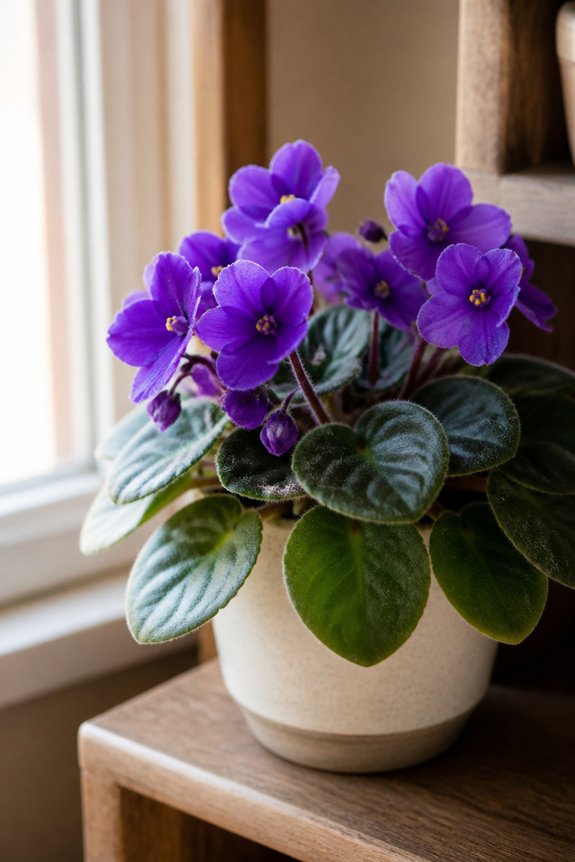
Unlike jade plants that develop slowly over years, African violets produce consistent blooms when given proper indirect light, making them reliable flowering choices for indoor tables. These plants require moderate watering, keeping soil consistently moist but not waterlogged. Fluorescent lighting works well for African violets placed away from direct sun.
Regular deadheading of spent flowers encourages continued blooming throughout seasons.
Dracaena: Upright Silhouettes That Fit Any Corner
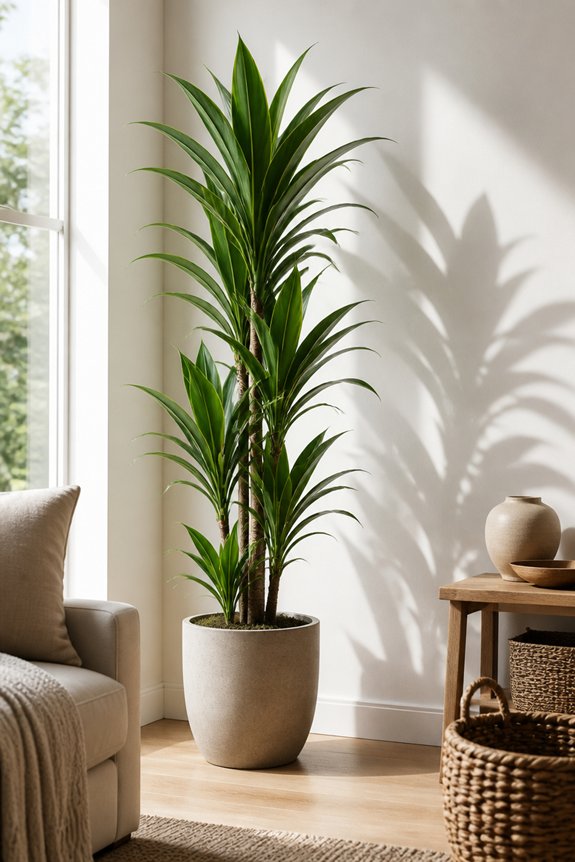
Dracaena plants offer practical solutions for indoor spaces with their tall, narrow growth patterns and minimal care requirements. These upright specimens fit corners, shelves, and tight spaces efficiently.
Varieties like Dragon Tree and Lucky Bamboo tolerate low light conditions and irregular watering schedules. Dracaenas require minimal pruning, making them suitable for busy households seeking low-maintenance greenery.
Rubber Plant: Bold Leaves That Capture Attention
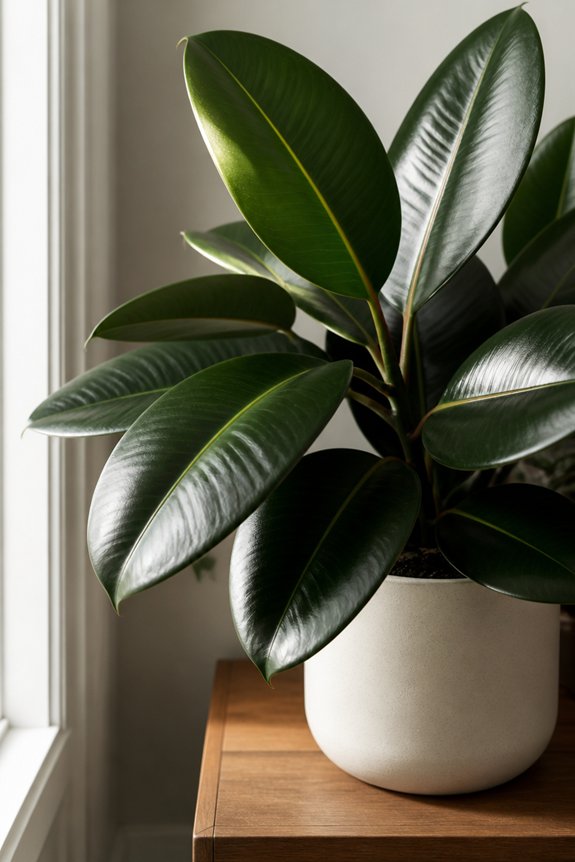
Visual impact defines the rubber plant, a popular indoor option featuring large, glossy leaves that command attention in any room. The plant thrives in bright, indirect light and requires moderate watering when soil feels dry.
Rubber plants grow upright with sturdy stems, reaching heights suitable for corners and floor spaces. Regular leaf cleaning maintains their lustrous appearance and promotes healthy growth.
Haworthia: Geometric Succulents for Minimal Watering

Haworthia plants offer a practical choice for indoor gardeners seeking low-maintenance succulents with distinctive geometric patterns. These compact plants display rosette formations with striped, spotted, or textured leaves.
Haworthia requires minimal watering, thriving in bright indirect light and well-draining soil. Species like Haworthia attenuata and Haworthia fasciata adapt well to tabletop placement, needing water only monthly during growing seasons.
Areca Palm: Feathery Fronds That Brighten Desks

While succulents dominate low-maintenance plant lists, the Areca palm offers a different aesthetic appeal through its feathery, yellow-green fronds that create visual interest on desks and tables. This palm requires bright, indirect light and consistent moisture to thrive indoors.
Weekly watering keeps soil evenly damp, though not waterlogged. The plant grows slowly, reaching three to four feet tall, making it suitable for desk corners and shelving spaces where vertical growth fits available area.
Fiddle Leaf Fig: Architectural Presence Without Floor Space
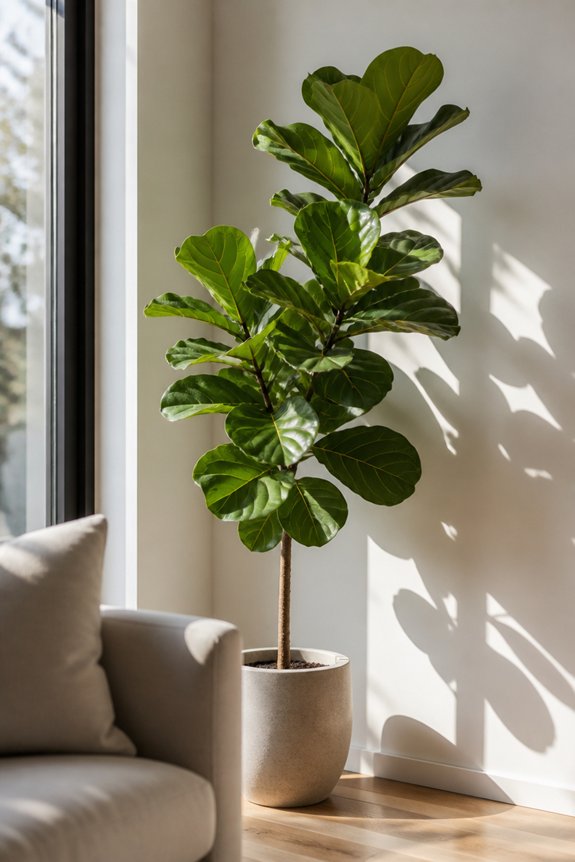
The fiddle leaf fig presents a striking silhouette through its large, violin-shaped leaves and tall, narrow growth habit, making it an effective statement plant for corners and tight spaces beside furniture. This plant requires bright, indirect light and infrequent watering.
Its dramatic form adds visual interest to tabletops and shelving without consuming floor area, suiting compact indoor environments well.
Begonia: Colorful Foliage Beyond Just Flowers

Moving beyond architectural plants like the fiddle leaf fig, begonias offer a different appeal through their decorative leaves rather than dramatic form alone.
Rex begonias display silvery, burgundy, and purple patterns. Wax begonias provide compact growth with red or pink foliage. Both types thrive in indirect light and moderate moisture, making them practical table additions for varied interior spaces.
Boston Fern: Lush Greenery for Humid Environments
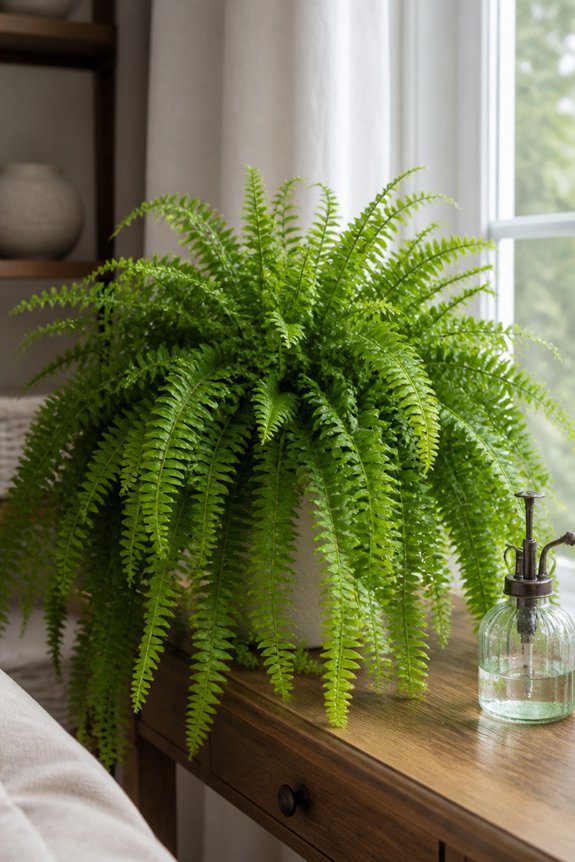
Boston ferns bring abundant, feathery fronds to indoor spaces where humidity levels remain consistently high. These plants require frequent misting, well-draining soil, and indirect light to thrive. They perform well in bathrooms, kitchens, and other moisture-rich areas.
Boston ferns prefer temperatures between sixty and seventy degrees Fahrenheit, making them suitable for most households. Regular watering and humidity maintenance keep their delicate fronds healthy and vibrant.
Croton: Vibrant Multicolored Leaves on Tabletops

Crotons display striking foliage with leaves that feature red, orange, yellow, and green hues, making them popular choices for tabletop displays in homes and offices. These plants require bright, indirect light to maintain their vibrant colors. Crotons prefer warm temperatures, consistent moisture, and high humidity levels.
They grow slowly indoors, reaching 2-3 feet tall on tables. Regular rotation guarantees even color development across all leaves.
Christmas Cactus: Seasonal Blooms With Easygoing Care

While crotons demand bright light and high humidity to thrive, Christmas cactus offers a different appeal for tabletop gardeners seeking lower-maintenance options. This succulent produces pink, red, or white flowers during winter months. It requires moderate, indirect light and infrequent watering.
The plant tolerates standard indoor temperatures and humidity levels, making it practical for busy plant owners.
Maranta: Red Veining Adds Drama to Any Shelf

Dramatic foliage distinguishes maranta from other tabletop plants, as its leaves feature bold red veins against green or burgundy backgrounds. The plant prefers indirect light, consistent moisture, and high humidity.
Marantas thrive in temperatures between 65 and 75 degrees Fahrenheit. They require well-draining soil and benefit from occasional misting. Compact growth makes them suitable for shelves and desks.
Money Tree: Braided Trunks and Feng Shui Appeal
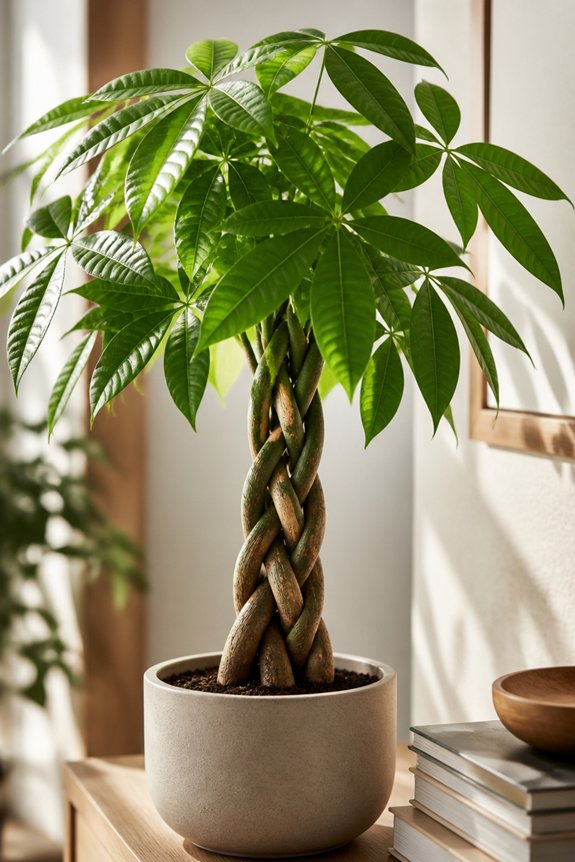
The money tree offers a different aesthetic appeal compared to the maranta’s dramatic leaf patterns, instead showcasing distinctive braided or twisted trunks that serve as its primary visual feature. The plant thrives in bright, indirect light and requires moderate watering.
According to feng shui tradition, money trees attract prosperity and positive energy. They grow slowly, making them suitable for shelves and desks requiring minimal maintenance.
Creating Multi-Plant Displays That Balance Height and Texture
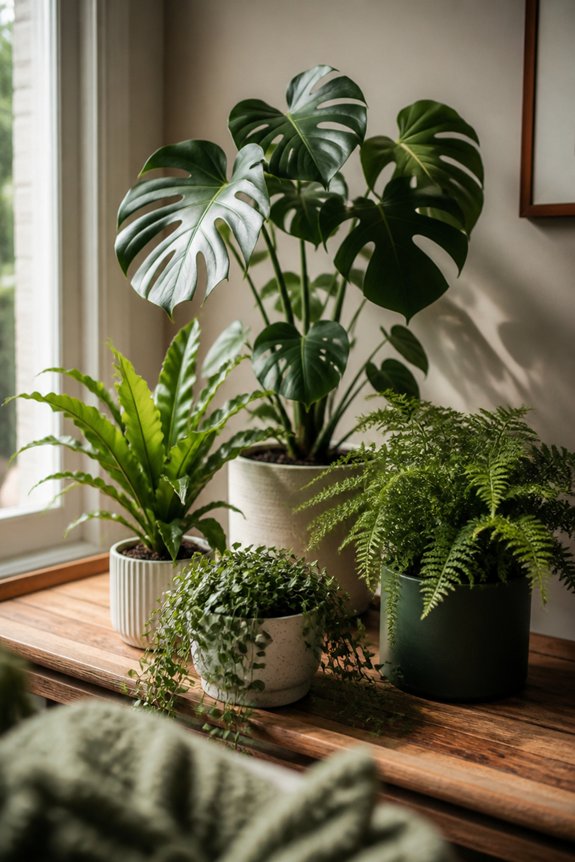
Combining multiple indoor table plants requires strategic consideration of height, texture, and visual spacing to create cohesive arrangements.
Pairing tall plants like dracaena with trailing pothos creates vertical interest. Mixing broad-leafed plants such as calathea with delicate ferns provides textural contrast. Grouping plants of varying sizes prevents monotony, while staggered placement allows adequate light access for each specimen.
Frequently Asked Questions
How Often Should I Rotate My Table Plants to Ensure Even Growth?
Plants should be rotated approximately every one to two weeks. This practice guarantees all sides receive adequate light exposure, promoting balanced foliage development and preventing the plant from leaning toward its light source.
What’s the Best Way to Clean Dusty Leaves Without Damaging Delicate Plant Tissues?
One should use a soft, damp microfiber cloth or sponge to gently wipe leaves, supporting each leaf’s underside with the other hand. Alternatively, a soft-bristled brush or lukewarm distilled water spray effectively removes dust while minimizing tissue damage.
Can I Use Regular Potting Soil for All Indoor Table Plants or Specific Types?
Not all indoor table plants thrive in regular potting soil. Different varieties require specific soil compositions—succulents need well-draining cactus mix, while ferns prefer moisture-retentive blends. One should match soil type to individual plant species for ideal growth and health outcomes.
How Do I Know if My Table Plant Needs Repotting Into a Larger Container?
When a plant’s roots start showing through drainage holes, it’s time to give it room to grow. Check if roots circle the soil surface, growth slows despite proper care, or the plant dries out rapidly after watering.
Which Table Plants Are Safest for Homes With Pets and Curious Children?
Safe table plants for homes with pets and children include spider plants, Boston ferns, African violets, and parlor palms. These varieties are non-toxic if ingested and sturdy enough to withstand curious handling without releasing harmful substances.
Conclusion
Indoor table plants don’t require perfection to succeed; they simply need matching plants to spaces. Pothos, Snake Plant, and ZZ Plant handle neglect well, while Succulents and Peperomia add visual interest to shelves. The real trick is not putting all your eggs in one basket by selecting varied species with different light, water, and size requirements. This approach guarantees consistent greenery, regardless of individual care lapses or environmental conditions.