

Fairy gardens demand careful plant choices that blend visual charm with realistic upkeep. Ground covers such as moss and baby tears establish that essential carpet-like foundation, while creeping fig and similar climbers introduce welcome vertical interest.
Succulents bring invaluable drought tolerance to the mix, and fragrant herbs like elfin thyme engage the senses on multiple levels.
Some plants inevitably falter in challenging spots, making smart substitutions a necessary skill. The difference between a thriving miniature landscape and a disappointing one often comes down to matching the right species to the right conditions.
Observation and flexibility matter more than rigid adherence to any single design.
Thoughtful selection pays dividends over time. A fairy garden built on this understanding rewards its keeper with sustained beauty rather than constant struggle.


Design Around the Growing Conditions
Start by deciding where the fairy garden will live before choosing plants for appearance alone. A shaded, moist setting suits moss and miniature ferns, while sunny, drier areas are better matched with thyme, sedums, and other drought-tolerant choices.
Group plants that prefer similar light and moisture levels. Combining a moisture-loving ground cover with a succulent in the same tiny container can make watering unnecessarily difficult.
Leave a little growing room around paths, houses, and other miniature features. Creeping and trailing plants can spread surprisingly quickly, so occasional trimming will help preserve the scale and details of your design.
Moss: Low-Maintenance Foundation for Every Fairy Garden

Because moss requires minimal care and grows in varied conditions, it serves as an ideal base layer for fairy gardens. Moss thrives in shaded, moist areas, making it suitable for woodland-themed designs. Common varieties include sheet moss and sphagnum moss.
These plants need no fertilizer, tolerate poor soil, and spread naturally across garden surfaces, providing soft ground cover for miniature pathways and structures.
Creeping Fig: Delicate Vines for Enchanted Spaces
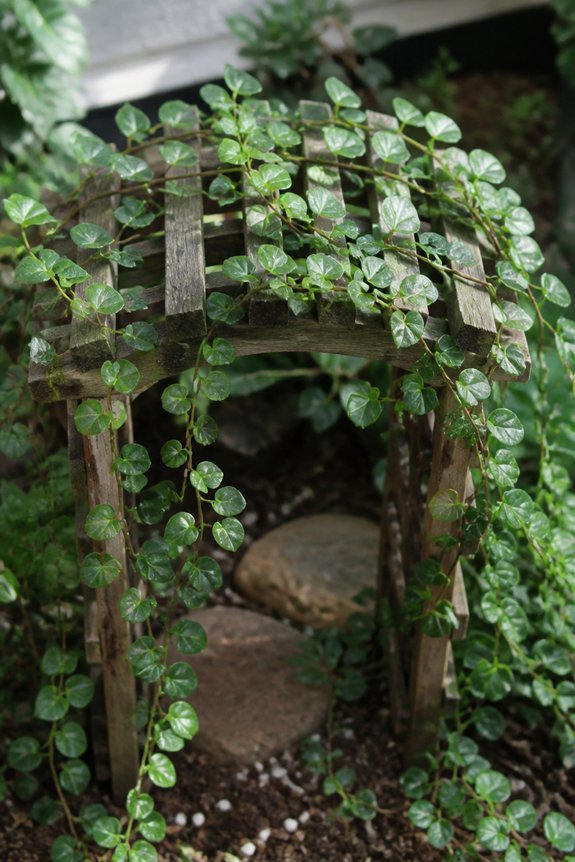
While moss creates the foundational ground cover for fairy gardens, creeping fig offers vertical interest and delicate foliage that enhances woodland and cottage-themed designs. This plant produces small, heart-shaped leaves and grows along structures, trellises, and miniature walls.
Creeping fig prefers indirect light, consistent moisture, and well-draining soil. It adapts well to container gardens and requires minimal pruning to maintain desired shapes and sizes.
Baby Tears: Ethereal Ground Cover With Minimal Care
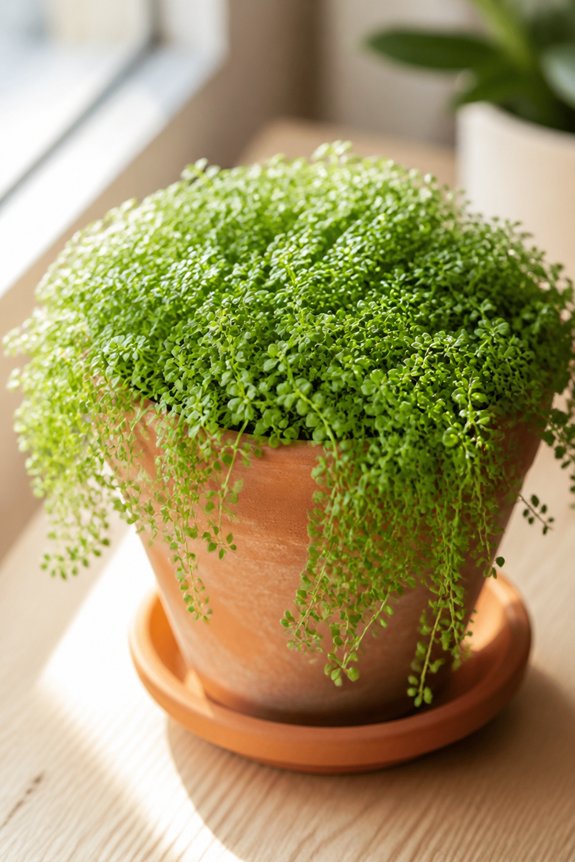
As a delicate alternative to moss, baby tears plant serves as an excellent ground cover for fairy gardens, offering fine, thread-like foliage that creates a soft, carpet-like appearance. This plant requires moderate indirect light, consistent moisture, and high humidity to thrive.
Baby tears spreads slowly, filling spaces between rocks and miniature structures naturally. It tolerates crowded conditions well, making it practical for compact fairy garden designs.
Miniature Ferns: Creating a Forest Floor Effect
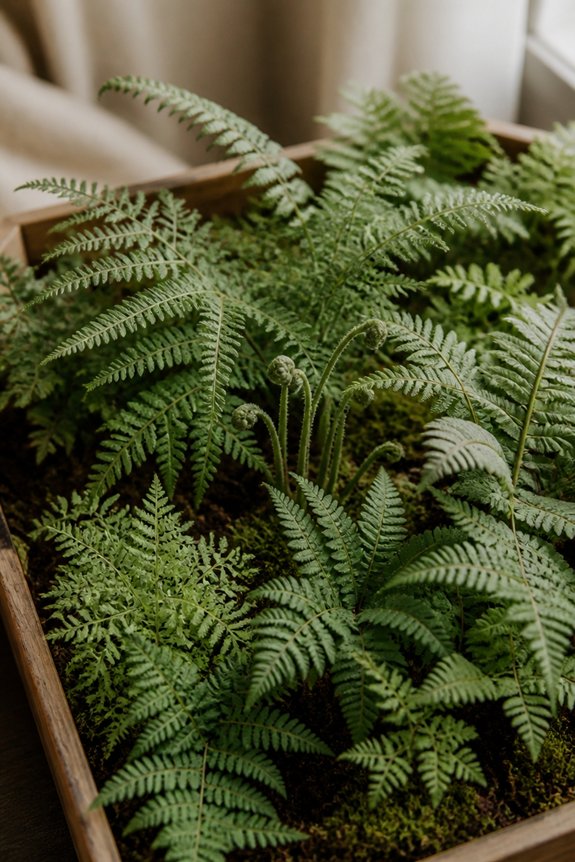
Miniature ferns bring woodland authenticity to fairy gardens through their delicate, feathery fronds and shade-tolerant nature. Species like maidenhair fern and button fern thrive in moist, indirect light conditions. These plants establish layered forest effects when grouped densely together.
They require consistent moisture, well-draining soil, and humidity. Placement in shaded garden corners mimics natural woodland habitats effectively.
Scotch Moss: Hardy Ground Cover That Stays Lush
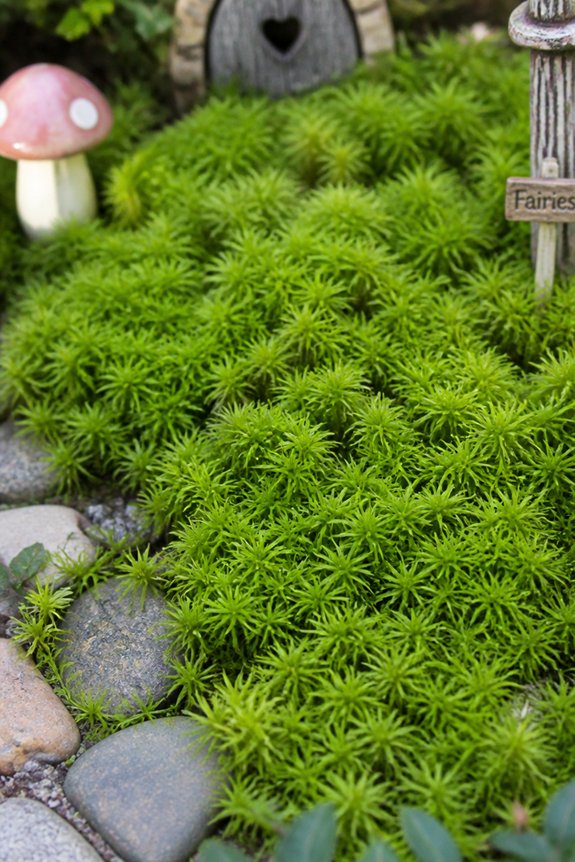
Scotch moss, despite its name, is not a true moss but rather a low-growing plant that functions exceptionally well as ground cover in fairy gardens. It thrives in moist soil, spreads quickly, and requires minimal maintenance. The dense, emerald foliage creates texture between miniature trees and structures.
Scotch moss tolerates partial shade, grows in acidic conditions, and resists most pests effectively.
Irish Moss: Soft, Cushioned Pathways for Tiny Feet

Irish moss offers another ground cover option for fairy gardens, creating soft, cushioned surfaces that complement pathways and open spaces. This low-growing plant reaches approximately one to two inches tall, forming dense mats.
Irish moss tolerates partial shade and prefers moist, well-draining soil. It spreads gradually, making it suitable for small garden areas. Regular watering maintains its lush appearance throughout growing seasons.
Elfin Thyme: Fragrant Creeping Plant With Character

A fragrant creeping plant with tiny leaves and delicate flowers, elfin thyme brings both sensory appeal and practical benefits to fairy gardens. This low-growing variety spreads horizontally, creating dense mats across garden floors.
The plant tolerates poor soil, requires minimal watering, and attracts pollinators. Its purple or pink blooms appear in summer months. Elfin thyme thrives in sunny locations with well-draining soil.
Sedum: Easy-Care Succulents for Compact Spaces
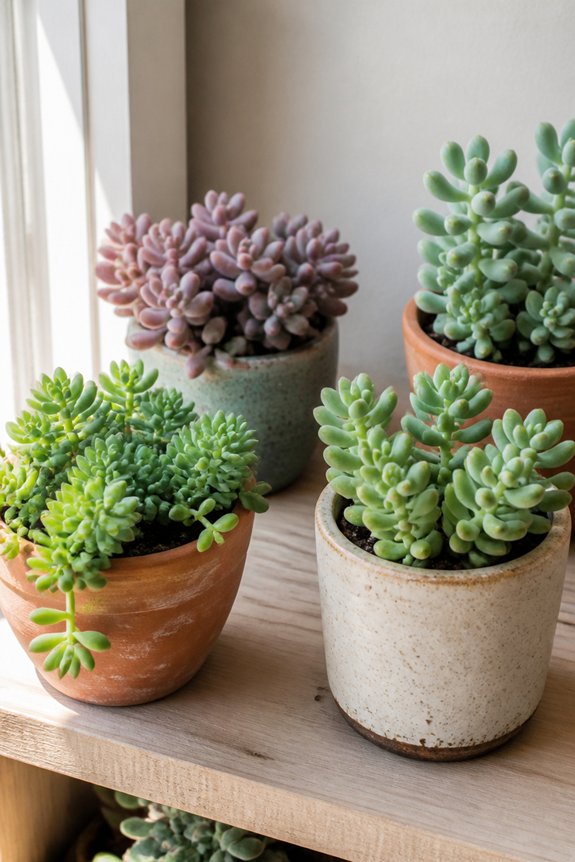
Sedums offer another low-maintenance option for fairy gardens, building on the success of creeping plants like elfin thyme. These succulents require minimal water, thrive in poor soil, and tolerate shade or sun. Popular varieties include Dragon’s Blood, with red foliage, and Autumn Joy, which changes color seasonally. Sedums work well in containers and between rocks, making them practical choices for small spaces.
Miniature Hostas: Shade-Loving Plants With Bold Texture

While sedums excel in sunny spots with minimal care, miniature hostas offer a contrasting solution for shaded fairy garden areas. These compact plants feature textured leaves in green, blue, or variegated patterns. Varieties like Blue Mouse Ears and Tiny Tears remain small, reaching only 4-6 inches tall.
Hostas require consistent moisture and partial shade, making them ideal for woodland-themed gardens.
Sweet Woodruff: Fragrant Ground Cover With Delicate Blooms
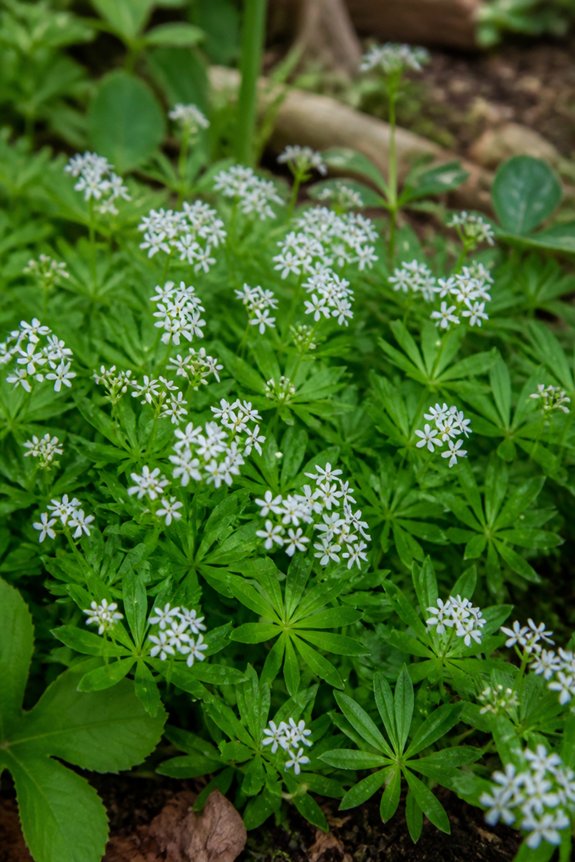
For shaded areas where other plants struggle, sweet woodruff provides reliable ground cover with fragrant foliage and delicate white flowers. This spreading perennial reaches six inches tall, spreading gradually across woodland settings.
It thrives in moist, well-draining soil beneath trees. The plant requires minimal maintenance once established, needing only occasional watering during dry periods and light trimming to maintain shape.
Parsley: Fine-Textured Herb for Delicate Garden Details
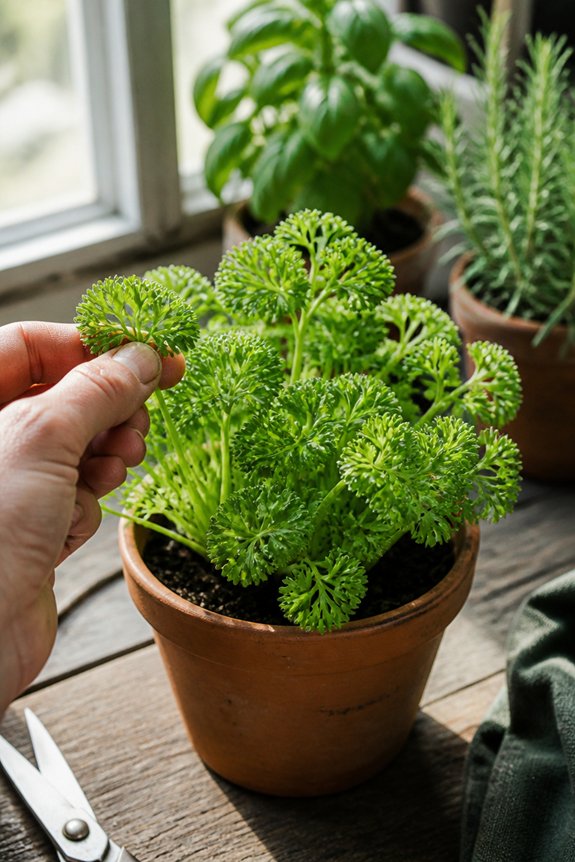
Parsley brings delicate, finely divided foliage to fairy gardens, creating visual texture that complements larger plants and structures. The herb grows well in containers and garden beds, requiring moderate sunlight and consistent moisture.
Parsley reaches six to twelve inches tall, making it suitable for midground placement. Both flat-leaf and curly varieties offer distinct aesthetic qualities for miniature garden designs.
Miniature Ivy: Cascading Greenery for Cottage Charm

Miniature ivy varieties provide trailing, cascading foliage that enhances fairy gardens with vertical interest and softens hard edges. Hedera helix cultivars like Needlepoint and Glacier grow slowly in containers, requiring moderate light and consistent moisture. These plants tolerate partial shade well, making them suitable for shaded garden corners.
Trailing stems cascade over container edges, creating natural cottage-style arrangements with minimal maintenance demands.
Helxine: Creating Lush Carpet Effects in Terrariums

Helxine soleirolii, commonly called baby tears, functions as a dense ground cover that establishes soft, moss-like carpeting across terrarium floors and soil surfaces. This plant thrives in humid, indirect light conditions and requires consistently moist soil.
Baby tears spreads quickly, filling gaps between larger specimens. It tolerates shade well, making it ideal for enclosed terrarium environments where moisture remains stable and air circulation stays minimal.
Ajuga: Purple-Tinged Ground Cover That Flowers in Spring
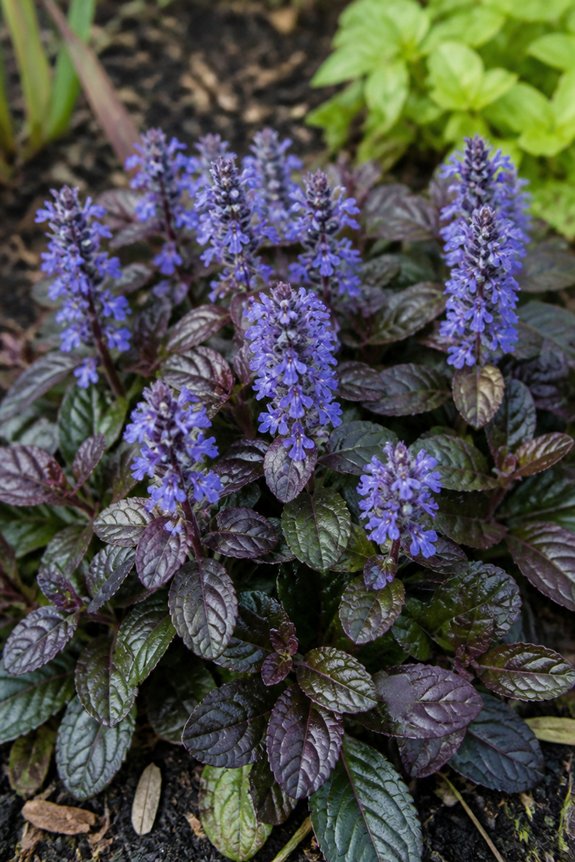
For fairy gardens requiring compact, colorful ground cover, Ajuga reptans presents a practical choice with distinctive purple foliage and spring blooms. The plant spreads steadily, creating dense mats that suppress weeds. It tolerates partial shade and moist soil conditions well.
Small purple flowers emerge in spring, adding visual interest to miniature landscapes. Ajuga requires minimal maintenance and adapts readily to container environments.
Dwarf Sage: Tiny Herb With Big Personality

While ground covers like Ajuga provide structural foundation to fairy gardens, dwarf sage varieties bring functional herbs into miniature landscapes. Compact cultivars such as Tricolor and creeping sage reach heights of six to twelve inches, fitting garden spaces efficiently. These plants tolerate dry conditions, require minimal pruning, and produce edible leaves suitable for culinary use throughout growing seasons.
Stonecrop: Low-Maintenance Succulent Groundcover
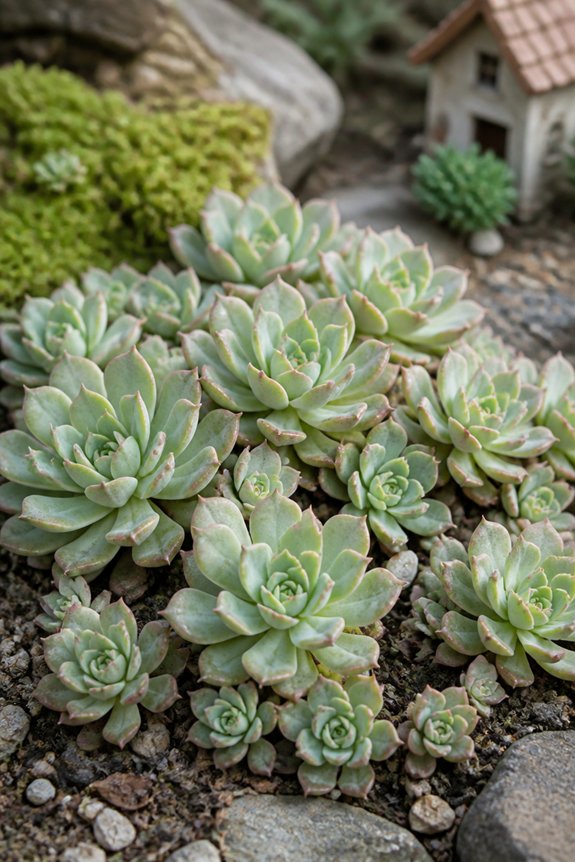
Stonecrops represent a practical choice for fairy garden designers seeking durable, drought-tolerant groundcovers. These succulents, including varieties like Sedum spurium and Sempervivum, require minimal watering and thrive in poor soil. Their shallow root systems suit container gardens well.
Stonecrops spread gradually, creating dense mats of foliage in green, red, or purple hues. They tolerate full sun and partial shade equally, making placement flexible for various garden layouts.
Creeping Jenny: Golden Cascades for Bright Containers
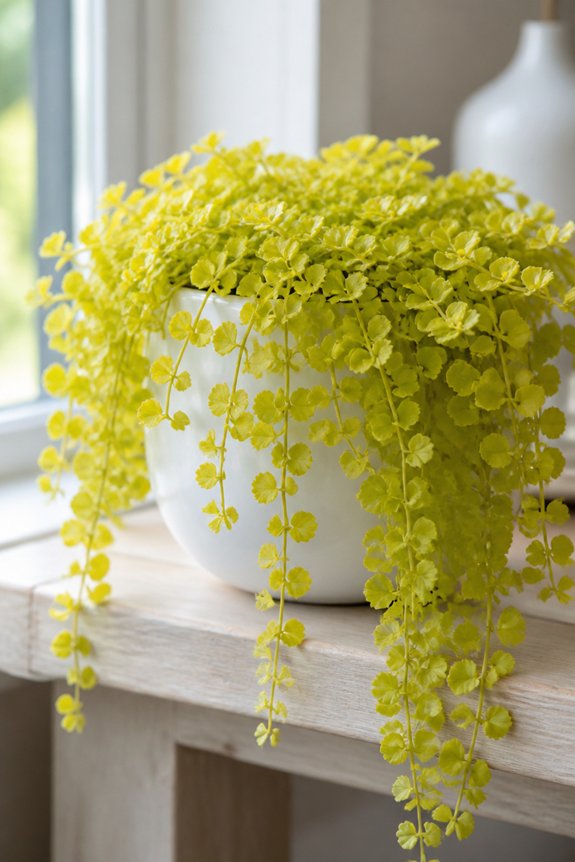
Lysimachia nummularia, commonly called Creeping Jenny, offers bright golden foliage and a trailing growth habit suited to container gardens. This plant prefers partial shade and consistently moist soil, making it ideal for hanging baskets and elevated planters.
Its cascading stems create visual depth in mixed containers. Creeping Jenny tolerates most soil types and requires minimal pruning, though occasional trimming maintains shape and prevents excessive sprawl.
Coral Bells: Colorful Foliage Plants for Fairy Beds

Heuchera species, commonly known as Coral Bells, provide striking foliage in shades of burgundy, purple, bronze, and chartreuse, making them valuable additions to fairy garden designs. These compact perennials thrive in partial shade with moist, well-draining soil.
Varieties like Palace Purple and Obsidian offer deep coloring year-round. Coral Bells reach 12 to 18 inches tall, creating layered visual interest without requiring frequent maintenance or pruning interventions.
Miniature Bleeding Heart: Delicate Shade Blooms
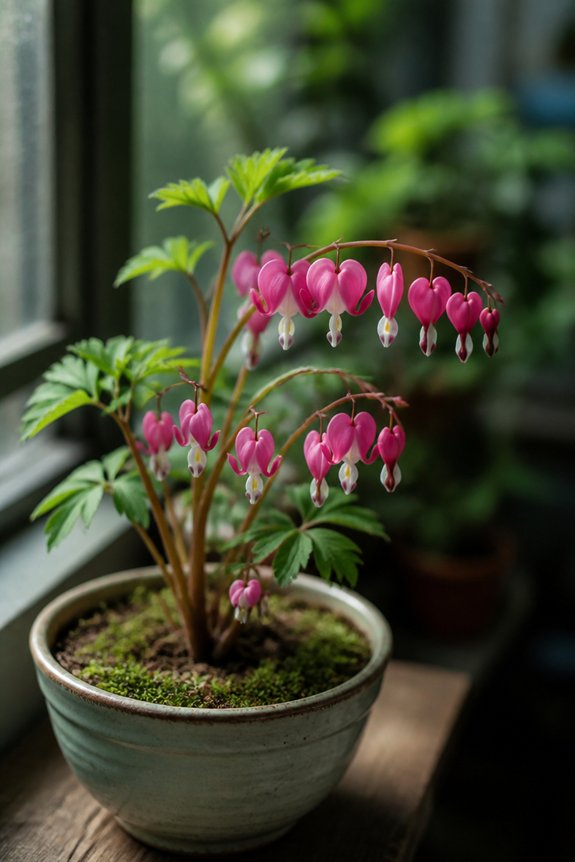
Dicentra eximia, the miniature bleeding heart, produces delicate heart-shaped flowers in pink or white, blooming in spring and early summer within shaded fairy garden spaces. This plant prefers moist, well-draining soil and partial shade conditions.
It reaches six to twelve inches tall, making it suitable for compact garden layouts. The foliage remains attractive throughout the growing season, providing consistent visual interest in fairy gardens.
Baby Ragwort: Yellow Blooms on Tiny Plants

While the miniature bleeding heart offers shade-loving gardeners delicate pink and white blooms, baby ragwort provides sunny fairy garden spots with bright yellow flowers on compact plants.
Baby ragwort grows six to eight inches tall, requiring full sunlight and well-draining soil. The plant tolerates drought conditions and attracts pollinators. It spreads gradually through the garden, filling spaces between larger specimens effectively.
Saxifrage: Rock Garden Charm at Miniature Scale
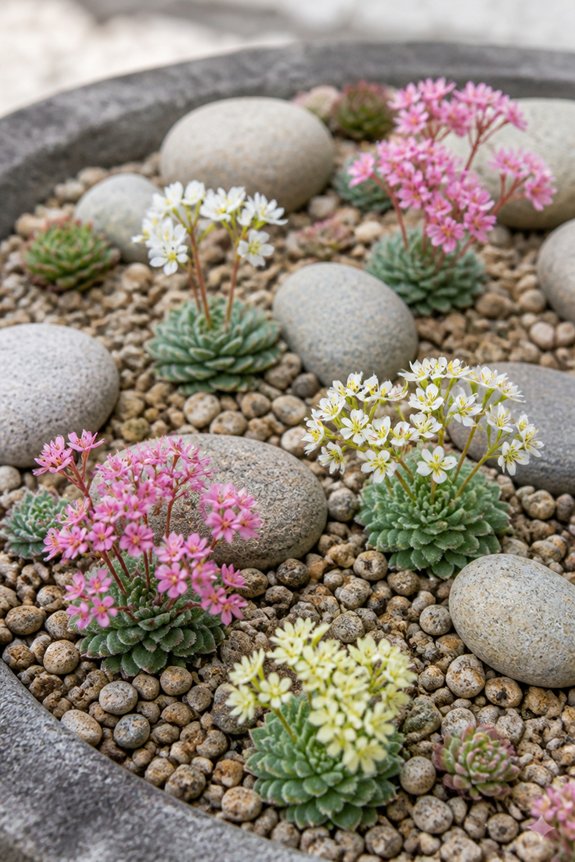
Saxifrage plants offer miniature forms ideal for fairy gardens, rock gardens, and container displays. These hardy perennials feature rosette-shaped foliage, producing delicate flowers in pink, red, white, or yellow.
Saxifrages thrive in well-draining soil, partial shade, and cool temperatures. Species like Saxifraga stolonifera and Saxifraga paniculata suit fairy garden settings. They require minimal water, making them practical, low-maintenance choices for miniature landscapes.
Year-Round Bloomers: Extended Flowering Plants for Continuous Color

For fairy gardens requiring consistent visual interest throughout all seasons, year-round bloomers provide reliable flowering displays without gaps in color. Penstemons, dianthus, and winter heathers deliver extended blooms across multiple months.
These plants withstand temperature fluctuations and require standard watering, drainage, and sunlight. Selecting varieties with staggered bloom times guarantees continuous flowering, creating maintained color in miniature landscapes.
When Baby’s Tears Won’t Grow: Smart Plant Swaps for Problem Areas
Baby’s tears plants often struggle in fairy gardens due to specific environmental demands, particularly excessive moisture or insufficient humidity.
Gardeners should consider alternatives like Irish moss, soleirolia, or miniature ferns for similar effects. These substitutes tolerate varied light conditions and drainage patterns better. Moss varieties provide delicate ground cover without fussy watering requirements, making them practical replacements.
Seasonal Maintenance Checklist: Keep Your Garden Thriving Year-Round

A fairy garden’s health depends on consistent care throughout the year, with each season bringing different tasks and challenges.
Spring requires pruning and repotting. Summer demands regular watering and deadheading. Fall involves cleaning debris and preparing plants for dormancy. Winter protects sensitive plants with mulch or coverings.
Monitoring moisture levels, checking for pests, and adjusting light exposure remain essential year-round maintenance priorities.
Frequently Asked Questions
How Often Should I Water Fairy Garden Plants and What’s the Best Watering Method?
Fairy garden plants typically require watering when the soil surface feels dry to the touch, usually every two to three days. The best method involves using a small watering can or spray bottle to deliver water gently at soil level, preventing foliage damage and overwatering.
What Size Container or Space Do I Need to Start a Fairy Garden?
One could practically fit an entire magical kingdom into a teacup! Realistically, beginners need merely a 12-inch container or small tabletop space. Larger gardens spanning several feet offer expanded design possibilities, though even modest six-inch pots work wonderfully for enchanting miniature displays.
Can I Combine Different Plant Types Together or Keep Them Separated?
Gardeners can successfully combine different plant types together in fairy gardens. Mixing varied heights, textures, and colors creates visual interest. However, grouping plants with similar watering and sunlight requirements guarantees healthier growth and easier maintenance overall.
How Do I Prevent Pests and Diseases in Small Fairy Garden Spaces?
A gardener once discovered that crowded plants succumbed to fungal rot, while spaced specimens thrived—tight quarters breed problems. One must guarantee proper airflow, remove debris promptly, inspect regularly, and isolate affected plants immediately to maintain healthy miniature ecosystems.
Which Plants Work Best for Indoor Fairy Gardens Versus Outdoor Locations?
Indoor fairy gardens thrive with low-light tolerant plants like African violets, begonias, and ferns. Outdoor locations suit sun-loving varieties such as sedums, miniature roses, and ornamental grasses. Selection depends on available light and climate conditions.
Conclusion
A fairy garden functions as a living tapestry, weaving together moss, creeping fig, baby tears, and miniature ferns into a cohesive landscape. Selecting appropriate plants for specific conditions—sedum for dry areas, saxifrage for rocky spots—ensures sustained growth with minimal intervention. Seasonal maintenance, smart substitutions when plants struggle, and year-round bloomers maintain visual interest. These 24 plants provide practical solutions for creating enchanting gardens that require manageable care.