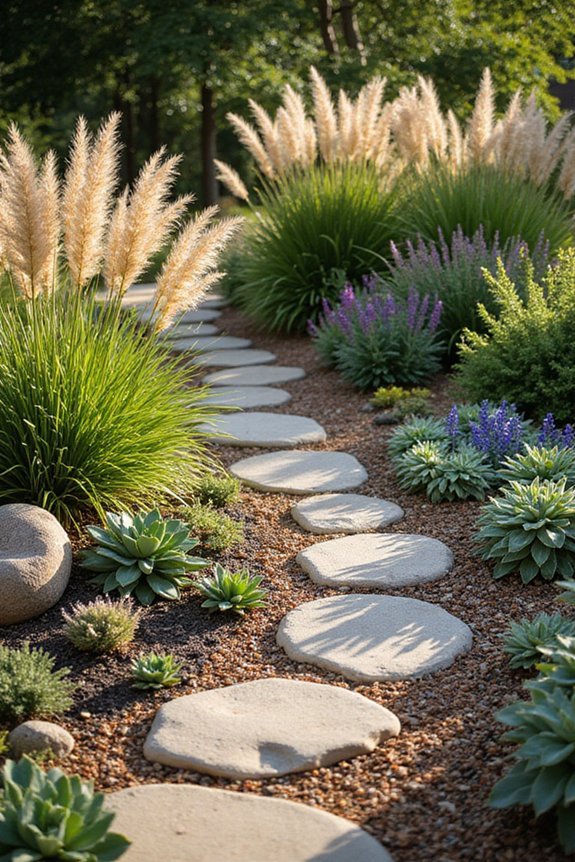
You’re tired of mowing every weekend, spending money on gas and maintenance, and watching your water bill climb. Your front yard doesn’t have to be a traditional grass lawn to look attractive and well-maintained. By understanding your yard’s specific conditions—sunlight, soil, and climate—you can select from dozens of alternatives that require minimal upkeep while creating visual interest.
Why Homeowners Are Ditching Lawn
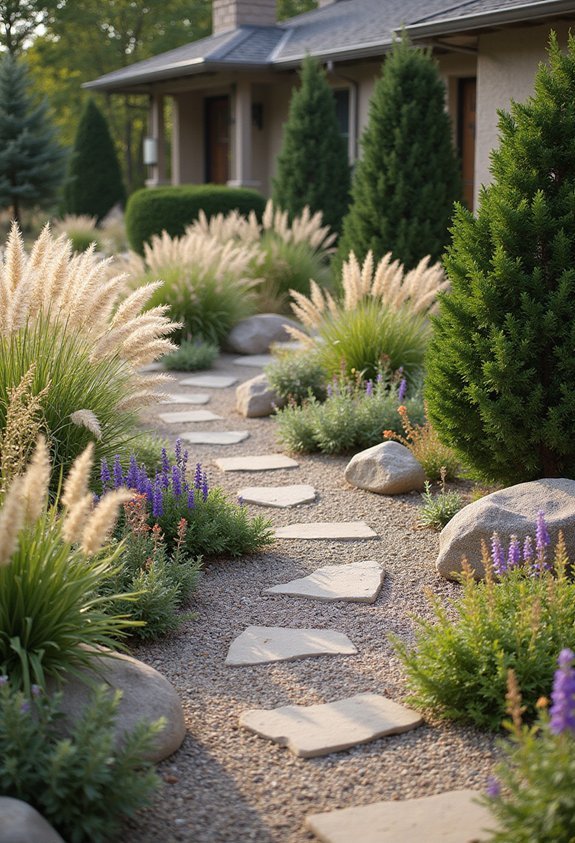
Why’re homeowners across the country removing their traditional grass lawns? You’ll find several practical reasons driving this change. First, maintaining a lawn demands significant time and money through regular mowing, watering, fertilizing, and pest control. Second, traditional grass requires consistent water consumption, which strains local resources and increases your utility bills. Third, lawn maintenance equipment produces carbon emissions and noise pollution affecting your community. Fourth, you’re recognizing that grass monocultures don’t support local ecosystems, offering minimal habitat for pollinators and wildlife. Finally, many homeowners discover they’d rather invest energy into alternatives requiring less upkeep and providing greater environmental benefits. These factors combined make ditching traditional lawns an increasingly attractive option for environmentally conscious and time-strapped homeowners seeking practical solutions.
Also read: 22 FRONT YARD CHRISTMAS LIGHTS That Look Expensive!
Quick Assessment: Which Option Fits Your Yard
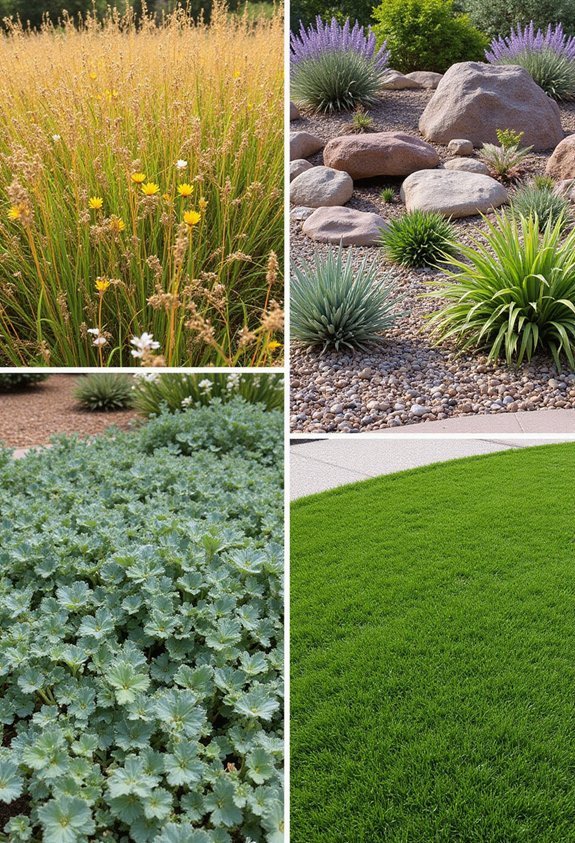
Before you commit to any no-mow alternative, you’ll need to evaluate your specific yard conditions and lifestyle to find the best match for your situation. Start by examining your yard’s sunlight exposure, since some options thrive in shade while others require full sun. Next, scrutinize your soil type and drainage patterns, as these factors determine what’ll grow successfully in your space. Consider your climate zone, because certain plants and materials perform better in specific regions. Additionally, think about your maintenance tolerance level—some no-mow options still require occasional upkeep like weeding or edging. Finally, evaluate your budget constraints, as costs vary considerably between solutions. By methodically working through these factors, you’ll narrow down which no-mow front yard option aligns perfectly with your unique circumstances and preferences.
Best No-Mow Choices for Sunny Front Yards
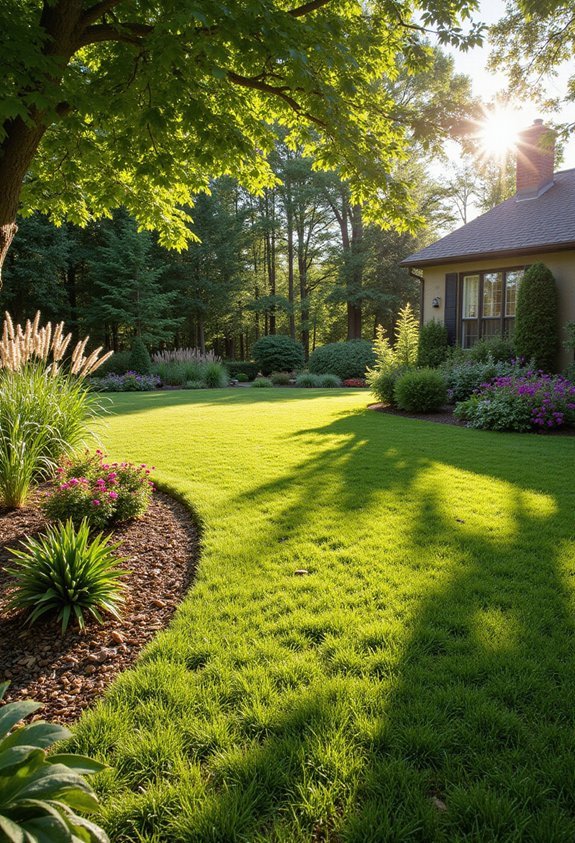
Once you’ve assessed your yard’s specific conditions, you can match those characteristics with suitable no-mow options, and if your property receives six or more hours of direct sunlight daily, you’ll find numerous excellent choices that thrive in bright conditions. Ornamental grasses like blue fescue and feather reed grass create attractive texture without mowing requirements. Sedums and other drought-tolerant succulents provide year-round visual interest while requiring minimal maintenance. Native wildflower mixes specifically selected for sunny regions establish quickly and support local pollinators. Ground covers such as creeping thyme and germander spread across open spaces, suppress weeds naturally, and tolerate full sun exposure. Mulched beds with strategically placed boulders and decorative rocks offer clean aesthetics while eliminating mowing altogether. These options combine functionality with visual appeal for your sunny front yard.
Native Plants and Wildflower Meadows
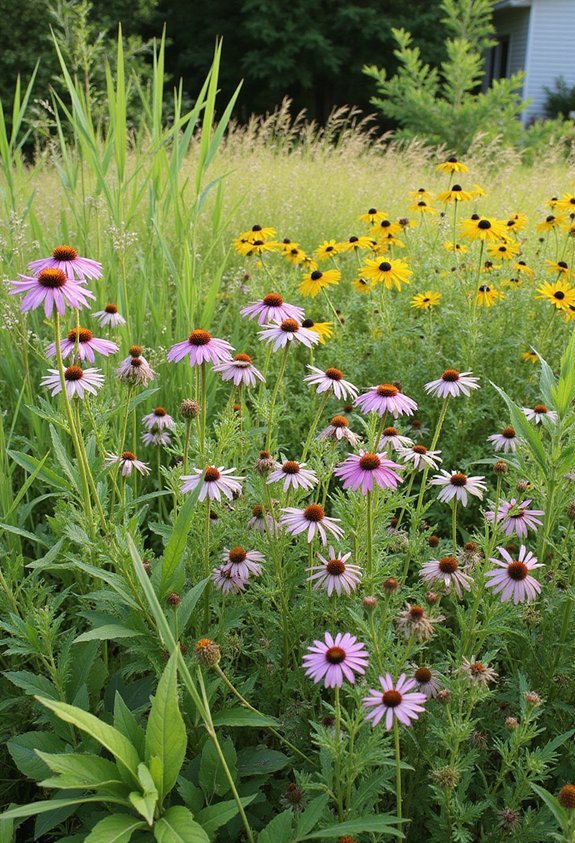
Native plants and wildflower meadows represent one of the most effective no-mow solutions you can implement in your front yard, as they’re naturally adapted to your region’s climate, soil conditions, and rainfall patterns, which means they’ll thrive with minimal intervention once they’re established. You’ll benefit from reduced maintenance costs and effort, since these plants don’t require regular watering, fertilizing, or mowing once established. Additionally, you’ll create a habitat for pollinators like bees and butterflies, which supports your local ecosystem while enhancing your yard’s visual appeal. To start, you’ll research native species suited to your specific geographic location, prepare the soil by removing existing grass, and seed or transplant your chosen plants during appropriate seasons.
Ornamental Grasses for Texture and Movement
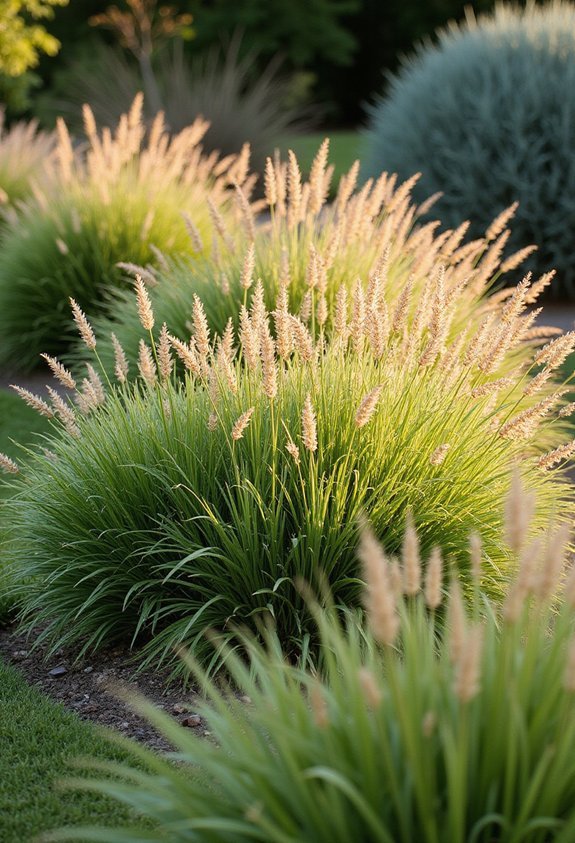
Graceful fountains of foliage that sway in the breeze offer you another excellent no-mow alternative that’ll transform your front yard into a dynamic landscape requiring minimal upkeep. Ornamental grasses provide year-round visual interest through their flowing movement, varied heights, and changing seasonal colors—from vibrant greens to golden ambers and russet tones. You’ll find that species like blue fescue, feather reed grass, and fountain grass establish quickly with minimal maintenance once established. These plants naturally suppress weeds through dense growth patterns, eliminating your mowing responsibilities entirely. Their deep root systems access water efficiently, reducing irrigation needs during dry periods. Additionally, ornamental grasses create appealing texture contrasts when combined with flowering perennials or evergreen shrubs, establishing a sophisticated, layered front yard composition that demands virtually no upkeep.
Clover and Creeping Thyme Ground Covers
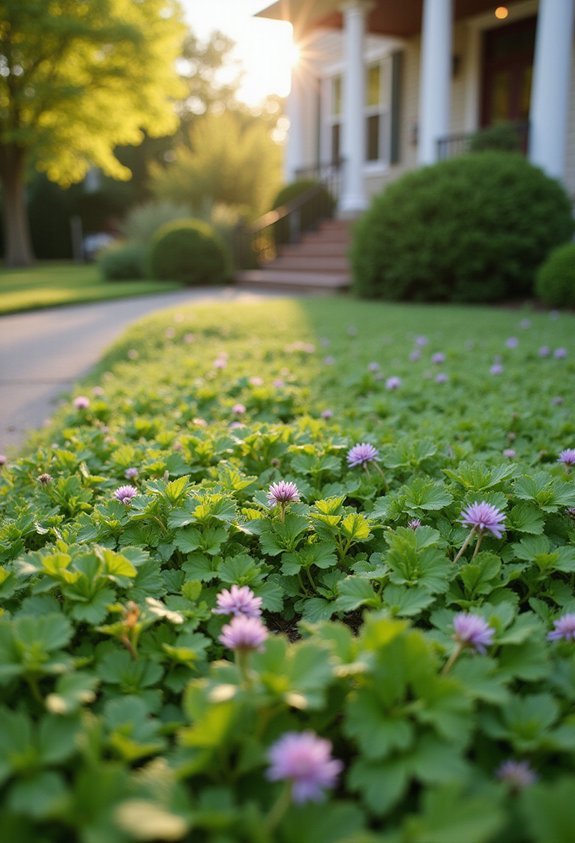
Two excellent alternatives to traditional lawn grass, clover and creeping thyme, offer you practical solutions for creating a no-mow front yard that’s both functional and visually appealing. Clover requires minimal maintenance, establishes quickly, and actually enriches your soil by fixing nitrogen naturally, which means you’ll spend less time fertilizing. Creeping thyme, meanwhile, produces delicate flowers that attract pollinators while releasing pleasant aromas when you walk across it. Both ground covers tolerate foot traffic reasonably well and spread to fill bare spots without constant attention. You’ll plant them in well-draining soil during spring or fall, water regularly until they’re established, then enjoy years of low-maintenance coverage. These options effectively eliminate mowing while creating distinctive, functional landscapes.
Best No-Mow Options for Shaded Front Yards
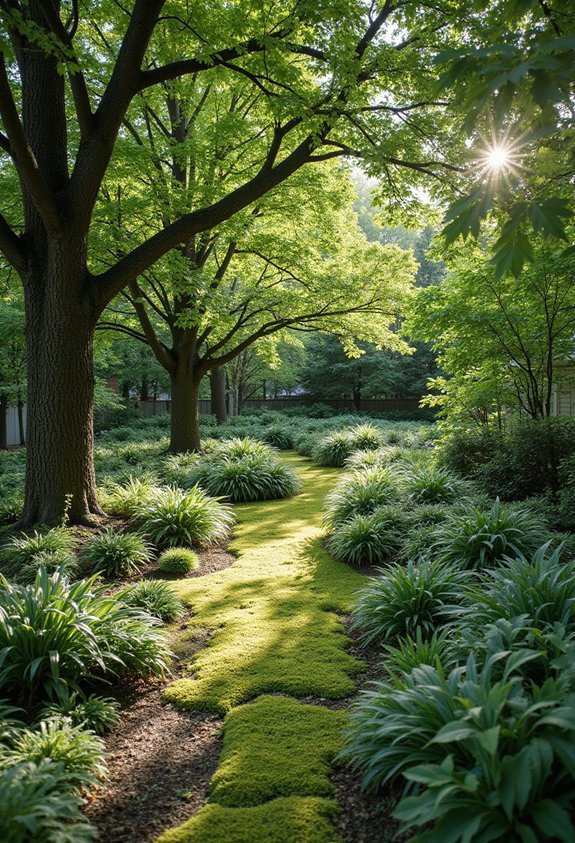
When shade covers your front yard, you’ll need to abandon the ground cover options that thrive in sunlight and instead select plants specifically adapted to low-light conditions. Shade-tolerant plants like Japanese forest grass, which grows in dense, attractive clumps, work excellently for creating visual interest without mowing. Hostas offer broad, colorful leaves that fill shaded spaces while requiring minimal maintenance once established. Ajuga, a low-growing ground cover, spreads quickly beneath trees and produces small purple flowers, adding aesthetic appeal to dark corners. Liriope creates neat borders with its grass-like foliage and purple flower spikes, thriving where sunlight remains limited. These shade-adapted options eliminate mowing entirely while maintaining your yard’s curb appeal throughout growing seasons.
Shade-Loving Hostas and Ferns
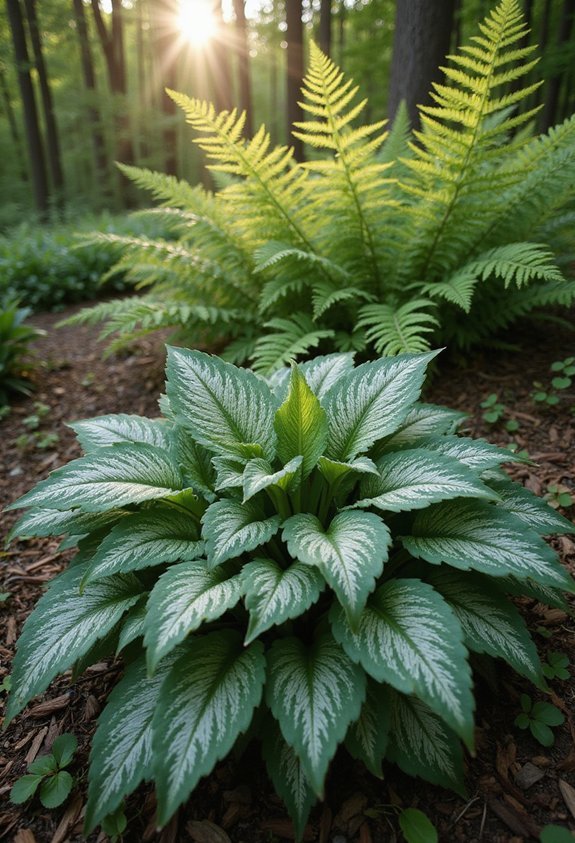
Among the most reliable plants you’ll find for shaded front yards, hostas and ferns offer distinct advantages that make them ideal no-mow alternatives. Hostas thrive in low-light conditions and require minimal maintenance once established, with their attractive foliage serving as year-round visual interest. You’ll appreciate their variety in leaf colors, ranging from deep greens to variegated patterns, which add depth to your landscape design. Ferns complement hostas beautifully, providing delicate textures that create layered aesthetics without demanding regular care. Both plants naturally suppress weeds through their dense growth patterns, reducing your need for maintenance tasks. They’re particularly valuable in consistently shaded areas where grass won’t grow well, transforming problematic spots into lush, thriving garden spaces that require only occasional watering during drought periods.
Moss Gardens for Low-Light Areas
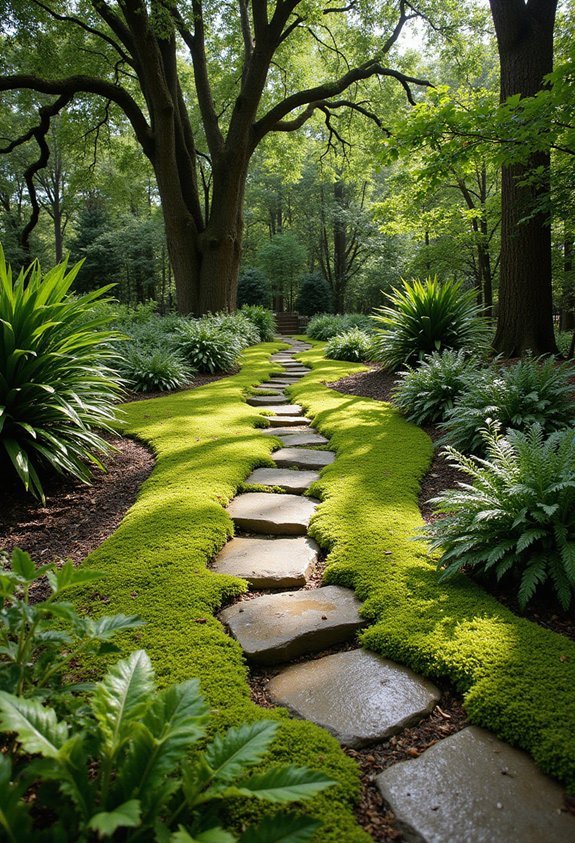
If you’re looking for an even lower-maintenance option than hostas and ferns, moss gardens offer a remarkable solution for shaded front yards where you’ll find these soft, carpet-like plants thrive without soil preparation, fertilizers, or mowing. Moss gardens develop naturally in consistently moist, shaded environments with acidic soil and poor drainage, making them ideal for difficult yard areas. You can establish a moss garden by collecting moss fragments from existing patches and pressing them firmly into prepared ground, keeping the area consistently damp for several weeks. Once established, moss requires minimal intervention beyond occasional watering during dry spells. These low-growing plants create an elegant, naturalistic appearance while eliminating lawn maintenance entirely, transforming problem areas into attractive landscape features.
Xeriscaping: Drought-Tolerant Plants for Dry Climates
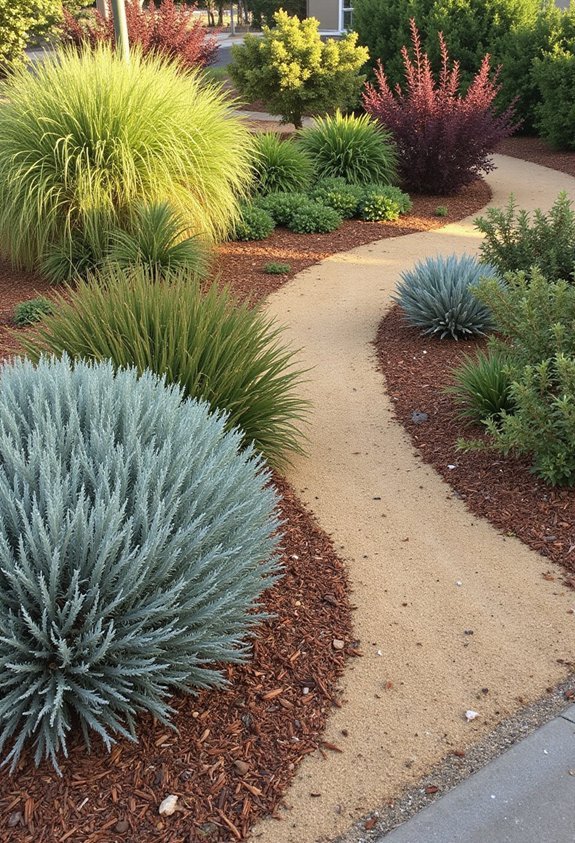
How can you maintain an attractive front yard without constantly watering your landscape? Xeriscaping offers a practical solution by using drought-tolerant plants adapted to dry climates. You’ll select native plants like sedums, ornamental grasses, and desert shrubs that require minimal water once established. These plants thrive in sandy or rocky soil, so you’ll need to amend your yard accordingly. You’ll arrange plants by water needs, placing thirsty varieties together and drought-resistant ones separately, which optimizes your irrigation efficiency. Mulching with gravel or wood chips helps retain soil moisture while reducing evaporation. You’ll create visual interest through varying plant heights, textures, and colors. This approach considerably reduces your maintenance time while conserving water resources, making it an environmentally responsible and practical choice for arid regions.
Decomposed Granite and River Rock Landscapes
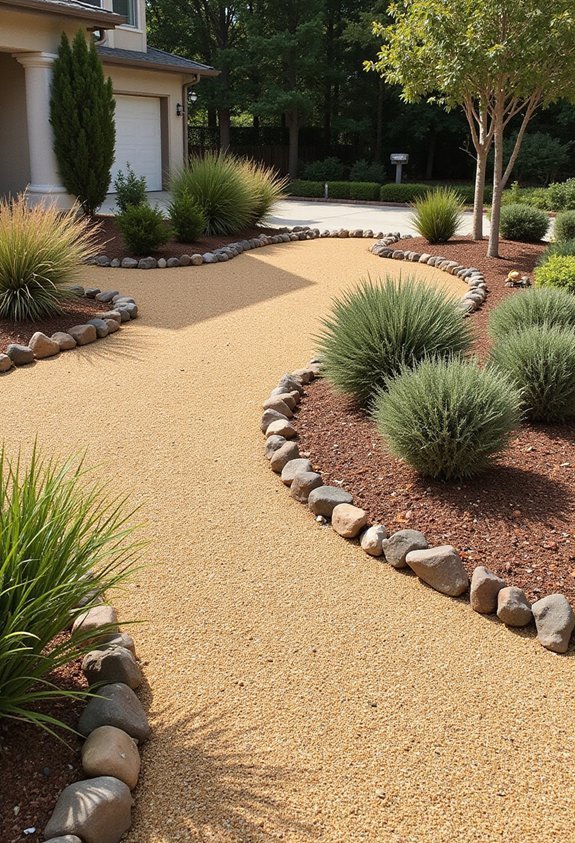
Since they’re completely maintenance-free once installed, decomposed granite and river rock landscapes offer you an excellent alternative to traditional grass yards that demand regular mowing, watering, and upkeep. You’ll find that decomposed granite, a natural byproduct of granite erosion, provides an attractive tan or rust-colored surface that complements various plants and hardscaping elements. River rocks, ranging from smooth pebbles to larger stones, add visual interest and texture while preventing soil erosion around plantings. Both materials require minimal care beyond occasional raking to maintain appearance and redistribute settled stones. You can arrange them strategically around drought-tolerant plants, creating defined planting beds that reduce water needs considerably. These landscape options prove particularly effective in arid regions where water conservation matters, transforming your front yard into a visually appealing, sustainable outdoor space.
Pea Gravel and Stone-Based Ground Covers
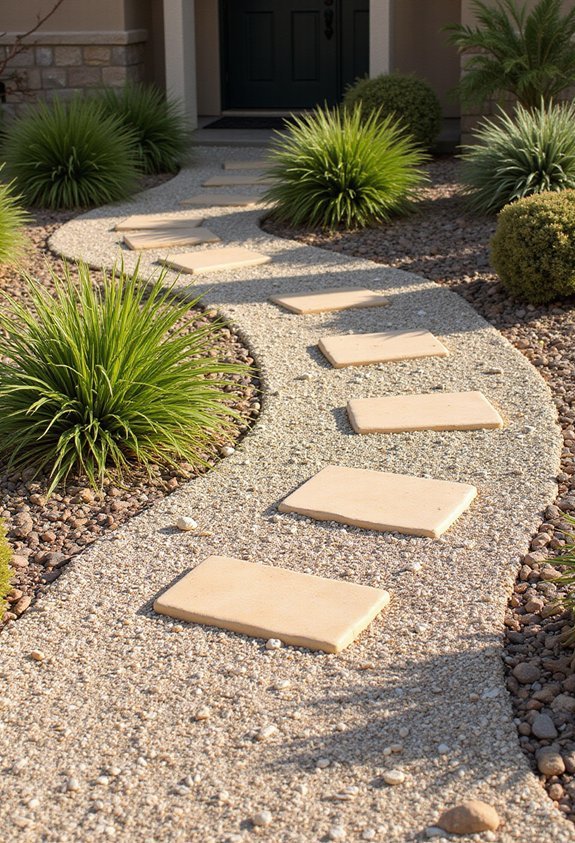
Pea gravel and other stone-based ground covers present you with versatile, low-maintenance alternatives that’ll transform your front yard while eliminating the need for regular mowing and watering. You’ll find that pea gravel, composed of small, smooth stones, creates an attractive, permeable surface that allows water drainage while preventing weed growth when properly installed with landscape fabric underneath. Stone-based options like river rock, crushed limestone, and volcanic rock offer different aesthetic qualities and varying costs depending on your regional availability. You can arrange these materials in decorative patterns or solid coverage areas to complement your home’s architecture. Installation requires you to prepare the soil, apply edging to contain the stones, and add two to three inches of material for ideal coverage and durability.
Hardscaping: Pavers and Stepping Stone Designs
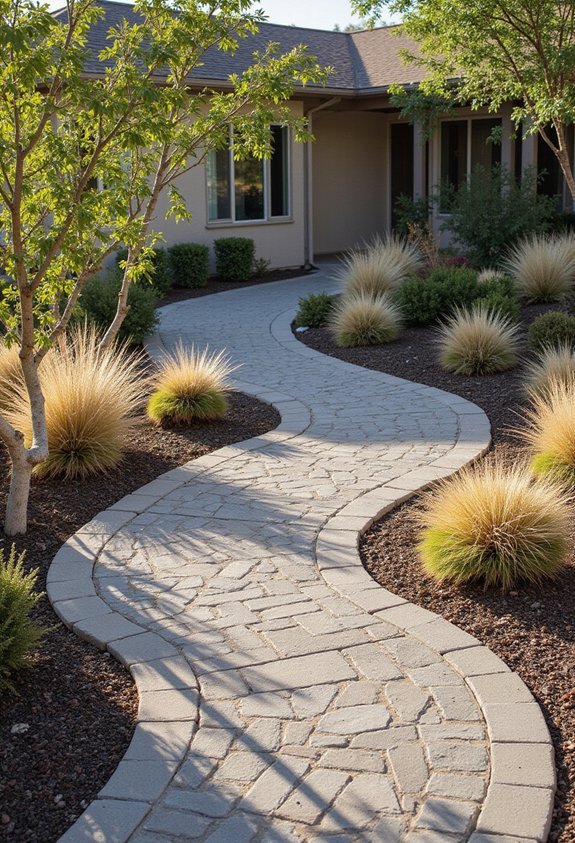
Pavers and stepping stones offer you a durable, stylish solution that transforms your front yard into a structured landscape while requiring minimal maintenance compared to traditional lawns. You can arrange pavers in various patterns—like herringbone, running bond, or geometric designs—to create visual interest and define pathways throughout your yard. Stepping stones allow you to establish walkways that guide visitors while protecting underlying soil from foot traffic compaction. You’ll benefit from choosing materials like concrete, natural stone, or permeable pavers that accommodate drainage and reduce water pooling. Installation involves preparing a level base, adding sand for stability, and securing stones firmly in place. This hardscaping approach eliminates mowing entirely, reduces weeding demands, and provides a clean, contemporary aesthetic that enhances your home’s curb appeal tremendously.
Rock Gardens and Alpine Plant Displays
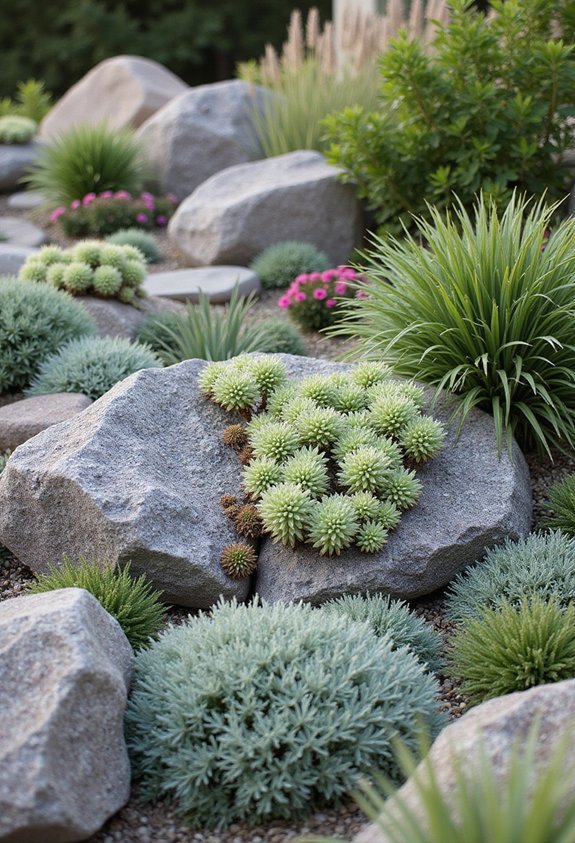
While hardscaping solutions like pavers create clean, structured spaces with minimal maintenance, rock gardens and alpine plant displays offer you a naturalistic alternative that combines decorative stones with carefully selected low-growing plants to produce a visually striking, low-maintenance landscape. You’ll arrange various sized rocks and boulders throughout your front yard, creating depth and visual interest without requiring regular mowing. Alpine plants, such as sedums, creeping phlox, and saxifrage, thrive in rocky terrain and don’t need frequent watering or fertilizing. You’ll benefit from improved drainage, reduced weeding compared to traditional gardens, and year-round visual appeal. These displays suit sloped yards particularly well, as rocks prevent erosion while plants stabilize soil. Your rock garden requires occasional maintenance to remove debris and manage plant growth, making it an ideal no-mow solution.
Groundcover Succulents and Sedums
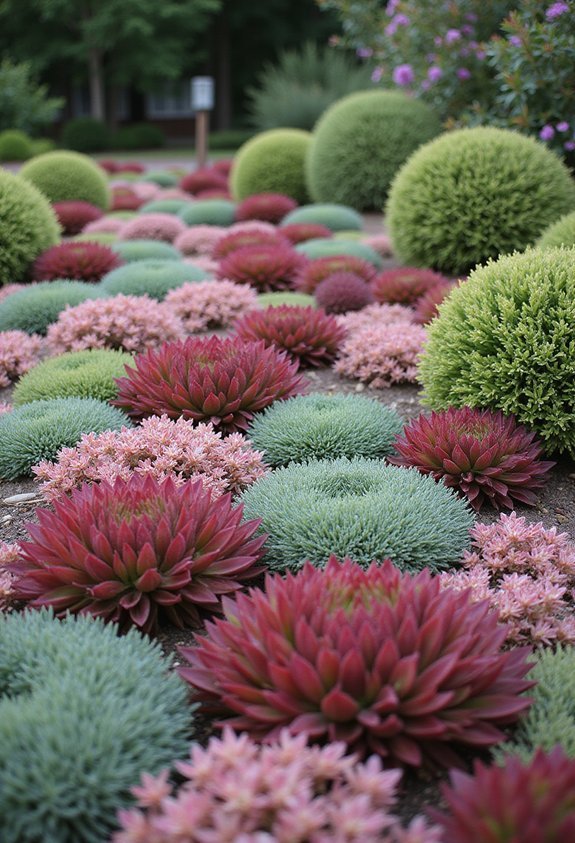
If you’re seeking a no-mow front yard option that requires minimal water and maintenance, groundcover succulents and sedums deliver exceptional results through their natural ability to thrive in harsh conditions where most plants struggle. These plants store water in their leaves, enabling them to survive prolonged dry periods without supplemental irrigation. You can select from varieties like creeping sedum, stonecrop, and echeveria, which spread horizontally across soil while reaching only inches tall. Their shallow root systems prevent competition with established trees and shrubs, making them ideal for mixed plantings. Plant them in well-draining soil during spring or fall, space them appropriately for mature spread, and water lightly during establishment. Once established, they’ll blanket your front yard with colorful, textured foliage year-round while eliminating mowing entirely.
Pollinator Gardens: Native Flowers That Attract Bees and Butterflies
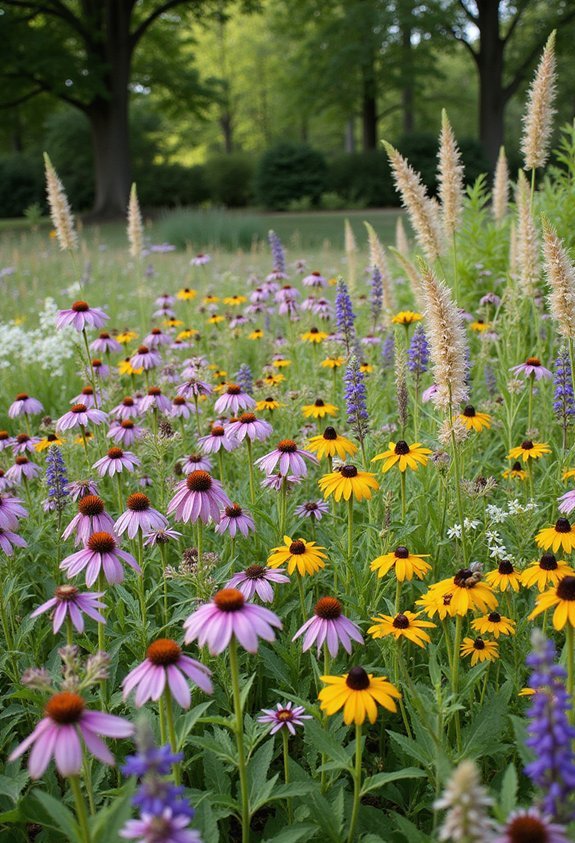
Creating a pollinator garden in your front yard combines low-maintenance landscaping with environmental benefits, since native flowering plants‘ll attract essential pollinators while requiring considerably less water and upkeep than traditional lawns. You’ll want to select native species suited to your specific region, as these plants’ve evolved to thrive in your local climate and soil conditions. Black-eyed Susans, coneflowers, and milkweed provide excellent nectar sources for butterflies and bees throughout the growing season. Plant flowers in clusters rather than scattered individually, making it easier for pollinators to locate food sources. Avoid pesticides completely, since they’ll harm the insects you’re trying to attract. Space plants appropriately based on mature size, allowing adequate airflow and reducing disease risk while creating a naturally attractive landscape requiring minimal maintenance.
Mixed Perennial Borders Without Grass
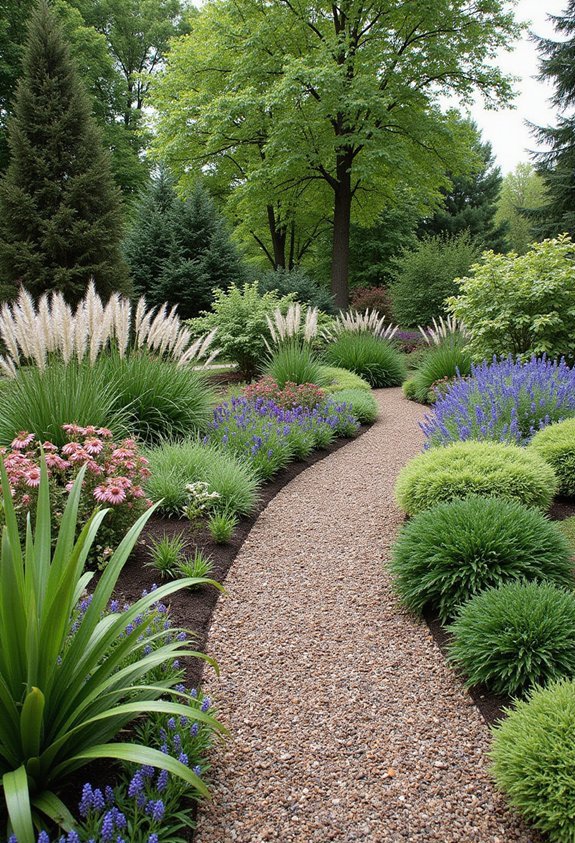
Mixed perennial borders offer you a flexible and attractive alternative to traditional grass lawns that’ll showcase a diverse selection of plants throughout multiple seasons. You can arrange plants by height, bloom time, and color preferences to create visual interest year-round without mowing. Start by preparing your soil with compost and organic matter, then select perennials suited to your climate zone and sunlight conditions. Plant taller varieties in the back and shorter ones in front, spacing them appropriately for mature growth. Add mulch between plants to suppress weeds, retain moisture, and reduce maintenance demands. You’ll need to deadhead spent flowers, divide overcrowded plants every few years, and occasionally stake taller varieties for support, but these tasks require markedly less effort than regular lawn maintenance.
Ornamental Shrubs for Year-Round Structure
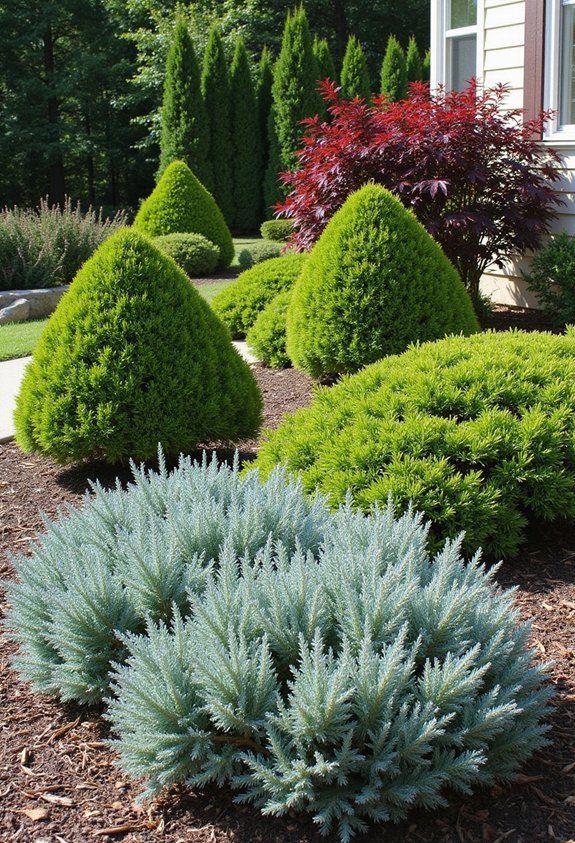
While perennial borders offer seasonal color and interest, ornamental shrubs provide the backbone of a no-mow landscape by delivering consistent structure, texture, and visual appeal throughout all twelve months of the year. You’ll want to select shrubs with varying heights, foliage colors, and growth habits to create layered visual depth. Evergreen varieties like boxwood and privet maintain their form during winter months, while deciduous shrubs such as burning bush showcase striking fall colors before dropping leaves. Consider plants with interesting bark textures, ornamental berries, or unique branching patterns that remain visually compelling even when dormant. Strategic placement around your property’s perimeter and foundation creates natural boundaries without requiring maintenance, establishing a sophisticated, low-effort landscape framework.
Edible Front Yard Landscaping
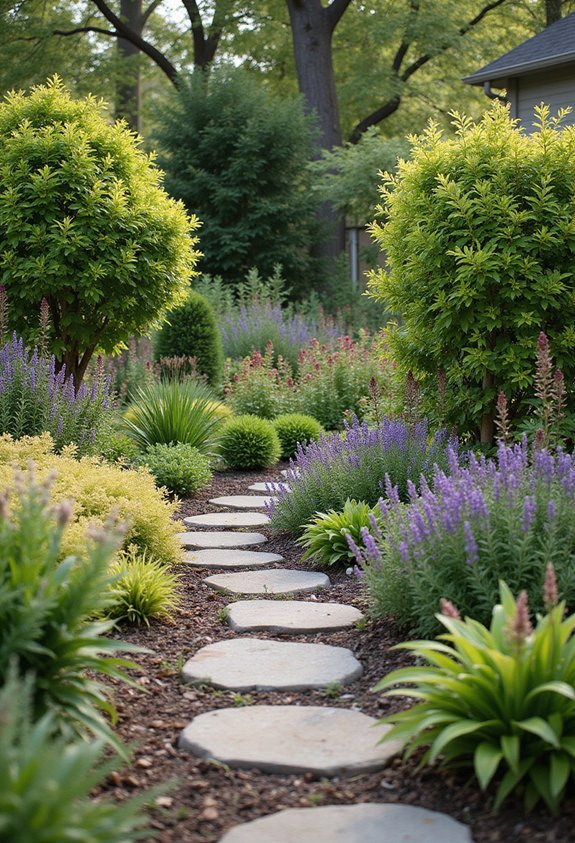
Why settle for ornamental plants when you can grow food in your front yard while maintaining that polished, low-maintenance aesthetic? You’ll find that edible landscaping combines functionality with visual appeal, eliminating the need for constant mowing while producing fresh vegetables, fruits, and herbs. Consider planting berry bushes like blueberries or raspberries, which offer attractive foliage and productive yields with minimal care. Dwarf fruit trees create vertical interest and seasonal beauty alongside edible returns. Perennial vegetables such as asparagus and artichokes establish themselves after initial planting, requiring little maintenance beyond occasional weeding. Herb gardens positioned near your entryway provide convenient access while enhancing curb appeal. This approach transforms your front yard into a productive space that remains visually attractive throughout the growing season.
Decorative Mulch and Wood Chip Designs
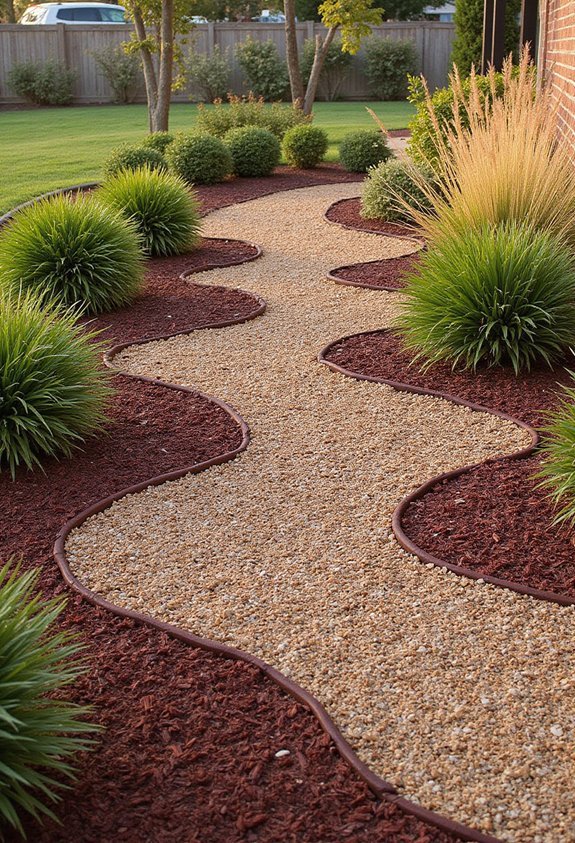
Mulch and wood chips offer you a practical foundation for creating visually appealing front yard designs that eliminate the need for mowing while protecting your soil and plants. You can choose from various colors, including natural brown, red, and black varieties, each complementing different home styles and landscaping themes. When you install mulch properly, you’ll suppress weeds effectively, retain soil moisture, and regulate ground temperature for healthier plants. You should apply mulch two to four inches deep around trees, shrubs, and garden beds, keeping it several inches away from plant stems to prevent rot. Wood chips break down gradually, improving soil composition over time. You’ll maintain your landscape by periodically replenishing mulch as it decomposes, ensuring your no-mow yard remains attractive and functional for years ahead.
Raised Beds as Front Yard Focal Points
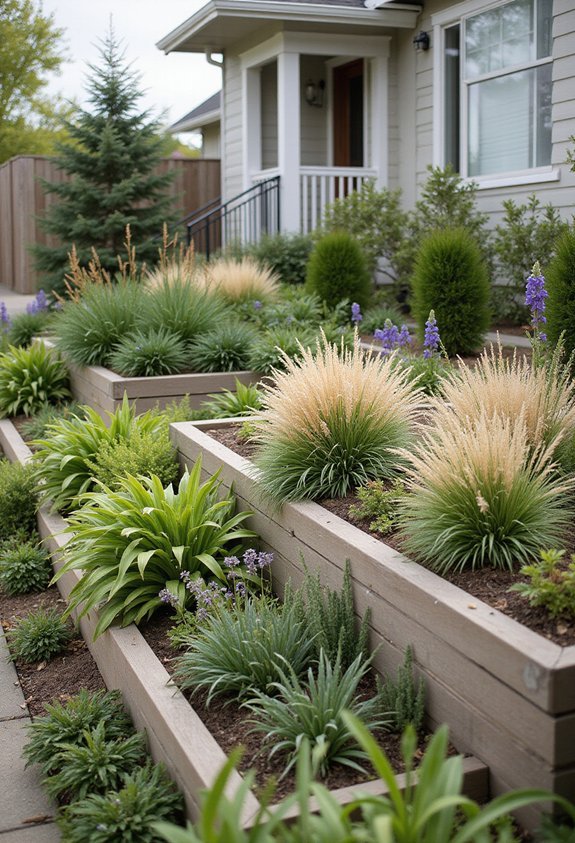
Since you’re looking to transform your front yard into an attractive, maintenance-free space, raised beds offer an excellent solution that combines functionality with visual appeal while serving as striking architectural elements. You can construct these beds from cedar, composite materials, or stone, creating defined garden areas that require minimal upkeep once established. By installing raised beds strategically near your entryway or along walkways, you’ll draw attention to specific landscape features while establishing clear visual boundaries. You can fill them with drought-tolerant plants, ornamental grasses, or seasonal flowers that thrive with infrequent watering. The elevated design prevents weeds from spreading into your yard, reduces soil compaction, and allows you to control growing conditions precisely. This approach transforms your front landscape into a polished, contemporary focal point that remains attractive year-round.
Minimalist and Zen-Inspired Stone Designs
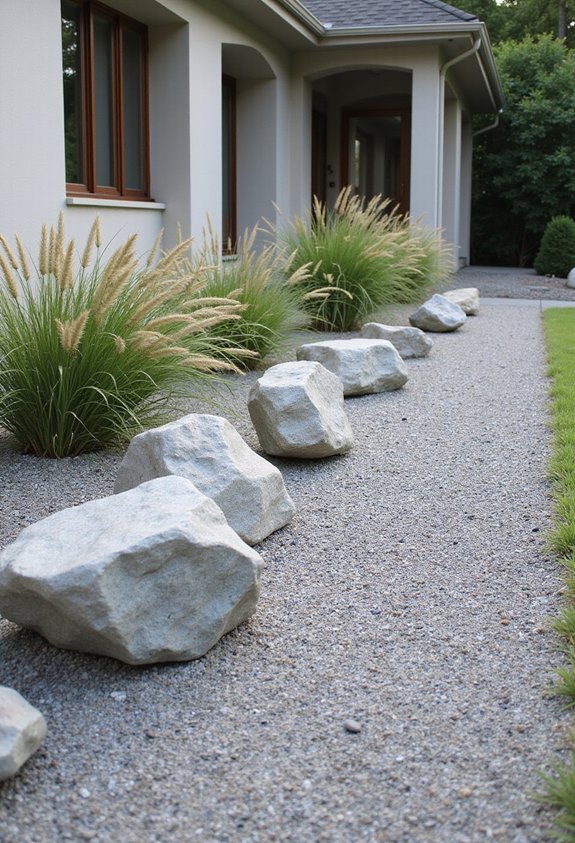
For a no-mow front yard that embraces calm simplicity, you’ll want to ponder minimalist and zen-inspired stone designs, which build upon the structured approach of raised beds by creating serene landscapes through carefully arranged rock, gravel, and stone elements. You can establish clean lines by positioning larger stones as focal points, while using smaller pebbles to fill spaces between them. Raking gravel into patterns creates visual interest without requiring maintenance. Incorporate Japanese-style lanterns or simple water features to enhance the peaceful atmosphere. Layer different stone sizes and colors strategically to guide the eye across your yard. This approach eliminates grass entirely, reduces upkeep substantially, and produces a sophisticated appearance that transforms your front yard into a tranquil outdoor sanctuary.
Quick Maintenance Tasks to Keep Your No-Mow Yard Looking Fresh
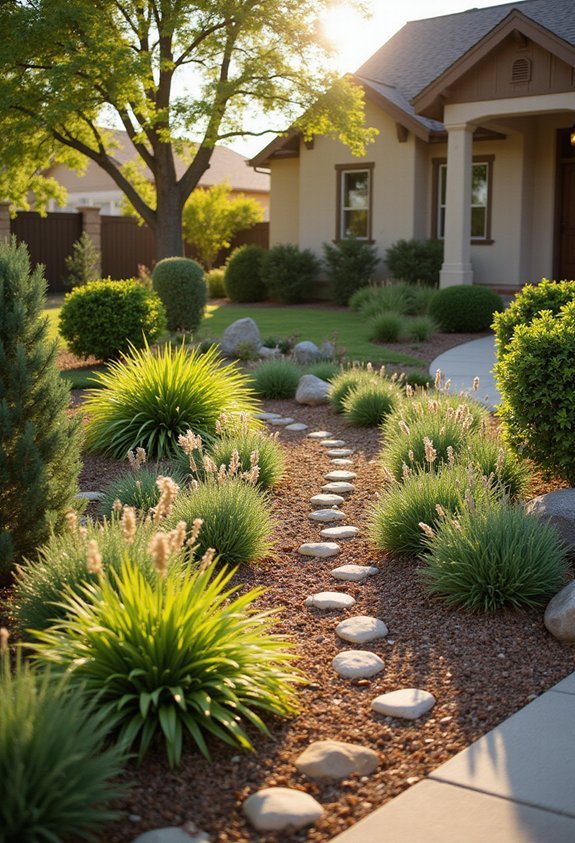
Although a no-mow yard requires considerably less upkeep than a traditional grass lawn, you’ll still need to perform certain maintenance tasks to keep your landscape looking polished and well-designed. You should regularly remove debris, including fallen leaves, branches, and dirt, which accumulate on stone surfaces and plant beds. Weeding between pavers and around plants prevents unwanted growth from detracting from your design’s appearance. Occasionally, you’ll need to rake gravel or mulch areas to maintain even coverage and refresh their color. Inspect hardscape elements for damage or shifting, addressing problems promptly. Clean stone surfaces with a gentle brush or low-pressure water to remove algae or stains. These straightforward tasks, performed seasonally or as needed, guarantee your no-mow yard remains attractive and well-maintained throughout the year.
Conclusion
You’ve now got the roadmap to transform your front yard into a low-maintenance landscape that’ll bloom like a garden you’ve always wanted. By selecting the right no-mow option for your specific sunlight and soil conditions, you’ll save time, money, and water while creating a thriving habitat for pollinators. Your choice between native plants, ornamental grasses, or stone designs determines your yard’s long-term success and visual appeal.