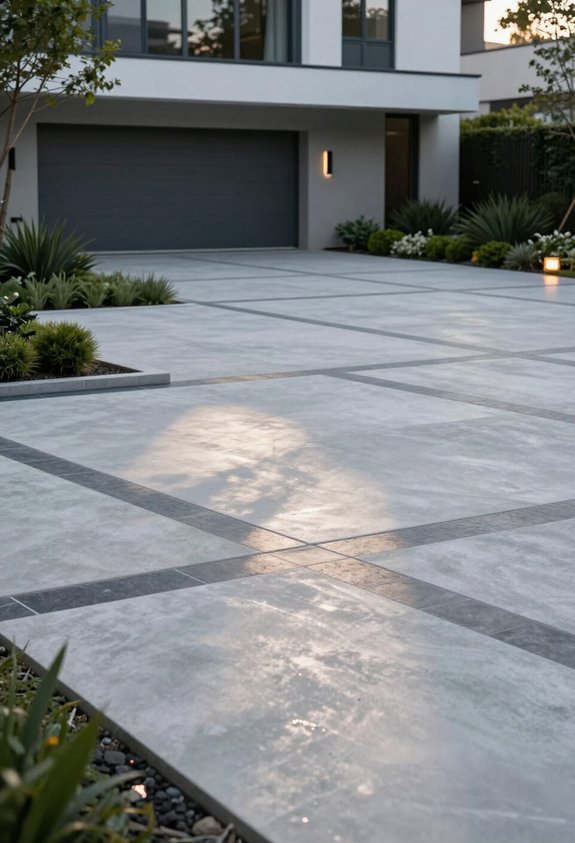
Many modern paved front yards fail because homeowners focus on material selection without considering how different paving types interact with each other or how the overall layout functions. Mismatched materials create visual confusion rather than sophistication. Poor planning leads to excessive hardscaping that dominates the space without serving clear purposes. Inadequate drainage causes water pooling and premature deterioration. Insufficient plantings make yards feel sterile and uninviting. The solution requires thoughtful planning around material consistency, functional layout, proper drainage infrastructure, and balanced integration of soft landscaping elements. These twenty ideas solve these challenges, offering both inspiration and practical guidance for creating modern paved front yards that look clean and polished while functioning reliably across seasons and years.
Minimalist Concrete Driveways With Clean Lines
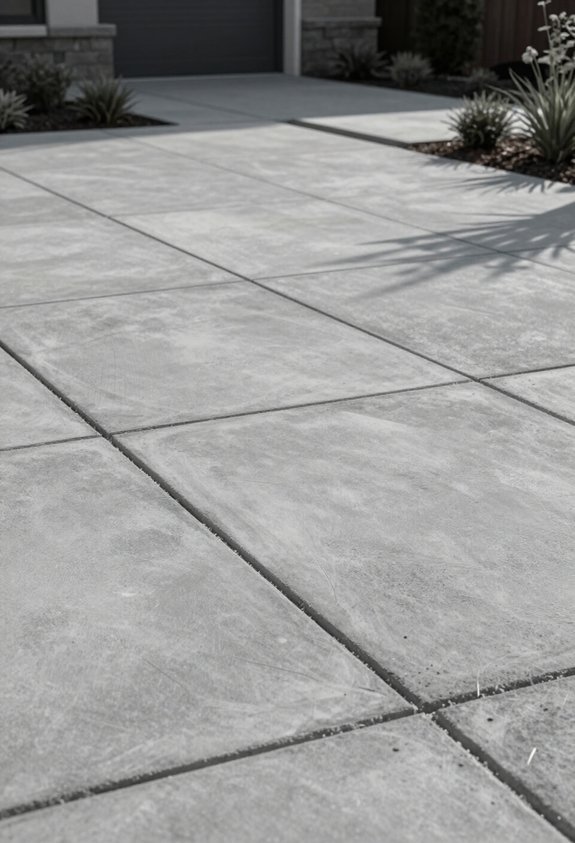
Minimalism in driveway design represents a modern approach to front yard paving that prioritizes simplicity, functionality, and visual clarity through the use of concrete as the primary material. Clean lines created by strategic scoring or subtle color variations define spaces without unnecessary ornamentation, establishing geometric patterns that guide vehicles and pedestrians efficiently. This design philosophy eliminates decorative elements, focusing instead on straight edges, uniform surfaces, and consistent textures that complement contemporary architecture. Concrete’s neutral palette serves as a versatile foundation, allowing homeowners to integrate landscaping or accent materials strategically. Proper drainage integration and reinforced joints guarantee durability and longevity. The resulting aesthetic conveys sophistication through restraint, demonstrating that effective design requires intentional choices about what to include and exclude from the visual composition.
Also read: 23+ FRONT YARD BUSHES SHRUBS That Look Expensive!
Japanese Gravel Gardens for Zen-Inspired Curb Appeal
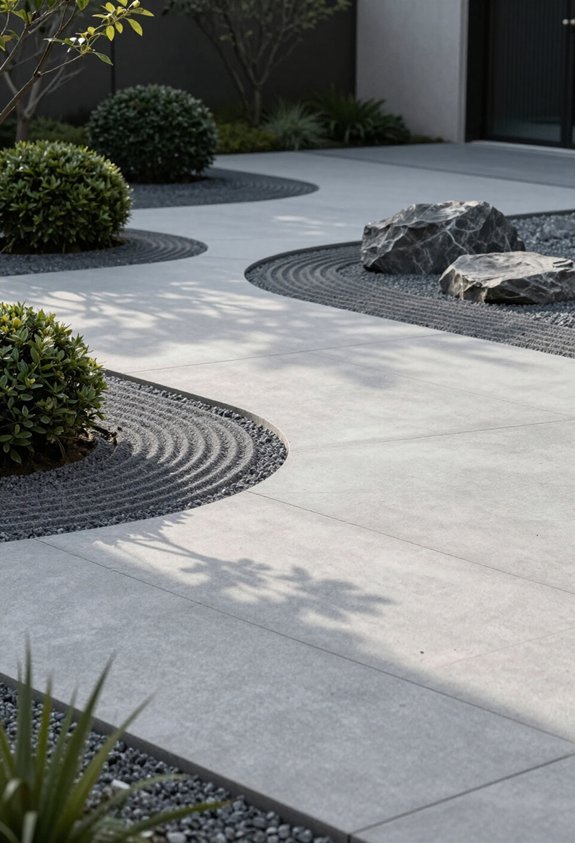
Japanese gravel gardens offer homeowners a serene alternative to traditional paved front yards by incorporating carefully raked gravel, strategically placed stones, and minimalist plant selections that create a calming outdoor space inspired by Zen philosophy. The design process begins with selecting fine gravel or sand, which serves as the foundation for creating intricate patterns through deliberate raking techniques. Large rocks positioned throughout the garden represent mountains or islands, while smaller stones establish pathways guiding visitors through the space. Sparse plantings, such as moss, bamboo, or ornamental grasses, complement the hardscape elements without overwhelming the composition. This approach requires minimal maintenance compared to traditional landscaping, as the gravel naturally suppresses weeds and requires only occasional raking to maintain aesthetic patterns and alignment with Zen design principles.
Industrial Concrete and Gravel Combinations
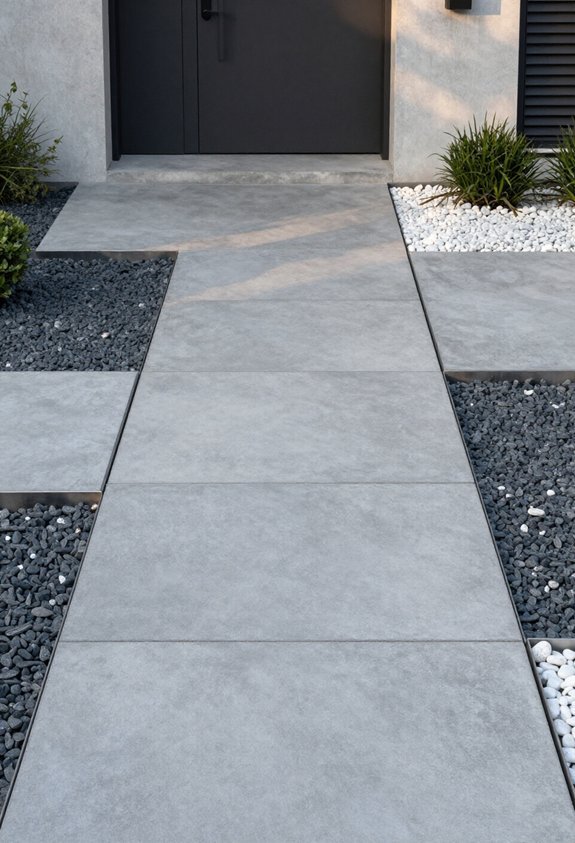
While Zen gardens emphasize minimalism and tranquility through natural materials, industrial concrete and gravel combinations offer homeowners a bold, contemporary aesthetic that prioritizes durability and modern design. This approach involves pouring concrete slabs or stamped concrete as the primary surface, then integrating gravel in designated areas to create visual interest and break up solid expanses. The combination provides practical benefits: concrete offers low-maintenance pathways and parking spaces, while gravel adds texture and allows water drainage in landscape beds. Homeowners can choose decorative gravel types, such as river rocks or crushed granite, to complement the concrete’s neutral tones. This hybrid design works particularly well for modern homes, creating a sleek appearance that requires minimal upkeep while maintaining functionality and contemporary visual appeal.
Mediterranean Style With Warm Sandstone Paving
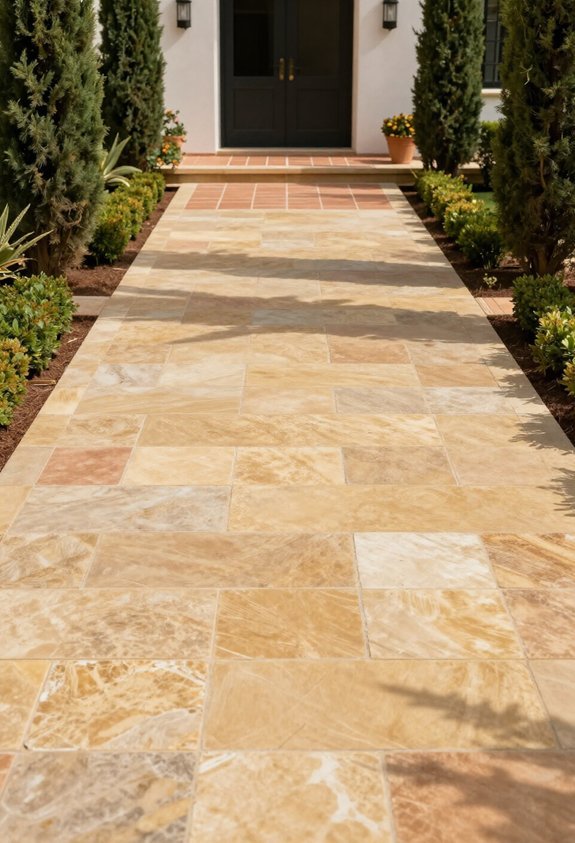
Mediterranean style paving brings warmth and Old World charm to front yards through the use of natural sandstone materials, offering homeowners an alternative to the stark, modern aesthetic of concrete and gravel combinations. Warm sandstone pavers, available in terracotta, golden, and cream tones, create inviting pathways that complement traditional architecture and landscaping. These stones develop natural patinas over time, enhancing their visual appeal and character. Sandstone’s textured surface provides excellent traction while resisting excessive heat absorption. Installation typically involves setting pavers in sand or mortar bases, requiring careful spacing and leveling for longevity. Mediterranean designs frequently incorporate curved patterns, decorative borders, and integrated planting areas featuring olive trees or lavender. The durability and timeless aesthetic of sandstone paving guarantee lasting curb appeal and functional outdoor spaces.
Monochromatic Color for Bold Impact
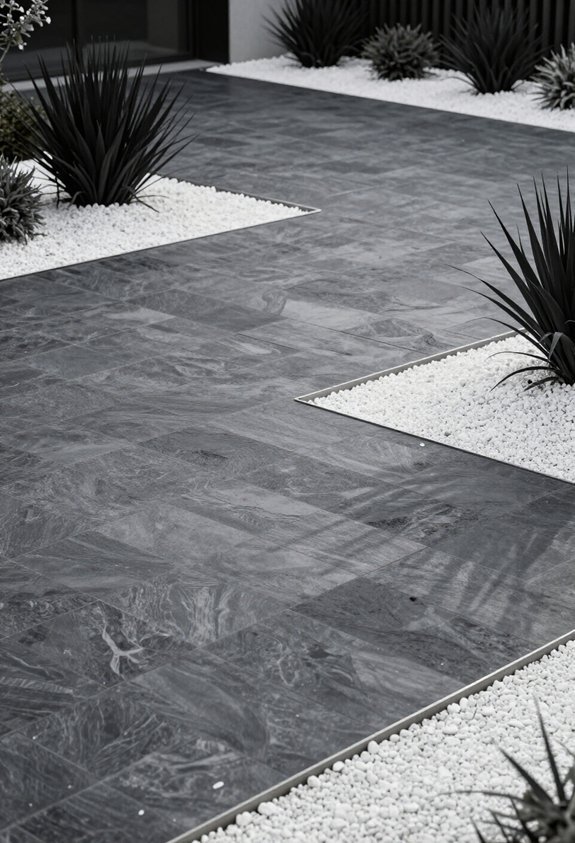
A monochromatic front yard paving design relies on a single color or closely related shades within the same color family to create a unified, striking visual statement that draws immediate attention to the home’s exterior. This approach eliminates visual clutter by using consistent coloring throughout the paved surface, whether selecting charcoal gray, warm beige, or deep slate tones. Homeowners can enhance depth by varying the paving material’s texture, incorporating smooth finishes alongside rough surfaces, or arranging pavers in distinctive patterns like herringbone or geometric designs. Monochromatic schemes work particularly well with modern architecture and contemporary landscaping. Adding strategic lighting, potted plants, or contrasting border elements can further elevate the design while maintaining the color scheme’s cohesive impact and sophisticated appearance.
Curved Layouts for Visual Flow
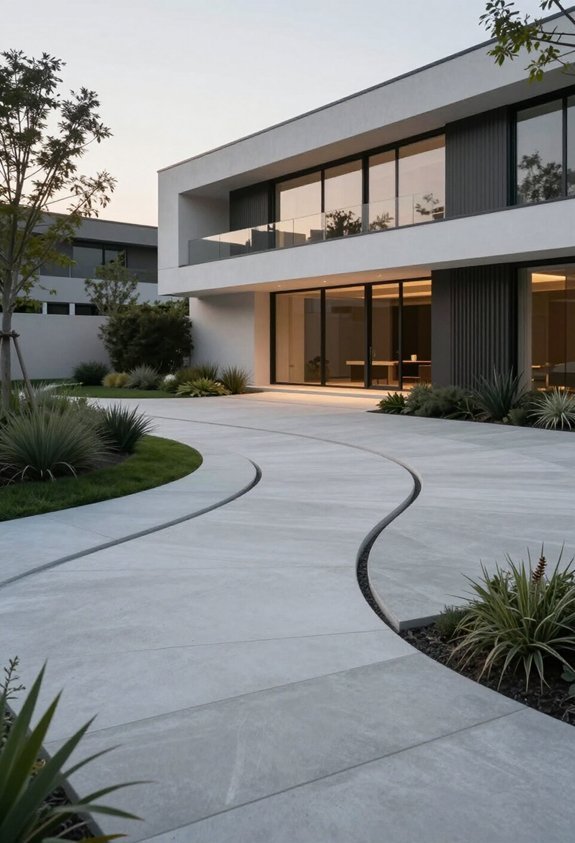
How can curved paving layouts transform a front yard’s visual appeal and guide movement through outdoor spaces? Curved pathways and pavement designs create natural flow by directing the eye smoothly across the landscape, avoiding the rigid appearance of straight lines. These gentle, rounded patterns encourage visitors to follow specific routes while making outdoor areas feel larger and more inviting. Curved layouts work particularly well when combined with landscaping elements like circular planting beds or rounded seating areas, establishing visual continuity throughout the space. The design technique softens hardscaping materials, such as concrete or pavers, producing a balanced aesthetic that blends structured elements with organic forms. Implementing curved layouts requires careful planning of drainage patterns and material placement to guarantee both functionality and visual harmony. This approach greatly enhances modern front yard design through strategic spatial organization.
Geometric Tile Patterns in Neutral Tones
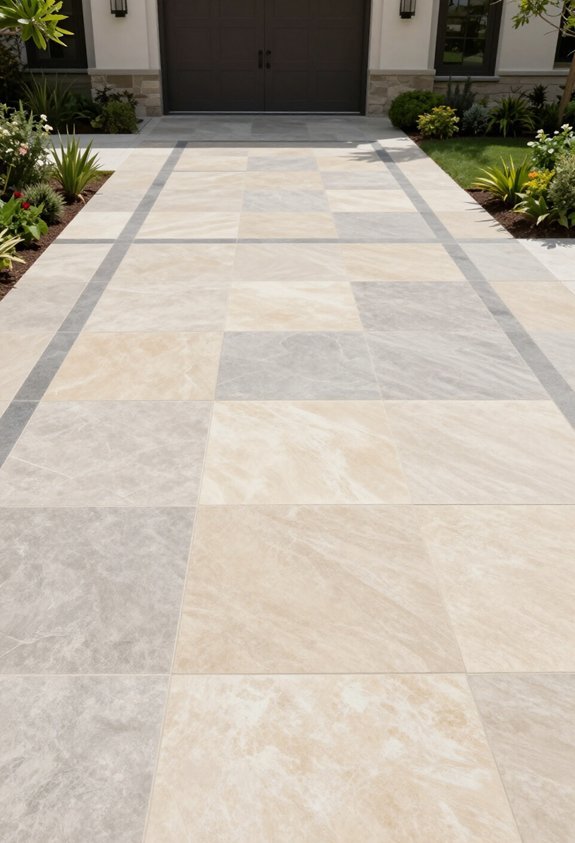
Geometric tile patterns in neutral tones offer a sophisticated and practical solution for front yards seeking a modern, refined aesthetic that remains timeless and versatile. These patterns utilize squares, rectangles, and hexagons in shades of gray, beige, and white to create visual interest without overwhelming the space. The systematic arrangement of tiles establishes order and structure, contributing to a clean appearance that complements contemporary architecture. Neutral tones provide flexibility for accessorizing with plants, lighting, or decorative elements, allowing homeowners to adjust their landscape’s style without replacing the foundational paving. This approach minimizes maintenance concerns while delivering an upscale appearance that enhances curb appeal and property value through thoughtful geometric design and restrained color selection.
Sleek Black Asphalt Designs
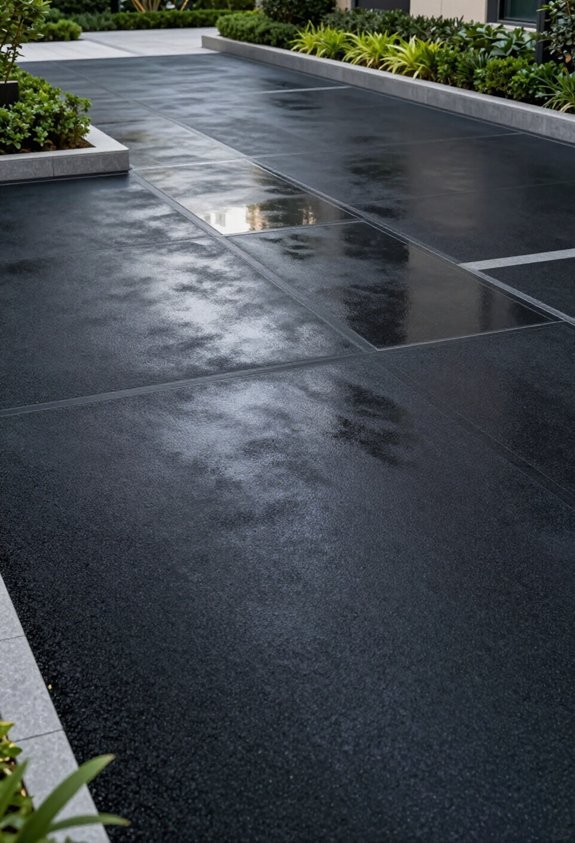
While geometric tile patterns offer refined visual sophistication through ordered design, sleek black asphalt designs present an alternative approach that emphasizes bold simplicity and practical functionality for front yards. Black asphalt creates a contemporary aesthetic that complements modern architecture, providing clean lines and a uniform appearance. This material offers several advantages for homeowners, including durability, affordability, and low maintenance requirements compared to decorative alternatives. Black asphalt effectively absorbs heat and water runoff, making it practical for various climate conditions. The dark surface also serves as a neutral backdrop that allows landscaping features, architectural elements, and entryway designs to become focal points. Installation remains straightforward, and repairs are manageable when necessary, ensuring long-term viability for front yard applications.
Large Format Porcelain Pavers for Seamless Appeal
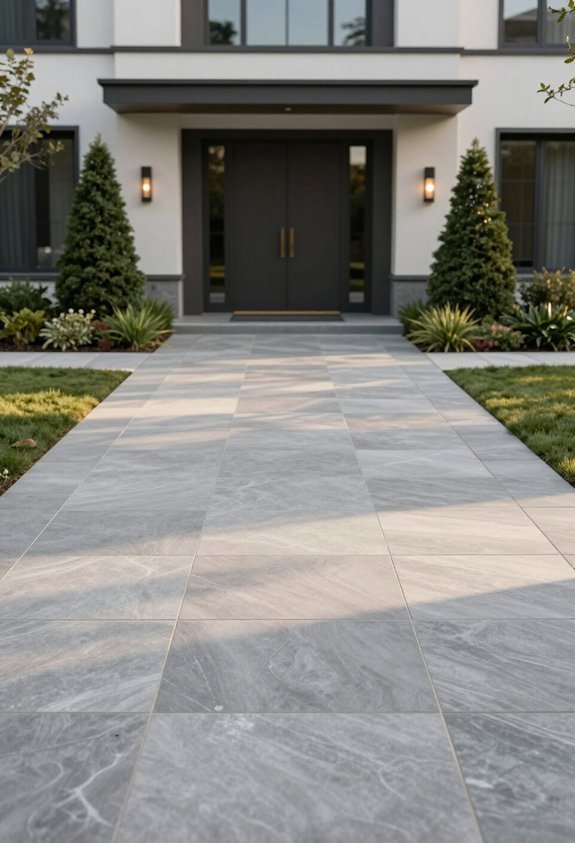
Large format porcelain pavers represent a premium option for front yards that prioritizes visual continuity and refined aesthetics, offering homeowners a sophisticated alternative to traditional paving materials. These oversized tiles, typically measuring 24 by 24 inches or larger, create fewer visible grout lines, which produces a seamless, uninterrupted surface appearance. Porcelain’s non-porous composition makes it exceptionally durable and resistant to staining, weather damage, and freeze-thaw cycles, ensuring long-lasting performance in various climates. The material comes in numerous finishes, including matte, polished, and textured options, allowing customization to match contemporary or minimalist design preferences. Installation requires professional expertise and proper subbase preparation to prevent cracking and settling issues, making this option more labor-intensive than conventional pavers but delivering superior aesthetic results.
Herringbone Brick Paving for Modern Homes
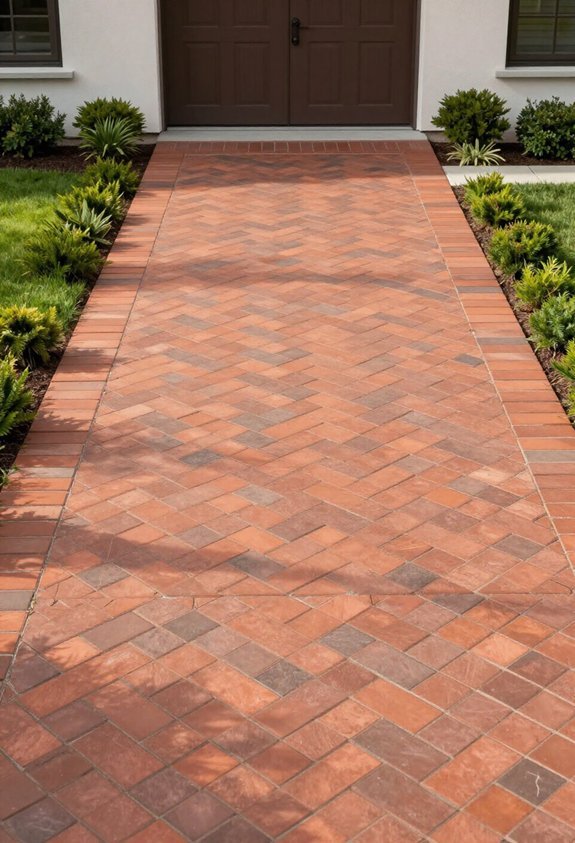
Herringbone brick paving offers homeowners a distinctive alternative to seamless porcelain surfaces, combining classic brick aesthetics with a dynamic, interlocking pattern that enhances visual interest and structural stability in front yard designs. This geometric arrangement, where rectangular bricks alternate at forty-five-degree angles, creates a visually compelling pattern that directs the eye across the surface while distributing weight evenly throughout the installation. The overlapping configuration provides superior load-bearing capacity compared to straight-laid patterns, making herringbone particularly suitable for driveways and high-traffic areas. Modern homeowners appreciate this style for its timeless elegance and versatility, as brick colors range from warm terracottas to cool grays, accommodating various architectural preferences. Proper installation requires precision alignment and adequate base preparation to guarantee longevity and structural integrity.
Permeable Pavers That Drain and Look Polished
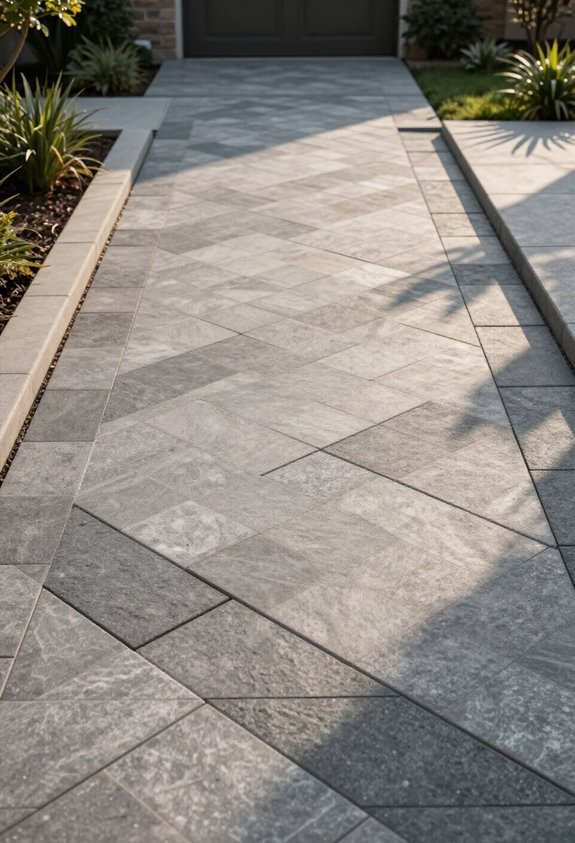
Permeable pavers represent a practical solution for homeowners seeking both aesthetic appeal and environmental responsibility in front yard design, as these specialized paving materials allow water to drain through small gaps or porous surfaces rather than pooling on top like traditional concrete or asphalt. Available in various styles, colors, and textures, permeable pavers combine functionality with visual sophistication, enabling property owners to create elegant outdoor spaces while managing stormwater runoff effectively. The installation process involves laying individual units over a prepared gravel base, allowing water infiltration into the ground below. This drainage capability reduces flooding risks, replenishes groundwater supplies, and minimizes environmental strain. Permeable pavers maintain their polished appearance through regular cleaning while providing a durable, long-lasting surface suitable for modern front yards.
Grid Pavers You Can Fill With Gravel or Grass
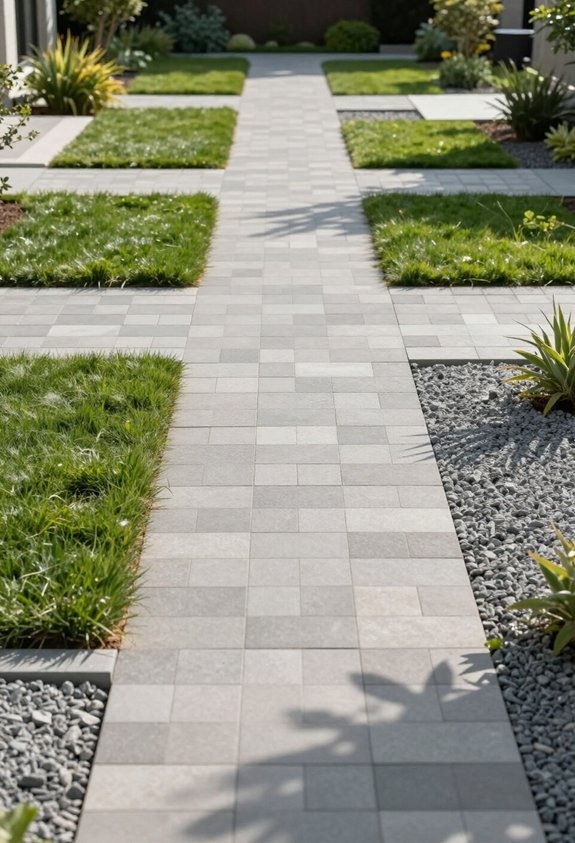
Grid pavers offer homeowners an alternative approach to front yard paving that combines the structural benefits of permeable materials with customizable aesthetic flexibility, allowing property owners to choose between filling the open spaces with gravel, decorative stones, or living grass depending on their preferences and maintenance capabilities. These modular systems feature open frameworks designed to support vehicle weight while permitting water drainage through the gaps. When filled with gravel, grid pavers create a low-maintenance surface requiring periodic raking and occasional gravel replenishment. Grass-filled options provide a natural appearance while maintaining permeability, though they demand regular mowing and watering. Decorative stone fills offer intermediate maintenance requirements and diverse visual appeal. Grid pavers suit driveways, parking areas, and pathways, delivering both functional durability and design customization for modern front yards.
Recycled Asphalt for Sustainable Style
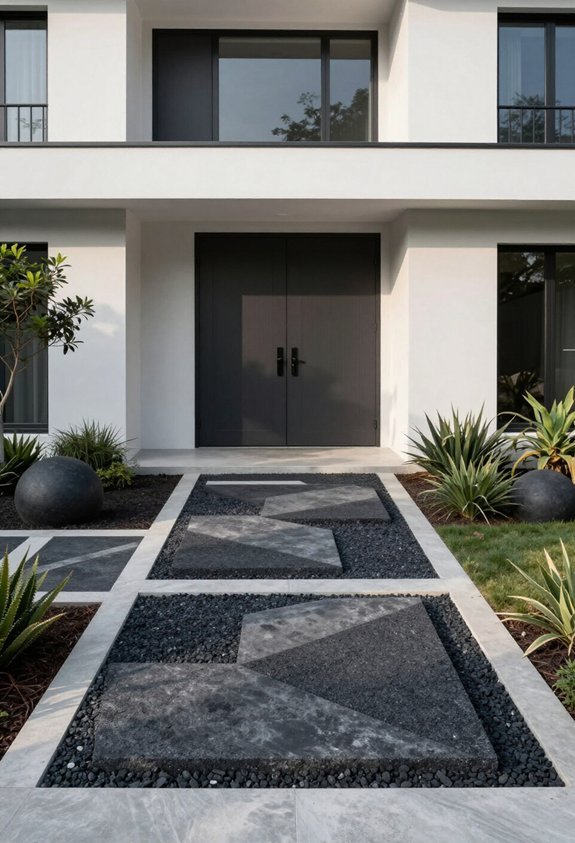
Because environmental concerns increasingly influence home design choices, recycled asphalt has emerged as a practical and sustainable option for front yard paving projects that combines ecological responsibility with functional durability. This material consists of old asphalt that has been processed and repurposed, reducing landfill waste while providing an economical paving solution. Recycled asphalt compacts firmly when properly installed, creating a stable surface that withstands vehicle traffic and weather conditions effectively. The dark color offers a modern aesthetic that complements contemporary home designs. Installation involves spreading the material across a prepared base and compacting it with specialized equipment to guarantee longevity. Homeowners appreciate this option for its affordability, sustainability credentials, and low-maintenance requirements, making it an increasingly popular choice for environmentally conscious property owners seeking practical front yard solutions.
Ribbed or Textured Concrete Finishes
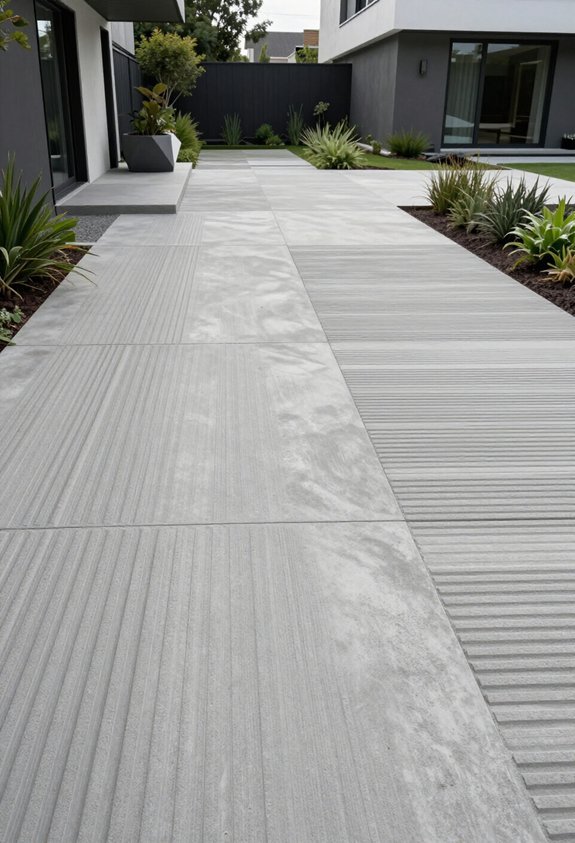
While recycled asphalt offers an economical and sustainable paving solution, homeowners seeking a more polished and refined appearance for their front yards often turn to concrete finishes that combine aesthetic appeal with practical functionality. Ribbed or textured concrete finishes provide enhanced slip resistance, making them particularly suitable for areas prone to moisture or ice accumulation. These finishes are created by imprinting patterns into wet concrete or using specialized tools during the installation process, resulting in surfaces that grip shoes and tires effectively. Additionally, textured finishes effectively conceal minor dirt and stains that might appear prominent on smooth concrete surfaces. The variety of pattern options available allows homeowners to customize their front yards while maintaining a contemporary aesthetic that complements various architectural styles and landscaping designs.
Contrast Materials to Define Zones
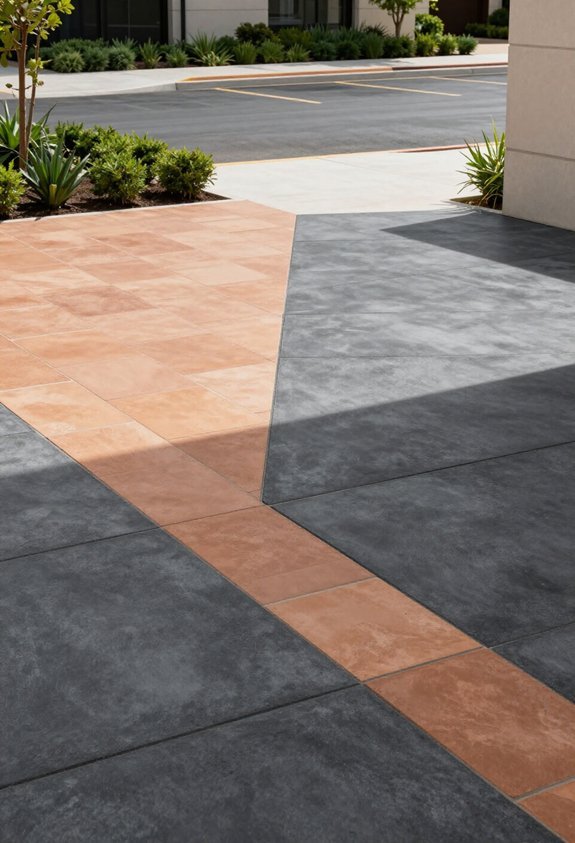
Strategic material selection creates visual boundaries and functional separations within front yard paving designs, allowing homeowners to organize outdoor spaces according to specific purposes and aesthetic preferences. Combining different paving materials, such as pavers with concrete or gravel with stone, establishes distinct zones for parking, walkways, and landscaping areas. This approach enhances both functionality and visual interest by creating natural shifts between different sections of the yard. Materials with contrasting colors, textures, or patterns serve as effective dividers without requiring physical barriers like fences or walls. For example, lighter-colored pavers might delineate a main pathway, while darker materials define a separate parking zone. Such strategic material combinations guide foot traffic, organize outdoor activities, and create a cohesive, intentional appearance that elevates the overall front yard design.
Grow Plants Within Your Paved Layout
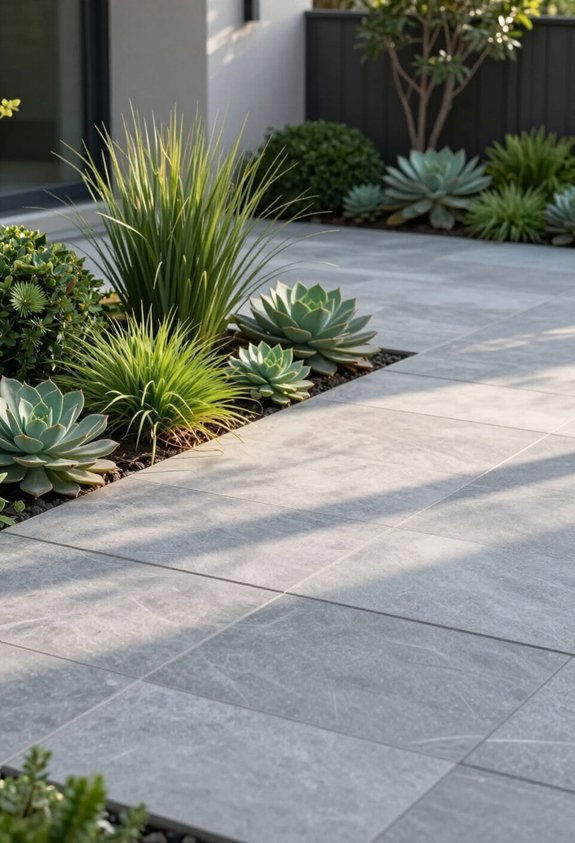
Integrating plants into paved front yard designs creates opportunities to soften hard surfaces while maintaining the structural benefits of paving materials, and homeowners can accomplish this through several methods that combine greenery with functional outdoor space. Planting beds carved into paved areas provide designated zones for flowers, shrubs, and ornamental grasses, breaking up monotonous expanses of concrete or pavers. Alternatively, strategic placement of container plants around the paved perimeter adds flexibility, since pots can be repositioned seasonally or replaced easily. Permeable pavers with soil gaps allow ground covers and low-growing plants to flourish between individual units, creating a cohesive integrated appearance. These layered approaches transform stark paved landscapes into visually balanced environments that combine durability with natural beauty.
Layer Decorative Stone With Strategic Greenery
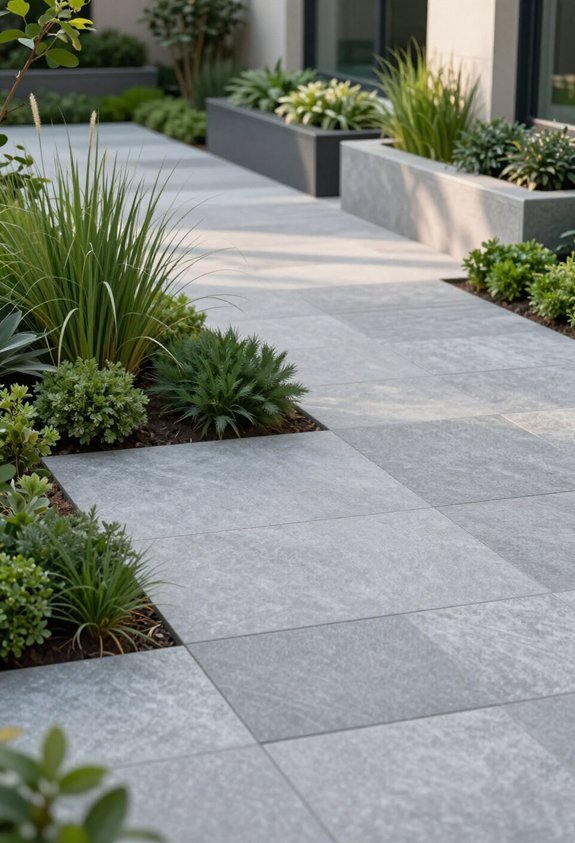
Combining decorative stone with carefully positioned plants creates visual interest and depth in paved front yards while allowing homeowners to establish focal points that draw the eye through the landscape. Strategic placement involves selecting stones in varying colors and sizes, then arranging evergreen shrubs, ornamental grasses, or flowering perennials around them to break up monotony. This layering technique prevents yards from appearing flat or uninviting by creating natural shifts between hardscaped and planted areas. Homeowners should consider the mature size of plants when positioning them near stone features, ensuring adequate spacing for growth. Using contrasting textures—smooth pebbles against feathery ferns or rough gravel beside delicate flowers—enhances the overall design while maintaining the clean, modern aesthetic that paved yards are known for achieving.
Low-Maintenance Xeriscaping With Decorative Stones
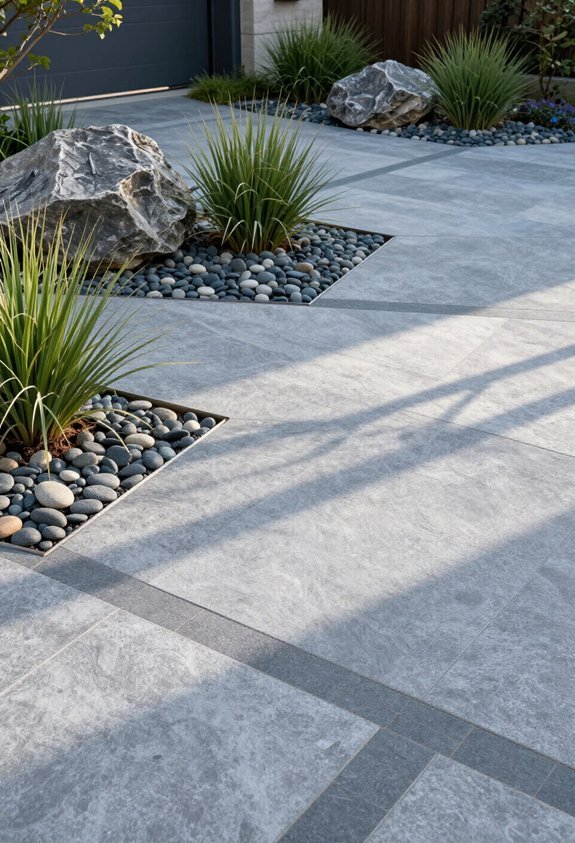
Because water conservation and reduced yard maintenance have become increasingly important to homeowners, xeriscaping with decorative stones offers a practical solution that combines aesthetic appeal with environmental responsibility. This landscaping approach minimizes water usage by replacing grass with drought-resistant plants and various stone materials, creating visually interesting patterns and textures. Homeowners can arrange stones in different sizes, colors, and shapes to establish focal points and define pathways throughout the front yard. Decorative stones like river rock, pea gravel, and flagstone require no watering, fertilizing, or mowing, greatly reducing maintenance time and costs. When paired with hardy, low-water plants such as sedums or ornamental grasses, this xeriscaping method produces an elegant, contemporary appearance while promoting sustainability and preserving natural resources.
Smart Lighting Built Into Paved Surfaces
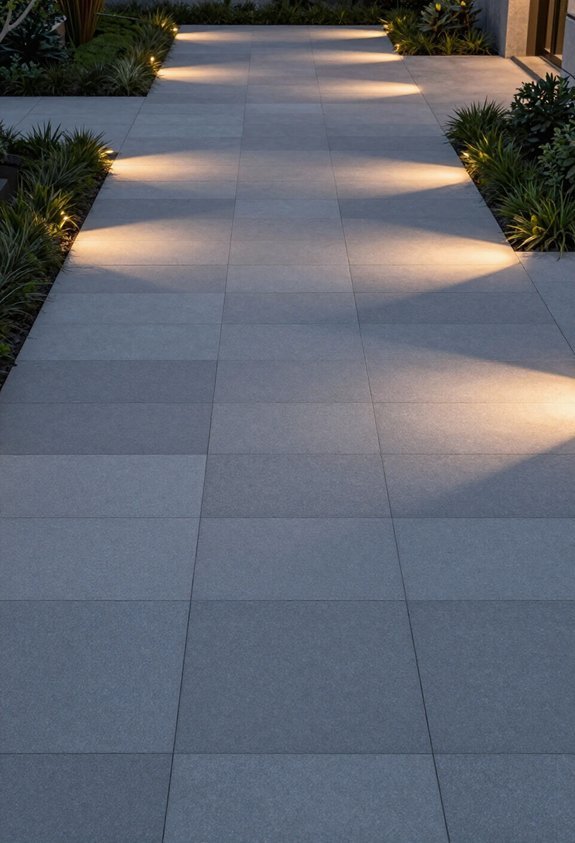
While xeriscaping with decorative stones creates a sustainable and visually appealing front yard that requires minimal maintenance, homeowners can further enhance their paved surfaces by incorporating smart lighting systems that combine functionality with modern technology. LED lights embedded directly into pavers provide ambient illumination that highlights pathways, prevents tripping hazards, and creates visual interest during evening hours. These systems can be controlled through smartphone applications, allowing homeowners to adjust brightness levels and color temperatures remotely. Solar-powered options eliminate wiring requirements and reduce electricity costs considerably. Motion-sensor capabilities add security by activating lights when movement is detected near the property. Smart lighting transforms paved front yards into safe, attractive spaces while demonstrating contemporary design sensibilities that appeal to modern homeowners seeking both practicality and aesthetic enhancement.
Sunken Seating Areas Paved in Stone
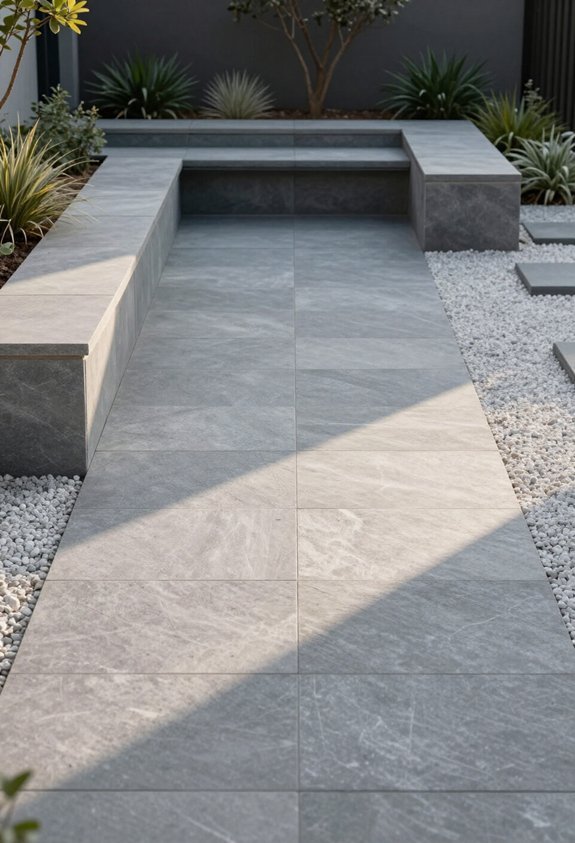
Creating sunken seating areas within a paved front yard offers homeowners a practical and visually striking way to expand outdoor living space while establishing distinct zones for relaxation and social gathering. These recessed areas, typically constructed one to two feet below ground level, are bordered by stone or pavers that define their perimeter and prevent soil erosion. Builders often incorporate built-in seating along the sunken perimeter, maximizing functionality while maintaining clean sight lines across the yard. Proper drainage installation proves essential to prevent water accumulation during rainfall. Stone materials like flagstone, slate, or limestone provide durable, weather-resistant surfaces that complement modern landscaping aesthetics. Lighting fixtures installed within or around the seating area enhance visibility during evening hours while creating an inviting atmosphere for outdoor entertainment.
Frequently Asked Questions
How Much Does It Cost to Pave a Front Yard Compared to Traditional Landscaping?
Paving typically costs $10-25 per square foot, while traditional landscaping ranges from $5-15 per square foot. However, paved yards require less maintenance, potentially offsetting higher initial expenses over time through reduced upkeep costs.
What Is the Best Paving Material for Areas With Heavy Rainfall or Snow?
Permeable pavers and porous asphalt excel in heavy rainfall and snow regions. These materials allow water drainage, prevent ice accumulation, and resist freeze-thaw damage. Concrete with proper slope also performs well in harsh climates.
How Long Do Paved Front Yards Typically Last Before Needing Repair or Replacement?
Paved front yards typically last 15-20 years before requiring significant repairs or replacement, depending on material type, climate conditions, and maintenance practices. Concrete generally outlasts asphalt, which may need resurfacing every 10-15 years.
Can I Install Paved Front Yards Myself, or Do I Need Professional Contractors?
DIY installation is possible for simple projects, though professional contractors are recommended for complex designs, proper drainage, and longevity. Homeowners with experience can handle basic paving; larger undertakings benefit from expert expertise.
How Do I Prevent Weeds and Moss From Growing Between Pavers Over Time?
Homeowners prevent weeds and moss by applying polymeric sand between pavers, which hardens when wet and blocks growth. Regular sweeping, occasional pressure washing, and herbicide treatments maintain cleanliness effectively.
Conclusion
Modern paved front yards combine functionality with contemporary design through strategic material selection and thoughtful layout planning. By integrating concrete, stone, and permeable pavers with complementary greenery and lighting elements, homeowners create visually appealing outdoor spaces that require minimal maintenance while maximizing durability. These design approaches successfully balance clean aesthetics with practical utility, transforming front yards into sophisticated extensions of the home that demonstrate both style and environmental consciousness.