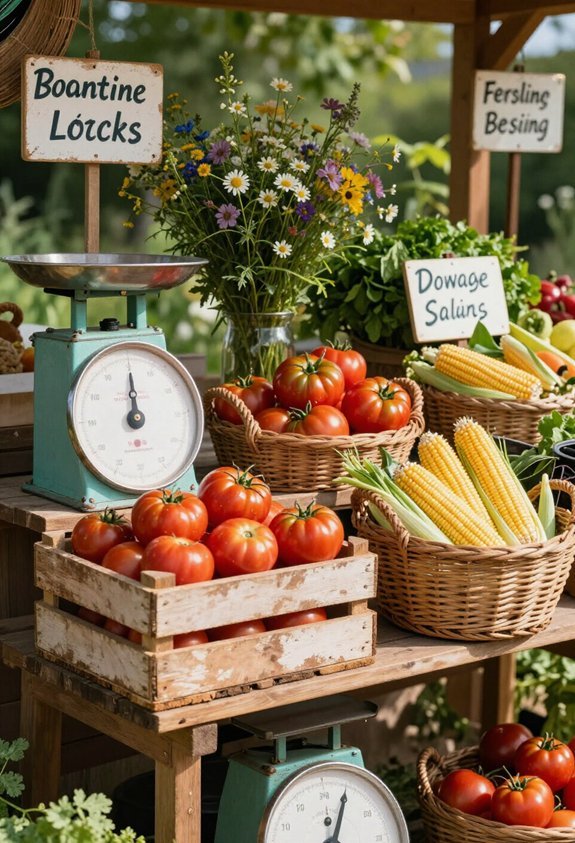
Front yard farm stands succeed when they’re designed as architectural elements rather than afterthoughts. The scale must relate proportionally to your home and front yard without overwhelming the space. Materials should complement your home’s existing style while conveying a sense of intentionality and quality. Sightlines from the street determine whether the stand becomes a focal point or blends invisibly into the landscape. Lighting, signage, display methods, and surrounding plantings all contribute to how inviting and polished the stand appears. These fifteen concepts apply design principles specific to streetside installations, showing how thoughtful details create farm stands that enhance curb appeal while functioning beautifully.
Classic Wooden Crate Farm Stand
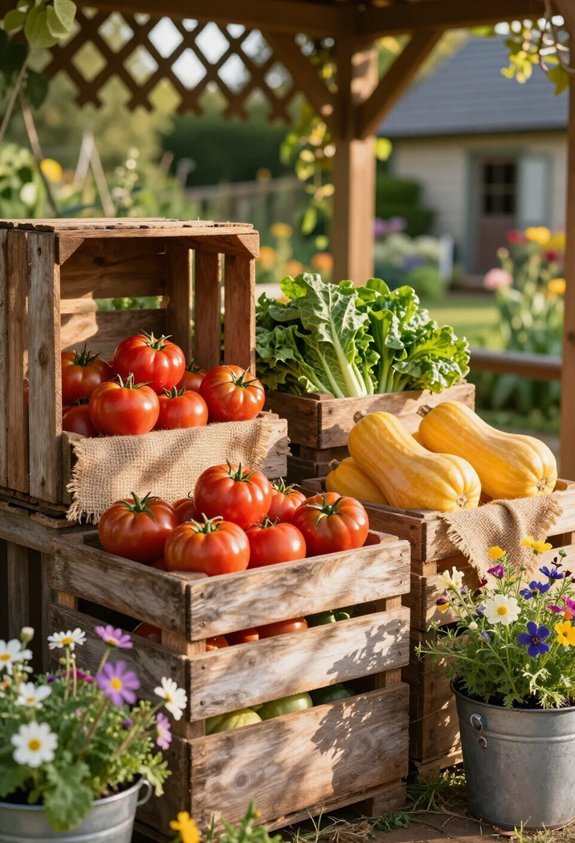
Many farmers and gardeners choose wooden crates as the foundation for building an effective farm stand because crates offer both durability and aesthetic appeal that attract customers to roadside displays. Builders can stack crates vertically or horizontally to create shelving units of various heights, which helps organize produce effectively and maximizes limited space. Wooden crates, typically constructed from pine or oak, withstand outdoor weather conditions when treated with protective sealant or paint. The rustic appearance complements agricultural settings naturally, requiring minimal additional decoration. Farmers can source crates from local suppliers, orchards, or warehouses, often at minimal cost. Adding a simple roof structure protects merchandise from rain and sun exposure. This versatile design accommodates seasonal adjustments, allowing operators to modify shelf arrangements based on inventory needs and customer traffic patterns throughout different growing seasons.
Also read: 23+ FRONT YARD BUSHES SHRUBS That Look Expensive!
Farmhouse Stand With Cottage Shutters
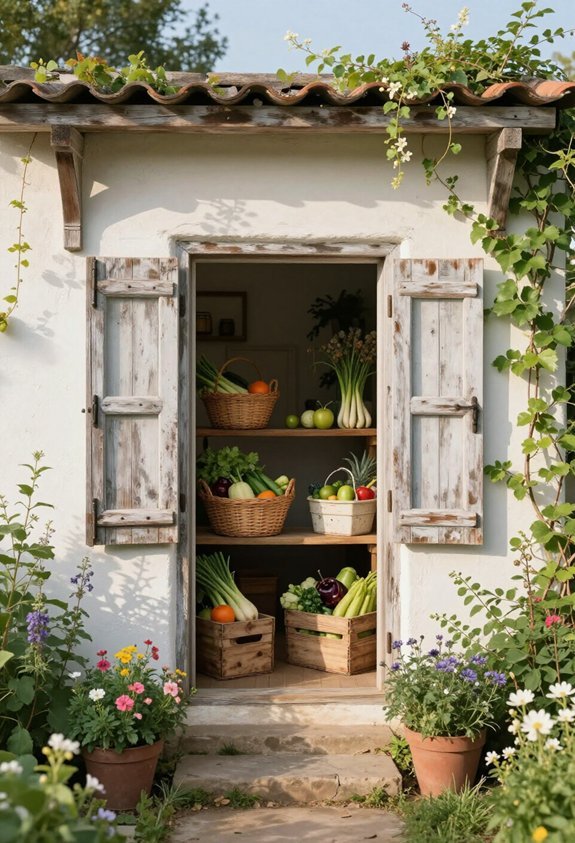
While wooden crate stands offer practicality and rustic charm, farmhouse stands featuring cottage shutters provide a more refined aesthetic that appeals to customers seeking a charming, established appearance. These stands incorporate decorative shutters on either side, creating an authentic farmhouse look that enhances visual appeal and distinguishes the display from simpler designs. Cottage shutters, typically painted in soft colors like white, cream, or pale blue, frame the produce area effectively and suggest quality craftsmanship. The shutters can be functional or purely decorative, allowing operators to control sun exposure and weathering of fresh goods. Building this style requires basic carpentry skills, sturdy framing, and quality shutters sourced from hardware suppliers or salvage yards. This investment in aesthetic detail attracts customers who appreciate traditional farmhouse design and perceive higher value in displayed products.
Rustic Barn Door Display Stand
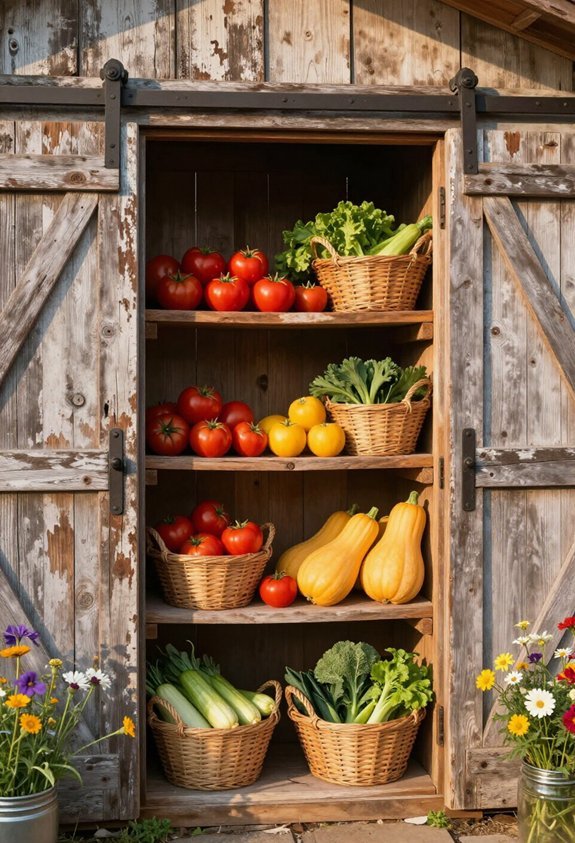
Barn door display stands represent a bold step beyond traditional farmhouse aesthetics, offering operators a striking visual centerpiece that commands attention and creates a memorable shopping experience for customers. These structures utilize authentic or reproduction barn doors as functional sliding panels, allowing vendors to adjust product visibility and protect merchandise from weather conditions. The rustic design naturally complements seasonal produce displays, featuring weathered wood textures and hardware that evoke agricultural heritage. Construction typically involves sturdy wooden frameworks with mounted sliding tracks, enabling smooth operation throughout daily business hours. Operators can customize door designs with paint finishes, decorative hinges, and signage integration. This display method effectively combines functionality with visual appeal, establishing a distinctive brand identity that attracts customers seeking authentic, farm-to-table experiences while maintaining practical storage and weather protection capabilities.
Vintage Wagon or Cart Conversion
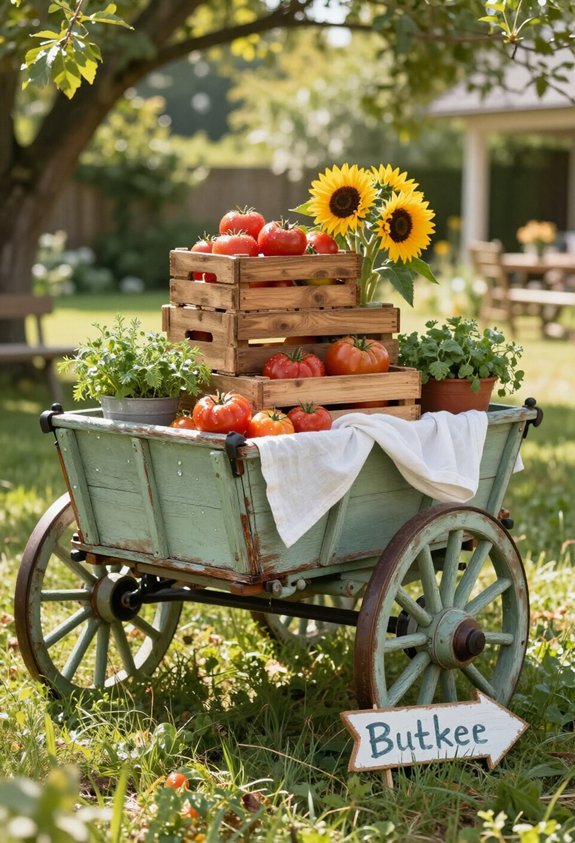
Transforming vintage wagons or carts into functional farm stand display units offers operators an authentic, mobile alternative to stationary structures, combining historical charm with practical versatility for showcasing seasonal produce and farm products. These converted pieces feature sturdy wooden frameworks that accommodate multiple shelving levels, allowing farmers to organize items by category and maximize visible display space. Operators should reinforce the cart’s structural integrity by inspecting wheels, axles, and support beams before loading merchandise. Adding weatherproof coverings, such as canvas canopies or wooden roofs, protects goods from rain and excessive sun exposure while maintaining the vintage aesthetic. Strategic positioning near property edges makes these mobile displays accessible to passersby, encouraging impulse purchases and creating distinctive visual landmarks that distinguish the farm stand from conventional retail competitors.
Contemporary Metal-Frame Farm Stand
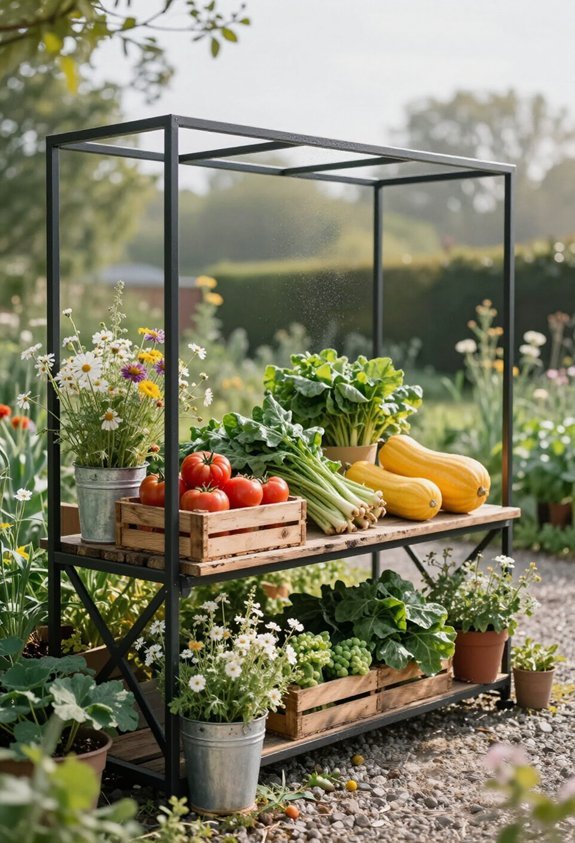
Modern metal-frame farm stands provide farmers with a durable, customizable structure that combines industrial strength with clean aesthetic appeal, offering a contemporary alternative to traditional wooden designs. These stands feature galvanized steel or aluminum frames that resist rust and weathering, ensuring longevity in outdoor environments. The open framework allows maximum visibility of displayed produce, while adjustable shelving accommodates various product sizes and quantities. Metal stands support heavier loads than wood alternatives, making them suitable for bulk displays and high-traffic farm stands. Installation requires basic tools and assembly, with most designs allowing quick setup or relocation. The minimalist appearance complements modern landscaping, while powder-coated finishes are available in multiple colors to match branding preferences. Metal frames demand minimal maintenance beyond occasional cleaning, making them practical for long-term farm stand operations.
Whimsical Fairy Tale Cottage Stand
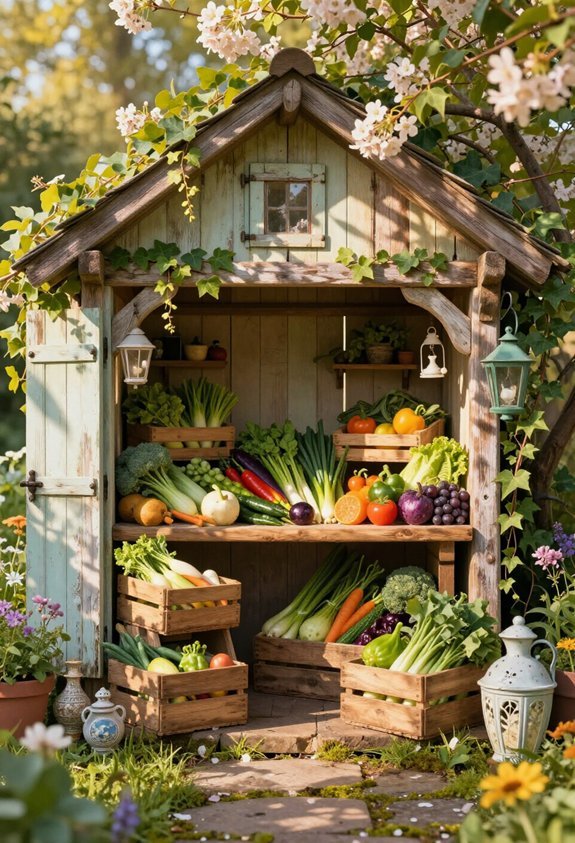
While contemporary metal frames prioritize industrial functionality and minimalist design, whimsical fairy tale cottage stands take a distinctly different approach by emphasizing charm, storytelling, and imaginative aesthetics that transform a simple produce display into an enchanting destination. These stands feature peaked roofs resembling storybook cottages, decorative shutters, and hand-painted details that evoke fantasy worlds. Builders typically incorporate natural wood with pastel colors, window boxes overflowing with flowers, and vintage signage to enhance the magical atmosphere. The structure’s design encourages customers to linger, creating memorable shopping experiences through visual storytelling. Tiered shelving and curved architectural elements showcase produce artfully, while weathered finishes add authentic character. This approach converts functional farm stands into Instagram-worthy attractions that appeal to families seeking entertainment alongside fresh vegetables and fruits.
Upcycled Cabinet Farm Stand
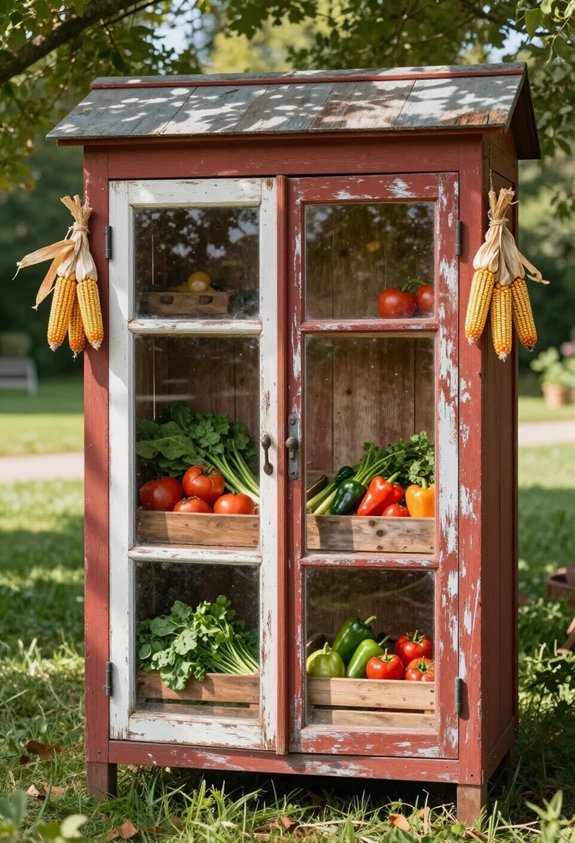
As an alternative to elaborate custom constructions, upcycled cabinet farm stands repurpose old furniture pieces, such as dressers, hutches, china cabinets, or kitchen cupboards, transforming discarded items into functional produce displays that require minimal building skills and materials. The process begins by selecting sturdy furniture with accessible shelving or compartments, then cleaning and treating the wood to withstand outdoor weather conditions. Owners can paint the cabinet in appealing colors, add weatherproof sealant, and install hardware for hanging baskets or additional storage. Produce arranges across shelves and drawers, while signage displays prices and item names. This approach offers affordability, sustainability, and distinctive character compared to mass-produced stands, allowing farmers to create personalized displays while reducing waste through creative furniture repurposing.
Farmhouse Stand With Chalkboard Signage
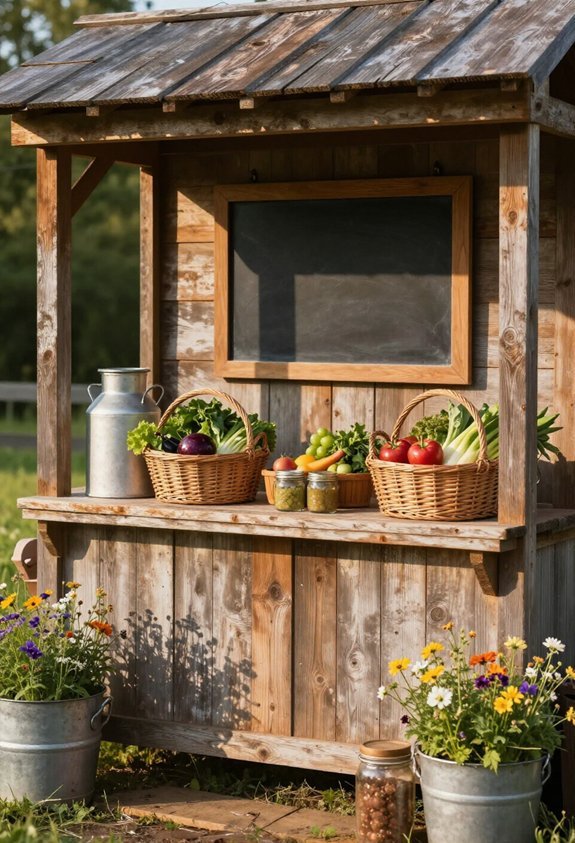
For those seeking a more polished and rustic aesthetic than repurposed furniture options, a farmhouse stand with chalkboard signage combines traditional design elements with practical functionality to create an inviting produce display that communicates pricing and product information effectively. This style typically features weathered wood construction, such as reclaimed barn wood or distressed painted surfaces, establishing an authentic country appearance that appeals to customers. The integrated chalkboard section allows vendors to update prices, highlight daily specials, and display product descriptions without permanent markers or replaceable paper signs. Natural elements like burlap draping, woven baskets, and potted flowers enhance the aesthetic while organizing produce efficiently. The combination of sturdy wooden framework and erasable signage creates a versatile, professional-looking farm stand that requires minimal maintenance while maintaining its charming character throughout the season.
Garden Gate Entrance Farm Stand
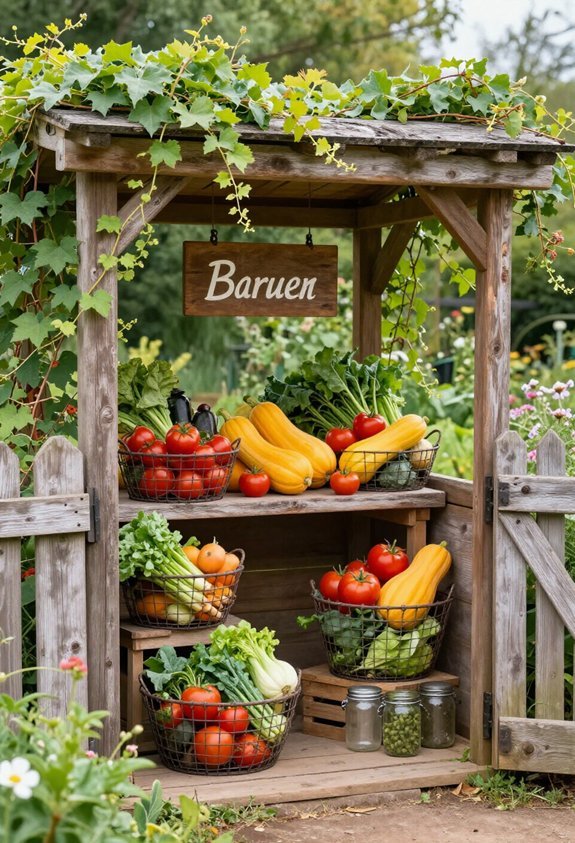
A garden gate entrance farm stand transforms the threshold between a residential property and a public space into a welcoming marketplace that draws customers through an attractive architectural feature rather than a simple storefront display. This design incorporates a charming gate as the primary focal point, which serves both functional and aesthetic purposes by creating a defined entry point while establishing the farm’s rustic character. The stand typically features shelving or display tables positioned just beyond the gate, allowing customers to browse produce while remaining in a designated area. Decorative elements such as hanging baskets, potted plants, or flower arrangements enhance the visual appeal and reinforce the agricultural theme. This setup encourages foot traffic from passersby who are drawn to the inviting entrance, ultimately increasing sales opportunities while maintaining the property’s curb appeal and neighborhood aesthetic.
Tiered Shelving Farm Stand
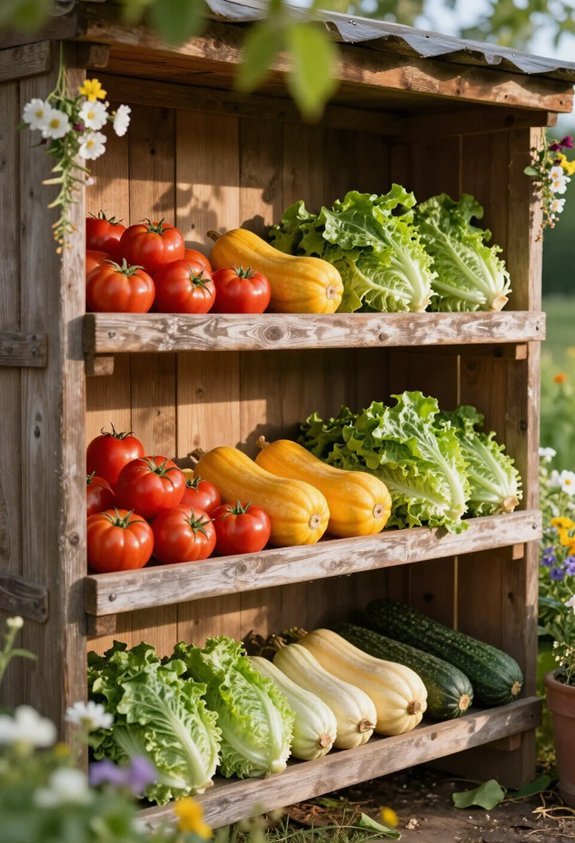
While a garden gate entrance farm stand creates an inviting architectural focal point that draws customers through an attractive threshold, a tiered shelving farm stand takes the display strategy in a different direction by using vertical space and multiple levels to organize and showcase produce more efficiently. This design maximizes limited ground area, allowing farmers to display considerably more items within a compact footprint. Tiered shelving typically features three to four levels, with lower shelves holding heavier items like squash and potatoes, while upper shelves accommodate lighter, more delicate produce such as berries and herbs. The ascending arrangement naturally guides customers’ eyes upward, encouraging them to examine all available products. This organizational method also facilitates easier customer access and improves inventory management notably.
Covered Gable Roof Farm Stand
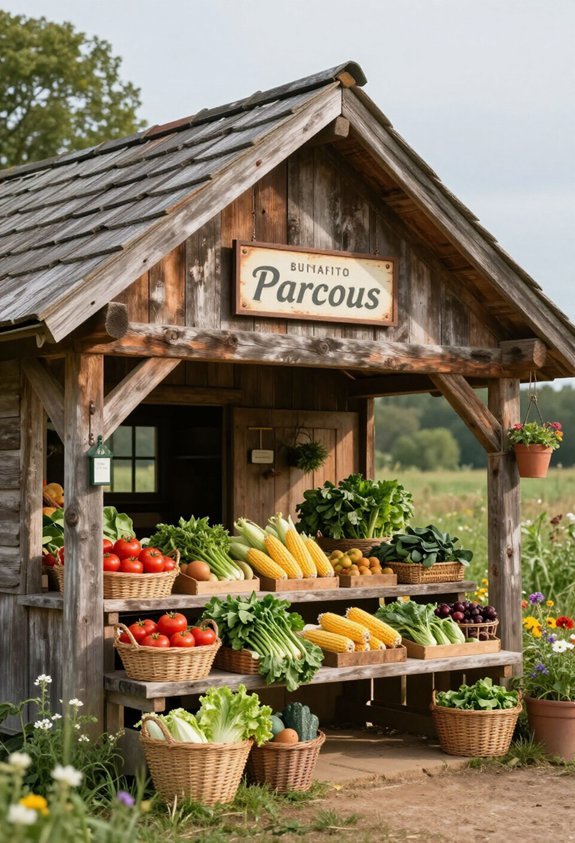
When weather protection becomes a priority for farm stand operators, the covered gable roof farm stand emerges as a practical solution that shelters both produce and customers from rain, snow, and intense sunlight. The distinctive peaked roof design allows water to run off efficiently while maximizing interior space underneath. Builders typically construct the frame using sturdy wooden beams or metal supports, ensuring stability against wind and heavy precipitation. The gable structure provides excellent ventilation, which prevents moisture accumulation and keeps produce fresh longer. Operators can customize the covering material using transparent panels for natural light or solid roofing for maximum shade. This design style combines functionality with visual appeal, making it an attractive addition to any front yard while protecting valuable inventory and creating a comfortable shopping experience for customers.
Budget-Friendly Pallet Wood Stand
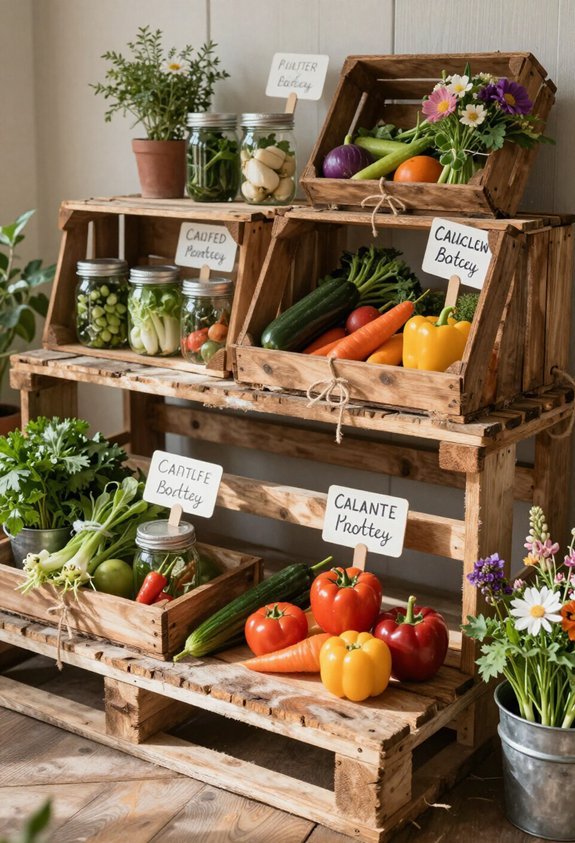
For farm stand operators seeking cost-effective alternatives to professionally built structures, repurposed wooden pallets offer an excellent foundation for constructing a functional and charming display stand that requires minimal financial investment. Pallets, which are typically available for free or at low cost from warehouses and retail stores, can be disassembled and reassembled into shelving units and display surfaces. Operators should select pallets in good condition, then sand the wood smooth to prevent splinters and improve appearance. Adding weatherproof stain or paint protects the wood from rain and sun damage. Arranging pallets vertically creates height variation for product displays, while horizontal configurations provide stable surfaces for heavier items. This approach allows farm stand owners to establish an attractive retail presence without substantial expenditure.
Arbor-Framed Farm Stand With Climbing Vines
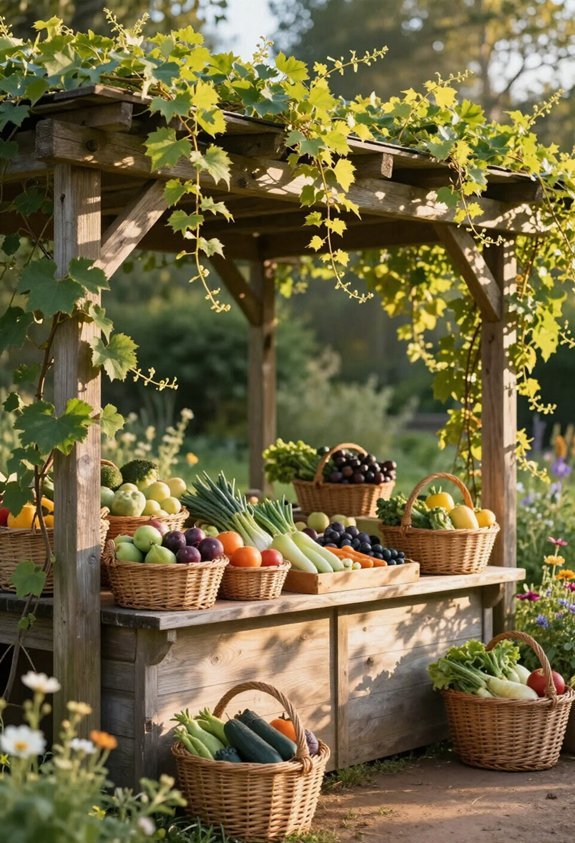
An arbor-framed farm stand combines structural elegance with natural beauty by integrating climbing vines into the design, creating a visually appealing structure that also provides shade and protection for displayed produce. This design approach involves constructing a sturdy wooden or metal framework that forms an arch or pergola over the stand area, where vines such as morning glories, clematis, or ivy gradually climb and spread across the supports. The vines serve multiple practical functions, including temperature regulation by reducing direct sunlight exposure, which helps keep vegetables and fruits fresher longer. Builders should guarantee the frame is properly anchored and can support the eventual weight of mature vines. Regular maintenance, including pruning and training the vines along designated pathways, keeps the stand attractive and functional while maintaining visibility of products for customers.
Glass-Paneled Greenhouse Window Stand
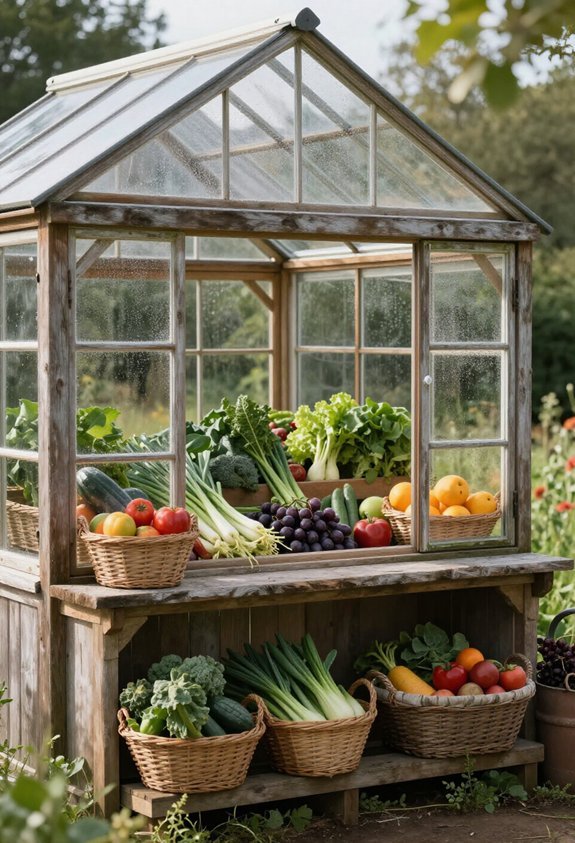
A glass-paneled greenhouse window stand transforms a front yard farm stand into a climate-controlled display space by incorporating transparent glass panels that trap heat and protect produce from harsh weather conditions, insects, and contamination. This design allows customers to view fresh vegetables and fruits through clear glass while maintaining ideal growing conditions inside. The greenhouse structure maintains warmer temperatures during cooler months, extending the selling season for delicate produce. Ventilation holes or adjustable panels prevent overheating during warm weather. The elevated window display creates an attractive focal point that draws customer attention while keeping merchandise organized and accessible. Builders can construct these stands using sturdy wooden frames with hinged or sliding glass panels for easy access and maintenance of the produce display.
Flower-Adorned Farm Stand With Integrated Planters
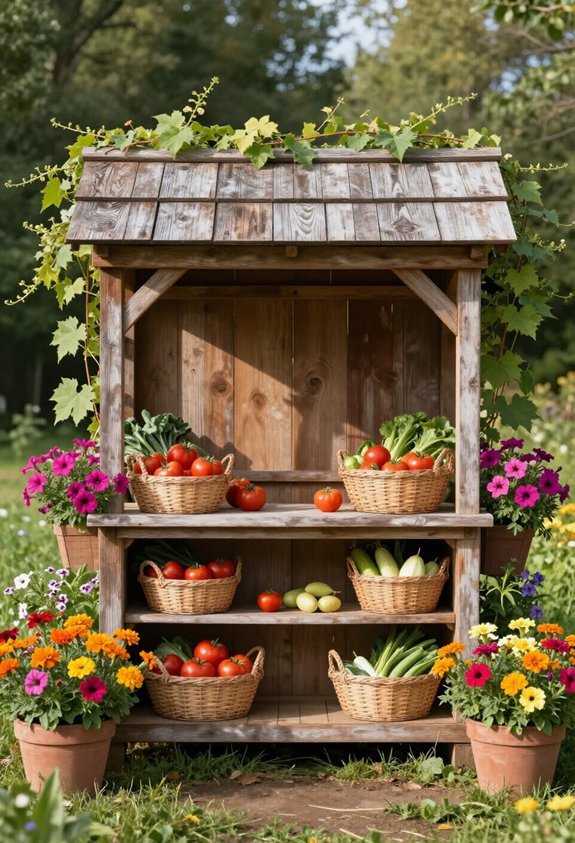
While most farm stands focus primarily on displaying produce, integrating decorative flowers and living planters into the stand’s structure creates an eye-catching display that serves both aesthetic and practical purposes by transforming the entire setup into an attractive garden showcase. Builders can install planter boxes along the stand’s sides and top edges, allowing customers to purchase flowering plants alongside fresh vegetables and fruits. Climbing vines, such as morning glories or clematis, can be trained along vertical supports to create natural green walls that frame the produce displays. Hanging baskets filled with colorful blooms add vertical dimension while maximizing limited space. This approach increases visual appeal, encourages longer customer visits, and provides opportunities to sell additional products beyond typical farm stand offerings.
Frequently Asked Questions
What Permits or Regulations Apply to Operating a Residential Front Yard Farm Stand?
Residential farm stands typically require local zoning permits, food safety licenses, and health department approval. Regulations vary by municipality but often include restrictions on operating hours, signage size, and product types allowed for sale.
How Do You Protect Produce From Pests and Weather Throughout the Day?
Farmers shield produce using shade cloths, row covers, and mesh netting against insects. Tiered displays and umbrellas protect from rain and sun. Regular misting maintains freshness while sealed containers deter pests overnight.
What’s the Best Pricing Strategy for Farm Stand Products to Maximize Profit?
Farmers maximize profit by pricing 10-15% above wholesale rates, adjusting for demand seasonality, product quality, and local competition. Bundling items and offering loyalty discounts encourages repeat purchases while maintaining healthy margins.
How Often Should You Restock and Refresh Displayed Items for Optimal Sales?
Farm stand operators should restock daily or every other day to maintain freshness and visual appeal. Regular rotation prevents wilting produce and encourages repeat customer visits. Strategic revitalization during peak shopping hours maximizes sales opportunities and customer satisfaction.
What Insurance or Liability Coverage Is Needed for a Home Farm Stand?
A home farm stand typically requires general liability insurance covering bodily injury and property damage. Homeowners should verify their existing policy covers commercial activities and consider product liability coverage for sold items.
Conclusion
Creating a farm stand in the front yard requires careful consideration of design, functionality, and visual appeal. By selecting appropriate structures, such as wooden crates or repurposed wagons, and incorporating decorative elements like flowering vines and shutters, property owners can establish an inviting marketplace that showcases produce effectively. These strategies combine practical merchandising with aesthetic enhancement, resulting in a successful retail space that attracts customers while maintaining the property’s charming appearance.