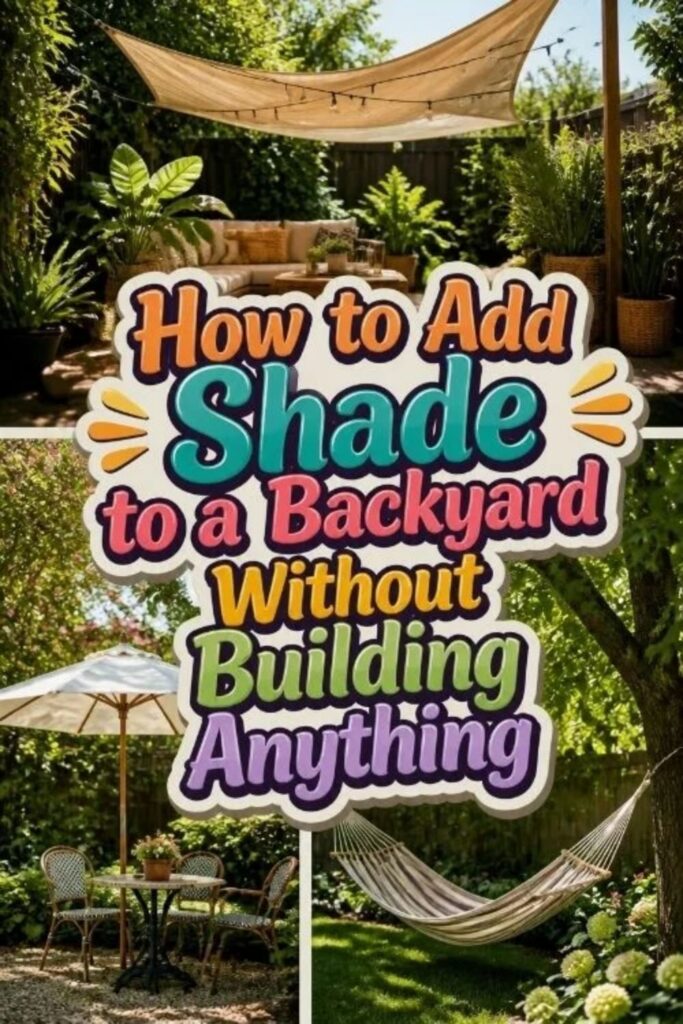
Finding shade for your backyard doesn’t mean pouring concrete or hiring contractors. With a bit of creativity, blocking harsh sunlight becomes surprisingly simple. Portable solutions, living elements, and smart arrangement can transform even the sunniest plot into a cool retreat.
Consider starting with adjustable options like cantilever umbrellas or triangular shade sails. These can move as the sun shifts across seasons, giving you flexibility that fixed structures simply cannot match.
Fast-growing trees such as maple or river birch offer another path, though patience pays off here. Within a few seasons, their canopy begins doing real work against afternoon glare.
Existing features deserve attention too. Training climbing vines like clematis or jasmine up fence lines turns vertical space into living green walls.
Meanwhile, repositioning seating areas beneath tree canopies or angling lounge chairs to catch shadow from your house can carve out pockets of relief during peak heat hours.
Each approach carries its own rhythm through the year. Sails excel in high summer when angles are steep, while deciduous trees let welcome light filter through in cooler months.
Layering these temporary methods together often yields better results than any single structure could provide.
Assess Your Space and Choose the Right Shade Method
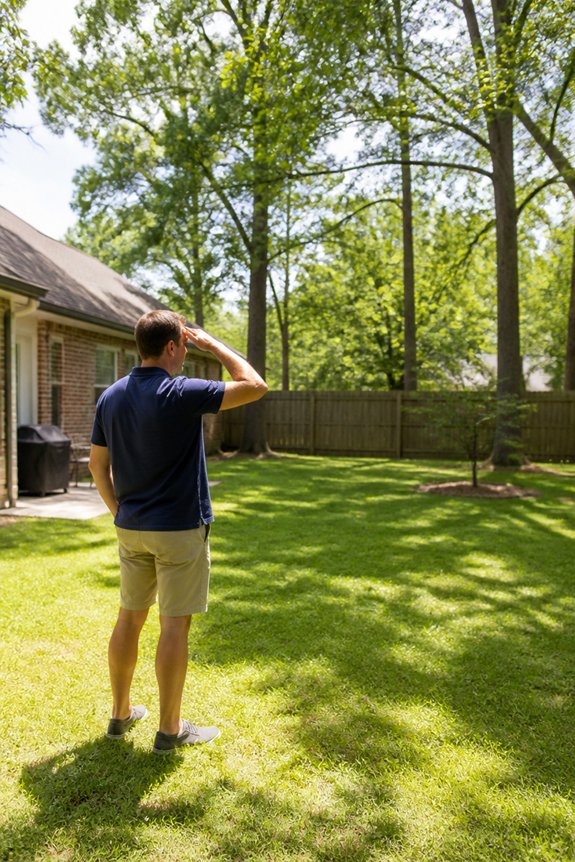
Before selecting a shade solution, homeowners need to analyze their yard’s specific conditions and constraints. Key factors include sun direction, tree coverage, and available space. Morning and afternoon sun exposure varies by location, affecting which areas need protection most.
Homeowners should consider their budget, maintenance preferences, and desired aesthetic. Popular options include umbrellas, shade sails, pergolas, and trees. Umbrellas work well for small patios and move easily. Shade sails cover larger areas and require anchor points. Pergolas provide partial shade with climbing plants. Trees offer permanent solutions but take years to mature.
The yard’s layout determines what method works best. Permanent fixtures suit established spaces, while portable options provide flexibility. Evaluating these factors prevents costly mistakes and guarantees effective shade coverage.
Also read: How to Water Houseplants Without Overwatering Them
Hang Shade Sails and Outdoor Fabric for Instant Coverage
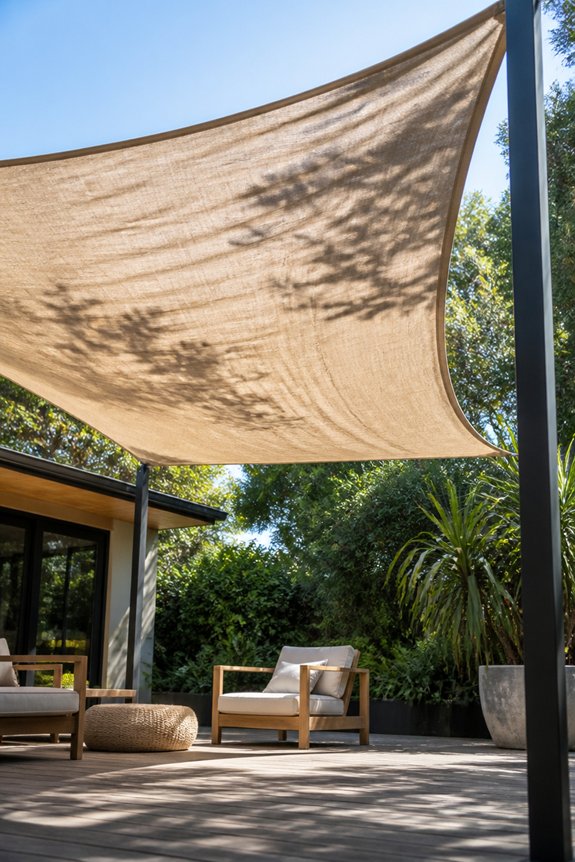
Shade sails and outdoor fabric offer quick coverage without waiting for trees to grow or installing permanent structures. These materials attach to existing posts, fences, or trees using hardware kits, providing immediate relief from sun exposure.
Shade sails, typically made from polyester or canvas, come in various shapes and sizes, ranging from small triangular designs to large rectangular configurations. Outdoor fabric panels work similarly, draping between anchor points to create flexible coverage areas.
Installation requires basic tools and mounting hardware. Users identify anchor locations, install brackets or hooks, then secure the fabric or sail material. This approach accommodates different yard layouts and sun patterns.
Both options offer adjustable coverage. They can be repositioned seasonally, removed during winter, or adjusted for changing sunlight angles. Many homeowners appreciate the flexibility and temporary nature of these solutions.
Position Umbrellas Strategically for Flexible, Movable Shade
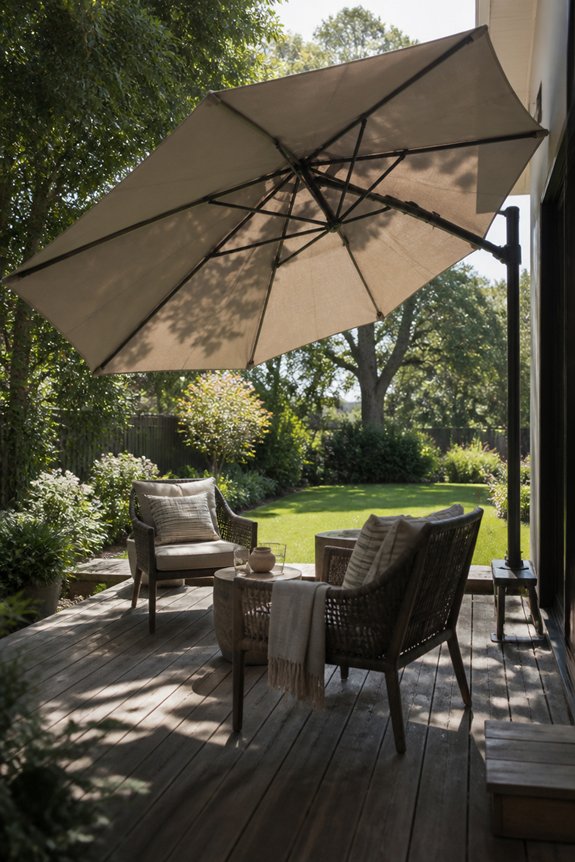
While shade sails and fabric panels provide permanent coverage solutions, umbrellas offer homeowners a portable alternative that moves with changing sun patterns throughout the day. Large market umbrellas, typically six to nine feet in diameter, effectively shade seating areas and dining spaces. Positioning umbrellas near patios, decks, and lounging zones provides targeted protection where needed most.
Umbrella placement should account for morning, afternoon, and evening sun angles. Rotating umbrellas throughout the day maintains consistent shade coverage. Multiple umbrellas positioned strategically across a yard create flexible shade zones without permanent installation.
Cantilever umbrellas, which feature offset poles, offer additional versatility by shading larger areas without central posts obstructing views. Weighted bases guarantee stability against wind. Umbrellas combine practical sun protection with the flexibility to adjust coverage as seasonal sun positions change and family activities shift locations.
Plant Trees and Shrubs for Long-Term, Natural Shade
Trees and shrubs provide permanent shade solutions that improve with age, creating cooler outdoor spaces while enhancing property value and environmental benefits. Fast-growing varieties like crepe myrtles, dogwoods, and lilacs establish shade within several years. Deciduous trees offer seasonal flexibility, providing summer cooling while allowing winter sunlight penetration. Evergreen shrubs such as hollies and privets maintain year-round coverage and privacy screening.
Placement matters greatly. Position trees on the west and south sides of patios and seating areas to block afternoon heat. Consider mature tree height and spread when selecting saplings, ensuring adequate distance from structures and utility lines. Shrub borders along fence lines create layered shade while reducing wind exposure.
Water newly planted specimens regularly during establishment. Mulch application helps retain soil moisture and regulates root temperature, supporting healthy development and faster shade creation.
Use Existing Fences and Walls to Grow Climbing Vines
Existing structures like fences and walls offer convenient surfaces for growing climbing vines that create shade with minimal additional installation. Ivy, clematis, and climbing jasmine attach readily to vertical surfaces, establishing dense foliage within one to three growing seasons.
These plants require basic support systems, such as trellises or wire frameworks, secured to the existing structure. The vines naturally grow upward and outward, gradually covering exposed areas and reducing direct sunlight below.
Homeowners should consider the wall’s material and condition before planting, as some vines may damage older mortar or wood surfaces. Regular pruning maintains the vines’ shape and prevents overgrowth into gutters or roofing. This approach maximizes shade production using resources already present on the property.
Arrange Outdoor Furniture to Create Shade Pockets
Strategic placement of outdoor furniture creates shadowed zones throughout a backyard without requiring permanent installation or plant growth time. Positioning lounge chairs, tables, and benches in clusters generates shade for multiple users simultaneously. Umbrellas anchored into furniture bases or ground stands provide immediate overhead protection, blocking direct sunlight effectively.
Pergolas paired with movable seating arrangements allow adjustable shade coverage as sun angles change throughout the day. Arranging furniture near existing structures like house walls or fences maximizes natural shadow expansion. Dense groupings of deck chairs, benches, and side tables reduce exposed ground area, creating cooler microclimates.
Repositioning furniture seasonally maintains ideal shade coverage. This approach offers flexibility, requiring no construction permits, permanent structures, or waiting periods for vegetation development.
Combine Methods for Year-Round Shade (And When Each Works Best)
While furniture placement offers immediate flexibility, combining multiple shade solutions produces more consistent coverage across seasons and weather conditions. Umbrellas work best during summer months, providing quick deployment when temperatures peak. Shade cloths perform well in spring and fall, filtering sunlight without blocking air circulation. Natural vegetation, including trees and shrubs, delivers maximum coverage during warmer seasons while allowing winter sun penetration when leaves drop.
Positioning these methods strategically guarantees adequate protection year-round. Summer requires layered shade from umbrellas and cloth combined. Fall benefits from shifting coverage using furniture and cloth. Winter relies on deciduous trees allowing sunlight through. Spring requires flexible solutions adjusting as foliage develops. This rotating approach maximizes comfort while adapting to seasonal changes and varying weather patterns throughout the year.
Frequently Asked Questions
How Much Does It Cost to Implement These Backyard Shade Solutions?
The expenses for backyard shade solutions vary considerably. Portable umbrellas range from $50 to $300, while shade sails cost $200 to $1,500. Retractable awnings typically run $1,000 to $5,000. Tree planting expenses start around $100 per tree. Budget depends on the chosen method.
What Is the Best Time of Year to Plant Trees for Shade?
Research shows that trees planted in fall have 20% better survival rates. The ideal planting window occurs during autumn or early spring when trees are dormant, allowing roots to establish before summer heat arrives.
Do Shade Sails and Umbrellas Require Permits or HOA Approval?
Shade sails and umbrellas typically require permits or HOA approval depending on local regulations and community guidelines. Homeowners should consult their local building department and review HOA restrictions before installation to guarantee compliance.
How Long Until Climbing Vines Provide Substantial Shade Coverage?
One’s patience is tested when cultivating leafy companions, as most climbing vines require two to three years to establish meaningful coverage. Fast-growing varieties like clematis or honeysuckle may deliver more expedient results than slower-maturing options.
Which Shade Method Works Best for Small or Compact Yards?
Portable shade structures like umbrellas and pop-up canopies work best for small spaces. They require minimal setup, occupy less area than permanent installations, and offer flexibility since one can relocate them as needed throughout the yard.
Conclusion
Creating backyard shade without building requires combining multiple approaches. Umbrellas, shade sails, and fast-growing trees work together like puzzle pieces, each filling different needs. Portable solutions offer flexibility, while plants provide permanent coverage over time. Climbing vines on existing fences add natural shade with minimal effort. Strategically arranged furniture creates additional shaded zones. This layered approach guarantees comfortable outdoor spaces year-round, adapting to seasonal changes and daily sun patterns.