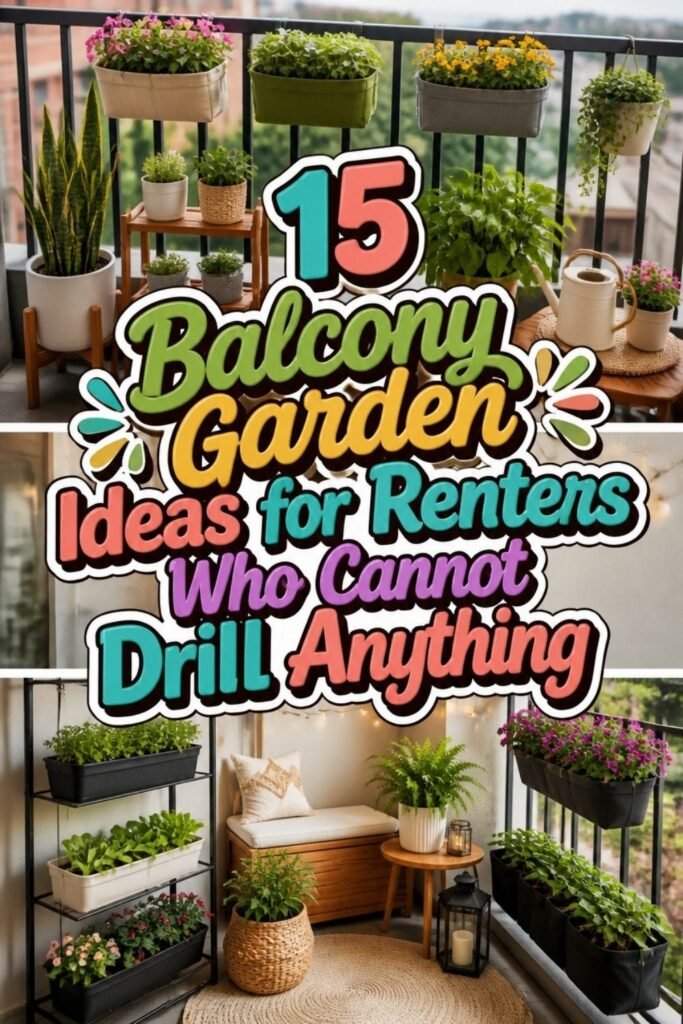
Finding ways to garden on a balcony as a renter often feels like solving a puzzle with missing pieces. Most traditional approaches demand permanent changes that could cost your security deposit or trigger lease violations. Yet the desire for greenery doesn’t have to end where your landlord’s rules begin.
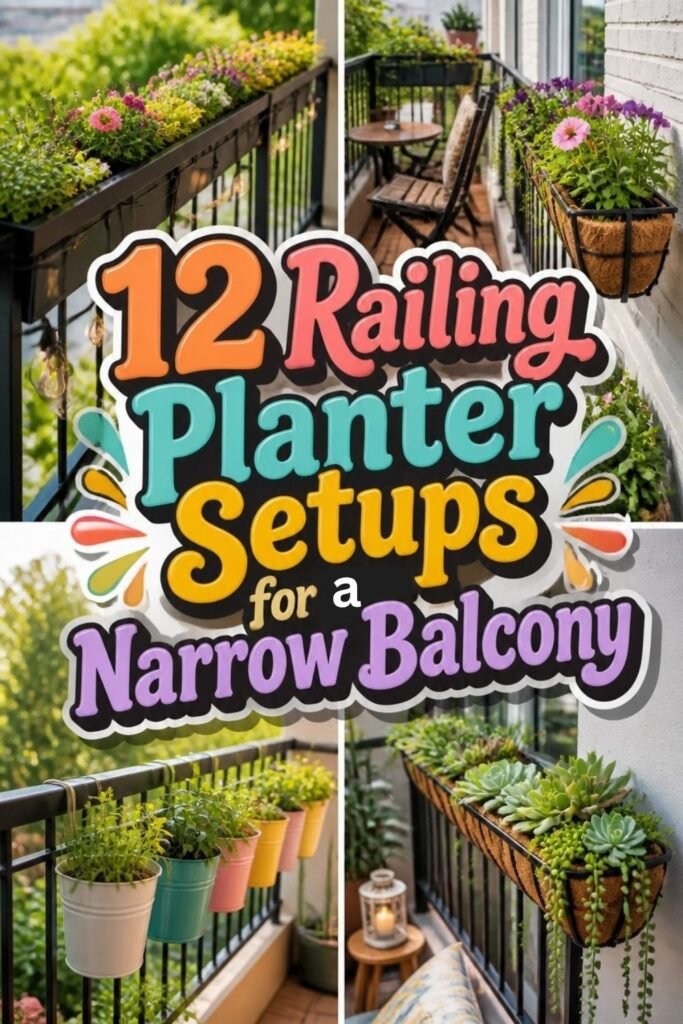
Railing planters offer one of the simplest entry points. These containers hook over balcony rails without screws or adhesives, creating instant growing space for herbs and compact flowers.
Tension rods and freestanding shelves expand possibilities upward, turning vertical surfaces into storage for lightweight pots without touching a single wall.
Weighted containers solve wind concerns for those on higher floors. Heavy ceramic or concrete planters stay put through storms while housing everything from tomatoes to small shrubs.
Each solution adapts to different balcony dimensions and sunlight patterns, letting renters match their setup to actual conditions rather than forcing plants into ill-fitting spaces.
The result is a garden that moves with you. When the lease ends, these elements pack up without trace, leaving behind only the memory of morning coffee surrounded by thriving plants.
Railing Planters: Instant Vertical Garden Without Tools
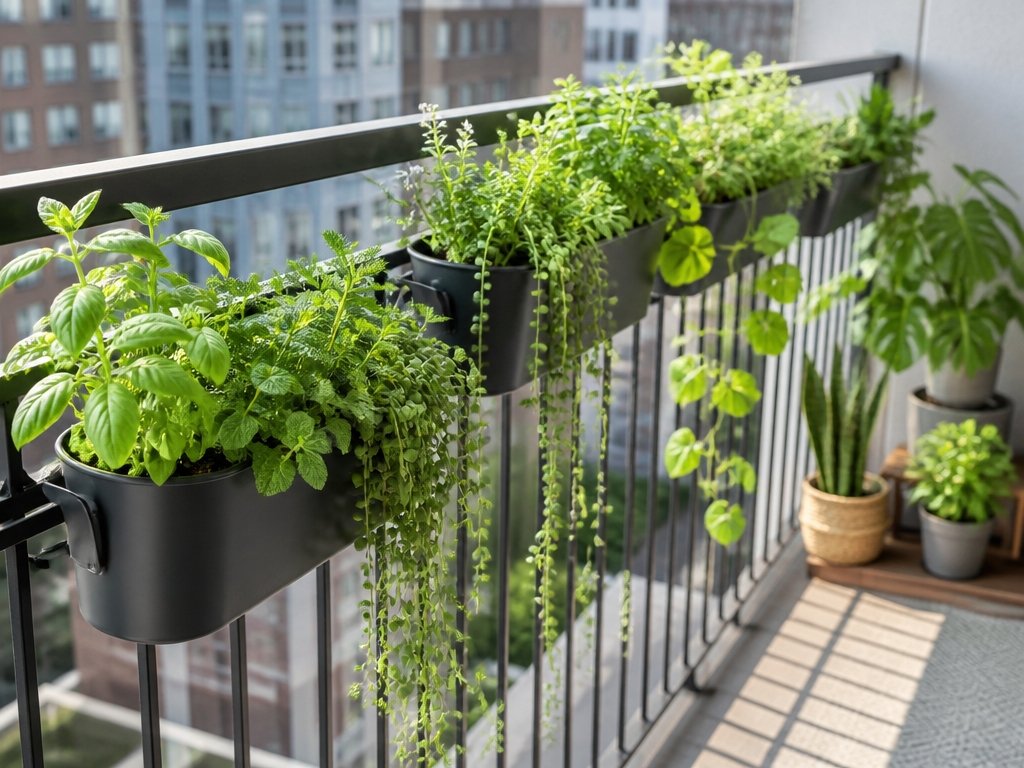
Railing planters attach directly to balcony railings, creating vertical garden space without drilling, nailing, or using tools. These containers hook over the railing edge, holding soil and plants securely.
Options include fabric pockets, plastic boxes, and metal clips. Herbs, trailing flowers, and small vegetables grow well in railing planters. They maximize limited balcony space while remaining renter-friendly and removable. Drainage holes are essential for preventing water buildup and root suffocation. Proper placement also helps support healthy root systems by reducing stress on plants.
Tension Rod Hanging Baskets for Overhead Growth
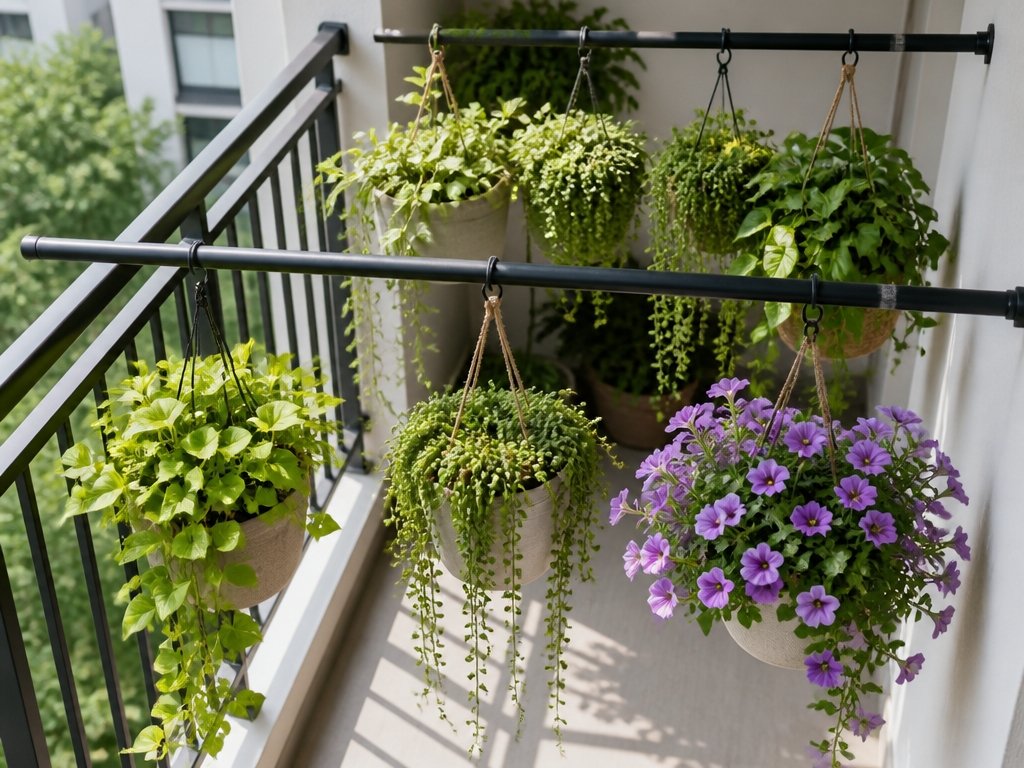
Tension rods, typically used for hanging curtains, offer another tool-free solution for overhead plant growth on apartment balconies. These rods install between balcony railings or walls without drilling, creating space for hanging baskets.
Pothos, string of pearls, and trailing succulents work well suspended this way. The setup accommodates multiple baskets, maximizing vertical space efficiently while remaining removable for renters. Hanging pots and tiered arrangements can further expand growing room without taking up valuable floor space. For best results, place them where they can get enough direct sunlight for the plants you choose.
Freestanding Shelving Units for Tall, Narrow Spaces
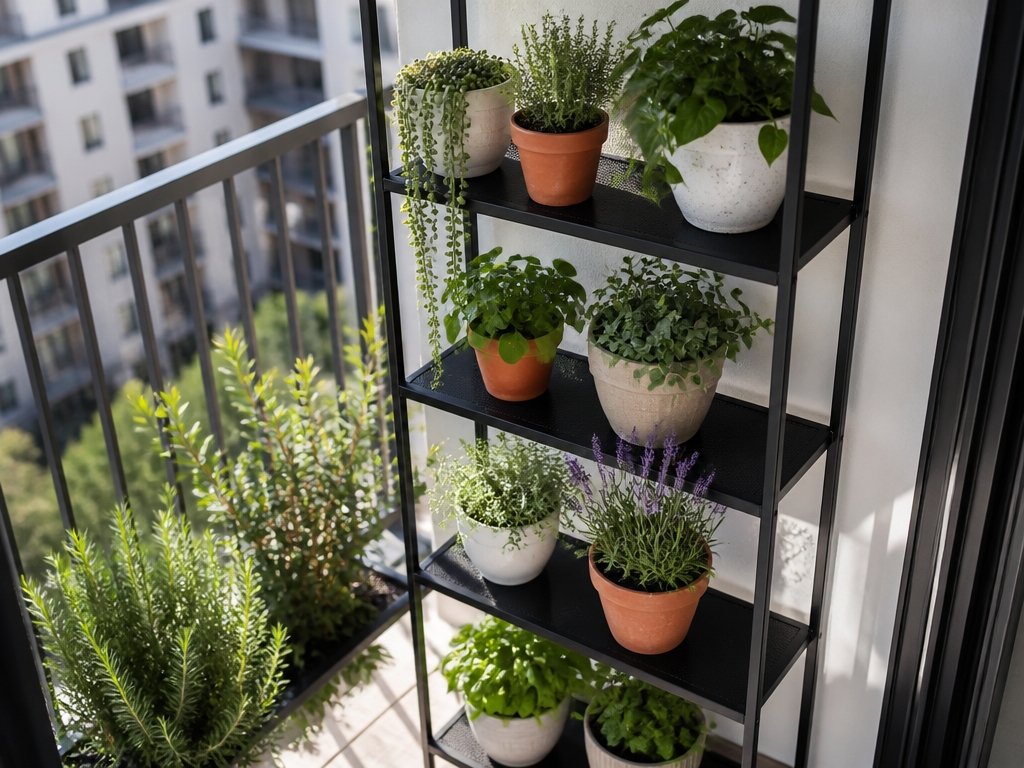
Vertical gardening extends beyond hanging solutions, with freestanding shelving units offering a stable alternative for balconies with limited floor space. Metal or wooden units accommodate multiple plant tiers without permanent installation.
These shelves organize small containers, succulents, and herbs efficiently. Units measuring 60 inches tall and 24 inches wide fit narrow balconies. Weight distribution across the base prevents tipping when fully planted.
Tiered Plant Stands to Stack More Greenery
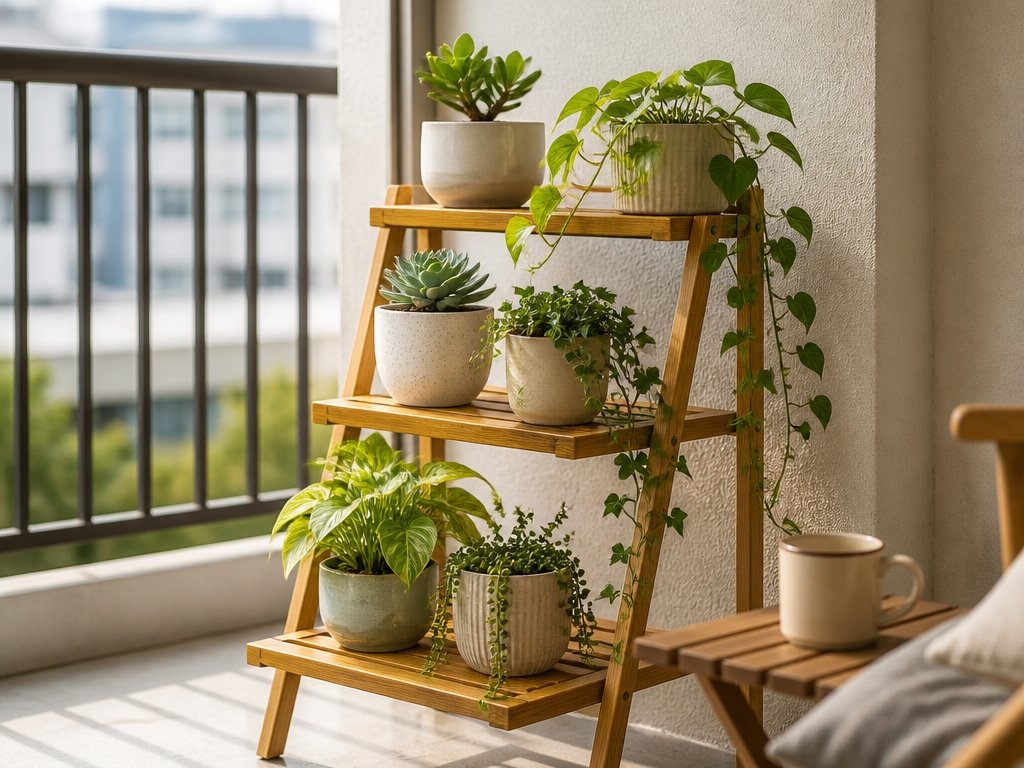
How can renters maximize planting space without sacrificing floor area on a compact balcony? Tiered plant stands offer a practical solution by stacking containers vertically. Metal or plastic stands with multiple levels, such as corner plant stands or ladder-style designs, hold numerous pots in minimal footprint. These freestanding structures are easy to move when you want to adjust for sunlight or rearrange your balcony layout. This arrangement accommodates herbs, succulents, and flowering plants while maintaining accessible balcony space for movement and seating. For even more privacy, pair them with ornamental grasses in taller containers to add softness and height.
Weighted Floor Containers: Heavy-Duty Stability
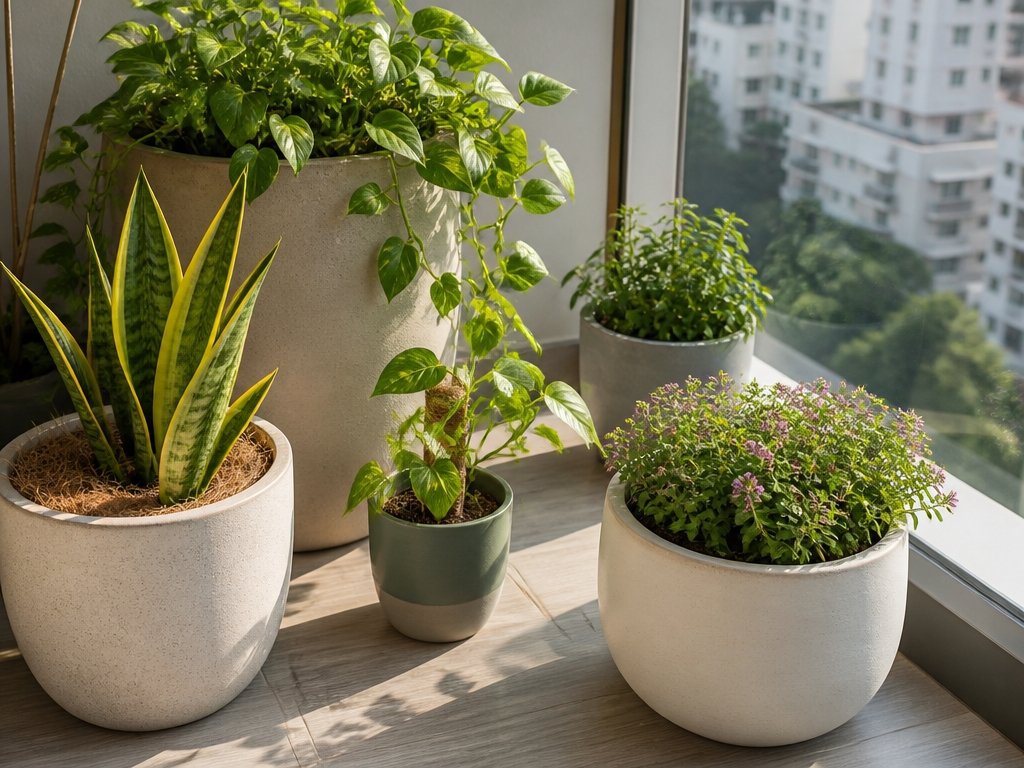
Many renters face challenges securing large planters on balconies exposed to wind, foot traffic, and uneven surfaces. Weighted floor containers solve this problem through built-in ballast systems or heavy bases. Options include resin planters with thick bottoms, concrete vessels, and self-watering containers filled with dense materials.
These solutions eliminate drilling needs while providing stability for substantial plants and shrubs on rental properties.
Wall-Mounted Planters Using Adhesive and Tension Rods
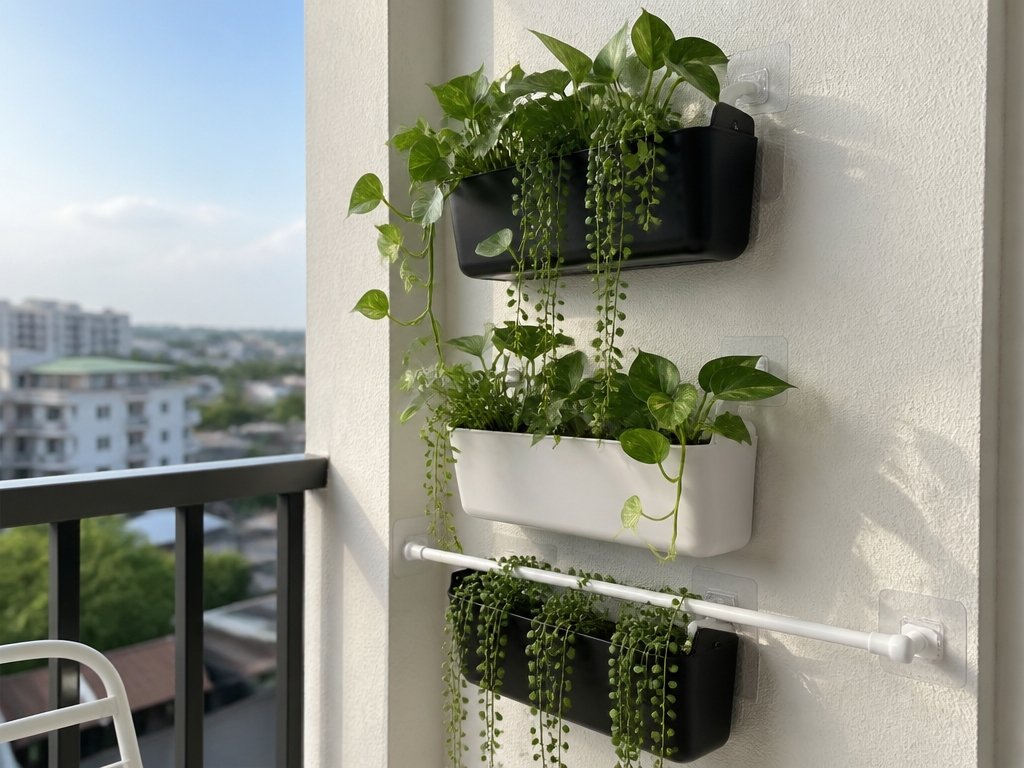
Wall-mounted planters offer an alternative approach for renters seeking to maximize limited balcony space without relying on floor-based containers. Adhesive hooks and tension rods secure lightweight planters to railings or walls. Command strips hold shallow containers, while adjustable tension rods span balcony widths.
This method preserves floor space for seating and movement, accommodating herbs, succulents, or trailing plants effectively.
Lean-to Shelves: Using Your Balcony Wall as Support
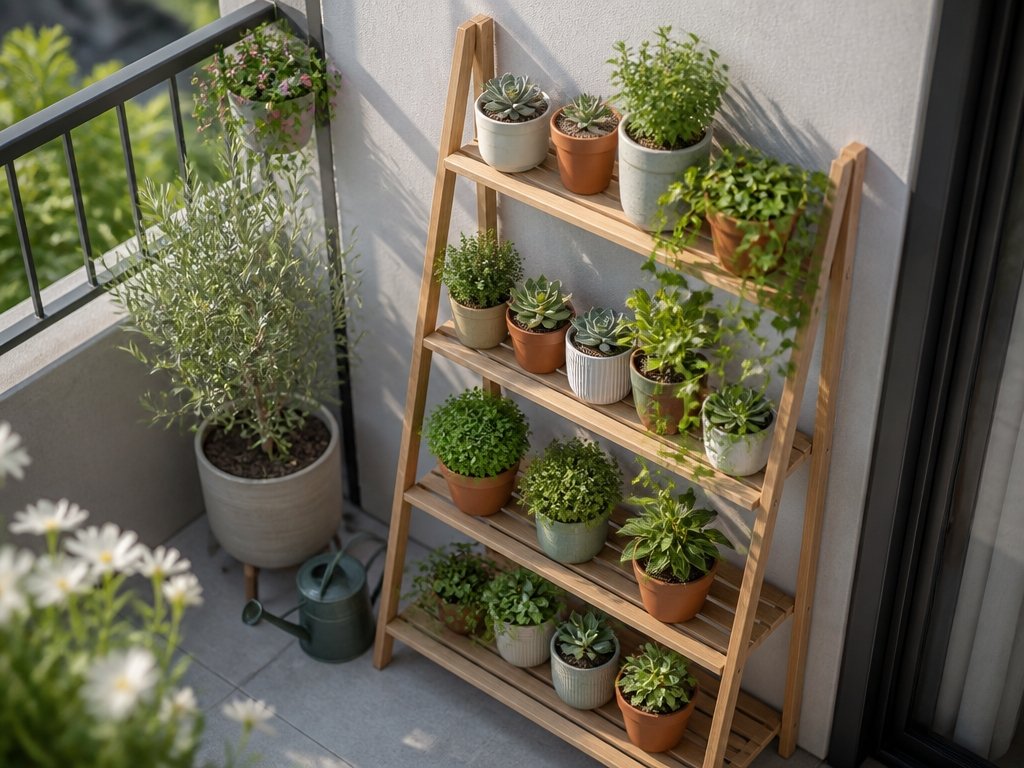
Because renters need storage solutions that avoid permanent damage, lean-to shelves provide a practical option for organizing plants on balconies. These shelves rest against the wall without fasteners, using gravity and weight distribution.
Metal or wood frames work effectively, accommodating multiple potted plants. Adjustable shelving units allow customization for different plant heights and sizes, maximizing vertical space efficiently.
Trellises in Weighted Bases for Vertical Vines
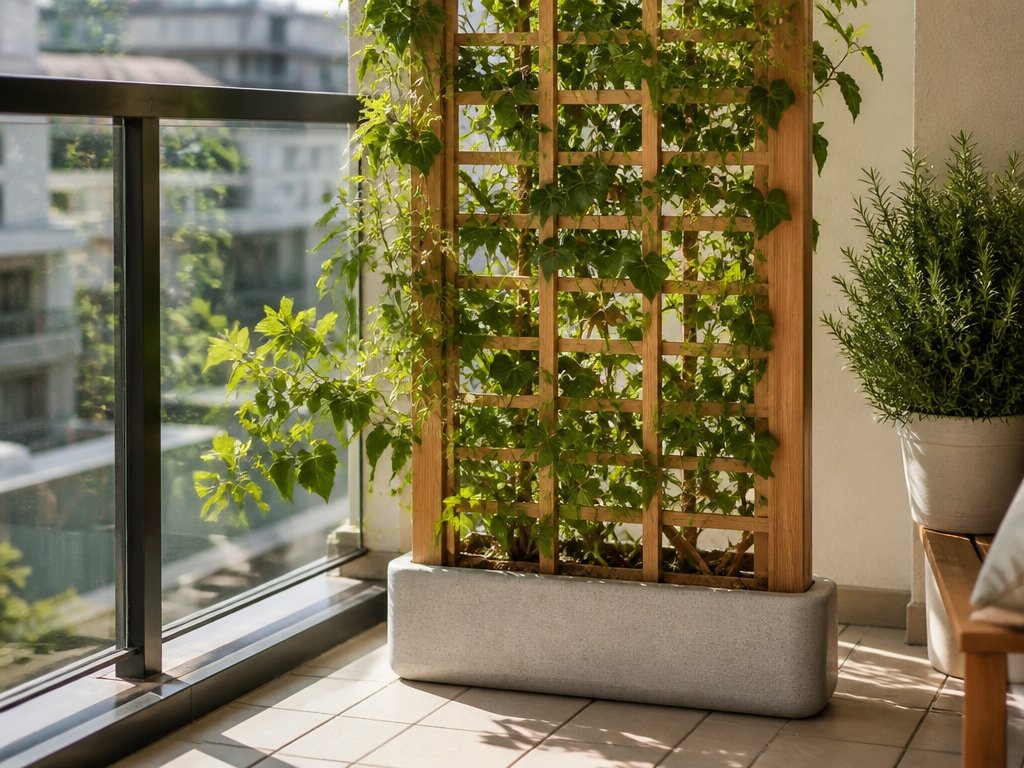
Trellises designed with weighted bases offer renter-friendly support for climbing plants without requiring wall anchors or permanent installation. Concrete-filled pots or metal stands provide stability for ivy, clematis, and honeysuckle varieties. The weight distributes across the balcony floor, preventing tipping.
Gardeners can adjust placement seasonally, relocate easily during moves, and avoid landlord disputes. These structures accommodate multiple climbing plants simultaneously while maintaining rental property conditions. For a more cohesive look, pair them with layered plantings to create visual depth and balance in a compact balcony space. Using vertical gardening techniques can also help maximize planting options without taking up extra floor area.
Macramé Hanging Planters From Existing Ceiling Beams
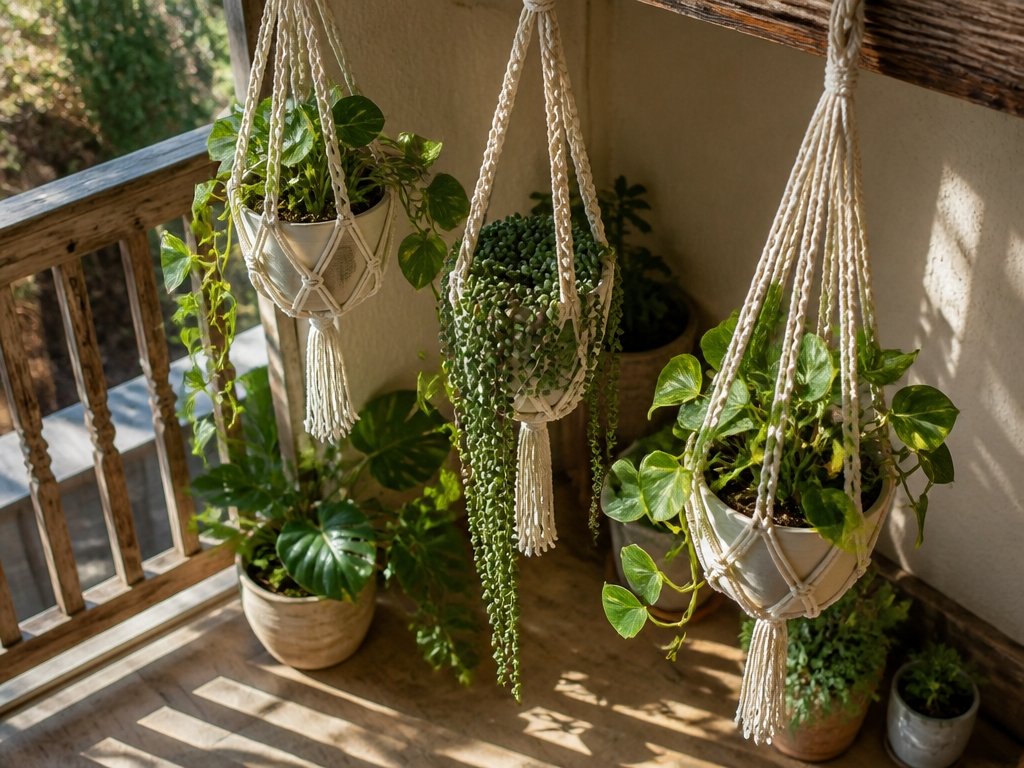
Macramé plant hangers offer renters a non-invasive way to suspend plants from existing ceiling beams or structural overhangs on balconies. These knotted rope holders, available in cotton or jute, accommodate small to medium-sized pots securely.
They require no drilling, screwing, or permanent installation, making them ideal for temporary gardening setups. Popular designs include four-strand and six-strand patterns that distribute weight evenly.
Rolling Plant Carts: Move Your Garden Around
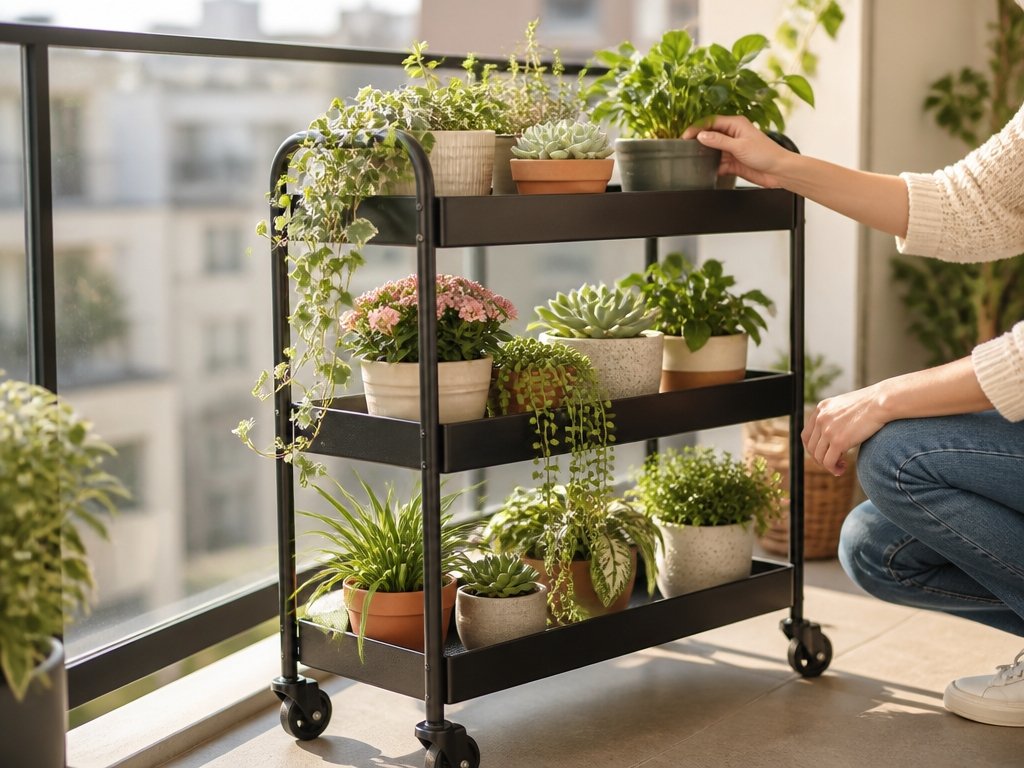
Rolling plant carts provide renters with flexible gardening solutions that adapt to changing balcony conditions, sunlight patterns, and seasonal needs. Metal or wooden carts with wheels allow easy repositioning of multiple plants throughout the day.
Renters can move containers closer to light sources, rotate plants for even growth, and rearrange layouts without drilling or permanent installation.
Railing Hooks With Tension Cables or Adhesive Strips
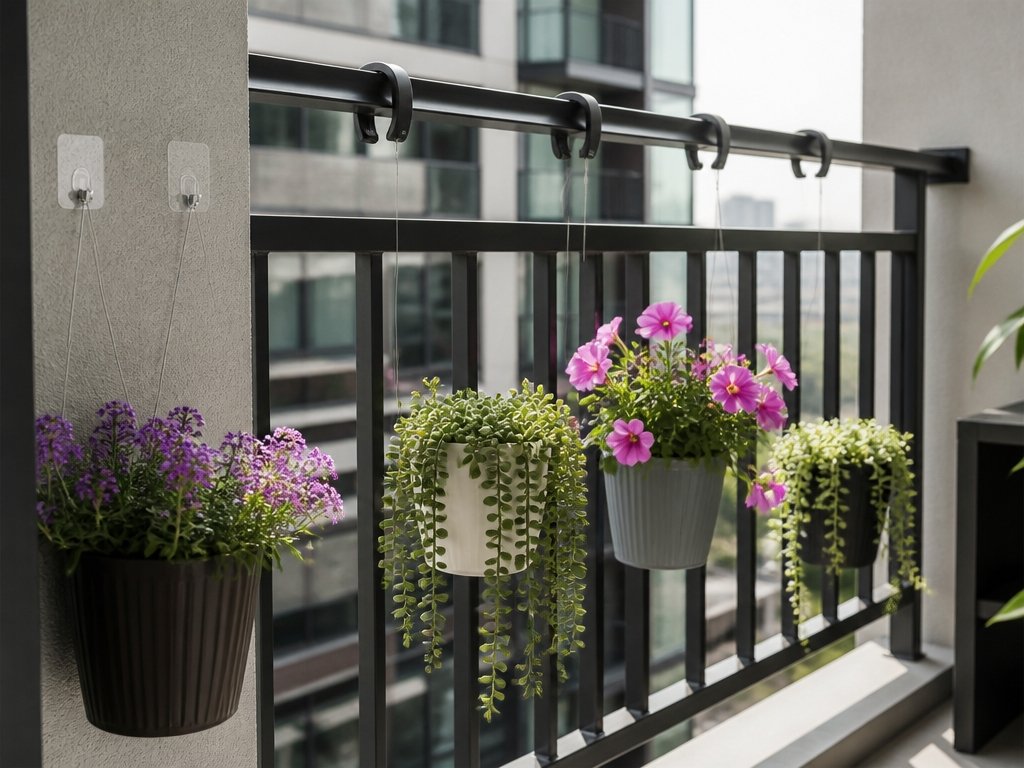
While rolling carts excel at ground-level flexibility, vertical space on balcony railings offers another practical gardening option for renters. Tension cable hooks and adhesive strip hangers attach planters to railings without drilling. Tension cables secure heavier containers, while adhesive strips work for lightweight pots. Both methods remove cleanly, leaving no damage to rental properties.
Window Box Substitutes That Clamp Instead of Drill
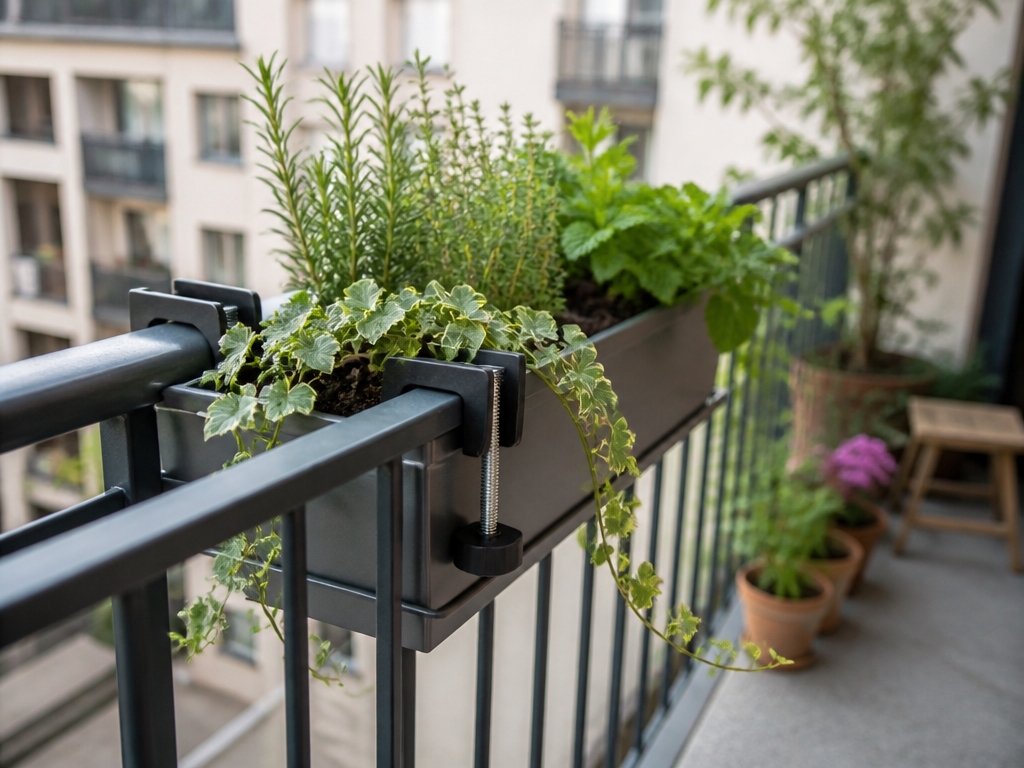
For renters seeking to add plants near windows without permanent installation, clamp-style window box holders provide a damage-free alternative to traditional drilling methods. These devices secure boxes to window frames or railings using tightening mechanisms, requiring no holes or fasteners.
Models like adjustable metal clamps and rubber-padded brackets accommodate various frame sizes and materials, making them suitable for different apartment configurations and window types.
Plant Ladder Stands: Compact Height Without a Footprint
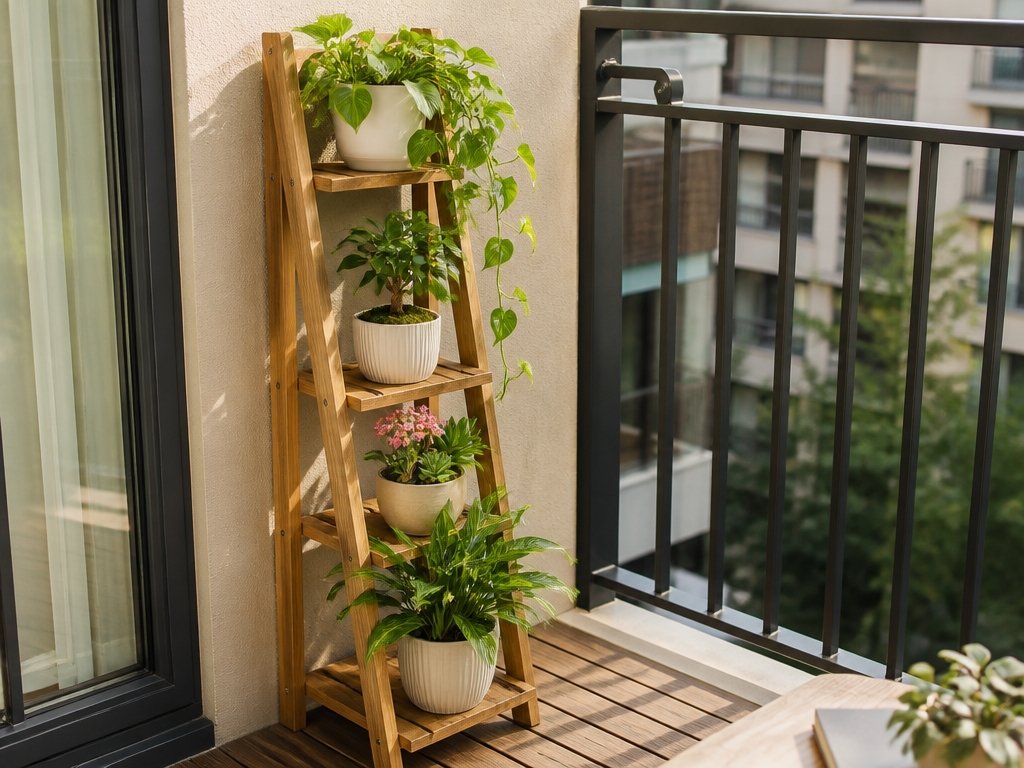
Plant ladder stands offer renters a practical solution for displaying multiple plants vertically while consuming minimal floor space. These metal or wooden structures hold pots on successive steps, creating tiered arrangements. Models range from A-frame designs to lean-to styles.
They require no installation, moving easily between locations. Ladder stands accommodate various pot sizes and weights, making them adaptable for different plant collections and balcony layouts.
Tabletop Herb Gardens for Culinary Spacing
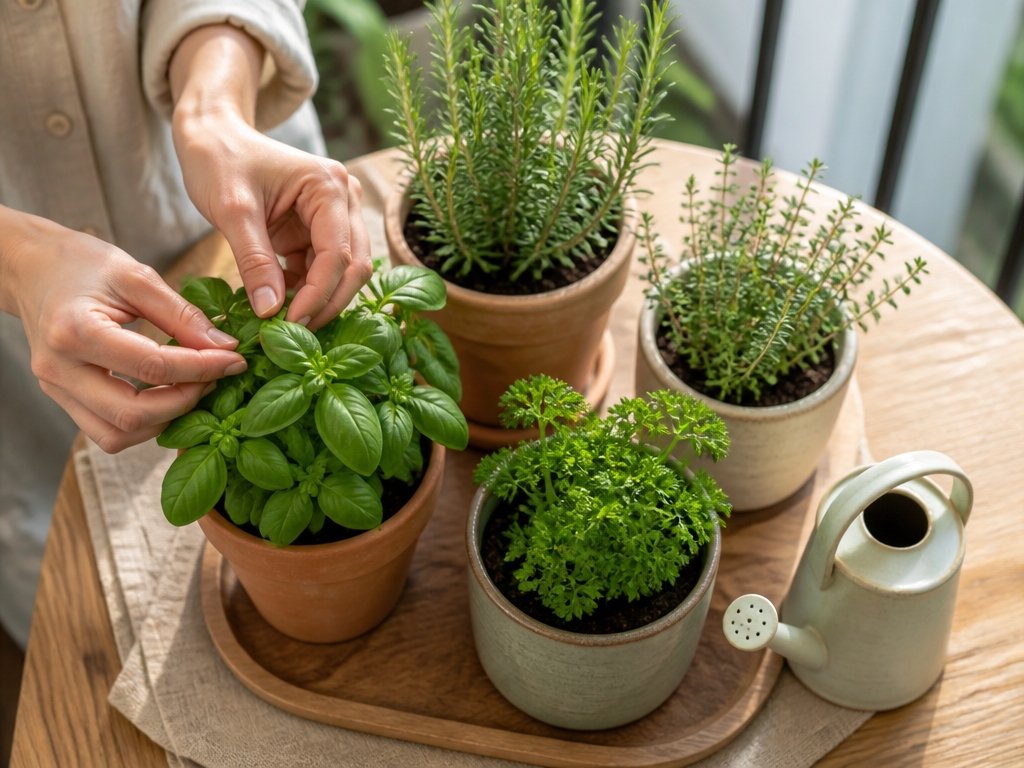
Since fresh herbs enhance cooking and occupy minimal counter or balcony space, tabletop herb gardens serve renters seeking convenient access to basil, parsley, cilantro, and thyme. Shallow containers, drainage holes, and potting soil create functional growing systems.
Herbs require six to eight hours of sunlight daily. Rotating containers guarantees even growth. Harvesting leaves regularly promotes bushier plants and continuous supply for meal preparation.
DIY Planters From Recycled Household Materials
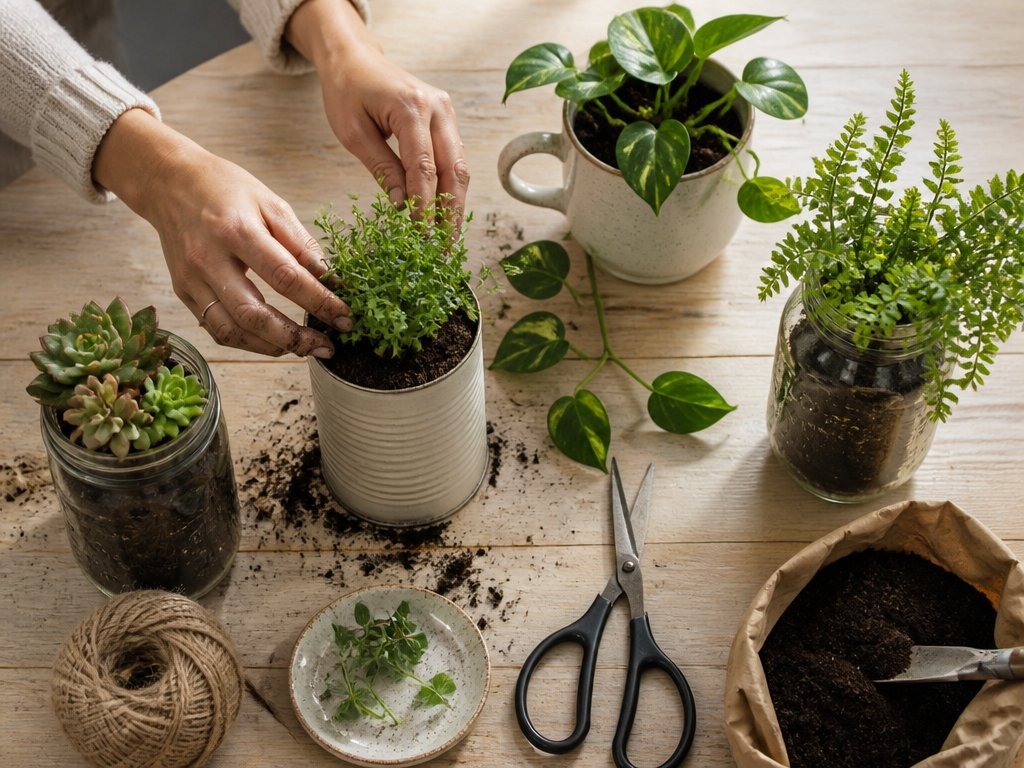
Creating planters from household items reduces costs and waste while providing functional containers for balcony gardens. Old yogurt containers, tin cans, wooden crates, and plastic bottles serve as viable planting vessels. Drainage holes require punching or drilling in most cases.
These recycled materials accommodate herbs, flowers, and small vegetables effectively, offering renters affordable gardening solutions without permanent balcony modifications.
Frequently Asked Questions
How Do I Prevent Potted Plants From Tipping Over During Strong Winds or Storms?
One can stabilize potted plants by placing them against walls or corners, using heavy containers, and grouping plants together for mutual support. Adding stakes or ties to sturdy structures, filling pots with soil, and selecting low-profile plants further reduces tipping risks during inclement weather.
What’s the Best Way to Water Hanging Baskets Without Making a Mess Below?
One should water hanging baskets early morning when evaporation is minimal. Using a watering wand with a curved head directs water upward into the basket. Alternatively, one can lower baskets temporarily to ground level for thorough watering without spillage concerns.
Can Renter-Friendly Planters Support Heavy Soil and Mature Plants Safely?
Lightweight alternatives gracefully accommodate mature plantings when selected thoughtfully. Quality renter-approved containers feature reinforced bases and drainage systems, supporting established flora reliably without compromising balcony structures or lease agreements.
How Do I Protect My Balcony Floor From Water Damage and Staining?
One can protect balcony floors by placing waterproof saucers or trays beneath all planters, using raised mat systems, or applying temporary protective coatings. Drip irrigation systems and strategic plant placement further minimize water pooling and staining risks.
Which Plants Thrive Best in Container Gardens With Limited Direct Sunlight?
Hostas, ferns, and begonias thrive in low-light balcony gardens. Ivy, coleus, and impatiens also flourish with limited direct sunlight. These plants adapt well to container growing, requiring minimal maintenance while providing lush foliage and occasional blooms.
Conclusion
Renters can transform balconies into thriving gardens using railing planters, tension rods, shelving units, and weighted containers. These drill-free solutions function like building blocks, stacking together to create personalized green spaces. Window box clamps, plant ladder stands, and recycled material planters offer flexible arrangements. Tabletop herb gardens provide culinary access. This approach preserves rental agreements while maximizing available space through strategic, non-invasive installation methods.