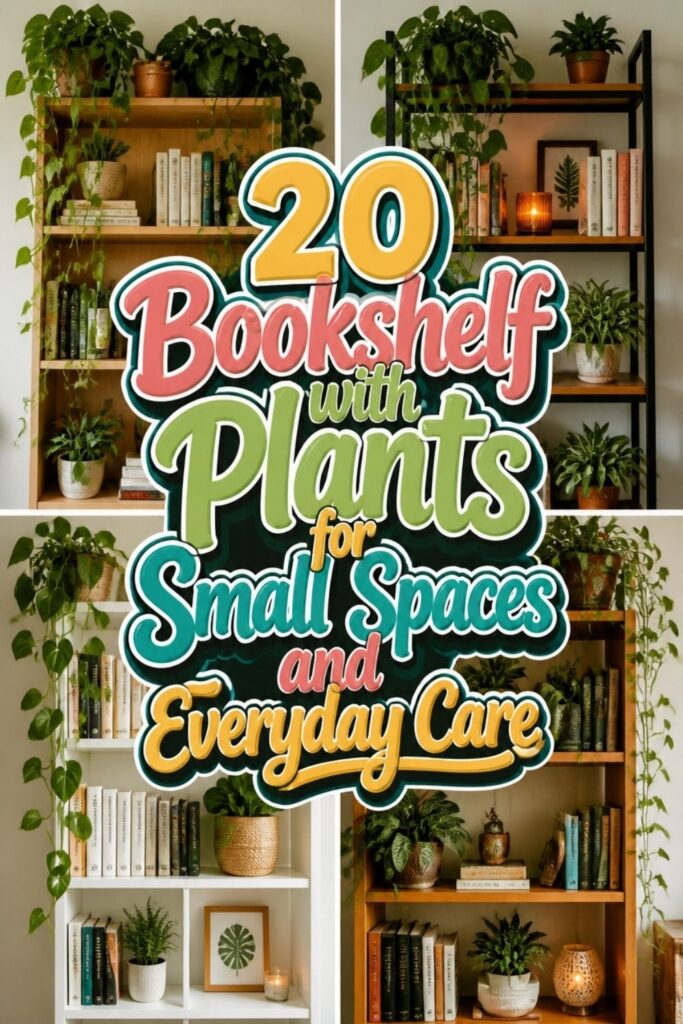
Finding room for both books and greenery can feel like solving a puzzle in compact living spaces. A Bookshelf With Plants offers an elegant solution, turning everyday vertical storage into a living display.
Pothos vines trailing over stacked paperbacks or a snake plant anchoring a corner shelf bring life to tight quarters without demanding constant attention.
Light shapes everything in this arrangement. Before positioning your Bookshelf With Plants, study how sunlight moves through the room.
North-facing windows suit low-light survivors like ZZ plants, while brighter spots open possibilities for succulents or herbs. Matching each plant’s needs to the actual conditions prevents the slow decline of hopeful but misplaced greenery.
Scale matters more than beginners assume. A mature fiddle-leaf fig can overwhelm narrow shelving, whereas compact varieties like peperomia or small ferns nestle comfortably between bookends. Consider growth habits too: climbing plants need occasional guidance, while upright varieties stay neatly contained.
Maintenance thrives on rhythm rather than perfection. Weekly watering checks, monthly leaf dusting, and seasonal rotation can keep both plants and shelves looking their best.
The reward is a Bookshelf With Plants that feels intentional rather than crowded, creating furniture that breathes, storage that surprises, and a small home that feels abundant instead of cramped.
Measure Before You Start Styling
Check the height and depth of each shelf before buying plants or planters. Compact varieties fit comfortably between books, while trailing plants work best higher up where their vines have room to fall without covering titles or crowding other greenery.
Protect the books as carefully as the plants. Use pots with drainage saucers, leave a little space between containers and book stacks, and avoid placing anything prone to leaking directly above valuable books.
Keep the arrangement manageable by grouping plants with similar watering needs. This makes weekly care quicker and reduces the chance of accidentally overwatering a drought-tolerant plant while tending to thirstier varieties.
Why a Planted Bookshelf Works for Small Spaces
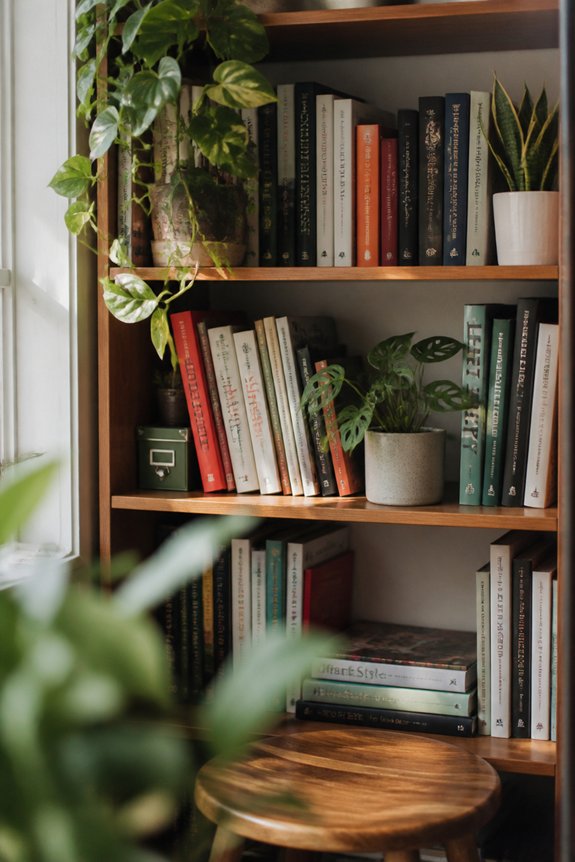
A planted bookshelf serves dual purposes in compact living areas: it stores books while adding greenery without requiring extra floor space. The combination maximizes vertical surfaces, allowing residents to incorporate plants like pothos, snake plants, and succulents alongside literature.
This integration reduces clutter by consolidating storage needs, creating functional décor that improves air quality and aesthetics simultaneously within limited square footage.
Assess Your Light Conditions Before You Start
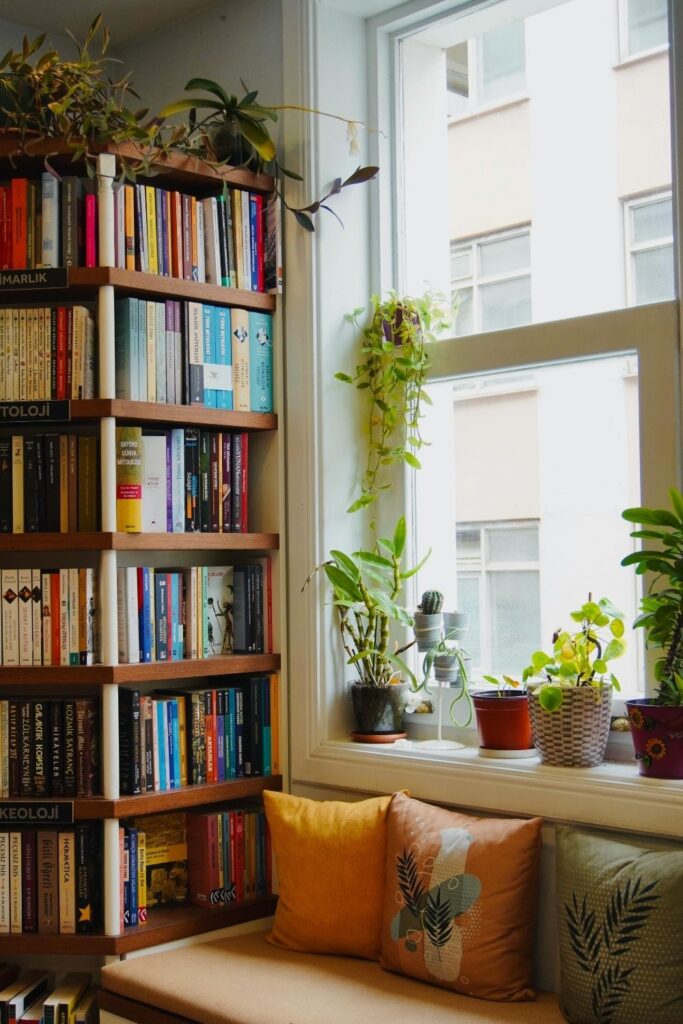
Before selecting plants for the bookshelf, the resident must understand the lighting available in that specific location. Direct sunlight, indirect light, and low-light conditions suit different plant varieties.
North-facing shelves receive minimal light, favoring pothos or snake plants. South-facing positions offer bright conditions for succulents. Evaluating natural light duration and intensity determines which plants will thrive successfully on the bookshelf.
Choose Low-Maintenance Plants That Thrive Indoors
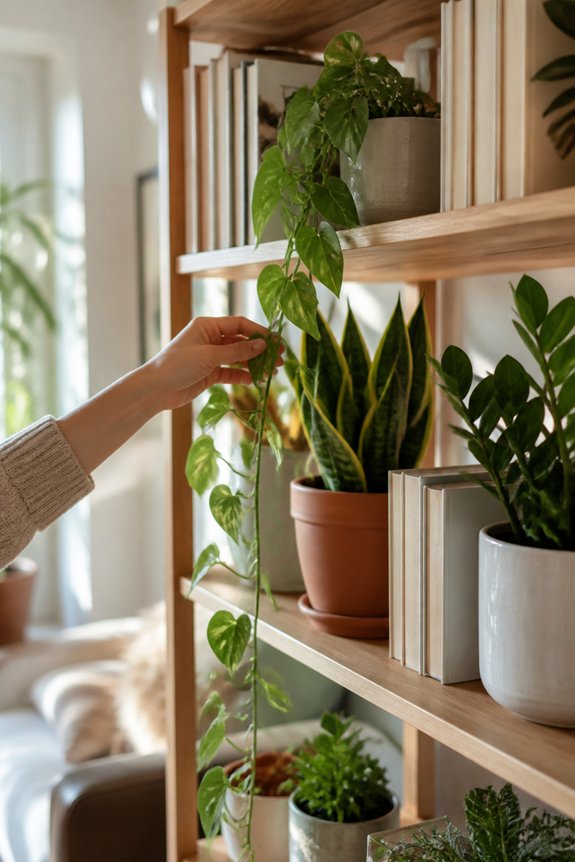
Once the light conditions are determined, selecting plants that require minimal care becomes the next priority. Pothos, snake plants, and ZZ plants tolerate various light levels and irregular watering schedules. These species thrive indoors without frequent attention, making them suitable for small bookshelf spaces.
Their ability to survive in typical home environments reduces maintenance demands substantially, allowing plant owners to focus on other tasks.
Match Plant Size to Your Shelf Depth and Height
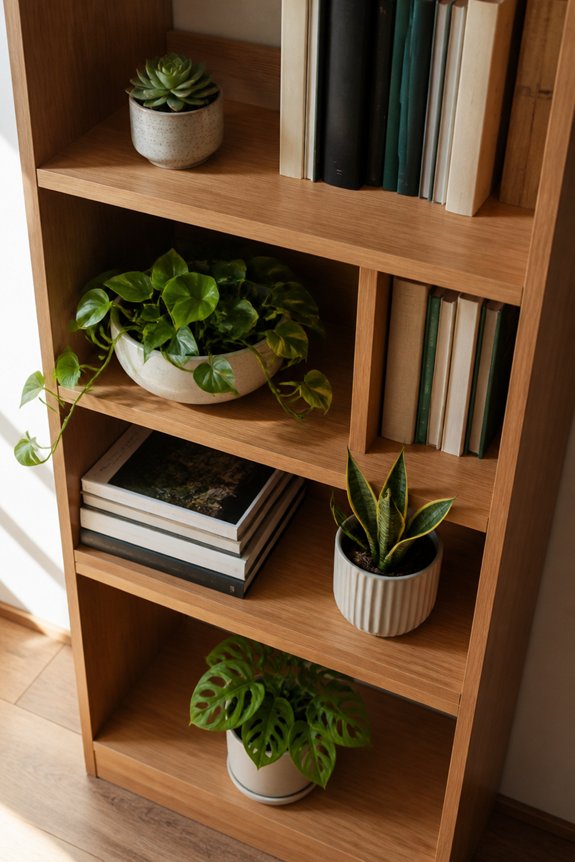
Proper plant sizing prevents overcrowding and guarantees each specimen receives adequate space and light exposure on bookshelves. Trailing plants like pothos work well on higher shelves, allowing vines to cascade downward. Compact varieties such as succulents fit narrow shelves without obstruction.
Taller plants belong on lower shelves or floor stands. Measuring shelf dimensions before selecting plants verifies proper fit and healthy growth conditions.
Create Visual Balance With Books and Greenery
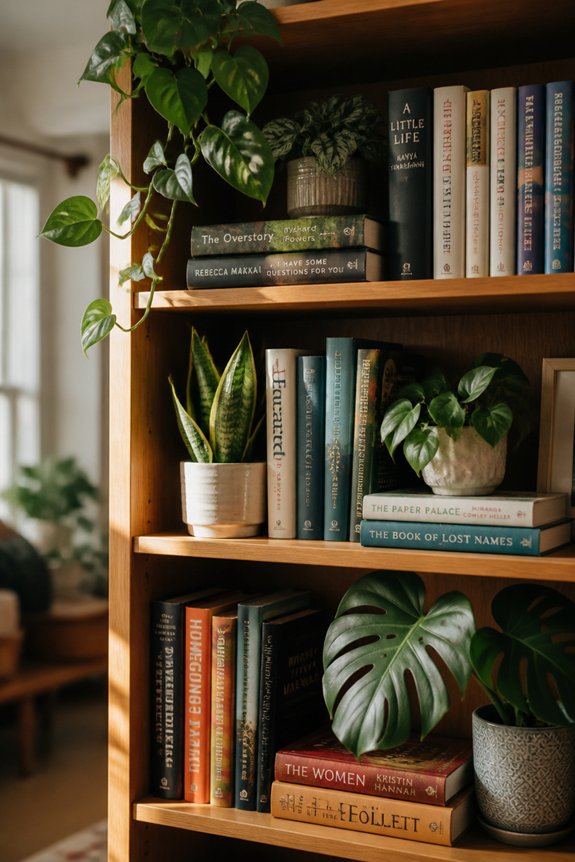
Combining books and plants on shelves requires intentional arrangement to achieve visual harmony. Alternate between stacked books and potted plants to prevent monotony.
Place taller plants behind shorter books, creating depth and preventing visual clutter. Use trailing plants like pothos to soften hard book edges. Space items with breathing room, allowing each element distinct visual presence without overwhelming the arrangement.
Water-Wise Plant Selection for Busy Schedules
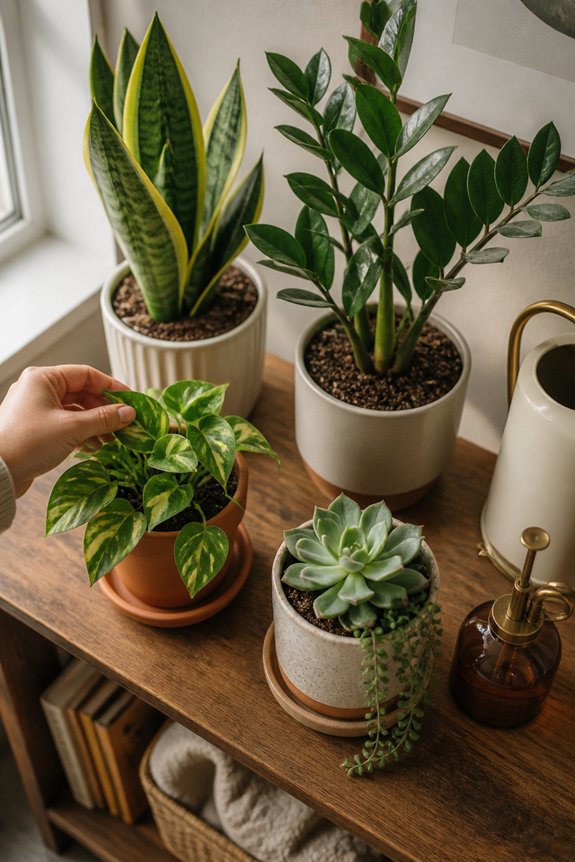
How can bookshelf gardeners maintain plants while managing demanding schedules? Selecting drought-tolerant species reduces watering frequency considerably. Snake plants, pothos, and ZZ plants thrive with minimal moisture and infrequent care. These varieties tolerate irregular watering patterns, making them ideal for busy individuals.
Self-watering pots and moisture-retaining soil amendments further decrease maintenance demands, allowing gardeners to prioritize other responsibilities.
Styling Techniques to Prevent Overcrowding
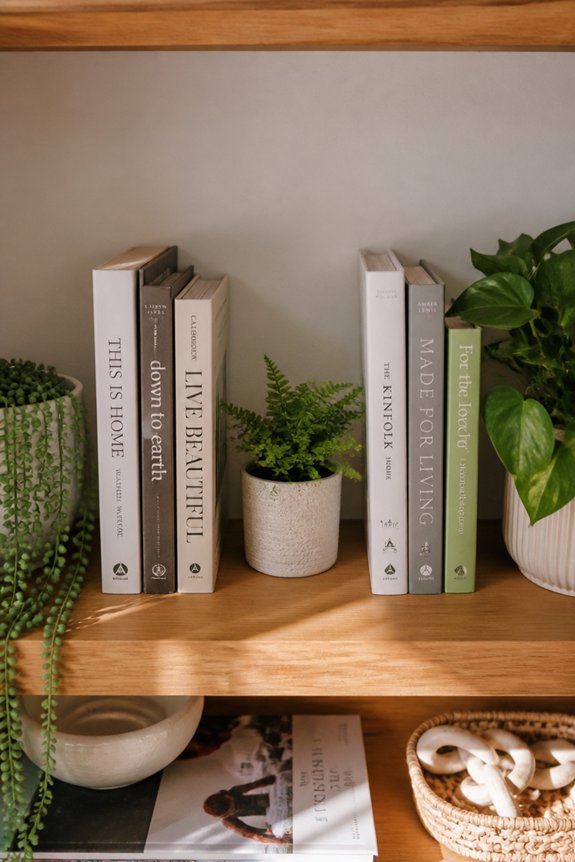
Strategic spacing and thoughtful arrangement prevent bookshelves from appearing cluttered when combining plants with books. Alternating book stacks with potted plants creates visual balance. Grouping items by height, with taller volumes beside trailing ivy, establishes rhythm.
Leaving breathing room between clusters prevents a cramped appearance. Consider using uniform pot colors to unify the display while maintaining distinct zones.
Best Shelf Materials for Plant Moisture and Weight
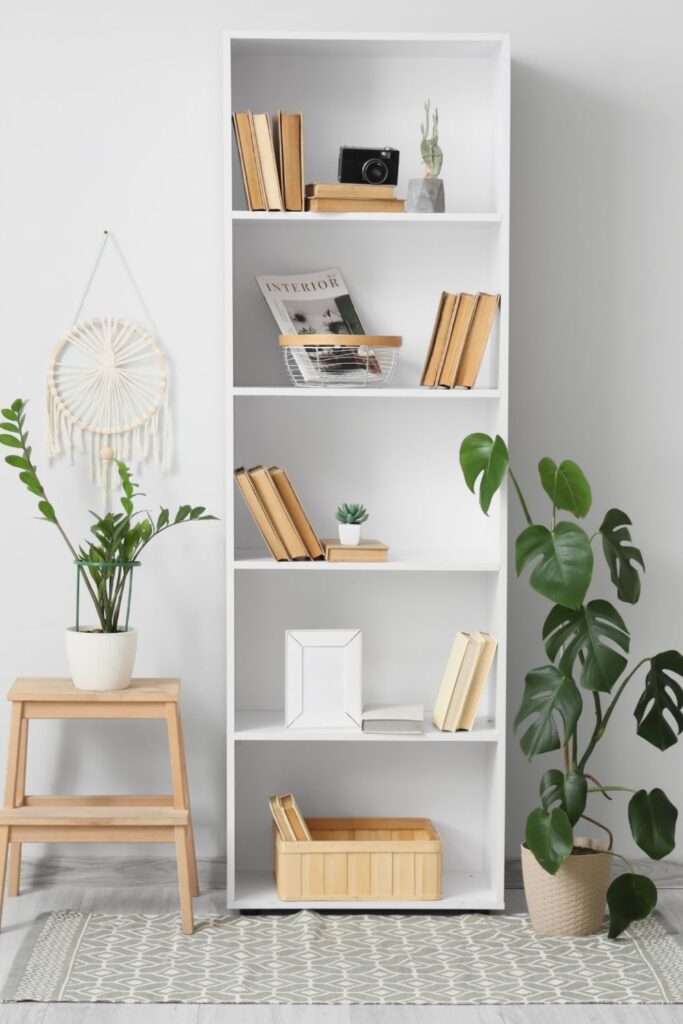
Because plants require watering and soil holds moisture, shelf materials must resist water damage and support added weight. Metal shelves, treated wood, and sealed bamboo perform well in humid conditions. Avoid particleboard and untreated wood, which absorb moisture and weaken over time.
Reinforced glass shelves work for lightweight plants. Metal brackets and supports prevent sagging under soil-filled pots, ensuring long-term stability and durability.
Trailing Plants for Cascading Shelf Drama
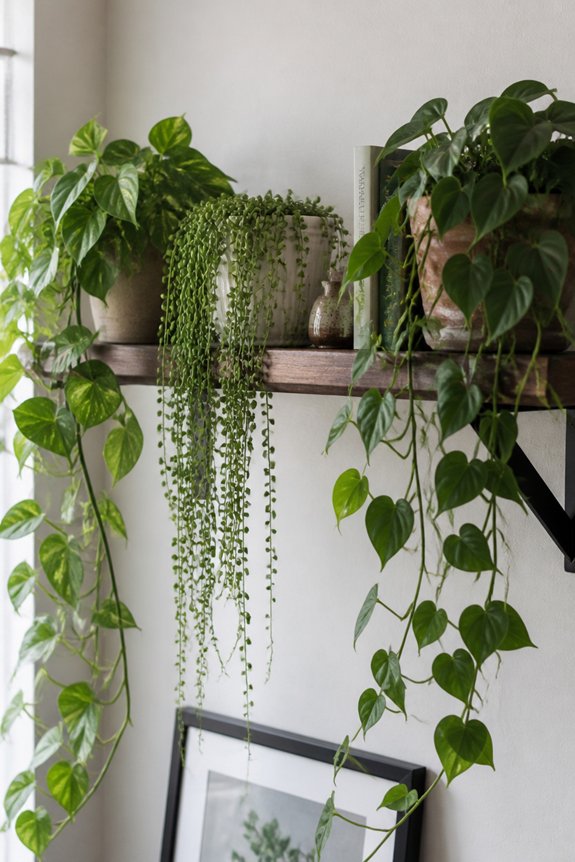
Once plants hang over shelf edges, they create visual depth and maximize vertical space in small rooms. Pothos, string of pearls, and philodendrons work well for this purpose. These trailing varieties need moderate light and occasional watering.
Placing them on upper shelves allows vines to cascade downward, filling empty wall space efficiently while keeping floor areas clear and uncluttered.
Compact Plants That Won’t Outgrow Your Shelves
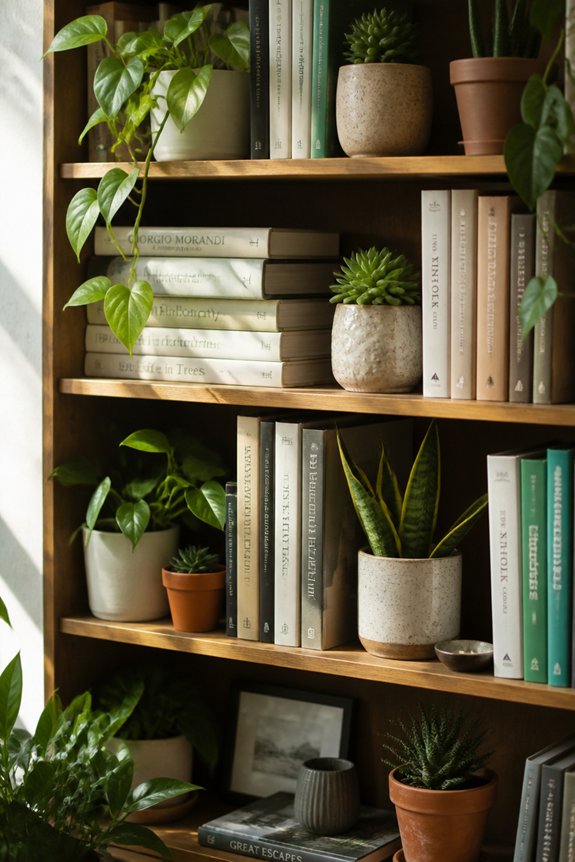
Many small-space gardeners benefit from selecting plants that remain naturally compact and do not require frequent pruning or repotting. Succulents, peperomia, and parlor palms stay small, making them ideal shelf residents. African violets and haworthia also maintain modest proportions.
These plants fit standard bookshelf dimensions while thriving in indirect light. They require minimal maintenance and space adjustments over time.
Use Planters That Complement Your Book Collection
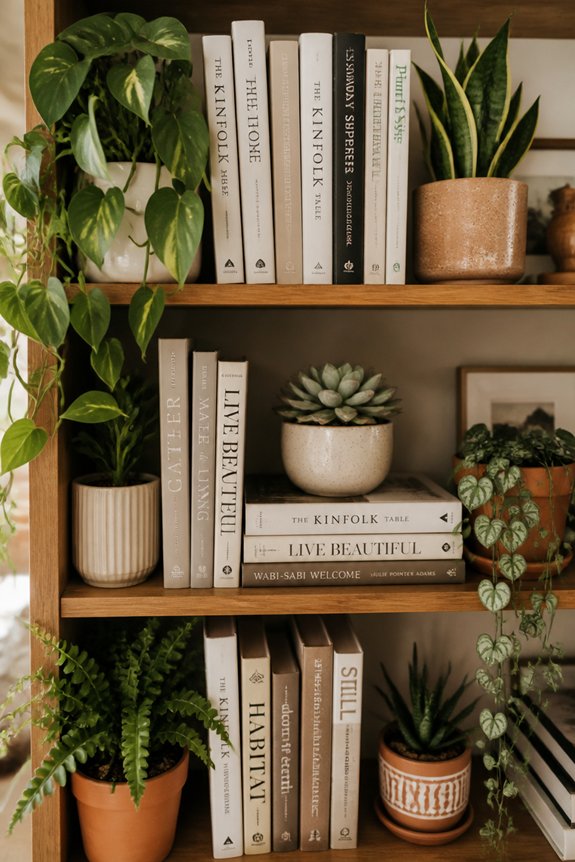
While plant selection determines what grows on shelves, planter choice shapes how the display looks alongside books. Ceramic pots in white or neutral tones blend seamlessly with book spines. Terracotta containers add warmth to shelves. Glass planters create visual lightness.
Metal holders offer modern contrast. Matching planter colors to book cover tones creates cohesion. Varying planter heights and textures prevents monotony while maintaining organization.
Arrange by Color to Unify Books and Plants
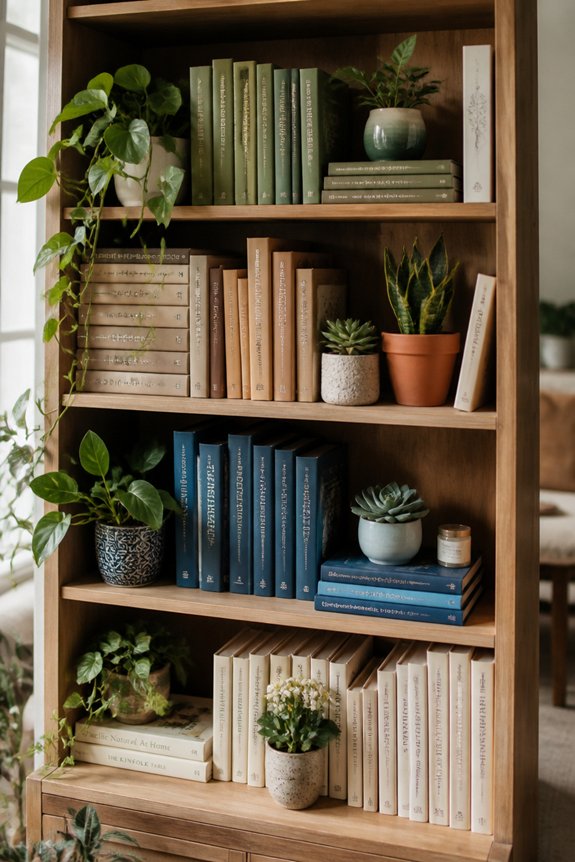
Color coordination creates visual harmony between books and plants on compact shelves. Grouping volumes by spine color: blues, greens, neutrals, establishes a cohesive backdrop. Potted plants with matching foliage tones, such as dark green succulents or silver-leafed varieties, integrate seamlessly.
This approach reduces visual clutter, making small spaces appear organized and intentional. Books and greenery work together as unified design elements rather than competing for attention.
Prevent Water Damage to Books and Shelving
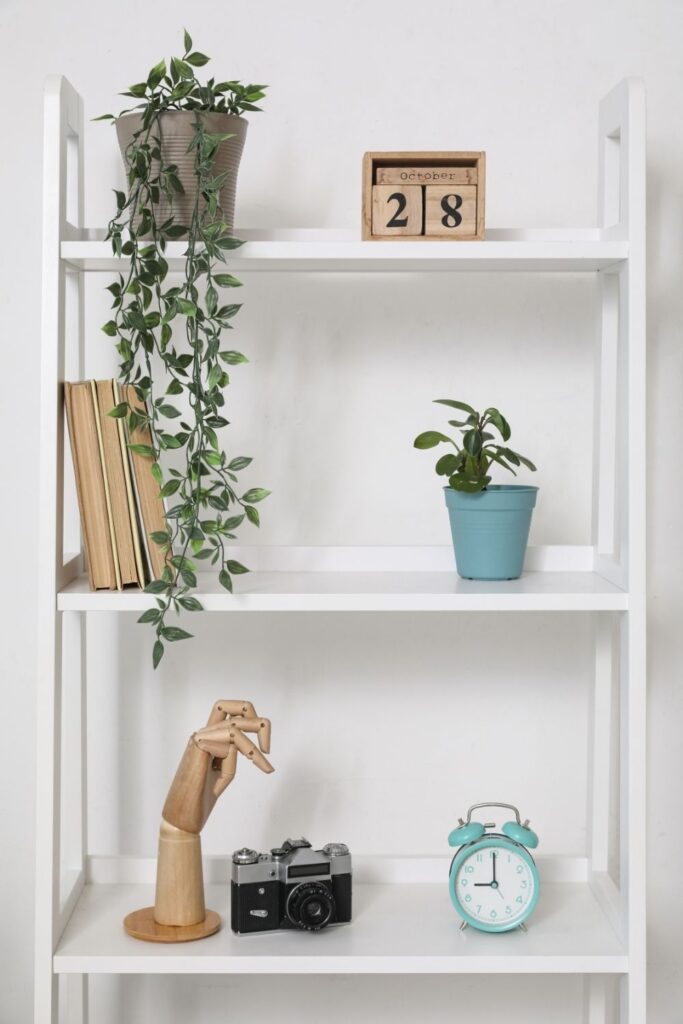
When plants sit near books on shelves, water poses a significant risk to both items. Saucers beneath pots catch excess water, preventing it from dripping onto books below. Spacing plants away from book stacks reduces moisture exposure.
Sealed wood shelving resists water damage better than unsealed varieties. Regular inspection of shelf surfaces identifies leaks early, allowing prompt intervention before damage spreads.
Humidity Trays for Thirsty Plants in Dry Homes
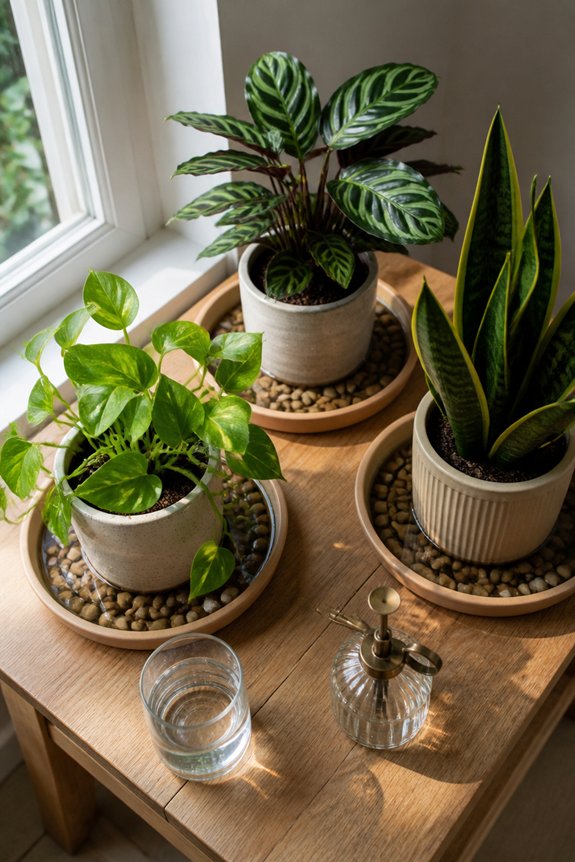
Plants requiring consistent moisture struggle in homes with low humidity levels, making humidity trays a practical solution for shelving arrangements. Placing saucers filled with water and pebbles beneath potted plants elevates moisture around foliage. Ferns, peace lilies, and calatheas benefit from this setup.
The water evaporates gradually, creating localized humidity. Refill trays regularly to maintain effectiveness and prevent plant stress.
Rotate Your Plants Seasonally for Even Growth
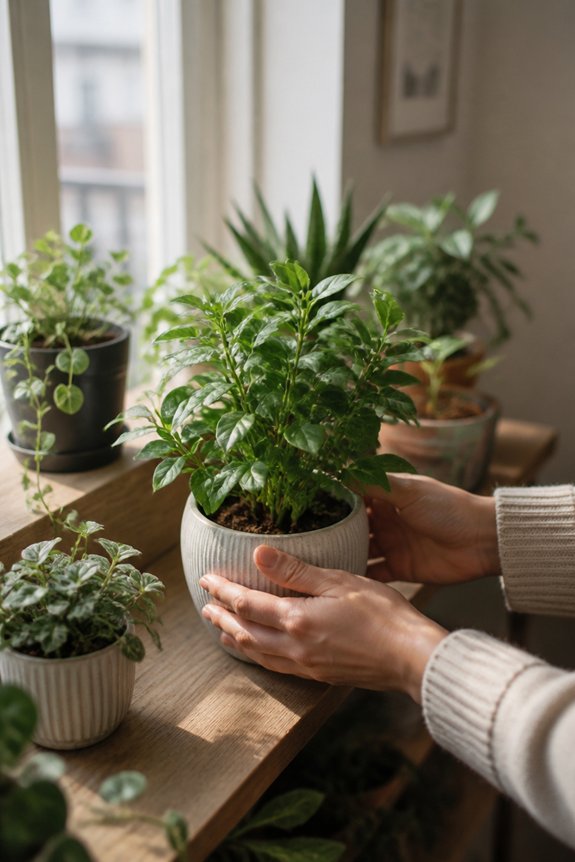
Most potted plants on shelves receive light unevenly, causing them to grow toward the strongest light source and develop lopsided shapes. Rotating plants quarterly, roughly every three months, promotes balanced foliage development on all sides.
Turn each plant ninety degrees during routine watering or fertilizing. This practice applies to pothos, snake plants, and philodendrons, which grow noticeably faster on their light-facing sides without regular rotation adjustments.
Group Plants by Watering Needs on One Shelf
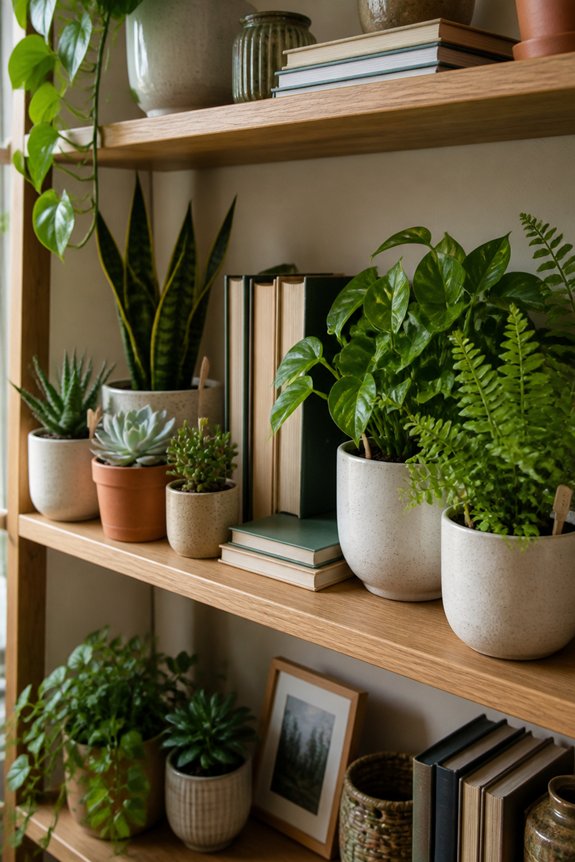
Organizing plants by their moisture requirements simplifies shelf maintenance and prevents overwatering or underwatering mistakes. Grouping succulents and snake plants together on one shelf works well, since they prefer dry conditions.
Placing ferns, peace lilies, and pothos on another shelf allows consistent watering schedules. This arrangement reduces confusion and guarantees each plant receives appropriate hydration levels based on its specific needs.
Lighting Solutions When Natural Light Is Limited
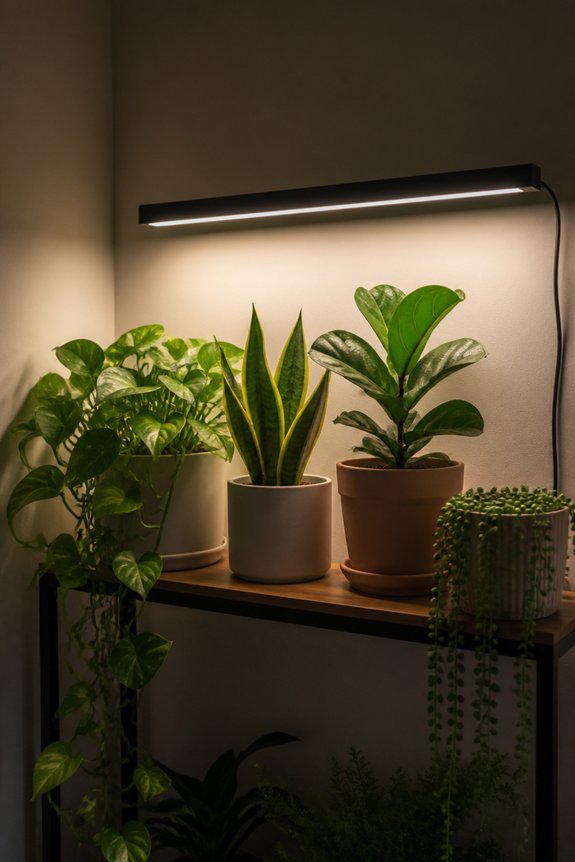
While organizing plants by watering schedules keeps them healthy, providing adequate light presents a separate challenge for bookshelf gardening in dim spaces. LED grow lights, positioned above shelves, deliver necessary wavelengths for photosynthesis. Full-spectrum bulbs suit most houseplants, requiring four to eight hours daily.
Alternatively, relocating bookshelves closer to windows or using reflective surfaces behind plants maximizes available natural light effectively.
Care Routines That Take Under 10 Minutes Weekly
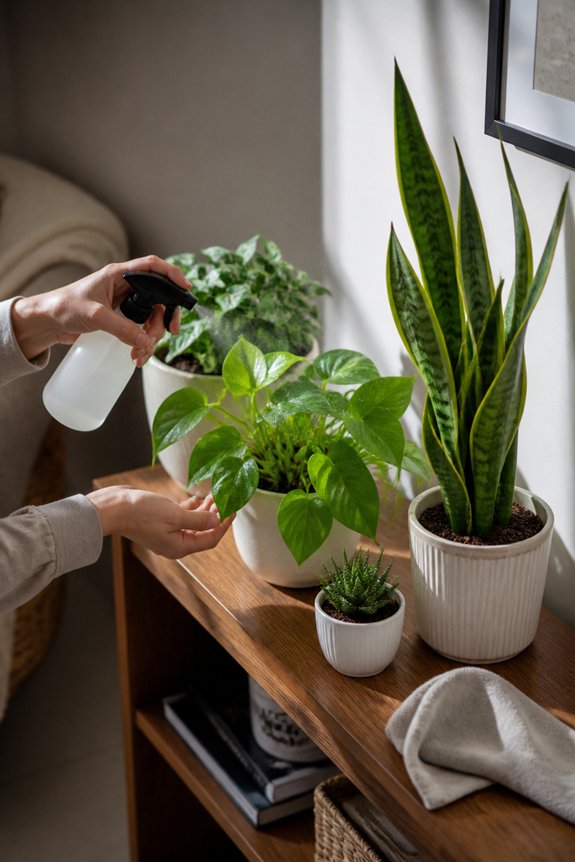
Simple maintenance tasks, performed consistently, prevent common plant problems on bookshelves. Weekly routines include checking soil moisture in pothos and snake plants, removing dust from leaves with a soft cloth, and rotating containers for even light exposure. Inspecting stems and undersides of foliage for pests takes minutes. These quick actions maintain plant health without requiring significant time commitment.
Scale a Planted Bookshelf as Your Plant Family Grows
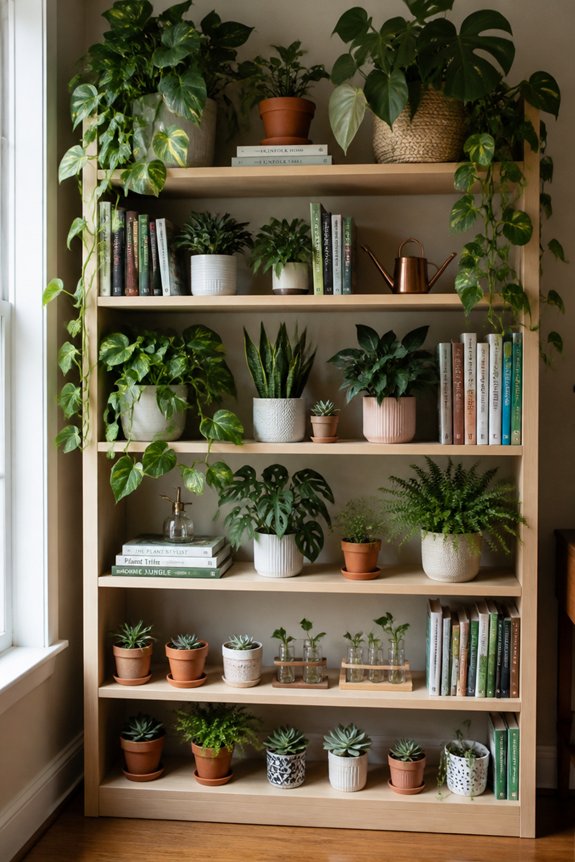
As plant collections expand beyond initial starter species, bookshelf arrangements require strategic adjustments to accommodate new specimens and their varying needs.
Relocating smaller plants to upper shelves creates space for larger specimens like pothos or snake plants below. Introducing vertical dividers separates plants requiring different watering frequencies. Reassessing light exposure guarantees taller additions don’t shade shade-sensitive varieties.
Upgrading shelf weight capacity prevents structural damage from heavier planters and soil.
Troubleshoot Common Issues Before They Spread
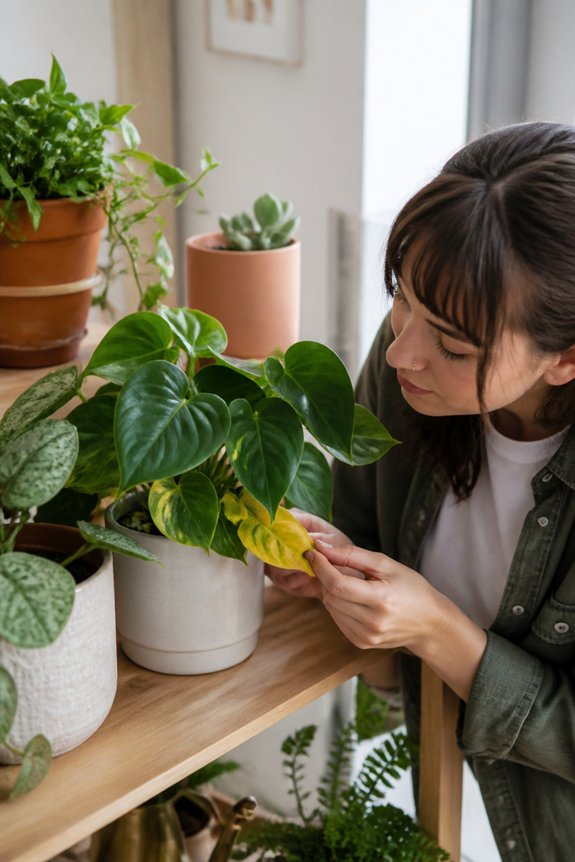
Detecting plant problems early prevents infestations and diseases from affecting the entire bookshelf collection. Common issues include spider mites, mealybugs, root rot, and yellowing leaves.
Regular inspections of stems, soil, and leaf undersides catch problems quickly. Isolating affected plants prevents spread to nearby specimens. Adjusting watering frequency, light exposure, and humidity levels addresses most issues effectively.
Frequently Asked Questions
Can I Use Artificial Plants if I Travel Frequently and Can’t Maintain Real Ones?
Yes, artificial plants work well for frequent travelers. They require no watering, sunlight, or maintenance, making them ideal for those unable to care for living plants regularly. High-quality artificial options look realistic and provide aesthetic benefits without demanding constant attention or care.
What’s the Best Way to Repot Plants Without Removing Books From Shelves?
One should remove the plant from its shelf temporarily, repot it in a separate workspace, then return it. Alternatively, one could use lightweight fabric grow bags that slip easily between books, minimizing shelf disruption during the repotting process.
How Do I Prevent Pests in Indoor Plants Without Harming Nearby Books?
Studies show indoor plant pests spread to 60% of nearby items within weeks. One should isolate affected plants immediately, use neem oil sprays away from books, inspect regularly, and maintain proper humidity to prevent infestations naturally.
Should I Seal Wood Shelves Before Adding Plants and Moisture-Prone Items?
Yes, sealing wood shelves proves beneficial before introducing plants and moisture-prone items. A polyurethane or water-resistant finish protects against warping, rot, and staining. This preventative measure extends shelf longevity and maintains structural integrity in humid environments.
Can Planted Bookshelves Work in Bathrooms With High Humidity and Limited Natural Light?
Like a fish learning to climb trees, planted bookshelves struggle in bathrooms. High humidity promotes mold and rot despite sealed wood, while limited natural light stresses most plants. Moisture-tolerant species and excellent ventilation become essential rather than optional.
Conclusion
A planted bookshelf merges static storage with living elements, requiring minimal effort yet delivering maximum impact. While books remain unchanging, plants demand weekly monitoring, watering, and occasional trimming. This contrast—permanence versus growth—creates dynamic visual interest in confined spaces. Success depends on selecting hardy varieties like pothos or snake plants, establishing straightforward care routines, and adjusting arrangements as plants develop. The result transforms functional furniture into a thriving, evolving décor feature.