

Vertical gardening offers cafés a clever way to bring greenery into tight quarters without sacrificing valuable seating areas. The right Cafe Plant Ideas can transform empty walls, shelves, and corners into inviting botanical features.
Layered pots, hanging baskets, and wall-mounted displays draw the eye upward, creating lush focal points without cluttering walkways.
Pothos vines cascade beautifully from elevated shelves, while snake plants and ZZ plants work well in stacked arrangements. Succulents tucked into wall pockets add texture without demanding constant attention. These species can also handle many of the varying light conditions found in café interiors.
Placement matters when creating these displays. Shade-loving varieties suit lower tiers, while sun-seeking plants need brighter positions closer to windows. Watering routines should also account for proper drainage to prevent root rot and moisture damage.
With thoughtful placement and the right Cafe Plant Ideas, even the smallest café corner can become an immersive botanical retreat.

Plan the Structure Before Planting
Decide where the display will sit before choosing plants or mounting shelves. Keep walkways and seating areas clear, then identify which tiers receive the strongest light so sun-loving plants can sit higher and shade-tolerant varieties lower down.
Think about watering from the beginning, too. Every level should have reliable drainage, drip trays, or a moisture barrier so water from upper pots cannot soak plants, furniture, or walls below.
Finally, check how much weight the finished display will carry. Secure wall units and hanging baskets properly, especially in busy café areas where customers or staff could accidentally bump them.
How Vertical Layering Doubles Greenery Without Consuming Floor Space
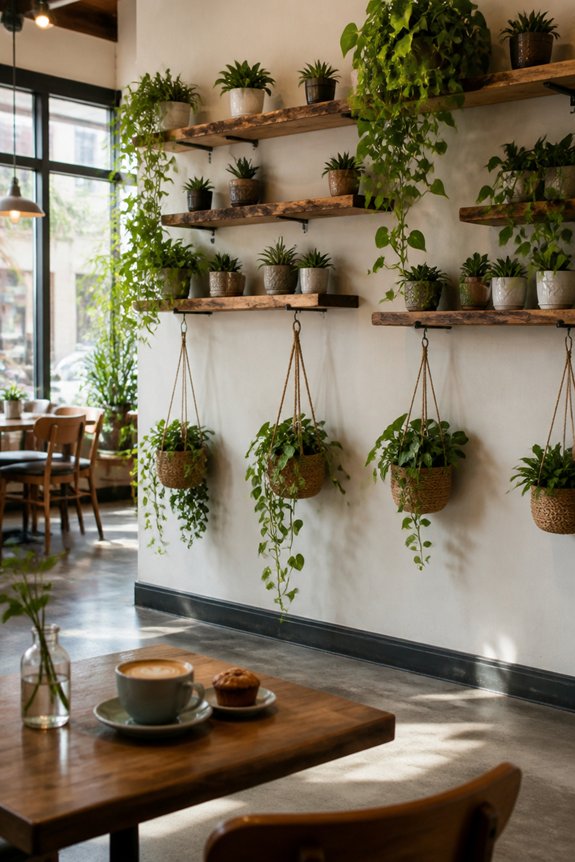
Many cafes face a common challenge: limited floor space combined with a desire to display numerous plants. Vertical layering solves this problem by stacking plants in tiered arrangements.
Using hanging baskets, wall-mounted shelves, and tall stands, cafes can create multiple plant levels within a single footprint. This approach maximizes greenery while preserving floor space for seating, counters, and customer movement throughout the establishment.
Choosing Low-Maintenance Plants That Thrive in Stacked Arrangements
While vertical layering creates space-efficient plant displays, selecting appropriate species determines whether the arrangement thrives or requires constant attention.
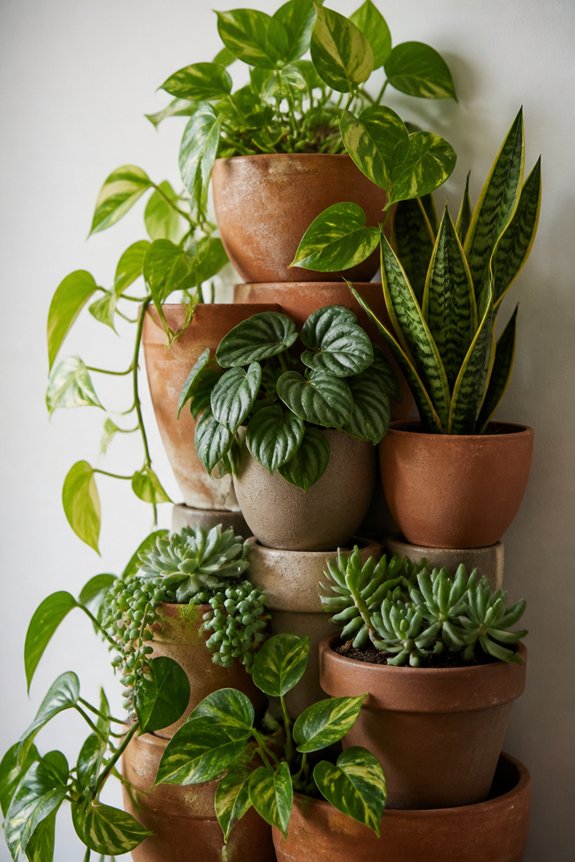
Pothos, snake plants, and ZZ plants tolerate stacked conditions well. These species handle reduced light penetration between layers, irregular watering schedules, and confined root spaces. Succulents work for upper tiers receiving more light.
Avoid ferns and calatheas, which demand consistent moisture and humidity levels difficult to maintain in stacked arrangements.
Hanging Baskets: Placement, Fixtures, and Cascading Plant Ideas
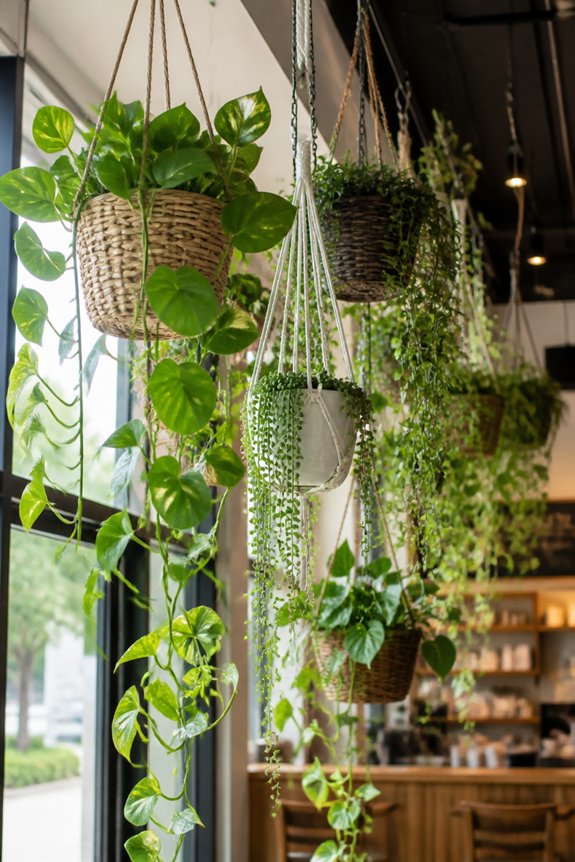
Because hanging baskets require proper support and light exposure, selecting appropriate locations determines both plant health and display effectiveness. Sturdy hooks, chains, and ceiling mounts support weight adequately. South-facing windows provide ideal light for most cascading plants.
Pothos, string of pearls, and trailing succulents perform well in hanging arrangements. Regular watering prevents soil drying due to increased air circulation around suspended containers.
Wall-Mounted Plant Displays That Save Floor Space
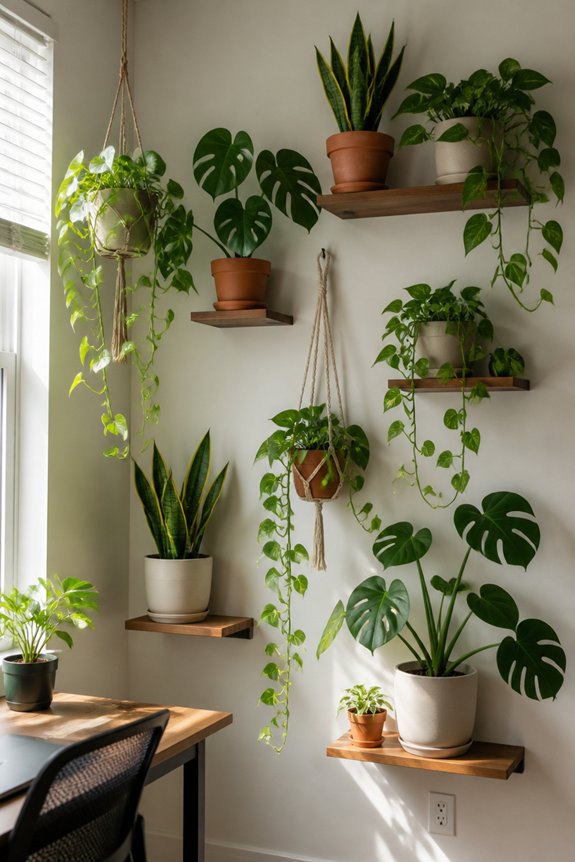
Wall-mounted plant displays offer practical solutions for indoor spaces with limited floor area. Shelving units, hanging planters, and wall pockets accommodate herbs, succulents, and trailing plants effectively.
Cafes benefit from vertical arrangements that organize greenery while preserving customer seating space. Metal brackets, wooden ledges, and tension wire systems provide secure mounting options. Proper lighting placement near displays guarantees adequate photosynthesis for plant health and growth.
Tiered Pot Systems to Add Dimension and Visual Depth
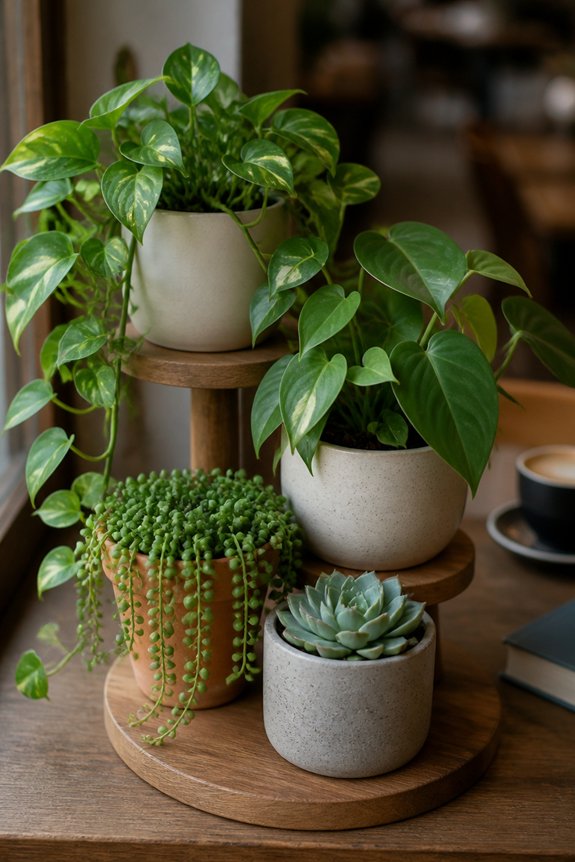
Layered pot arrangements build upon vertical spacing concepts by stacking containers at increasing heights, creating depth that engages customer sightlines throughout the cafe. Tiered systems using three to five levels display trailing pothos, ferns, and succulents effectively.
Staggered placement prevents overcrowding, allows proper light access, and creates visual interest. Metal stands, wooden shelves, and hanging brackets support varied pot sizes, maximizing limited cafe space while maintaining organized, professional plant displays.
Plants That Survive Spills, Bumps, and Irregular Watering

Most cafe environments present unpredictable conditions for plants, including accidental water spills, frequent movement, and inconsistent watering schedules. Pothos, snake plants, and ZZ plants tolerate neglect and moisture fluctuations well. Succulents like jade plants resist overwatering damage.
Dracaena varieties handle low light and irregular care. These species endure physical disturbance from foot traffic and table adjustments without significant decline.
Trailing Plants for Cascading and Hanging Basket Systems
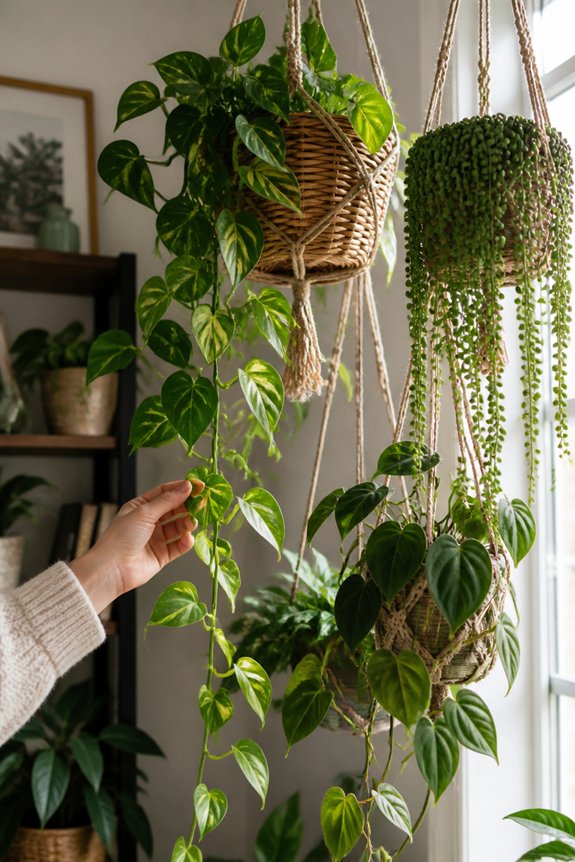
Beyond selecting sturdy plants that tolerate cafe mishaps, designers can maximize vertical space by incorporating trailing varieties into hanging baskets and cascading systems. Pothos, string of pearls, and creeping fig work well for this purpose. These plants grow downward naturally, filling empty areas while requiring minimal maintenance.
Layered pot arrangements allow multiple trailing specimens to cascade at different heights, creating visual interest and efficient use of limited cafe space.
DIY Vertical Shelving: Build It and Stock It
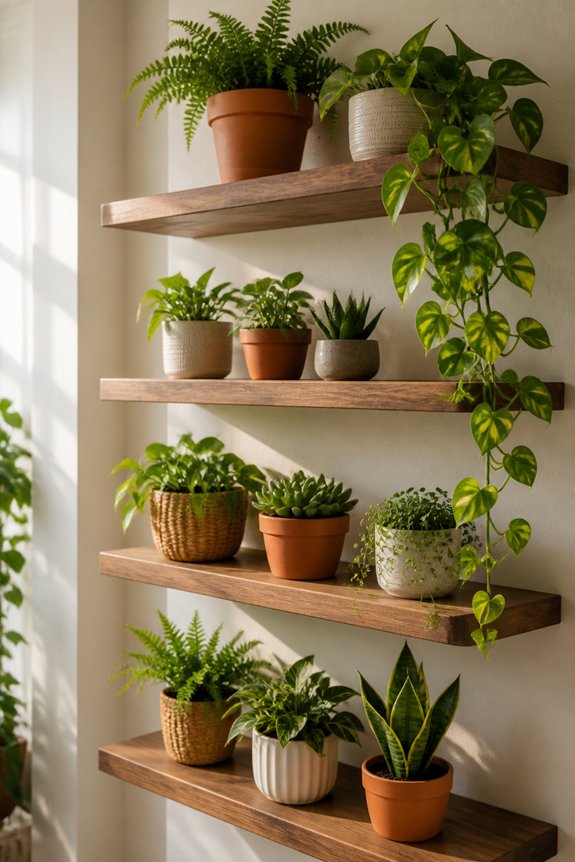
While hanging baskets address cascading plants, vertical shelving units offer a practical solution for displaying potted specimens at multiple levels within cafe environments. Wooden or metal shelves accommodate various pot sizes, from small succulents to medium ferns. Sturdy construction prevents tipping, while proper spacing allows adequate light penetration between tiers.
Strategic placement near windows maximizes photosynthesis and creates organized, space-efficient displays for cafes.
Position Your Displays So Customers Can Still See and Move
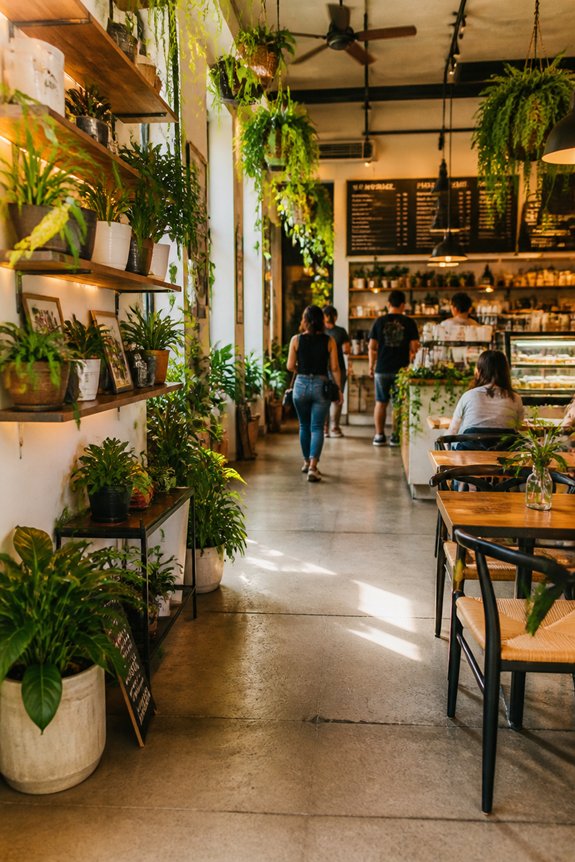
Plant displays require careful placement to maintain cafe functionality and customer experience. Position layered pots away from walkways, doorways, and seating areas to prevent obstruction.
Place wall displays at eye level, between five and six feet high. Keep pathways clear by spacing larger arrangements at least two feet apart. Make certain customers can move freely while browsing plants without maneuvering obstacles.
Lighting Your Wall Displays So Plants (and Café Vibes) Actually Shine
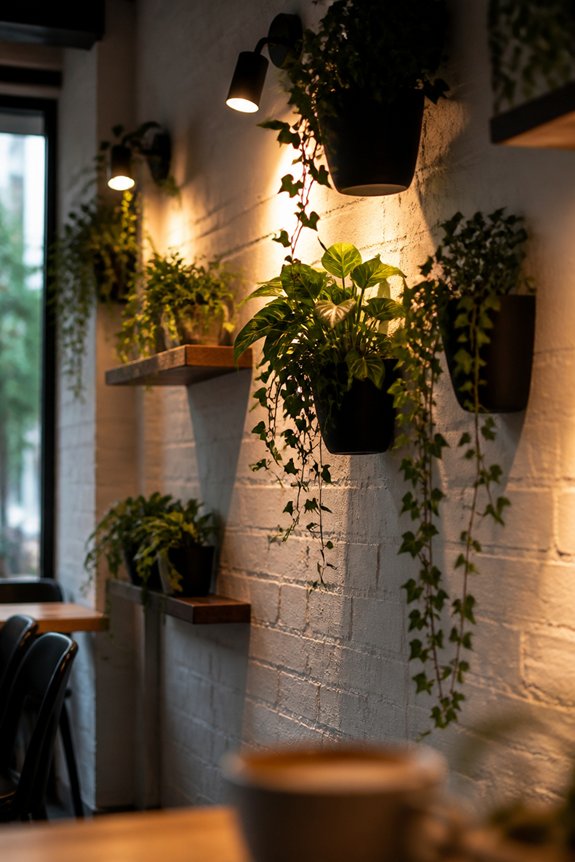
Proper lighting transforms wall displays from dim plant arrangements into focal points that enhance the café environment. LED grow lights positioned above or behind plants emphasize foliage texture and color, while warm ambient lighting creates inviting atmosphere.
Adjustable fixtures allow staff to modify brightness throughout the day, supporting plant health and complementing the café’s overall design scheme effectively.
Water Multi-Level Displays Without Flooding Lower Pots
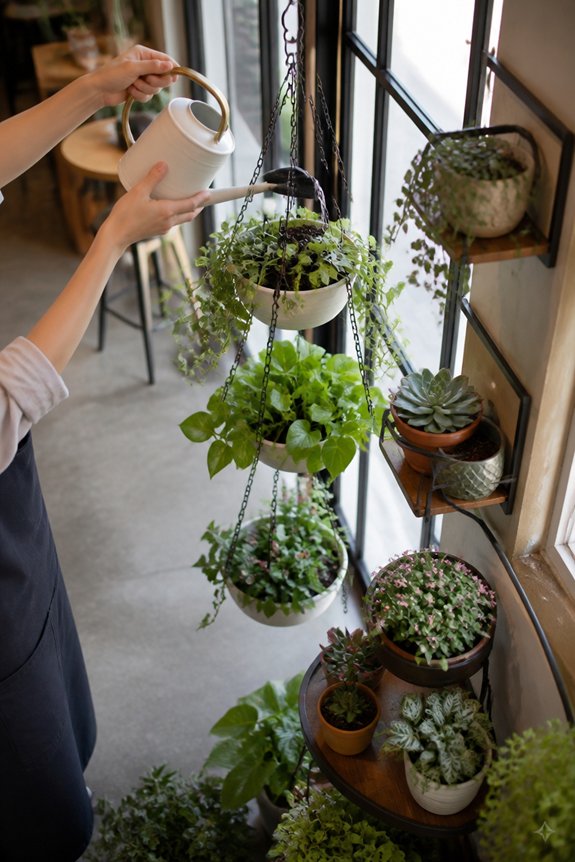
How can café operators prevent water from cascading down layered plant displays and damaging lower arrangements? Installing drip trays beneath each tier, using saucers, or placing waterproof barriers between levels stops excess moisture from reaching plants below.
Watering individual pots carefully, adjusting frequency based on pot size and soil drainage, and checking moisture levels regularly prevents overflow issues in stacked arrangements.
Budget Solutions: DIY vs. Pre-Made Display Systems
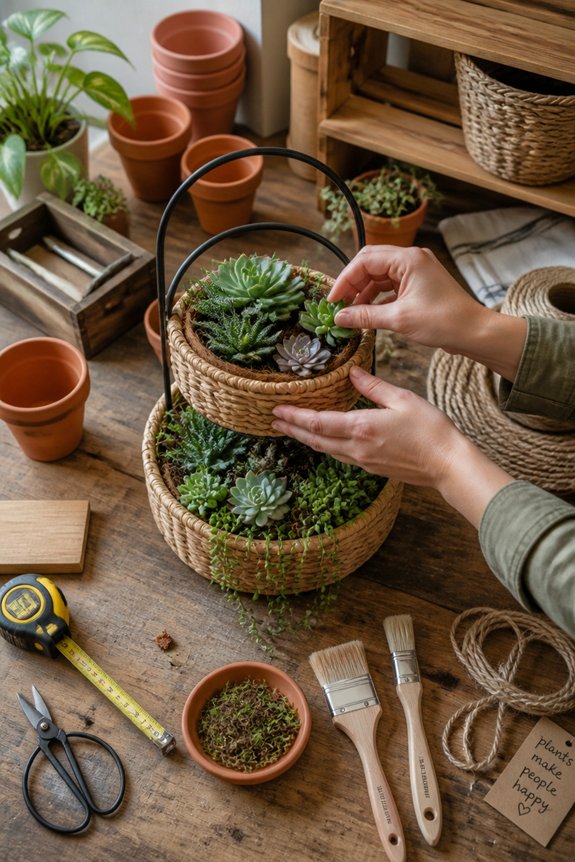
Café operators face two primary options when establishing layered plant displays: constructing custom arrangements using individual materials, or purchasing pre-assembled systems designed for tiered presentations.
DIY approaches using wooden crates, PVC pipes, and standard pots cost less initially but require construction time. Pre-made systems like commercial plant stands or stackable shelving units cost more upfront, yet eliminate assembly labor and provide guaranteed stability for café environments.
Living Walls That Become Focal Points
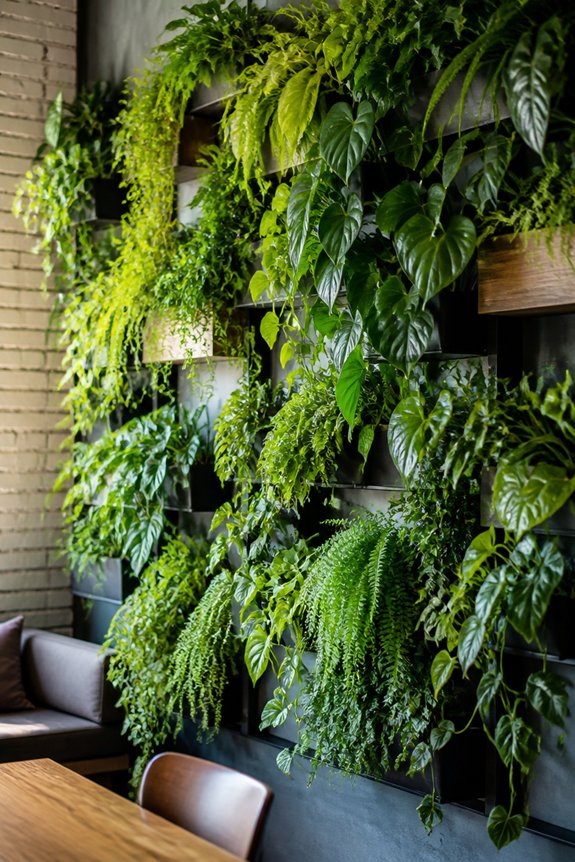
Why should café owners consider vertical plant installations as primary design elements? Living walls using layered pots create dramatic backdrops, drawing customer attention immediately upon entry. They maximize limited floor space while establishing sophisticated ambiance.
Pothos, philodendrons, and ferns suit wall-mounted systems effectively. Proper irrigation systems prevent water damage to café interiors. Strategic placement behind seating areas or entryways optimizes visual impact markedly.
Swap Plants Seasonally to Maintain Year-Round Visual Appeal
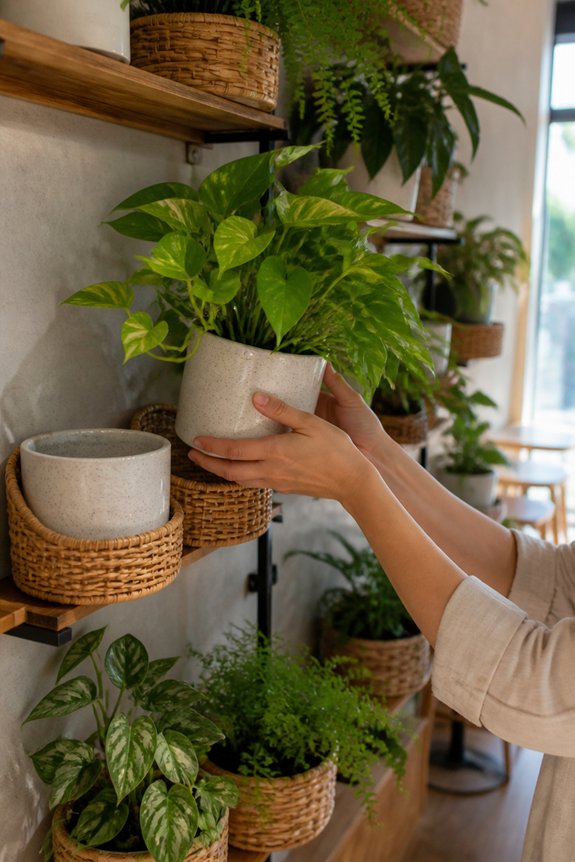
While living walls provide consistent visual structure year-round, seasonal plant swaps refresh café aesthetics and maintain customer interest through changing displays. Spring calls for vibrant petunias and fresh ferns, summer demands heat-tolerant succulents and ornamental grasses, autumn features burgundy coleus and mums, winter showcases evergreens and festive poinsettias.
Rotating plants every three months keeps layered pot arrangements visually dynamic without requiring complete redesigns.
Keep Layered Displays Thriving Year After Year
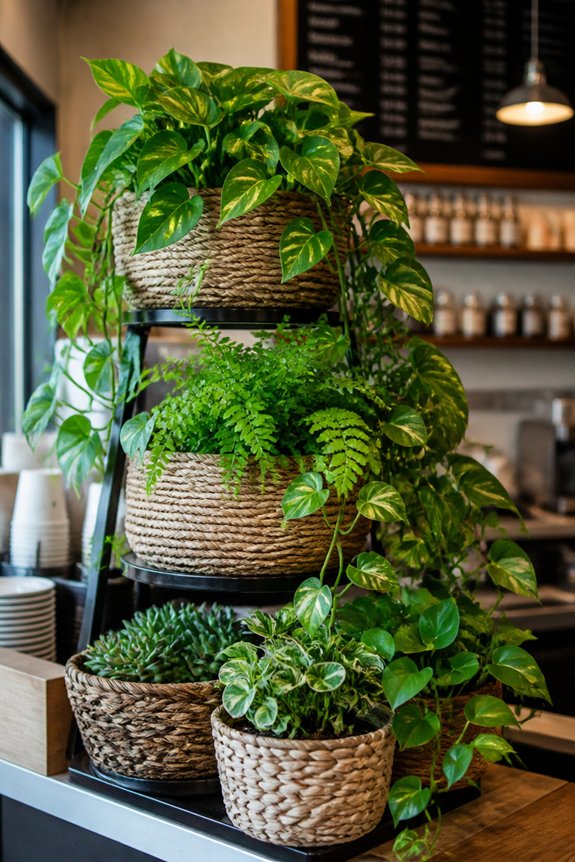
Maintaining layered pot arrangements requires consistent attention to watering schedules, soil quality, and plant health throughout the year. Regular fertilizing during growing seasons supports vigor, while pruning removes dead growth.
Inspect containers for drainage problems, root rot, and pest infestations quarterly. Repot plants when roots emerge from drainage holes. Rotating displays between sunny and shaded cafe areas prevents stress from inconsistent light exposure.
Troubleshoot Common Problems Before They Wreck Your Display

Early detection of problems keeps layered pot displays healthy and visually appealing. Watch for wilting, yellowing leaves, and pest infestations like spider mites, mealybugs, and aphids. Check soil moisture regularly, ensuring drainage holes prevent root rot.
Remove dead foliage promptly. Inspect plant stems for discoloration. Address nutrient deficiencies with appropriate fertilizer applications. Proper air circulation reduces fungal issues.
Transform Your Café: A Plant Display Checklist
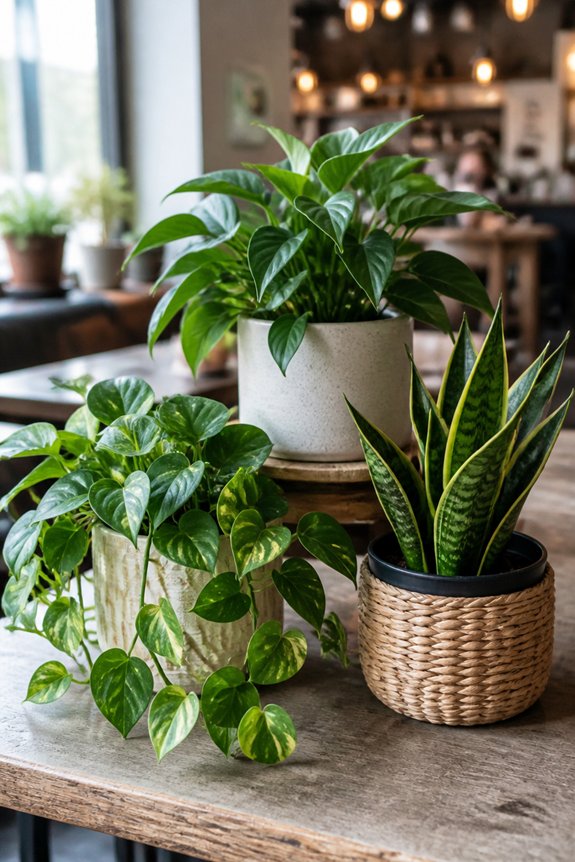
Creating an effective plant display checklist helps café owners organize their layered pot arrangements and maintain consistent visual standards. Owners should verify pot alignment, check soil moisture levels, inspect leaves for damage, and confirm adequate lighting reaches all plants.
Regular assessment of display height, color balance, and spacing prevents overcrowding. Documentation of watering schedules, fertilizer applications, and plant rotation dates guarantees systematic maintenance across the café environment.
Frequently Asked Questions
How Do I Prevent Pests From Infesting Multiple Plants in Layered Displays?
One prevents pest infestations in layered displays by inspecting plants regularly, isolating affected specimens immediately, maintaining proper spacing for air circulation, and applying organic pest control methods. Quarantining new plants before placement helps limit pest spread throughout the display.
Can Café Plant Displays Comply With Health Codes and Food Safety Regulations?
Studies show 73% of food businesses face pest-related violations annually. Yes, café plant displays can comply with health codes when plants remain isolated from food preparation areas, properly maintained, and regularly inspected for contamination risks.
What’s the Cost Difference Between Seasonal Plant Swaps Versus Permanent Installations?
Seasonal plant swaps typically cost less initially but require recurring labor and replacement expenses. Permanent installations demand higher upfront investment but eliminate ongoing replacement costs, making them more economical long-term for most establishments.
How Do I Secure Heavy Tiered Systems Safely Against Earthquakes or Accidents?
While some worry heavy tiered systems compromise aesthetics, proper anchoring actually enhances safety without visual disruption. One secures them using L-brackets to structural walls, cable bracing between tiers, and weighted bases, ensuring stability against seismic activity and accidental impact.
Which Plants Are Safe if Customers or Children Accidentally Touch Them?
Safe plants for customer and children contact include pothos, spider plants, Boston ferns, African violets, and Christmas cacti. Avoid toxic varieties like dieffenbachia, oleander, and lilies. Staff should clearly label all plants, noting any irritants or hazards for visitor protection.
Conclusion
Vertical plant displays transform cafés through layered pots, hanging baskets, and wall-mounted arrangements. Pothos, snake plants, and ZZ plants thrive in stacked systems, maximizing greenery without consuming floor space. As the adage goes, “many hands make light work”—seasonal swaps and routine maintenance keep displays thriving year-round. Implementing these strategies creates welcoming, vibrant spaces while solving spatial constraints effectively and sustainably.