
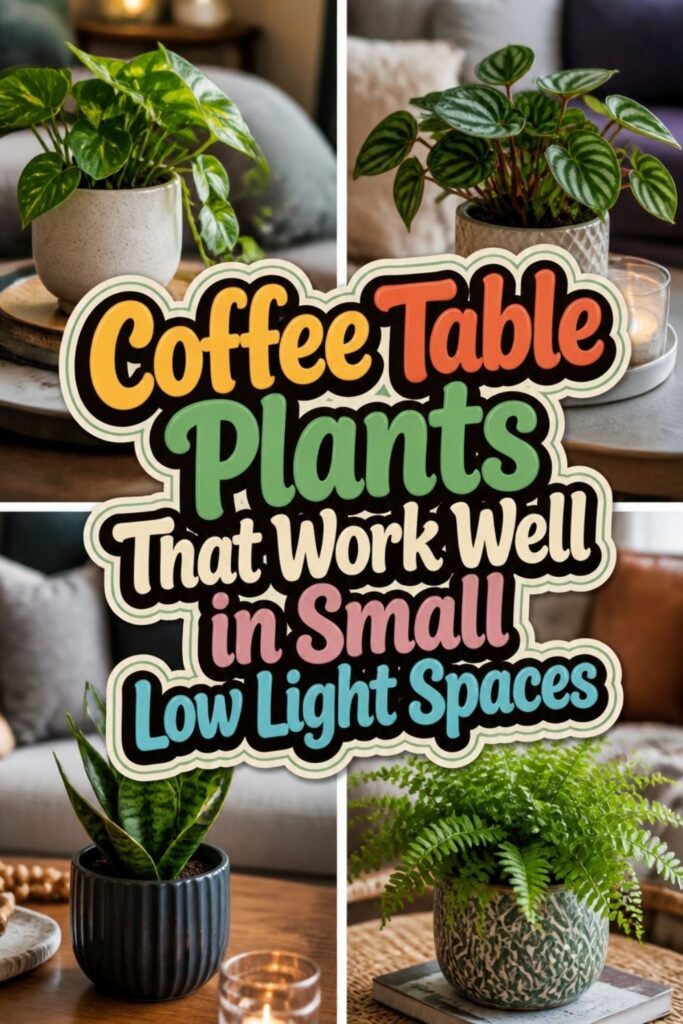
Finding the right Coffee Table Plants for a dimly lit living room can feel challenging. Fortunately, several resilient plants handle lower light conditions well. Pothos and philodendrons tolerate shade, while snake plants and ZZ plants need little attention. Most require only occasional watering and protection from harsh direct sun.
Patterned foliage can add character to a coffee table without needing a bright window. Calathea and maranta offer striking leaf designs that work beautifully as natural centerpieces. Their detailed foliage adds color and texture without overcrowding the table.
Size also matters when choosing Coffee Table Plants. Compact varieties leave enough room for books, trays, and everyday items. Low-growing plants can also keep the surface feeling open rather than cluttered.
Even easy-care varieties need sensible watering. Overwatering can quickly lead to root rot, especially in lower light. Check the soil before watering to keep these compact plants healthy.

Let the Table Guide Your Choice
Keep scale in mind when choosing a coffee table plant. Compact varieties with controlled growth work best, while long trailing vines or tall foliage can quickly interfere with drinks, books, and everyday use of the table.
Choose a pot with drainage and place a saucer underneath to protect the surface. In lower light, soil dries more slowly, so always check the moisture before adding more water.
Position the table where the plant still receives some indirect light rather than assuming low-light means no light. If the room is especially dark, occasionally moving the plant closer to a window or adding a small grow light can help maintain healthier growth.
Best Low-Light Plants for Coffee Tables
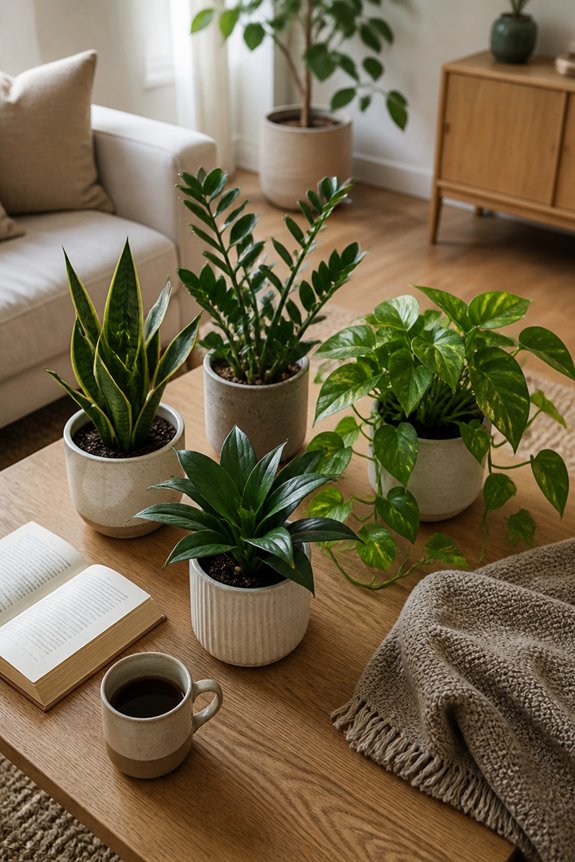
Which plants tolerate dim environments well enough for coffee table placement? Pothos, snake plants, and ZZ plants thrive in low light conditions. Philodendrons adapt readily to shadowy corners. Peace lilies bloom despite minimal sunlight. Cast iron plants earn their name through durability in poor lighting.
These species require infrequent watering and minimal maintenance, making them suitable for indoor coffee table displays.
Pothos and Philodendrons: Low-Light Powerhouses
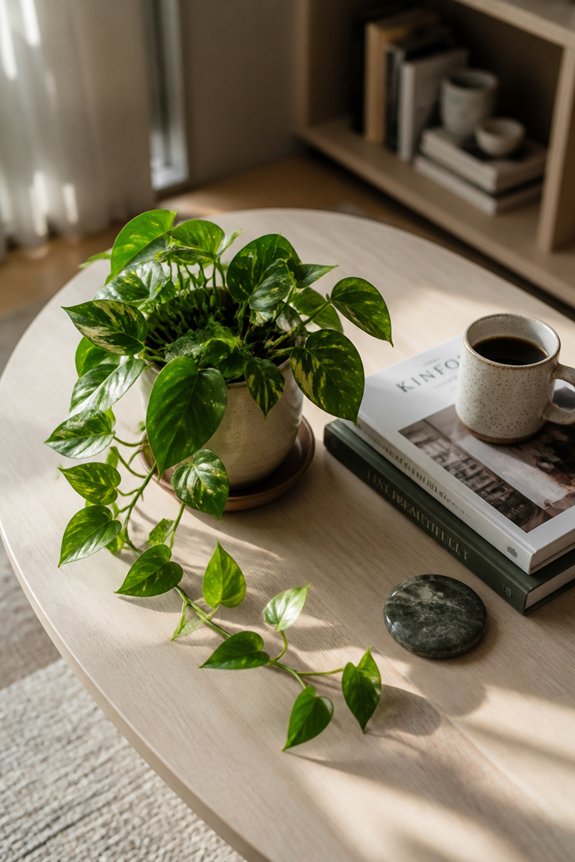
Among the low-light plants mentioned previously, pothos and philodendrons stand out as particularly reliable choices for coffee table settings. Both varieties tolerate dim environments and require minimal maintenance.
Pothos features trailing vines, while philodendrons offer compact growth patterns. These plants thrive in indirect light, need water every one to two weeks, and adapt well to typical indoor temperatures. Their resilience makes them practical selections for low-light spaces.
Snake Plants and ZZ Plants: Low-Light Survivors

Snake plants and ZZ plants represent two exceptionally hardy options for coffee table placement in low-light conditions. Both species tolerate irregular watering and dim environments effectively.
Snake plants feature upright, variegated leaves, while ZZ plants display glossy, compound leaflets. These plants require minimal maintenance, making them suitable for neglectful gardeners. Water sparingly, allowing soil to dry completely between waterings.
Calathea and Maranta: Low-Light Decorative Plants

Decorative foliage plants like Calathea and Maranta offer visual appeal alongside low-light tolerance, distinguishing them from the purely functional survivors discussed previously.
Calathea varieties display striking leaf patterns with colors ranging from deep burgundy to pale pink. Maranta, commonly called prayer plants, feature distinctive folding leaves and compact growth patterns. Both species thrive in indirect light conditions typical of coffee table placements and require consistent moisture levels.
Setting Up Your Coffee Table for Plant Success
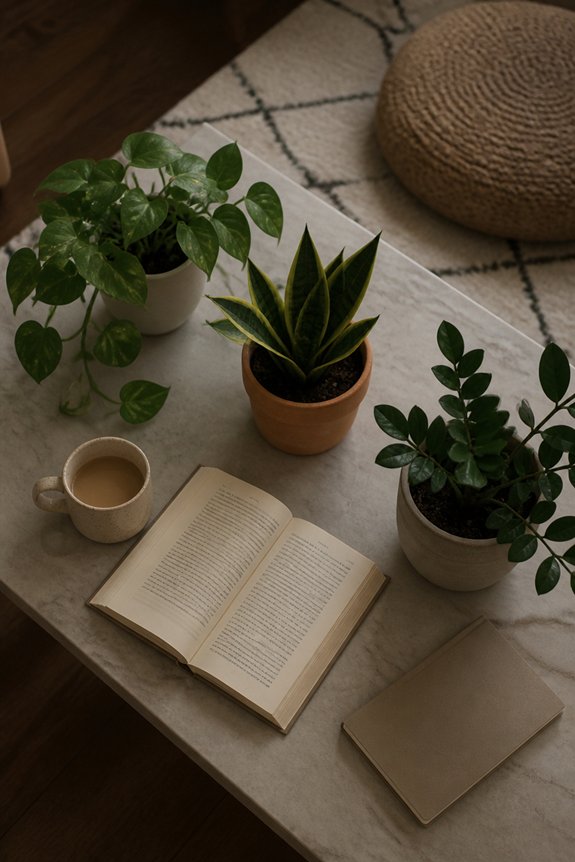
How can a coffee table environment support healthy plant growth? Proper placement near indirect light sources, consistent watering schedules, and appropriate drainage containers matter greatly. Use saucers beneath pots to protect surfaces while allowing excess water to drain.
Guarantee adequate air circulation around plants, maintain stable room temperatures between sixty and seventy degrees, and position tables away from heating vents or air conditioning units that cause stress.
Watering Low-Light Plants Without Killing Them
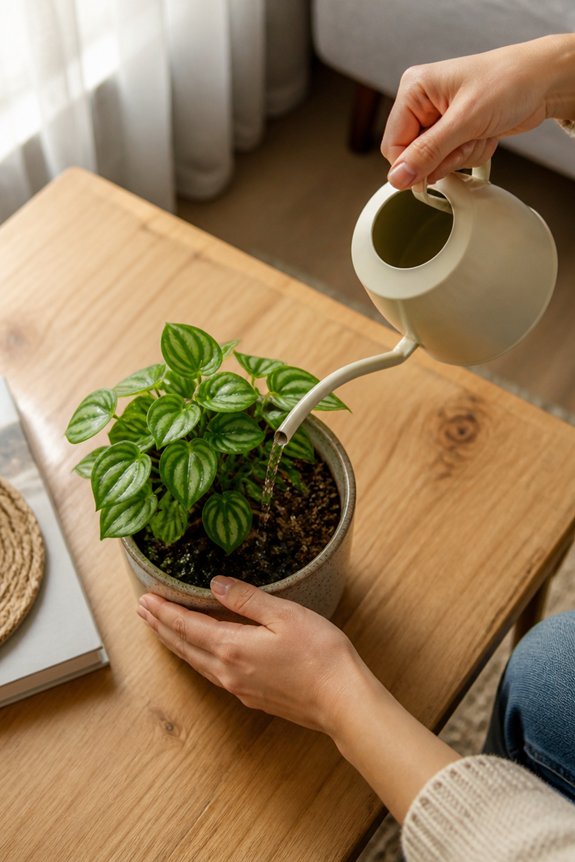
Because low-light plants require less energy for growth, they need less water than their sun-loving counterparts, and overwatering remains the primary cause of plant death in coffee table settings. Check soil moisture before watering by inserting a finger one inch deep. Water only when soil feels dry at that depth.
Pothos and snake plants tolerate irregular watering schedules better than other varieties.
Common Mistakes That Kill Coffee Table Plants
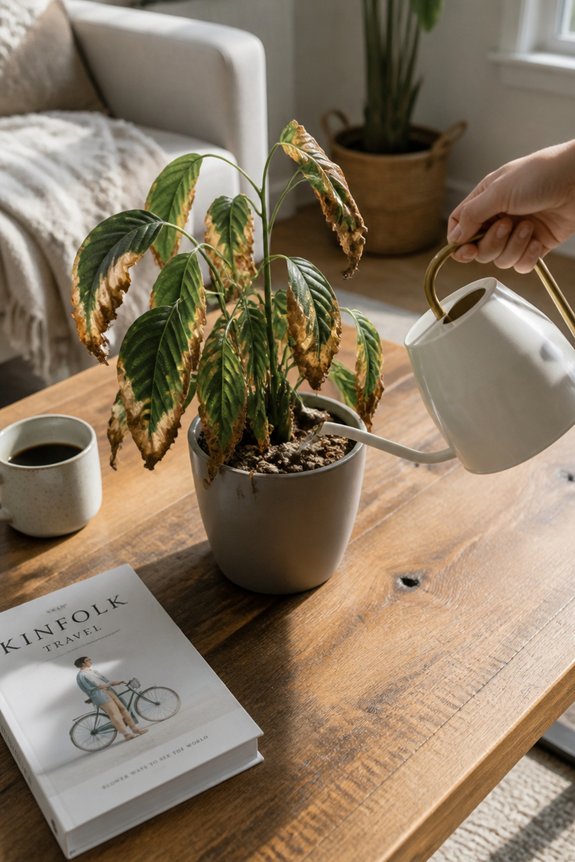
Even with good intentions, plant owners often make preventable errors that damage or kill low-light specimens.
Overwatering ranks as the primary culprit, causing root rot in pothos and snake plants. Placing plants too far from windows eliminates necessary light exposure. Using regular potting soil instead of well-draining varieties traps excess moisture.
Neglecting to wipe leaves blocks light absorption and encourages pest infestations.
Frequently Asked Questions
How Often Should I Rotate My Coffee Table Plant to Ensure Even Growth?
A coffee table plant should be rotated approximately once weekly to promote even growth on all sides. This practice guarantees balanced exposure to available light and prevents the plant from developing a one-sided appearance while maintaining uniform development.
Can I Use Artificial Grow Lights to Supplement Natural Light for Coffee Table Plants?
Yes, artificial grow lights effectively supplement natural light for coffee table plants. LED grow lights positioned 6-12 inches above foliage for 12-14 hours daily promote healthy growth in low-light environments, making them ideal for indoor spaces lacking adequate sunlight.
What Size Pot Is Ideal for Coffee Table Plants in Small Spaces?
For coffee table plants in small spaces, pots measuring 4-6 inches in diameter prove ideal. This size accommodates root development while maintaining proportional aesthetics. Shallow containers work particularly well, allowing plants to fit seamlessly into compact living areas without overwhelming the furniture piece.
Are Coffee Table Plants Safe Around Pets and Small Children?
Many coffee table plants prove safe, though some pose risks. Pet owners should select non-toxic varieties like spider plants and prayer plants. Parents must research each species, removing toxic options and securing pots firmly to prevent accidents and ingestion.
How Do I Know When to Repot a Low-Light Coffee Table Plant?
One should repot a low-light coffee table plant when roots emerge from drainage holes, growth slows noticeably, or soil dries excessively fast. Typically, repotting occurs every 12-18 months. Spring offers the ideal timing for this task.
Conclusion
Coffee table plants serve as quiet companions in dim spaces, requiring minimal attention yet delivering steady results. Pothos, snake plants, and ZZ varieties form the foundation of low-light success. Calathea and maranta add visual interest through their patterned leaves. Proper watering schedules and realistic expectations prevent common failures. These plants transform ordinary coffee tables into living displays, proving that greenery thrives even in forgotten corners of homes.