
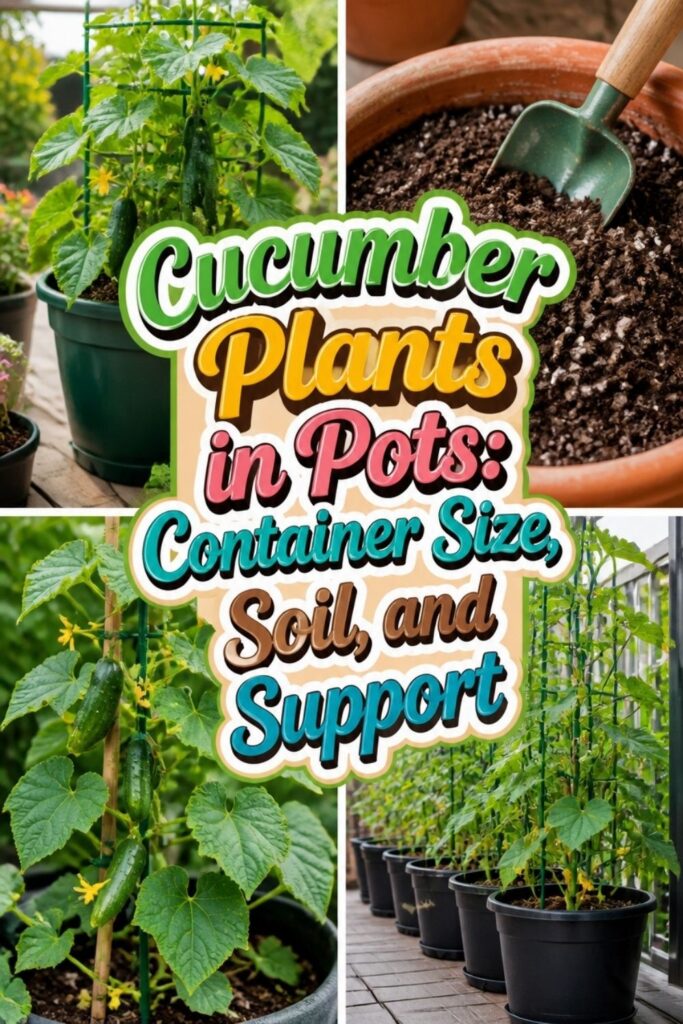
Growing Cucumber Plants in Pots makes it possible to enjoy fresh cucumbers even when garden space is limited. Choosing the right pot size is an important first step. A five-gallon container can work for compact varieties, while larger pots give vigorous vines more room to develop.
The soil matters too. Avoid heavy garden soil and use a quality potting mix instead. Adding compost can improve nutrition while helping create a healthy environment for the roots.
Support should be planned before the vines grow too long. Sturdy trellises, stakes, or tomato cages encourage upward growth. They also keep sprawling vines under control and make better use of limited space.
For healthy Cucumber Plants in Pots, the container, soil, and support need to work together. Getting these basics right creates a strong foundation for productive plants and a successful harvest.
Give the Roots Room to Grow
Choose the container with the mature plant in mind, not the size of the seedling. Cucumbers develop vigorous roots and vines, so a deep pot with plenty of drainage will give them a stronger start.
Set up the trellis or cage before the plant begins climbing. Adding support later can disturb established roots and makes it harder to train long vines without damaging them.
Keep moisture consistent once growth takes off. Containers can dry quickly in warm weather, so check the soil regularly and water deeply rather than giving the plant frequent shallow drinks.
Choose the Right Container Size
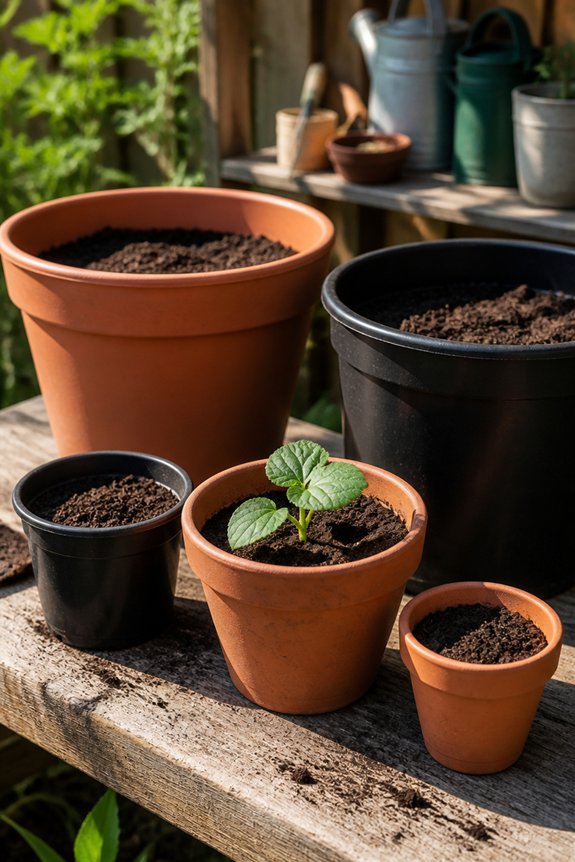
Container size directly affects cucumber plant growth, root development, and fruit production. A minimum five-gallon pot works for standard varieties, while larger ten-gallon containers suit vigorous types better.
Adequate drainage holes prevent root rot and waterlogging. Wide, shallow containers restrict root expansion: deep pots, ideally twelve inches minimum, promote healthier plants and increased yields.
The Right Soil for Container Cucumbers
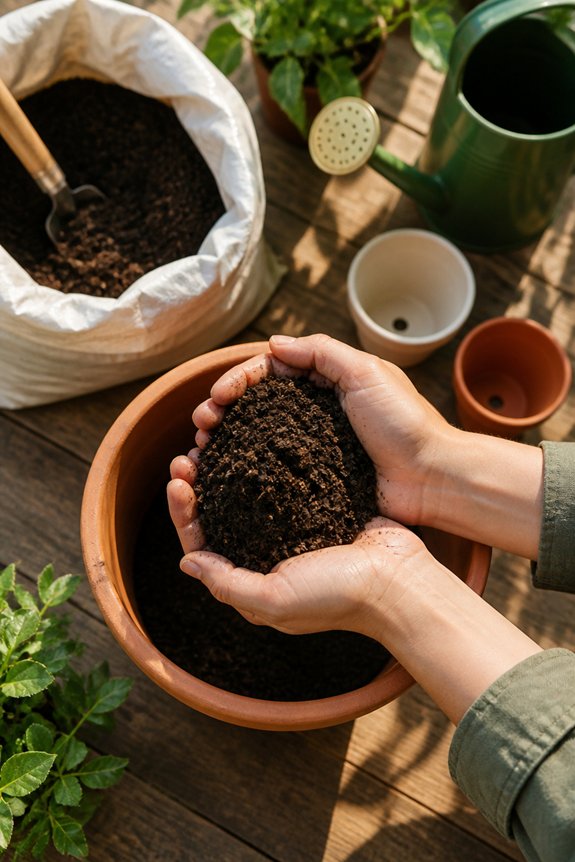
Soil quality determines whether container cucumbers thrive or struggle, making it essential to select appropriate growing medium. Use potting mix containing peat moss, coconut coir, and perlite for proper drainage and aeration. Avoid garden soil, which compacts in containers.
Add compost for nutrients. Maintain moisture consistently without waterlogging. Well-draining soil prevents root rot and supports healthy cucumber growth.
Support Structures for Container Cucumbers
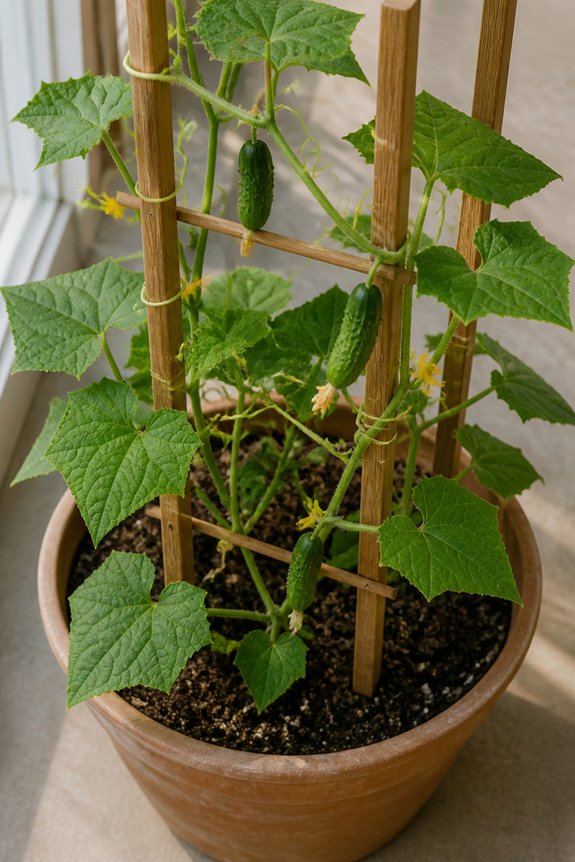
Because cucumber vines grow upward naturally, they require sturdy support systems to maximize space and improve air circulation. Trellises, stakes, and cages work effectively for container cucumbers. Bamboo poles, tomato cages, and wire trellises provide adequate support.
Gardeners should secure supports firmly in soil before planting, ensuring vines train upward as they develop, preventing ground contact and disease.
Prep Your Containers
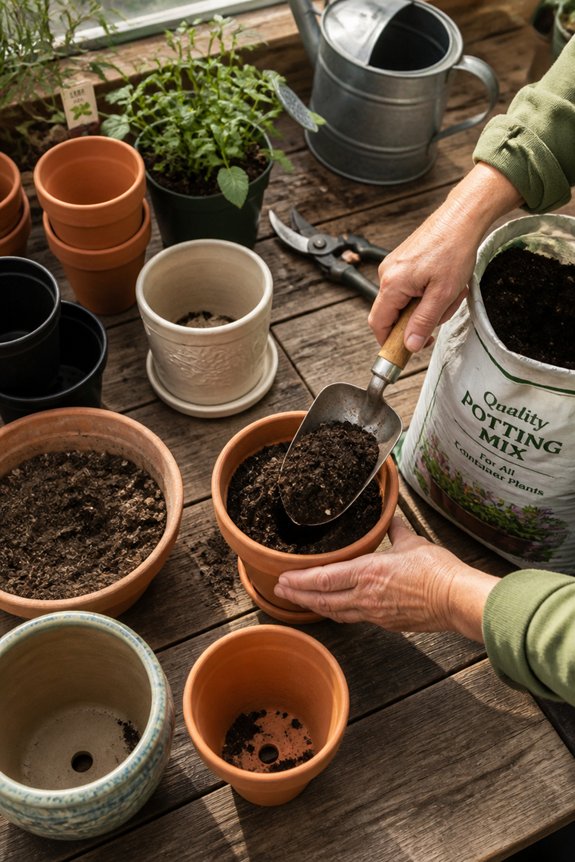
Proper preparation of containers safeguards cucumbers develop healthy root systems and produce abundant fruit. Rinse containers thoroughly with water, removing any dirt or debris from previous use.
Verify drainage holes exist in the bottom, allowing excess water to escape. If holes are absent, drill several quarter-inch openings. Sanitize containers using a dilute bleach solution, preventing disease transmission from contaminated soil.
Water and Feed Strategically
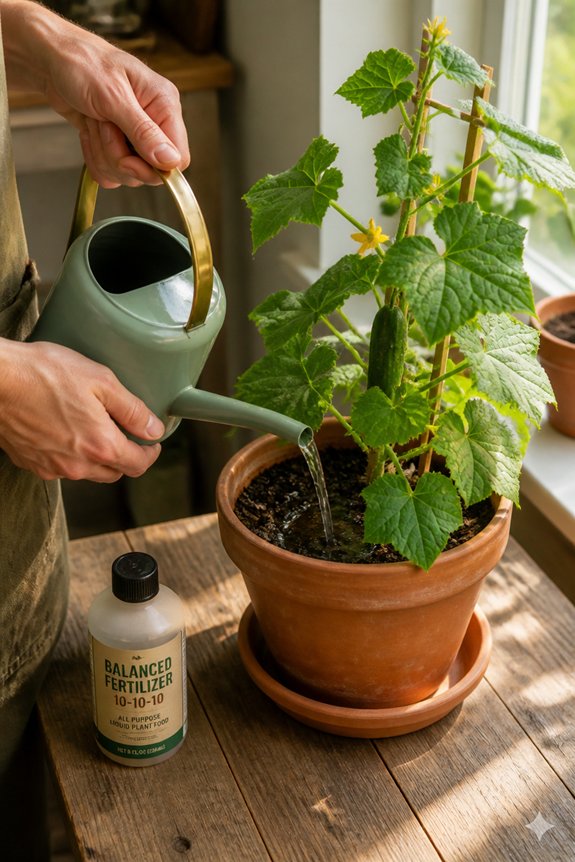
Consistent watering and regular fertilization support healthy cucumber growth in containers, since potted plants dry out faster than garden soil and lack natural nutrient reserves. Water deeply when the top inch of soil feels dry. Apply balanced fertilizer every two weeks, or use slow-release pellets at planting time.
Maintain consistent moisture without waterlogging, which causes root rot and fungal issues.
Fix Common Problems
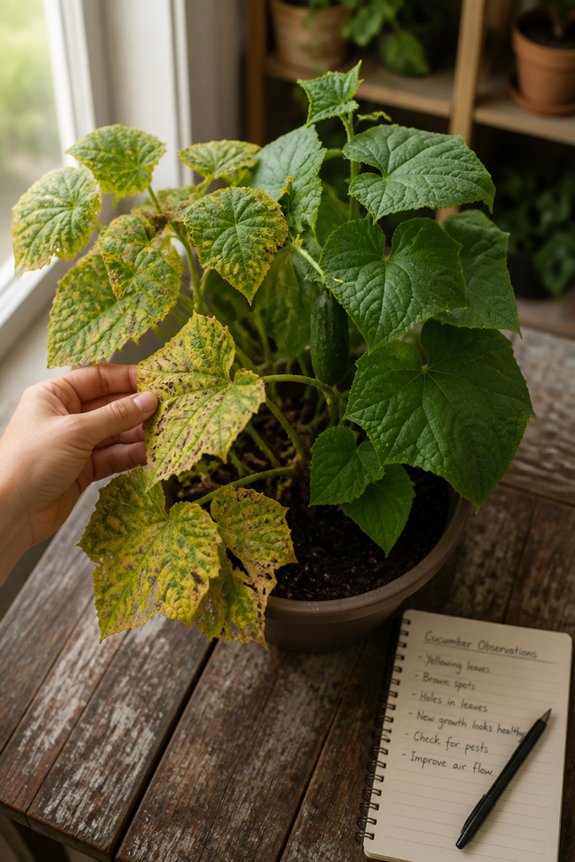
Even with proper watering and feeding, potted cucumber plants encounter obstacles that reduce growth and yield. Yellow leaves often signal nutrient deficiency or overwatering. Powdery mildew appears as white coating on foliage, requiring improved air circulation.
Spider mites cause stippled leaves and fine webbing. Blossom end rot indicates calcium imbalance from inconsistent moisture. Pest management and environmental adjustments restore plant health effectively.
Getting the Most From Container Cucumbers
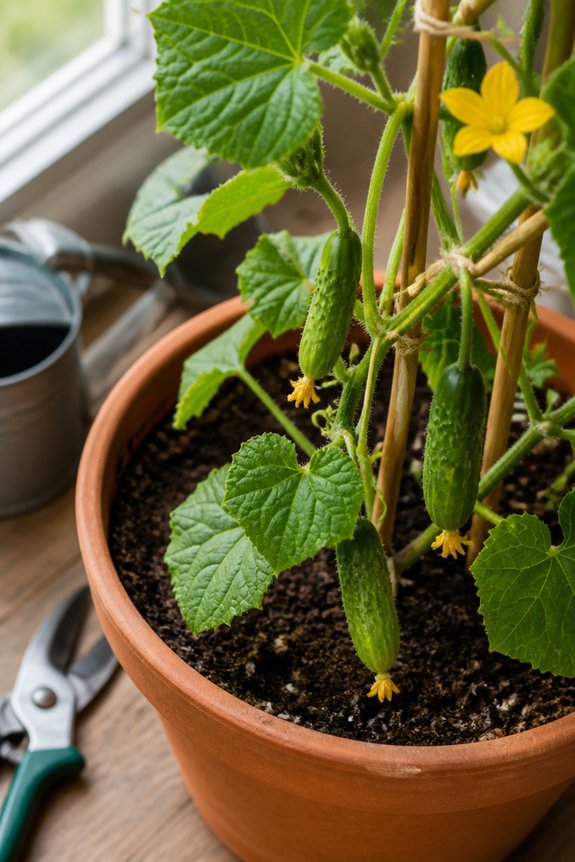
Maximizing yields from potted cucumber plants requires attention to variety selection, support structures, and harvest timing. Compact cultivars like Spacemaster and Bush Pickle perform well in containers.
Installing trellises or stakes improves air circulation and reduces disease. Harvesting fruits when six to eight inches long encourages continued production. Regular picking prevents plant energy from being diverted to mature seeds.
Frequently Asked Questions
How Long Does It Take for Cucumber Plants to Produce Fruit in Containers?
Container-grown cucumber plants typically produce fruit within 50-70 days from planting, depending on the variety selected and growing conditions provided. Consistent warmth, adequate sunlight, proper watering, and appropriate fertilization greatly influence the timeline for flowering and subsequent fruit development.
Can I Grow Multiple Cucumber Varieties in the Same Container Together?
Growing multiple cucumber varieties in one container is possible but challenging. Each plant requires substantial space, nutrients, and water. Gardeners typically succeed better with single varieties per pot, ensuring ideal growth, airflow, and fruit production.
What Is the Best Time of Year to Start Growing Container Cucumbers?
Container cucumbers thrive when planted like clockwork in spring, after the last frost date passes and soil temperatures reach 60-70°F. This timing guarantees warm conditions necessary for germination and vigorous growth throughout the growing season.
How Do I Know When Cucumbers Are Ripe and Ready for Harvesting?
Cucumbers are ready for harvest when they reach firm, dark green color and desired length, typically six to eight inches for most varieties. They should feel crisp and snap easily when bent. Harvesting regularly encourages continued production throughout the growing season.
Can I Reuse Potting Soil From Previous Seasons for Container Cucumbers?
One can reuse potting soil, though renewing it is recommended. The gardener should mix old soil with fresh compost to replenish nutrients and reduce disease risk. Sterilizing reused soil through heating also helps eliminate pathogens.
Conclusion
Container cucumbers succeed when gardeners address three core elements: pot size, soil quality, and support systems. A gardener using a ten-gallon pot, compost-enriched potting mix, and a trellis produces substantially more fruit than one using undersized containers with poor drainage. This combination guarantees healthy root development, proper plant structure, and disease prevention, directly determining harvest success and plant longevity throughout the growing season.