

Wabi sabi plants bring a relaxed, natural beauty into the home by celebrating imperfect shapes, changing textures, and the quiet character of living things.
Instead of relying on perfectly matched greenery, this approach makes room for trailing vines, sculptural leaves, weathered-looking foliage, and plants that develop more personality as they grow.
These 14 Wabi Sabi plants for homes that need more foliage variety can help you create an indoor space that feels layered without looking overly styled.
From delicate leaves to bold architectural forms, each plant adds its own texture and movement while fitting naturally into the calm, understated feel of Wabi Sabi interiors.


Let Imperfection Guide Your Choices
Choose plants for the character they develop over time, not for perfect symmetry. Twisted stems, uneven growth, curling leaves, and subtle signs of age can all strengthen the relaxed wabi sabi feeling described throughout these plant choices.
Placement matters too. Give each plant enough room for its natural silhouette to show, and pair it with simple materials such as aged ceramic, unglazed clay, stone, or weathered wood rather than highly polished containers.
Resist the urge to correct every irregular leaf or branch. With wabi sabi plants, some natural aging and asymmetry are part of the display, so thoughtful care works better than constantly trying to make each plant look flawless.
Japanese Maple Bonsai for Twisted, Storied Branches
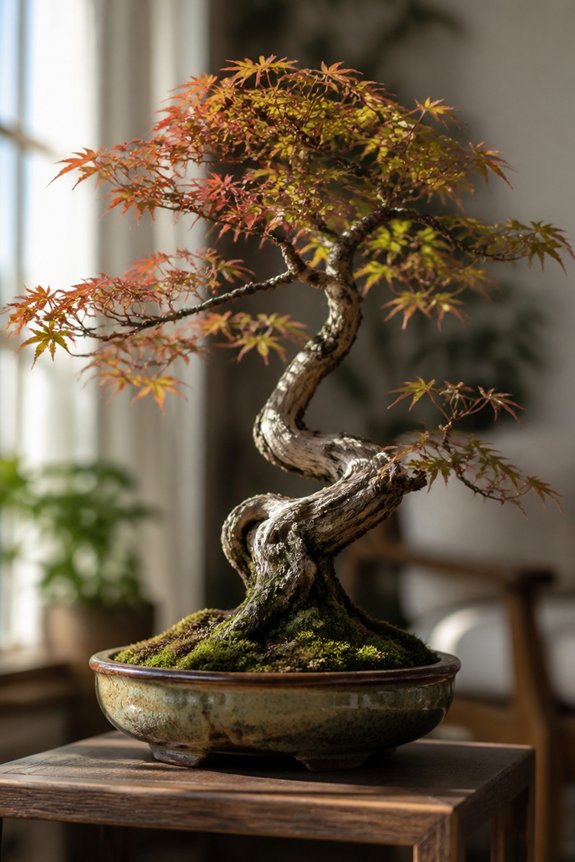
Why do twisted branches carry more visual weight than any other feature of a bonsai tree? Japanese Maple Bonsai display gnarled trunks and angular limbs that suggest decades of growth, even when younger. Wire training encourages these bends, creating asymmetry that mirrors aged trees found in nature.
Placed near windows, the branch patterns cast shifting shadows, adding subtle movement and texture to otherwise static interior spaces.
Jade Plant for Thick, Gnarled Stems
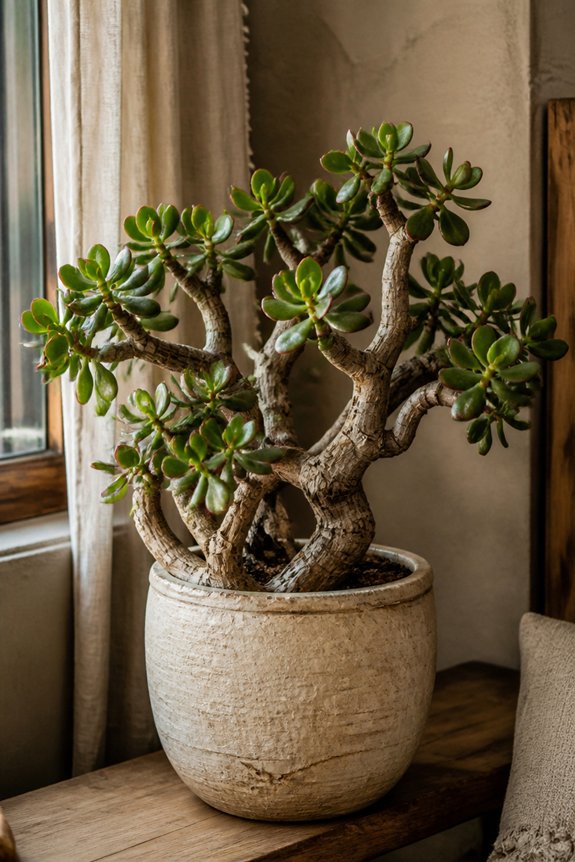
Few succulents develop the thick, woody stems that jade plants show as they mature over several years. The trunk thickens and twists slightly, gaining a bark-like texture that resembles a miniature tree.
Older specimens, sometimes decades old, display gnarled bases and thick branches, giving them the aged, sculptural quality wabi sabi enthusiasts value in home foliage displays.
Air Plants for Wild, Untamed Silhouettes
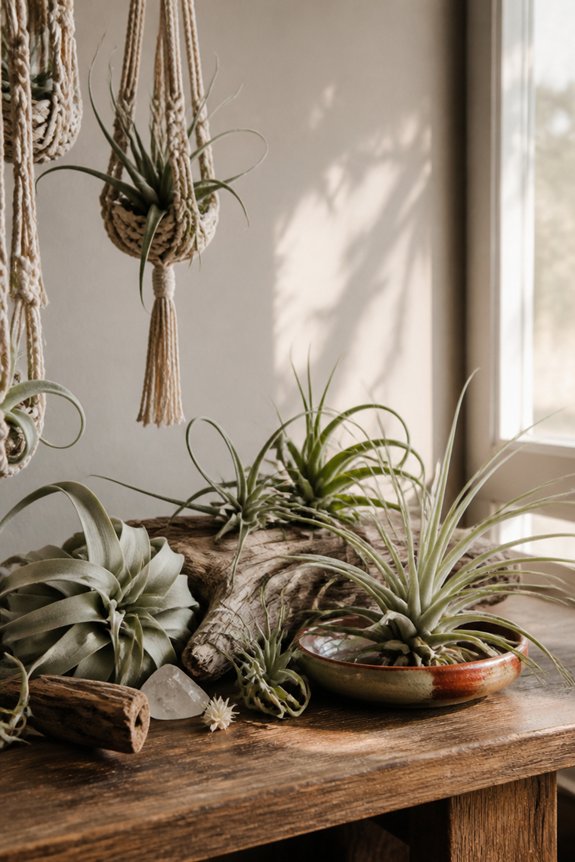
How air plants grow reveals their appeal for wabi sabi interiors, as their curling leaves twist outward without any soil to anchor them. Species like Tillandsia ionantha and Tillandsia xerographica display irregular, spiky forms that change shape as they mature.
Displayed in shallow bowls, mounted on driftwood, or clustered on shelves, they bring asymmetry and organic imperfection into minimalist spaces.
Weeping Fig for Asymmetrical Growth
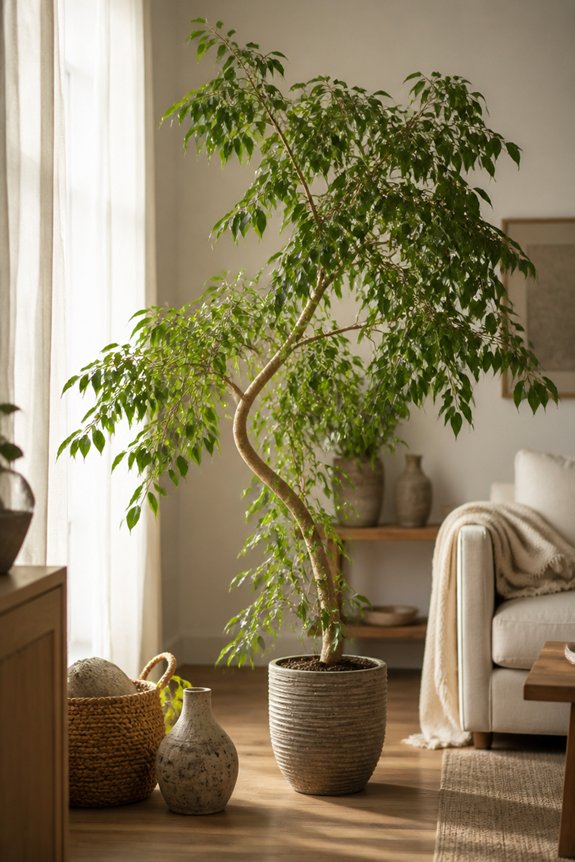
Ficus benjamina, commonly known as the weeping fig, develops a naturally uneven canopy as its branches bend and stretch toward available light. This asymmetry gives it a graceful, irregular shape that suits wabi sabi interiors seeking organic imperfection.
Placement near a window encourages lopsided growth patterns, while minimal pruning preserves its natural form, allowing the tree’s crooked branches and drooping leaves to display quiet, weathered elegance.
Rattlesnake Plant for Wavy Leaf Patterns
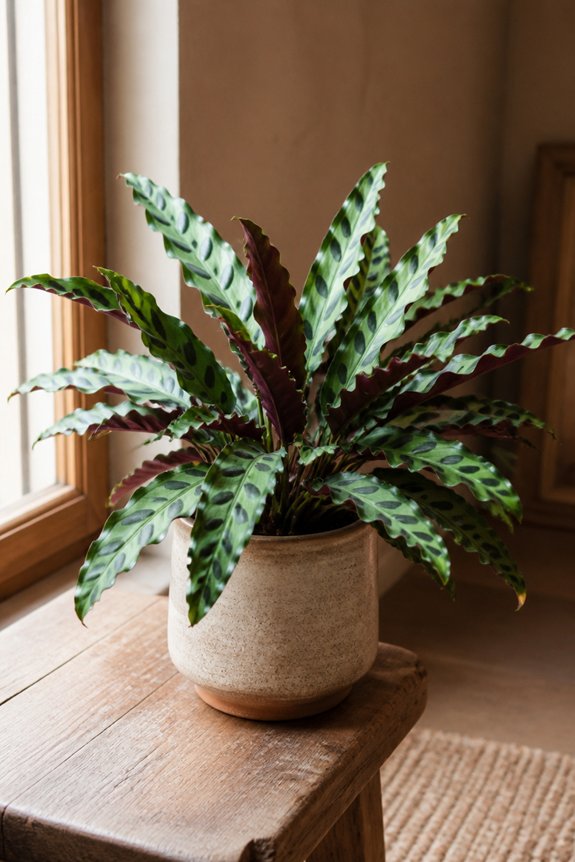
Where the weeping fig relies on branch structure for its uneven charm, Calathea lancifolia, known as the rattlesnake plant, offers imperfection through its foliage. Its long, wavy leaves feature dark green blotches and purple undersides, creating irregular patterns rather than uniform shapes. Leaves rise and curl at varying angles, adding texture and depth.
This plant suits low-light corners, bringing organic, uneven visual interest without symmetry.
String of Pearls for Trailing, Organic Movement

Senecio rowleyanus, commonly called string of pearls, introduces a different kind of imperfection through its cascading, bead-like leaves. Strands drape unevenly from hanging baskets or shelves, creating irregular lines that shift with growth and light exposure. Some pearls may shrivel or grow unevenly, adding to its organic, imperfect charm.
This trailing succulent suits wabi sabi interiors seeking movement, texture, and quiet asymmetry without demanding excessive maintenance.
Ponytail Palm for a Weathered Trunk

Beaucarnea recurvata, known as the ponytail palm, offers a sturdier form of imperfection compared to the delicate strands of string of pearls. Its bulbous, cracked base resembles aged bark, while curling leaves add textural contrast.
This slow-growing plant tolerates neglect, thriving in dry conditions with infrequent watering. Its irregular trunk shape and weathered surface embody wabi sabi principles, showing character through age rather than uniform perfection or symmetry.
Fiddle Leaf Fig for Natural Leaf Imperfections
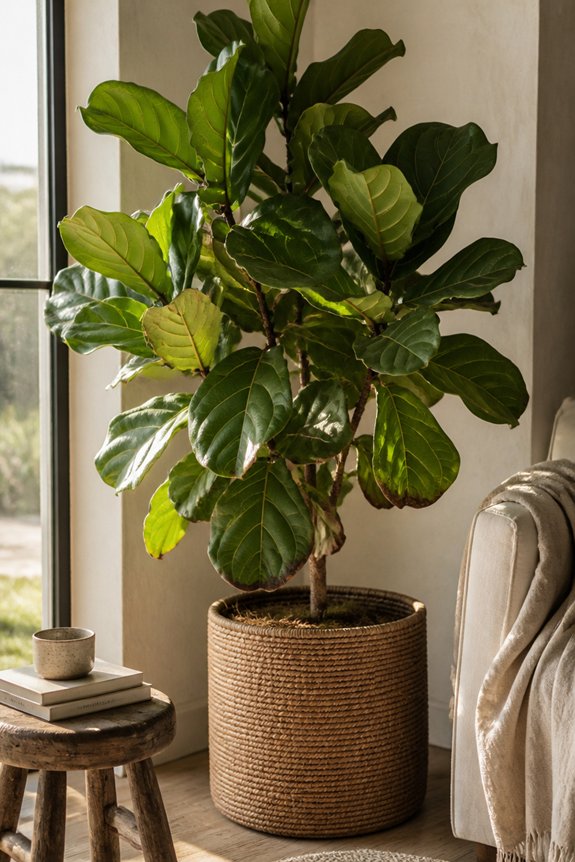
Although Ficus lyrata is often prized for glossy symmetry in mainstream décor, its natural tendency toward spots, tears, and uneven leaf edges suits wabi sabi interiors well. Brown patches, minor tears, or curled edges add character rather than flaws requiring correction.
Placing it near indirect light highlights its texture. Allowing leaves to age naturally, rather than pruning imperfections, keeps the plant aligned with wabi sabi values of impermanence and imperfection.
Staghorn Fern for Rugged, Antler-Like Fronds
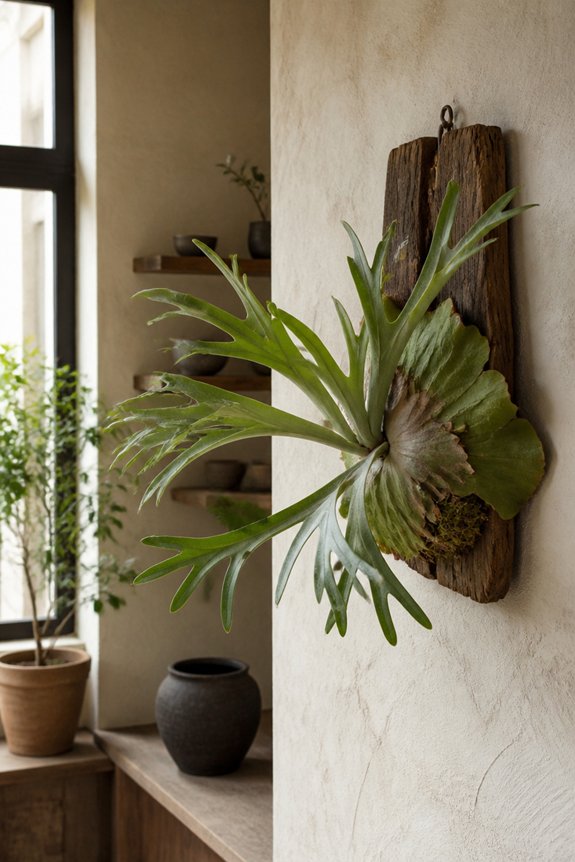
Where the fiddle leaf fig shows imperfection through surface markings, Platycerium bifurcatum expresses it through shape and structure. Its antler-shaped fronds grow unevenly, forking in unpredictable directions rather than symmetrical patterns.
Mounted on wood boards or grown in hanging baskets, the fern’s basal fronds brown and flatten naturally over time, forming a papery shield that protects roots while adding rugged, weathered texture to interior walls.
Snake Plant for Irregular Variegation

Sansevieria trifasciata offers a different kind of imperfection, one built into its very pigmentation rather than its shape. Bands of gray-green, yellow, and silver run unevenly across each leaf, no two plants matching exactly. This irregular variegation gives the snake plant an aged, marbled look, suited to wabi sabi interiors that value asymmetry, muted tones, and quiet visual texture over uniformity.
Norfolk Island Pine for Sparse, Uneven Branching
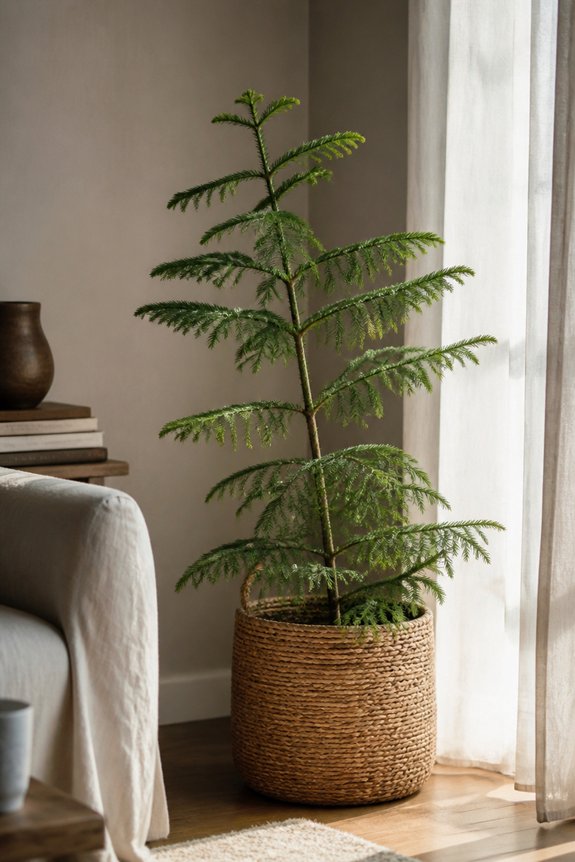
Araucaria heterophylla grows in tiered whorls of branches, spaced unevenly along a central trunk, giving the tree a lopsided, sculptural silhouette. Indoor light conditions often cause asymmetrical growth, with some tiers thicker than others, reinforcing the wabi sabi aesthetic.
Rotating the pot occasionally can adjust growth patterns slightly, but complete symmetry rarely occurs. This irregular branching pattern suits minimalist interiors seeking natural, imperfect texture rather than uniform greenery.
Moss Ball (Marimo) for Simple, Quiet Texture

A round clump of Aegagropila linnaei, commonly called marimo, offers a soft, velvety sphere of green that requires little visual or physical upkeep. It sits quietly in a glass bowl or jar, needing only clean water and indirect light.
Its texture, dense and uniform, contrasts with sharper foliage nearby, adding a calm, understated focal point without demanding attention or frequent care.
Prayer Plant for Leaves That Shift and Fold
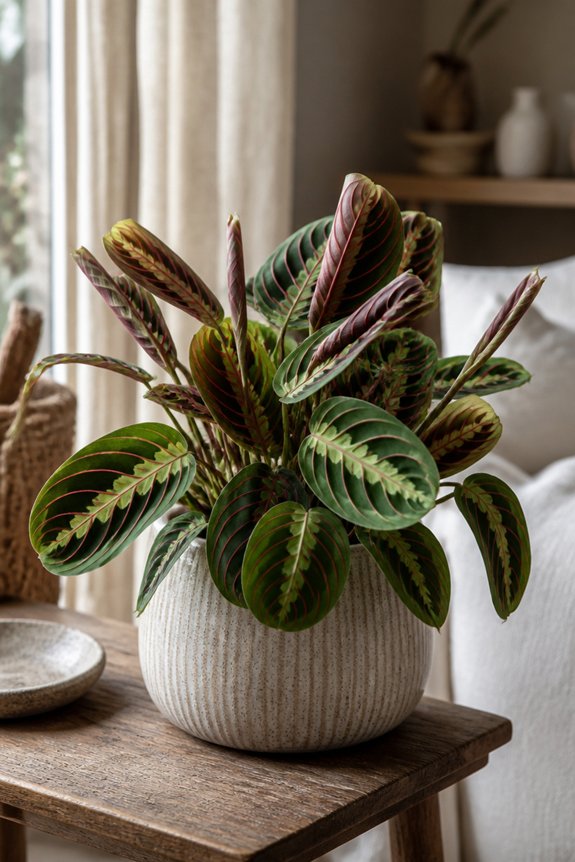
Several varieties of Maranta leuconeura, known widely as prayer plant, display leaves that fold upward at night and flatten out during the day, a movement called nyctinasty. Patterned foliage, marked with veins and blotches, adds visual complexity without symmetry, fitting a wabi sabi aesthetic.
The plant prefers indirect light, consistent moisture, and humidity, making it suited for bathrooms, kitchens, or shaded corners needing subtle, shifting texture.
Driftwood-Mounted Orchids for Raw, Natural Character

Mounting an orchid directly onto a piece of driftwood gives the plant an appearance closer to how it might grow in the wild, clinging to bark or branches rather than sitting in a pot. Exposed roots, weathered wood grain, and irregular growth patterns create a rustic, unfinished look.
Phalaenopsis and Vanda varieties adapt well to this method, requiring occasional misting instead of traditional soil-based watering routines.
Frequently Asked Questions
What Does Wabi-Sabi Mean in the Context of Houseplants?
Wabi-sabi refers to embracing imperfection, asymmetry, and natural aging in houseplants—celebrating irregular leaves, weathered pots, and organic growth patterns rather than seeking flawless symmetry. It reflects an appreciation for authenticity and transience, encouraging plant lovers to value character over conventional, manicured beauty in their indoor greenery.
Can Wabi-Sabi Plants Be Combined in a Single Arrangement or Display?
Yes—like a potter grouping imperfect bowls, one gardener combined a cracked-pot fern, a lopsided succulent, and a weathered ivy. Their contrasts created harmony, proving wabi-sabi displays thrive on imperfection, variety, and quiet, unforced coexistence.
How Do I Choose Pots That Match a Wabi-Sabi Aesthetic?
Choose pots with imperfect textures—cracked glazes, uneven edges, or natural weathering. Unglazed clay, stone, or aged ceramic works well. Muted, earthy tones complement foliage without competing. Handmade or asymmetrical shapes reflect authenticity, while avoiding polished, symmetrical, or mass-produced containers preserves the aesthetic’s essence.
Is It Okay to Let These Plants Show Signs of Aging or Imperfection?
Yes, it is encouraged. A curling leaf, a faded bloom, a weathered stem—each imperfection tells a story. Wabi-sabi honors transience, decay, and quiet beauty. Nothing needs fixing; nature’s aging process deserves reverence, not correction.
How Much Sunlight Do Most Wabi-Sabi Style Plants Generally Need?
Most thrive in bright, indirect light, though many tolerate lower light gracefully. Direct harsh sun often causes scorching, disrupting their natural, weathered charm. Moderate conditions suit them best, allowing organic imperfections to develop slowly, without forcing unnatural, rapid growth patterns.
Conclusion
These fourteen wabi sabi plants show that imperfection can create striking visual interest in a home. A homeowner who places a gnarled Jade Plant beside a Driftwood-Mounted Orchid, for example, combines contrasting textures without needing precise symmetry or constant upkeep. This pairing demonstrates how natural irregularities, twisted stems, uneven leaves, sparse branches, can coexist to form a cohesive display. Choosing plants based on character rather than uniformity allows for a low-maintenance space with lasting, organic appeal.