
Gardening becomes far less overwhelming when you break it down into manageable pieces. That’s where free planner printables come in handy. They tackle everything from sketching your layout to tracking every seed packet in your collection.
Some printables focus on the big picture, like mapping where each plant will grow or planning crop rotations year after year. Others handle the details: when to start seeds indoors, when to transplant seedlings, and exactly which fertilizers to apply and when. A few even help with the practical side of gardening, such as monitoring your spending or keeping seasonal to-do lists from spinning out of control.
The real value comes from matching the right tool to your specific struggle. Observation journals, for instance, become invaluable once you realize you can’t remember what worked last season.
Budget trackers catch overspending before it derails your plans. By choosing printables that address your actual pain points rather than downloading every option available, you build a system that genuinely supports your garden rather than adding more paperwork to your life.
Design Your Garden Layout

Several key elements shape a successful garden design, including sunlight patterns, soil conditions, available space, and plant spacing requirements. Gardeners should measure their plot dimensions, identify sunny and shaded zones, and note existing structures.
Mapping plant locations prevents overcrowding and competition for resources. Recording these details on paper creates a reference guide for planting season, reducing errors and improving crop yields.
Download: Free Garden Planner Printables
Log Your Seed Inventory
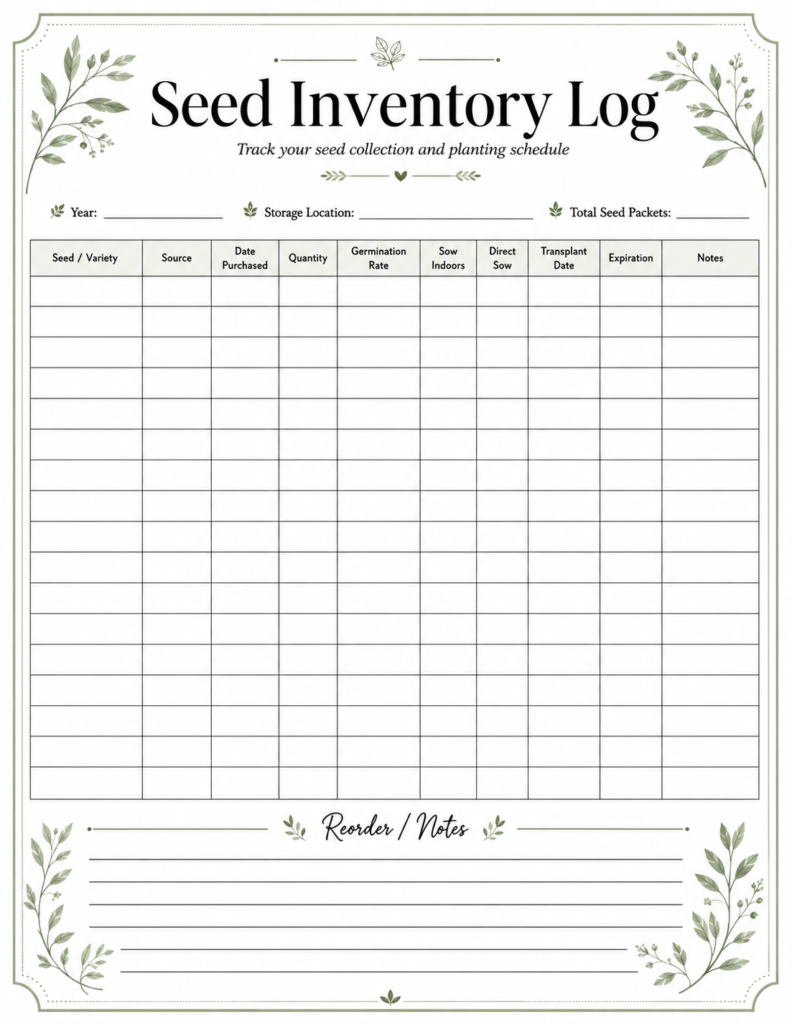
Maintaining an organized seed inventory prevents duplicate purchases, tracks planting dates, and documents which varieties perform well in specific garden conditions. A seed inventory printable should list plant names, purchase dates, germination rates, and storage locations.
Recording this information helps gardeners make informed decisions about future plantings, reduces waste, and guarantees seeds remain viable for upcoming seasons.
Create a Planting Calendar
When should tomatoes go in the ground, and how do cool-season crops like lettuce fit into the growing schedule? A planting calendar organizes these decisions by mapping frost dates, soil temperatures, and daylight hours.
Gardeners note spring and fall planting windows for each vegetable, accounting for local climate zones. This printable tool prevents mistakes, guarantees successive harvests, and maximizes garden productivity throughout the season.
Plan Your Crop Rotation
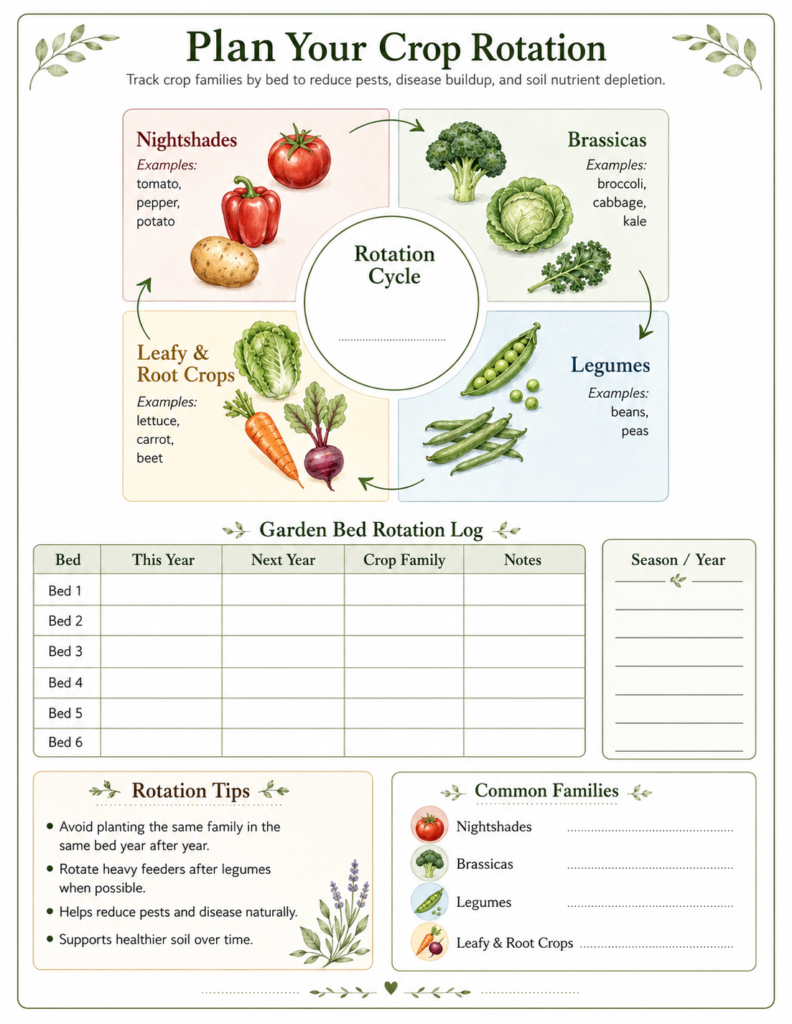
Most gardens benefit from rotating crops across seasons and years, since different plants use varying soil nutrients and attract different pests. A printable crop rotation chart helps gardeners track which vegetables, like tomatoes, lettuce, and beans, grew in specific garden beds. Rotating families of plants, nightshades, brassicas, legumes, prevents soil depletion and reduces disease buildup naturally over time.
Track Transplant Progress
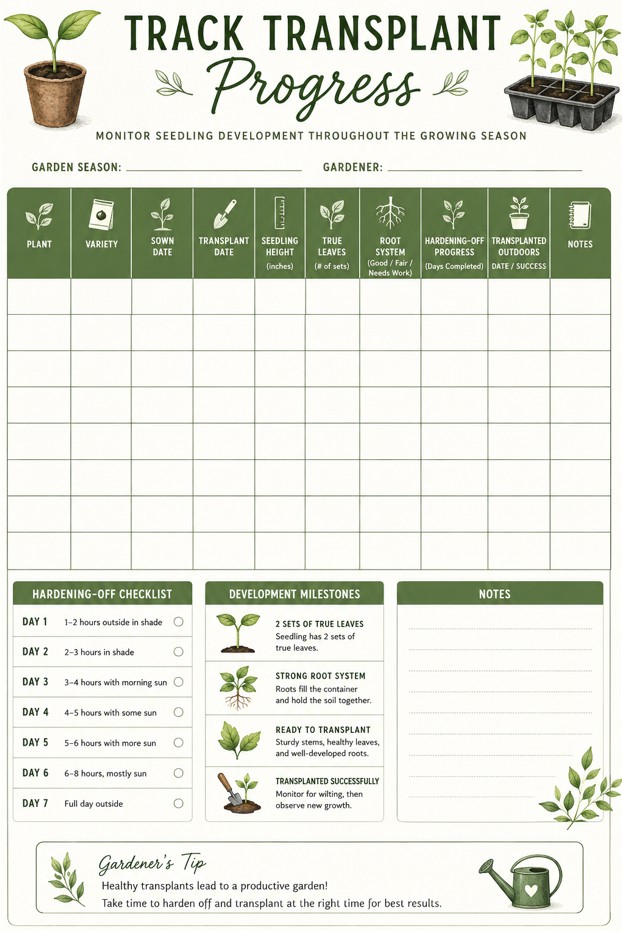
Beyond managing soil health through crop rotation, gardeners also benefit from monitoring the development of seedlings and transplants throughout the growing season. Tracking sheets record transplant dates, seedling height, leaf development, and hardening-off progress.
Gardeners note when tomatoes reach two sets of true leaves, when peppers develop sufficient root systems, and when seedlings shift outdoors successfully.
Build Your Watering Schedule
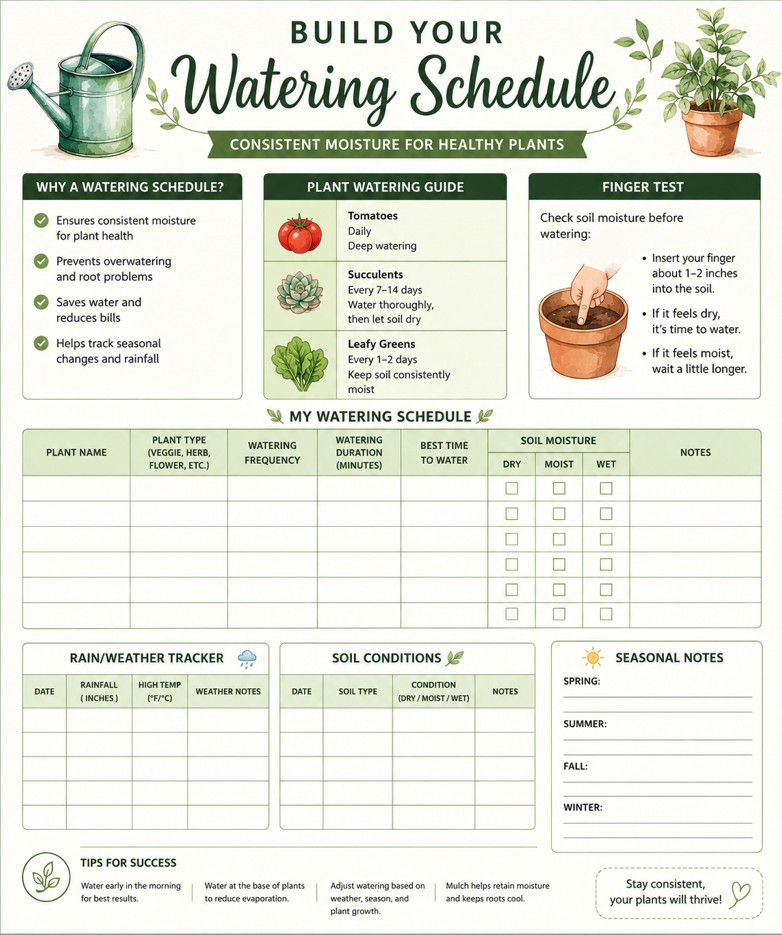
How can gardeners guarantee plants receive consistent moisture without wasting water? A watering schedule printable tracks frequency, duration, and plant types.
Gardeners note specific needs: tomatoes require daily watering, succulents need less frequent attention, and leafy greens prefer consistent moisture. Recording rainfall amounts, soil conditions, and seasonal changes helps optimize irrigation. This documentation prevents overwatering, reduces water bills, and supports plant health throughout growing seasons. Checking soil moisture with a finger test helps prevent overwatering and ensures plants are watered only when they truly need it.
Record Your Harvest

Tracking garden yields provides gardeners with valuable data about crop performance, timing, and productivity across seasons. Recording harvest dates, quantities, and plant varieties helps identify which crops grow best in specific garden locations.
Documenting weather conditions, soil amendments, and pest issues alongside harvest information enables gardeners to make informed decisions about future planting strategies and garden improvements.
Document Pests and Diseases

Recording pest and disease observations in the garden creates a reference system for identifying recurring problems and selecting appropriate responses. Gardeners document affected plants, symptoms, timing, and conditions.
Tracking aphids on roses, powdery mildew on squash, or tomato blight patterns helps predict future outbreaks. This record informs preventive measures and treatment choices for subsequent growing seasons.
Manage Seasonal Tasks

Beyond documenting pest and disease patterns, gardeners benefit from organizing their year-round work into seasonal categories. Spring tasks include soil preparation, seed starting, and transplanting seedlings. Summer requires watering, weeding, and monitoring plant health. Fall involves harvesting, composting, and planting cover crops. Winter includes planning next year’s garden layout, ordering seeds, and maintaining tools.
Seasonal organization guarantees timely completion of essential gardening activities. For lawn care, mowing long grass before winter helps reduce snow mold and supports healthy dormancy. A large compost pile can keep breaking down through freezing temperatures, while smaller piles may freeze solid and stop decomposing.
Monitor Your Garden Budget

Garden expenses accumulate quickly across seeds, soil, fertilizers, tools, and pest management supplies. A printable budget tracker helps gardeners record spending on each category, compare costs year to year, and identify where money goes.
Monitoring expenses prevents overspending and reveals opportunities to reduce costs through bulk purchasing or reusing materials effectively.
Log Fertilizer Applications

Keeping detailed records of fertilizer applications helps gardeners understand which nutrients their plants receive, when they receive them, and how plants respond to treatment. A fertilizer log should include the application date, product name, amount used, and affected garden sections.
Tracking nitrogen, phosphorus, and potassium applications enables gardeners to adjust future treatments based on plant growth and soil conditions.
Track Year-Round Observations

While fertilizer logs document nutrient applications, a thorough observation record captures the broader picture of garden performance throughout the year. Gardeners can note bloom dates, pest appearances, weather patterns, and harvest times.
Recording soil moisture levels, plant heights, and disease symptoms creates valuable data for future seasons. This systematic tracking reveals patterns, identifies problem areas, and guides improvements for next year’s planting decisions.
Frequently Asked Questions
How Do I Choose the Best Vegetables to Grow in My Climate Zone?
One should consult the USDA hardiness zone map to identify their region, then research vegetables suited to that zone’s temperature ranges and growing season length. Gardeners benefit from selecting varieties labeled for their specific zone on seed packets and nursery labels.
What’s the Ideal Spacing Between Plants for Optimal Growth and Yield?
One must practically give each vegetable its own mansion to thrive properly. Generally, spacing depends on the crop’s mature size—typically six inches to three feet apart. Proper spacing prevents disease, maximizes airflow, and guarantees each plant receives adequate sunlight and nutrients for peak productivity.
How Can I Start Seeds Indoors Before the Outdoor Planting Season?
One should start seeds indoors 6-8 weeks before the last frost date. Gardeners use seed trays with moistened soil, place them in warm locations with adequate light, and maintain consistent moisture until seedlings develop true leaves for transplanting outdoors.
What Organic Pest Control Methods Work Best for Common Garden Insects?
Gardeners find neem oil, insecticidal soap, and diatomaceous earth effective against common pests. Companion planting with marigolds and nasturtiums deters insects naturally. Introducing beneficial predators like ladybugs and encouraging birds provides organic pest management solutions.
How Do I Improve Soil Quality and pH for Healthier Plants?
One discovers that soil transformation begins with an unexpected solution: compost amendments. Gardeners observe remarkable results by testing pH levels, adding lime to raise alkalinity, or sulfur to lower it, ultimately creating the ideal growing environment plants crave.
Conclusion
A gardener tracking soil pH, sunlight hours, and fertilizer dates discovered that organized records revealed which vegetables thrived in specific plot locations. This systematic approach mirrors how any project benefits from documentation. Garden planners function similarly to blueprints in construction, transforming scattered ideas into actionable plans. By recording observations across seasons, gardeners build knowledge that compounds annually, creating increasingly successful harvests through data-driven decisions rather than trial and error.