Every cat has a welcome ritual for a new plant. Sniff it, chew one leaf, then nudge the pot toward the edge of the shelf to see what happens. That’s exactly why houseplants that are safe for cats matter more than any trend list. When the plant is non-toxic, a nibbled frond is a styling problem, not a trip to the emergency vet.
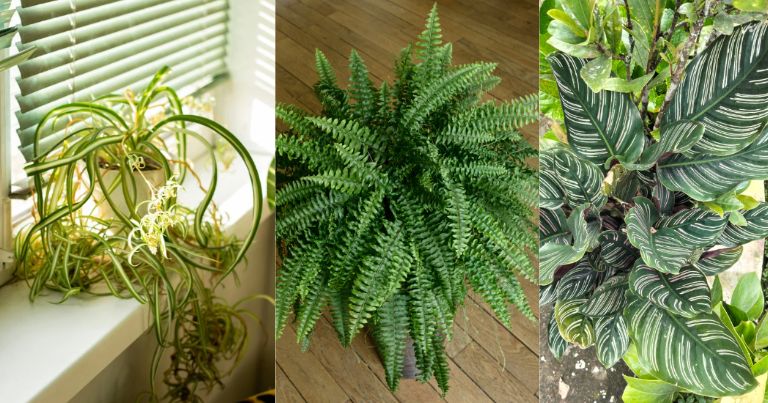
The good news is that the safe list is long and anything but boring. Every plant here appears on the ASPCA’s list of plants that are non-toxic to cats, and each one is shown in a real room setup you can copy. There’s a spider plant swinging high in a kitchen window, a Boston fern soaking up bathroom steam, a parlor palm that copes with a dim corner, and a calathea patterned enough to replace a piece of art.
You’ll find 20 ideas spread across kitchens, bathrooms, bedrooms, hallways, and small apartments. Some are low light picks, some love a sunny window, and some hang out of reach of cats who climb. Each one comes with the pot, the placement, and the one move that keeps your cat and your plant in one piece.
1. Spider Plant
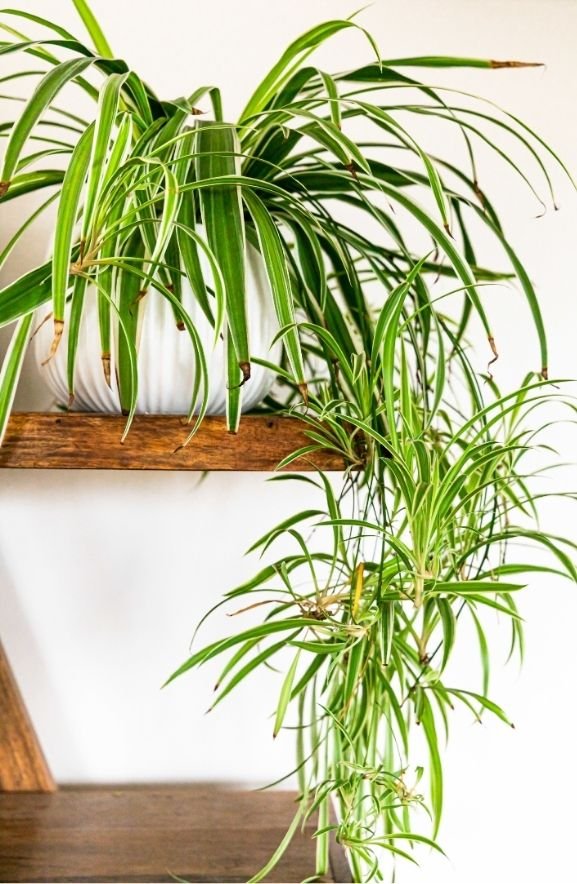
Cats treat a spider plant like a toy that grows its own refills. The arching, green and white striped leaves send out long stems with baby plants dangling at the ends, and those swinging babies sit at exactly the height a paw wants to bat.
It’s one of the easiest hanging plants safe for cats, and one of the toughest houseplants, period. Bright, indirect light keeps the stripes crisp, though it copes with less. Water when the top of the soil feels dry.
The plant is non-toxic, but a cat that eats a lot of it can still get an upset stomach, so hanging it high is kind to both of you. Snip off a baby, set it in water or soil, and you have a free new plant.
2. A Parlor Palm for the Dim Living Room Corner
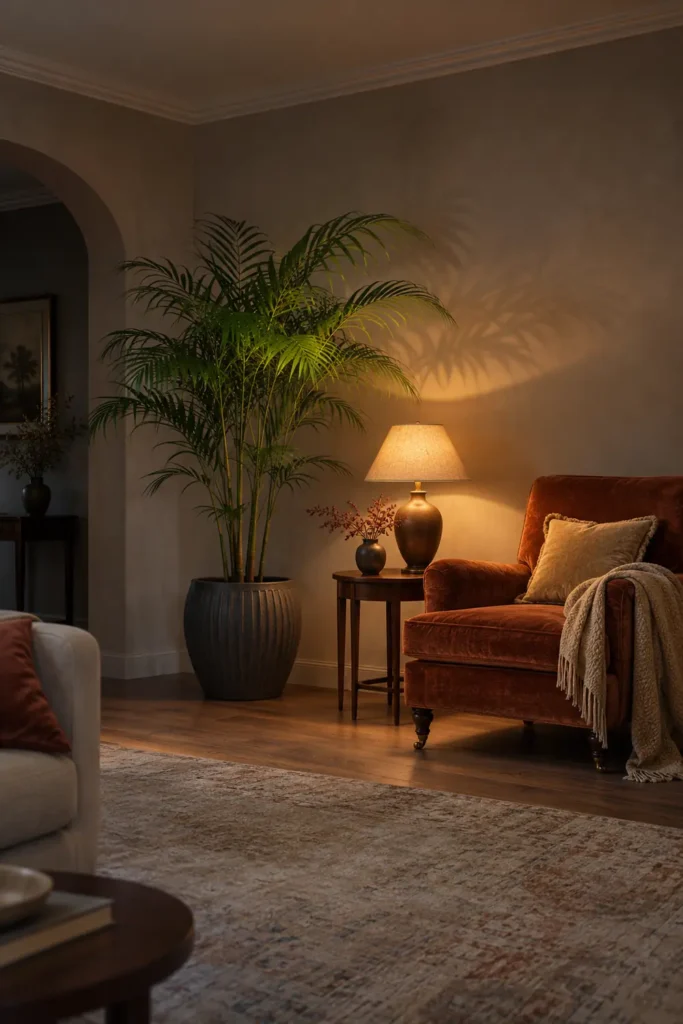
Few palms handle a dim room as well as the parlor palm. It stays compact, grows slowly, and puts out soft, feathery fronds on thin green stems, which is why it has been a favorite indoor plant since Victorian times. It’s also one of the most reliable low light plants safe for cats.
Medium or low indirect light suits it, and direct sun can scorch the fronds. Keep the soil lightly moist but never soggy, and water less in winter when growth slows down.
Brown frond tips usually point to dry air or uneven watering. Snip them off with clean scissors, and the palm will happily carry on for years.
3. Boston Fern

Steam is the secret with a Boston fern. Its long, arching fronds are lined with tiny leaflets, and they only stay full and green when the air around them is humid. That makes a bright bathroom or a spot near the kitchen sink a natural home.
Give it bright, indirect light and keep the soil evenly moist, because ferns hate drying out completely. In dry, heated rooms, a pebble tray under the pot helps. Boston ferns are on the ASPCA’s non-toxic list, so a cat that chews a frond is no cause for panic.
Crispy brown leaflets on the floor usually mean the air or the soil got too dry, not that the cat won.
4. Rattlesnake Plant
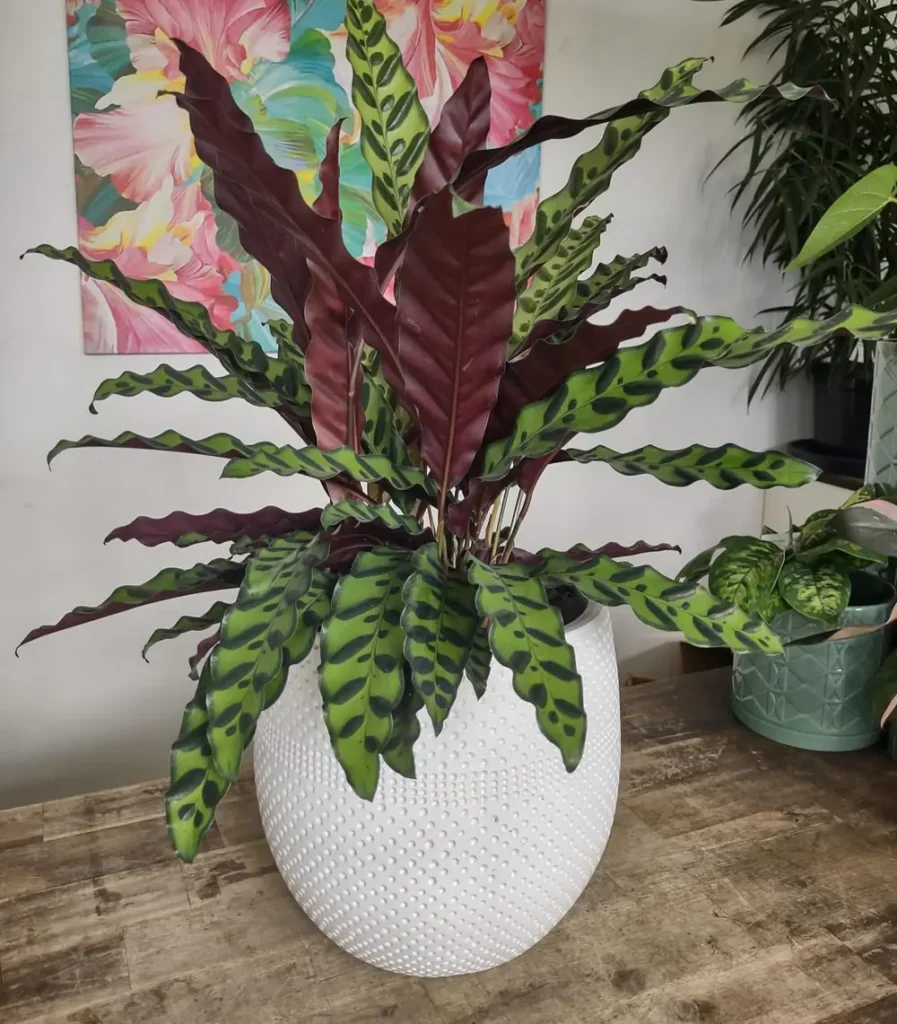
Look closely at a rattlesnake plant and you’ll see where the name comes from. The long, wavy leaves are patterned with dark green ovals on a lighter green base, and the undersides are flushed deep purple, so the plant looks good from every angle.
It’s a calathea, and calatheas are some of the most colorful cat safe houseplants you can buy. They like bright, indirect light, steady moisture, and plenty of humidity. Direct sun fades the markings, and letting the soil dry out completely makes the leaf edges curl and brown.
Calatheas can be fussy about tap water. If the edges keep browning, switch to filtered water or rainwater and see if the new leaves come in cleaner.
5. Ponytail Palm
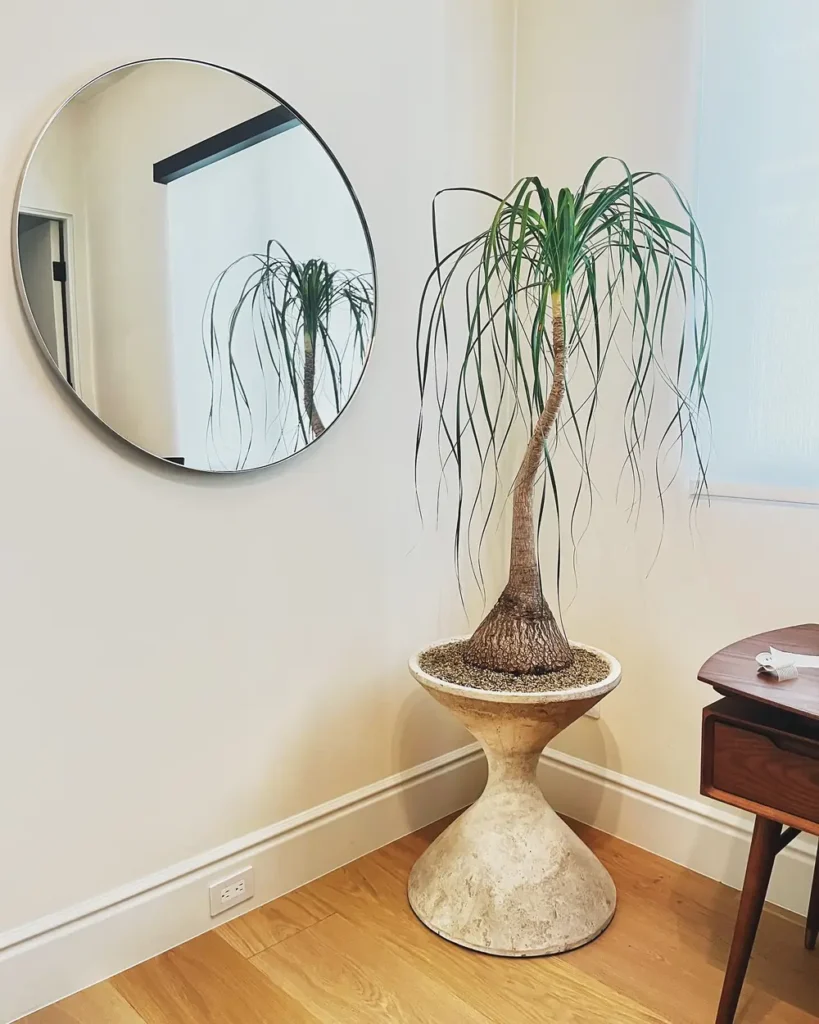
The ponytail palm isn’t a true palm at all. It’s a succulent with a swollen, bulb shaped trunk that stores water, topped with a fountain of long, thin, curly leaves. That trunk is why it forgives a forgotten watering better than almost any other plant on this list.
Give it bright light, including some direct sun, and let the soil dry out completely before you water again. Overwatering is the fastest way to lose one. It grows slowly, so the plant you buy will stay roughly the same size for years.
Those dangling leaves work like a feather wand for cats. The plant is non-toxic, so a few chewed tips are only cosmetic, and a heavy pot keeps a playful cat from tipping it over.
6. African Violets
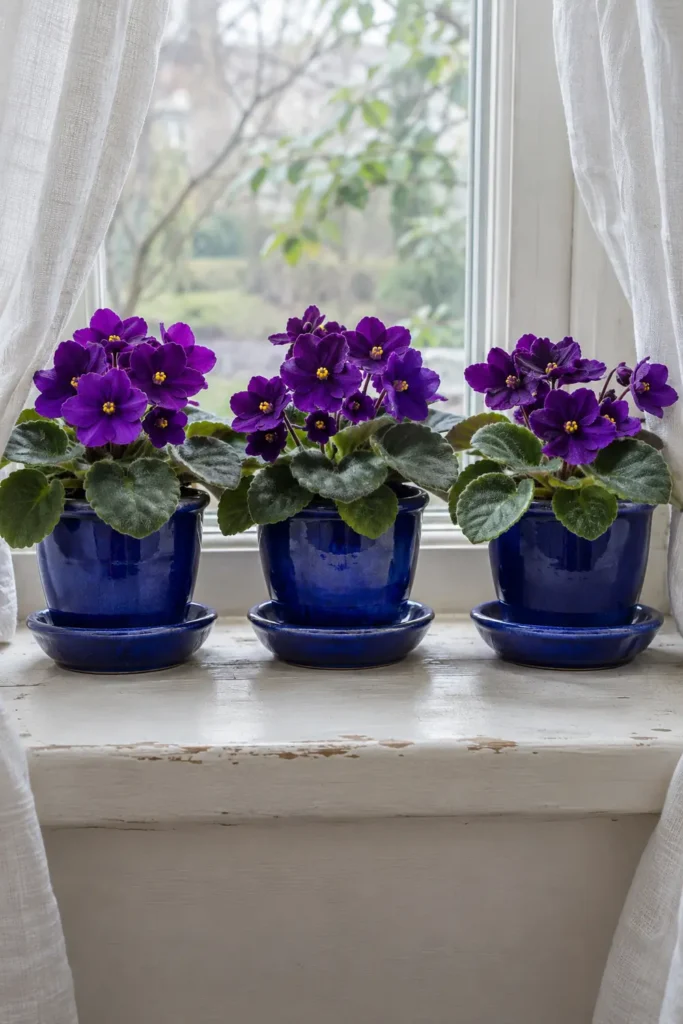
African violets are among the few flowering cat friendly plants that bloom happily indoors, and they can flower several times a year. Clusters of purple, pink, blue, or white flowers sit above a rosette of soft, fuzzy, rounded leaves.
They like bright, indirect light, such as an east or north facing window. Keep the soil lightly moist, and water the soil rather than the leaves. Cold water splashed on the fuzzy foliage leaves pale spots, so use water at room temperature.
When blooming slows down, light is usually the reason. Move the plant somewhere a little brighter, out of direct afternoon sun, and the buds tend to come back.
7. Areca Palm
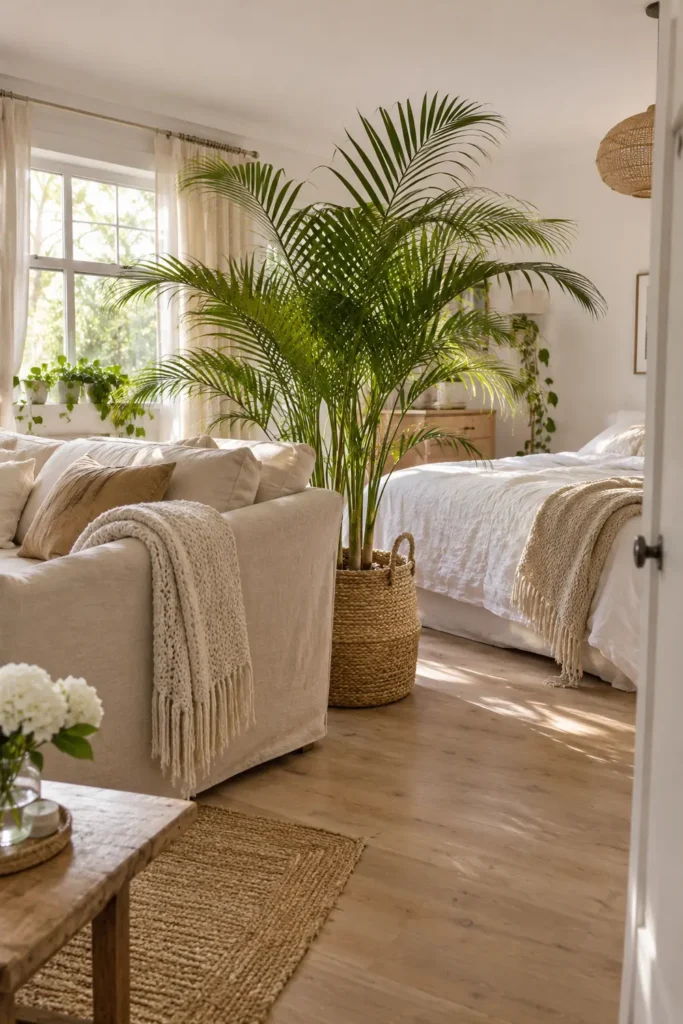
Few pet friendly houseplants give you as much height as an areca palm. Several slim, cane like stems grow from one pot, each topped with arching, feathery fronds in a bright yellow green, which is how it earned its other name, the butterfly palm.
Bright, indirect light keeps it full, and harsh direct sun can yellow the fronds. Water when the top of the soil starts to dry, and never let the pot sit in water. Indoors, an areca can eventually reach the ceiling, so give it room to grow.
Areca palms are non-toxic to cats, and plenty of cats love napping under the fronds. Brown tips are common in dry winter air and can be trimmed without hurting the plant.
8. Zebra Haworthia
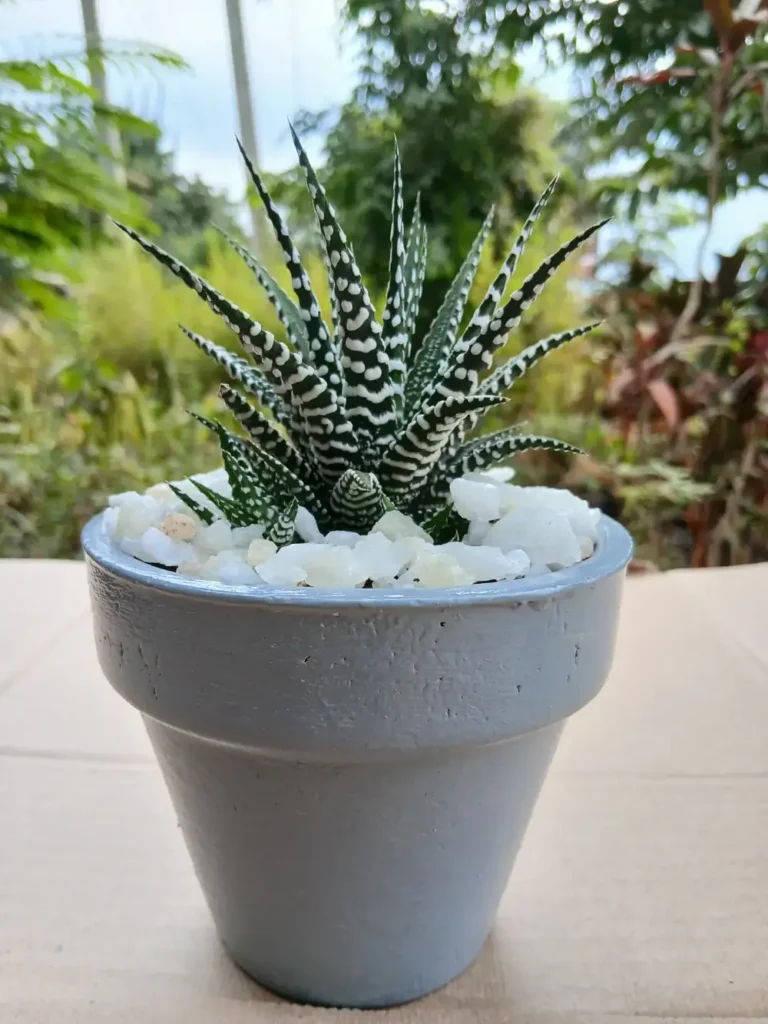
Zebra haworthia looks like a tiny aloe wearing pinstripes. Its stiff, pointed, dark green leaves are banded with raised white bumps, and they grow in a tight rosette that rarely outgrows a small pot.
It’s one of the easiest succulents for a sunny windowsill or desk. Bright light keeps it compact, and very little water keeps it alive. Let the soil dry out completely between drinks, and plant it in a gritty cactus mix in a pot with a drainage hole.
Over time, small offsets grow around the base. Separate them once they have a few roots of their own and you’ll have new plants to pot up or give away.
9. Prayer Plant
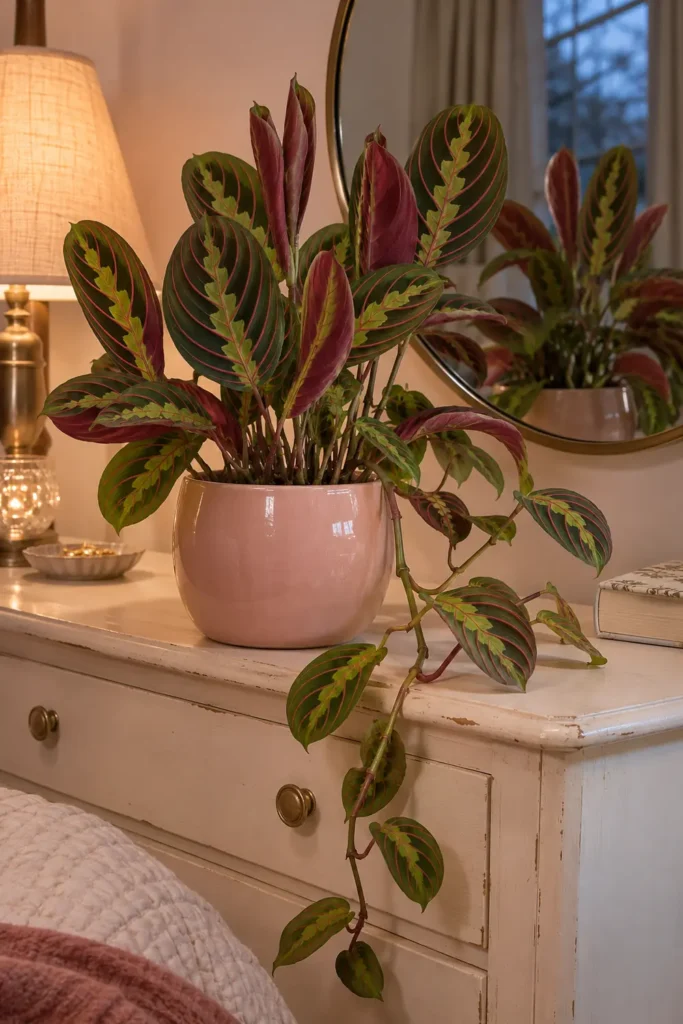
Come evening, a prayer plant lifts its leaves upright like hands folded in prayer, which is how it got its name. By morning they lie flat again. The oval leaves are boldly marked, often with red veins and a feathered green stripe down the center.
It likes medium to bright indirect light, evenly moist soil, and higher humidity. Direct sun bleaches the pattern, and dry air crisps the leaf edges, so keep it away from heating vents.
Prayer plants have a loose, trailing habit, and the stems look good spilling over the edge of a pot or shelf. They’re non-toxic to cats, which matters, because a trailing stem is very hard for a cat to ignore.
10. Braided Money Tree
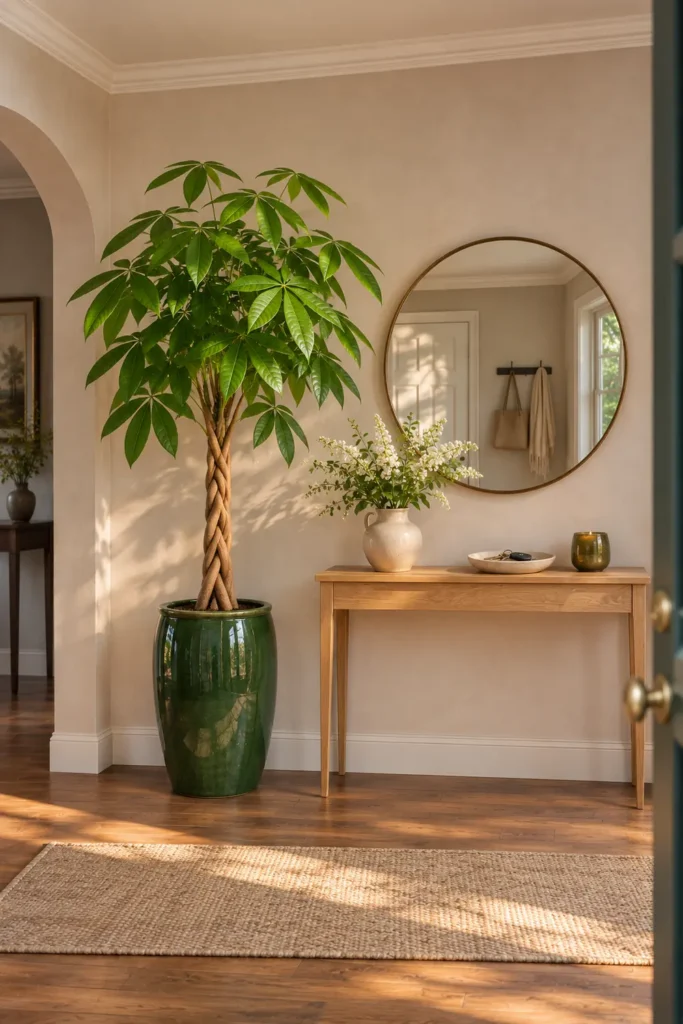
A braided money tree is a real indoor tree that is non-toxic to cats. Several young trunks are woven together while they’re still flexible, and the braid is what people notice first. Up top, glossy green leaves spread out in groups of five, a bit like an open hand.
It likes bright, indirect light and soil that dries out at the top between waterings. Soggy soil is the most common cause of yellow leaves and soft trunks, so a pot with a drainage hole matters a lot here.
Give the pot a quarter turn every week or so to keep the tree from leaning toward the light.
11. Christmas Cactus
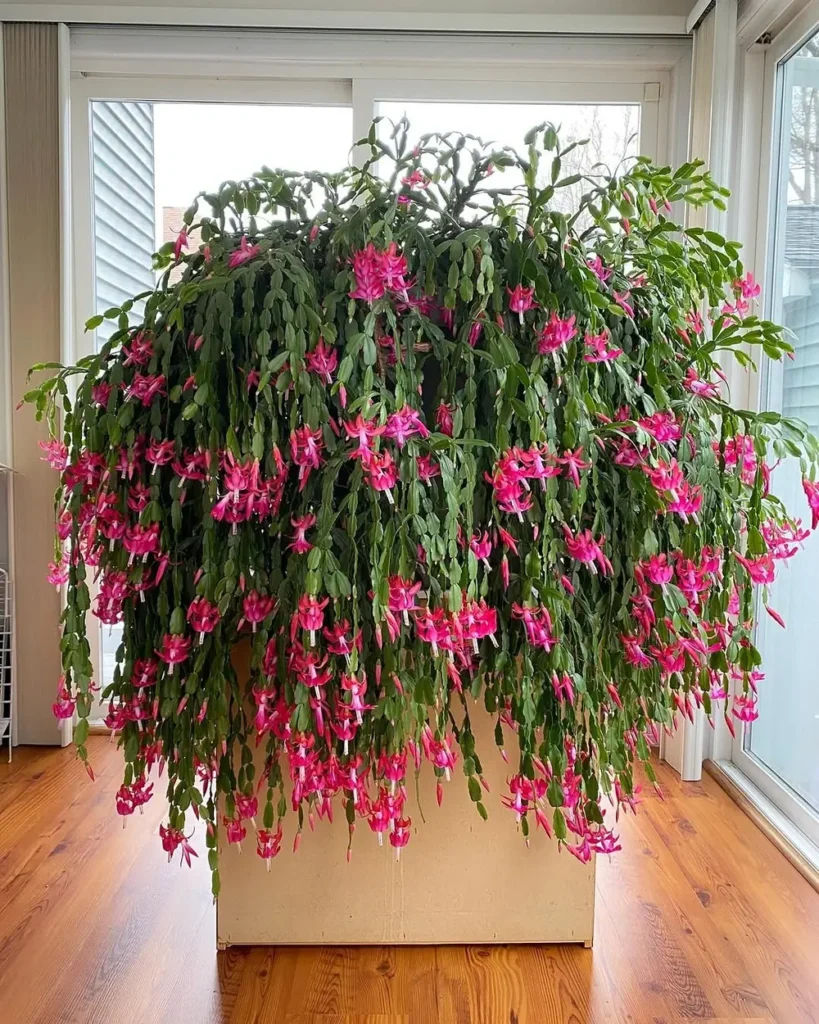
Late fall is when a Christmas cactus earns its keep. Just as the garden goes quiet, it covers the tips of its flat, segmented stems in hot pink, red, white, or coral blooms. Unlike desert cacti, it comes from humid forests, so it prefers bright, indirect light and lightly moist soil.
It’s non-toxic to cats, and the buds are triggered by long nights and cooler temperatures in fall. A spot away from bright lamps in the evening helps it set flowers.
Buds drop when the plant gets moved around or sits in a draft. That’s the most common slip in Christmas cactus care, so pick its spot and leave it there until the flowers fade.
12. Bird’s Nest Fern
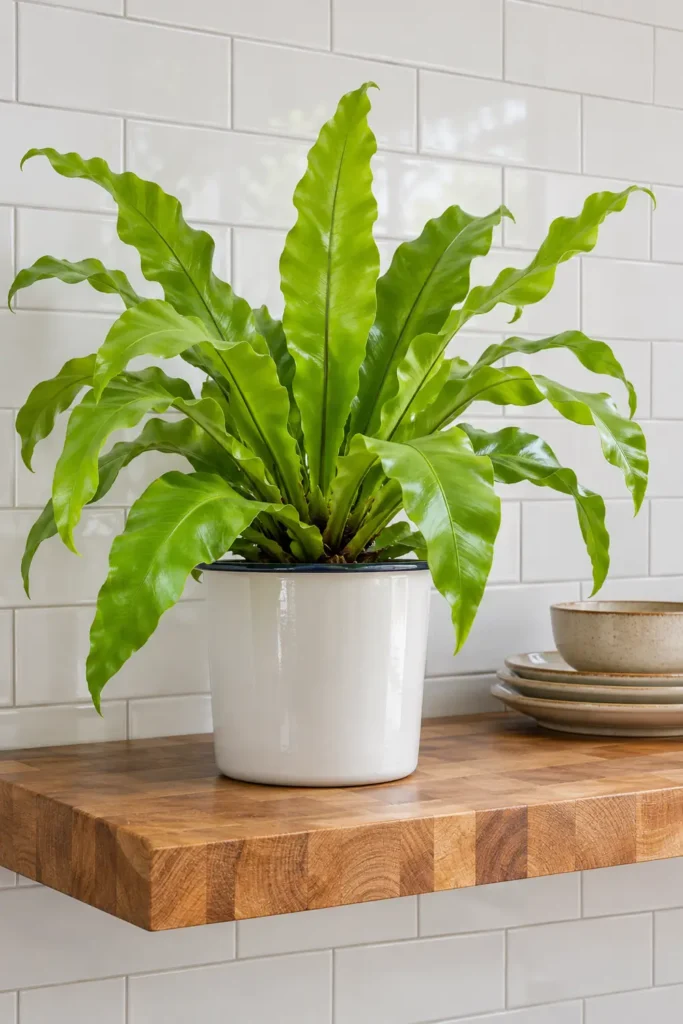
A bird’s nest fern looks nothing like the fluffy fern most people picture. Its wide, glossy, wavy fronds grow out of a central rosette like a green fountain, and the fuzzy brown center is the “nest” that gives the plant its name.
It handles low to medium indirect light better than most ferns and likes humidity, so a bathroom or kitchen suits it well. Keep the soil lightly moist. It’s a true fern, and it’s non-toxic to cats.
Water around the edge of the soil, not into the center cup, where trapped water can rot the crown. New fronds unfurl from that center, so avoid handling them while they’re soft.
13. Staghorn Fern Mounted on the Living Room Wall
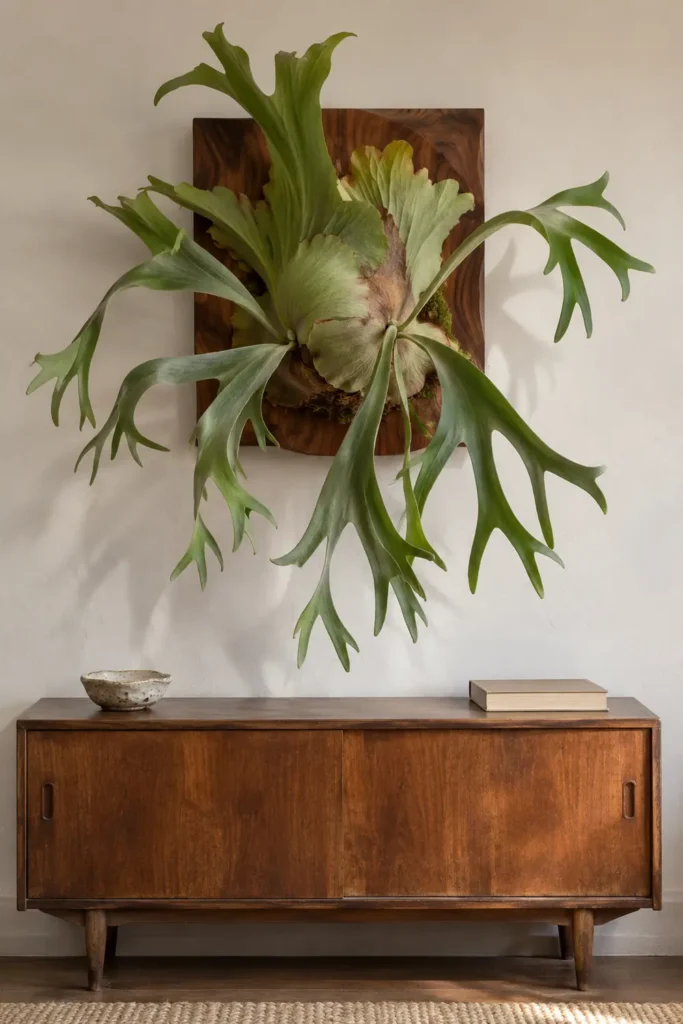
The surest way to keep a cat off a plant is to hang the plant on the wall, and staghorn ferns are built for it. In the wild they grow on tree trunks, and indoors they’re usually mounted on a wooden board or grown in a hanging basket.
The plant makes two kinds of fronds. Gray green, antler shaped fronds reach outward, while flat, rounded shield fronds hug the mount and turn brown with age. That browning is normal, so leave the shield fronds in place.
Bright, indirect light and humid air keep it healthy. Instead of pouring water over it, soak the mount in a sink, let it drip dry, and rehang it. Staghorn ferns are non-toxic to cats, but at that height it hardly comes up.
14. Polka Dot Plant
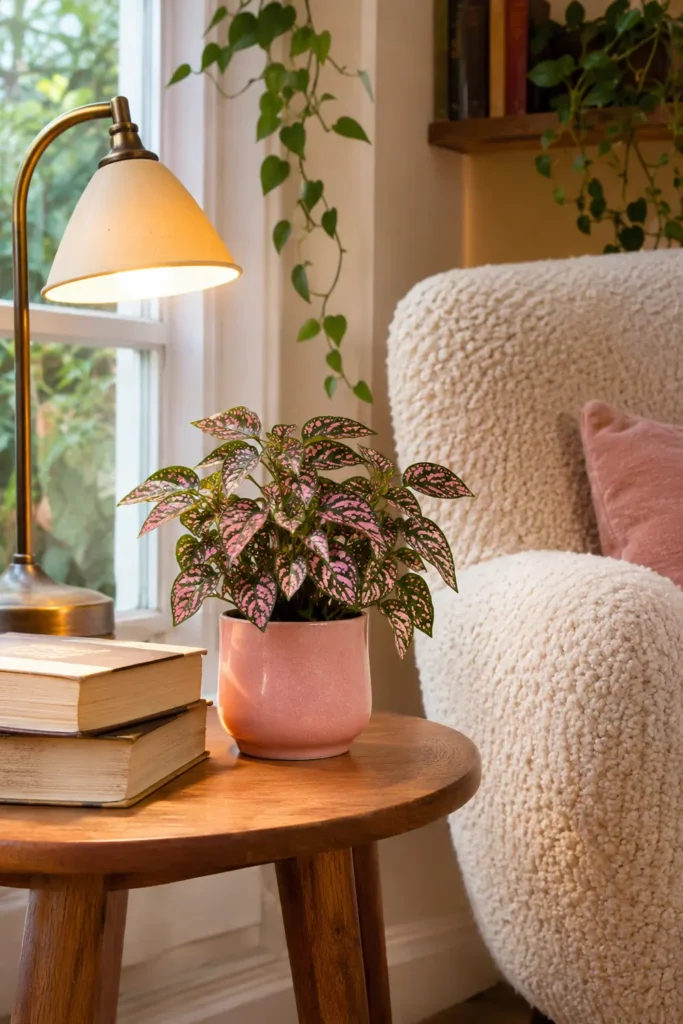
Pink speckles are the whole appeal of a polka dot plant. Its small, pointed leaves look like someone flicked a paintbrush at them, and depending on the type, the spots come in pink, red, or white.
The color stays brightest in bright, indirect light. With too little light the leaves fade to green, and harsh sun scorches them. Keep the soil evenly moist, because the plant droops quickly when it dries out. It’s non-toxic to cats and small enough for a shelf or desk.
Pinch off the top pair of leaves on each stem now and then. Left alone, polka dot plants get tall and floppy fast, especially once they start to flower.
15. White Moth Orchid on the Bathroom Vanity
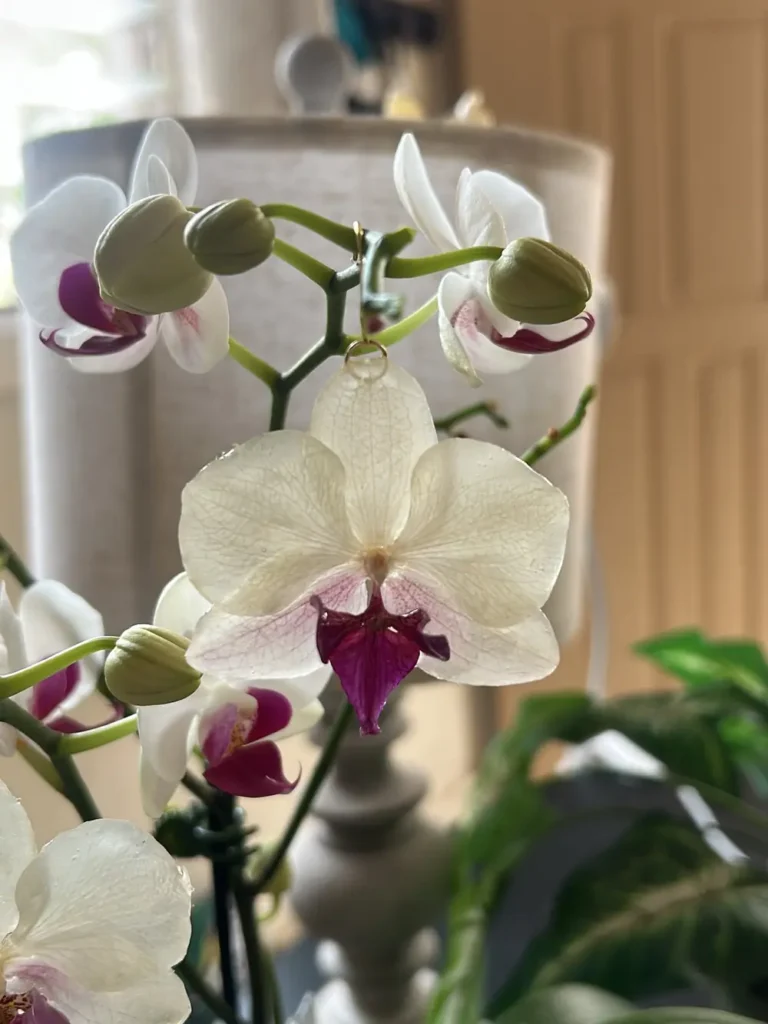
A moth orchid is the orchid you see in grocery stores, and it’s far easier to keep than its fancy reputation suggests. Flat, wide petals in white, pink, purple, or patterned shades open along an arching stem, and one flower spike can stay in bloom for a couple of months.
It grows in chunky bark rather than soil and likes bright, indirect light. Water when the roots inside the pot turn silvery, then let the pot drain completely, because orchid roots rot quickly in standing water.
Moth orchids are non-toxic to cats. After the flowers fall, keep the plant in good light and it will often send up a new spike within a year.
16. Burro’s Tail
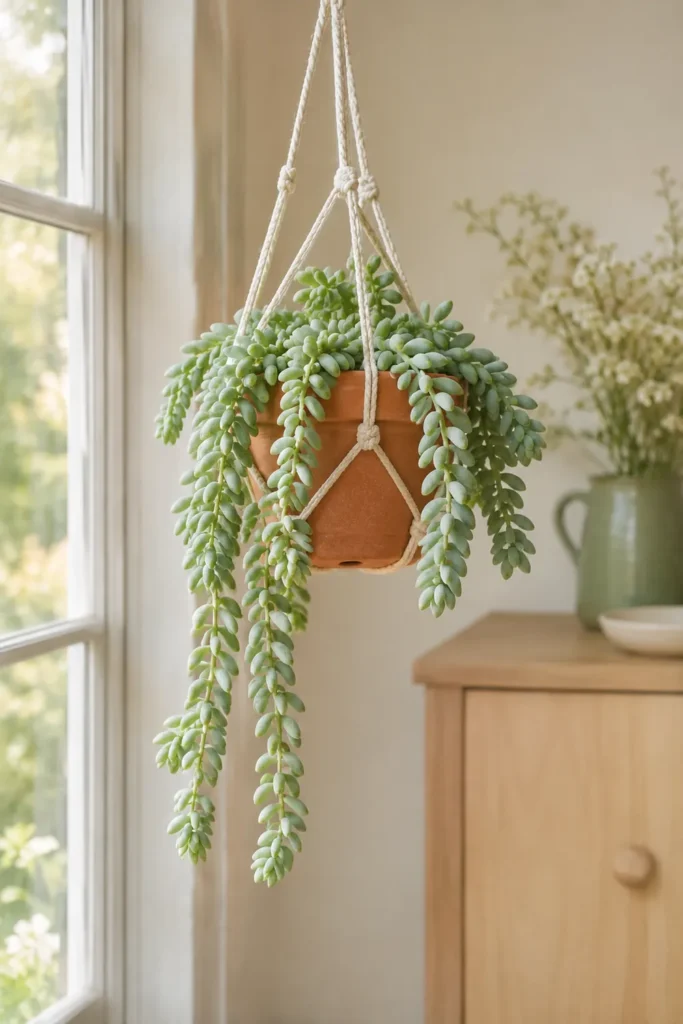
Burro’s tail has one flaw in a cat household: its plump, blue green leaves pop off at the lightest touch. Brush past it and a few beads hit the floor. Let a cat bat at it and you’re sweeping. The long stems packed with those leaves trail down like braided ropes, so the plant does best in a pot hung up high.
It’s a succulent, so it wants bright light with some direct sun and soil that dries out between waterings. It’s non-toxic to cats, so stray leaves aren’t a worry, and fallen ones will often root if you set them on dry soil.
Hang trailing plants well above the furniture your cat jumps from.
Use heavy pots for anything that sits on the floor.
Cover bare soil with large pebbles so it isn’t mistaken for a litter box.
Pots on shelves your cat already uses as a walkway.
Letting a cat graze on any plant every day, even a safe one.
Tucking a toxic plant into a group of safe ones up high.
17. Cast Iron Plant
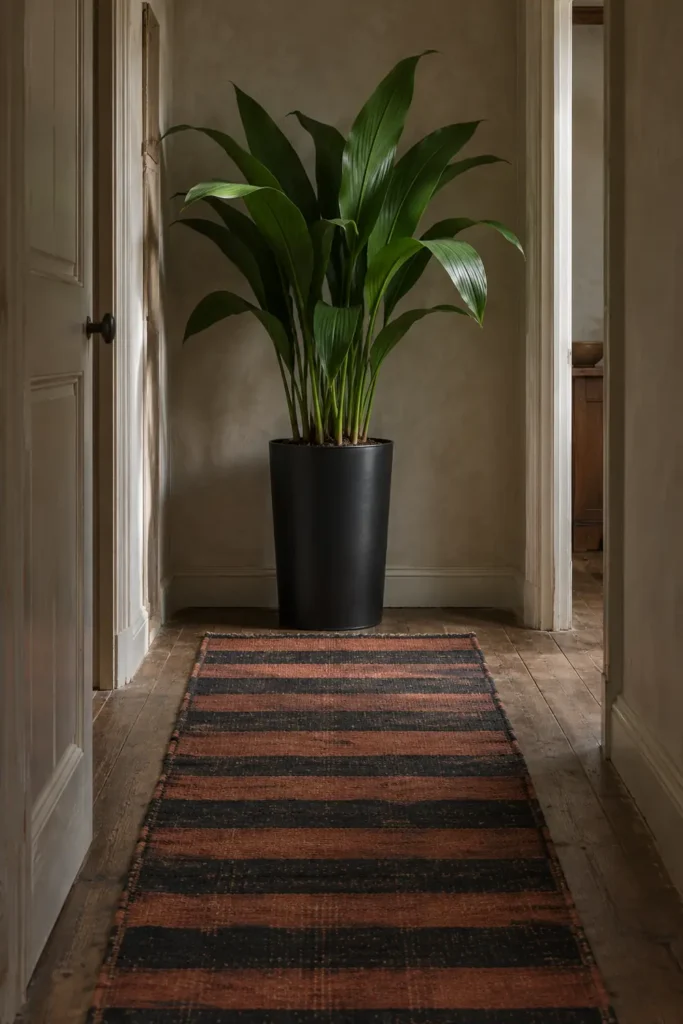
The cast iron plant got its name honestly. Its broad, dark green, upright leaves put up with low light, dry air, and missed waterings better than nearly any other houseplant, and it’s non-toxic to cats too.
That toughness makes it a good fit for a hallway or dim corner where other plants sulk. It grows slowly, adding only a few new leaves a year, so buy one at the size you want. Let the top of the soil dry before watering, and keep it out of direct sun, which scorches the leaves.
18. Hoya Climbing a Hoop on the Stair Landing Window
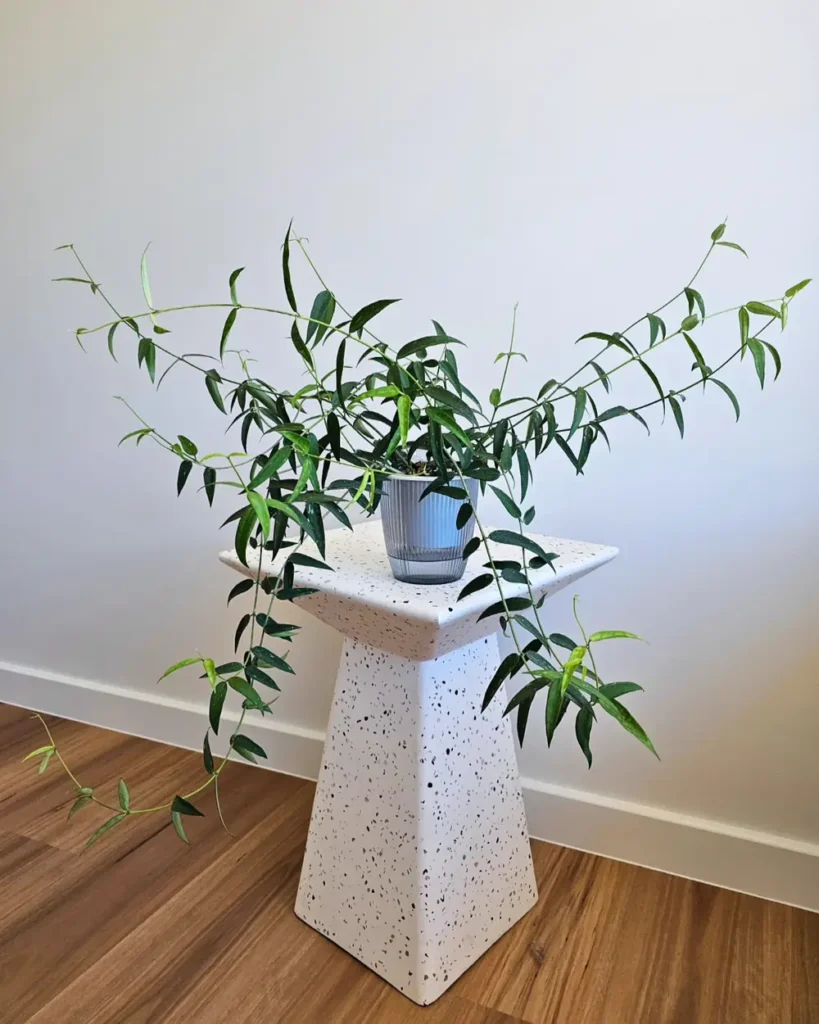
Hoya leaves are so thick and waxy that people touch them to check they’re real. These climbing and trailing vines come in many forms, with round, heart shaped, or long and narrow leaves. Once settled, they can send out round clusters of small, star shaped flowers.
Bright, indirect light encourages blooms. The thick leaves store water, so let the soil dry out before watering. Hoyas like being a little snug in their pots and often flower better that way. A trellis or a high shelf keeps the long stems tidy and away from a cat looking for something to swat.
Hoyas are non-toxic to cats and happy to be ignored. Leave old flower spurs in place, since new blooms come from the same spots.
19. Peperomias on a Tiered Stand by the Balcony Door
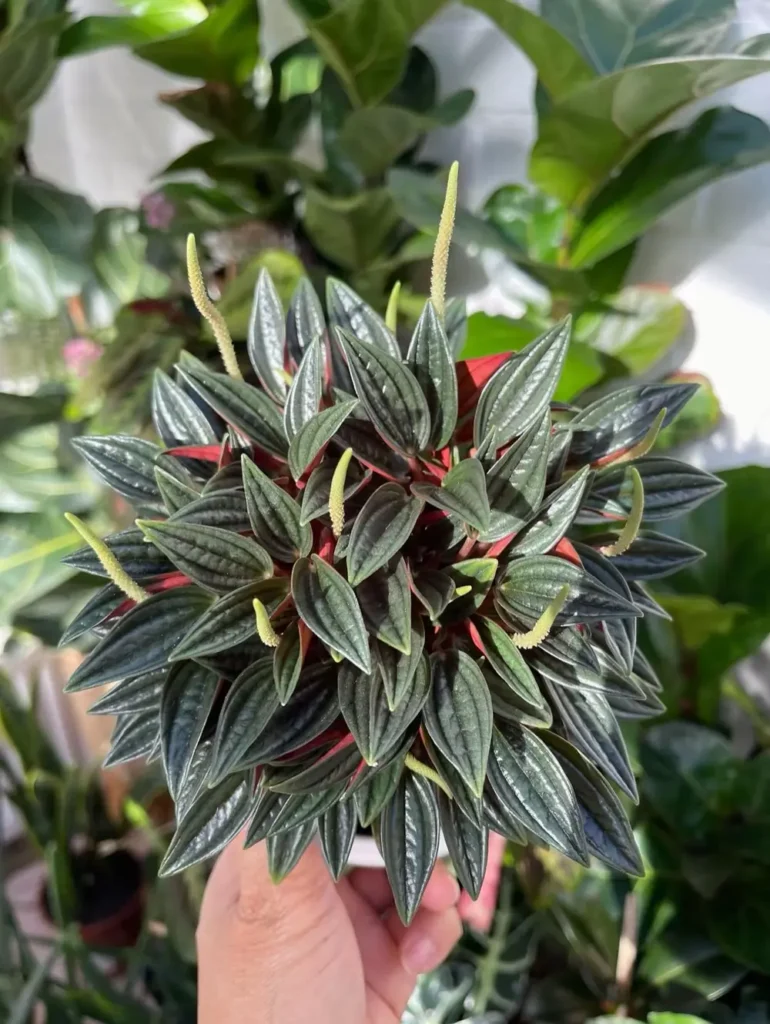
Peperomias come in an amazing range of leaf shapes, and the common ones are easy to tell apart. The baby rubber plant has thick, glossy, rounded leaves. The watermelon peperomia has silver striped leaves that really do look like tiny watermelon rinds. Ripple peperomia has deeply crinkled, dark leaves and sends up thin, cream colored flower spikes.
All three are non-toxic to cats and stay compact, so they fit easily on a shelf in a small apartment. Their thick leaves hold water, so let the soil dry out partway between drinks and give them medium to bright indirect light.
Overwatering is the main thing that kills peperomias. When in doubt, wait a few more days.
20. Nerve Plant
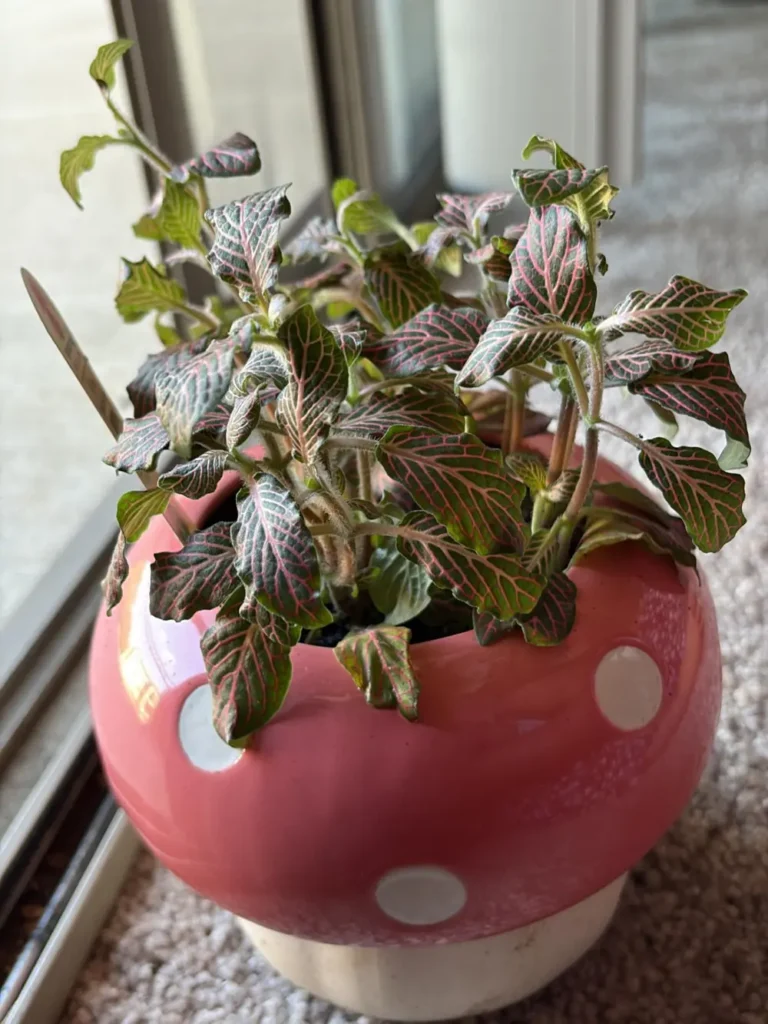
Nerve plants get their name from the fine network of veins across each small leaf, in bright pink, red, or white against green. They stay low and spreading, which makes them a favorite for terrariums and small pots.
They like medium, indirect light, steady moisture, and high humidity. A glass terrarium or cloche holds in that humidity and keeps curious paws and noses out at the same time.
Nerve plants are non-toxic to cats. They wilt dramatically when thirsty, then perk up soon after a drink, so the plant tells you exactly when it’s time to water.
How to Choose Non Toxic Plants for Cats, Room by Room
If you’re still wondering what plants are safe for cats in one particular room, start with the light. Every plant on this list is non-toxic, but each one only thrives when its spot matches what it needs.
Then think about reach. The ideas that hold up best use height, weight, or glass to keep paws off: a hanging pot, a concrete planter, a wall mount, a cloche.
Finally, repeat one color between the pot and the plant, like the blush pot under the polka dot plant or the cobalt pots under purple violets. That small echo is what makes a plant look styled instead of just parked.
| Light | Where you’ll find it | Plants from this list |
|---|---|---|
| Low light | Dim corners, hallways, rooms with small windows | Parlor palm, cast iron plant |
| Medium light with humidity | Bathrooms and kitchens with a window | Boston fern, bird’s nest fern, moth orchid, nerve plant |
| Bright, indirect light | A few steps back from a sunny window, north facing sills | Spider plant, areca palm, rattlesnake plant, prayer plant, African violet, money tree, staghorn fern, polka dot plant, hoya, peperomias, Christmas cactus |
| Bright light or full sun | Sunrooms, bay windows, south or west windows | Ponytail palm, zebra haworthia, burro’s tail |
Houseplants That Are Safe for Cats: Your Questions Answered
Are pothos, snake plants, and peace lilies safe for cats?
No. All three are on the ASPCA’s list of plants that are toxic to cats. Pothos and peace lilies can irritate a cat’s mouth and stomach, and snake plants can cause vomiting. True lilies, like Easter lilies, are far more dangerous and can cause kidney failure, so keep lily bouquets out of cat homes entirely.
Are succulents safe for cats?
Some are and some aren’t. Haworthia, burro’s tail, ponytail palm, and Christmas cactus are all non-toxic to cats, while aloe vera and jade plant are toxic. Check each succulent by its botanical name rather than assuming the whole group is safe. Ideas 5, 8, 11, and 16 show the safe ones in real rooms.
How do I stop my cat from eating my plants?
Make the plants harder to reach and give your cat something better to chew. Hang trailing plants, use heavy pots on the floor, and keep a pot of cat grass where your cat can get to it freely. Ideas 1, 13, and 20 use height, a wall mount, and glass to keep paws away.
Does non-toxic mean my cat can eat it?
No. Non-toxic means the plant isn’t poisonous, not that it’s food. A cat that eats a lot of any plant, even a spider plant, can still vomit or get an upset stomach. A few nibbles are nothing to panic about, but steady chewing is worth discouraging.
What should I do if my cat eats a toxic plant?
Call your vet or the ASPCA Animal Poison Control Center at 888-426-4435 right away, even before symptoms show. Have the plant’s name ready, or snap a photo of it, so they can tell you how serious it is and what to do next.
Final Thoughts
A home full of plants and a cat who inspects every one of them can share the same space without drama. Start with houseplants that are safe for cats, give each one the light it wants, and put it where a paw can’t easily send it flying. Heavy pots, hanging planters, and a wall mount or two do more than any deterrent spray.
With the holidays close, the same habits help you keep cats out of the Christmas tree, which is really just a very tall plant covered in toys. Pick one idea for the room that feels emptiest, and save this for the next time you’re standing in the plant aisle reading tags.