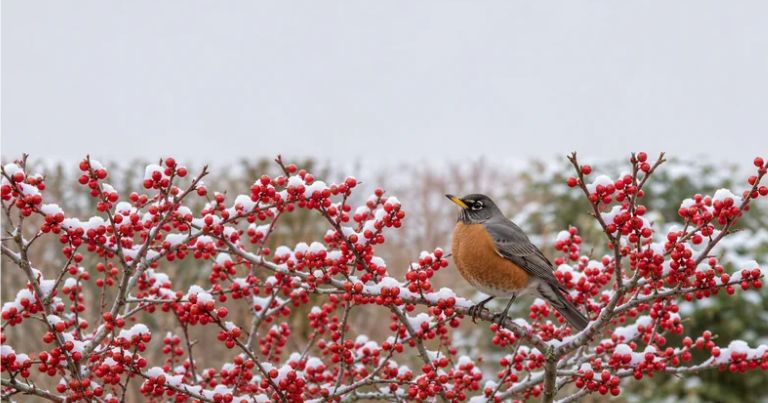
Step outside on a cold January morning and watch where the birds actually go. Plenty of them skip the feeder entirely. They pick at old coneflower heads, strip red berries off a holly, or tuck themselves deep inside an evergreen out of the wind. That is the real case for plants to feed birds naturally: food and shelter in the same spot, and nothing to refill.
The 15 plants below cover the whole winter. Winterberry, crabapple, and wild raisin viburnum hold berries for robins, bluebirds, and cedar waxwings. Purple coneflower, sunflowers, and switchgrass keep seed on the stem for goldfinches and juncos. Eastern red cedar and American holly add evergreen cover, and tart late fruit like sumac and rose hips carries birds through the leanest weeks before spring.
For each plant you get what it looks like, when birds eat it, where it grows best, and one practical tip. You’ll find big shrubs, small trees, easy perennials, and one annual you can grow from a packet of seed. There’s also a warning about the one berry shrub to leave out.
1. Winterberry (Ilex verticillata)
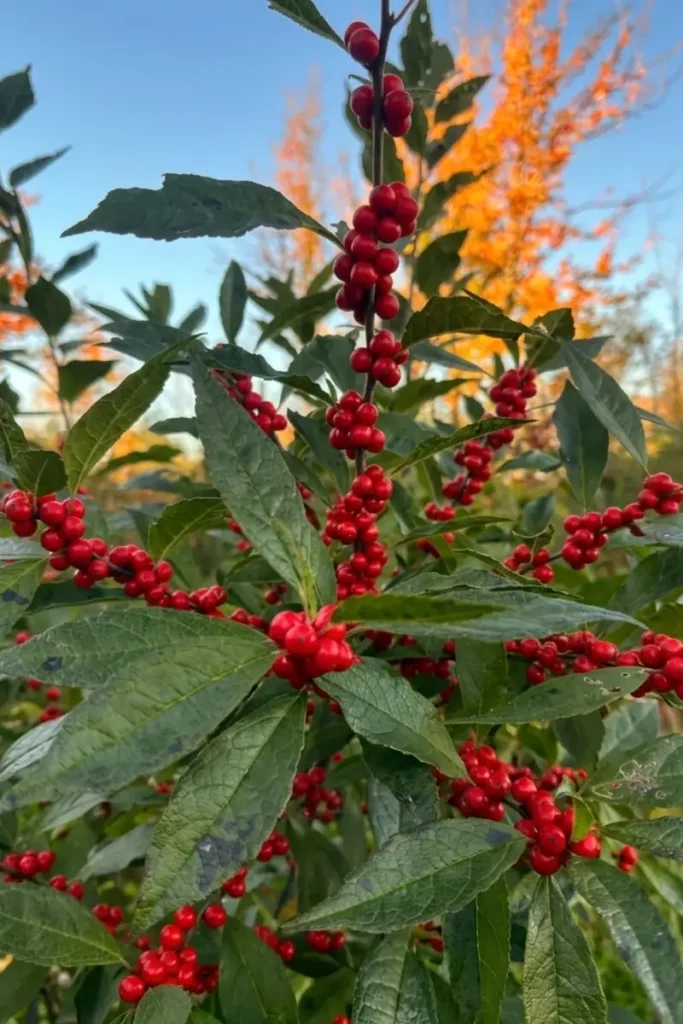
Bare gray stems packed with glossy red berries: that is winterberry in January, and it is hard to walk past. This deciduous holly drops every leaf in fall, so nothing hides the fruit, and the whole shrub looks like a branch someone dipped in paint.
It is native to eastern North America and one of the best plants that feed birds in winter. Robins, bluebirds, mockingbirds, and cedar waxwings strip it in mid winter, usually after the earlier berries are gone. It also handles soggy ground better than most shrubs, which puts it among the easiest plants that live in wet areas like rain gardens and low corners.
Only female plants make berries, and they need a male winterberry nearby to set fruit. A common rule of thumb is one male for several females, planted within about 50 feet. The berries are toxic to people and pets.
Quick facts: Deciduous shrub | Full sun to part shade | Moist to wet soil | Usually 6 to 10 feet tall and wide | Red berries from fall into mid winter | Rain gardens, wet corners, hedgerows | Hardiness: USDA zones 3 to 9
2. Purple Coneflower (Echinacea purpurea)
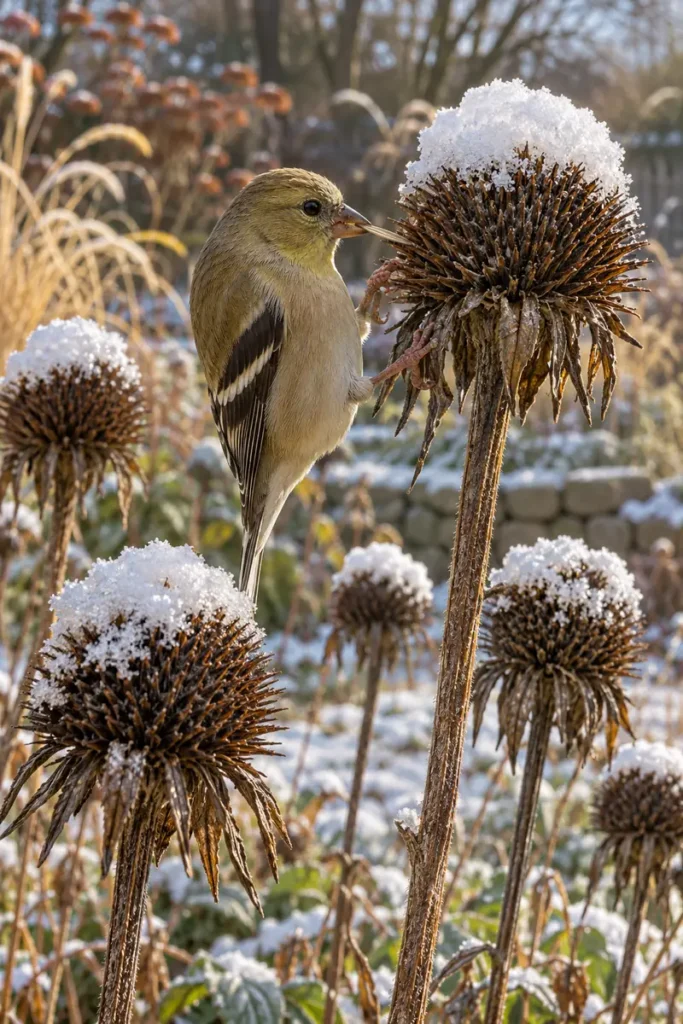
The messiest thing in your fall border might be the most useful. Purple coneflower spends summer covered in pink-purple daisies with spiky orange centers, and then those centers dry into dark, bristly cones full of seed. Most of us cut them down in October. Goldfinches would rather we didn’t.
Leave the stems standing and finches will work the cones into early winter, hanging off the heads and picking out seed one at a time. Chickadees and sparrows clean up whatever drops. The stiff stems also hold snow in neat little caps, which beats a bed of bare mulch for winter looks.
Coneflower is a native prairie perennial that wants full sun and shrugs off dry spells once settled. Plant it in groups of three or five so the birds have a real patch to work, not a single snack.
🌿 Garden Tip
Wait until spring to cut coneflowers back, once fresh leaves show at the base. If you have room, leave a few old stems standing at about knee height. Many native bees nest inside hollow and pithy stems, and the new growth hides the stubble by early summer.
Quick facts: Perennial | Full sun | Low to moderate, drought tolerant once established | 2 to 4 feet tall | Blooms early summer into fall, seed heads into winter | Pollinator borders, prairie gardens, sunny beds | Hardiness: USDA zones 3 to 8
3. Eastern Red Cedar (Juniperus virginiana)
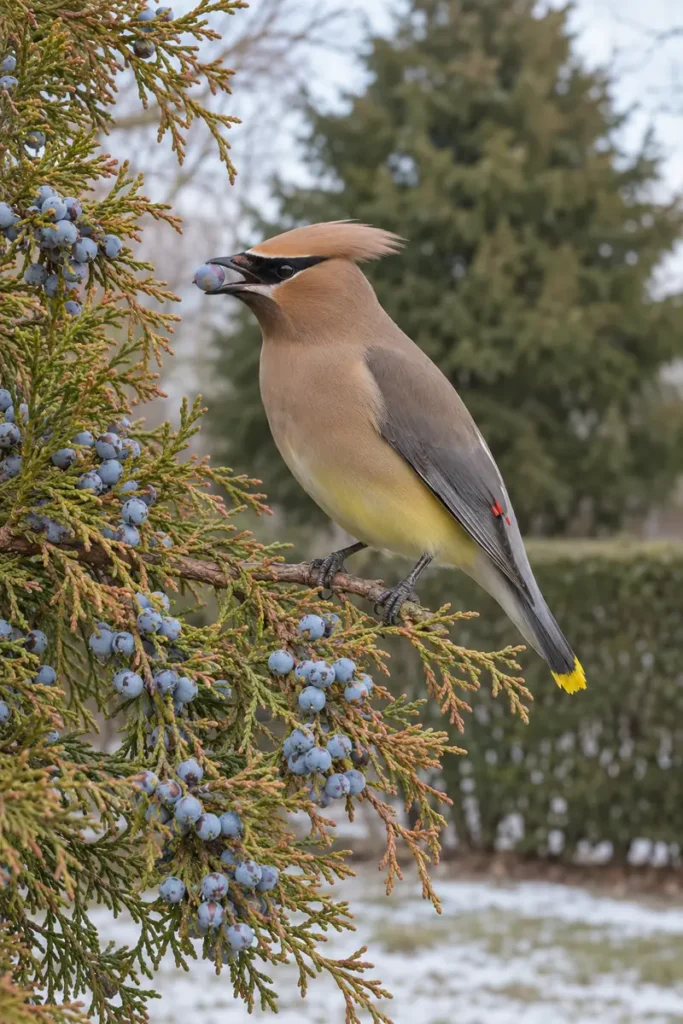
Cedar waxwings are named after this tree, which tells you most of what you need to know. Eastern red cedar is a native evergreen juniper with dense, scratchy foliage that takes on a bronze cast in cold weather. Female trees carry dusty blue, berry-like cones all winter, and waxwings, bluebirds, robins, and yellow-rumped warblers keep coming back for them.
The food is only half the job. Thick evergreen cover blocks wind and hides small birds from hawks, so a red cedar near your other bird plants turns a quick snack stop into a place birds spend the day.
It tolerates poor, dry soil and makes a tough windbreak or the back row of a hedgerow. Short on space? Narrow upright forms of the same species fit a side yard.
Garden note: Red cedar hosts cedar-apple rust, a fungus that spots apple and crabapple leaves, so keep it well away from fruit trees.
Quick facts: Evergreen conifer | Full sun | Low, tolerates dry soil | Usually 30 to 50 feet tall, narrow forms available | Blue berry-like cones fall through winter | Windbreaks, screens, back of a hedgerow | Hardiness: USDA zones 2 to 9
4. American Beautyberry (Callicarpa americana)

Few berries look less real than these. American beautyberry wraps its arching stems in tight clusters of vivid magenta-purple fruit, stacked at every leaf joint like beads on a string. This Southeastern native is a loose, open shrub that looks best at a woodland edge or in a big mixed border.
The berries ripen in early fall and often hang on into mid winter, when mockingbirds, cardinals, brown thrashers, and robins pick them over. The color holds after the leaves drop, so the shrub keeps earning its spot in a corner that would otherwise go brown.
Beautyberry blooms on new growth, so you can cut it back hard in late winter and it will still fruit that fall. That habit keeps it full and compact instead of leggy. At the cold edge of its range it may die back to the ground and regrow in spring.
Quick facts: Deciduous shrub | Full sun to part shade | Moderate | 3 to 6 feet tall and wide | Purple berries early fall into mid winter | Woodland edges, mixed borders, Southern yards | Hardiness: USDA zones 7 to 11
5. Crabapple (Malus)
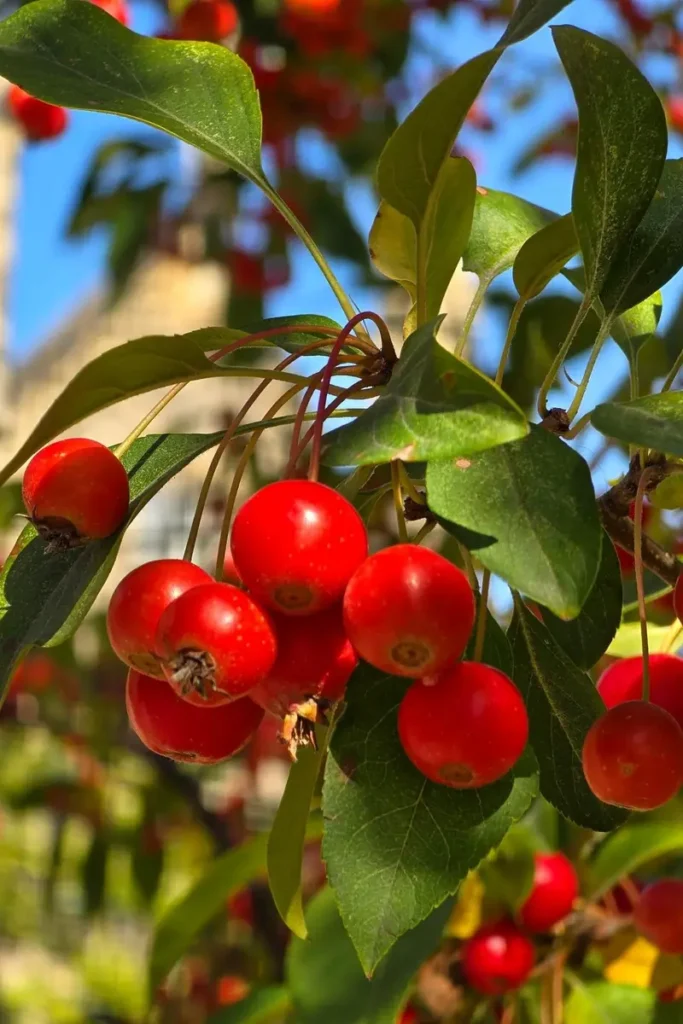
A crabapple with big fruit feeds the lawn. A crabapple with small fruit feeds the birds. That is the main thing to know when you shop for one.
Crabapples are small flowering trees that cover themselves in white, pink, or rose blossoms in spring and set fruit in fall. The best ones for birds carry pea-to-cherry-sized fruit that hangs on the branches into winter. Frost softens it, and that is when robins, cedar waxwings, bluebirds, and cardinals move in. Large-fruited types tend to drop everything in autumn, which mostly feeds wasps and squirrels.
Ask the nursery for a disease-resistant crabapple with small, persistent fruit. One tree makes a strong focal point in a front yard, and the spring flowers come free with it. Plant it where you can see it from a window. A crabapple full of waxwings in February is the best show in the yard.
Quick facts: Small deciduous tree | Full sun | Moderate | Usually 15 to 25 feet tall | Spring flowers, fruit from fall into winter | Front yards, focal points, small properties | Hardiness: USDA zones 4 to 8
6. Switchgrass (Panicum virgatum)
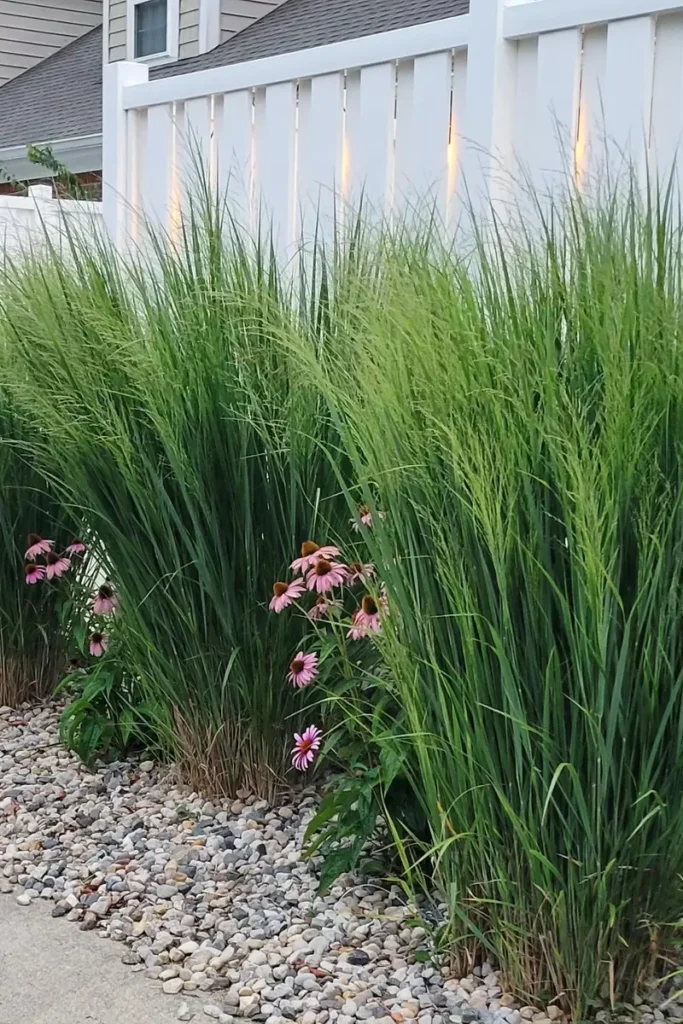
Snow is hard on the birds that feed on the ground. Juncos, sparrows, and towhees spend winter scratching for seed, and a few inches of snow can bury the whole menu. Switchgrass solves that by holding its food up high.
This native prairie grass grows in upright clumps of green or blue-green blades. In late summer it sends up airy, pinkish seed sprays that sit over the plant like a haze. By winter the clump turns straw gold and stays standing through most storms, so the seed stays above the snow line. The dense base also gives small birds a dry place to get out of the wind.
Switchgrass adapts to wet or dry soil and wants full sun. Plant it in a drift behind lower perennials, then cut it back in late winter before new shoots appear.
Quick facts: Perennial ornamental grass | Full sun | Low to moderate, tolerates wet and dry soil | 3 to 6 feet tall | Seed heads late summer, standing straw through winter | Meadows, drifts, back of a border, screening | Hardiness: USDA zones 4 to 9
7. Red Chokeberry (Aronia arbutifolia)
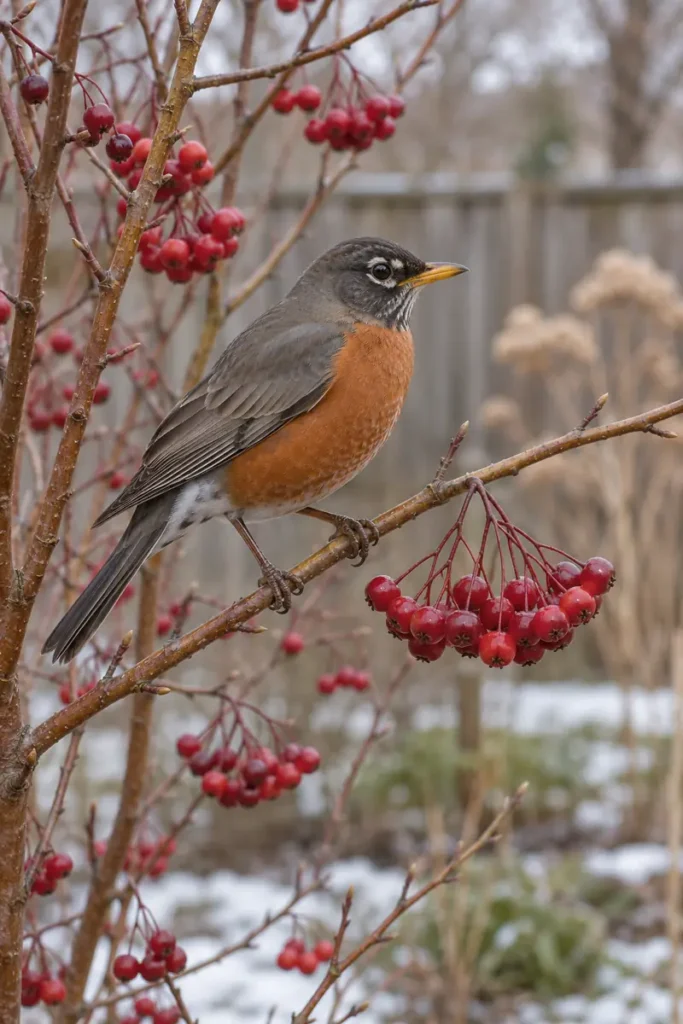
Red chokeberry is the bird shrub for yards that are short on space. It grows upright and fairly narrow, with white flower clusters in spring, glossy leaves that turn bright red in fall, and small red berries that last far into winter.
The berries are tart, so birds usually save them for later. That works in your favor. Once the sweeter fruit is gone in late winter, robins, cedar waxwings, and mockingbirds come back for the chokeberries still hanging there.
It is native to the eastern US, takes sun or part shade, and grows in wet or fairly dry soil, which makes it one of the easiest shrubs with berries for birds. It does spread slowly by suckers into a small thicket. Birds like the cover, but give it room or pull the strays each spring.
Pair it with: winterberry in a wet corner, or a drift of switchgrass in front for winter seed and shelter.
Quick facts: Deciduous shrub | Full sun to part shade | Moist to wet, tolerates some dryness | 6 to 10 feet tall | Spring flowers, red fall leaves, berries into late winter | Small yards, rain gardens, informal hedges | Hardiness: USDA zones 4 to 9
8. Sunflower (Helianthus annuus)
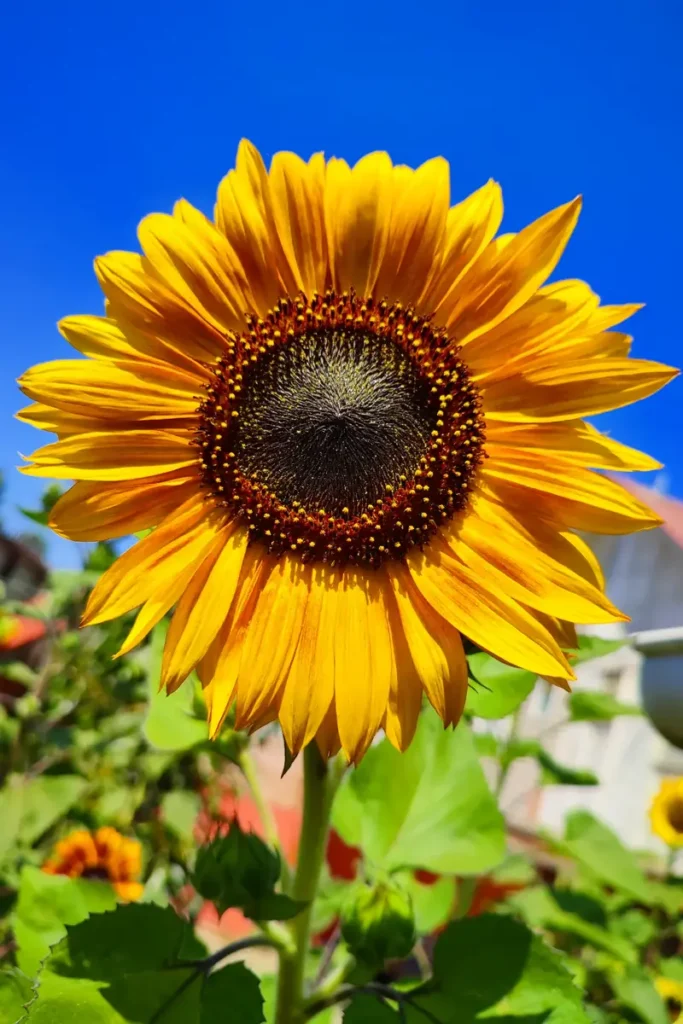
A packet of seed and one sunny fence line is all it takes. Common sunflower is the cheapest plant on this list and the only annual, so you can try it this spring without giving up any permanent bed space. If you have never started anything from a packet, this is the plant to learn on, and our guide to growing flowers from seed walks you through it.
The big yellow flower heads ripen into dense discs of striped or black seed by late summer. Goldfinches, chickadees, nuthatches, and cardinals pick at them on the stalk through fall and into early winter.
Leave the heads in place, or cut a few and hang them on a fence post where you can watch the visitors. Squirrels will compete for the seed. Consider it part of the deal.
Quick facts: Annual | Full sun | Moderate | Usually 5 to 10 feet tall, dwarf types shorter | Summer flowers, seed heads fall into early winter | Fence lines, vegetable gardens, kids’ gardens, beginners
9. American Holly (Ilex opaca)
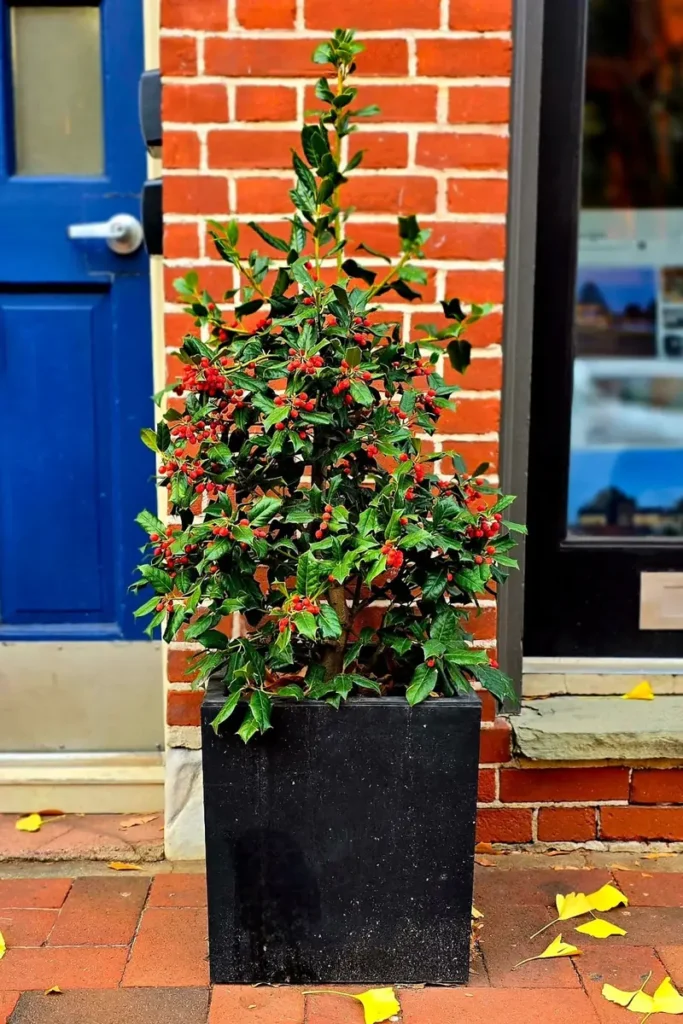
If your American holly is loaded with red berries in December and the birds ignore it, nothing is wrong. Holly fruit is bitter early in the season. After a few rounds of freezing and thawing the berries soften and lose some of that bite, and that is when robins, bluebirds, mockingbirds, and cedar waxwings finally move in.
That late timing is what makes this native evergreen tree so useful. It feeds birds in late winter, when most of the plants on this list have been picked clean. The spiny, glossy leaves give year-round cover too, and on a cold, windy night that shelter matters.
American holly grows slowly into a dense pyramid and likes acidic, well-drained soil. As with winterberry, a female only fruits when a male holly grows nearby. The berries are toxic to people and pets.
⚠️ Watch Out
Nandina, often sold as heavenly bamboo, also holds red berries all winter, but it does not belong in a bird garden. Fresh nandina berries can contain cyanide compounds, and flocks of cedar waxwings that gorged on them have died. It also spreads into woodlands across the Southeast. Plant holly, winterberry, or chokeberry instead.
Quick facts: Evergreen tree | Full sun to part shade | Moderate, well-drained acidic soil | Usually 15 to 30 feet tall | Red berries from late fall, eaten mostly in late winter | Evergreen screens, foundation corners, woodland edges | Hardiness: USDA zones 5 to 9
10. Black-Eyed Susan (Rudbeckia)

Black-eyed Susan gives you two seasons from one plant. In summer it is a mass of golden-yellow petals around dark brown cones. Once the petals fall, those cones turn almost black and stay up on stiff stems, full of small seeds that goldfinches, chickadees, and sparrows pick through until the supply runs out.
You will usually find two types at the nursery. Rudbeckia hirta is short-lived and reseeds freely, so it wanders around the bed from year to year. Rudbeckia fulgida is a longer-lived perennial that spreads in a tidier clump. Both work for birds.
It handles heat, full sun, and poor soil, and it fits in with other drought tolerant perennials for full sun. The dark cones look sharp against snow, so plant a clump where you can see it from indoors.
11. Staghorn Sumac (Rhus typhina)
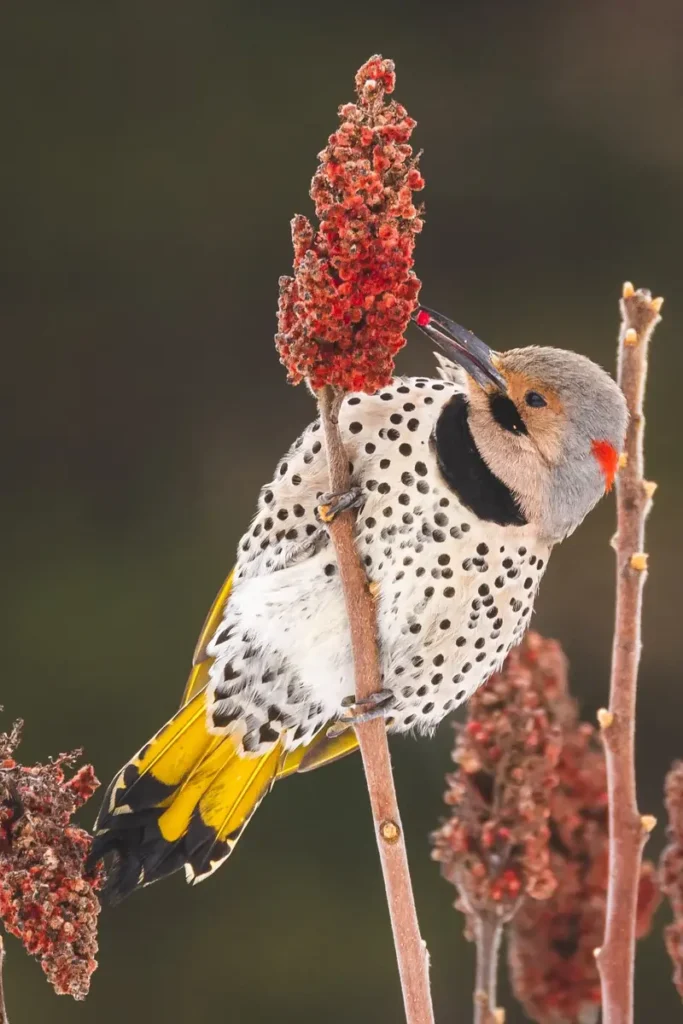
Mention sumac and someone will ask about poison sumac. Relax. Staghorn sumac is a different plant, and the fruit is the easy way to tell them apart. Poison sumac has loose, drooping whitish berries and grows in swamps. Staghorn sumac holds upright, cone-shaped clusters of fuzzy dark red fruit at the tips of its branches, and it grows on dry, sunny ground.
Those red clusters stay put all winter. They are low in fat, so birds treat them as backup food and eat them late in the season, after the richer berries are gone. Bluebirds, robins, cardinals, and northern flickers all turn up for them. The bare branches are covered in velvety fuzz like a deer’s antlers, which is where the name comes from.
It spreads by suckers into a wide colony, so give it a slope or a wild edge. For a small bed, fragrant sumac stays much shorter.
Quick facts: Large deciduous shrub or small tree | Full sun | Low, tolerates dry, poor soil | Usually 15 to 25 feet tall, spreading wider | Orange-red fall leaves, red fruit clusters all winter | Slopes, wild edges, roadside banks | Hardiness: USDA zones 3 to 8
12. Anise Hyssop (Agastache foeniculum)
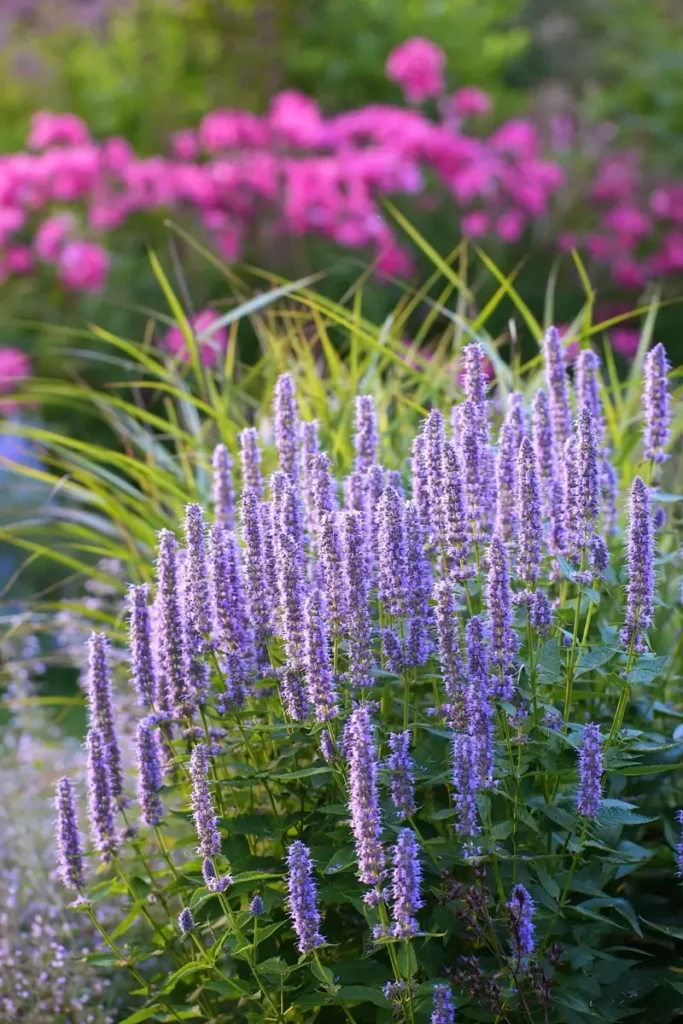
Brush past anise hyssop in July and the air smells like licorice. The scent comes from its soft, gray-green leaves, which sit below tall spikes of lavender-blue flowers that bees work from midsummer into fall.
The bird value shows up after the flowers fade. Each spike dries into a stiff brown column packed with tiny seeds, and goldfinches and chickadees pick at them well into winter. Leave the spikes standing and the plant goes from pollinator stop to bird feeder with no extra work from you.
This native perennial likes full sun and well-drained soil, and it tends to sulk in heavy clay that stays wet all winter. Individual plants are short-lived, but they reseed, so a patch usually keeps itself going. Deer generally leave the scented leaves alone.
Quick facts: Perennial | Full sun | Low, drought tolerant once established, needs good drainage | 2 to 4 feet tall | Blooms midsummer into fall, seed spikes into winter | Pollinator gardens, herb beds, sunny borders | Hardiness: USDA zones 4 to 8
13. Wild Raisin Viburnum (Viburnum nudum)
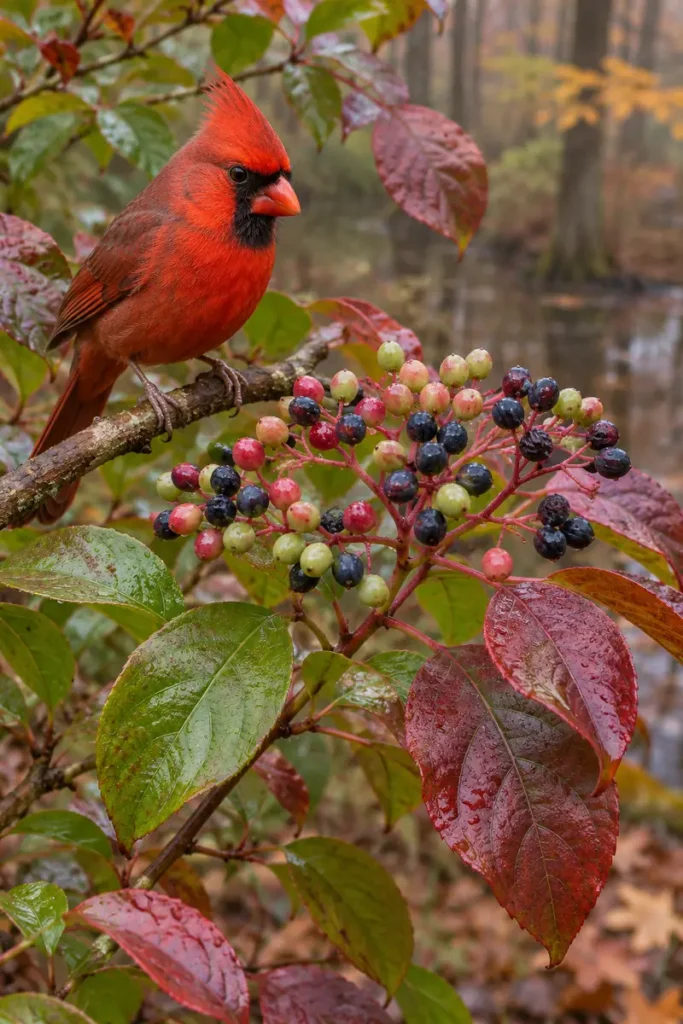
Wild raisin viburnum puts on the best color change of any berry on this list. The fruit starts pale green in late summer, turns pink, then deepens to blue-black, and a single cluster often shows all three shades at once. Flat white flower clusters open in late spring, and the glossy leaves go red-purple in fall.
The berries last into winter, often a little shriveled, which is where the raisin name comes from. Bluebirds, robins, cardinals, and catbirds all eat them. The shrub also handles damp ground and part shade, so it fills the spots where a lot of berry plants struggle.
For the heaviest crop, plant two or more wild raisins that are not clones of each other, since they fruit better with a cross-pollination partner. If viburnums are new to you, our guide to growing viburnum covers planting, pruning, and growing in pots.
Quick facts: Deciduous shrub | Full sun to part shade | Moist to wet soil | Usually 6 to 12 feet tall | Spring flowers, multicolored berries from fall into winter, red-purple fall leaves | Damp borders, woodland edges, rain gardens | Hardiness: USDA zones 5 to 9
14. American Mountain Ash (Sorbus americana)
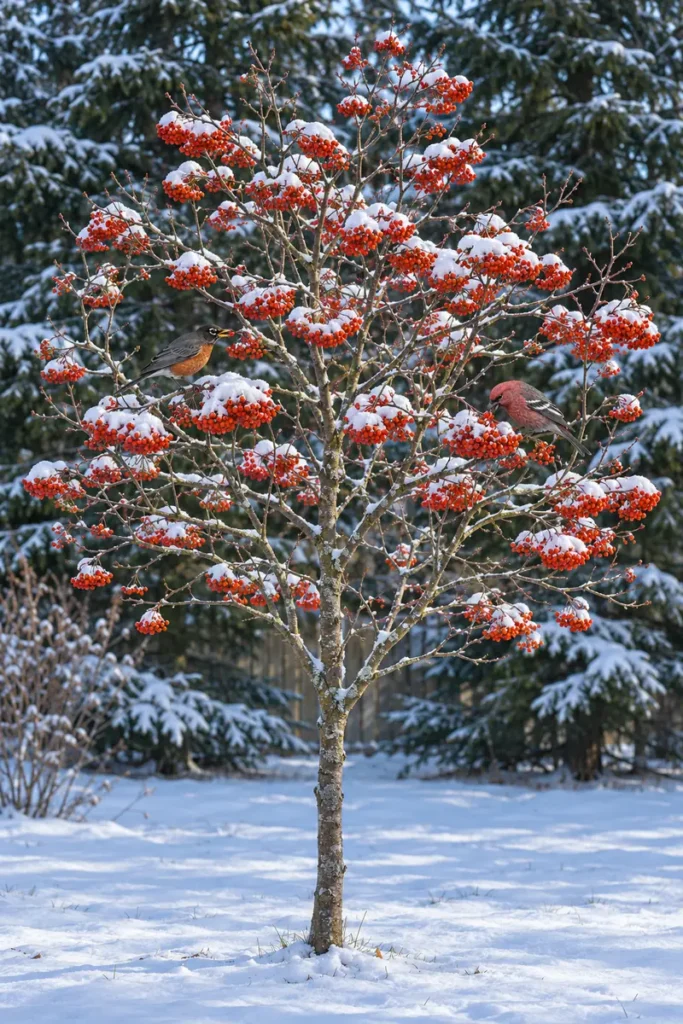
Gardeners in cold northern yards get one tree the rest of us envy. American mountain ash is a small native tree with feathery, fern-like leaves, flat white flower clusters in late spring, and heavy bunches of bright orange-red berries from late summer into winter.
Robins, cedar waxwings, and pine grosbeaks can clean off a tree quickly once they find it, so think of it as a big, bright feeding station. Despite the name, it is not a true ash, so emerald ash borer leaves it alone.
The catch is heat. Mountain ash wants cool summers, full sun, and moist, acidic soil, and it often struggles in hot, humid regions. Gardening somewhere warm? Washington hawthorn gives a similar crop of red winter berries and handles heat far better. Just site it away from paths, because it has thorns.
Quick facts: Small deciduous tree | Full sun | Moderate, moist well-drained soil | Usually 15 to 30 feet tall | White spring flowers, orange-red berries from late summer into winter | Cold-climate yards, small properties, woodland edges | Hardiness: USDA zones 2 to 6
15. Virginia Rose (Rosa virginiana)
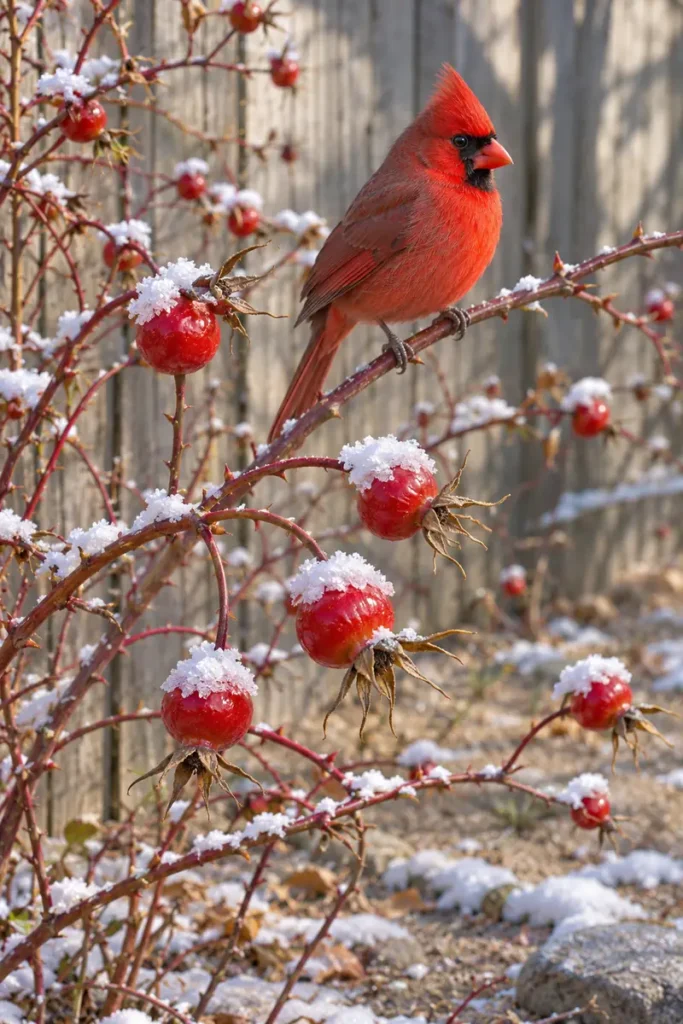
Skip the deadheading on this one. Virginia rose is a native shrub rose with simple, five-petaled pink flowers in early summer, and every bloom you leave turns into a round, glossy red hip by fall. The hips hang on through winter, bright against the reddish stems, and bluebirds, robins, mockingbirds, and cardinals eat them when other fruit runs short.
This tough, thicket-forming rose handles sandy soil, poor soil, and salty coastal wind, and its leaves turn orange and red in fall. Plant it along a sunny fence or property line where it has room to spread a little.
One rose to avoid is multiflora rose, a non-native with clusters of small white flowers that is invasive across much of the US. If it has already moved in, these tips for getting rid of invasive plants will help you make room for the native kind.
Quick facts: Deciduous shrub rose | Full sun | Low to moderate, tolerates sandy and salty soil | 3 to 6 feet tall | Pink flowers in early summer, red hips from fall through winter | Fence lines, coastal gardens, informal hedges | Hardiness: USDA zones 3 to 8
How to Choose the Right Winter Berries and Seed Heads for Birds
The plants on this list share a few patterns. Timing matters more than quantity. Seed heads and soft berries get eaten early, while holly, chokeberry, sumac, and rose hips wait for late winter, so planting across all three stretches keeps food on hand until spring.
Food works best next to shelter. An evergreen like eastern red cedar or American holly gives birds somewhere to rest between meals. Plant in groups of three to five, and reach for native species first. The easiest move costs nothing at all: leave stems and seed heads standing until spring.
| When birds usually eat it | Plants from this list | What they offer |
|---|---|---|
| Early winter | Purple coneflower, sunflower, black-eyed Susan, anise hyssop, American beautyberry | Seed heads and soft, early berries |
| Mid winter | Winterberry, eastern red cedar, crabapple, wild raisin viburnum, American mountain ash | Berries that soften after frost, plus evergreen cover from the cedar |
| Late winter | American holly, red chokeberry, staghorn sumac, Virginia rose, switchgrass | Long-lasting fruit and standing seed for the leanest weeks |
FAQ
Should I cut back perennials in fall or leave them for birds?
Leave them standing until spring. The seed heads of coneflower, black-eyed Susan, and anise hyssop feed finches and sparrows through winter, and the stems keep some of that seed above the snow. Cut the plants back once new leaves show at the base, as ideas 2, 10, and 12 describe.
Are native plants better for feeding birds naturally?
Usually, yes. Native plants evolved alongside local birds, and many common non-native berries are higher in sugar and lower in the fat birds need in cold weather. Natives also host the caterpillars songbirds feed their chicks in spring. Most of the plants on this list are native to North America.
Can I grow plants that feed birds in pots or a small yard?
Yes, if you pick the right ones. Coneflower, black-eyed Susan, and anise hyssop grow well in large containers with drainage holes, and red chokeberry and beautyberry suit small yards. Roots in pots freeze faster than roots in the ground, so these winter container gardening ideas are worth a look before you plant.
Can you feed birds without a feeder?
Yes. Berry shrubs, evergreens, and standing seed heads feed birds all winter and give them shelter too, and none of them need refilling. A feeder still helps during deep snow or ice storms. If you keep one, clean it regularly so it does not spread disease between birds.
A Winter Yard That Feeds Itself
A yard that feeds birds through winter does not have to look wild or messy. It needs a few berry shrubs that hold fruit at different times, some seed heads left standing, and an evergreen or two for cover. Start with one plant from each row of the timing table, plant it in a small group, and add more each year.
Before long, your plants to feed birds naturally will be doing the work your feeder used to do, and the cardinals and waxwings will show you which ones they like best. Pin this list so it is handy when planting season comes around.