
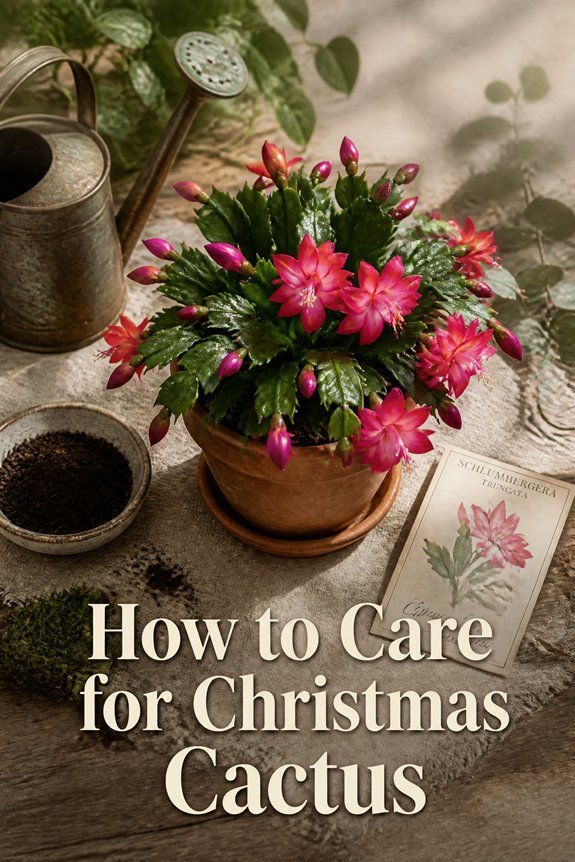
Getting a Christmas cactus to flourish indoors takes a bit of know-how. These tropical plants need bright but indirect light, along with careful watering that keeps soil lightly moist without drowning the roots.
Temperature and soil quality matter just as much for keeping the foliage plump and healthy.
For those iconic winter flowers, timing is everything. The plant needs extended darkness and cooler nights to trigger blooming. Cutting back on water and moving it to a dim, cool spot for several weeks mimics the natural dormancy cycle.
Skip this step, and you’ll likely end up with nothing but green branches during the holidays.
Pests like fungus gnats and mealybugs can sneak in when conditions get too damp. Catching problems early prevents the spread and protects neighboring plants.
With attention to these details, a Christmas cactus becomes a long-lived companion that rewards patience with stunning color year after year.
Give Your Christmas Cactus Plenty of Light
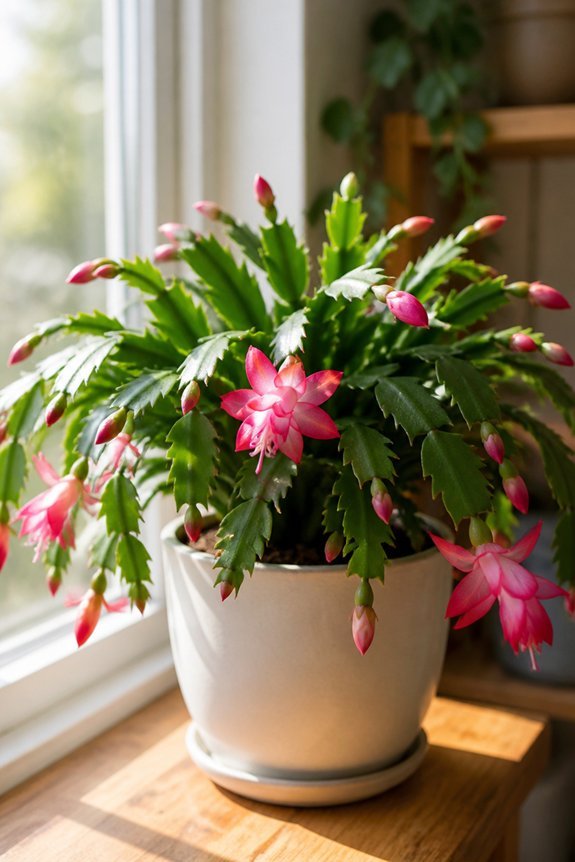
Your Christmas cactus loves light, but not the harsh kind. Give it bright, indirect sun for most of the day. An east or west-facing windowsill works perfectly. Your plant gets gentle morning or afternoon rays without the scorching midday heat.
South-facing windows can work too. Just hang a sheer curtain to soften that intense light.
Good news: these plants handle lower light better than most succulents. But they still need enough brightness to thrive. Too little light means no blooms come winter. No window space? Fluorescent lights nearby can help fill the gap.
Winter brings shorter days, so move your plant closer to its light source. Rotate the pot every few weeks. This keeps growth even and balanced on all sides.
Water Your Christmas Cactus More Often
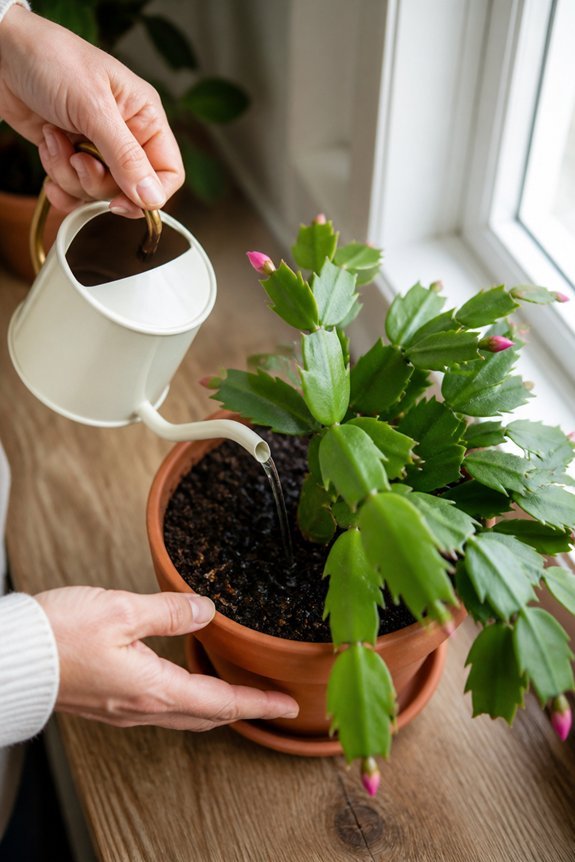
Unlike many succulents, Christmas cactus actually likes a drink more often. During spring through fall, keep the soil lightly moist. Just don’t let it get soggy. Check the top inch with your finger. If it feels dry, it’s time to water.
Winter changes things. The plant slows down and needs far less. Cut back to every two or three weeks. Let the soil dry out more between drinks.
Good drainage still matters. Pick a pot with holes and use well-draining soil. Root rot is real, even with this moisture-friendly cactus. Check the soil regularly. Adjust as needed based on your home’s humidity, light, and pot size.
Also read: How to Care for Peace Lily Indoor
Keep Warmth and Humidity High
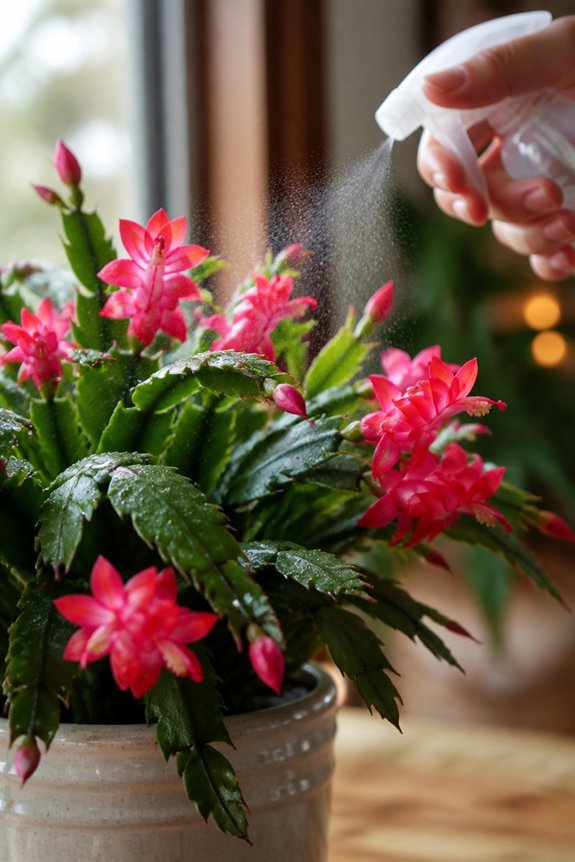
Your Christmas cactus loves warmth and humidity. Think tropical rainforest, not desert.
Keep temperatures between 65 and 75 degrees for most of the year. Cooler winter temperatures are actually helpful. They encourage the plant to set buds and bloom.
Humidity matters too. Aim for 50 to 60 percent. Most homes run much drier, especially with heat running.
Try misting your plant a few times each week. A pebble tray with water works well. Grouping plants together also boosts moisture in the air.
Stay away from heating vents and drafty windows. These spots swing too hot or cold. Dry air stresses the plant out.
Steady conditions mean stronger stems. You’ll also see more flowers when the time comes.
Choose Well-Draining Soil and a Suitable Pot
Your Christmas cactus needs the right foundation to thrive. Start with soil that drains well. Water shouldn’t sit around the roots.
A mix of peat moss, perlite, and bark works great. It lets extra moisture escape while holding just enough for the plant.
Pick a pot with drainage holes at the bottom. Terracotta naturally helps with airflow and drying. Plastic works too if the holes are there.
Size matters more than you might think. Choose a pot only slightly bigger than the root ball. Too much soil holds too much water.
These choices keep moisture in check. Your plant stays healthy without the risk of root rot.
Trigger Blooms With a Winter Dormancy Period
Your Christmas cactus needs a little winter nap to show off those festive blooms.
Start this process in October. Find a spot where temperatures stay between 50 and 60 degrees. Cut back on light too—about 12 hours daily works well. A darker corner of your home does the trick.
Keep this up for six to eight weeks. Water less often, but don’t let the soil turn to dust. Check it occasionally.
Watch for those tiny buds in November or December. Once they appear, move your plant back to its usual spot. Bright blooms in red, pink, or white will soon follow.
Fertilize After the Rest Period Ends
Your Christmas cactus is waking up. Those tiny buds mean it’s hungry.
A balanced 10-10-10 fertilizer will do the trick. Feed every two weeks while it’s blooming. Then ease off as the flowers start dropping.
Liquid fertilizers work fast. Just mix at half strength so you don’t burn the roots. Slow-release pellets are another option if you prefer a set-it-and-forget-it approach.
Once blooming finishes, stop feeding entirely. Let your plant rest. Too much fertilizer now leads to lots of leaves but fewer flowers next year.
Pick up again when you spot fresh growth and new buds forming. That’s your cue to start the cycle once more.
Diagnose and Treat Common Problems and Pests
Even healthy Christmas cactus plants can develop issues. Pests, diseases, or poor conditions usually cause them.
Common pests include mealybugs, spider mites, and scale insects. Look for small bumps or webbing on stems and leaves. These pests feed on sap and slowly weaken your plant.
Root rot happens when soil stays too wet. The roots decay, and the plant collapses. Fungal infections show up as soft, discolored patches. Leaf drop comes from temperature swings, irregular watering, or too little light.
Treat pests with insecticidal soap or neem oil. Spray the affected areas thoroughly. For root rot, repot in fresh, well-draining soil. Cut back on watering. Remove diseased parts with clean, sharp tools.
Keep conditions stable to prevent future problems. Maintain steady temperatures and proper lighting. Your cactus will bounce back with a little attention.
Frequently Asked Questions
Can I Propagate My Christmas Cactus From Cuttings, and How Long Does It Take?
One can successfully propagate Christmas cactus from cuttings by removing two to three segment pieces and allowing them to callus for one day. Planted in moist soil, roots typically develop within two to three weeks, with full establishment occurring in several months.
Why Isn’t My Christmas Cactus Blooming Even After Dormancy Period?
Insufficient light, inadequate cool temperatures, and improper watering all prevent blooming. The plant requires six weeks of darkness and temperatures below 50°F to trigger flowering. Additionally, excessive nitrogen fertilizer and inconsistent moisture stress the cactus, inhibiting bloom production.
How Often Should I Repot My Christmas Cactus Plant?
Christmas cactus plants should be repotted every two to three years during spring. One should use well-draining soil and a container only slightly larger than the previous one. Repotting becomes necessary when roots emerge from drainage holes or growth slows considerably.
Can Christmas Cactus Survive in Low Light Conditions Indoors?
Christmas cactus can tolerate low light conditions better than many houseplants, though it thrives with bright, indirect light. While it survives indoors with minimal light, flowering may be reduced without adequate brightness.
What’s the Ideal Temperature Range for Christmas Cactus Growth?
Christmas cactus thrives when one keeps their cool. The plant prefers temperatures between 60-70°F during growing season and slightly cooler conditions of 50-55°F during winter dormancy to encourage blooming and healthy development.
Conclusion
Caring for a Christmas cactus requires balancing light, water, temperature, and soil conditions. Provide bright, indirect sunlight, water moderately during growing seasons, and maintain 65-75°F temperatures. Use well-draining soil with drainage holes, monitor humidity around 50-60%, and induce winter dormancy to encourage blooming. Address pests promptly, fertilize after dormancy ends, and your plant will flourish reliably for years.