
A touch of greenery can shift the entire mood of a living room, breathing warmth into neutral palettes and softening hard edges.
Whether it’s a towering fiddle leaf fig or a cluster of succulents on the coffee table, plants introduce layers of color and texture that no throw pillow can replicate. The best arrangements feel effortless, as though the leaves simply found their perfect spot.
Grouping pots in odd numbers tends to look more balanced to the eye than even pairs.
Try hanging trailing pothos at staggered heights near a window, or nestling a snake plant beside a low bookshelf. These small, deliberate choices create visual rhythm without overwhelming the space.
Not every corner demands a statement piece.
Sometimes a single trailing vine near a mirror doubles the green through reflection, amplifying its presence without extra plants.
Low-maintenance varieties like ZZ plants or spider plants forgive inconsistent watering, making them ideal for busy households.
Ultimately, the right combination hinges on three things: available light, square footage, and the atmosphere you want to cultivate.
The sections ahead break down specific strategies for sun-drenched spots versus dim nooks, along with styling tricks that suit minimalist, bohemian, or traditional tastes.
Start Small, Then Build the Collection
Most living rooms look better with three well-placed plants than a dozen scattered ones, so there is no need to work through this list from top to bottom. Pick one anchor for an empty corner, add a trailing plant somewhere above eye level, and see how the room reads before adding more. The ideas below range from single-plant statements to full jungle corners, and the arrangement principles at the start apply just as well to a small collection as a large one.
Group Plants in Odd-Numbered Clusters

Most designers agree that plants look more natural when arranged in groups of three, five, or seven, rather than in even numbers. Odd numbers create a sense of visual balance without appearing overly symmetrical or stiff.
A living room corner might hold three plants of varying heights, such as a snake plant, a pothos, and a small palm, placed close together to form one grouping. Varying pot sizes and leaf textures within the cluster adds depth, while keeping the color palette of the containers consistent ties the display together.
Odd-numbered groupings work well on shelves, windowsills, or floor space near furniture. This arrangement method applies to both real and artificial plants, giving rooms a layered, intentional appearance rather than a scattered or random one.
Also read: 17 Flower Garden Color Combinations That Always Work
Hang Plants at Different Heights for Depth

While clustering plants on the floor builds depth at ground level, hanging plants at varying heights adds another layer to the room’s vertical space. Macramé hangers, ceiling hooks, and wall-mounted brackets allow trailing plants, such as pothos or string of pearls, to cascade at different levels, creating visual movement without cluttering the floor.
Placing one plant near the ceiling, another at eye level, and a third closer to a windowsill establishes a staggered arrangement that draws the eye upward and around the room. This layering technique works well in corners, near windows, or above furniture, filling empty air space that often goes unused.
Mixing pot styles and plant textures at each height adds further contrast, while keeping spacing uneven prevents the display from appearing too uniform or predictable.
Layer Textures With Ferns, Palms, and Succulents

Combining plants with different leaf shapes and growth habits creates a layered look that feels intentional rather than accidental. Ferns bring soft, feathery texture that contrasts well against harder, more structured leaves. Palms, such as areca or parlor palms, add height and broad, arching fronds that fill vertical space. Succulents contribute a low, compact form, with thick, geometric leaves that stand out against the delicate texture of ferns.
Grouping these three types together highlights differences in scale, shape, and surface. Placing a tall palm behind a cluster of ferns and succulents, for example, builds depth without overcrowding the space. Mixing matte and glossy leaf finishes also adds visual interest, giving the arrangement a more layered, deliberate appearance overall.
Use a Ladder Shelf for Multiple Plant Sizes
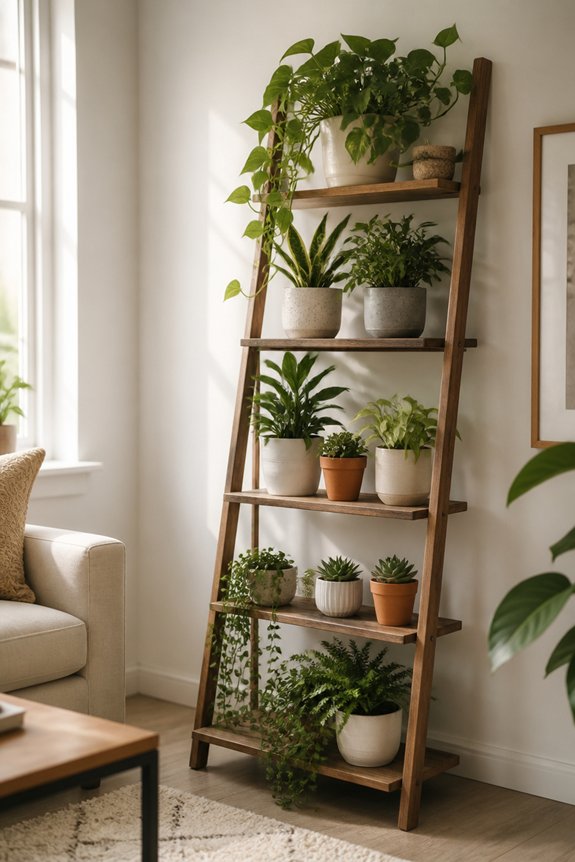
A ladder shelf offers a simple way to organize plants of different sizes while making use of vertical space. Each step can hold a separate plant, allowing larger pots to sit near the base and smaller ones toward the top. This arrangement creates a natural visual hierarchy, drawing the eye upward without crowding the floor.
Wooden ladder shelves suit rooms with a rustic or minimal look, while metal versions fit more modern interiors. Trailing plants, such as pothos or string of pearls, work well on higher rungs, letting vines cascade downward. Sturdier plants, like snake plants or ZZ plants, can anchor the lower steps.
Placing the shelf near a window guarantees consistent light exposure for all levels, keeping plant health even across the display.
Style Open Shelving With Cascading Plants and Books
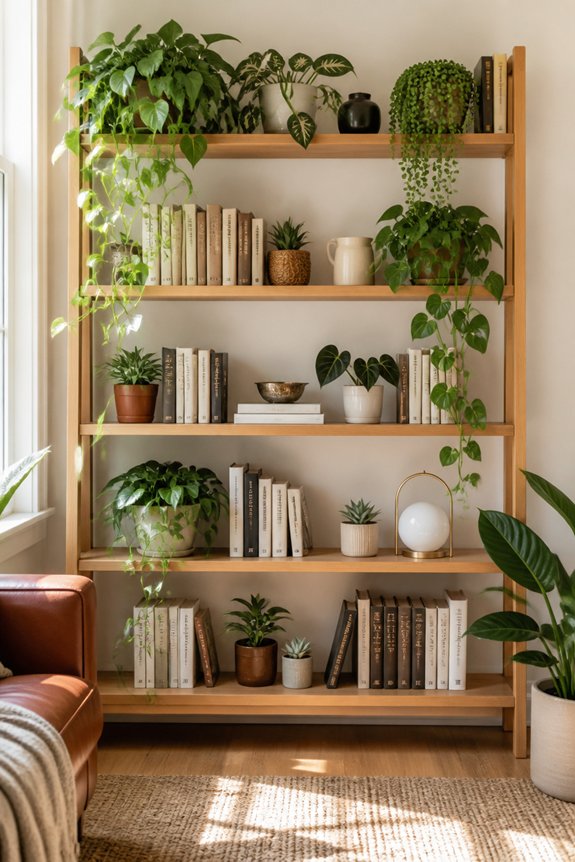
Why do open shelves so often look either cluttered or empty? The answer usually lies in balance, mixing greenery with objects rather than filling every space with one type of item.
Trailing plants, such as pothos or string of pearls, work well on upper shelves, letting vines spill downward and soften hard edges. Books can be stacked horizontally or vertically to create height variation, with small plants tucked between stacks for contrast.
Ceramic pots in neutral tones keep the display cohesive, while varying leaf shapes add visual interest without appearing busy. Leaving some negative space between groupings prevents shelves from feeling overloaded, allowing each plant and book grouping to stand out clearly against the surrounding wall.
Anchor Your Living Room With a Fiddle Leaf Fig
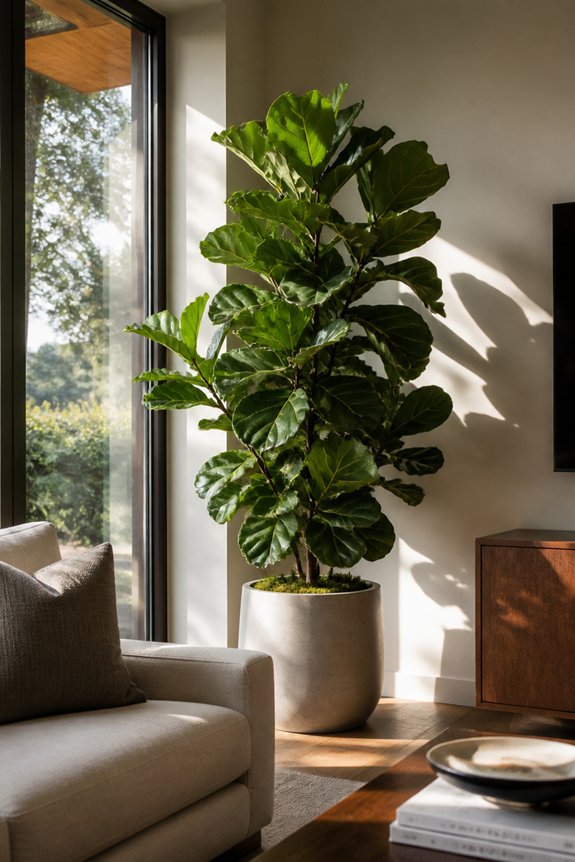
Shelves filled with trailing vines and stacked books create texture at eye level, but a living room often needs one larger feature to establish scale. A fiddle leaf fig serves this purpose, with its tall stem and broad, violin-shaped leaves drawing the eye upward.
Placing it near a window with bright, indirect light supports steady growth, while a corner spot allows the plant room to spread without crowding furniture. A simple pot in neutral tones, such as terracotta or matte white, keeps attention on the leaves rather than the container.
Positioned beside a sofa or empty wall space, the plant fills visual gaps and adds height, balancing lower furniture pieces and smaller decor accents throughout the room.
Place a Monstera Beside Your Reading Chair

Reading corners often benefit from a plant that echoes the calm, focused mood of the space, and a monstera fits that role well. Its large, split leaves add visual interest without overwhelming a small seating area, making it suitable for corners near a chair, lamp, or side table.
Placing the plant slightly behind or beside the chair allows its leaves to frame the reading nook, creating a sense of enclosure and privacy.
Monsteras tolerate moderate, indirect light, which matches the lower light levels typical of reading spaces positioned away from windows. A pot on casters allows easy repositioning for cleaning or seasonal light changes. Pairing the plant with a woven basket or ceramic planter adds texture, reinforcing a relaxed, grounded atmosphere suited to quiet activities like reading.
Bring In a Fig Tree for Vertical Space
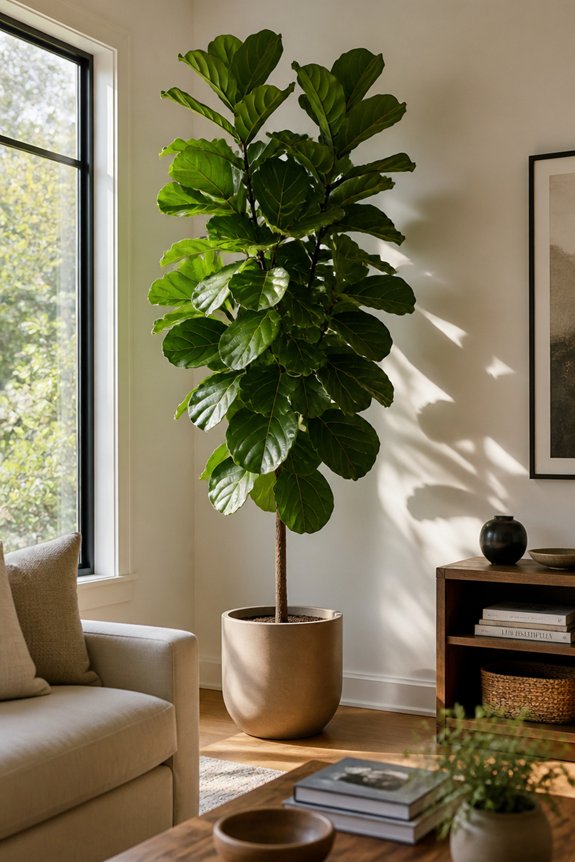
A tall corner or empty wall segment often calls for a plant that draws the eye upward, and a fiddle-leaf fig tree serves that purpose effectively. Its broad, glossy leaves create a strong vertical presence, filling unused space without requiring much floor area.
A single fig tree can act as a focal point, especially when placed near a window with bright, indirect light. Pairing it with a simple ceramic or woven basket planter keeps the look clean and understated. Rubber trees or dracaenas offer similar height and structure if a fig tree feels too demanding to maintain.
Rotating the plant occasionally helps it grow evenly, preventing it from leaning toward the light source over time.
Tuck a Snake Plant Into an Empty Corner
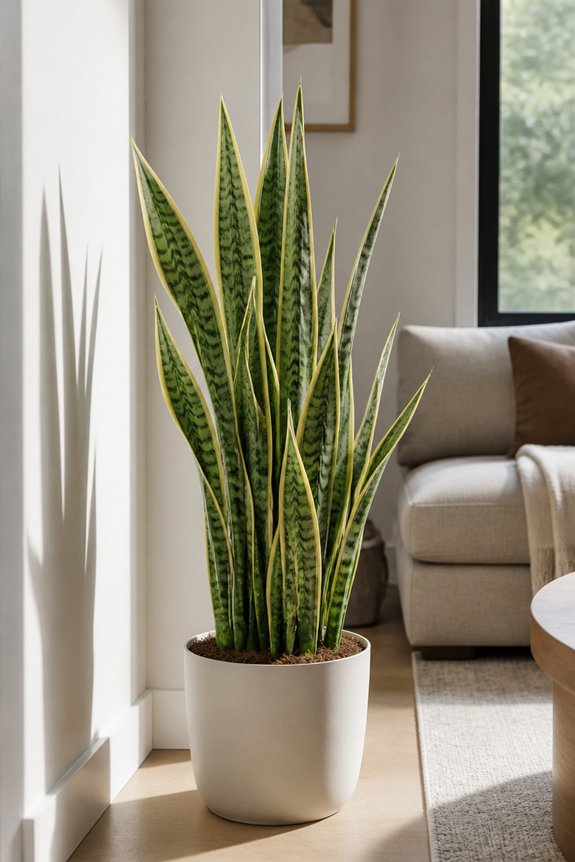
Empty corners often go unused, but a snake plant fills that gap with minimal effort, thanks to its upright, sword-like leaves and tolerance for low light. Its narrow footprint makes it suitable for tight spaces, including corners near doorways, staircases, or reading chairs, where wider plants would not fit comfortably.
Varieties like Sansevieria trifasciata or the shorter Sansevieria hahnii both work well, offering different heights depending on the available space. A tall floor planter can emphasize its vertical lines, while a simple ceramic pot keeps the look understated.
Snake plants require infrequent watering, making them practical for corners that are easy to overlook during a regular watering routine. Their stiff leaves also hold their shape without staking or additional support.
Frame Your Windows With Tall Floor Plants
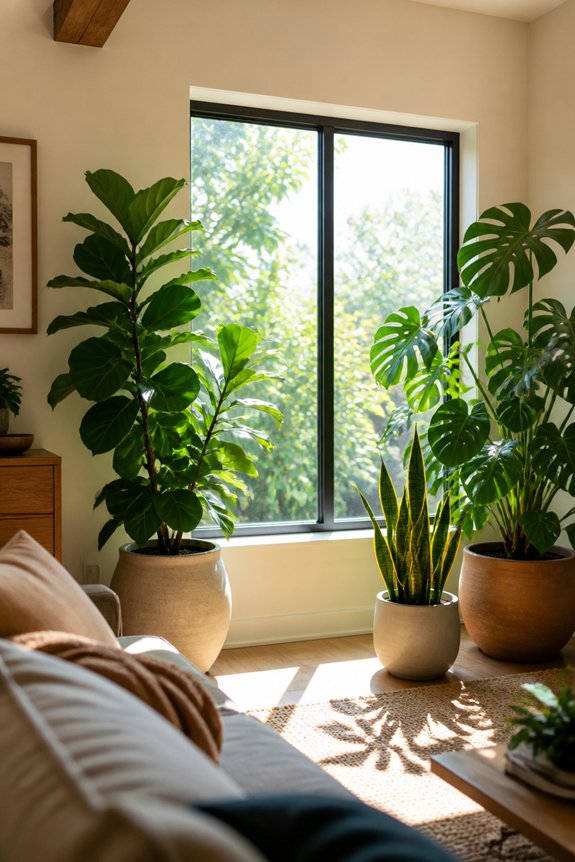
Several tall floor plants placed on either side of a window can create a natural frame that draws attention to the view outside while softening hard architectural lines. Fiddle leaf figs, rubber trees, and dracaenas work well for this purpose, since their height and upright growth patterns mimic the vertical lines of window frames.
Placing one plant on each side creates symmetry, though uneven pairings, such as a taller plant on one side and a shorter one on the other, can add visual interest. Light exposure should guide plant selection, as most tall varieties need bright, indirect sunlight to thrive near windows. Spacing plants a few inches from the glass prevents leaf scorch while maintaining the framing effect throughout the day.
Let Trailing Pothos Cascade From a Bookshelf
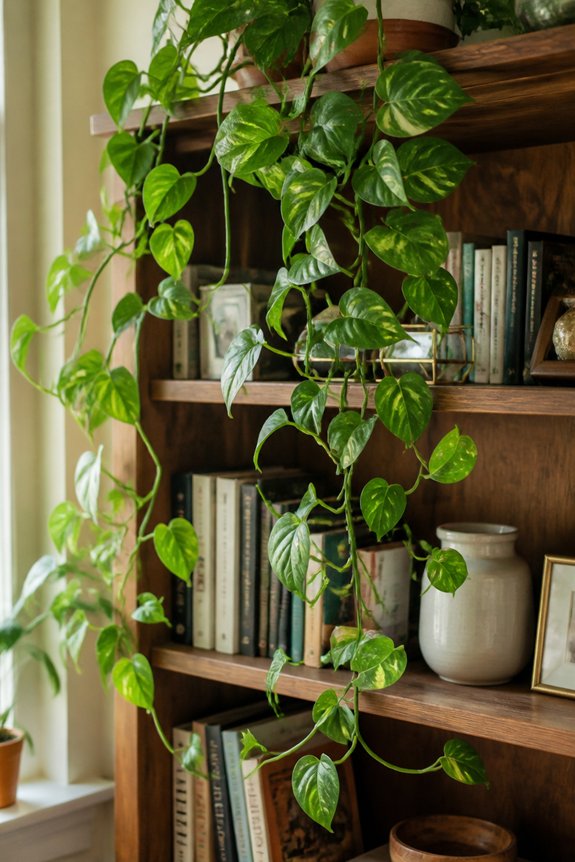
Many bookshelves benefit from the addition of a trailing pothos, whose vines spill over edges and soften the rigid lines of shelving units. Placed on a top shelf, the plant can grow downward over time, creating a layered look among books and decorative objects.
Pothos tolerates low to medium light, making it suitable for shelves positioned away from windows. Watering once the soil feels dry to the touch is usually sufficient, since overwatering can cause root rot. Trimming the vines occasionally encourages fuller growth and prevents legginess.
Placing the plant near the shelf’s edge allows the trailing effect to develop naturally, while positioning it toward the back keeps foliage from blocking access to books or frequently used items.
Add a Trailing Vine Above Your TV Console
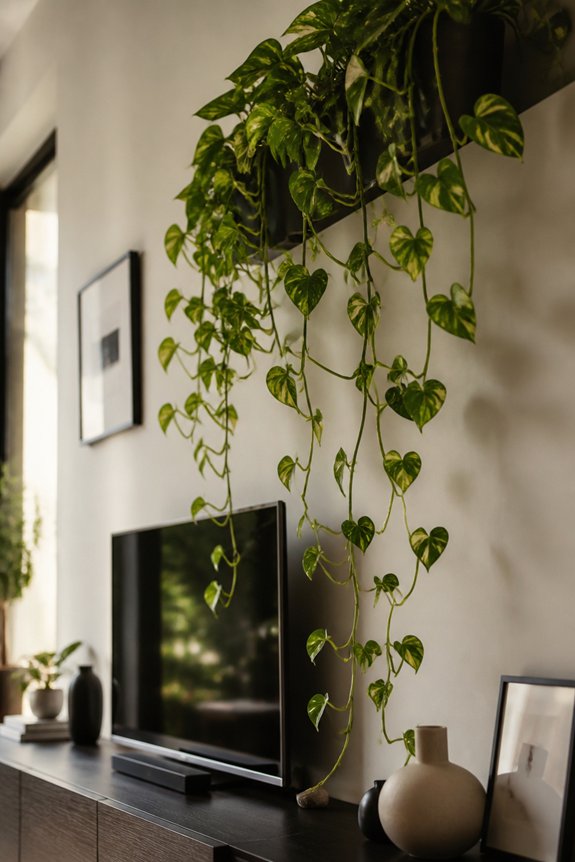
Just as a bookshelf can showcase a pothos plant’s trailing habit, the space above a TV console offers another opportunity for greenery to soften a room’s hard edges. A shelf mounted above the console, or a small cabinet placed nearby, can hold a trailing plant such as pothos, philodendron, or English ivy, letting vines drape down along the wall or around the screen.
This placement draws the eye upward and balances the visual weight of electronics and media equipment. Choosing a pot that matches the console’s finish, whether wood, metal, or ceramic, keeps the display cohesive. Regular trimming prevents vines from blocking the screen or tangling with cords, keeping the arrangement functional and tidy over time.
Use Macrame Hangers for a Boho Plant Look
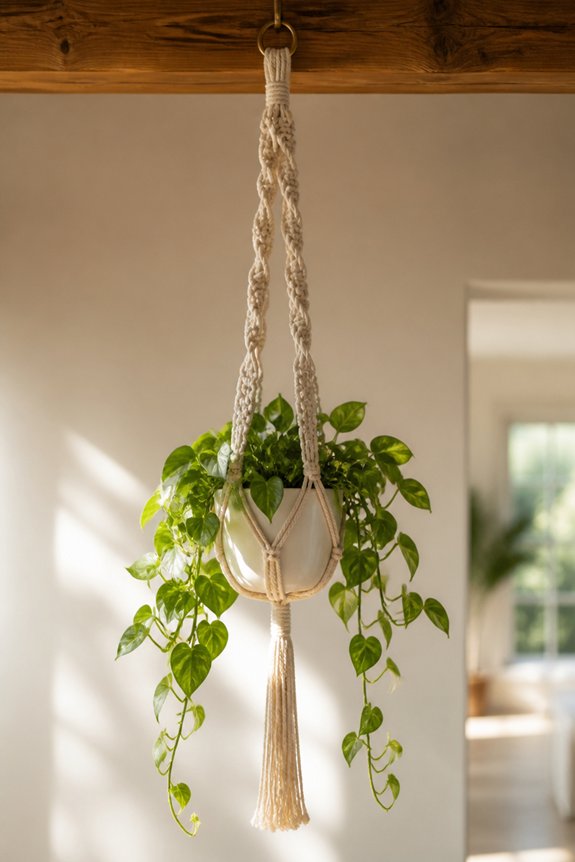
A handful of knotted cotton cords can transform an ordinary plant into a focal point, giving rooms a relaxed, bohemian character. Macrame hangers add texture and warmth, filling empty corners or window spaces without requiring floor or shelf space.
Pothos, spider plants, and ferns work well in these hangers, since their trailing or bushy leaves complement the woven patterns below them. Hanging height matters, as pieces placed at eye level draw attention, while lower placements create a cozier feel near seating areas.
Natural fiber cords, in shades of cream or brown, pair easily with wood furniture and neutral walls. Multiple hangers, grouped at varying lengths, produce a layered look often associated with boho interiors, adding depth without cluttering the room.
Pair Plants With Woven Baskets for Contrast
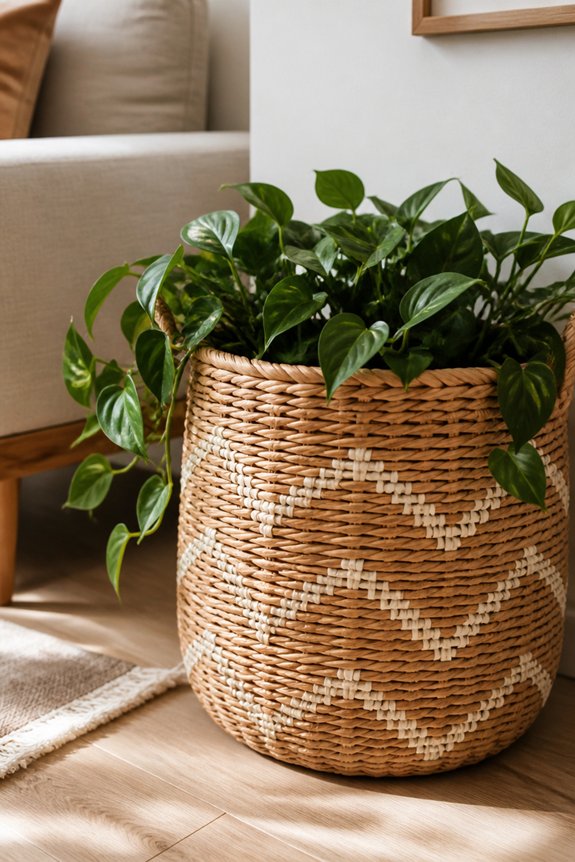
Woven baskets offer a grounded counterpart to the airy look of hanging macrame, bringing texture back down to floor level and tabletops. Their natural fibers, such as seagrass, rattan, or water hyacinth, contrast well with the smooth leaves of plants like pothos, snake plants, or rubber trees. Placing a basket around a plastic nursery pot hides unattractive containers while adding warmth to a room.
Baskets also work well grouped in odd numbers, varying in height and width, to create visual interest without appearing cluttered. Darker woven baskets pair effectively with lighter-colored walls, while lighter baskets stand out against deeper tones. This combination suits living rooms, corners, or shelving units where plants need both support and style.
Repurpose Vintage Containers as Unique Planters

While woven baskets bring texture to floor-level displays, vintage containers introduce character and history to plant arrangements, turning ordinary greenery into a conversation piece. Old teapots, enamelware pitchers, tin washtubs, and glass apothecary jars can all serve as planters, provided drainage is addressed with holes or a hidden inner pot.
Flea markets, estate sales, and family attics often hold pieces suited to this purpose, each carrying its own patina and story. Mismatched vintage finds work well grouped together, creating an eclectic display rather than a uniform one. A weathered galvanized bucket suits a trailing pothos, while a cracked ceramic pitcher might hold a small fern. These containers add visual interest without requiring new purchases, making them a practical and resourceful decorating choice.
Match Planter Colors to Your Living Room Palette
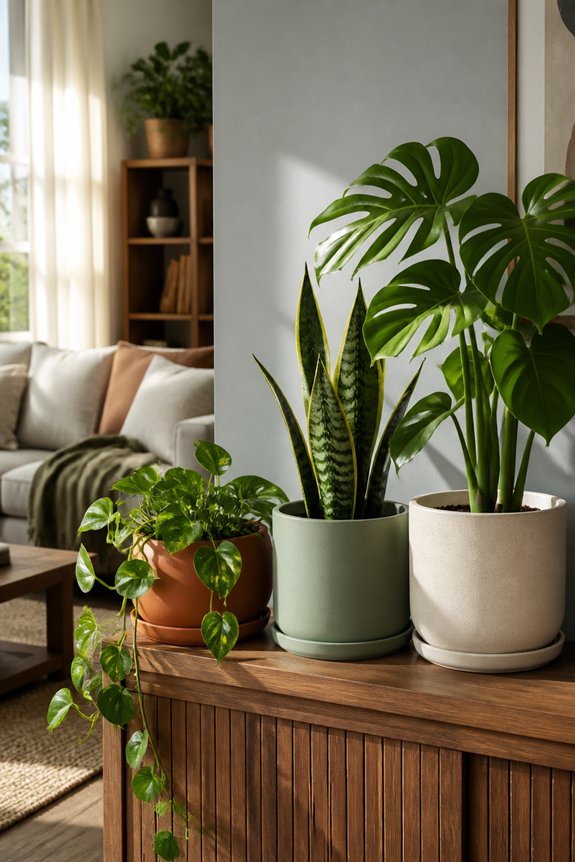
Once a room’s color scheme is established, planters can be chosen to reinforce it rather than compete with it, creating a cohesive look throughout the space.
Neutral rooms with beige, gray, or white tones benefit from terracotta, black, or white ceramic planters, which blend easily without adding visual clutter. For rooms with bolder palettes, planters in complementary shades, such as navy blue pots against mustard walls, or sage green containers paired with rust-colored accents, can tie the plant into the existing design. Metallic finishes, including brass or copper, work well in rooms with warm tones, while matte black suits more modern, monochrome spaces.
Matching planter color to trim, furniture, or accent pillows also creates a subtle, unified appearance.
Build a Living Room Jungle Corner With Greenery

Beyond selecting the right planter colors, an unused corner of a living room can be turned into a dense, layered display of greenery that mimics a small indoor jungle. Height and depth matter most, so a tall plant like a fiddle leaf fig or areca palm should anchor the back, with medium-sized options such as pothos or philodendron filling the middle ground.
Trailing vines, including string of hearts or ivy, can spill over shelves or plant stands to soften hard edges. Grouping pots of varying sizes, textures, and leaf shapes, from broad monstera leaves to feathery ferns, adds visual complexity. Placing plants at different heights, using stands, hanging baskets, or stacked crates, creates the layered effect associated with jungle-style corners.
Create a Plant Stand Vignette Beside the Sofa

A few square feet of floor space beside a sofa can hold a small plant stand vignette that adds height and structure without crowding the seating area. A tiered wooden stand, or a cluster of stands at varying heights, creates visual interest while keeping plants organized.
Pairing a tall specimen, such as a fiddle leaf fig or dracaena, with smaller trailing plants like pothos or ivy adds contrast between vertical and cascading forms. Materials matter, as rattan, metal, or painted wood stands can match existing furniture finishes.
Grouping three plants of different heights, rather than one large plant, gives the vignette more dimension. Placing the arrangement near natural light, but clear of foot traffic, keeps the display functional and easy to maintain.
Style a Gallery Wall Around One Large Plant
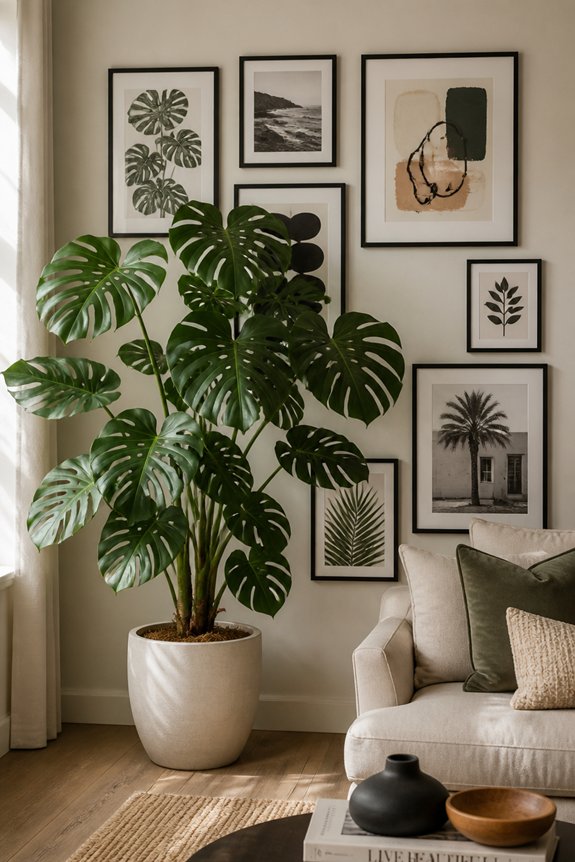
Wall space above a plant stand or in an empty corner offers another opportunity to build a display, this time using framed art instead of furniture. A large plant, such as a fiddle leaf fig or bird of paradise, works well as the anchor beneath a cluster of frames.
Arrange five to seven pieces in mixed sizes, keeping frame finishes consistent, such as black or natural wood, to unify the look. Botanical prints, line drawings, or personal photographs all pair well with greenery.
Leave several inches between frames for balance, and let the plant’s foliage overlap slightly into the lower edge of the grouping. This combination softens the wall while giving the plant a defined backdrop rather than a bare surface.
Build a Terrarium as a Coffee Table Centerpiece
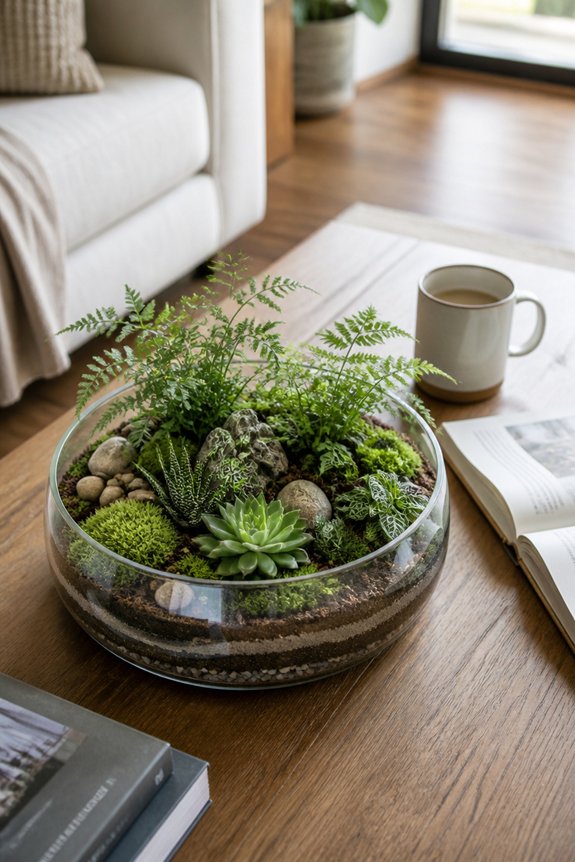
Several layers of material transform a simple glass container into a self-contained miniature landscape suited for a coffee table. A base of small stones supports drainage, followed by a thin layer of activated charcoal to control odor, then potting soil suited to small plants like moss, ferns, or succulents.
Low-growing varieties work best, since height should stay proportional to the container’s size. Glass shapes vary, including apothecary jars, fishbowls, or geometric terrariums with clean lines. Small decorative elements, such as pebbles, miniature figurines, or driftwood, add visual interest without overwhelming the space.
Placement on a coffee table allows viewing from multiple angles, making symmetry and balance in the arrangement noticeable from any seat in the room.
Line a Windowsill With Trailing Succulents

Certain succulent varieties, including string of pearls, burro’s tail, and string of hearts, produce long, cascading stems that drape naturally over a windowsill’s edge. Placed in small pots along a sill, these plants create a layered, textured look while relying on the same sunlight source, since most succulents need several hours of direct light daily.
Terra cotta or ceramic pots with drainage holes work well, as trailing succulents are prone to root rot if water collects at the base. Grouping different varieties together adds visual contrast, mixing bead-like foliage with flatter, leaf-shaped stems.
Regular rotation of the pots helps stems grow evenly rather than leaning toward one direction. This arrangement suits living rooms with south- or west-facing windows, where light levels remain consistently strong throughout the day.
Choose Low-Light Plants Like Snake Plant or ZZ Plant
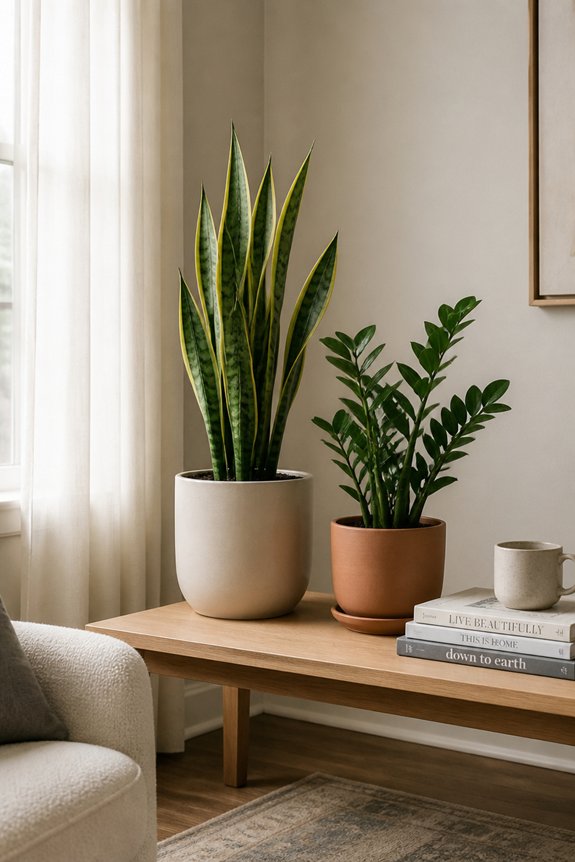
Adaptability makes snake plants and ZZ plants practical choices for rooms with limited natural light, including interior offices or north-facing spaces. Both species tolerate infrequent watering, low humidity, and inconsistent light, making them suitable for busy households or forgetful caretakers.
Snake plants feature upright, sword-shaped leaves in shades of green, sometimes edged with yellow, adding vertical structure to a living room corner. ZZ plants offer glossy, dark green foliage with a naturally symmetrical, almost sculptural form, suiting minimalist or modern interiors.
Both plants store water in their roots and stems, reducing the need for frequent watering, and can survive weeks of neglect without visible decline. Placement near bookshelves, media consoles, or empty corners fills space without requiring additional light sources.
Layer Faux Plants With Real Ones for Fuller Coverage
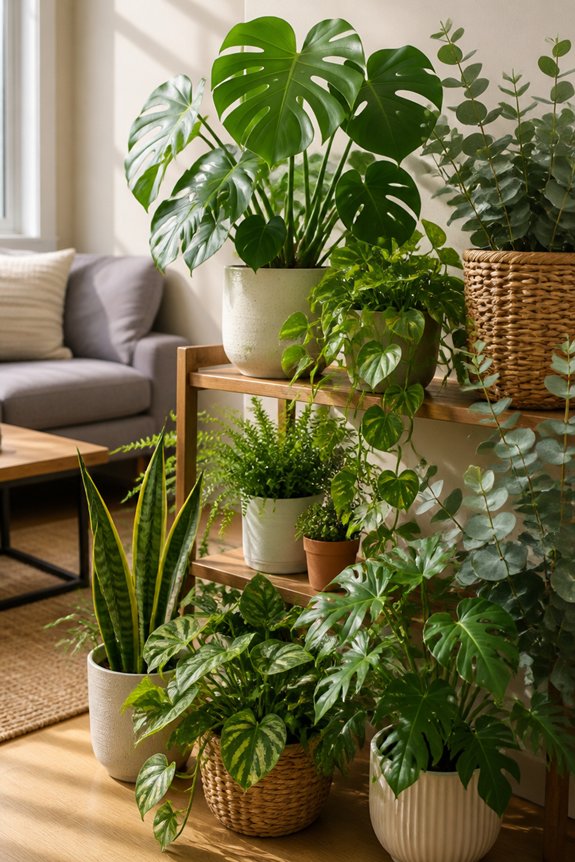
Because real plants sometimes leave gaps on shelves or in corners where light or space limits growth, mixing in faux varieties can round out the display without extra maintenance. High-quality artificial ferns, trailing pothos, or small succulents can fill dim corners, high shelves, or spots near vents where live plants often struggle.
Placing faux fiddle leaf figs or palms behind real ones adds height and fullness while keeping upkeep manageable. Choosing textures and leaf shapes that match nearby live plants helps the combination look cohesive rather than mismatched. Rotating faux pieces occasionally, dusting leaves, and varying pot styles can also help maintain a natural appearance.
This layered approach allows a living room to appear lush and balanced, even in areas where sunlight or humidity would otherwise limit real plant growth.
Rotate Seasonal Plants for a Refreshed Living Room
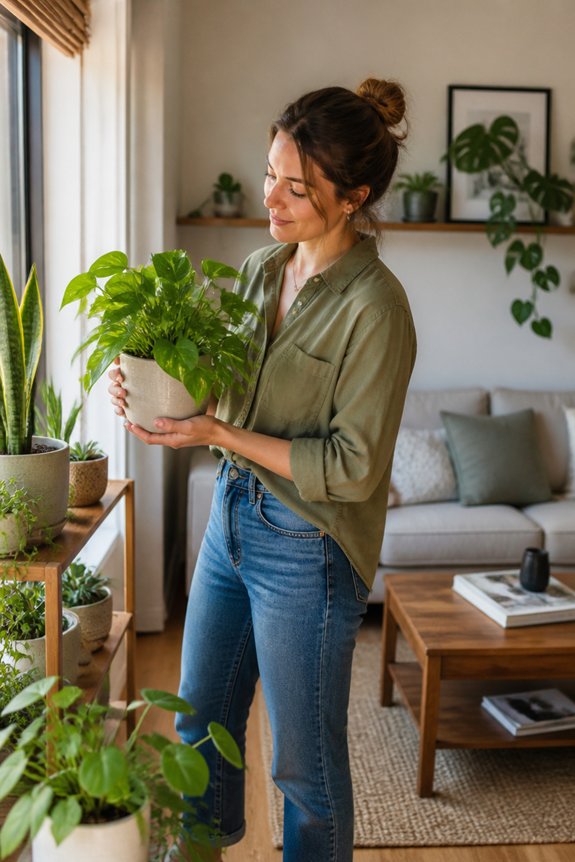
As seasons change, swapping certain plants in and out of the living room keeps the space feeling current and connected to the time of year. In spring, flowering plants like azaleas or hyacinths introduce color and softness. Summer allows for lush, leafy greenery, such as ferns or palms, to emphasize a fuller, tropical look. Fall calls for warmer tones, achieved through plants like croton or mums, which echo the season’s natural palette.
Winter often favors evergreens, including rosemary topiaries or small pines, for a subtle festive touch. Rotating plants seasonally also allows for rest periods for those needing less light or attention. Storing dormant plants elsewhere during their off months helps maintain their health while keeping the living room display relevant and well-suited to the time of year.
Use Mirrors to Double Your Living Room Greenery

How can a small room feel larger without adding furniture? Placing a mirror near indoor plants creates visual depth, reflecting leaves and stems to make greenery appear doubled. A large mirror positioned across from a plant cluster, such as a group of pothos or snake plants, extends the sense of space while adding brightness to darker corners. Mirrors also bounce natural light toward plants, supporting healthier growth in rooms with limited windows.
Leaning a floor mirror behind a fiddle-leaf fig, or hanging a round mirror above a shelf of succulents, multiplies the visual impact without requiring more plants. This approach works well in narrow living rooms, where reflected greenery softens hard lines and balances furniture arrangements. Choosing frames that match existing decor keeps the effect cohesive rather than distracting.
Frequently Asked Questions
How Often Should I Water Indoor Plants in a Living Room?
Watering frequency depends on plant type, light, and season—typically once every one to two weeks. Soil should dry slightly between waterings. Checking topsoil moisture before watering prevents overwatering, ensuring healthier roots and long-term indoor plant health indoors.
What Are the Best Fertilizers for Healthy Indoor Plant Growth?
Studies show 70% of indoor plants suffer nutrient deficiency from improper feeding. Balanced liquid fertilizers (10-10-10 NPK), applied monthly during growing seasons, work best. Organic options like compost tea or worm castings provide gentler, sustained nourishment without risking root burn or chemical buildup.
How Do I Get Rid of Pests on Houseplants Naturally?
Neem oil sprays, insecticidal soap, and wiping leaves with diluted alcohol effectively eliminate common pests like aphids and mealybugs. Introducing beneficial insects, isolating affected plants, and maintaining proper humidity levels also help prevent infestations without relying on harsh chemical treatments.
Which Plants Are Safe for Homes With Pets or Children?
Pet- and child-safe options include spider plants, Boston ferns, areca palms, calathea, and parlor palms. These non-toxic varieties pose minimal risk if chewed or touched, making them suitable choices for households with curious pets or young children.
How Much Sunlight Do Most Indoor Plants Actually Need?
Most indoor plants thrive with bright, indirect sunlight for several hours daily. Placement near east- or north-facing windows works well, avoiding harsh direct rays. Low-light varieties tolerate dimmer corners, while succulents and cacti prefer brighter, sunnier spots.
Conclusion
These 25 ideas show that decorating with plants requires attention to grouping, height, texture, and light needs. Odd-numbered clusters, ladder shelves, and macramé hangers create visual interest, while snake plants and ZZ plants offer practical, low-maintenance solutions. Mixing faux and real plants, along with seasonal rotation, keeps a living room adaptable, much like updating a room’s decor with the reliability of a telegraph message: simple, effective, and built to last.