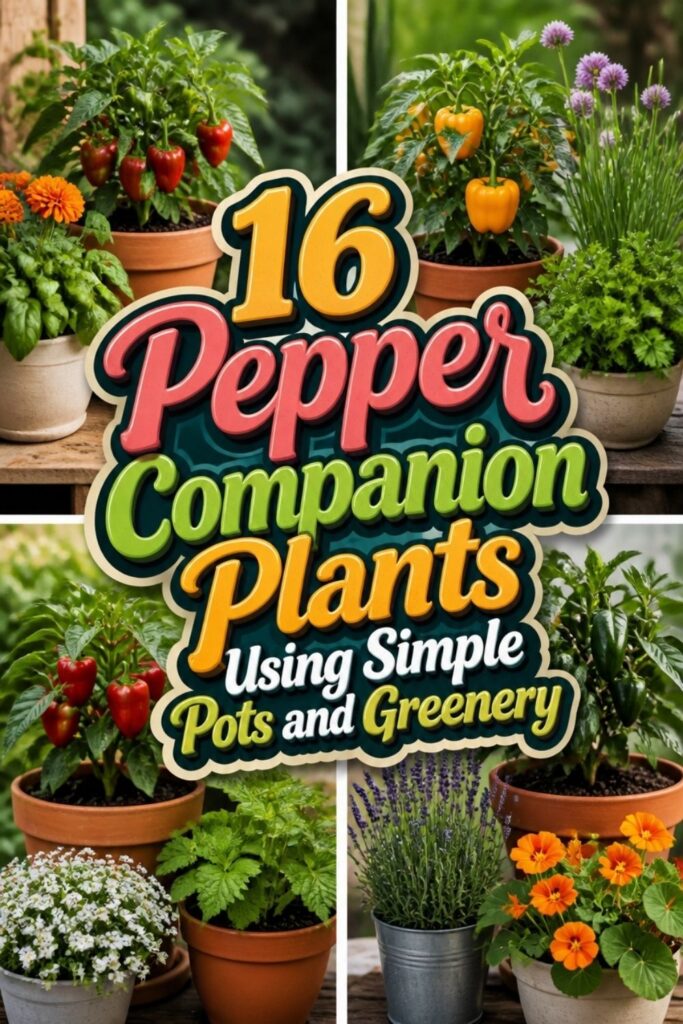
Growing peppers in containers becomes far more rewarding with thoughtful companion planting. Choosing the right Pepper Companion Plants can help you make better use of limited growing space. Basil and parsley do more than season your kitchen. They add variety around your peppers, while marigolds bring cheerful color and draw in pollinators.
Lettuce, carrots, and radishes can make useful neighbors for potted peppers because their shallow root systems use the soil differently from deeper pepper roots. This layered approach helps you make the most of every inch of container space. The result is a small but thriving ecosystem right on your patio or balcony.
Not every pairing succeeds without attention, though. Some Pepper Companion Plants need regular pruning or careful watering schedules to prevent crowding and other growing problems.
A few minutes of observation each week can help keep everything balanced and productive.
Give Every Plant Enough Room
Start with a container large enough to support the pepper and its companions without crowding their roots. Pairing peppers with shallow-rooted crops such as lettuce, radishes, or carrots can help you use the available soil more efficiently.
Choose companions with similar light and moisture preferences whenever possible. Peppers perform best with plenty of sun, so nearby plants should not create excessive shade or compete heavily for water.
Watch the container as everything grows. Regular pruning and a quick weekly check can prevent vigorous herbs or flowers from crowding the pepper and restricting airflow.
Basil: The Classic Flavor and Pest-Control Pairing
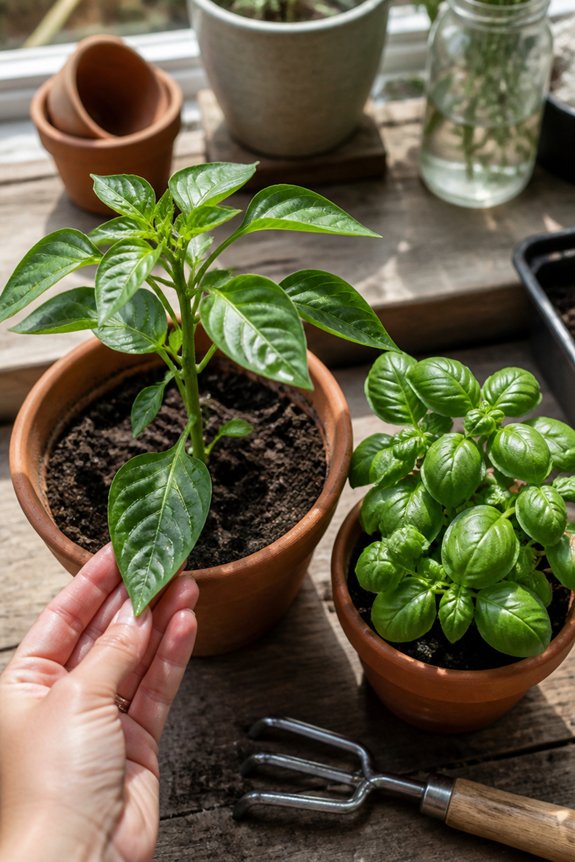
Basil grows well alongside pepper plants, offering two main advantages: improved flavor and natural pest management. The herb repels aphids, spider mites, and flies that commonly damage peppers. Gardeners plant basil in nearby pots or adjacent soil spaces.
Both plants thrive in warm conditions, requiring six to eight hours of sunlight daily. This combination maximizes garden efficiency while reducing pest control needs considerably.
Parsley: Boost Nutrients While Sharing Container Space
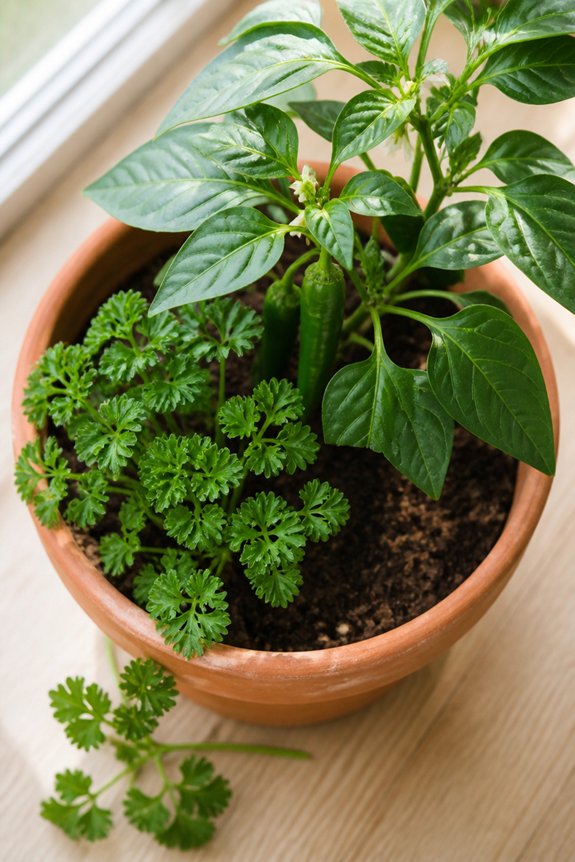
Parsley serves as an effective companion plant for peppers, particularly when grown in shared containers, because it enhances soil nutrient availability while occupying minimal space. The herb’s deep roots access nutrients peppers need, while its compact foliage prevents overcrowding.
Parsley attracts beneficial insects that control pests affecting pepper plants. Together in a single pot, these plants create an efficient growing system requiring minimal additional resources.
Marigolds: Natural Pest Deterrent for Healthier Peppers
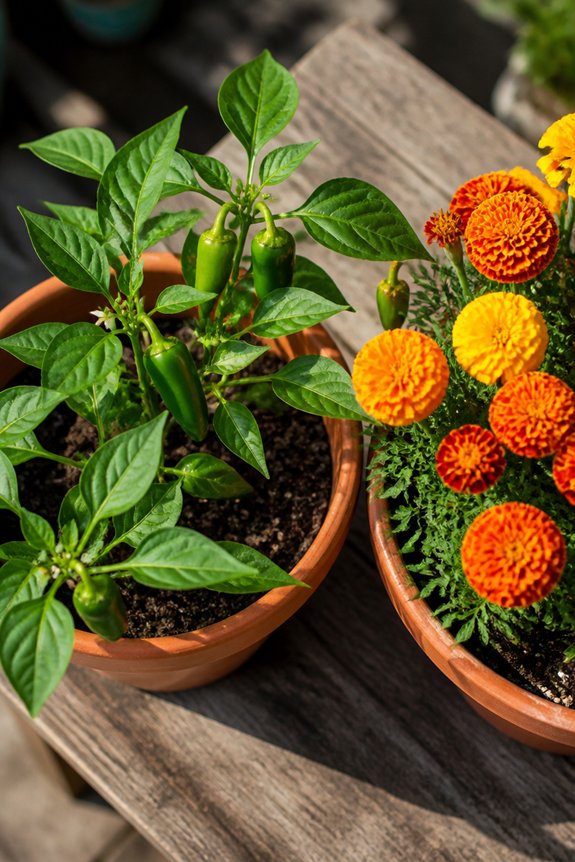
Among the most effective companion plants for pepper cultivation, marigolds serve as a natural barrier against common garden pests. These flowers repel aphids, spider mites, and whiteflies through their distinct odor. Planting marigolds adjacent to pepper containers creates a protective zone.
The bright blooms also attract beneficial insects like ladybugs, which consume harmful pests, promoting healthier pepper growth.
Onions and Garlic: Underground Allies Against Common Pests
Beneath the soil surface, onions and garlic work to protect pepper plants from harmful insects and diseases. These bulbs release sulfur compounds that repel aphids, spider mites, and fungal infections.
Planting onions and garlic nearby creates a natural barrier, reducing pest problems without chemical treatments. Both vegetables thrive in similar conditions to peppers, making them practical companion choices for container gardening.
Carrots: Root Companions That Won’t Compete for Resources
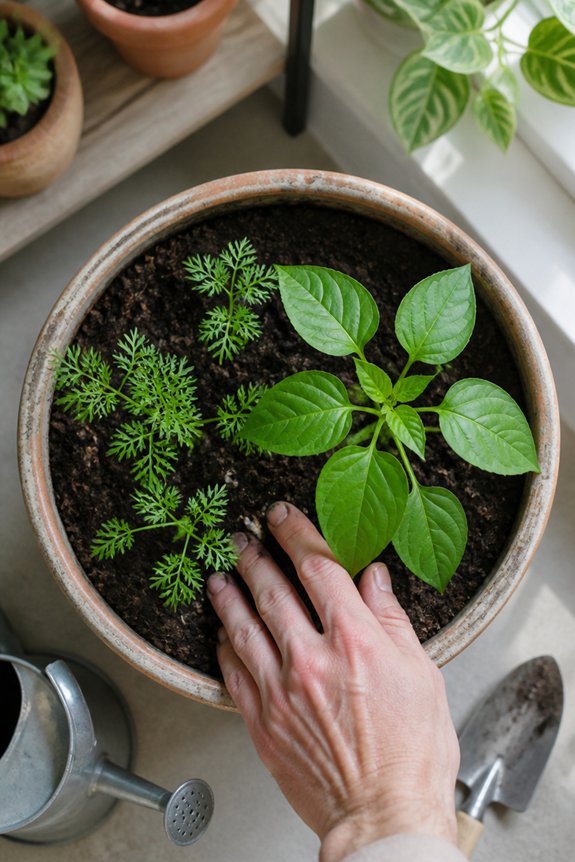
Most gardeners find carrots to be excellent companions for peppers because their root systems occupy different soil depths. Carrots develop shallow, fibrous roots, while peppers extend deeper into the soil. This arrangement eliminates competition for nutrients and water.
The two plants can grow adjacent to each other in containers or garden beds without requiring additional spacing or special care adjustments.
Lettuce and Spinach: Low-Growing Shade Partners for Pepper Containers
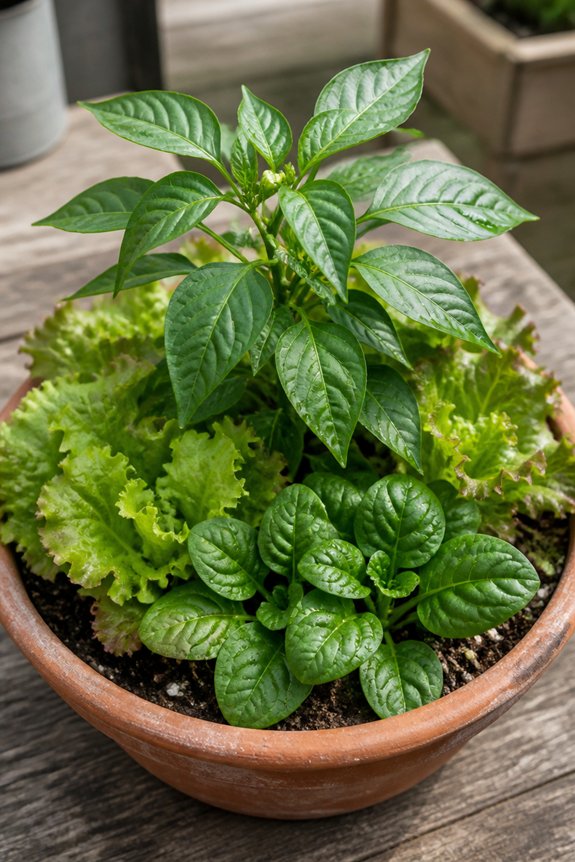
Lettuce and spinach function as useful understory plants for pepper containers, filling space beneath pepper foliage while creating beneficial growing conditions. These low-growing greens tolerate partial shade cast by pepper plants, reducing water evaporation from soil.
They mature quickly, allowing successive harvests before peppers dominate container space. Their shallow root systems avoid competing with pepper roots for nutrients and moisture.
Borage: Attract Pollinators and Repel Hornworms
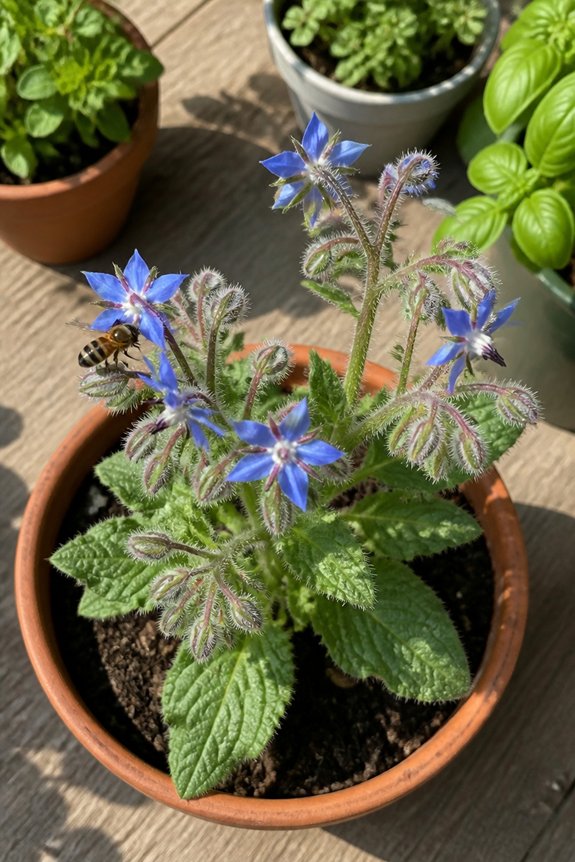
Borage plants deliver dual benefits to pepper containers through pollinator attraction and pest deterrence. The blue flowers draw bees and other pollinators, improving pepper fruit set. Additionally, borage repels hornworms, a common pepper pest.
Gardeners plant borage near pepper containers, allowing it to grow 2-3 feet tall. This companion thrives in full sun and requires minimal maintenance once established.
Cilantro: Maximize Flavor While Minimizing Pests
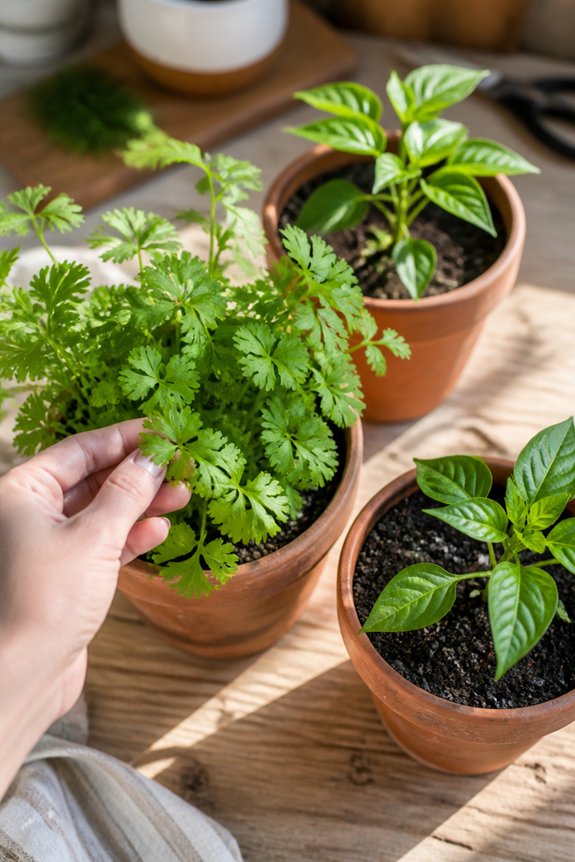
Why should gardeners consider cilantro as a pepper companion plant? Cilantro repels spider mites, aphids, and potato beetles while attracting beneficial parasitic wasps. The herb grows quickly in simple pots alongside peppers, sharing similar watering needs.
Cilantro’s strong aroma masks pepper plants from certain pests. Gardeners harvest leaves regularly, promoting bushier growth and continuous pest management benefits throughout the growing season.
Chives: Subtle Defense and Continuous Harvests
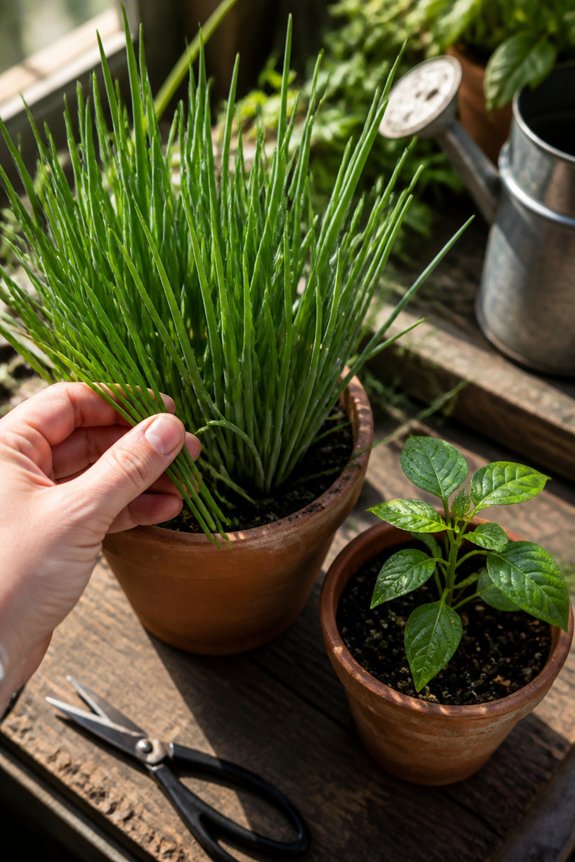
Although chives lack the strong aroma of cilantro, they still offer pest deterrent properties when planted near peppers. Chives repel aphids and spider mites through their subtle onion scent. Gardeners benefit from continuous harvests by snipping outer leaves regularly, which promotes new growth.
The plants thrive in simple pots alongside pepper containers, requiring minimal maintenance and space.
Thyme: Compact Herb That Repels Spider Mites
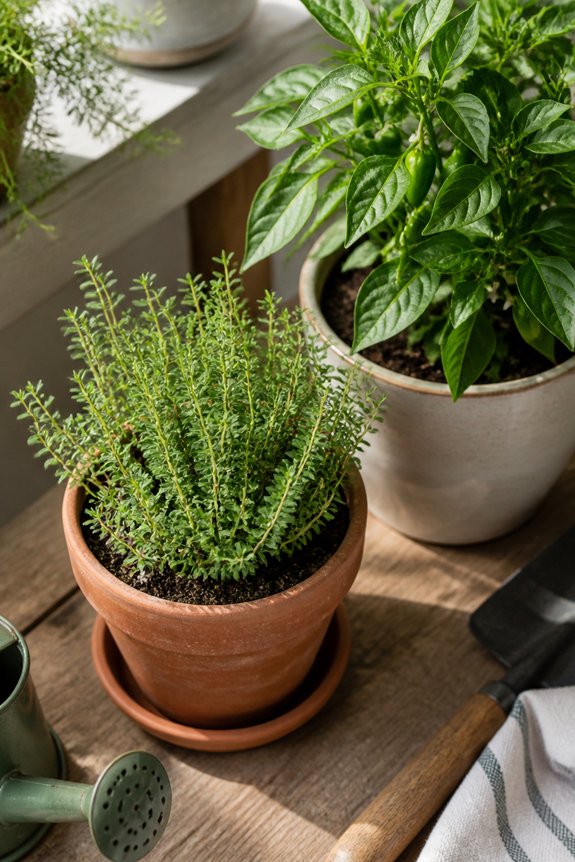
Thyme serves as a compact herb that gardeners can position near pepper plants to manage spider mite infestations. The plant’s aromatic oils create an inhospitable environment for spider mites, reducing pest pressure naturally.
Thyme requires minimal space, thrives in containers alongside peppers, and tolerates similar growing conditions. Gardeners can harvest thyme leaves for culinary use while maintaining its pest-management benefits throughout the growing season.
Oregano: Spreading Ground Cover That Deters Pests
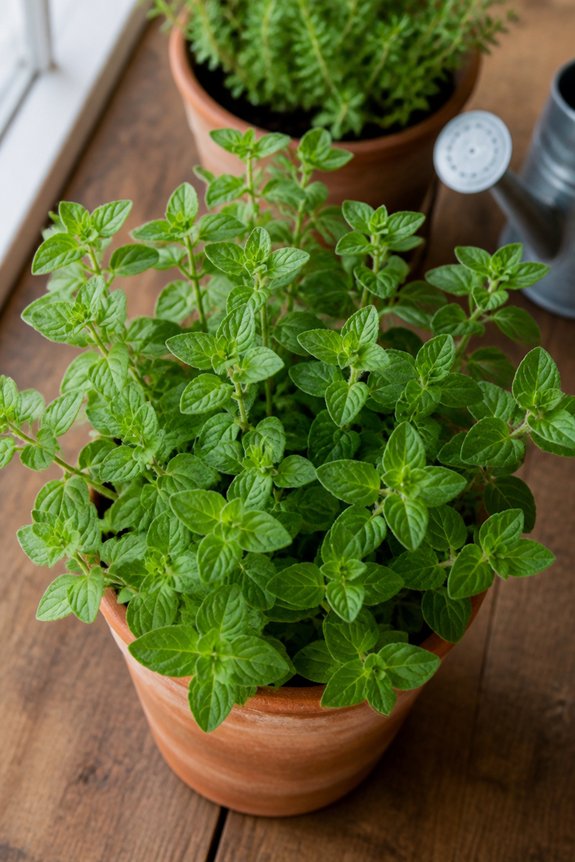
Oregano offers gardeners another aromatic herb option, one that spreads across ground space while protecting pepper plants from common garden pests. The herb deters aphids, spider mites, and beetles through natural oils in its leaves.
Oregano thrives in containers alongside peppers, requiring minimal water and full sunlight. Its low-growing habit prevents soil-borne diseases while maximizing pot space efficiency.
Calendula: Pest Trap and Medicinal Neighbor
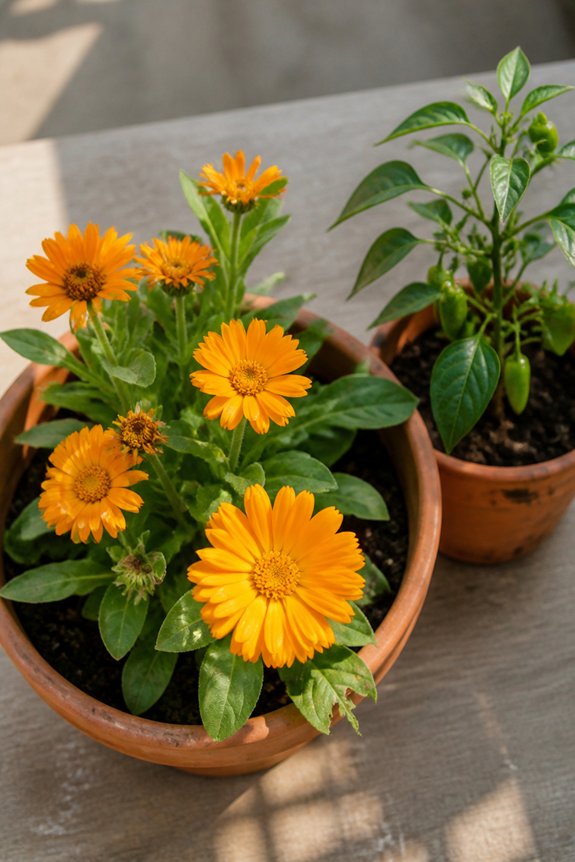
Calendula flowers serve dual purposes in pepper gardens, functioning as both pest deterrents and beneficial companions. These bright orange and yellow blooms attract aphids, spider mites, and whiteflies away from pepper plants.
Gardeners can plant calendula in surrounding pots or directly nearby soil. Beyond pest control, calendula petals offer medicinal properties, providing harvestable material for teas and salves alongside pepper cultivation.
Nasturtiums: Sacrificial Plant That Protects Your Peppers
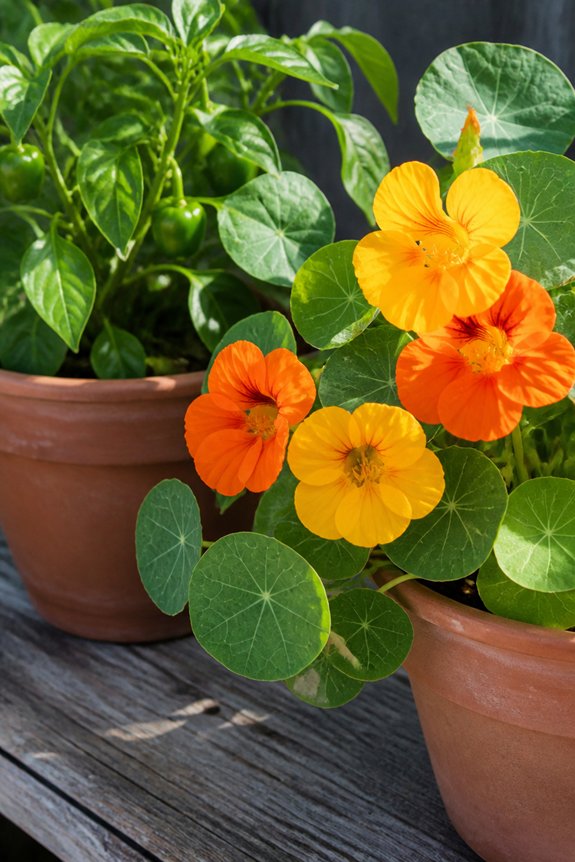
While calendula draws pests away through attraction, nasturtiums operate by an opposing strategy, deliberately sacrificing themselves to protect pepper plants nearby. Nasturtiums attract aphids, spider mites, and whiteflies, which feed on the nasturtium leaves instead of pepper foliage.
Gardeners plant nasturtiums around pepper beds as buffer plants. The nasturtiums sustain pest damage while peppers remain largely unharmed, making this an effective biological pest management approach.
Dill: Beneficial Insect Magnet in Compact Containers
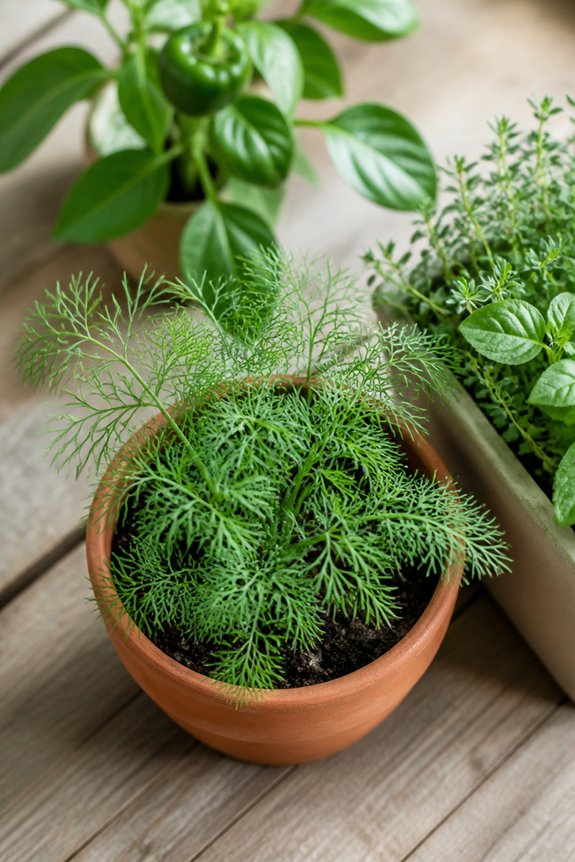
Dill serves as an effective companion plant for peppers by attracting beneficial insects that prey on common pepper pests. The herb draws parasitic wasps and ladybugs, which feed on aphids, spider mites, and thrips.
Dill grows well in compact containers alongside pepper plants. Its delicate foliage requires moderate sunlight and regular watering to thrive in confined spaces.
Tomatoes: The Risky Companion Plant (And How to Make It Work)
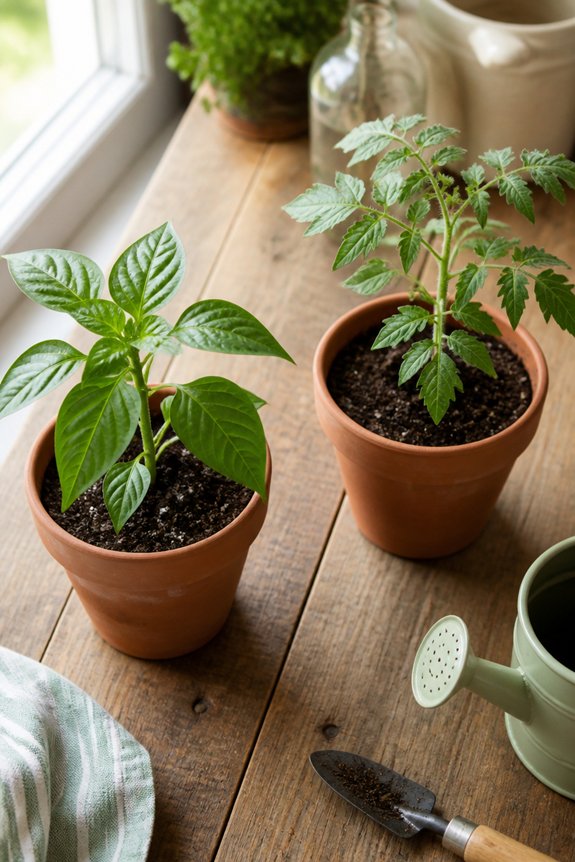
Why would gardeners plant tomatoes near peppers when these popular garden vegetables compete for similar resources? Both crops require substantial nitrogen, water, and sunlight.
However, spacing them adequately, ensuring proper air circulation, and staggering watering schedules can minimize competition. Gardeners may separate plants by two feet, allowing each adequate growing room. This method reduces disease risk while permitting successful coexistence in container gardens.
Turnips and Radishes: Quick Crops, Zero Competition
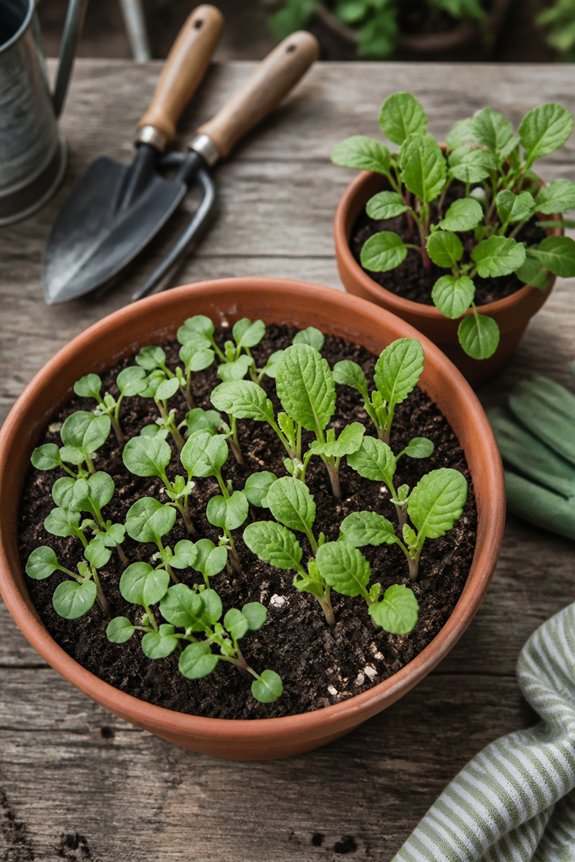
Because turnips and radishes mature rapidly, they occupy garden space for only six to eight weeks before harvest, making them ideal companions for peppers. These root crops don’t compete for nutrients or sunlight with pepper plants.
Gardeners can succession plant radishes every two weeks, harvesting multiple crops before peppers reach full size. This arrangement maximizes container space efficiently.
Frequently Asked Questions
What Is the Ideal Pot Size for Growing Peppers With Companion Plants Together?
A gardener should select a container measuring at least five gallons or twelve inches in diameter per pepper plant. When combining companion plants, one should increase the pot size to ten gallons, providing adequate space for root systems and nutrient distribution.
How Often Should I Water Pepper Containers With Multiple Companion Plants?
One gardener reaches for the watering can just as the soil surface turns dry to the touch. Container peppers with companions typically need watering every two to three days, depending on temperature and humidity levels, ensuring consistent moisture without waterlogging.
Can I Grow Companion Plants With Peppers Indoors Under Grow Lights?
Yes, one can successfully grow companion plants with peppers indoors under grow lights. Proper light intensity, duration, and spectrum are essential. Basil, parsley, and marigolds thrive alongside peppers when provided adequate illumination and maintained at appropriate distances from light sources.
What Soil Mixture Works Best for Peppers and Their Companion Plants?
A well-draining soil mixture of equal parts peat moss, perlite, and compost works effectively for peppers and companions. This combination guarantees adequate moisture retention while preventing root rot, promoting healthy growth for both plants sharing containers.
How Much Sunlight Do Pepper Containers Need Daily for Optimal Growth?
Peppers persistently produce prolifically when positioned in prominent, plentiful sunlight. Containers require approximately six to eight hours of direct daily light for ideal growth. This photoperiod promotes robust root development and abundant fruit formation throughout the growing season.
Conclusion
Companion planting with peppers in containers offers practical benefits for gardeners managing limited space. Studies show that diverse planting arrangements increase pest resistance by up to 30 percent, reducing pesticide needs. Basil, marigolds, and radishes work effectively alongside peppers, maximizing yield through strategic pot arrangements. This method requires minimal equipment, making it accessible for beginners and experienced gardeners alike seeking sustainable, productive growing systems.