

A healthy space for Plants Around Chicken Coop areas starts with thoughtful plant selection. Herbs such as basil, oregano, and thyme add fragrance and variety while helping create a more useful environment around the run.
Leafy greens also deserve a place in the setup. Spinach, kale, and Swiss chard provide fresh vegetation that chickens may enjoy pecking. Growing them in pots makes rotation and harvesting easier while protecting the main garden beds.
Ground covers can fill bare areas around the coop. Clover is a popular option that supports soil health and encourages natural foraging behavior. It can also help create a softer, greener landscape around frequently used areas.
The best Plants Around Chicken Coop spaces combine herbs, leafy greens, and suitable ground covers. Thoughtful placement helps create an attractive area that works well for both the garden and the flock.


Protect Plants From Curious Chickens
Think about access before placing pots around the coop. Chickens may peck leaves, scratch soil, or knock over lightweight containers, so sturdy pots and protected positions can keep young plants from being destroyed too quickly.
Keep edible greens within reach when you want the flock to forage, but place herbs and newly established plants slightly farther away until they are strong enough to handle attention. Rotating containers also gives heavily grazed plants time to recover.
Choose locations with enough sunlight and convenient access to water. A practical arrangement makes harvesting, watering, and moving containers much easier while keeping the coop area tidy.
Best Herbs to Plant Around Your Chicken Coop
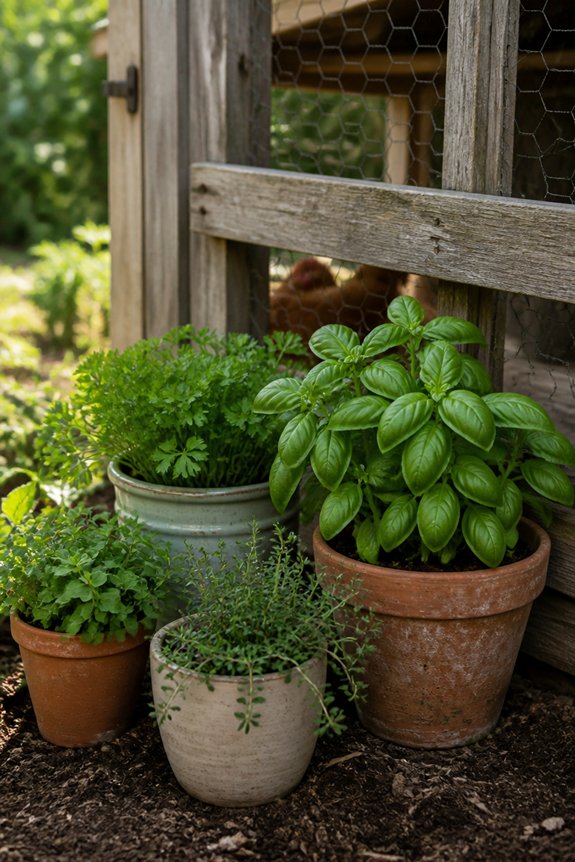
Several herbs offer practical benefits when planted around chicken coops, including pest control, improved chicken health, and natural fly deterrents. Oregano, basil, and thyme repel insects effectively. Mint deters rodents and flies. Lavender reduces stress in chickens. Garlic and chives combat parasites.
These herbs tolerate container growing and require minimal maintenance, making them suitable additions to coop environments.
Setting Up Simple Pots for Success
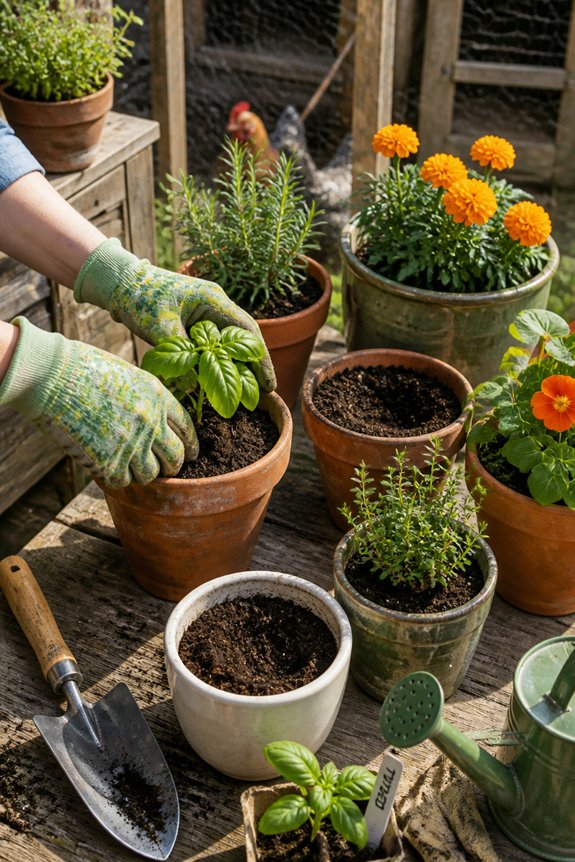
Container gardening around chicken coops requires basic supplies and straightforward setup. Gardeners need drainage holes, potting soil, and appropriately sized containers. Terra cotta, plastic, and wooden pots work effectively.
Placing pots near coops provides herbs like oregano, thyme, and basil within reach. Containers require regular watering and positioning in adequate sunlight for ideal herb growth and accessibility.
Basil: Natural Bug Repellent and Chicken-Friendly Herb
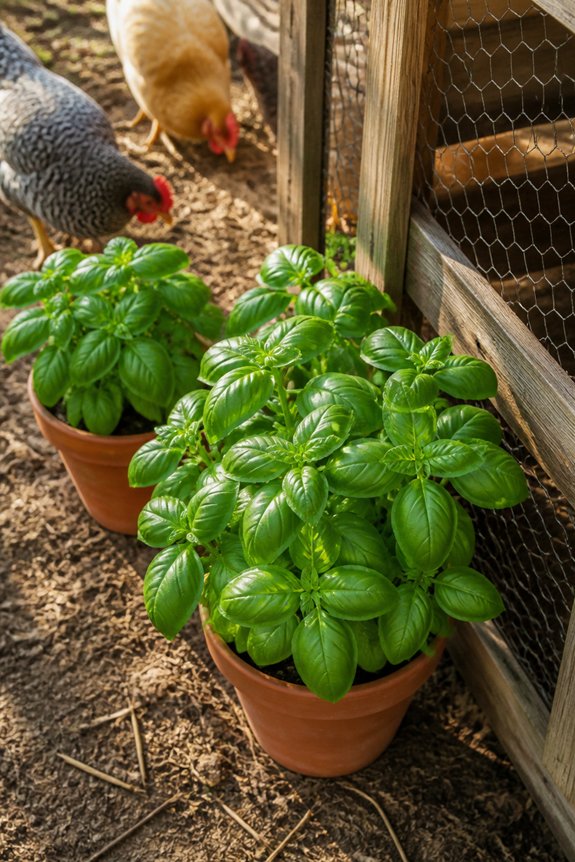
Basil stands out as one of the most practical herbs to grow in containers near chicken coops, offering benefits beyond simple gardening convenience.
The plant repels insects like flies and mosquitoes through its natural oils. Chickens can safely consume basil leaves, which provide mild nutritional benefits. Container-grown basil requires minimal maintenance, needing regular watering and sunlight. Positioning pots near coop entrances maximizes pest control effectiveness.
Oregano: Boosting Chicken Health and Pest Control
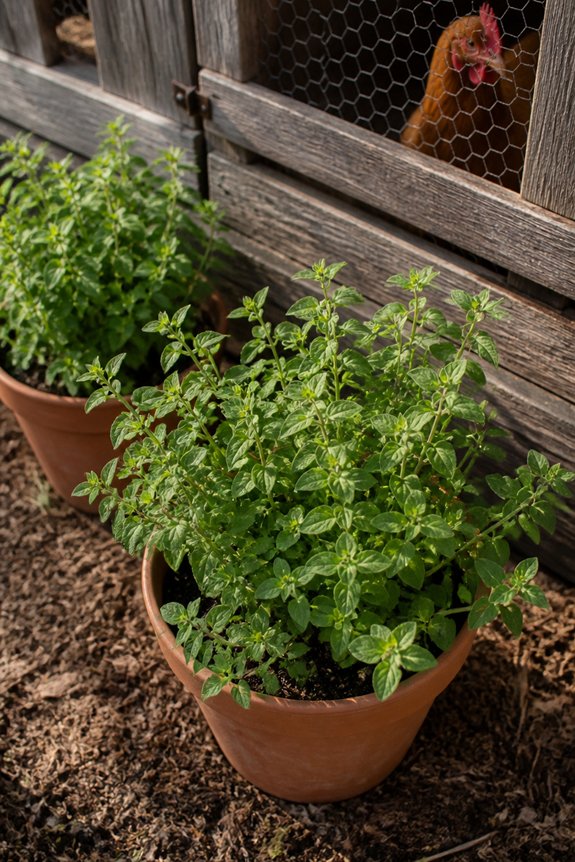
Oregano serves as a dual-purpose plant for chicken keepers, functioning as both a health supplement and natural pest deterrent. When chickens consume fresh oregano leaves, the herb supports digestive health and boosts immunity.
Additionally, oregano’s strong aroma repels insects, including flies and mites, around the coop area. Planting oregano in pots near chicken housing provides accessible fresh herbs while establishing a protective perimeter.
Thyme: A Hardy Herb That Chickens Love to Peck
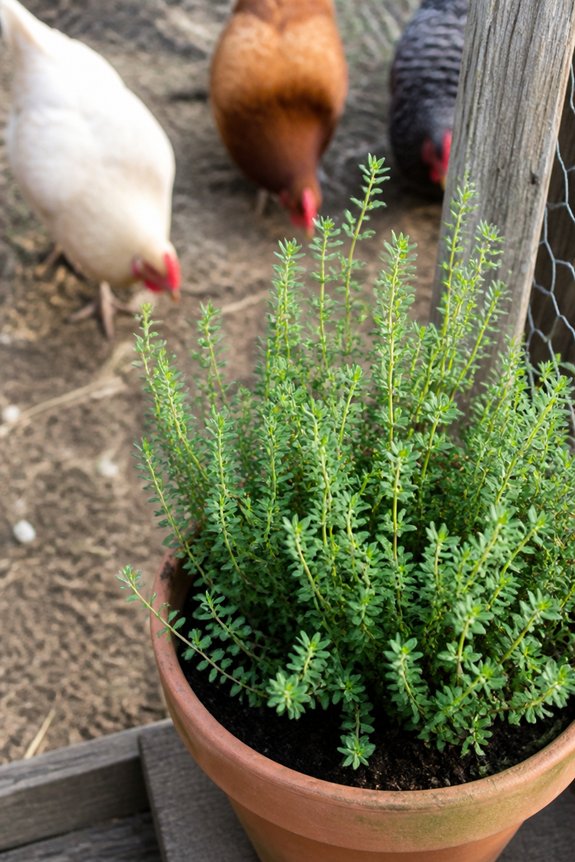
While thyme thrives in various conditions, it stands out as a particularly resilient herb for chicken keepers seeking plants that withstand pecking and trampling. Thyme grows low to the ground, spreads quickly, and recovers from damage.
Chickens consume the leaves for potential health benefits, including improved digestion. Plant thyme in containers around the coop perimeter, ensuring well-draining soil and adequate sunlight for ideal growth and durability.
Mint: Keeping Parasites Away in Simple Pots
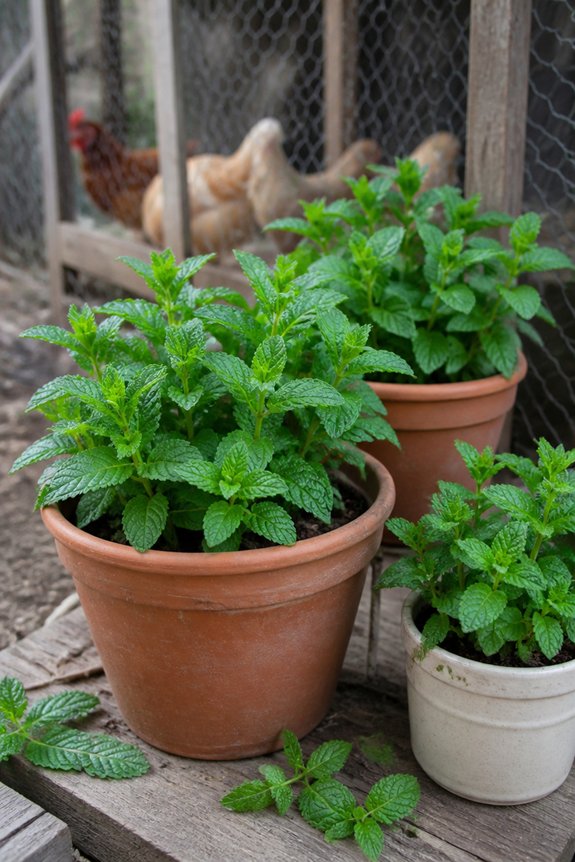
Mint presents a practical solution for chicken keepers seeking natural parasite deterrence without complex maintenance routines. The herb repels lice, mites, and intestinal parasites effectively.
Mint grows readily in simple clay or plastic pots placed near coop areas. Chickens consume fresh leaves, gaining internal parasite protection. The plant requires minimal watering and tolerates partial shade, making it reliable for routine coop management.
Lavender: Calming Scents and Fly Prevention
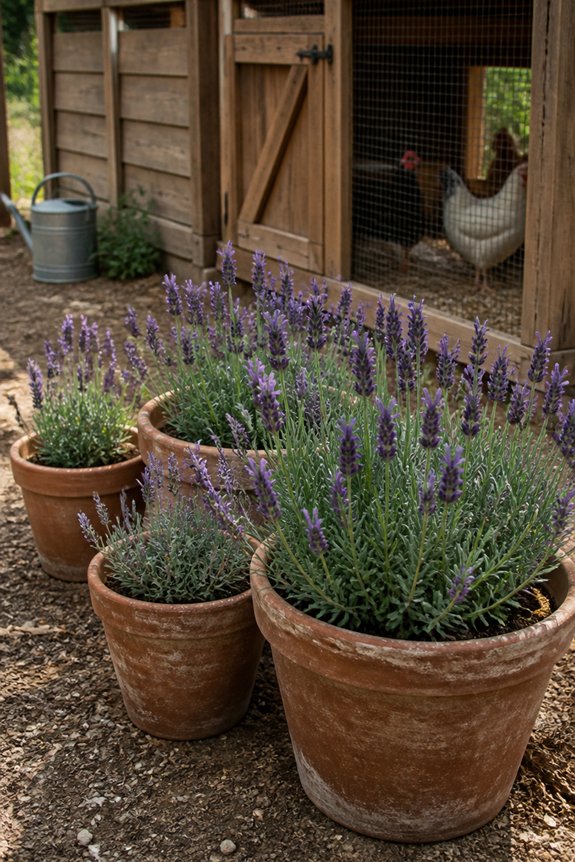
Lavender offers chicken keepers another herb-based approach to coop management, addressing concerns that mint alone may not fully resolve. The plant’s strong aroma repels flies and other insects effectively.
Grown in simple pots near the coop entrance, lavender creates a calming environment for chickens while reducing pest problems. Its dried flowers can be scattered in nesting boxes for additional pest control benefits.
Calendula: Edible Flowers for Nutrition and Wellness
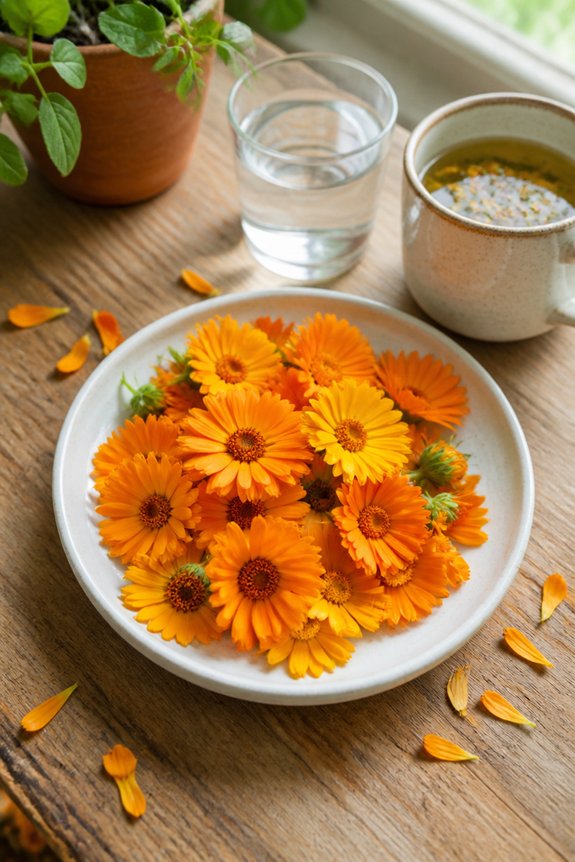
Calendula flowers, also known as pot marigold, provide chicken keepers with a dual-purpose plant that chickens can eat for nutritional benefits. The petals contain vitamins and antioxidants, supporting immune health. Chickens readily consume fresh calendula blooms scattered in their coop area.
Growers can cultivate calendula in simple containers near the chicken run, ensuring consistent access to this nutritious supplement throughout growing seasons.
Nasturtiums: Pest-Trapping Container Plants for Your Flock
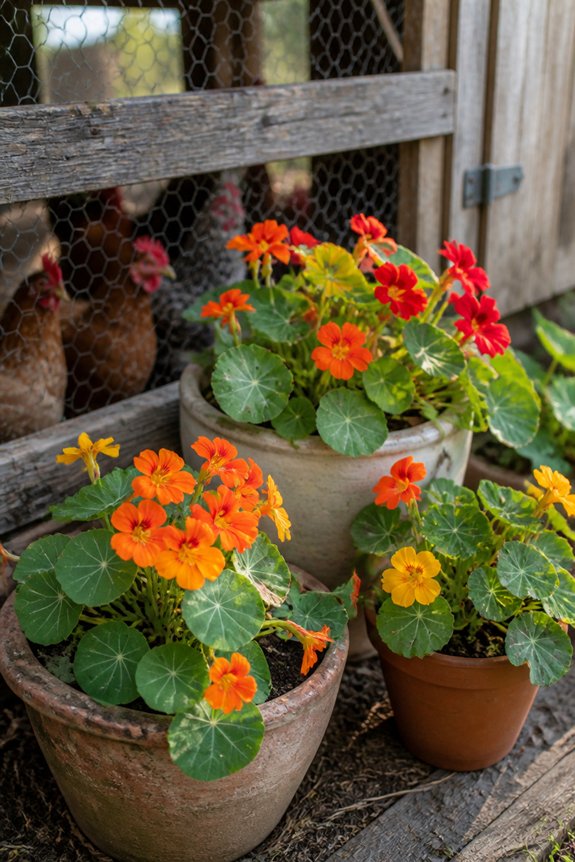
Brightly colored nasturtium flowers serve as effective trap plants for chicken keepers managing pest populations around the coop. Aphids, whiteflies, and beetles prefer nasturtiums over vegetables, drawing insects away from garden beds.
Container-grown nasturtiums positioned near the coop perimeter create protective barriers. The plants tolerate poor soil conditions, require minimal water, and produce edible flowers and seeds for supplemental chicken nutrition.
Garlic: Natural Wormer for Healthier Birds
While trap plants like nasturtiums protect gardens from external pests, internal parasites pose a different threat to flock health. Garlic contains compounds that act as natural dewormers, reducing intestinal parasites in chickens.
Adding minced garlic to feed or water twice weekly supports digestive health. This simple addition strengthens immune function and promotes overall bird robustness without chemical interventions.
Parsley: Nutrient-Dense Greens Chickens Can’t Resist
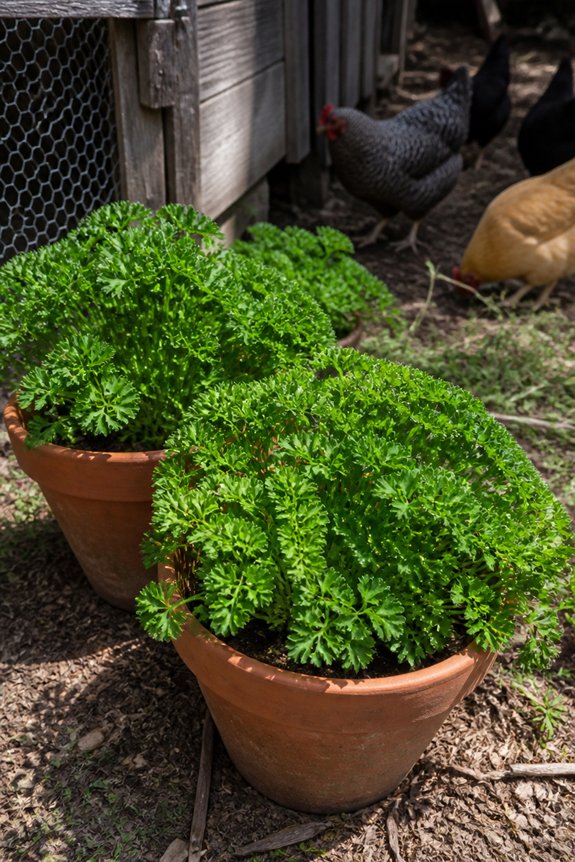
Fresh parsley offers chickens essential vitamins and minerals that support their overall health and egg production. The herb grows easily in pots near the coop, requiring minimal maintenance and regular watering.
Chickens gladly consume both leaves and stems, gaining nutritional benefits from vitamin K, vitamin C, and calcium. Gardeners can plant parsley in containers placed within the chicken run or nearby garden space for convenient access and continuous harvesting throughout growing seasons.
Comfrey: Fast-Growing Forage Plant in Pots
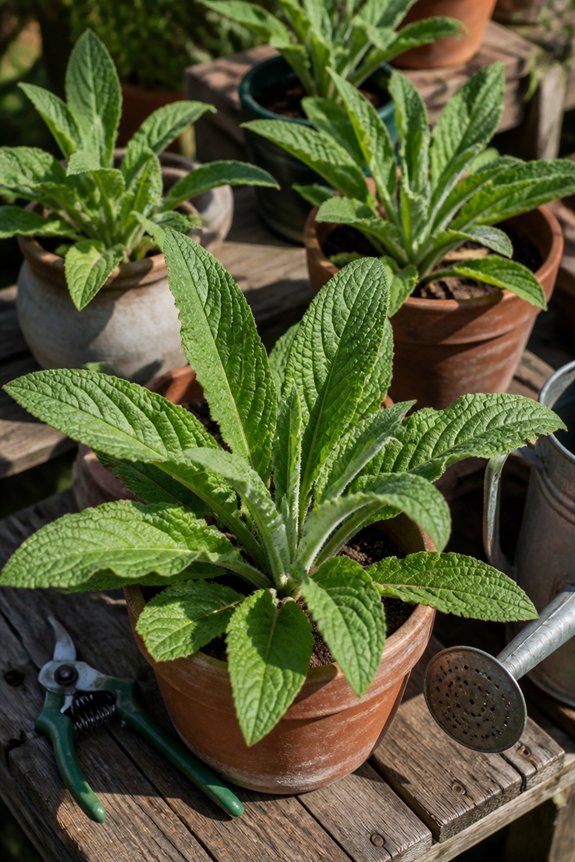
Comfrey plants grow rapidly in containers, producing abundant leafy forage that chickens consume readily. The herb thrives in large pots with drainage holes and well-draining soil.
Comfrey reaches harvestable size within weeks, offering multiple cuttings per season. Chickens benefit from its nutrient-rich leaves, which support egg production and overall health. Placement near the coop provides convenient access for regular harvesting and feeding.
Plantain: Medicinal Greens in Low-Maintenance Containers
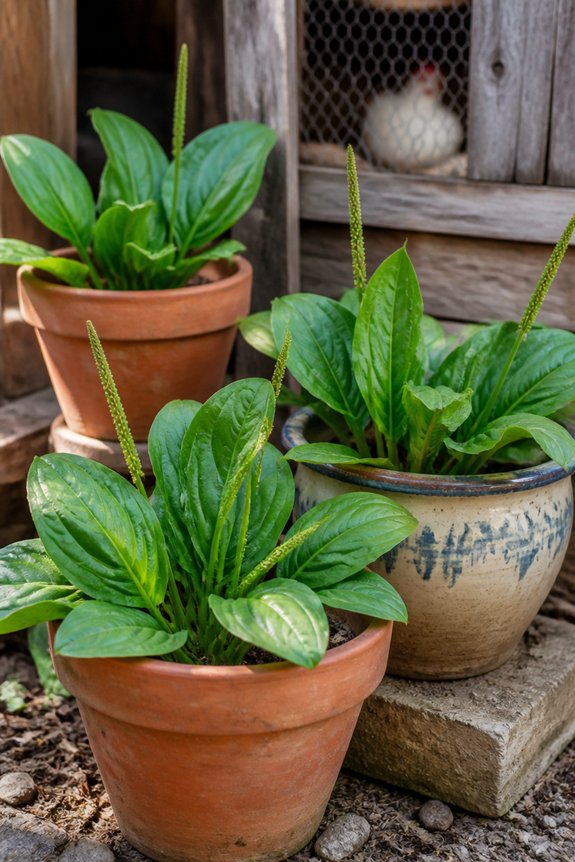
Plantain offers another container-growing option for chicken keepers seeking plants with medicinal properties alongside nutritional value. The broad-leafed herb grows well in pots with standard soil, requiring minimal maintenance and occasional watering.
Chickens consume plantain leaves readily, benefiting from its digestive and anti-inflammatory compounds. Containers placed near coops provide convenient access, allowing regular harvesting while supporting flock health.
Dandelions: Free Food and Natural Health Support
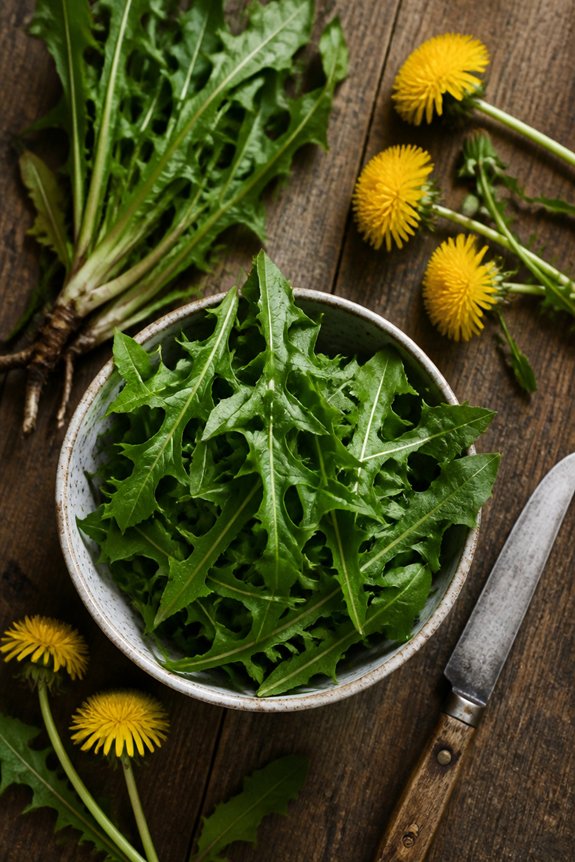
While dandelions are commonly dismissed as weeds, they represent a readily available food source for backyard flocks. Chickens consume leaves, flowers, and roots with nutritional benefit. Dandelions contain vitamins A and C, supporting immune function and overall health.
Growers can cultivate dandelions in simple containers near coops, allowing hens direct access to fresh greens throughout growing seasons without purchased supplements.
Clover: Nitrogen-Fixing Ground Cover for Enrichment
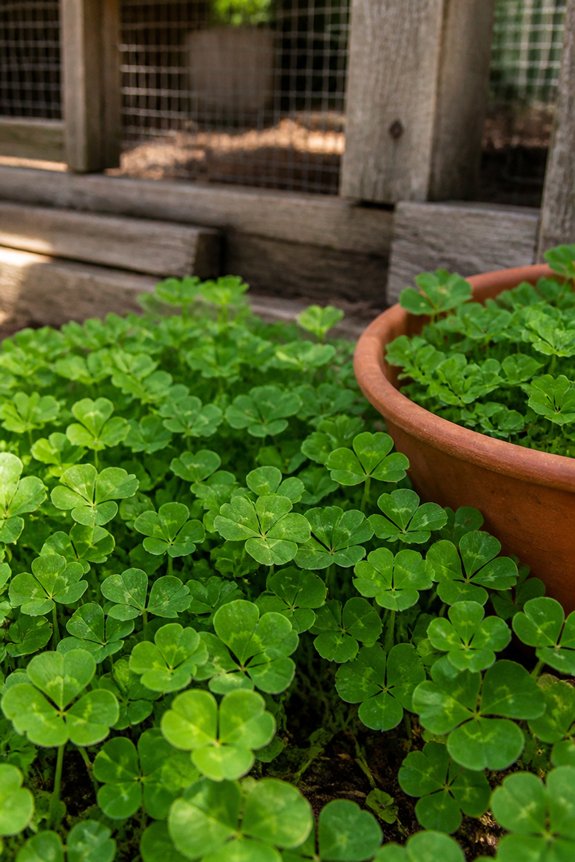
Because clover grows quickly and requires minimal maintenance, it serves as an excellent ground cover option around chicken coops. Clover fixes nitrogen in soil, naturally enriching it without fertilizer.
Chickens enjoy foraging clover, gaining nutritional benefits from fresh greens. White clover and red clover varieties both thrive in moderate sunlight and damp conditions, making them practical choices for coop environments.
Lettuce and Leafy Greens: Quick Harvests in Containers
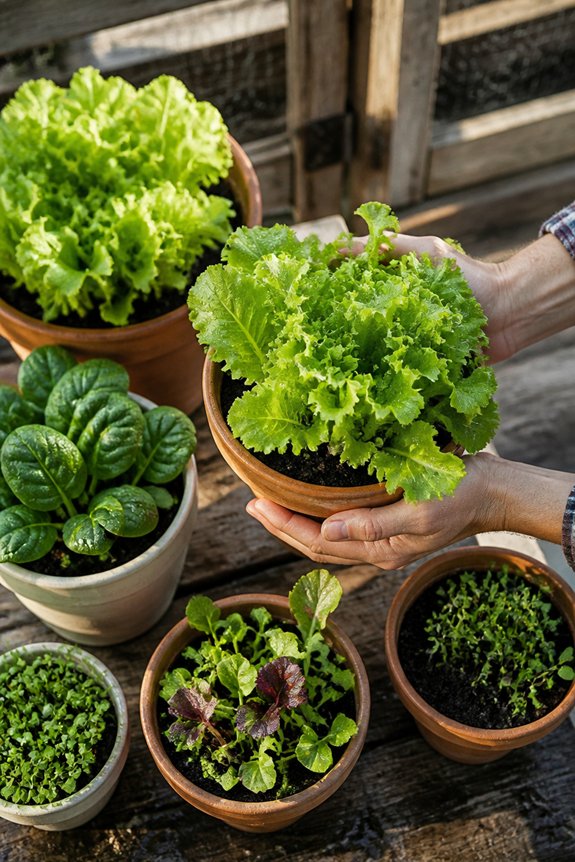
Container gardens offer an efficient way to grow lettuce and other leafy greens near chicken coops, providing fresh vegetables within weeks rather than months. Spinach, kale, and arugula thrive in five-gallon buckets or wooden boxes positioned in partial shade. These containers require minimal soil depth, approximately eight inches, and regular watering.
Chickens benefit from occasional leafy trimmings, while gardeners harvest outer leaves continuously for sustained production.
Sunflowers: Tall Plants That Provide Shade and Seeds
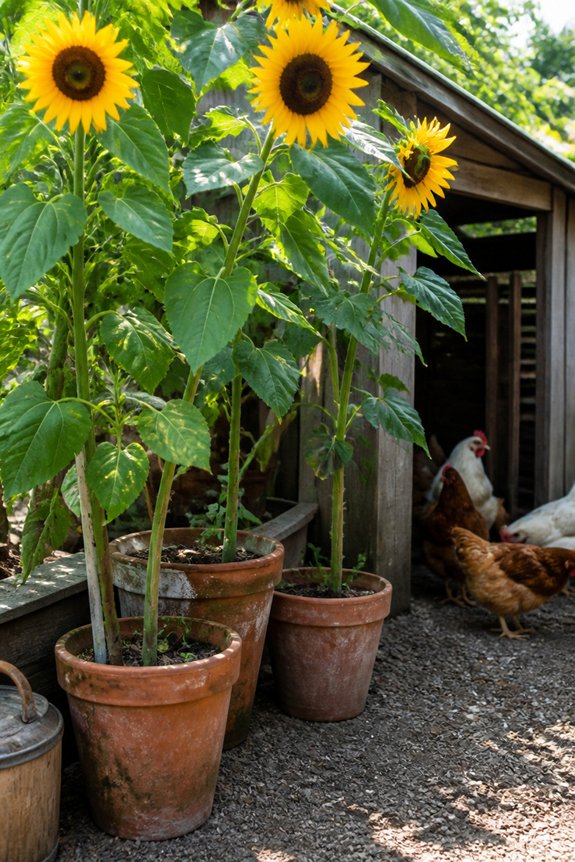
Sunflowers grow to heights of six to twelve feet, depending on the variety, and create useful shade for chicken coops during hot months. The plants produce seeds that chickens eat, providing natural nutrition.
Sunflowers require full sun, well-draining soil, and regular watering. Plant seeds directly in large containers or garden beds near the coop perimeter during spring for summer growth.
Pumpkins and Squash: Vining Plants for Fall Treats
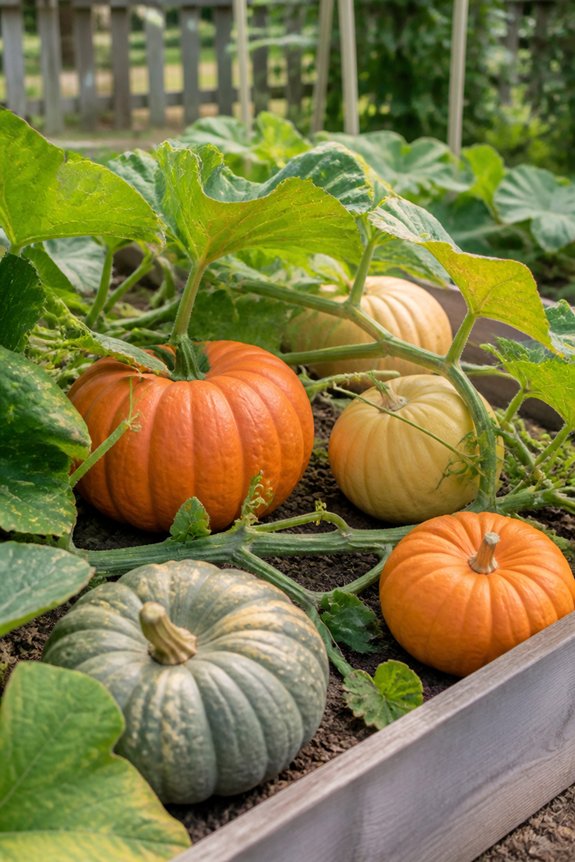
Pumpkins and squash thrive as vining plants near chicken coops, producing edible fruits that chickens enjoy during fall and winter months. These plants require adequate space to sprawl across garden beds, full sunlight, and well-draining soil.
Varieties like butternut squash and sugar pumpkins grow reliably in most climates. Chickens consume fallen fruits and leftover plant material, reducing waste while providing nutritional supplementation during colder seasons.
Frequently Asked Questions
How Often Should I Water Potted Plants Around the Chicken Coop During Hot Weather?
During hot weather, potted plants around a chicken coop typically require daily watering, sometimes twice daily. Check soil moisture regularly by inserting a finger one inch deep. Water thoroughly when dry to guarantee proper hydration and plant health.
Can Chickens Safely Eat All the Plants Mentioned, or Are Some Toxic to Poultry?
Not all plants are safe for chickens. Common toxic varieties include avocado, foxglove, and yew. Before planting around coops, one should research each species’ safety profile to prevent accidental poisoning of poultry.
What’s the Best Soil Type and Potting Mix for Growing Herbs in Containers?
One might assume dirt is simply dirt. In reality, herb containers thrive with well-draining potting mixes combining peat moss or coco coir, perlite, and compost. This balanced blend guarantees maximal drainage, aeration, and nutrient retention for vigorous herb growth.
How Do I Protect Container Plants From Being Knocked Over by Curious Chickens?
One should secure containers with sturdy stakes driven deep into soil or use heavy ceramic pots with wide bases. Alternatively, grouping pots together in wire cages or placing them on elevated shelves keeps them beyond chicken reach effectively.
Which Plants Produce the Quickest Harvests for Supplementing Chicken Feed Year-Round?
Leafy greens like lettuce and kale offer harvests within weeks, while sprouted seeds provide nutrition in days. Herbs such as parsley and basil regrow quickly after cutting, enabling continuous supplementation throughout the year.
Conclusion
The eighteen plants surrounding a chicken coop function as interconnected layers of a living system, each serving practical purposes. Herbs repel pests, leafy greens provide nutrition, flowers add visual structure, and ground covers anchor soil health. This garden arrangement symbolizes self-sufficiency, where every element supports the others. Gardeners create a balanced ecosystem through simple pots and strategic placement, transforming basic containers into productive components of sustainable chicken management.