
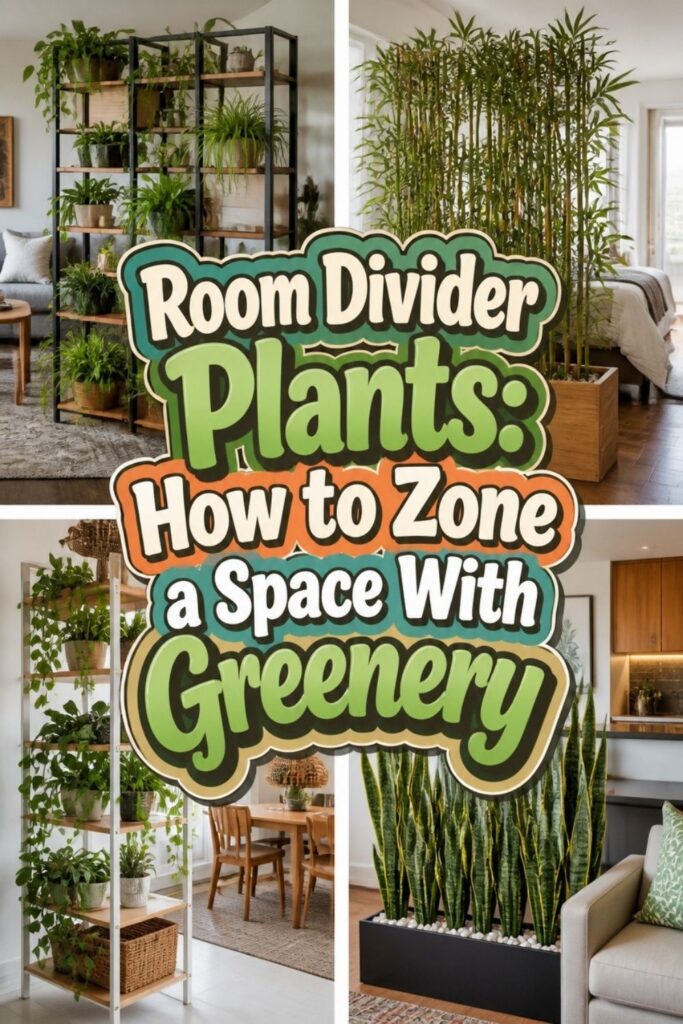
Open floor plans offer flexibility, but they often lack definition. Room divider plants solve this gracefully, carving out distinct zones while adding life and texture. Tall varieties like fiddle leaf figs, bamboo palms, and rubber plants stand in where walls might feel too heavy or permanent.
The key to success lies in thoughtful selection. Match each plant to your available light conditions, and scale your choices to the ceiling height and overall space. A petite snake plant will get lost in a soaring loft, just as a towering monstera overwhelms a cozy studio.
Strategic positioning matters too—cluster plants in staggered formations rather than rigid rows for a more organic feel.
Multiple plants arranged together create stronger visual boundaries than scattered individuals. Pair them with complementary elements like slim shelving, pendant lights, or woven screens to amplify their presence.
Get these fundamentals right, and your green dividers will elevate the entire room; miss them, and even the healthiest specimens can feel like an afterthought.
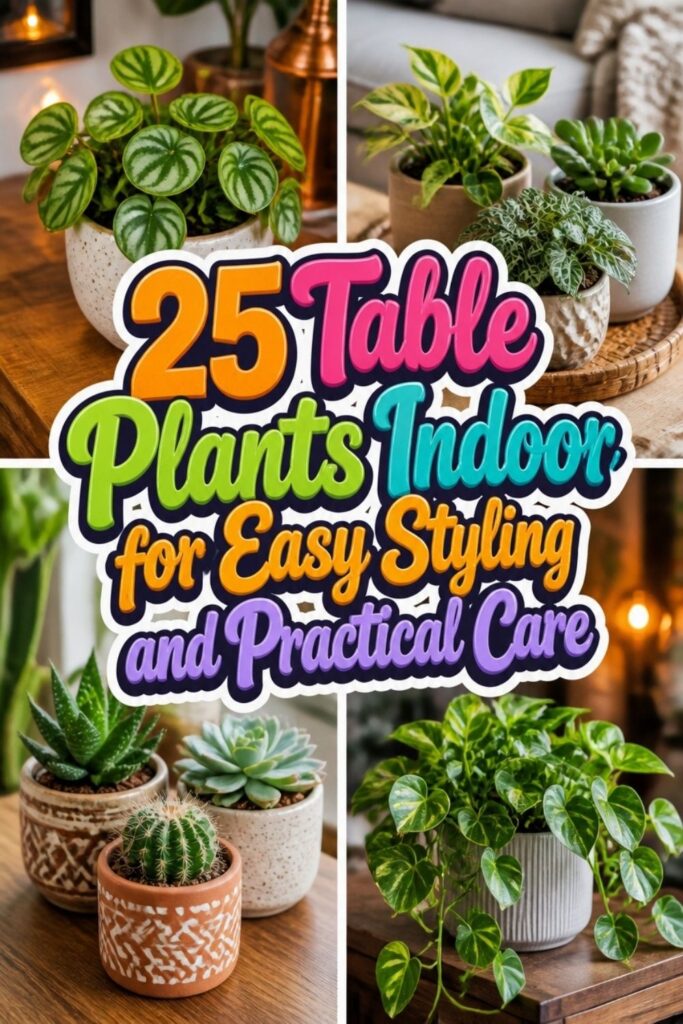

Plan Around How You Move
Before placing tall plants, map the natural walking routes through the room. A divider should create separation without narrowing doorways, blocking windows, or making furniture harder to reach.
Build the boundary with varied heights rather than a straight wall of identical pots. One or two tall plants can provide structure, while medium and trailing varieties fill gaps and create a softer, more natural transition.
Leave enough space around every container for foliage and roots to develop. This prevents the arrangement from becoming overcrowded as the plants mature and also makes watering, pruning, and cleaning much easier.
Assess Your Space: Light, Size, and Room Layout

Success with room divider plants depends on evaluating three key factors before selection: available light, physical space dimensions, and room configuration.
Bright, indirect light suits ficus and pothos plants. Tall varieties like bamboo palms require adequate ceiling height. Consider the room’s layout, doorways, and traffic patterns. Plants need sufficient space for growth without blocking pathways or windows.
Best Tall Plants for Room Dividing
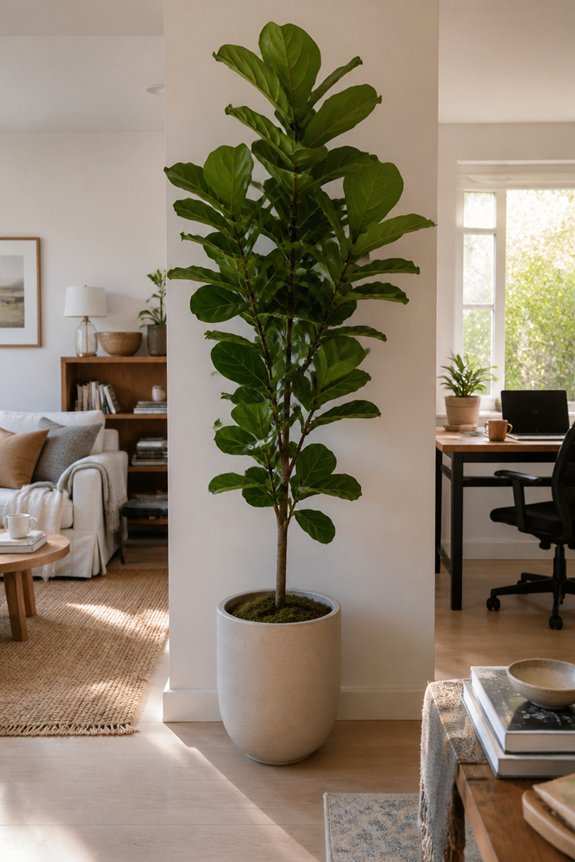
Tall plants function as effective room dividers when they reach heights of six feet or more, creating visual barriers and separate zones within open spaces. Fiddle leaf figs, bamboo palms, and rubber plants work well for this purpose.
These species provide density and height, blocking sightlines between areas. Select varieties matching your space’s light conditions and maintenance capacity for peak performance.
Match Plants to Your Light Conditions
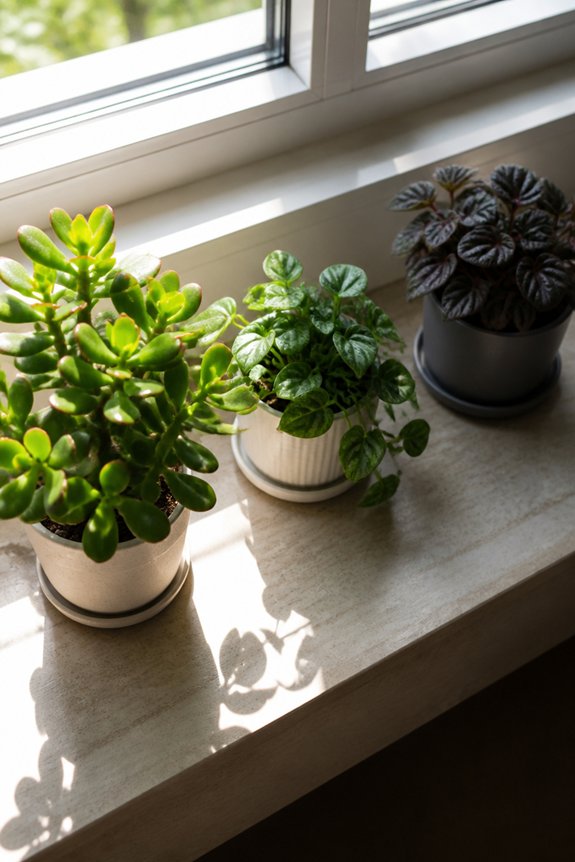
Choosing the right plant for a room divider requires understanding the light available in that space. Low-light areas suit pothos, snake plants, and ZZ plants. Bright, indirect light works well for monstera and philodendron varieties.
Direct sunlight accommodates dracaena and bamboo palm. Matching light conditions to plant needs guarantees healthy growth and effective room division without constant maintenance concerns.
Where to Place Room Divider Plants for Best Results
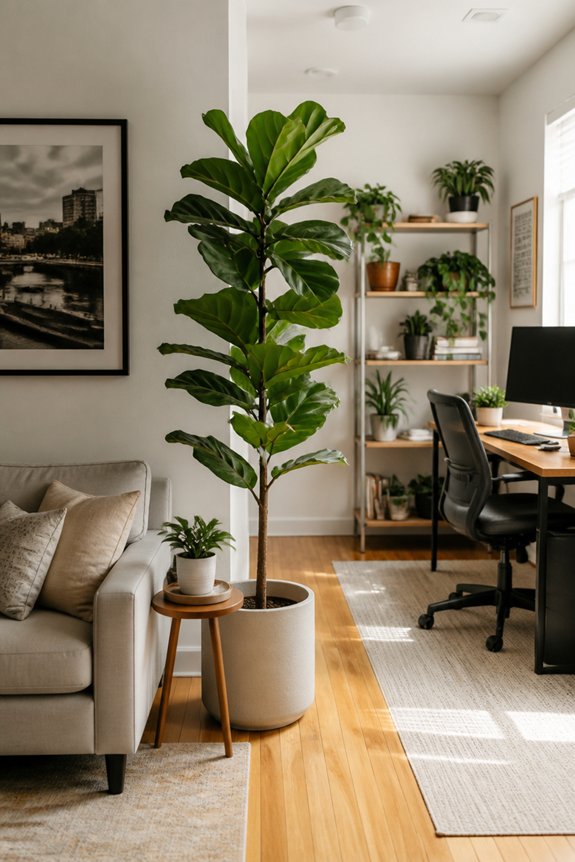
Many factors determine where a room divider plant performs best, including traffic flow, humidity levels, and proximity to windows. High-traffic areas require sturdy plants like pothos or snake plants. Low-light corners suit ferns and philodendrons.
Bathrooms and kitchens provide humidity for monsteras. Corner placements maximize space usage while maintaining sightlines. Distance from heating vents prevents leaf damage.
Arrange Multiple Plants for Maximum Visual Impact

Creating visual impact with room divider plants requires strategic arrangement of several specimens, considering height variation, leaf texture, and color distribution. Tall plants like fiddle leaf figs anchor the back, while pothos and philodendrons fill middle layers.
Placing plants at staggered heights, combining broad leaves with delicate fronds, and grouping odd numbers creates balanced, visually compelling room divisions that effectively zone spaces.
Keep Your Plant Dividers Lush and Thriving

While arranging plants strategically creates an attractive room divider, maintaining their health determines whether that visual appeal lasts. Regular watering, appropriate light exposure, and consistent humidity levels keep plants vigorous.
Ferns, pothos, and snake plants require different care schedules. Inspect foliage weekly for pests, remove dead leaves promptly, and fertilize monthly during growing seasons to sustain lush, attractive dividers.
Pair Plants With Shelving, Lighting, and Textiles
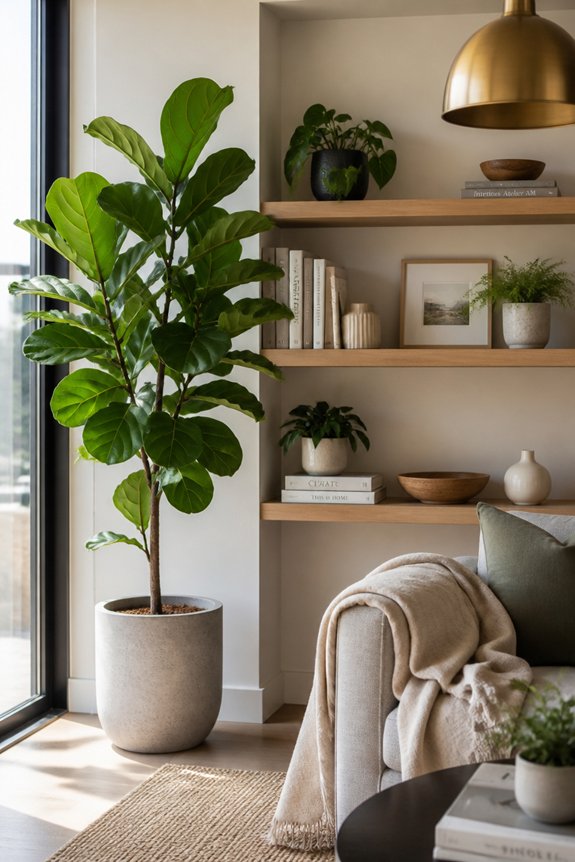
How can simple additions transform plant dividers into functional room features? Installing shelves alongside tall plants like fiddle leaf figs creates storage space, while overhead grow lights extend plant health in dim corners.
Incorporating woven baskets, fabric panels, or macramé holders adds visual texture, conceals support structures, and softens the divider’s appearance. These layered elements enhance both aesthetic appeal and practical utility simultaneously.
Frequently Asked Questions
Can Room Divider Plants Help Reduce Noise Levels Between Spaces?
Room divider plants can modestly reduce noise levels between spaces. Their foliage and stems absorb some sound waves, though they are not primary soundproofing solutions. Denser, larger plants with thicker leaves prove more effective at dampening noise than smaller varieties.
What Is the Best Way to Transport Large Plants Without Damaging Them?
One secures large plants by wrapping foliage loosely with soft cloth, placing the container in a sturdy box with packing material, and keeping it upright during transport. Climate-controlled vehicles and gentle handling minimize stress and damage.
Do Room Divider Plants Improve Indoor Air Quality and Remove Toxins?
One might believe plants are tiny air purification factories working 24/7. Reality? They marginally improve air quality in typical homes. While research shows some toxin removal, the effect remains modest compared to proper ventilation and HVAC systems.
How Often Should I Rotate My Plants for Even Growth?
Plant rotation should occur every one to two weeks for best results. Turning plants guarantees all sides receive adequate light exposure, promoting balanced, even growth and preventing the development of one-sided, leggy specimens.
Are There Pet-Safe Room Divider Plants for Homes With Animals?
Pet-safe room divider plants include spider plants, Boston ferns, and parlor palms. These options effectively zone spaces while remaining non-toxic to cats and dogs. Owners should verify specific pet sensitivities and confirm plants are securely positioned to prevent damage.
Conclusion
Room divider plants transform open spaces into functional zones while improving indoor air quality. Studies show that indoor plants reduce airborne toxins by up to 87 percent, creating healthier environments alongside visual separation. Fiddle leaf figs, bamboo palms, and similar tall varieties establish effective barriers when placed strategically according to light conditions. Combining plants with shelving and textiles maximizes impact, making greenery a practical, sustainable solution for modern living spaces.