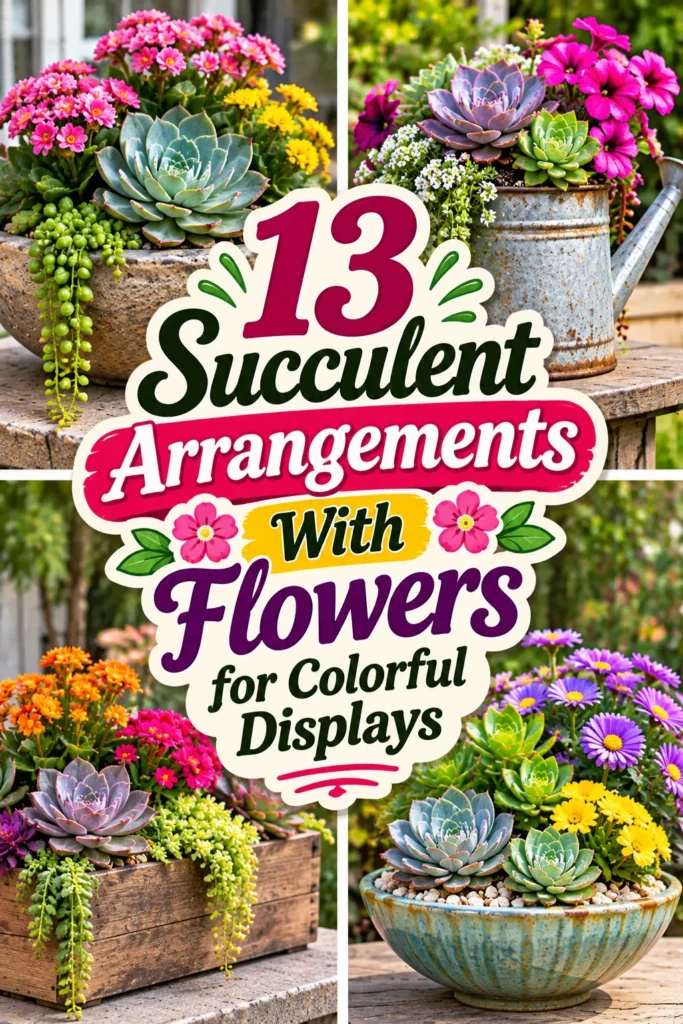
Cut flowers bring the color and succulents bring the staying power, and together they make up for each other’s biggest weakness. These 13 succulent arrangements with flowers cover three kinds of display:
- fresh flowers with wired rosettes
- living pots where flowers and succulents grow side by side
- dried pieces that never need vase water
You’ll find blush garden roses with echeveria in a low glass bowl, a hand-tied ranunculus bouquet, a bowl of flowering kalanchoe that blooms for weeks, and a moss rose pot built for a sunny patio. There’s also a copper urn for fall and a domed holiday centerpiece for the big table.
Every idea deals with the one problem that trips people up: flowers want water, and succulents rot in it. Each entry shows how to keep them apart. Idea 12 shows how to turn the leftover rosettes into new plants once the flowers fade.
1. Wired Echeveria and Blush Garden Roses in a Low Glass Bowl
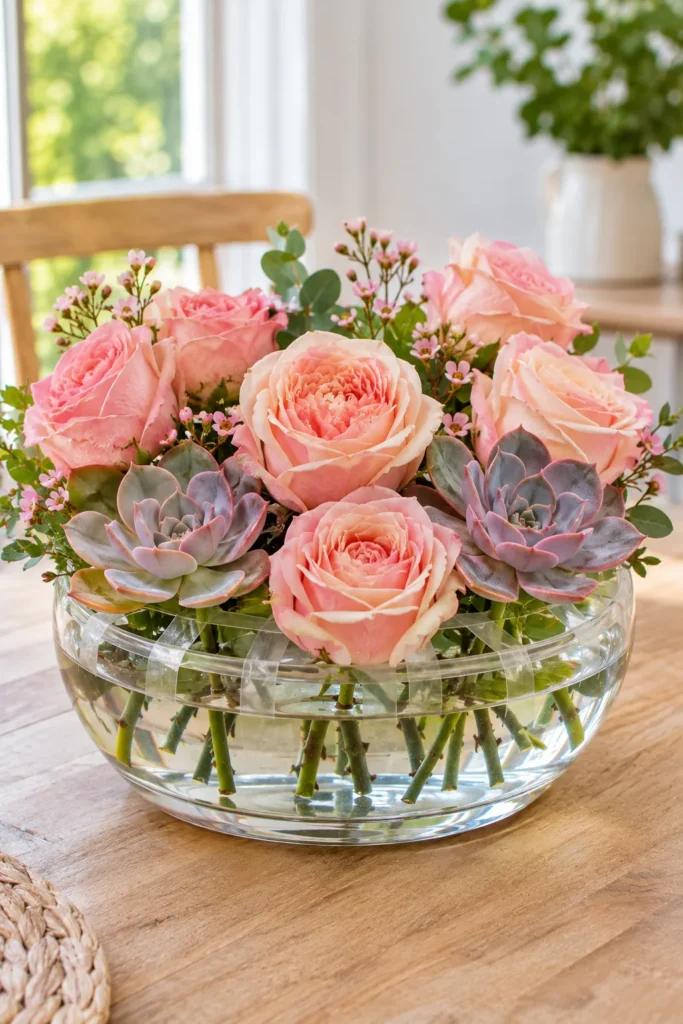
Roses need water and succulents rot in it, so the trick is to give the succulent a stem of its own. Pull a dusty pink echeveria out of its nursery pot, brush off the soil, and trim the stem short. Then give it a wire stem, so it can stand in the arrangement like any flower while its own base stays dry.
Fill a low glass bowl with water and tape a loose grid of clear tape across the rim. Push blush garden roses through the grid, then tuck three wired rosettes between them so they sit right at the rim, above the water. The roses and the echeveria share the same soft pink, so this succulent centerpiece with flowers reads as one color story in two textures: ruffled petals and tight, waxy leaves.
Wire a rosette in three moves
Clean the stem
Remove the soil and trim to a short, firm stem.
Cross two wires
Push one floral wire through the base, then a second at a right angle.
Fold and tape
Bend all four ends down and wrap them tightly with floral tape.
2. A Hand-Tied Bouquet of Ranunculus, Queen Anne’s Lace, and Succulents
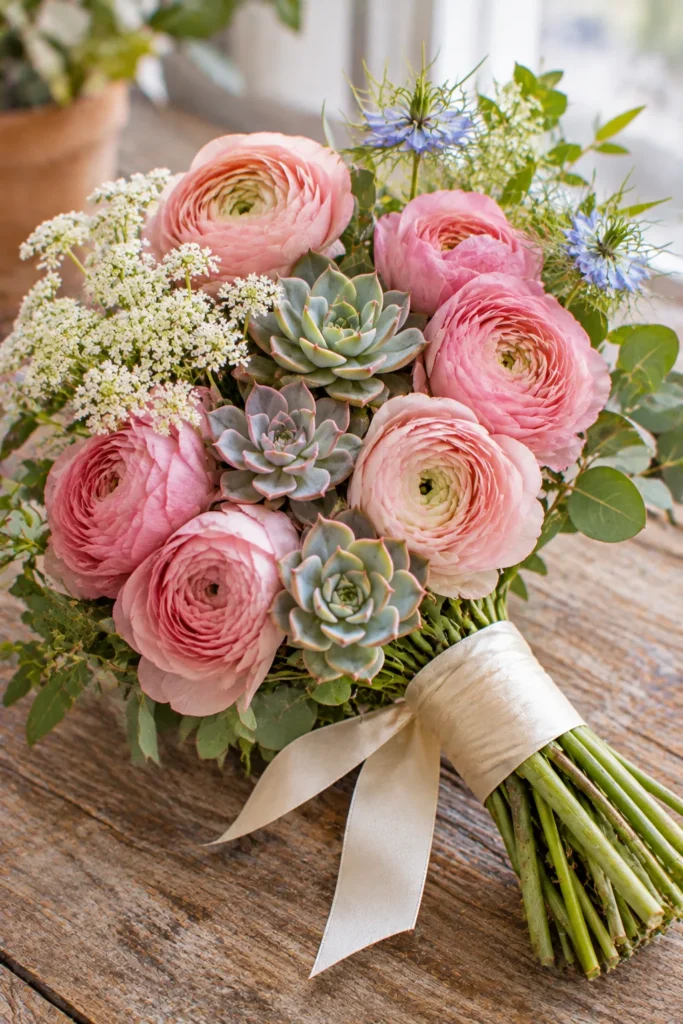
A bouquet with succulents tucked in is still a gift on the day the flowers are long gone. Wire three small echeveria the same way as in idea 1. Then gather them with six soft pink ranunculus, a stem of Queen Anne’s lace, and a sprig of nigella for a looser, wilder edge.
Hold everything just under the blooms and bind the stems where they meet with floral tape. Finish with a wrap of ribbon over the tape. The lacy white flowers keep the round rosettes from looking heavy, and the ranunculus petals echo the layered shape of the echeveria. For more combinations that lean on rosettes, see these succulent bouquet ideas.
You will need: six ranunculus, one stem of Queen Anne’s lace, one stem of nigella, three small echeveria, floral wire, floral tape, and ribbon.
3. A Living Bowl of Flowering Kalanchoe and Echeveria
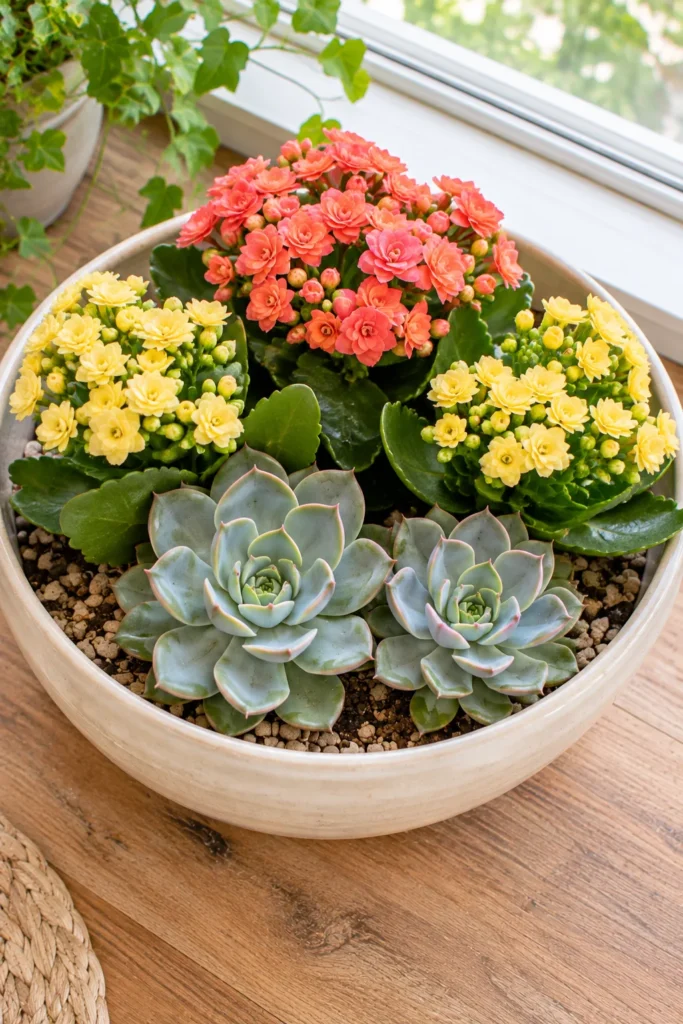
Cut flowers fade in about a week. Flowering kalanchoe can keep blooming for weeks at a time, and it’s a succulent, so it can share a pot with echeveria without anyone drowning.
Plant three flowering kalanchoe, one coral and two soft yellow, with two blue-gray echeveria in a wide ceramic bowl with a drainage hole and cactus mix. The tight clusters of small flowers rise above the flat rosettes, so you get color on top and calm foliage underneath. It’s one of the easiest ways to bring flowering succulents into a room that needs color in winter.
Set the bowl in a bright window and water only when the soil is dry. Pinch off flower clusters as they fade to keep it tidy. If you have pets, check a reliable pet safety list before bringing kalanchoe home.
4. Eucalyptus, White Spray Roses, and Pale Echeveria in a Tall Vase
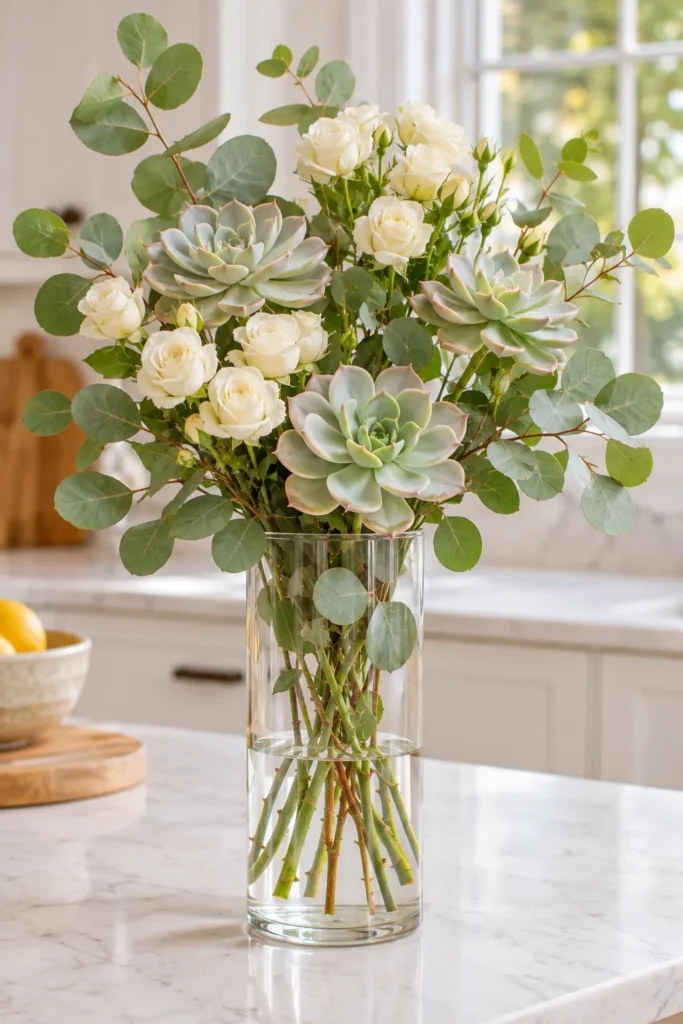
Tall vases cause a problem for succulents, because so much of each stem sits under water. The fix is to fill the vase only partway. Let the wired stems carry the pale echeveria rosettes up to the rim, so the rosettes and their own short stems stay high and dry while the roses drink below.
Start with branches of silver dollar eucalyptus to set the shape. Add white spray roses in loose clusters, then place three pale green echeveria at different heights near the top. Silver-green leaves, white petals, and pale rosettes keep the whole thing in one cool palette, so it suits a kitchen island or an entry table any time of year.
Care note: Change the vase water every day or two, and recut the rose stems when you do. The succulents need nothing extra.
5. Three Silver Cups, Each With One Rosette and Two Stems
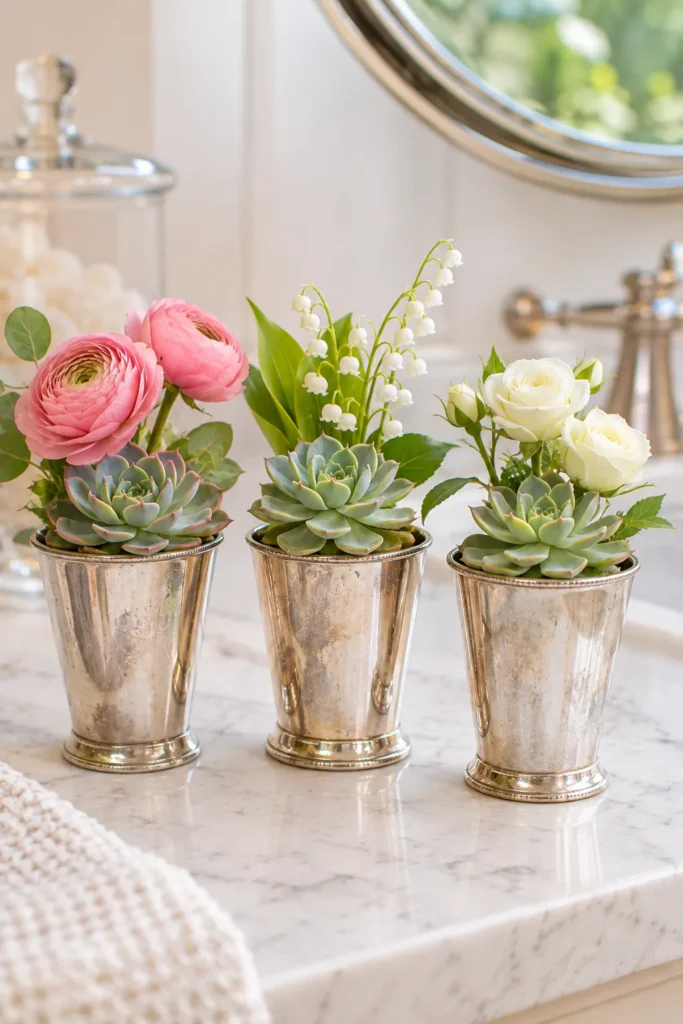
A dented silver julep cup from a flea market is the right size for a tiny arrangement. Three of them in a row look like a set.
Keep each one simple: a single small echeveria and two flower stems. One gets a pair of ranunculus, one gets lily-of-the-valley or whatever small bloom is in season, and one gets two short white spray roses. Pour in just enough water for the flowers, and rest the wired rosette at the rim so it sits above it. The shine of old silver makes the soft gray-green rosettes glow.
Line the trio up along a bathroom counter, a bedside table, or the windowsill above the sink, where something small gets noticed.
6. Moss Rose Spilling Around Echeveria and Aloe on a Sunny Patio
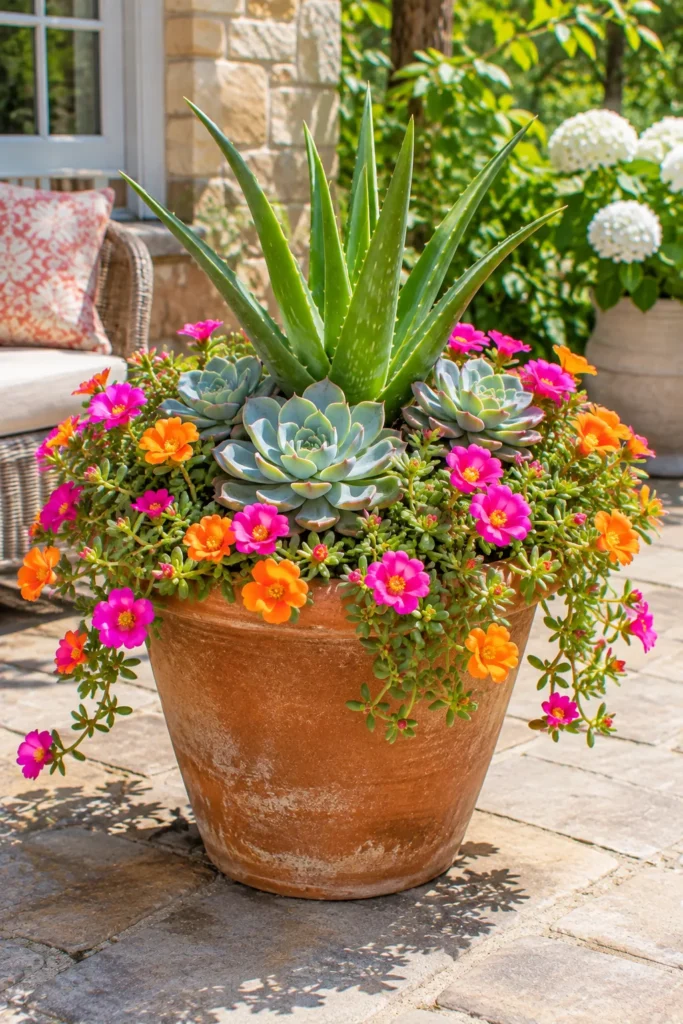
Most flowers want more water than succulents do, which is why mixed pots so often fail. Moss rose is the exception. It loves heat, full sun, and dry soil, so it can live in the same pot as an aloe and a few echeveria without either side suffering.
Plant an upright aloe in the center of a wide terracotta pot, ring it with blue-gray echeveria, and tuck moss rose around the rim so its bright pink and orange flowers spill over the edge. The flowers open in sunshine and close up on cloudy days and in the evening, which makes the pot look different every afternoon. Moss rose is usually grown as an annual, so plan to replant the edges each spring. These succulent container ideas show other easy-care combinations.
| Good pot partners for succulents | Better in their own pot |
|---|---|
| Moss rose | Impatiens |
| Ice plant | Petunias |
| Gazania | Begonias |
| Why: all like full sun and dry soil | Why: all want steadily moist soil |
7. Dried Flowers and a Rooted Succulent, No Vase Water Needed
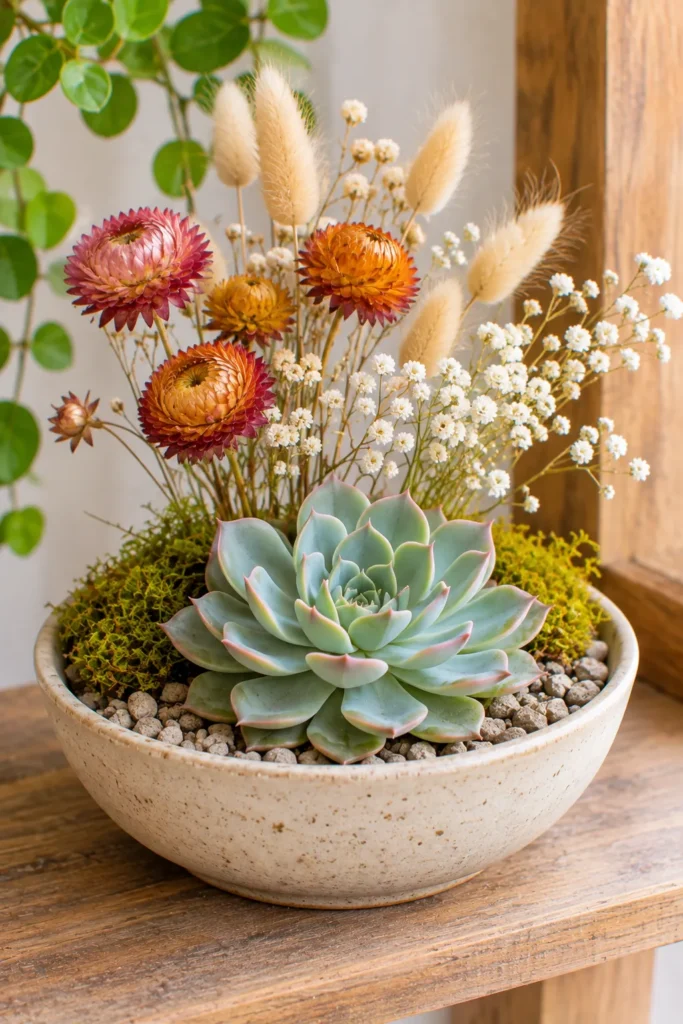
Every other arrangement here has to keep flowers wet and succulents dry. This one skips the problem entirely.
Plant a single large rooted echeveria in a shallow ceramic bowl of cactus mix. Then tuck a small block of dry floral foam behind it and cover the foam with moss. Push stems of dried bunny tail grass, rust-colored strawflower, and white gypsophila into that foam. The dried stems stay crisp because they never touch damp soil, and the living rosette in front gives the whole piece a fresh, green center.
Care note: Water the echeveria with a spoon at its base, only when the soil is dry, and keep the water away from the dried stems. Kept out of harsh sun, the dried flowers hold their color for months.
8. Purple Echeveria, Lisianthus, and Scabiosa in a Color Echo
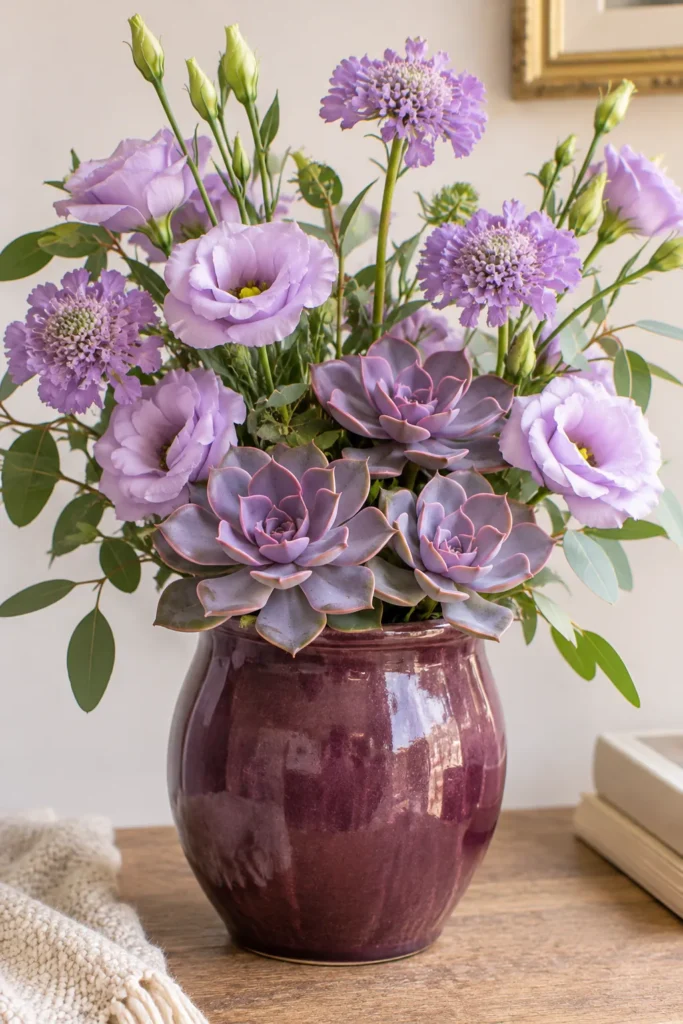
The easiest way to make succulents and flowers look like they belong together is to repeat a color. Start with three dusky purple echeveria rosettes, then choose flowers that pick up the same tones: lavender lisianthus and soft purple scabiosa.
Arrange them in a ceramic vase in a gray or plum glaze. Put the wired rosettes low near the rim, and let the lisianthus and the pincushion heads of scabiosa float above on their longer stems. Each element repeats the purple in a different form: flat rosettes, ruffled cups, and round pincushions.
Color note: The same trick works for any of the flowers that go with succulents. Pink echeveria pairs with blush roses, blue-gray rosettes with white or soft blue blooms, and pale green rosettes with cream flowers.
9. Ice Plant and Hens and Chicks in a Blooming Trough
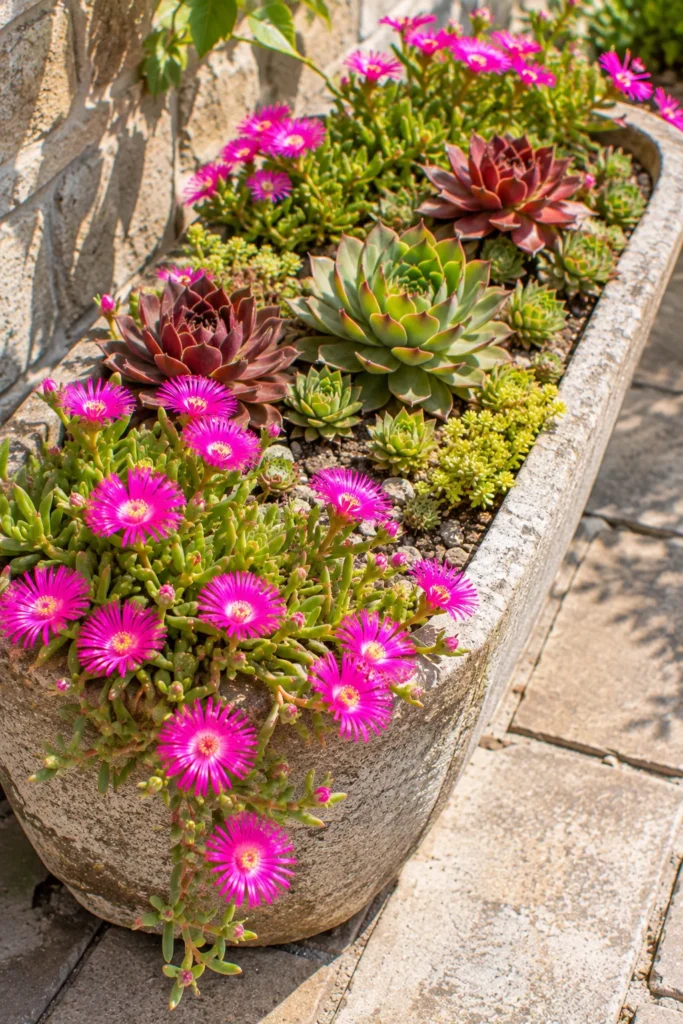
Some succulents bring their own flowers. Ice plant carpets the ground with daisy-like flowers in hot pink and purple, and the flowers shine like they’ve been varnished.
Fill a shallow stone or concrete trough with gritty soil. Plant ice plant along the front edge so it can trail over, set clusters of hens and chicks across the middle, and add a little sedum to fill the gaps. When the ice plant blooms, the pink flowers sit right against the green and red rosettes, so the whole trough looks planned like a flower arrangement.
Set it in full sun on a patio wall or step. Many ice plants and hens and chicks handle frost, but check the tags if your winters are harsh.
10. A Long Wooden Box Centerpiece With Roses in Water Tubes

Long tables need long centerpieces, and that usually means one big box. The problem is that potted succulents want dry soil and cut roses need water. Floral water tubes solve it.
Line a long, low wooden box and set small potted succulents along it in their nursery pots. Fill the spaces with sheet moss so the pots disappear. Then fill floral water tubes, cap them, and slip a rose stem into each one. Push the tubes down into the moss between the succulents. Every rose gets its own drink, and the succulents never touch a drop. It’s the same approach behind many succulent wedding centerpiece ideas, since it scales to as many tables as you need.
Top up the tubes every day, and the roses stay fresh for the whole weekend.
11. A Copper Urn of Orange Roses, Rose Hips, and Echeveria for Fall
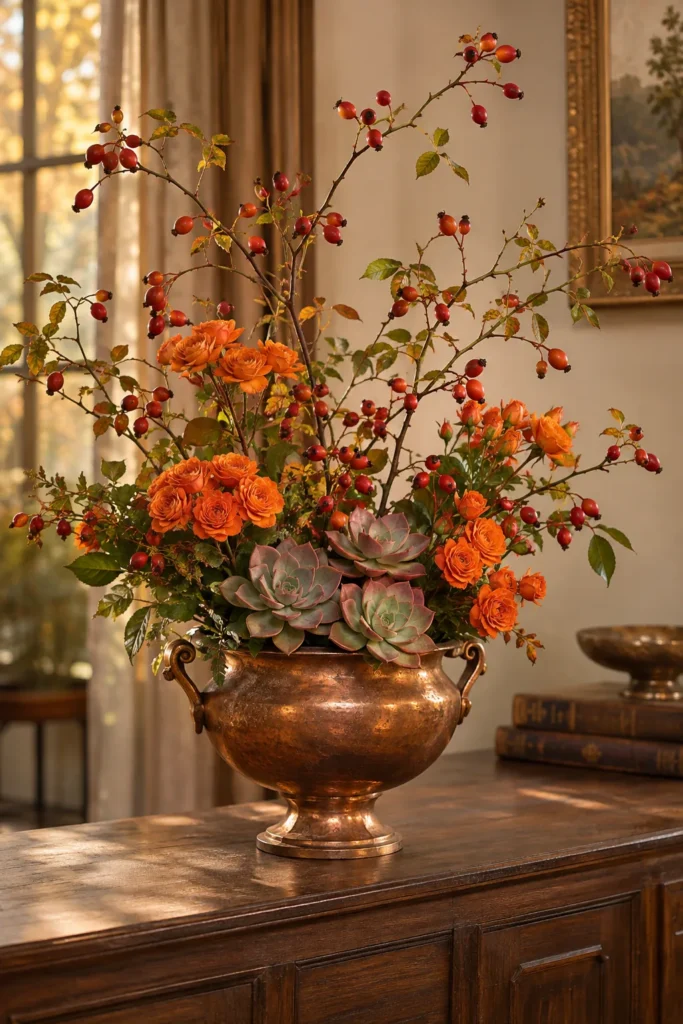
In fall, many echeveria take on coppery pink edges in cool weather. That’s the perfect excuse to pair them with orange spray roses, sprays of red rose hips, and a copper urn.
Fill the urn with water, then set the rose hips first to give the arrangement a loose, branching shape. Add the orange spray roses in clusters, and tuck three wired echeveria low near the rim, where their warm edges pick up the copper finish of the urn. The rose hips last well past the roses, so you can swap in fresh roses and keep the arrangement going.
Get the look: a copper urn, orange spray roses, branches of rose hips, three echeveria with coppery edges, and floral wire.
12. From Vase to Pot: Replanting the Succulents When the Flowers Fade
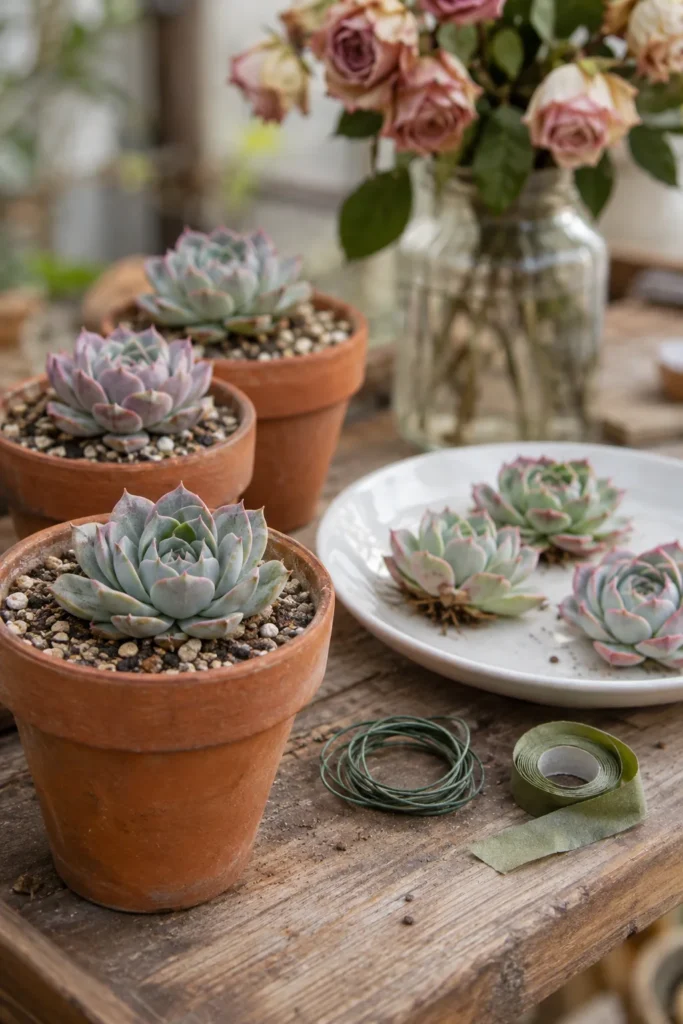
The roses wilt. The succulents don’t. That’s the quiet bonus of every arrangement in this list.
When the flowers are done, gently pull the tape and wire out of each rosette. Then leave the rosettes on a dry plate for a few days, until the cut ends seal over. Set them on top of cactus mix in small terracotta pots in bright, indirect light. Wait until you see small roots before you water, then water lightly. Within a season, last month’s centerpiece is a row of new plants. These beginner succulent propagation ideas cover the process in more detail.
Last about a week with fresh water every day or two.
Then: compost them
Stay fresh far longer than the flowers, even out of soil.
Then: unwire and let them dry
Root in cactus mix and can grow on for years.
Then: use them in the next arrangement
13. A Domed Holiday Centerpiece of Red Roses, Berries, and Succulents

This is the big one for the holiday table, and it’s built in a low bowl of soaked floral foam. Give the larger echeveria rosettes two wooden skewers each, pushed into the base of the stem for support, and give smaller rosettes a wire stem. Push the lowest pieces in nearly sideways around the rim and the top ones straight up. That angle is what creates the dome.
Group red roses in tight clusters of three rather than scattering them. Clusters read as bold color from across the room. Finish by sliding red berry branches into both ends, so the arrangement stretches long enough for a rectangular table.
Host tip: As the roses fade, pull them and push in fresh ones, and the succulents carry the arrangement right through the season. Keep berry branches out of reach of small children and pets. If you’d rather skip foam, a loose ball of chicken wire in a bowl of water holds stems just as well.
How to Add Succulents to a Flower Arrangement
Look past the flowers, and every arrangement here follows one of three setups:
- Cut arrangement: the flowers stand in water, and the succulents ride above it on wire or skewer stems.
- Living pot: succulents share cactus mix with flowering plants that also like sun and dry soil, or with succulents that flower on their own.
- Dried arrangement: nothing needs vase water at all, so the rosette just gets a spoonful at its base when the soil dries.
Pick the setup first, then choose the colors.
Flowers in water, wired succulents above the waterline.
Ideas 1, 2, 4, 5, 8, 10, 11, 13
Succulents and sun-loving flowers in the same cactus mix.
Ideas 3, 6, 9
Dried stems plus one living rosette. No vase water at all.
Idea 7
Succulent Arrangements With Flowers FAQ
Do succulents need water in a bouquet?
No. In a succulent bouquet with flowers, the flowers need water but the succulents don’t. Give each rosette a wire stem so it sits above the waterline while the flower stems drink below. Change the vase water every day or two for the flowers, and leave the succulents alone.
What flowers go well with succulents?
Roses, ranunculus, lisianthus, and scabiosa pair beautifully in cut arrangements, especially when their color echoes the rosettes. For living pots, choose flowers that like the same sun and dry soil, such as moss rose, ice plant, and gazania. Ideas 6 and 8 show both approaches.
How long does a succulent and flower arrangement last?
The cut flowers usually last about a week with fresh water. The wired succulents stay fresh much longer, so you can swap in new flowers and keep going. Living pots and dried arrangements last for months, since nothing in them is waiting to wilt.
Can succulents and flowers grow in the same pot?
Yes, if the flowers like the same dry, sunny conditions. Moss rose, ice plant, and gazania all share a pot happily with echeveria and aloe. Impatiens, petunias, and begonias want steadily moist soil, so they’re better in their own containers.
Can you replant succulents after using them in an arrangement?
Yes. Remove the wire and tape, and let the rosettes dry for a few days until the cut ends seal. Then set them on cactus mix in small pots. Wait until roots appear before watering lightly. Idea 12 walks through it.
Conclusion
The prettiest succulent flower arrangements are the ones where nothing is fighting. Keep cut flowers in water and rosettes above it. Pair living succulents only with flowers that like the same dry sun. And let dried stems do the work when you’d rather not refill a vase at all.
Then enjoy the bonus. When the flowers fade, the succulents are still there, ready for the next arrangement or a pot of their own.
Save this list for the next birthday, dinner party, or holiday table that needs color fast.