
A long, snowy winter seems like the last place for succulents, but plenty of them handle a zone 5 freeze just fine. The trick to a zone 5 succulent garden isn’t fighting the cold. It’s keeping the roots out of the soggy, half-frozen soil that comes with every thaw. Get the drainage right and choose the right plants, and the bed comes back on its own each spring.
Below are 12 ideas built for cold climates. There’s a gravel bed of hens and chicks, a raised rock berm that sheds winter wet, stone troughs that stay outside all year, sedum carpets between flagstones, and bold eastern prickly pear with yucca. You’ll also find hardy ice plant for summer color, rosettes tucked into a stone wall, and upright sedums that hold snow-capped seed heads all winter.
The practical side comes with every entry: which plants are commonly sold as zone 5 hardy, why gravel beats heavy mulch, where the warmest spot in your yard usually is, and how to grow tender favorites in summer pots that come inside.
1. A Hens and Chicks Mosaic in a Gravel Bed
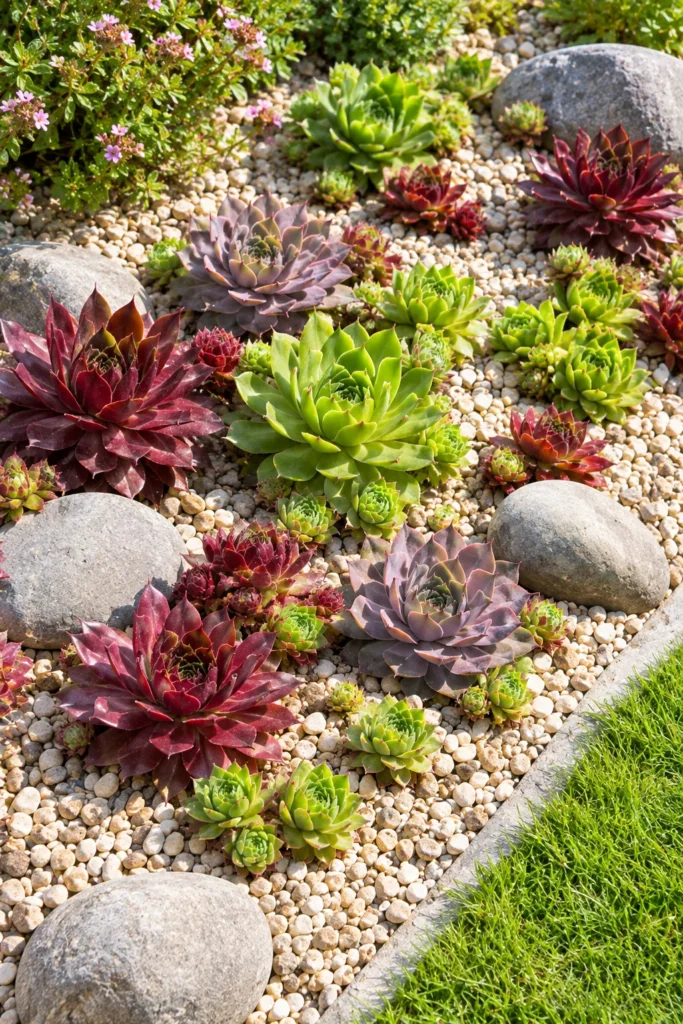
A patchwork of hens and chicks is the easiest place to start a zone 5 succulent garden. These rosettes shrug off hard freezes and snow cover, and each “hen” sends out baby “chicks” that slowly fill the gaps. Plant a mix of green, red, and silvery-purple rosettes a hand’s width apart in a sunny bed, then cover the soil around them with pea gravel.
The gravel matters more than it looks. It keeps the crowns of the rosettes dry and out of the mud, which is where rot usually starts. Within a couple of seasons the colors knit together into a living tapestry that looks deliberate, even though the plants do most of the arranging themselves.
Planting note: Plant in spring, once the ground can be worked, so the roots settle in before winter.
2. A Raised Rock Garden Berm That Sheds Winter Wet
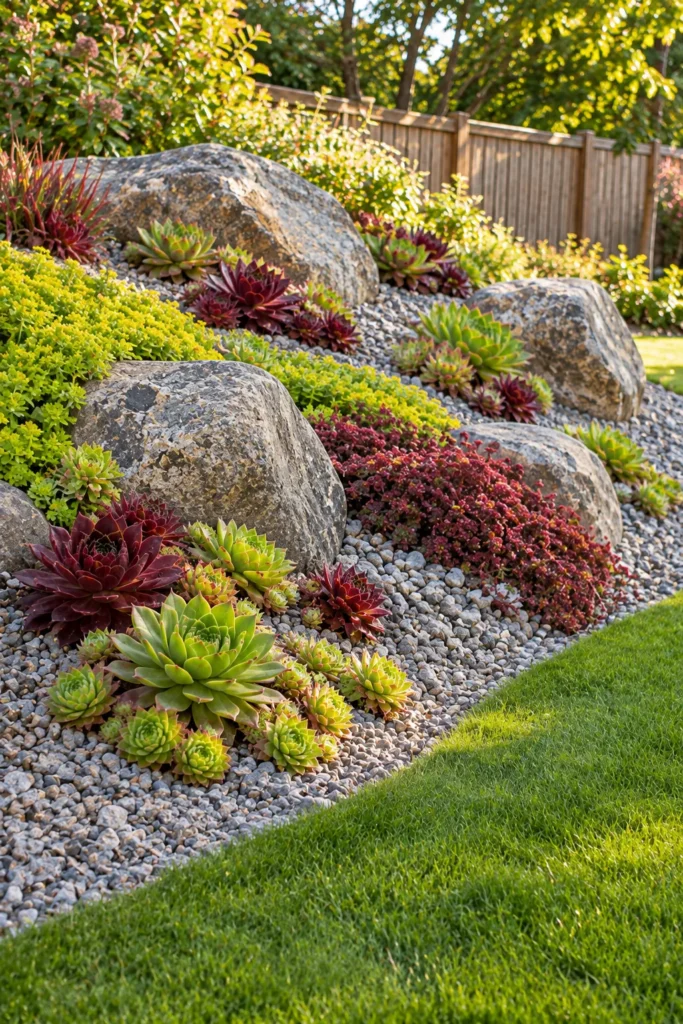
Most hardy succulents that die in a zone 5 garden don’t freeze to death. They rot, sitting in cold, soggy soil through a long thaw. A raised berm solves that by lifting the roots above the wet. Mound native soil mixed generously with gravel and coarse sand into a low hill, then set a few large boulders into it so they look half buried.
Plant hens and chicks, creeping sedum, and dragon’s blood sedum in the pockets between the stones. The rocks soak up sun and hold warmth, and the slope lets snowmelt run off instead of pooling around the plants. For more layouts using stone, these low-water succulent rock garden ideas build on the same principle.
🌿 Wet, Not Cold, Is the Real Threat
Many hardy succulents handle zone 5 cold and even sit happily under snow. What they can’t handle is soggy soil. Skip heavy mulch around the crowns, use gravel instead, and stop watering as fall nights approach freezing.
3. Stone Troughs Planted With Hardy Rosettes
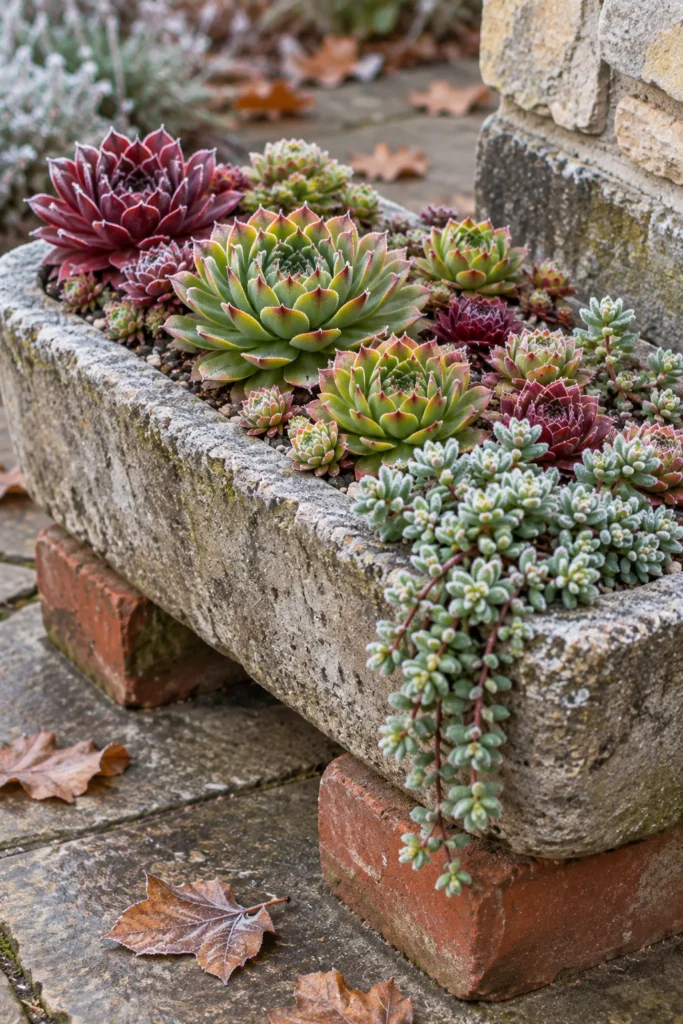
Can succulents stay in pots outside over winter in zone 5? Yes, if the pot is the right kind. A thick hypertufa or stone trough holds up to freeze and thaw, while thin terracotta tends to crack. Fill the trough with a very gritty mix of potting soil and pumice or coarse grit, and make sure the drainage hole is open.
Plant a cluster of jovibarba, whose rosettes roll loose and tumble when bumped, alongside a few small hens and chicks and a trailing sedum along one edge. Raise the trough on bricks or pot feet so water drains out the bottom rather than freezing in place.
A trough on a patio corner looks like an alpine garden in miniature, and it’s the right scale for a small yard.
4. A Sedum Carpet Along a Flagstone Path
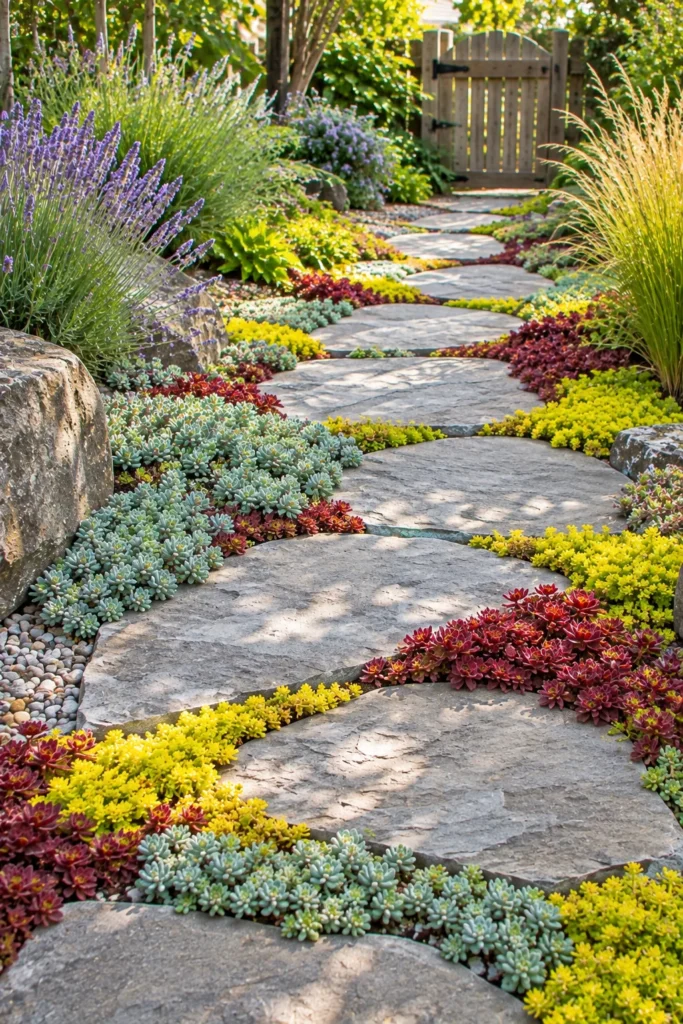
Creeping sedums are the low-maintenance answer to weeds between paving stones. Plant small plugs of three or four kinds, like blue spruce sedum, golden creeping sedum, and dragon’s blood sedum, in the gaps of a flagstone path. Within a season or two they knit into a carpet that handles the occasional footstep.
Mixing the colors is the move here. Blue, gold, and red sedums planted in drifts make the path look like it has been there for decades. The flat stones help too: they warm up in the sun and shed rain into the gaps, so the sedums get water without sitting in it. These low-maintenance succulent landscape ideas show how to carry the look into the rest of the yard.
Get the look: flagstones set in sand, blue spruce sedum, golden creeping sedum, dragon’s blood sedum, and a bag of gravel to fill the edges.
5. Eastern Prickly Pear and Yucca for a Bold Dry Bed
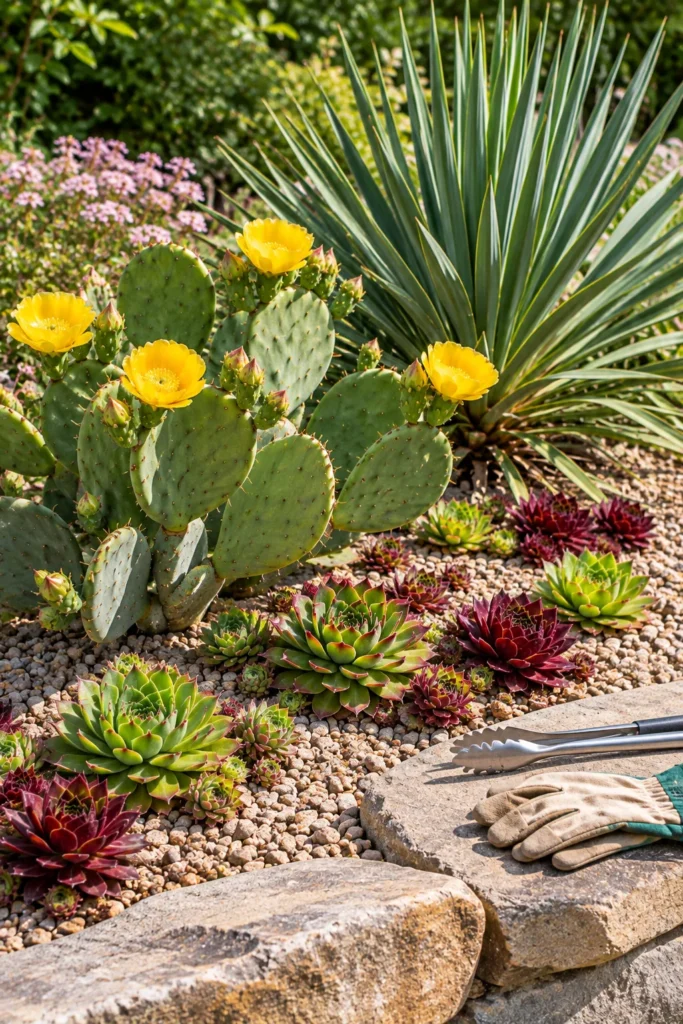
A zone 5 succulent garden doesn’t have to stay flat. Eastern prickly pear and yucca bring height and drama, and both are commonly sold as hardy in cold climates. Plant a sprawling clump of prickly pear in front and a spiky yucca behind it. Fill around them with gravel and a few low hens and chicks so the bed looks finished from the start.
Don’t panic the first winter. Prickly pear pads go limp, wrinkled, and slumped as the cold sets in, then plump right back up in spring. That’s how the plant protects itself, not a sign that it’s dying.
Handling note: Prickly pear pads are covered in glochids, tiny barbed spines that are hard to remove from skin. Wear thick gloves and use kitchen tongs when planting, and keep both plants well back from walkways where kids and pets play.
6. Hardy Ice Plant for a Summer-Long Color Border
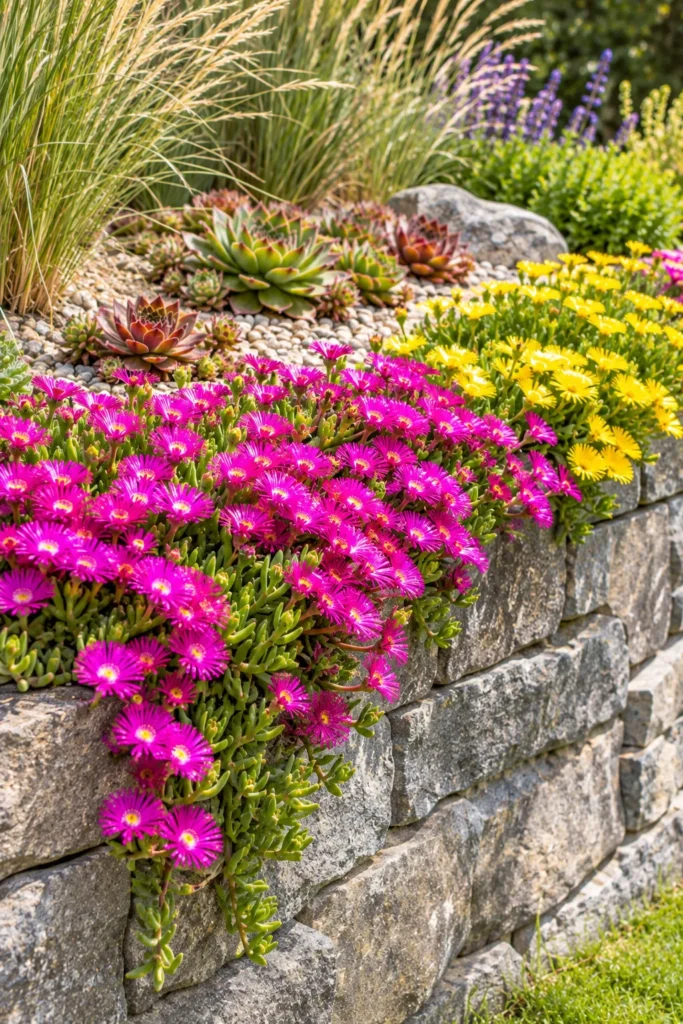
Most cold-climate succulents are about foliage. Hardy ice plant is the exception. Its low mats of fleshy leaves disappear under daisy-like flowers in hot magenta, purple, or yellow for much of the summer, so a border of it reads like a bed of annuals that comes back every year.
Plant it along the sunny, dry edge of a bed or at the top of a retaining wall, where it can spill over the side. It needs even sharper drainage than sedum, because ice plant dislikes winter wet more than almost anything else on this list. Not every ice plant is cold hardy, so check that the tag lists zone 5 before you buy.
Here’s a quick guide to the plants in this article and the job each one does:
| Plant | Role in the garden | Zone 5 note |
|---|---|---|
| Hens and chicks | Rosettes for beds, walls, and troughs | Very cold tolerant, handles snow cover |
| Creeping sedum | Ground cover and path filler | Many kinds hardy, check the tag |
| Tall upright sedum | Late summer flowers and winter seed heads | Dies back to the ground, returns in spring |
| Eastern prickly pear | Bold structure and yellow summer flowers | Pads shrivel in winter, plump in spring |
| Hardy ice plant | Flowering ground cover | Needs the sharpest drainage, check the tag |
| Jovibarba and dunce cap | Small rosettes for troughs and bowls | Cold tolerant in gritty, fast-draining mix |
7. Hens and Chicks Tucked Into a Dry Stone Wall
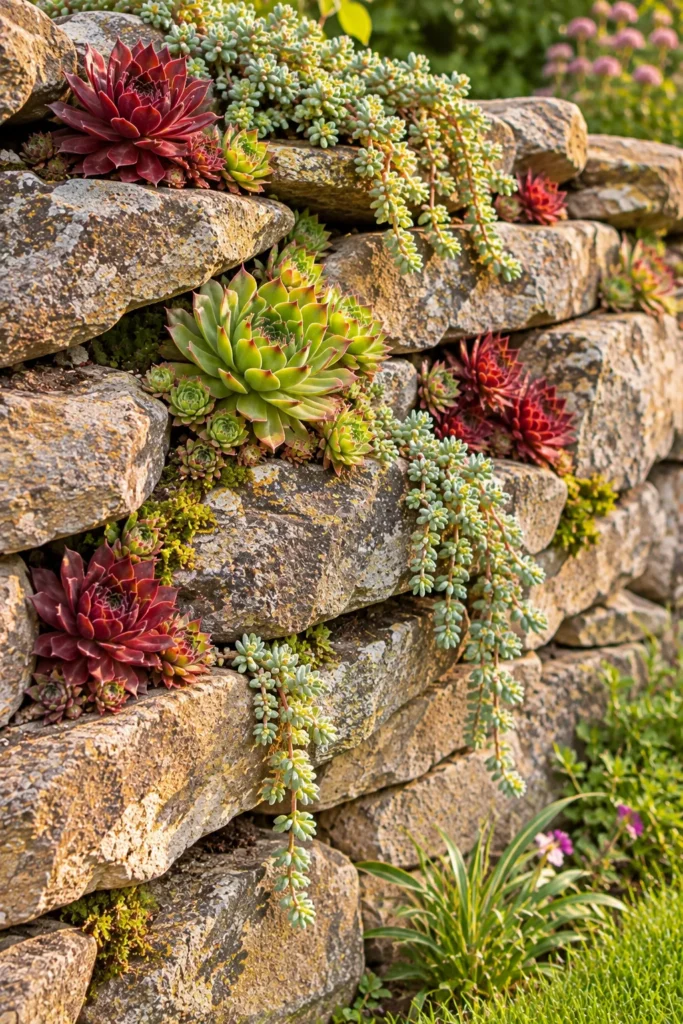
The cracks in a dry stone wall are close to perfect for hardy succulents. Water drains straight through, the stones hold the day’s warmth into the evening, and the roots stay high above any winter puddles. Tuck small hens and chicks and trailing sedum into the gaps between stones, wrapping each root ball in a pinch of moss and gritty soil so it holds in place until it roots.
Planting the vertical face turns a plain wall into a garden of its own. It’s especially useful in a small yard where bed space is tight. These modern succulent wall ideas show more ways to plant vertically.
Plant into existing walls with care, and never dig out stones from a retaining wall. Any wall that holds back soil, especially a tall one, should be built or checked by a professional.
8. Shallow Concrete Bowls of Dunce Cap and Jovibarba
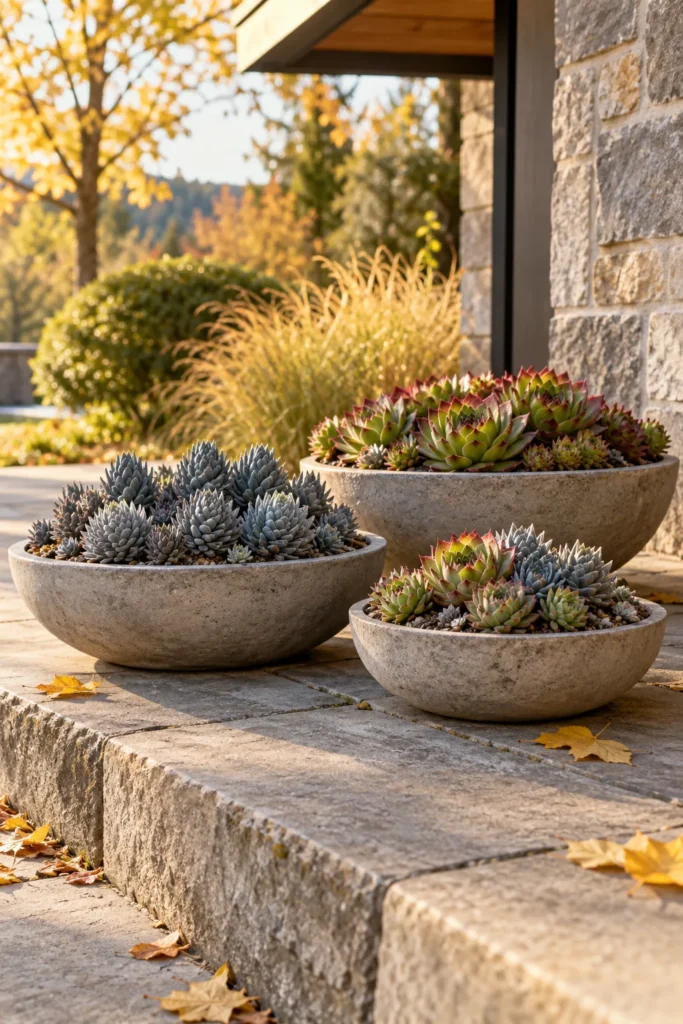
A shallow bowl suits small, shallow-rooted rosettes. It also dries out quickly after rain, which is exactly what you want in a cold climate. Choose thick cast concrete bowls, which hold up to freezing far better than thin clay, and fill them with a very gritty mix.
Plant dunce cap in one bowl. Its little pointed, gray-blue rosettes look like tiny pinecones. Fill another with round jovibarba rosettes, and group the bowls in a cluster of three on a sunny patio step. Dunce cap rosettes flower and die in the fall, but they leave behind baby offsets, so the bowl refills itself.
Winter note: Leave the bowls outside, but set them under the edge of the eaves, where snow can still fall on them but a long autumn rain won’t flood them.
9. A South-Facing Foundation Bed That Borrows the House’s Warmth
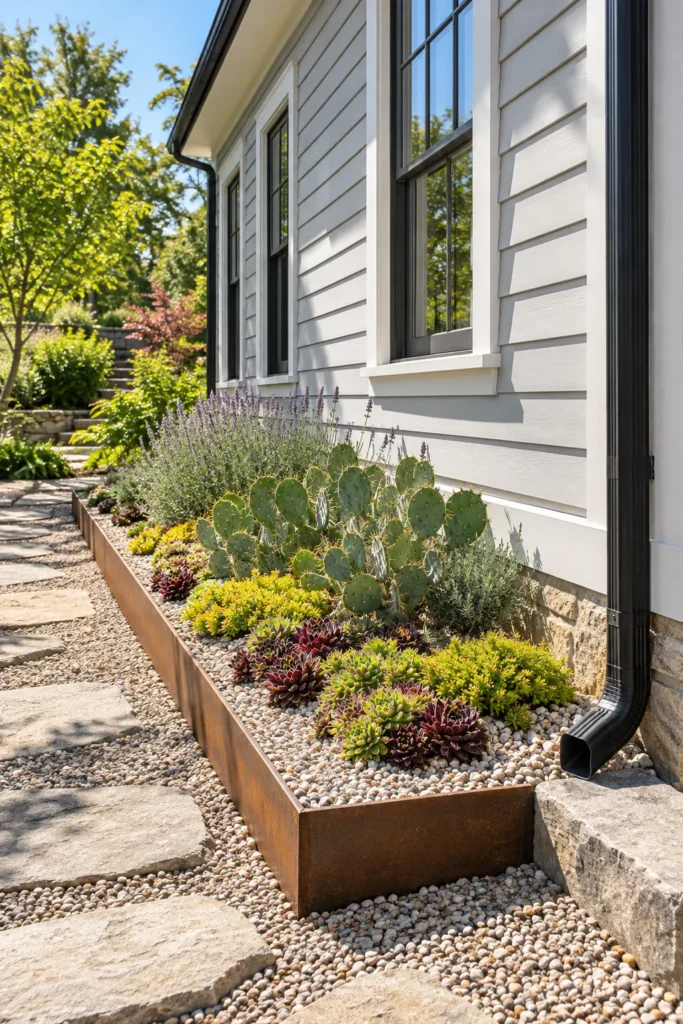
Every yard has warmer and colder spots, and the warmest is often a strip along the south-facing wall of the house. The wall soaks up sun all day and gives off heat at night, so snow melts there first in spring. Raise the bed a few inches with a stone or steel edge, fill it with gritty soil and a gravel top dressing, and plant hens and chicks, creeping sedum, and a clump of prickly pear, with lavender as a companion.
Two things undo this spot fast, so check for them first. A downspout that empties into the bed will flood it every thaw, so redirect it away from the plants. And snow sliding off a steep roof can crush anything below, so set the bed out past the drip line.
Plant in spring after the soil can be worked, so roots settle in before their first winter.
10. Summer Containers of Tender Succulents That Move Indoors
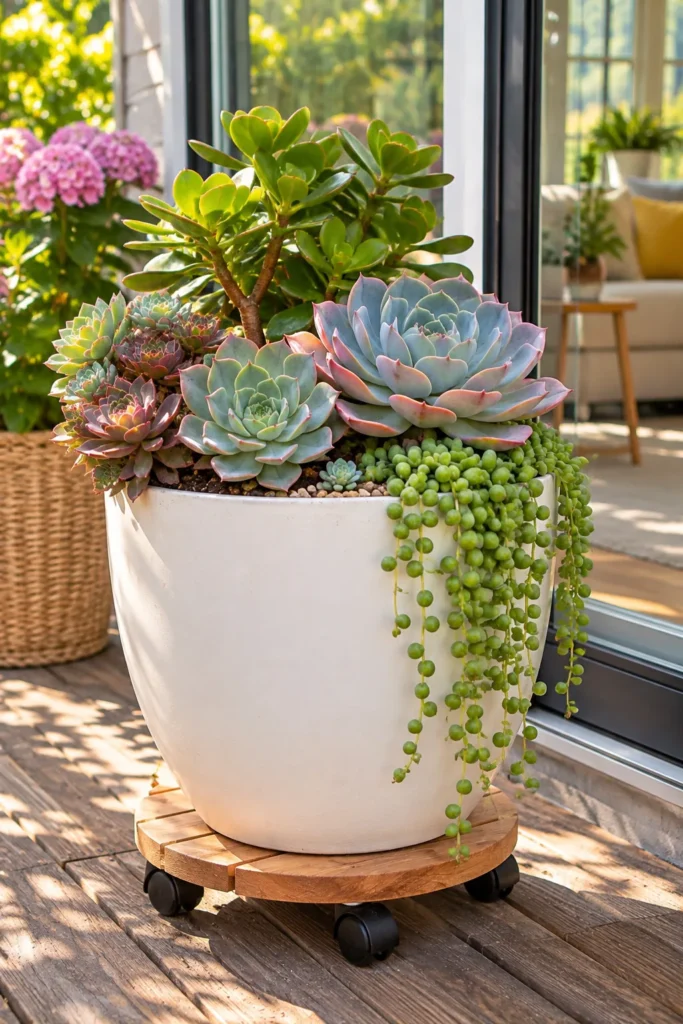
Living in zone 5 doesn’t mean giving up on echeveria, string of pearls, or jade plant. It just means treating them as summer guests. Plant the tender succulents in a large, lightweight pot set on a rolling plant caddy. Enjoy them on the patio from late spring, then wheel them inside before the first frost.
Indoors, they want the sunniest window you have, or a bright, unheated porch that stays above freezing. Water much less in winter while the plants are resting. Keep this pot separate from your hardy plantings, since mixing tender and hardy plants in one container means one group always ends up in the wrong place. These easy-care succulent container ideas work for summer patios and winter windowsills alike.
You will need: a large lightweight pot with a drainage hole, a rolling plant caddy, gritty cactus and succulent mix, and tender succulents like echeveria, string of pearls, and jade plant.
11. Upright Sedums Left Standing for Winter Interest
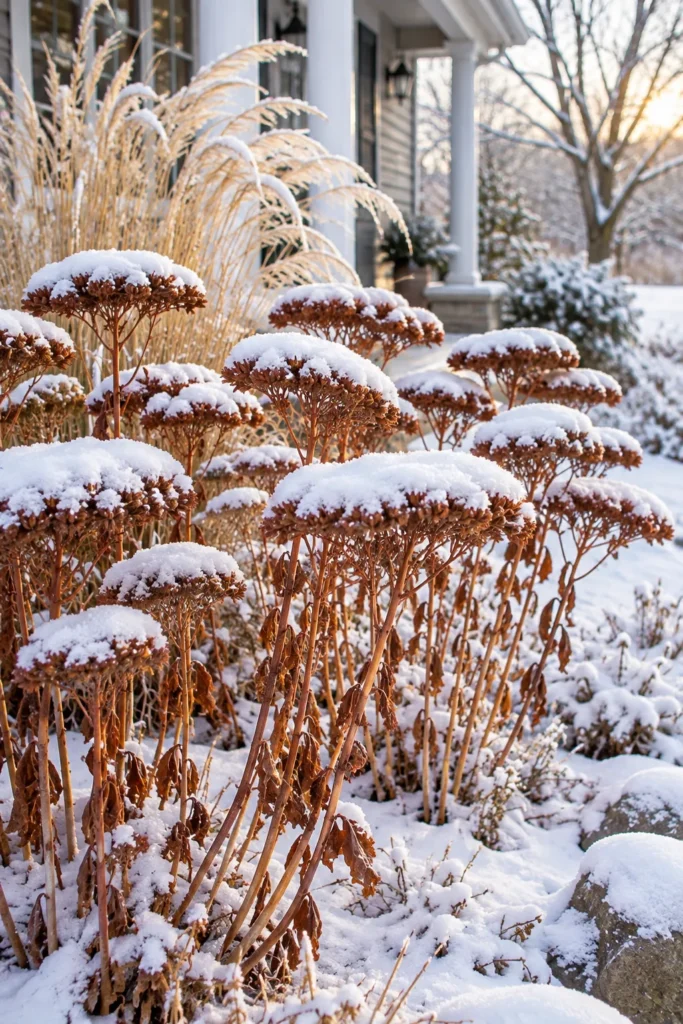
Most of a cold-climate garden goes bare by December, so leave something worth looking at. Tall upright sedums flower pink in late summer, fade to rusty brown in fall, and hold their broad, flat seed heads all winter. After a snowfall, each one wears a little white cap.
Plant them in drifts of three or five between ornamental grasses, whose tan plumes sway behind the sturdy sedum heads. Don’t cover or mulch them, and resist cutting them back in fall. Wait until early spring, when fresh green buds appear at the base, then trim the old stems to the ground.
The bed keeps its structure through the darkest months and gives birds a place to perch.
12. A Sedum Living Roof on a Garden Shed
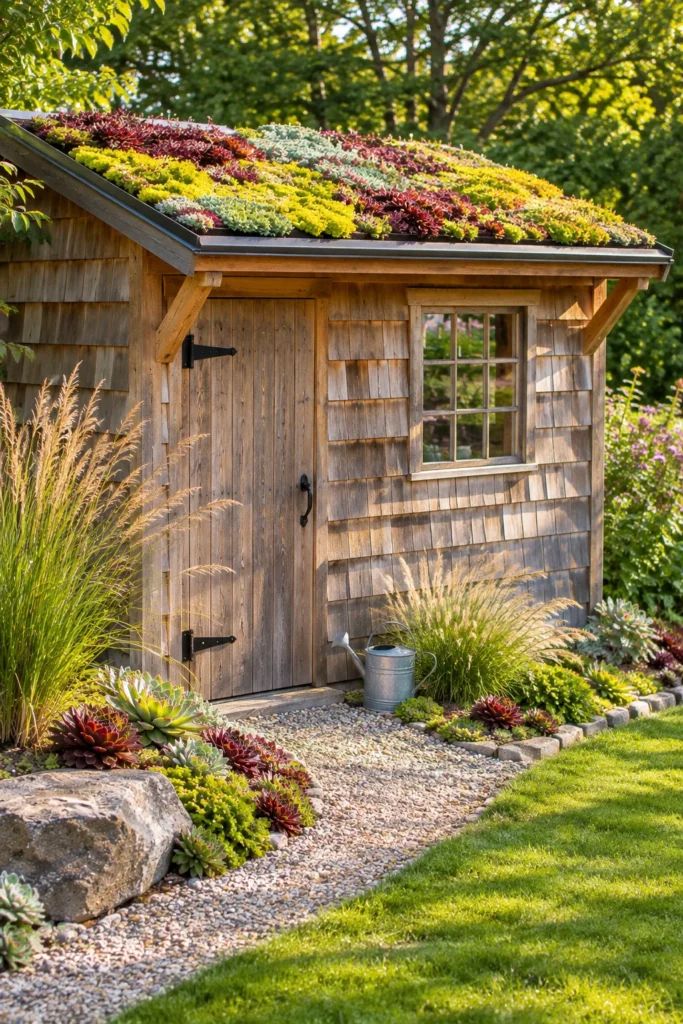
For a showpiece, put the succulents overhead. A small garden shed or potting shed topped with a living roof of sedum looks like it grew out of the hillside. Sedums are popular for green roofs because they hold water in their leaves, survive in a thin layer of growing mix, and come through hard winters.
The easiest route is pre-grown sedum mats laid into a shallow, lined tray with drainage at the low edge, rather than planting a roof from scratch. Mix blue, gold, and red sedums for a patchwork that shifts color with the seasons.
Before you start: Wet soil plus a load of snow is very heavy. Have a professional confirm the shed roof can carry the weight and handle any structural changes before a single plant goes up.
How to Keep Cold Hardy Succulents Alive Through Winter
Every idea on this list follows the same handful of rules. Get these right and most hardy succulents need little else from you.
The zone 5 winter checklist
Zone 5 Succulents FAQ
What succulents survive zone 5 winters?
Hens and chicks, many creeping sedums, tall upright sedums, jovibarba, dunce cap, eastern prickly pear, yucca, and some hardy ice plants are commonly sold as zone 5 hardy. Ratings vary by type and nursery, so check each plant tag. The table in idea 6 shows what each plant does in the garden.
Should you mulch or cover succulents in winter?
Usually not. Hardy succulents handle cold and snow cover well, but a thick layer of wood mulch or a cover can hold moisture against the crowns and cause rot. A gravel top dressing does a better job. Ideas 1 and 2 show how to set it up.
Can succulents stay in pots outside over winter in zone 5?
Hardy succulents can, as long as the pot is thick and frost resistant, like stone, hypertufa, or cast concrete, and the mix is very gritty. Raise the pot on feet so it drains freely. Thin terracotta often cracks in a freeze. See ideas 3 and 8.
When should you plant succulents in zone 5?
Spring, once the ground can be worked, is the safest time, because it gives roots a full season to settle in before winter. Early summer works too. Late fall planting is risky, since young plants haven’t anchored themselves before freeze and thaw cycles start lifting them.
Why do hardy succulents rot in winter?
Most winter losses come from wet soil, not cold. Snowmelt and cold rain that sit around the roots for weeks cause rot even in tough plants. Raised berms, gravel mulch, redirected downspouts, and gritty soil keep water moving away. Ideas 2 and 9 focus on this.
Conclusion
Cold winters don’t rule out succulents. They just change the rules. Pick plants rated for zone 5, give them full sun and gritty soil, and keep the roots out of standing water, and a hardy succulent garden will come back on its own every spring. Start small with a gravel bed of hens and chicks or a single trough, then add a rock berm or a sedum path once you see what thrives in your yard. When you’re ready to plan the whole space, these modern succulent garden design ideas help pull it together. Save this for your spring planting list.