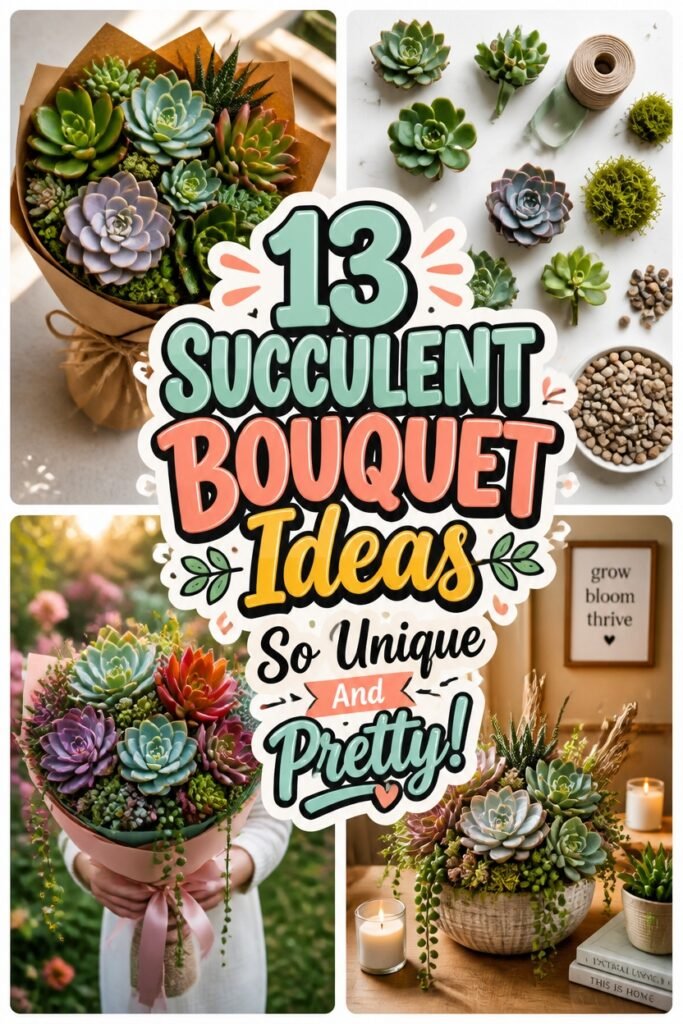
Succulent bouquets are having a quiet moment in the spotlight, and it’s easy to see why. They outlast cut flowers by weeks, barely ask for water, and slot effortlessly into almost any style of home.
You’ll find them dressed up in soft blush and rose gold for weddings, or stripped back in sun-baked desert tones for modern, earthy spaces. Some arrangements lean into a single mood with monochromatic palettes, while others gather jewel tones or gentle pastels for something more playful.
What makes them truly special is how small choices shift the whole feel. A sleek ceramic pot reads minimalist. Weathered terracotta brings warmth.
Color and texture work together to turn these easygoing plants into thoughtful gifts or quiet statement pieces for your shelf.
Blush & Rose Gold Succulent Bouquet
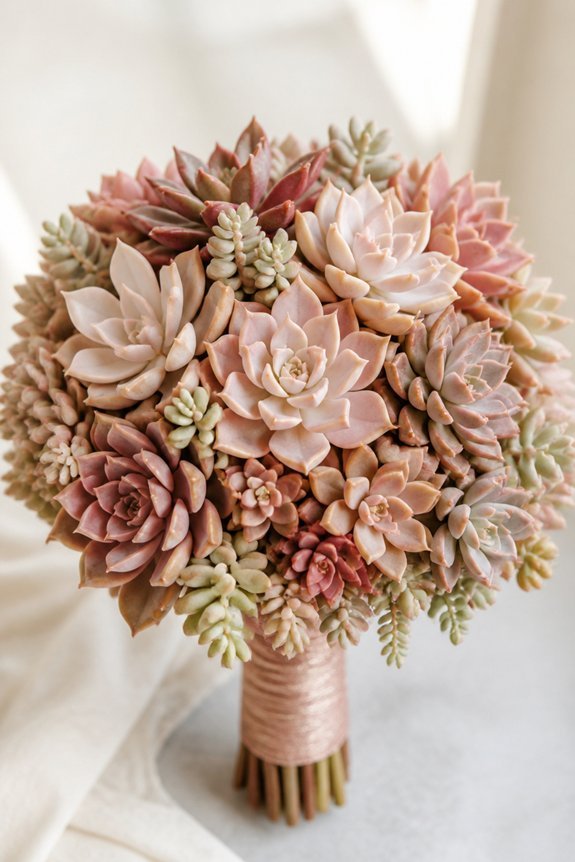
Blush and rose gold succulent bouquet
Soft pink tones meet metallic accents in this modern arrangement style. You get drought-resistant plants that look delicate but last forever.
Echeveria in pale pink forms the base. Sedum adds dusty rose depth. Aeonium rosettes give structure and height. Rose gold wrapping and ribbon tie everything together without overpowering the plants.
Try pink jade or graptopetalum for that coveted rosy glow. These succulents already grow in the right colors, so no need for dyes or sprays. Copper wire woven through the arrangement catches light beautifully. For containers, look for rose gold painted pots at craft stores or online.
Perfect for weddings, bridal showers, or your living room shelf. The pastels keep things romantic. The metallics add edge. Guests often mistake these for fresh flowers at first glance.
Water once every two weeks. Keep near bright, indirect light. Your bouquet stays picture-perfect for months with almost zero effort.
Also read: 11 SUCCULENT CONTAINER IDEAS Ideas Easy To Maintain!
Desert Rainbow Succulent Bouquet
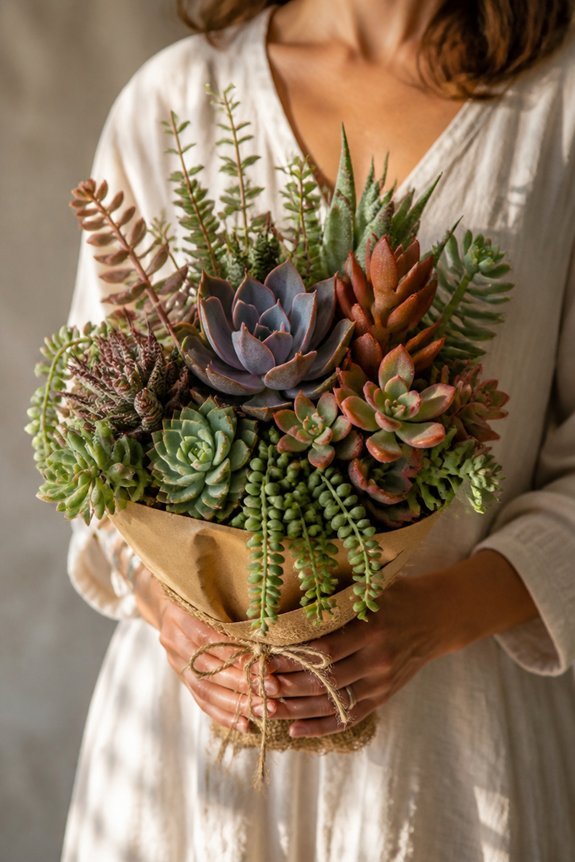
Forget soft pastels. This style goes bold. Deep purples, bright oranges, pale yellows, and rich reds all share the same pot.
Pick your stars carefully. Echeveria elegans brings pale pink tones. Aeonium arboreum adds dramatic dark purple. Sedum varieties contribute those fiery orange and red pops. Sunlight does the work here. These colors aren’t painted on. They’re natural pigments plants develop when exposed to bright light.
Height matters. Group similar sizes together. Then spread your colors around. Don’t bunch all the purple in one corner. Aim for a balanced rainbow effect across the whole arrangement. The result feels energetic and alive. Perfect for anyone tired of understated plant displays.
Monochromatic Succulent Bouquet For Modern Spaces
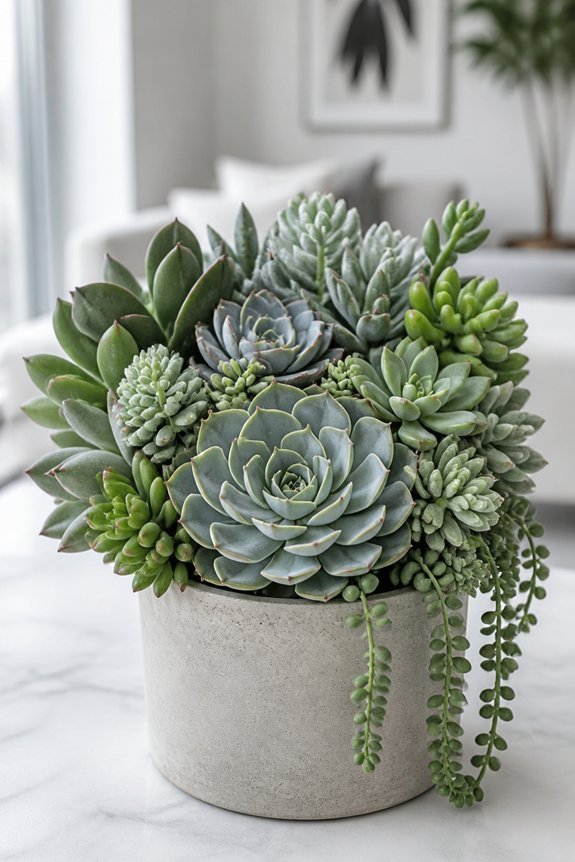
Monochromatic arrangements stick to one color family. This keeps things clean and unified. Your eye knows exactly where to look.
Visual noise disappears when colors compete less. Suddenly you notice texture. You notice shape. Those become the stars.
Grays work beautifully for modern spaces. Try Echeveria elegans alongside Graptopetalum. Add dusty miller for softness. The result feels sophisticated without trying too hard.
Green offers the most variety. Mix jade plants with deep Crassula. Layer in Sedum species from lime to forest. Same color, endless interest.
Purple brings drama when you want it. Aeonium ‘Zwartkop’ reads nearly black. Echeveria ‘Black Prince’ adds depth without breaking the palette.
These bouquets thrive in minimalist rooms. They suit offices and contemporary homes perfectly. One color means visual rest for your brain.
Maintenance gets simpler too. No clashing hues means no constant rearranging. Everything already coordinates.
Choose rectangular containers. Geometric planters emphasize the architectural feel. Sharp lines plus soft succulents creates satisfying contrast.
Jewel-Tone Succulent Bouquet
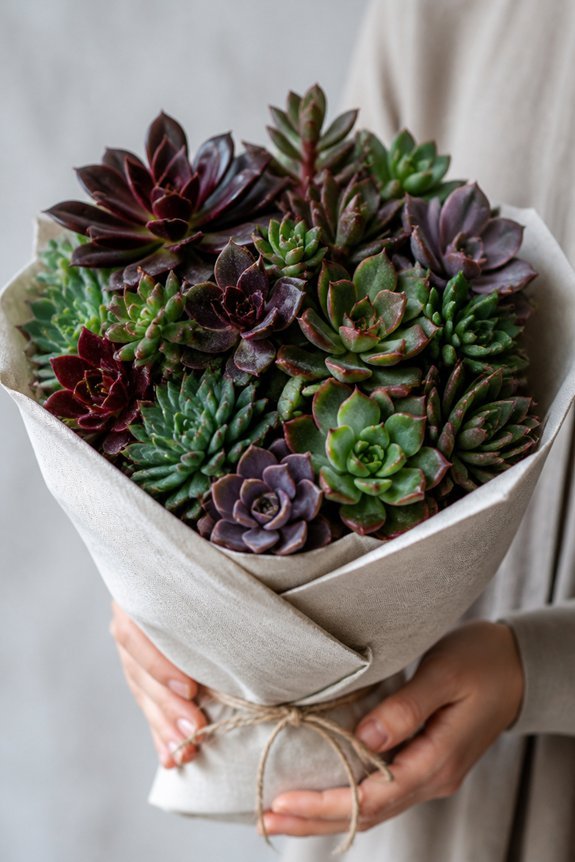
Monochromatic bouquets find unity through repetition. Jewel-tone arrangements play with difference instead. They gather rich, saturated colors that simply work together.
Deep purples sit next to emerald greens. Burgundy reds add warmth between them. The result feels layered and sophisticated without trying too hard.
Specific pairings make this style sing. Wine-colored echeveria varieties love company from dark-leaved jade plants. Aeonium arboreum ‘Zwartkop’ brings dramatic black-purple rosettes to the mix. For a spark of heat, Sedum nussbaumerianum contributes orange-red undertones.
Jewel tones balance naturally. You don’t need perfect color matching. The colors do the work for you.
Height and texture matter here. Let trailing succulents spill over edges. Keep compact rosettes as anchors. This contrast adds movement.
Your container choice shapes the whole look. Metals reflect light beautifully against saturated colors. Deep ceramics ground the arrangement. Dark wood adds organic warmth.
This bouquet style travels well between spaces. It suits sleek contemporary rooms. It holds its own in traditional settings too. The complexity comes from color interplay, not restraint.
Pastel Dream Succulent Bouquet With Soft Echeveria
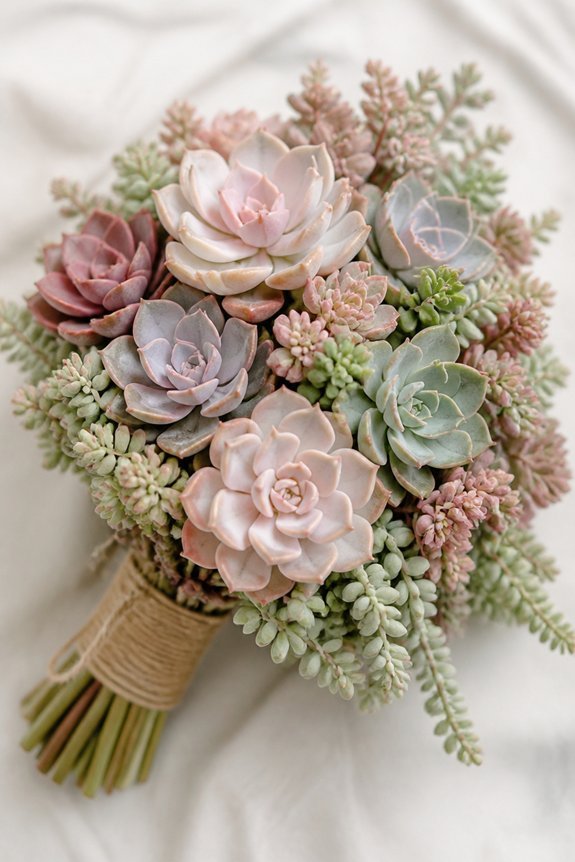
Pastel succulents bring calm without the drama of bold colors. Soft echeveria comes in pale pink, lavender, and cream tones. These gentle hues create instant visual peace.
Try pairing them with dusty rose sedum or blush aeonium. Pale green crassula adds another layer of softness. The mix feels effortless and lived-in.
Terracotta or ceramic pots work best here. They echo the muted palette rather than competing with it. Your bedroom or bathroom becomes a quiet retreat.
Light matters for echeveria. Give them bright, indirect sun and barely any water. They thrive on neglect, honestly.
The color stays true year-round. No waiting for a bloom or season change. Just steady, quiet beauty for people who prefer subtle over loud.
Trailing Succulents That Cascade Like A Waterfall
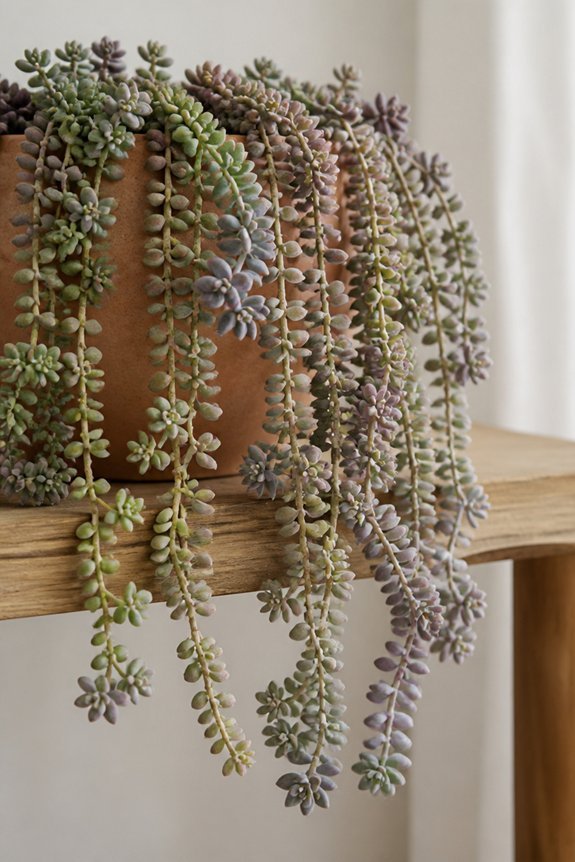
Trailing succulents solve a real problem for small spaces. They grow downward instead of outward. This makes them perfect for spots where floor space is tight.
Hang them in baskets. Mount them on walls. Place them on high shelves. They cascade over edges like living waterfalls. String of pearls looks like tiny green beads tumbling down. Burro’s tail drapes in thick, velvety ropes. Jade necklace spills over with plump, stacked leaves.
Their pendant stems keep stretching toward the ground. The longer they grow, the more dramatic the effect becomes.
Keep them happy with bright, filtered light. Use a gritty, fast-draining mix. Water only when the soil feels bone dry. These plants prefer to stay slightly thirsty.
Pair trailing kinds with upright echeverias or haworthias. The contrast in direction and texture creates instant depth. Try this on a narrow windowsill or floating shelf. Traditional potted plants would crowd these spots. Cascading succulents turn them into displays instead.
Minimalist Single-Stem Succulent Statement
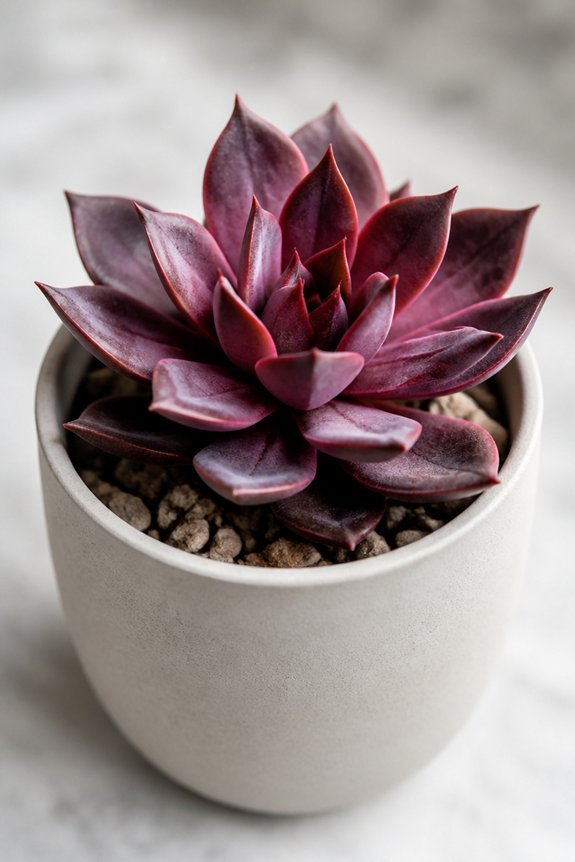
Pick one plant. Let it speak for itself.
A single echeveria, aloe, or jade cuts through the noise. No clutter. No filler. Just one specimen that catches the eye through shape, surface, or shade alone.
Go tall when you can. Aeonium arboreum stretches upward with rosette crowns. Mature jade develops woody stems and tight foliage. Short on space? Echeveria elegans fits slim vases for vertical lift.
This approach asks little of you. Give it light, water sparingly, and drainage that works. The piece stays with you. It shifts from accent to permanent resident whenever you like.
Rustic Wood Box Filled With Succulents
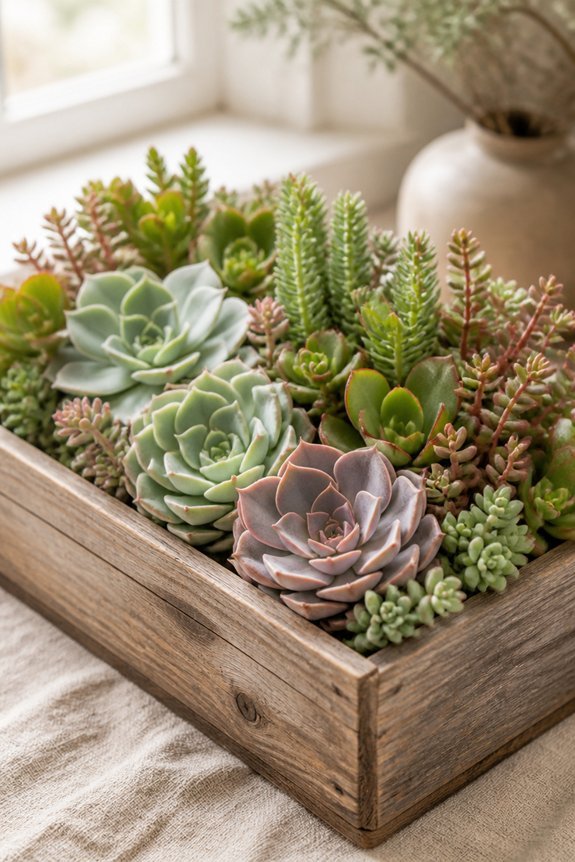
A rustic wood box brings warmth to any space. It pairs beautifully with mixed succulents. The natural grain adds character that plastic simply cannot match.
Choose cedar or redwood if you can. These woods resist rot far better than pine or fir. Your box will last seasons longer outdoors.
Drainage matters more than anything else. Drill several holes in the base before planting. Skip this step and your succulents will drown.
Arrange your plants with height in mind. Taller echeveria or jade plants go toward the back. Nestle tiny sedums and ground-hugging varieties up front. This layering creates instant visual depth.
Leave breathing room between each plant. Crowded succulents invite mildew and pests. Aim for at least an inch of space on all sides.
Fill every gap with gritty cactus soil. Regular potting mix stays too wet for these desert natives. Your local garden center stocks bags specifically blended for succulents.
Water sparingly. Every two to three weeks works for most climates. Always check that soil feels completely dry first.
These boxes thrive indoors on sunny windowsills. They look equally at home on patio tables or garden steps. The weathered aesthetic only improves with age.
Tall Succulent Bouquet For Dramatic Spaces
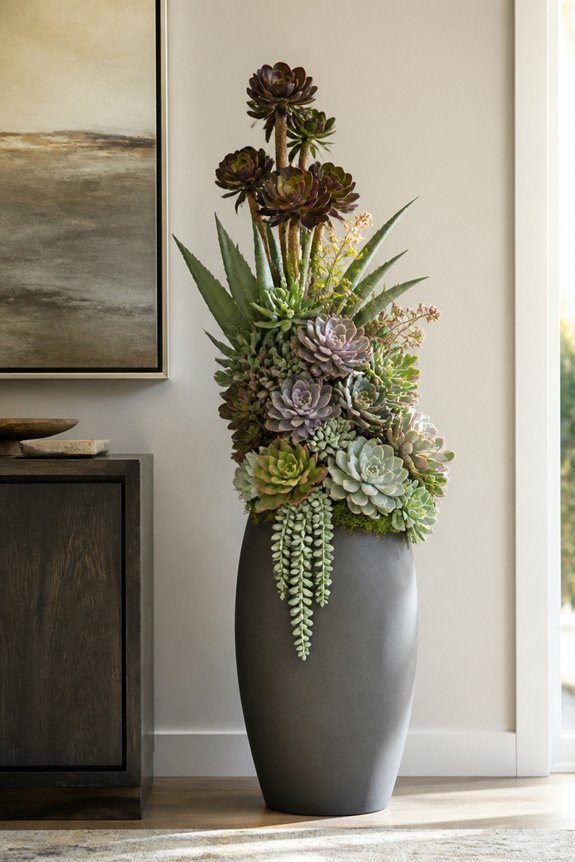
Tall succulent bouquets command attention in rooms with high ceilings. They draw the eye upward and fill empty vertical space beautifully.
Most arrangements stand between 18 and 36 inches. Choose tower echeveria, jade plants, or aeonium for natural height. Narrow vases or cylinders keep everything stable without looking bulky.
Layer your plants for depth. Put larger specimens at the base. Tuck smaller rosettes higher up. Mix textures too. Silvery blue chalk sticks look stunning against deep red aeoniums.
These work perfectly in entryways, dining rooms, and empty corners. You get visual impact without sacrificing floor space.
Succulent Wreath Bouquet For Weddings
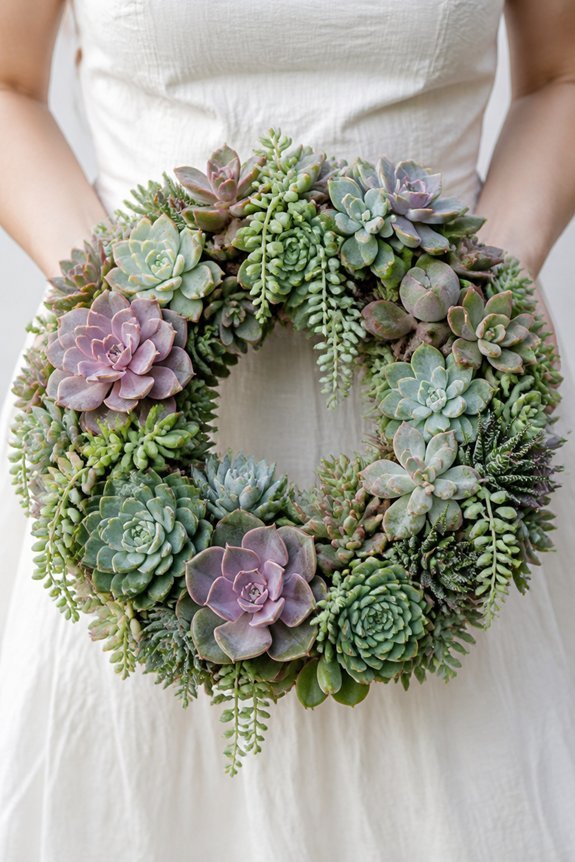
Succulent wreaths solve real wedding problems. They look stunning in photos. They survive long ceremonies without wilting.
These circular bouquets feature tough little plants like echeveria and jade. Each one gets secured to a sturdy base. The result holds up for hours, even days.
You can use them everywhere. Brides love them as bouquets. Bridesmaids carry matching versions. They also work as aisle markers or table centerpieces.
Color options stretch far beyond green. Try soft pinks for spring weddings. Deep burgundy suits fall celebrations. Some couples mix purple and coral for something unexpected.
Heat won’t destroy these arrangements. Forgot to water them before the ceremony? They won’t mind. This alone saves many wedding day headaches.
Sizes run from eight to fourteen inches. Smaller wreaths suit flower girls. Larger ones make bold statement pieces.
Ask your florist about custom touches. Wire spirals add modern flair. Velvet ribbons bring softness. Small herbs like lavender add fragrance.
Plan ahead when ordering. Succulents need time to root into their bases. Rush orders sometimes limit your variety choices.
Sealed Glass Terrarium Alternative To Bouquets
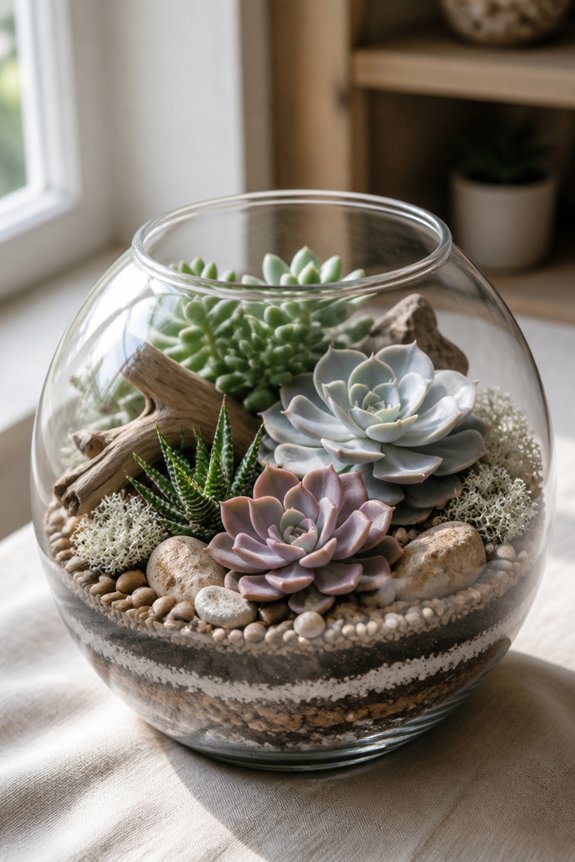
Glass terrariums give you a smart way to skip traditional succulent bouquets. They seal everything inside. Your plants stay safe from bumps and bruises. You water less too.
Moisture moves around inside on its own. The system basically runs itself.
Pick Your Plants
Echeveria works beautifully here. Jade plants thrive in closed spaces. Aloe fits nicely as well. The glass lets people enjoy the arrangement from every side. Set one on a desk. Place another on a shelf. They become instant centerpieces.
Perfect For Tricky Situations
Wedding transport stressing you out? Corporate gift that needs to last? These solve both problems. They handle travel better than loose bouquets. They stick around for months instead of days.
Build It Right
Start with pebbles at the bottom. Add activated charcoal next. Then your soil mix. Choose plants that like humidity. Watch for foggy glass. That means too much moisture inside. Open the lid briefly if needed. Root rot sneaks up fast on sensitive plants. Check weekly during the first month.
Seasonal Succulent Bouquet With Dried Elements
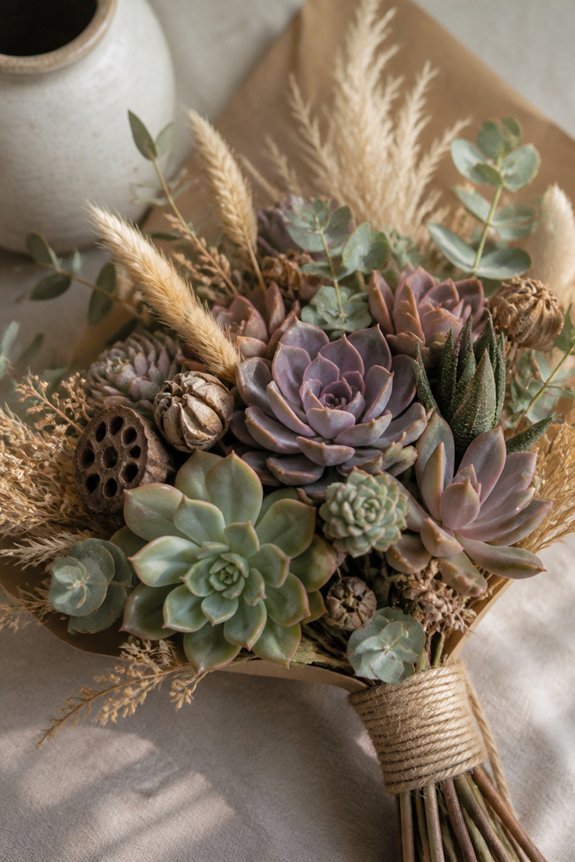
Less water. Less worry. That’s the magic of mixing dried elements with your succulents.
Seasonal shifts hit different when fresh flowers dry up or cost too much. Dried pampas grass, wheat stalks, and eucalyptus branches step in beautifully here. They pair naturally with plump succulents like echeveria, jade, and sedum. Fall and winter especially love this combo.
These dried botanicals bring height and texture without the fuss. No wilting. No daily water checks. Your succulents store their own moisture anyway, so dry partners make perfect sense.
Try bronze-toned dried grasses with autumn succulents for cozy seasonal vibes. Come spring, lighten things up with pale succulents and airy dried baby’s breath or statice. Either way, these arrangements stick around for weeks. Great for gifts. Great for your own space.
Gift-Ready Succulent Arrangement In Ceramic Planter
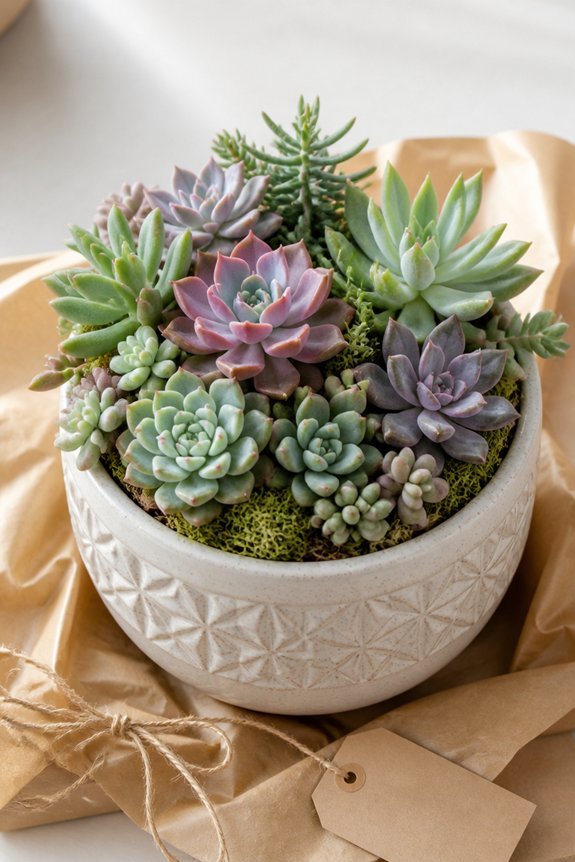
You’ll love how ceramic planters do double duty. They hold your plants. They look gorgeous on a shelf. No wrapping paper needed. No gift bags to hunt for.
Pick finishes that match your friend’s style. Glossy neutrals suit minimalists. Textured surfaces add warmth. Rectangular shapes fit windowsills. Round ones soften desk corners.
Choose succulents that play well together. Echeveria rosettes catch the eye. Jade plants add height from behind. Aloe tucks neatly into front corners. Put tall plants in back. Keep short ones up front. This trick creates instant depth.
Never skip the drainage hole. Root rot kills gifts fast. Fill with proper succulent soil. It dries quickly and keeps roots happy.
Your recipient unwraps nothing. They place it down. They enjoy it immediately. A small card with watering tips completes the gesture. Water when soil feels dry. Bright indirect light keeps colors vibrant.
Ceramic planter gifts work for birthdays, housewarmings, or just because. Practical and pretty always wins.
Frequently Asked Questions
How Long Do Succulent Bouquets Typically Last Before Needing Replacement?
Succulent bouquets typically last several months to over a year, depending on care quality and environmental conditions. Proper watering, adequate sunlight, and appropriate temperatures greatly extend their longevity. With ideal care, one may enjoy these arrangements considerably longer than traditional floral bouquets.
What Is the Best Way to Water Succulent Bouquets After Purchase?
One should not put all their eggs in one basket when watering these arrangements. A light misting every two weeks suffices, ensuring soil dries completely between waterings. Overwatering kills succulents; minimal moisture preserves their longevity and vibrant appearance effectively.
Can Succulent Bouquets Be Shipped Safely, and Do They Arrive Healthy?
Yes, succulent bouquets can be shipped safely when properly packaged. Growers typically secure plants with tissue wrapping and cushioning materials. Most arrive healthy if shipped during mild weather, though some minor leaf damage occasionally occurs during transit.
Are Succulent Bouquets Suitable for Indoor Spaces With Low Light Conditions?
Studies show that 80% of succulents require six hours of direct sunlight weekly. Consequently, succulent bouquets are generally unsuitable for consistently low-light indoor spaces, as they risk etiolation and decline without adequate illumination.
How Should I Care for a Succulent Bouquet During Winter Months?
One should reduce watering frequency considerably, as succulents require minimal moisture during dormancy. Placement in bright, indirect light remains essential. Temperatures between 50-60°F are ideal. Protection from frost and cold drafts is critical for survival.
Conclusion
Succulent bouquets function like living investments. A wedding planner reported that one Blush & Rose Gold arrangement lasted six months, outlasting fresh flowers by five. These displays adapt to various spaces—Desert Rainbow suits modern homes, while Pastel Dream works in bedrooms. The thirteen styles presented offer practical options for different occasions, budgets, and aesthetic preferences, making succulents a reliable choice for long-term decorative arrangements.