
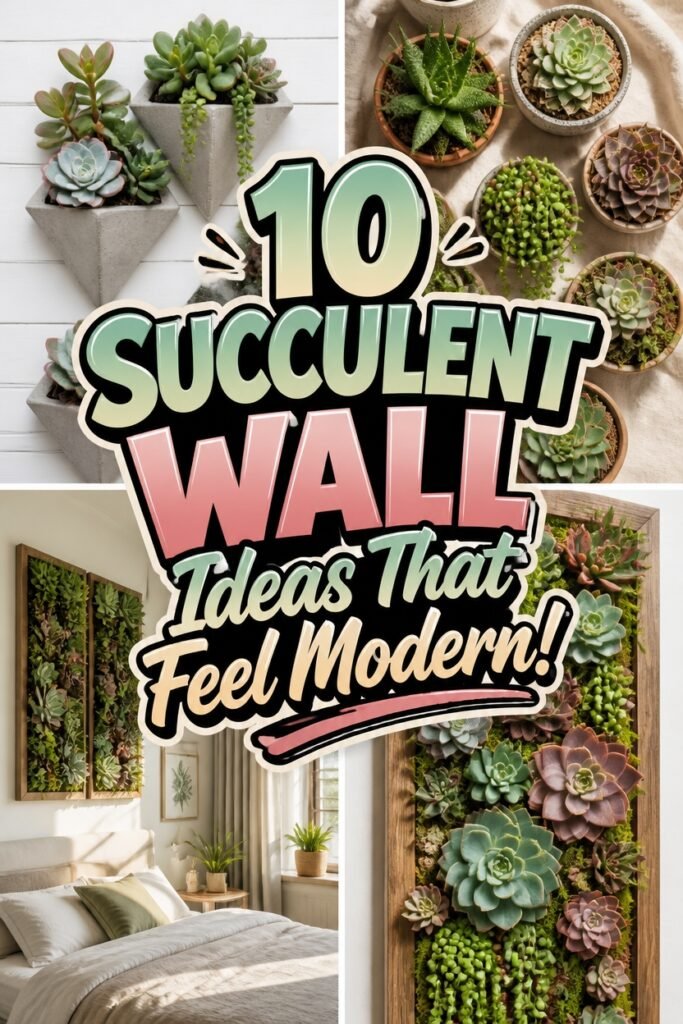
Succulent walls are having a moment, and it is easy to see why. They bring life to compact spaces without demanding much in return.
Framed grids, soft cork backings, and sculptural planters each offer their own quiet personality. Some lean minimalist, others feel more organic.
The best part is finding what actually fits your space and routine.
Below are ten approaches worth considering, from floating shelves to macramé moments. Each one balances beauty with the low maintenance these plants are known for.
Geometric Succulent Wall Planters for Clean Lines
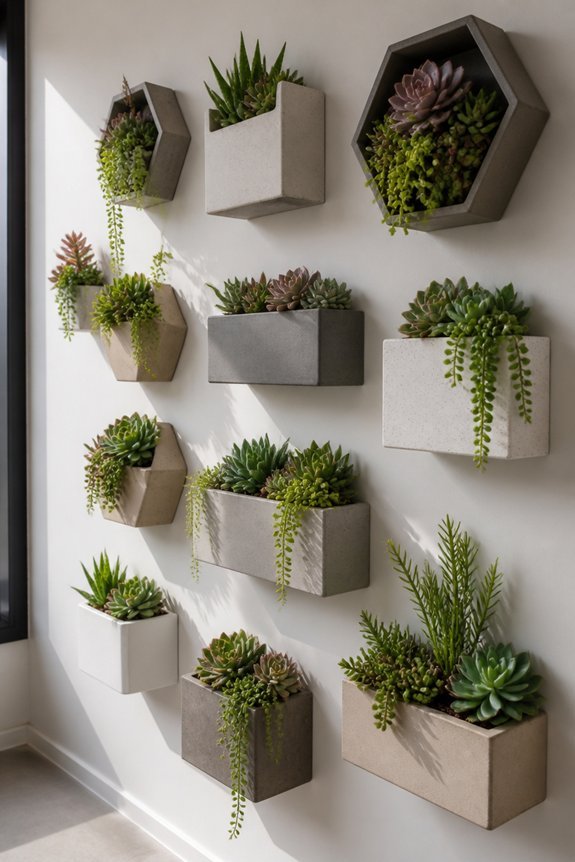
Geometric planters give your succulents a tidy, organized look. Clean lines and sharp angles fit beautifully into modern spaces.
Think hexagons, cubes, triangles, or diamond patterns. Each shape brings something different.
Hexagonal planters spread your plants evenly across six sides. Cubes work great when you want matching rows of tiny succulents. Triangular mounts stack vertically for eye-catching walls. Diamond shapes catch light on their angled surfaces.
Pick from concrete, ceramic, or metal frames with soft pockets. These shallow containers suit echeverias, jade plants, and sedums perfectly.
Try clustering three hexagon planters in your entryway. Or line up cubes on a kitchen wall. The consistent shapes pull your whole room together. Even cramped apartments gain visual breathing room from this structured approach.
Also read: 16 SUCCULENT GARDEN DESIGN Ideas That Feel Modern!
Cascading Succulents in Vertical Frames
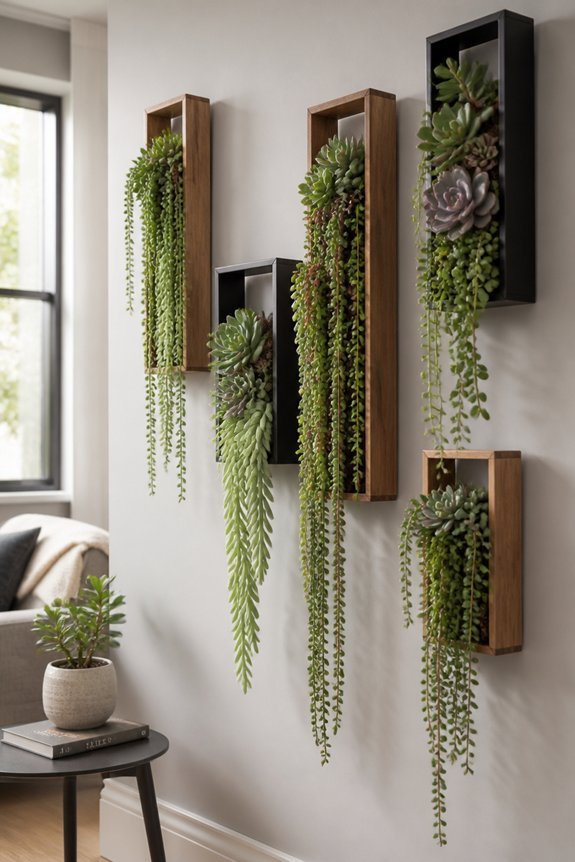
Trailing succulents can turn any bare wall into something alive. They spill over edges like green waterfalls. Each strand catches light differently.
String of Pearls looks like beaded necklaces swaying in breeze. Burro’s Tail forms fuzzy ropes of plump leaves. Even Jade Pothos joins the party with heart-shaped foliage trailing down.
Vertical frames make this magic possible. They use shallow pockets to cradle roots and soil. Wood warms up modern spaces. Metal suits industrial lofts. Fabric works for renters who move often.
Light makes or breaks these displays. South-facing walls feed most trailing varieties happily. Too dark and your pearls turn dull. Too harsh and leaves crisp at edges.
Drainage holes prevent headaches later. Nobody wants mold blooming behind picture frames. Space plants six inches apart minimum. Crowding invites trouble with rot and pests.
Water when soil dries out completely. Fertilize lightly in spring growth spurt. Snip long strands to trigger bushier regrowth. The cuttings root easily in fresh soil.
These living frames soften rooms instantly. They prove gardens can grow anywhere, even sideways.
Living Moss Succulent Walls With Mixed Plantings
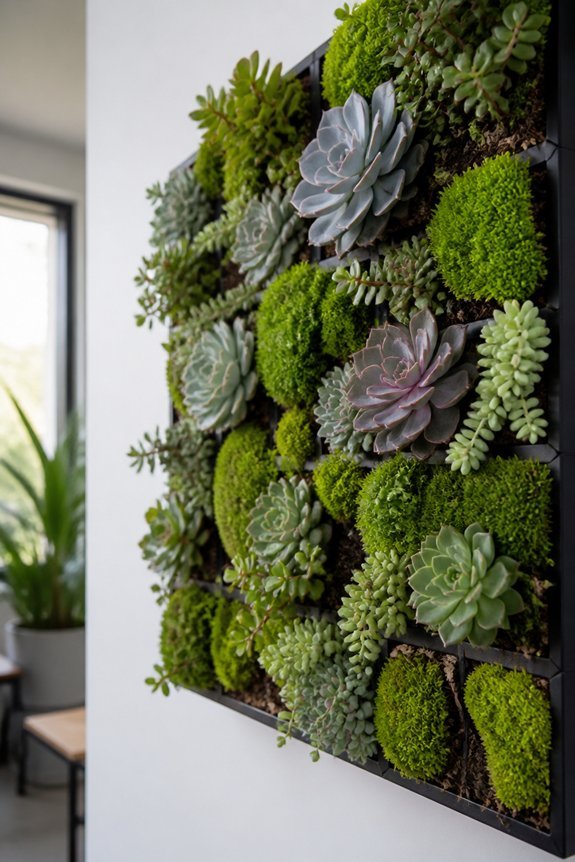
Living moss walls pair beautifully with succulents. They create a stunning visual combo. Plus, they work together in smart ways.
Moss holds onto moisture steadily. This gives succulents like echeveria, sedum, and jade just the humidity they enjoy. The moss layer cradles roots gently. It keeps things damp but not soggy.
Try trailing sedums near the edges. Let them spill downward for a soft effect. Tuck compact echeveria into middle sections. Add one or two bold rosettes as eye-catchers. Sheet moss or mood moss makes an excellent base layer.
You’ll water less often than with potted succulents. Moss releases moisture slowly over time. Just mist it every few days. Check that your succulents aren’t sitting wet. Root rot sneaks up fast if drainage gets ignored.
Minimalist Succulent Wall Grids in Black Metal
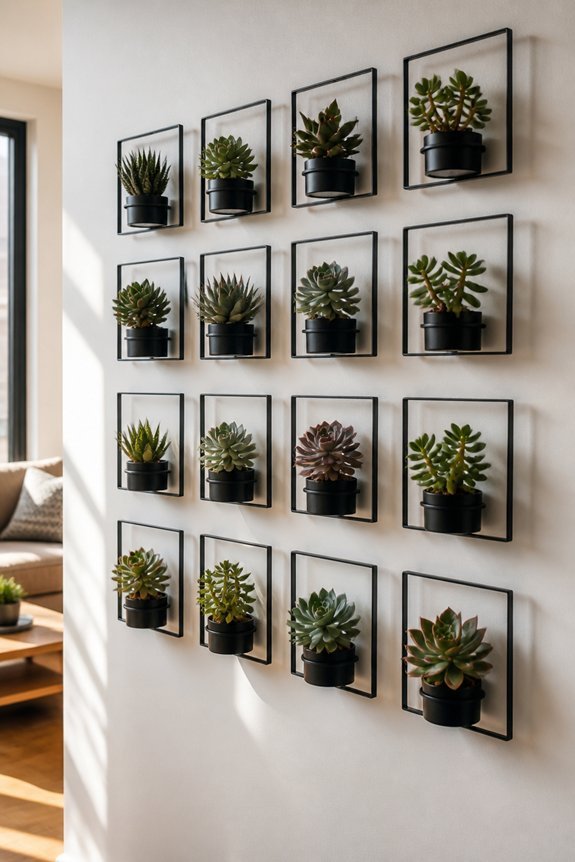
Black metal grids give your walls a crisp, organized look. Think of them as empty picture frames waiting for living art. The dark finish makes every shade of green pop against your wall.
Choose rectangular or square sections based on your space. Square grids feel balanced and orderly. Rectangular ones stretch nicely above couches or headboards. Either way, the geometric pattern keeps things feeling intentional.
You’ll need sturdy wall anchors and screws. Check that your hardware can handle the full load: metal frame plus soil plus watered plants. Modular systems are worth the extra cost. You can pop out sections to rearrange or replace plants without dismantling everything.
Shallow compartments suit echeveria, jade plants, and sedum varieties. These succulents don’t mind tight spaces. Avoid anything with deep root systems.
Check each section’s soil separately. One corner might dry faster than another due to sunlight or airflow. Small drainage holes in each compartment prevent soggy roots.
These grids fit contemporary and industrial spaces naturally. They work in minimalist rooms too, since they keep plants contained and tidy. For tight apartments, they free up valuable surface space while adding vertical interest.
Tiered Succulent Wall Shelving With Staged Displays
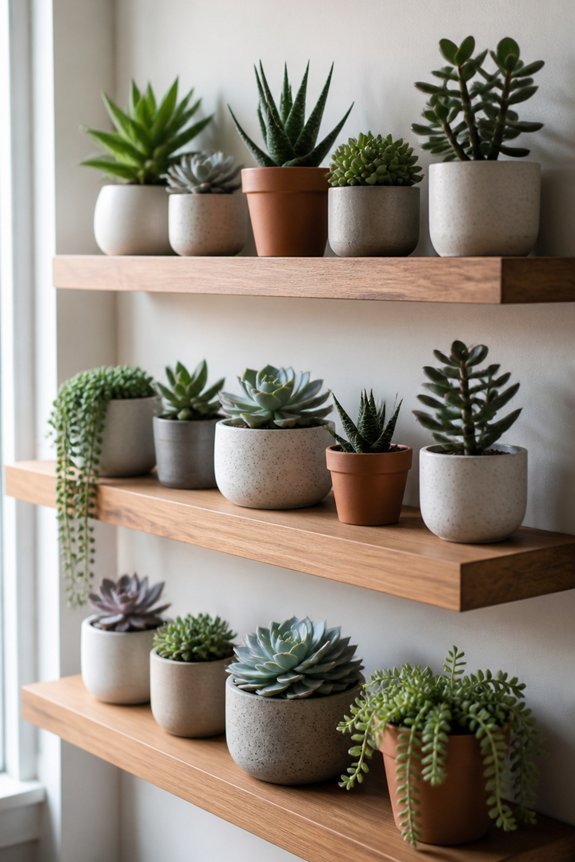
Tiered shelves bring instant depth to your display. Arranging them up or down draws the eye naturally and helps you sort plants by their needs.
Set your spacing at 12 to 18 inches. This keeps air moving and protects lower plants from drips above. Small plants go up front. Tuck larger ones behind so nothing gets lost.
Lower shelves suit shade-tolerant succulents like jade or snake plants. Upper tiers catch more sun. That is where your echeveria and aloe thrive.
Metal or wood both work for modern looks. Just add drainage holes or raised trays. Water runoff stays managed. Your routine gets simpler. Your wall stays neat.
Monochromatic Designs: Creating Depth With Texture
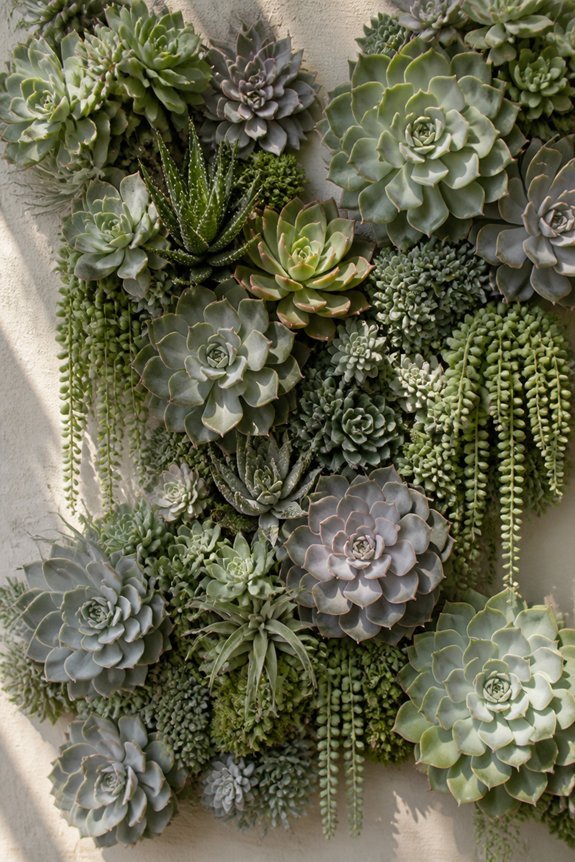
Tiered shelving sorts your plants by their needs. A monochrome wall does something different. It leans entirely on texture to catch your eye.
You will work with plant shapes and surface finishes instead of bold colors. Pick succulents with clear physical differences. Try Aeonium for its neat rosettes. Add spiky Aloe for contrast. Toss in fuzzy Echeveria elegans for softness.
Mix your materials too. Smooth river stones feel cool against rough cork backing. Matte ceramic pots add quiet variation. Stick to grays, muted greens, and warm earth tones. This restraint makes every texture pop.
Lighting matters more than you might expect. Directional light casts small shadows that reveal surface detail. Leave deliberate gaps between plants. Crowding kills the effect. Space lets each form breathe and be seen.
Macramé Succulent Wall Hangings and Rope Gardens
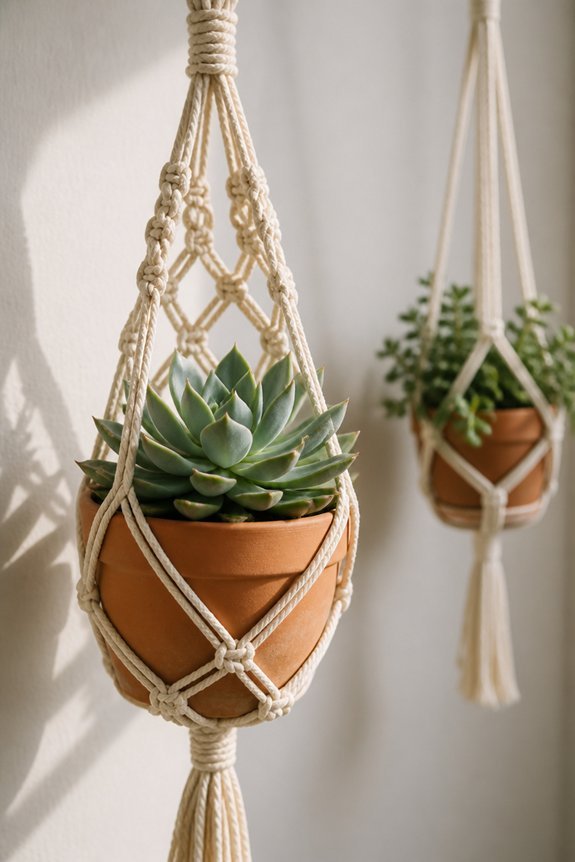
Macramé brings texture to your succulent displays. It lifts plants to different heights. This creates visual layers you’ll love.
Knots matter here. Square knots work for stability. Spiral knots add playful twists. Fringe designs finish the edges nicely. Each style holds small pots tight. Mix them for interesting wall pieces.
Rope gardens pair macramé with trailing succulents. Try string of pearls or burro’s tail. Let them spill downward through the knots. Jute, cotton, and hemp look best. These natural fibers match earthy succulent colors.
Your wall anchors need real strength. Wet soil gets heavy fast. Check your hardware before hanging anything.
Corners work well for these pieces. So do spots above shelves. Even bare vertical walls come alive with a rope garden. Turn your planters weekly. Suspended plants need balanced light on all sides.
Cork and Wood Succulent Wall Panels as Focal Points
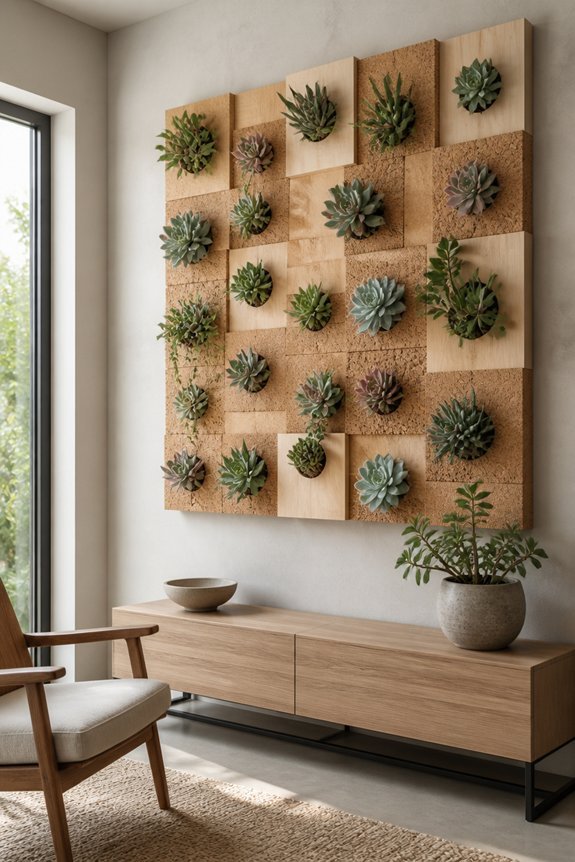
Cork and wood transform plain walls into living art pieces. These natural materials give succulents something beautiful to climb on.
Cork comes straight from tree bark. It drains fast. It weighs next to nothing. Your wall stays happy and dry.
Wood brings the warmth. Think reclaimed barn boards with history in every grain. Cedar smells amazing and resists rot. Even simple plywood works as a sturdy base.
Both materials frame your plants dramatically. They draw the eye. They start conversations.
Pro tip: Mount cork panels slightly off the wall. Air circulates better. Moisture escapes faster.
Attach plants through small soil pockets tucked into crevices. Try wire grids for trailing varieties. Special plant-safe adhesives hold everything firm without damage.
Mist weekly. Most succulents hate wet feet. Check that your wall gets bright, indirect light.
Taking it outside? Seal wood panels with outdoor-grade finish. Cork handles weather fine on its own.
The mix of raw cork and smooth wood suits modern spaces perfectly. You get nature’s beauty without the clutter.
Floating Shelf Succulent Walls for Compact Spaces
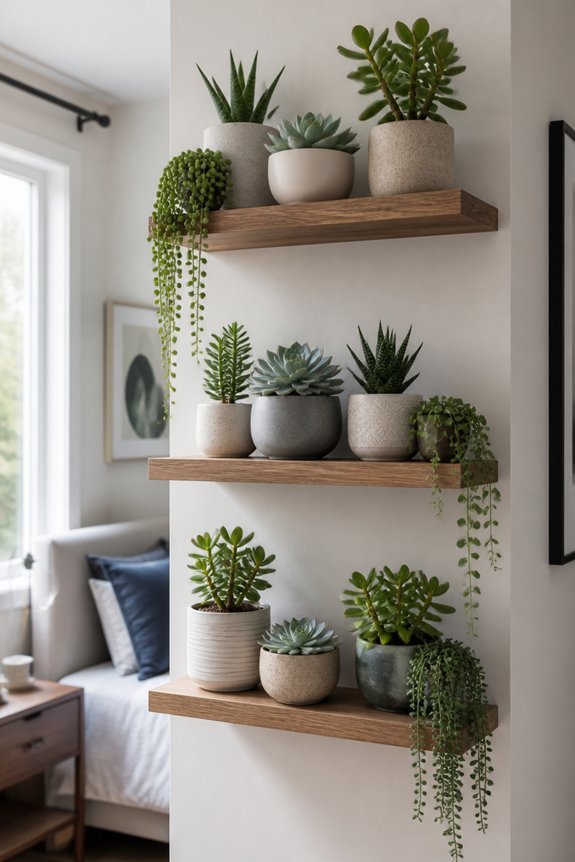
Can’t spare much floor space? Floating shelves have your back.
These slim mounts attach right to your wall. You get vertical storage without sacrificing walking room. Stack them at different heights for a cascading green effect. Mix echeverias with trailing string of pearls for instant texture.
Small apartments and bathrooms love this trick. Wood warms up a space. Metal keeps things sleek. Stick to 6-8 inch depths. Any deeper and you’re wasting space. Any shallower and pots get wobbly.
Installation matters here. Find wall studs first. No studs? Grab heavy-duty anchors rated for moisture and weight. Leave 12-18 inches between shelves so lower plants still catch light.
That bare wall above your desk? It wants this upgrade.
Styling Your Succulent Wall: Arrangement and Spacing Principles
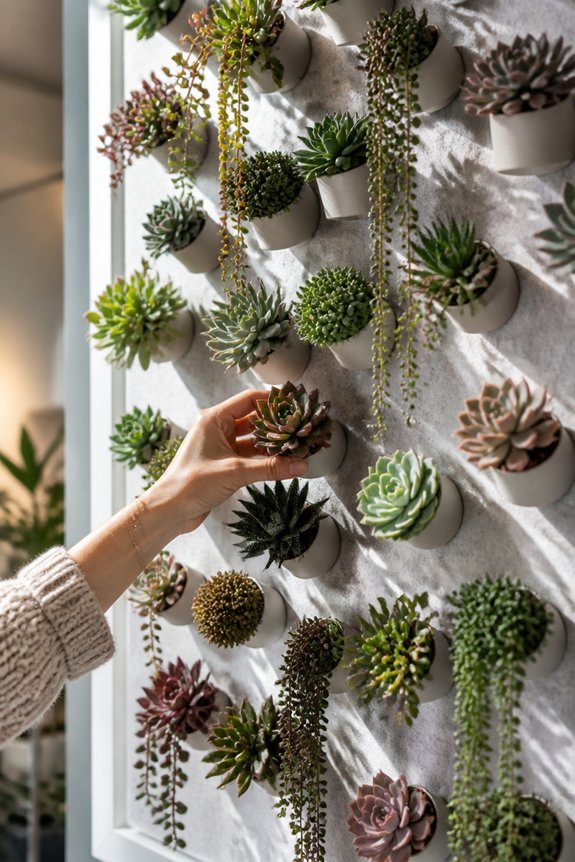
Arrangement makes or breaks your succulent wall. Get it right, and everything flows. Get it wrong, and it looks messy fast.
Start with breathing room. Two to three inches between plants keeps air moving. It also gives them space to fill out over time.
Size matters more than you’d think. Keep similar heights together for calm, orderly sections. Then break it up. Tuck a tall Aeonium behind low Echeveria. The contrast keeps eyes moving across the wall.
Color needs spreading out too. One loud cluster throws everything off. Scatter your brightest succulents like punctuation marks.
Here’s a trick that works: build around threes and fives. Odd groupings feel relaxed. Even numbers look stiff. Stagger your placement so nothing lines up in perfect rows. Zigzag beats grid every time.
Your biggest specimens deserve the spotlight. Let them anchor corners or center points. Fill leftover pockets with tiny trailing types.
Spacing isn’t just pretty. It cuts down root competition. Your wall stays healthier, longer.
Frequently Asked Questions
How Often Should I Water Succulents on a Vertical Wall Installation?
Vertical succulent installations typically require watering every 2-3 weeks during growing seasons. However, the frequency depends on climate, sunlight exposure, and soil drainage. One should check soil moisture before watering and reduce frequency considerably during winter months.
What Is the Best Lighting Condition for Succulent Walls Indoors?
Succulent walls thrive best with bright, indirect light for six to eight hours daily. South or west-facing windows work ideally. If natural light proves insufficient, LED grow lights positioned 6-12 inches above plants effectively supplement lighting needs indoors.
How Do I Prevent Soil From Falling Out of Vertical Planters?
Why would anyone risk losing soil in their vertical garden? One should line planters with landscape fabric or mesh before adding soil. This barrier prevents drainage while keeping soil secured, ensuring succulents remain properly anchored and hydrated throughout their growth.
Can I Use Regular Potting Soil for Succulent Wall Gardens?
Regular potting soil is not ideal for succulent wall gardens. One should use a well-draining cactus or succulent-specific soil mix instead. Standard potting soil retains excessive moisture, which causes root rot in succulents requiring minimal water and drainage.
How Long Does It Take for a Succulent Wall to Mature?
Studies show that 70% of succulent enthusiasts achieve full visual impact within 12-18 months. Most walls reach maturity in this timeframe, though some species require up to two years for complete establishment and densification across the frame.
Conclusion
Modern succulent walls combine practical plant care with contemporary design through geometric planters, floating shelves, and structured arrangements. A Brooklyn apartment successfully integrated black metal grids with drought-tolerant echeveria and jade plants, creating a low-maintenance focal point that required minimal watering. These installations prove that functional plant displays enhance interior spaces while maintaining the airflow and aesthetic balance necessary for healthy succulent growth.