
Succulent rock gardens are having a moment. Pairing easygoing plants with sculptural stone creates outdoor spaces that thrive on minimal attention and even less water.
The beauty lies in versatility. These gardens shape-shift effortlessly into classic beds, tiered arrangements, or compact container displays. Sedums, echeveria, and cacti offer texture and quiet color without demanding constant care.
Small details make them sing: a pathway meandering through warm-toned gravel, a pop of seasonal bloom, or the subtle contrast between soft leaves and rough stone.
Below are thirteen ideas to help you build something lovely that asks little of you in return.
Classic Rock and Succulent Beds
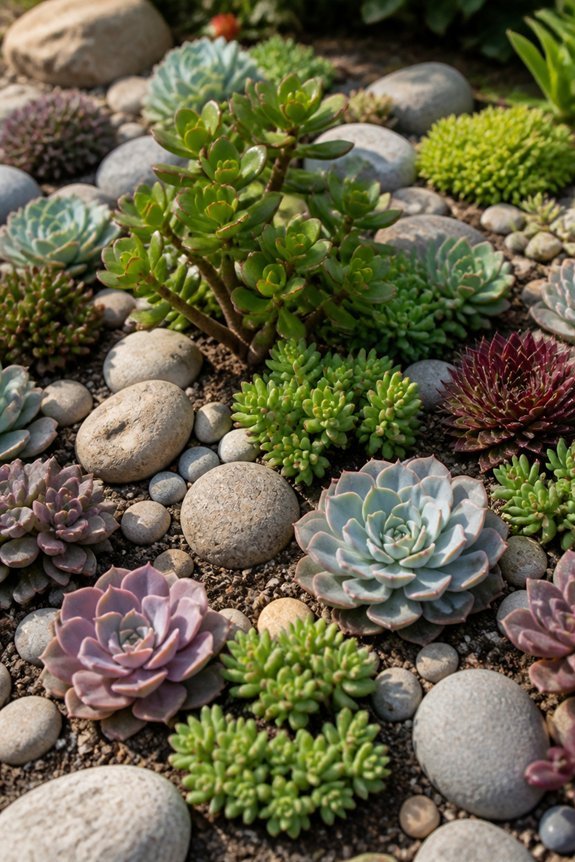
Many gardeners love these setups. They look great and need little care. Drought-tolerant plants like sedums and echeveria pair beautifully with decorative rocks.
The rocks do real work. They help water drain away from roots. They keep soil cool on hot days. Less moisture escapes to the air too.
Try mixing rock sizes for a natural look. Small pebbles fill gaps between larger stones. Granite and river stone both work well.
Getting the soil right matters most. Add coarse sand or perlite. Test drainage before planting. Water should disappear quickly after a heavy soak.
Once established, these beds almost care for themselves. Perfect for busy people or dry climates. Weeds struggle to push through the rock layer. You’ll also spot friendly insects making homes among the stones.
Also read: 16 SUCCULENT GARDEN DESIGN Ideas That Feel Modern!
Alpine Rock Gardens With Drought-Resistant Succulents
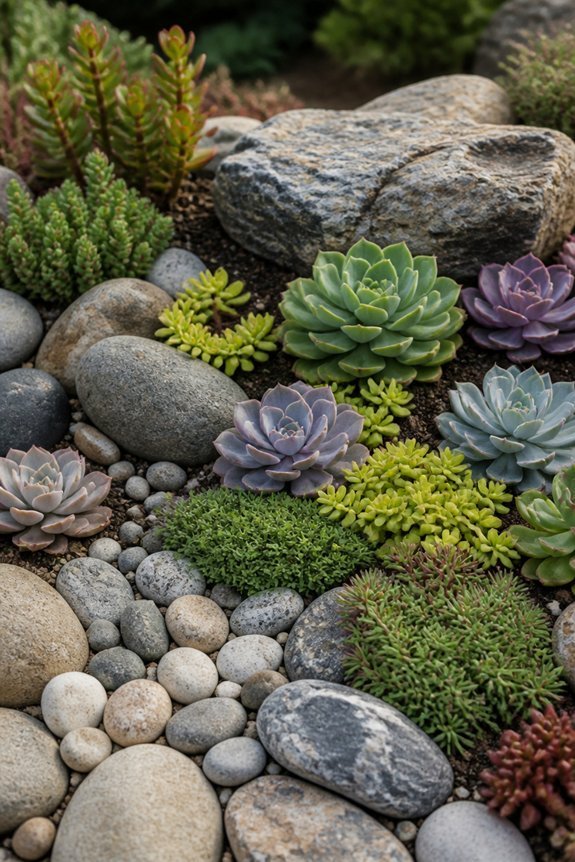
Alpine rock gardens feel like stepping onto a mountainside. They mimic high elevation terrain with steep slopes, loose rocks, and soil that drains fast. Classic beds sit flat and hold moisture. Alpine setups let water run off quickly.
These gardens favor cold hardy succulents that laugh at thin soil and harsh sun. Sempervivum forms tight rosettes in purples, reds, and greens. Alpine sedums spread low across stone surfaces. Delosperma surprises you with bright blooms despite needing almost no water.
Building the elevation effect takes some intention. You will want angled ground so rain flows naturally. Large anchor rocks draw the eye and hold heat. Mix your soil gritty and sparse. Choose plants native to high elevations.
Start with one dramatic boulder as your centerpiece. Slope the ground away from it at roughly 30 degrees. Tuck sempervivum into crevices where they naturally colonize. Let sedums cascade over edges. The result needs less watering and weeding than traditional beds. Texture carries these gardens through every season.
Tiered Gardens for Tight Spaces
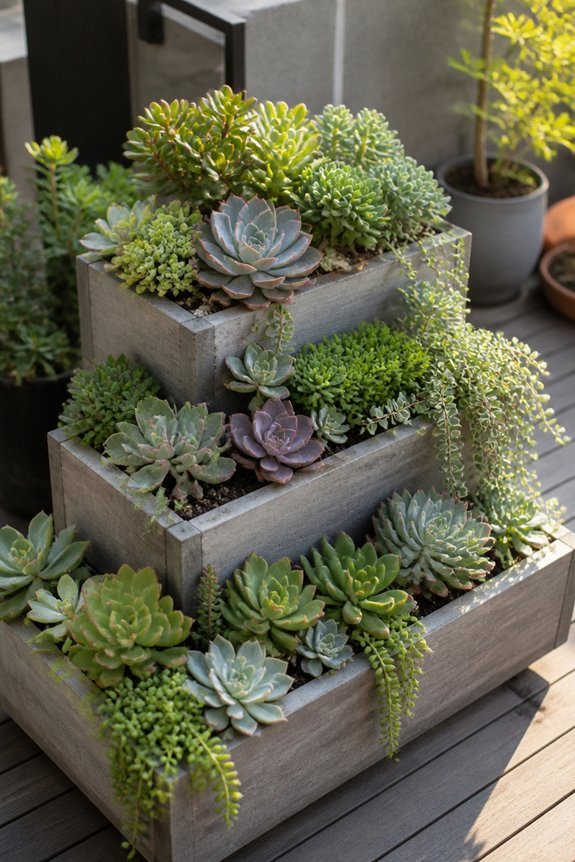
Tiered gardens turn tight spots into thriving succulent displays. You grow upward instead of outward. More plants, same footprint.
Build your tiers from almost anything. Stacked stones work great for a rustic look. Wooden crates add warmth to balconies. Old shelving units? Perfect for a quick weekend project. Even simple concrete blocks do the trick.
Match plants to their level. Shade lovers like haworthias go down low. Sun seekers such as echeverias claim the top spots. Sedums and sempervivums fill the middle happily.
Watch your water. Drainage matters on every single tier. You don’t want drips drowning the plants below. Use gritty, fast-draining soil throughout. Add a thin gravel layer at the bottom of each level if you’re building from scratch.
The height variation creates natural visual drama. Your eye travels up the structure. Maintenance gets easier too. You tend plants at comfortable heights instead of bending to the ground.
Playing With Color: Using Shade and Tone in Succulent Gardens
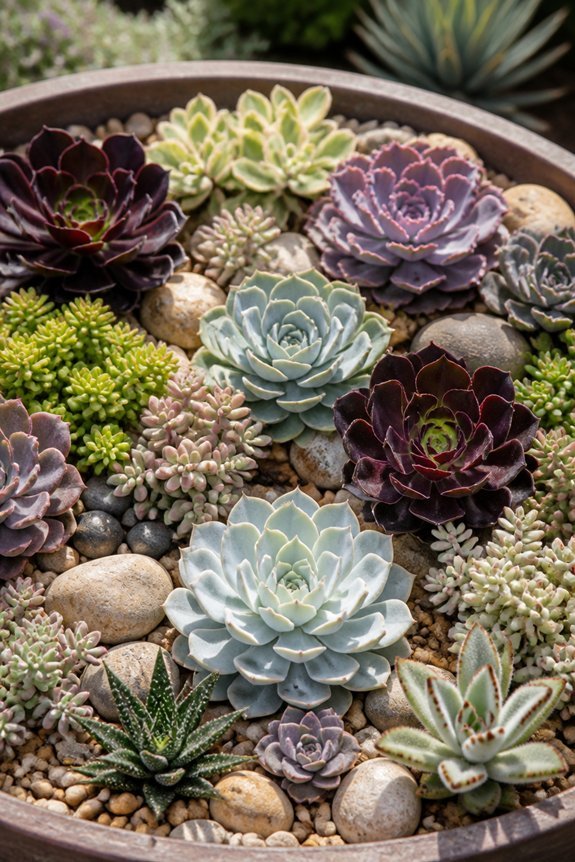
Succulents bring way more than just geometric shapes to your garden. Their colors do the heavy lifting.
Deep purples anchor a space. Soft blues calm it down. These plants naturally create focal points in rock gardens without trying too hard.
Echeverias blush pink and orange when stressed by sun. Sempervivums turn burgundy or jade depending on their mood. Use this to your advantage.
Contrast makes things pop.
Pale Aloe vera against dark Aeonium arboreum? Instant definition. No landscaping degree required.
Tone works differently than shade. Muted colors step back visually. Bright colors jump forward. Think of it as creating depth without digging.
Silver Senecio catches light. Whitish Dudleya cools down dense plantings. Both break up dark masses that otherwise feel heavy.
Seasonal shifts happen automatically. Many succulents redden in cold weather. Free dynamic interest. No replanting needed.
Group by temperature for cohesion.
Keep warm oranges and reds in one zone. Cool purples and blues in another. The eye travels smoothly. Nothing fights.
This simple sorting keeps your design intentional. Your garden feels bigger and more organized than it actually is.
Desert Succulent Landscapes With Cacti and Rocks
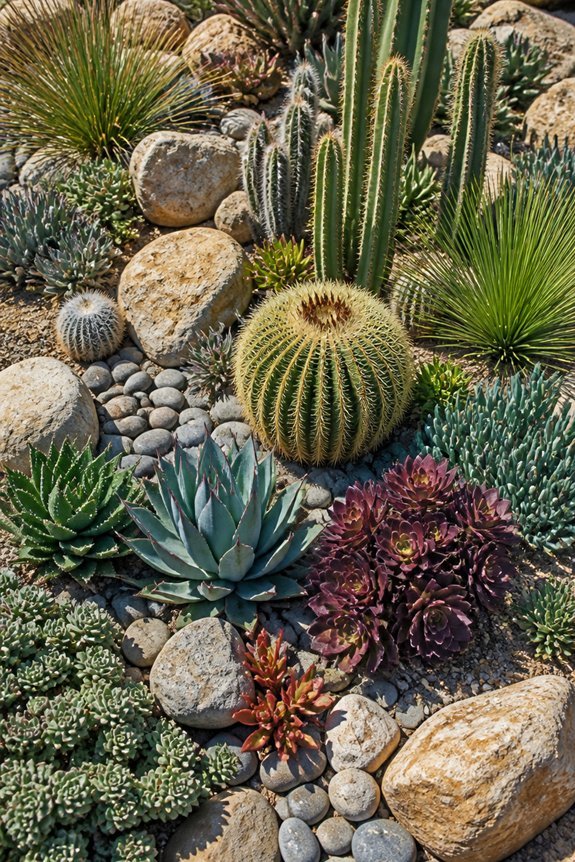
Most desert rock gardens rely on three essentials. Succulents add softness. Cacti bring structure. Stones tie everything together.
Rocks do real work out there. They improve drainage and stop soil from washing away. A single large boulder can anchor a whole corner. Smaller pebbles tuck nicely between plantings. You will want stones in varied sizes for the most natural look.
Cacti handle harsh sun like champions. Think prickly pear for flat, sculptural shapes. Try barrel types for rounded focal points. Hedgehog varieties stay compact and charming. Pair these with succulents like agave, yucca, or aloe. The mix of spiky and smooth textures keeps eyes moving through your garden.
Stone choice shapes the whole mood. Warm granite or sandstone echo sunset colors. Decomposed granite works beautifully for pathways. Cluster stones in groups rather than scattering them randomly. Space plants with their full grown size in mind. A little planning now saves headaches later.
Water deeply but rarely once plants settle in. These gardens practically run themselves after the first year or two.
Coastal Rock Garden With Soft Succulents
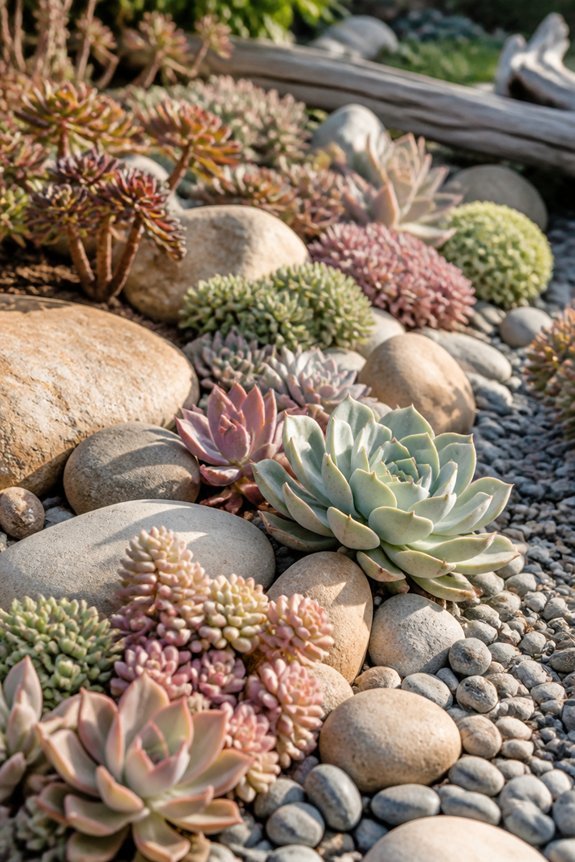
Coastal rock gardens need softer succulents than desert settings. Salt spray, sandy soil, and cooler temperatures shape your choices.
Ice plants handle these conditions beautifully. Sedums and sempervivums spread easily across rocky areas. They need little attention once established.
Smooth stones mixed with pebbles and larger rocks do double duty. They create drainage paths and block harsh winds from fragile leaves.
Salt-tolerant picks worth trying
Dudleya species and select echeverias develop pale green or silvery tones. These colors hint at their coastal toughness.
Tuck succulents between rocks. This simple step mimics natural coastal drainage and prevents root rot.
Larger stones work as windbreaks on oceanside properties. Place them to shield your more delicate plants from gusts.
Ground cover that pulls it together
Native coastal grasses fill gaps between succulent clusters. They add texture and hold sandy soil in place.
The result feels cohesive. It functions beautifully too.
Japanese-Inspired Zen Garden With Succulents
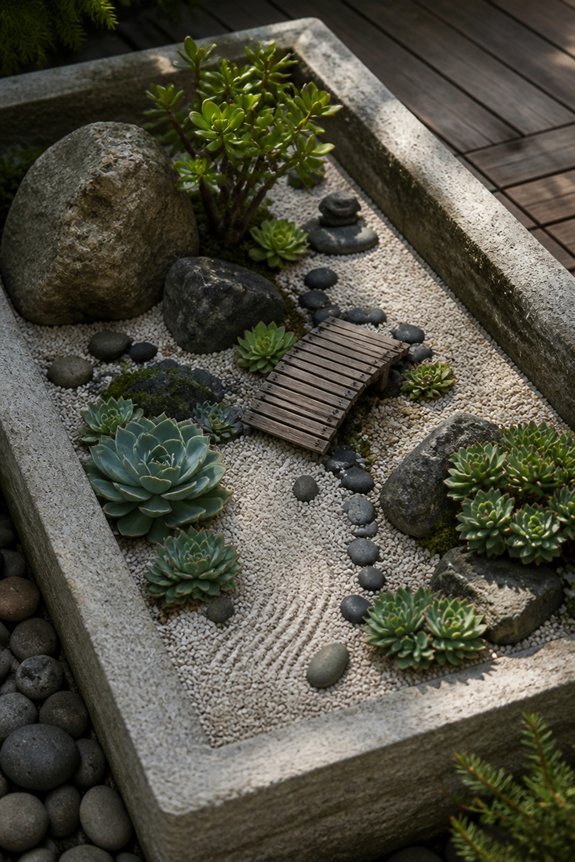
A succulent garden can feel truly peaceful when you keep things simple. Start with just a few plant types. Jade plants work beautifully. Echeveria adds soft shapes. Sempervivum brings texture. Three varieties are enough.
Raked gravel becomes your water feature. Curved lines suggest flowing streams. Straight lines evoke still ponds. Use a small rake or even a stick. Refresh the pattern weekly if you enjoy the ritual.
Place stones off-center. Odd numbers look more natural. Try groupings of three or five. Nestle each stone slightly into the soil so it looks settled.
Space your plants generously. Let soil show between them. This emptiness is part of the design. It gives your eye places to rest.
Stick to greens, grays, and silvery blues. Avoid bright flowers. The muted palette feels calm throughout the seasons.
Choose rocks with character. Wrinkled surfaces catch shadows. Flat stones invite sitting. Position one larger rock as your anchor point. Let everything else relate to it.
Raised Rock Beds for Better Drainage
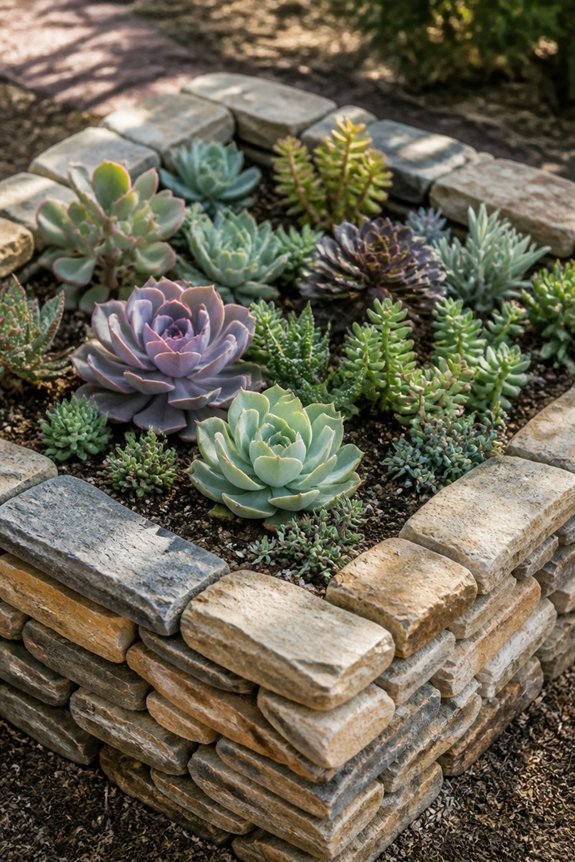
Raised rock beds solve problems flat gardens just can’t handle. Your succulents need dry feet. These elevated structures give them exactly that.
Water drains fast from raised beds. Root rot becomes a thing of the past. Fungal issues stay away too.
Build yours 12 to 18 inches high. Stone, wood, or composite materials all work well. Pick what matches your garden style.
Start with a gravel base. Layer succulent soil mix on top. Water moves through freely when you build it this way.
Granite, limestone, and basalt all hold up beautifully. They add something nice to look at while doing the heavy lifting.
Here’s a bonus you might not expect. These beds warm up faster in spring. Your growing season stretches a little longer.
Pests have a harder time reaching your plants. Weeding feels less like a chore. Space your beds apart for neat organization and simple harvesting.
One practical tip: position taller beds facing south if you can. They capture more warmth early in the season.
Pathways and Borders Using Decorative Stones
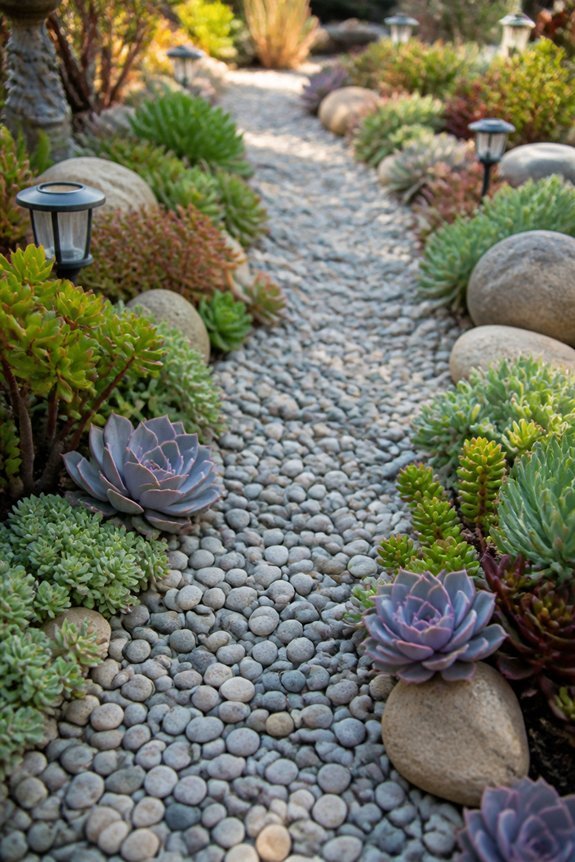
Decorative stones give your rock garden its structure. They create pathways. They mark borders. They keep everything organized.
Gravel paths work beautifully here. Try pea gravel or crushed granite. Your feet will thank you. The garden stays neat too. Want something sturdier? Flagstone or slate stepping stones handle foot traffic with ease.
Border stones do more than look pretty. They hold soil in place. They stop plants from wandering into the wrong zones. River rocks, limestone blocks, and basalt all make excellent edging. Lay them straight for a modern feel. Curve them for something softer. Geometric patterns add visual interest.
Pick your stones with purpose. Light colors bounce heat away. Your shade-loving succulents appreciate this. Dark stones soak up warmth. Heat-tolerant varieties thrive here. Stick with one stone family throughout your garden. The result feels intentional and calm.
Container Rock Gardens for Patios and Decks
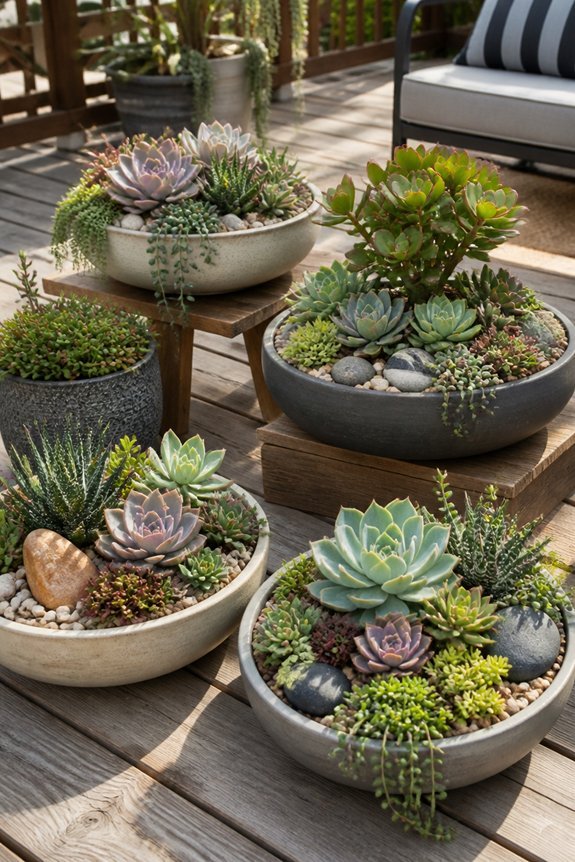
You want flexibility? Container rock gardens deliver.
Patios and decks work perfectly for these setups. Shallow ceramic bowls or concrete troughs fit right in. Just grab something with drainage holes. Layer in coarse sand and small rocks. Your plants will thank you.
Succulents love this life. Try sedums, echeveria, or jade plants. They store water in their leaves. That means less work for you. Water rarely. Enjoy often.
The best part? Portability. Move containers when seasons change. Bring them inside before frost hits. Rearrange whenever you need a fresh look.
Pick rocks that match your vibe. Pea gravel feels soft underfoot. Crushed granite adds texture. Decorative pebbles tie everything together.
Small yard? No problem. Renting? Take your garden when you move. Want low commitment? This is it. Once established, these gardens practically run themselves.
Choosing Succulents for Year-Round Color
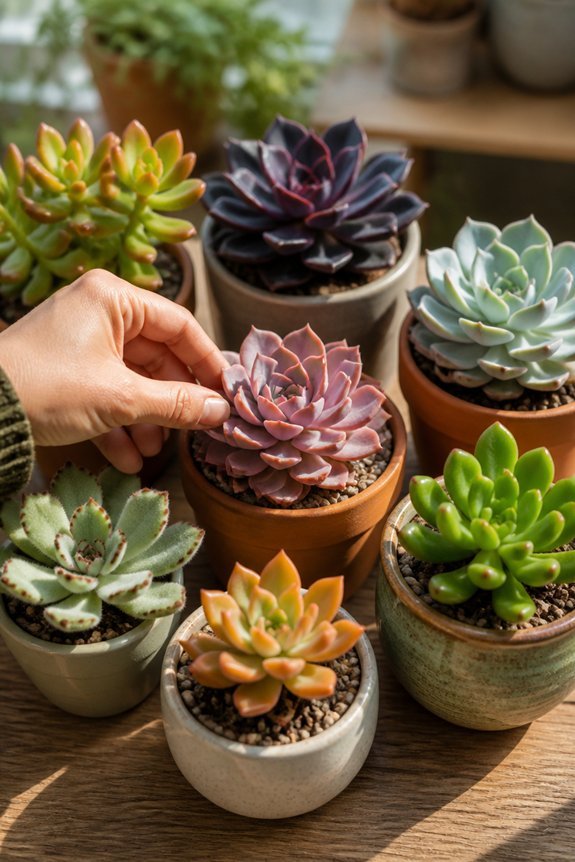
Container rock gardens give you freedom. But the right succulents? They give you color all year long.
Each season brings something new. Echeveria and Sempervivum wake up in spring. You will see fresh greens and soft reds pushing through. Summer belongs to Aloe and Jade. Their foliage stays steady and calm when other plants struggle. Come fall, Sedum shifts into warm oranges and burgundies. Winter does not mean bare pots. Hardy Sempervivum keeps its color through frost and snow.
Mix your plants with purpose. Pair quick growers with slow ones. This stops any single variety from taking over. Add upright shapes next to trailing forms. Your eye will travel across the container. Blend bright colors with quiet neutrals. The result feels pulled together, not chaotic. One last tip: check your hardiness zone. Outdoor winter pots need tough survivors.
Water Features in Succulent Rock Gardens
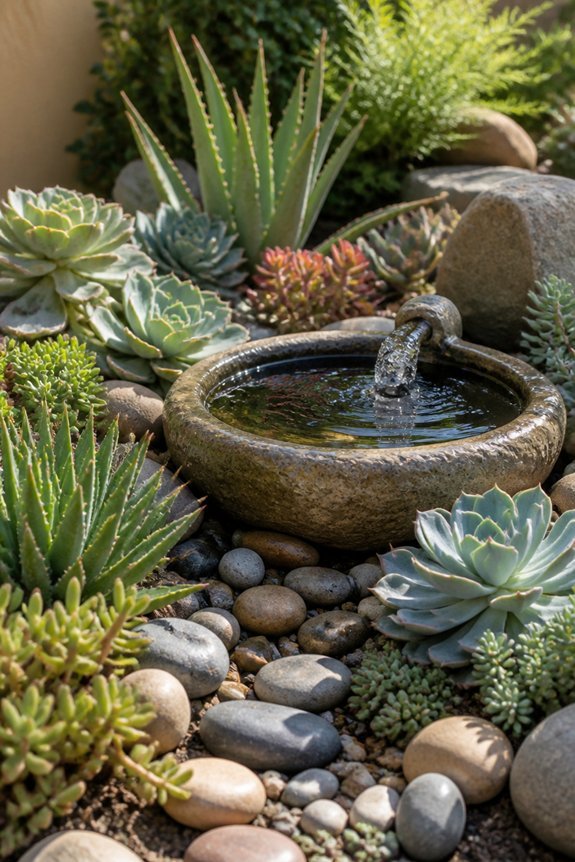
Water and succulents can live together. You just need a smart plan.
Small bird baths work beautifully. Position them on bare rock areas. Keep them away from your plants. Shallow basins catch rainfall without drowning roots. Low-flow fountains add gentle sound. They use minimal water too.
Gravel and stone soak up daytime heat. This creates warm pockets around your water features. Your echeveria will love these microclimates. Sedum thrives there too. Birds arrive for a drink. Beneficial insects follow. Your garden gets more life.
Always check your drainage. Water must flow somewhere. Never let it pool near roots. Use basins with built-in outlets. Test them before planting nearby. Quick tip: place a layer of coarse gravel under any fountain base. It speeds up drying time.
Want something simple? Try a ceramic dish filled with stones and shallow water. It looks intentional. It stays manageable. Your low-maintenance garden stays low maintenance.
Keeping Your Succulent Rock Garden Thriving
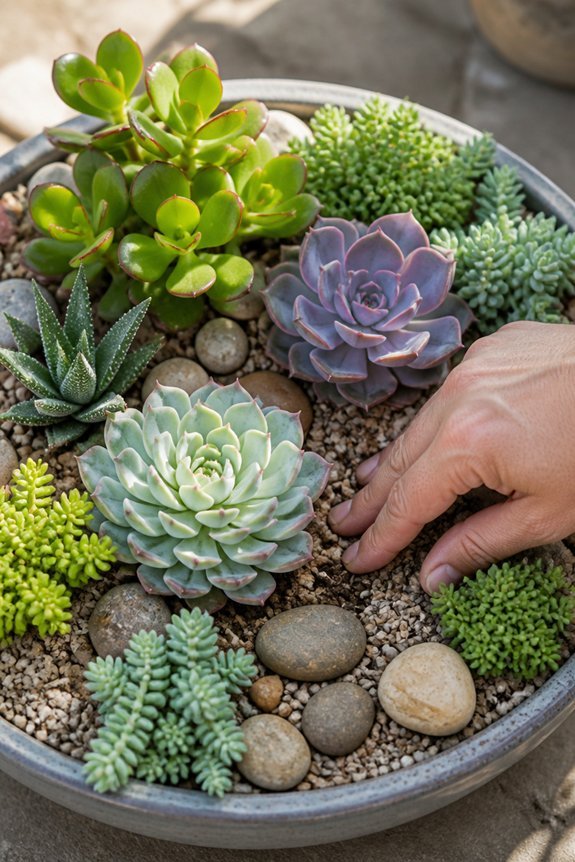
Most succulent rock gardens need little help once they’re settled in. But a few simple habits keep them looking their best.
Water less in winter. Your plants barely grow then, so they don’t need much. Come spring and summer, give sedums, echeveria, and aloe a deep soak now and then. They like drought, but not endless drought.
Pick off dead leaves and faded flowers. It keeps disease away and keeps things tidy. Pull weeds when you spot them. They steal water and nutrients your succulents need.
Feed once in spring. That’s plenty. Check leaves for mealybugs or spider mites while you’re at it. Caught early, they’re easy to fix. Move overgrown plants before they crowd each other. Good airflow matters.
Refresh your rock mulch every year or two. Compacted stone looks dull and traps moisture where you don’t want it. These small steps keep your garden thriving with hardly any fuss.
Frequently Asked Questions
How Often Should I Fertilize Succulents in Rock Gardens?
Succulents in rock gardens typically require fertilizing only once or twice during the growing season, usually spring and early summer. Use a diluted, low-nitrogen fertilizer since these plants thrive in nutrient-poor conditions and excessive feeding promotes weak growth.
What Is the Best Time of Year to Plant Succulents?
Like planting seeds of success, spring and early fall represent the ideal windows for succulent planting. During these seasons, cooler temperatures and moderate moisture levels allow newly transplanted succulents to establish robust root systems before extreme weather arrives.
How Do I Prevent Pests and Diseases in Succulent Gardens?
One prevents pests and diseases in succulent gardens by ensuring proper drainage, avoiding overwatering, maintaining air circulation, removing dead leaves promptly, and inspecting plants regularly for infestations. Quarantining new plants before adding them to the garden also proves essential.
Can Succulents Survive in Freezing Winter Temperatures Outdoors?
One might imagine succulents frolicking in arctic blizzards, but reality differs. Most succulents cannot survive freezing temperatures outdoors. However, certain hardy varieties like sedums and sempervivums tolerate cold climates. Others require indoor protection during winter months.
How Long Does It Take for a Succulent Garden to Establish?
A succulent garden typically establishes itself within six to twelve months. During this period, plants develop strong root systems and acclimate to their environment. Most gardeners observe significant growth and stability after the first growing season.
Conclusion
A succulent rock garden combines sedums, echeveria, and cacti into a low-maintenance landscape. Tiered beds, container arrangements, and decorative stone pathways create visual structure across patios and tight spaces. Color contrasts between plants and rocks establish focal points throughout the garden. Year-round hardy selections guarantee sustained interest during seasonal changes. Water features add subtle depth. With minimal watering needs and resilient plant choices, gardeners achieve both aesthetic appeal and practical durability.