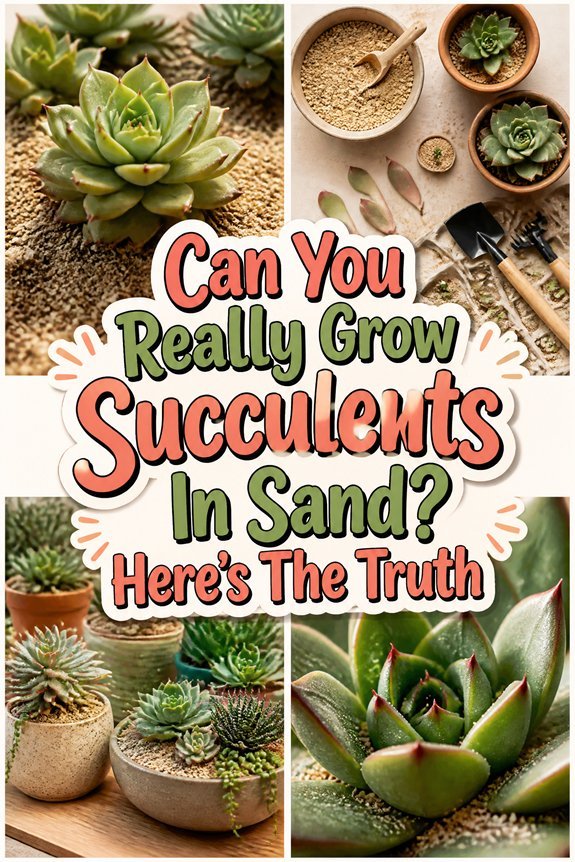
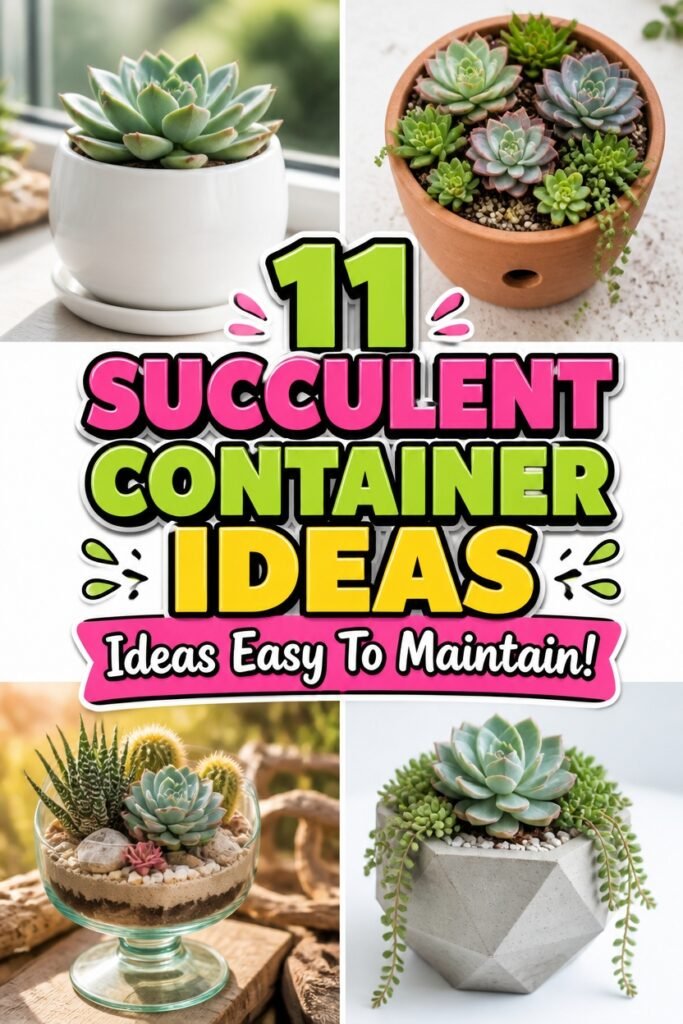
Finding the perfect home for your succulents is simpler than it seems. The right container quietly supports your plants while keeping care routines low and manageable.
Drainage matters most. A pot that lets excess water escape protects delicate roots and stretches the time between waterings. Your plants stay happier with less fuss on your part.
From warm terracotta to sleek concrete and airy hanging planters, each style brings something different to your space.
Shallow bowls work beautifully for compact arrangements, while deeper vessels suit statement specimens.
Choose with your lifestyle in mind, and watch your succulents settle in with ease.
Shallow Bowls: Minimalist Elegance for Tight Spaces
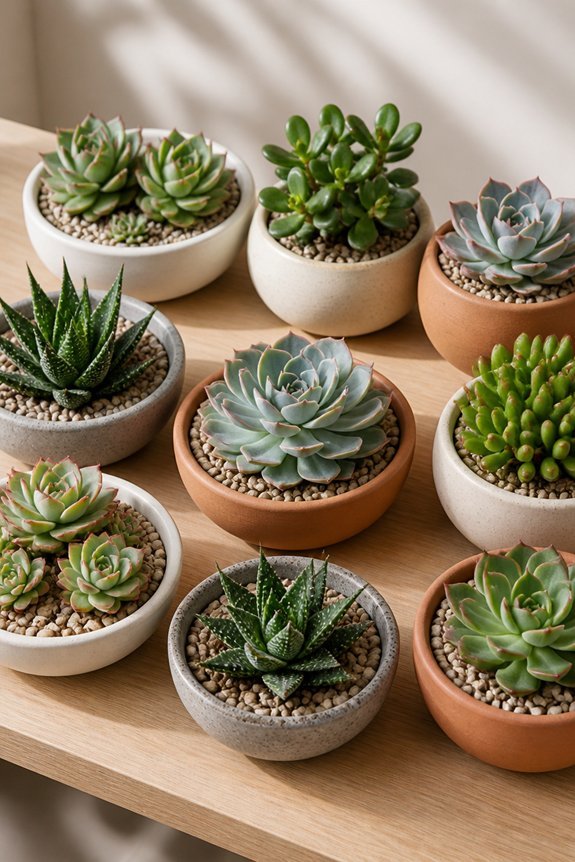
Shallow bowls work beautifully for succulents when vertical space is tight.
They sit low and spread wide. You can fit several plants at once without things getting crowded. Ceramic, concrete, or terracotta all perform well. Just check for drainage holes.
Your echeveria and sempervivum will spread outward instead of shooting up. Jade plants settle in nicely too. Leave two to three inches between plants. This keeps air moving and prevents trouble.
Less soil means less water hanging around. Root rot becomes less likely. These bowls fit anywhere. Windowsills, desks, shelves. They tuck right in.
Watch your watering though. Shallow soil dries fast. Check more often than you would with deep pots.
Also read: 16 SUCCULENT GARDEN DESIGN Ideas That Feel Modern!
Terracotta Pots: Classic Charm That Breathes
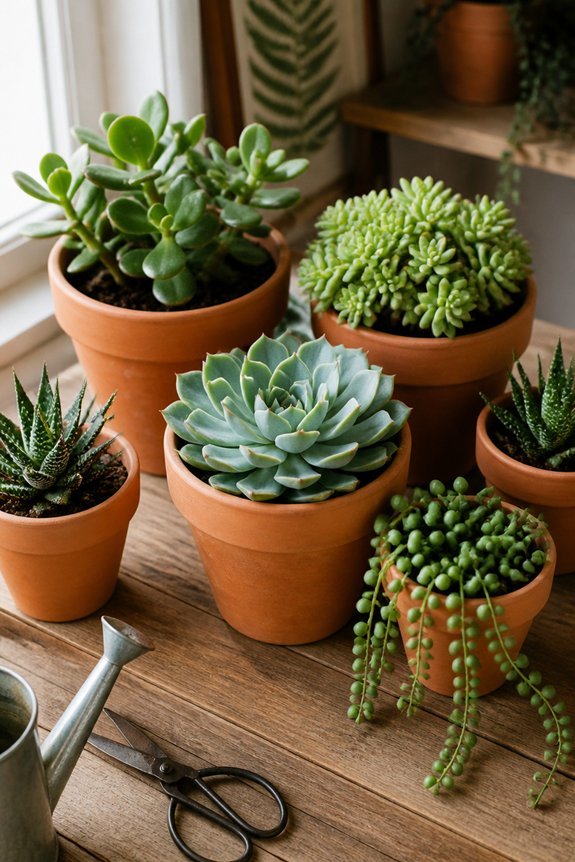
Terracotta pots bring a classic warmth to your succulent collection. The clay breathes. Air moves through the walls, and soil dries fast.
This matters because succulents hate wet feet. Wet roots rot. Quick drying keeps them happy and healthy.
Sizes range from tiny 2-inch pots for mini echeverias to roomy 8-inchers for chunky aloe plants. Something fits every windowsill.
Beginners love terracotta. Overwatering happens. Here, it matters less. The pot forgives your learning curve.
Still add a drainage hole. Still mix in perlite or grit. Breathable walls help, but they don’t replace good habits.
Expect to water more often than with plastic. Moisture escapes right through the clay. Check soil with your finger every few days.
The weight keeps tall plants steady. The fragility? Handle with care. Glazed versions skip the breathability but come in pretty colors. Painted ones too.
Hanging Planters: Vertical Gardens for Small Areas
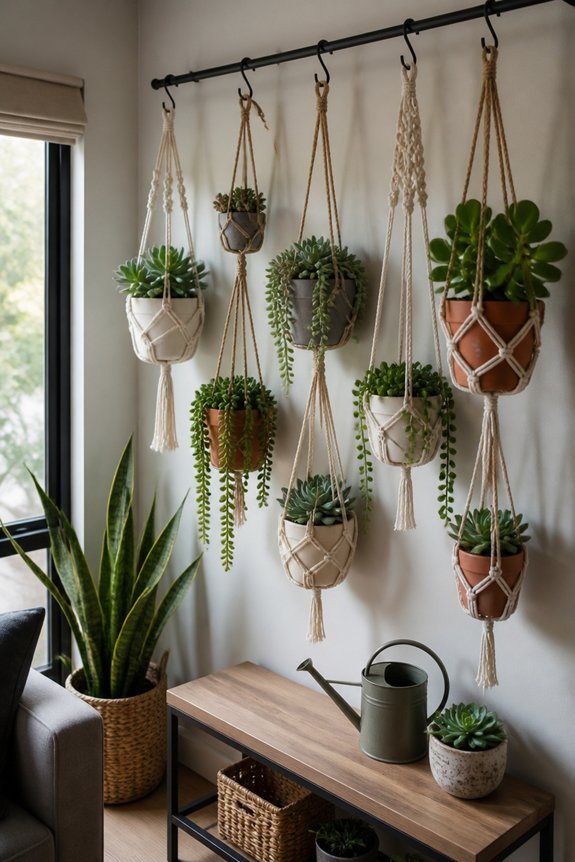
Vertical space solves a common problem. Limited room should never stop your succulent collection from growing.
Hanging planters let you use walls, ceilings, and shelving. Suddenly, tiny spaces become plant displays. String of pearls drapes beautifully. Burro’s tail spills over edges. Trailing jade adds rich green layers. These plants love to cascade. They create depth without eating up your floor.
Materials matter when you shop. Macramé brings soft texture. Ceramic feels classic and clean. Wire baskets keep things airy. Each drains differently, so check the holes. Water that sits still kills succulents fast. Hanging plants catch breezes. That airflow keeps them healthier than crowded shelves.
Pack light soil overhead. Heavy mixes strain hooks and risk falls. Water more often than your ground pots. Hanging containers dry out quickly. A simple finger test every few days works. Your vertical garden thrives. Your space stays open.
Driftwood and Stone Containers: Natural Texture Appeal
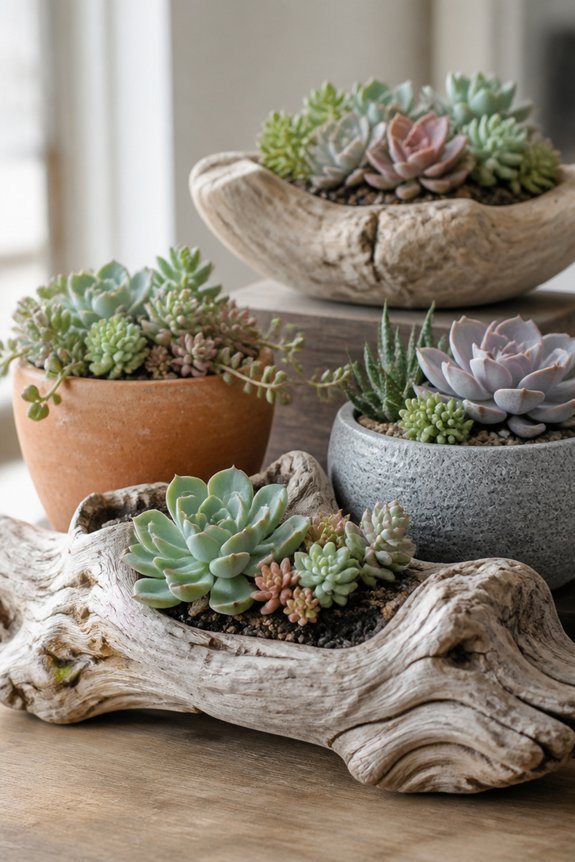
Driftwood and stone bring organic warmth to succulent displays. These materials pair beautifully with fleshy leaves and geometric shapes.
Pieces of weathered driftwood suit shallow plantings perfectly. Tuck small rosettes like echeveria or sempervivum into crevices and hollows. The soft gray tones contrast nicely with green foliage. Water drains easily through the porous wood. Try grouping several pieces at staggered heights for visual depth.
Stone containers add heft and permanence to your arrangement. Slate, granite, and limestone all work well. Shallow stone bowls cradle trailing varieties such as string of pearls. Stack flat stones to build vertical gardens with pockets for different plants.
Both materials need drainage help. Drill holes if possible, or layer pebbles at the base. Position your containers where light streams in. Water sparingly. These setups practically care for themselves once established.
Geometric Concrete Planters: Modern Aesthetics on a Budget
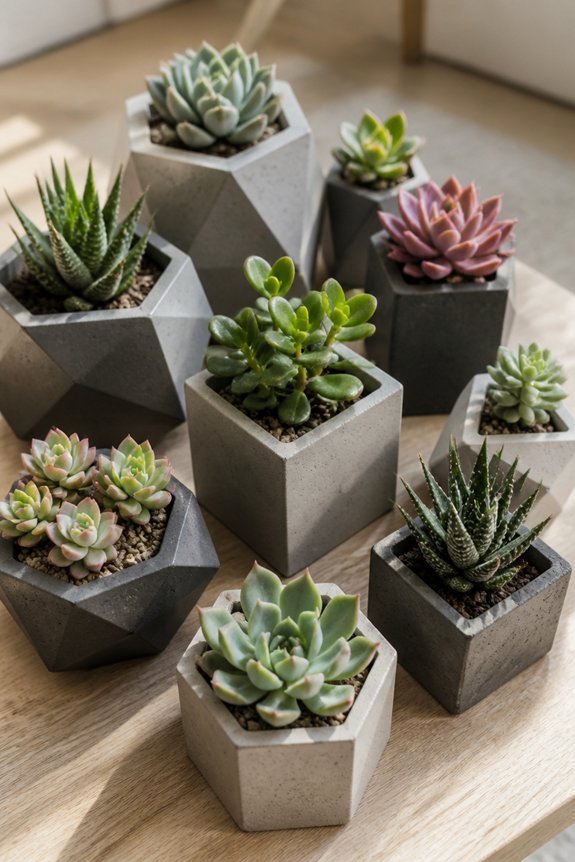
Geometric concrete planters are having a moment. And for good reason.
Clean edges and sharp angles elevate any space without trying too hard. Cubes fit neatly on narrow windowsills. Pyramids add height to flat surfaces. Hexagons cluster beautifully in groups.
Why concrete works
It handles rain, heat, and frost without complaining. You won’t be repotting plants into new containers every few seasons.
The price tag helps too. Concrete typically costs half what you’d spend on quality ceramic.
That muted gray backdrop makes succulent colors pop. Think coral echeverias against cool stone. Or deep green jade catching afternoon light.
Making your own
Grab plastic containers from your recycling bin. Nest two together with wet concrete in between. Instant mold.
Drill drainage holes before the concrete fully cures. Skip this step and you’ll lose plants to soggy roots.
Apply concrete sealer once everything dries. Two thin coats beat one thick one.
Placing them
Patios love these planters. So do bookshelves and kitchen counters. Move them around until the light hits just right.
Upcycled Planters: Transform What You Have Into Succulent Homes
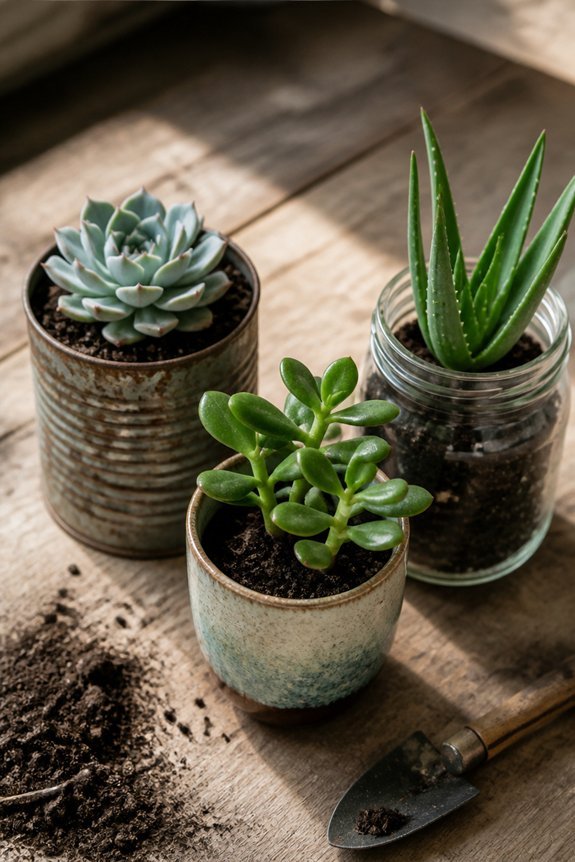
Look around your home. You probably have three potential planters sitting unused right now.
Mason jars work beautifully for tiny cuttings. Drill a hole in the bottom first. Tin cans last forever and give that farmhouse look everyone loves. Puncture drainage holes with a sturdy nail and hammer.
Wooden boxes handle multiple plants easily. Drill holes, line with plastic, then add soil. Old ceramic bowls make elegant indoor pieces. One drainage hole does the trick.
Skip the glass vases unless you’re doing water propagation. They trap moisture and rot roots fast.
Teacups charm on windowsills. They’re small, so pick the tiniest succulents.
The key is always drainage. No hole means drowned roots and a dead plant. Check containers weekly after watering. Upcycled planters tell a story. Each one brings character you cannot buy.
Tall Cylindrical Vessels: Statement Pieces for Single Specimens
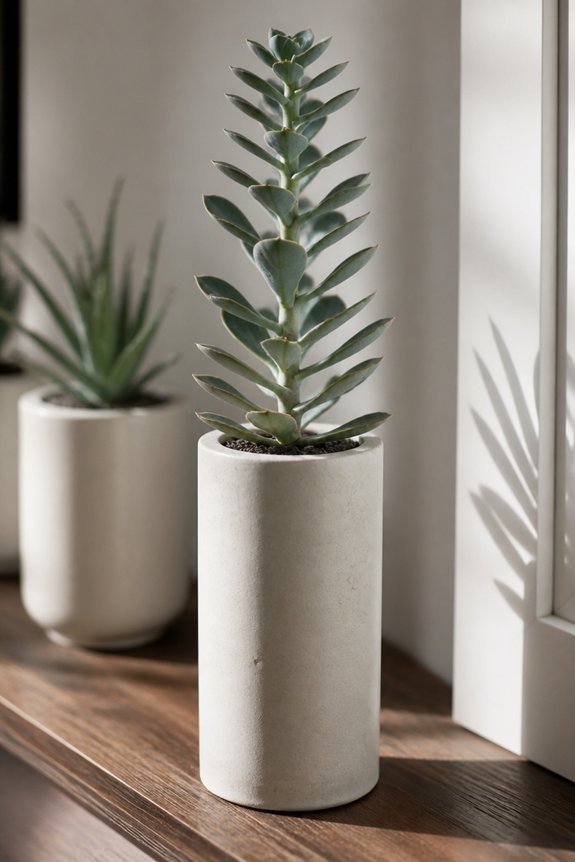
A tall cylinder lifts one plant up where it belongs. It frames your specimen like a portrait. Guests notice it immediately.
Echeveria elegans looks stunning in these vessels. The rosette sits at eye level. Jade plants and snake plants work beautifully too.
The narrow base keeps everything steady. The height does the heavy lifting visually. Your plant becomes the star.
Ceramic gives you timeless warmth. Concrete feels clean and current. Metal suits minimalist spaces perfectly.
Always check for drainage holes before buying. Water needs somewhere to go. Root rot sneaks up fast in deep pots.
These fit almost anywhere. Try a windowsill, a shelf, or the floor. Small rooms benefit especially. The vertical shape saves precious surface space.
Mixed Materials: Wood, Metal, and Ceramic Combined
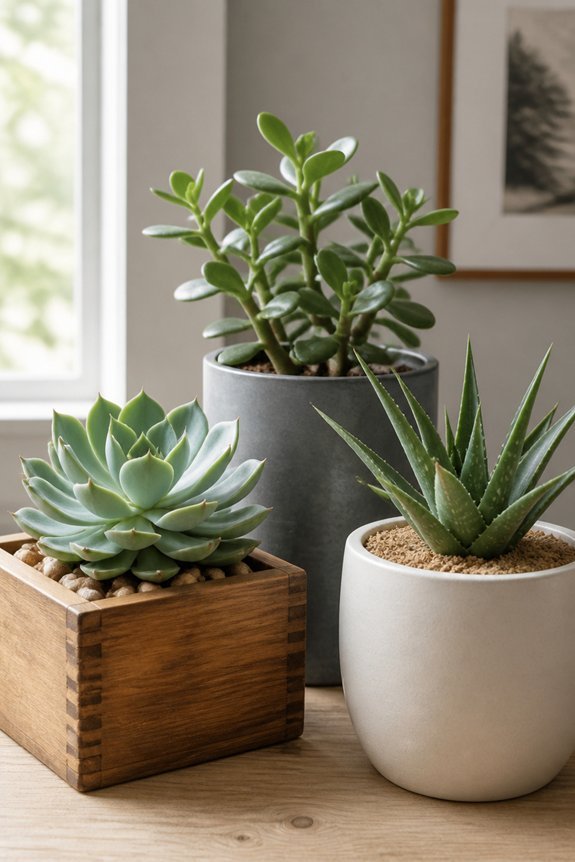
Single-material containers work well. But mixing wood, metal, and ceramic? That’s where things get interesting.
Wooden bases naturally insulate roots. Temperature swings become less of a worry. Metal frames add strength. Think copper or steel for long-lasting support. Ceramic pieces handle drainage and moisture like pros.
Popular combos include wood planters with metal corner brackets. Try ceramic pots tucked inside wooden crates. Metal stands holding ceramic vessels also work beautifully.
These hybrids fit different succulents and spaces. Wood ages gracefully. It gains character over time. Metal resists corrosion, especially galvanized or powder-coated options. Ceramic delivers reliable planting performance.
Pick mixed materials to balance looks with function. Your succulents will thank you.
Self-Watering Succulent Containers: Less Frequent Refills
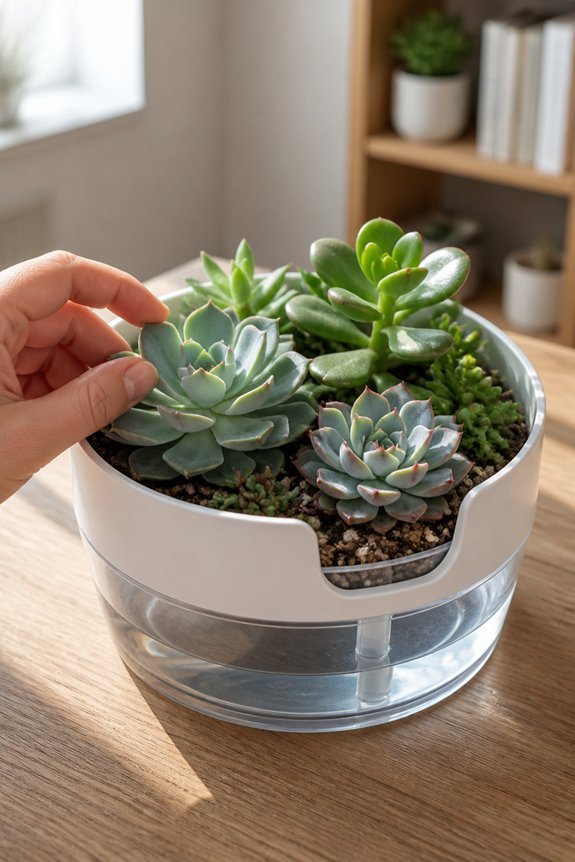
You want an easier way to water your succulents. Self-watering containers might be your answer.
These pots have a hidden reservoir below the soil. The water travels up slowly as the dirt dries out. You fill the tank. The plant drinks when it needs to.
You get several weeks of freedom between refills. Terracotta versions look classic. Plastic ones show water levels through clear windows. Some gardeners prefer fabric wicks for better airflow.
Reservoirs usually last one to three weeks. Hot rooms empty them faster. Cool spaces stretch the timeline.
Watch out for constant fullness. Your succulent roots can rot sitting in moisture. Pop a wooden skewer into the soil monthly. Pull it out. Dry means safe. Damp means wait.
These setups work beautifully for echeveria, jade plants, and aloe. Skip them for cacti that hate any lingering wetness.
Perfect if you travel sometimes. Even better if you own thirty plants and forget which got watered when.
Stacked Succulent Displays: Grow More in Tight Spaces
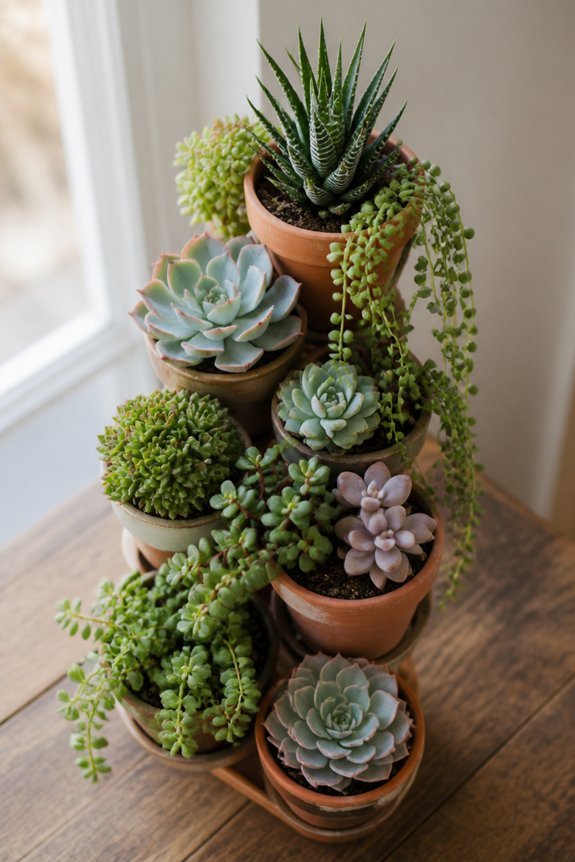
Vertical stacking lets you grow more succulents in tight spots. Think apartments, narrow shelves, or tiny patios. You build upward instead of outward.
Tiered stands work great. So do wall planters and hanging pots. Echeveria, jade plants, and aloe all handle stacked life well. They adapt to different light levels up and down your setup.
Watering needs extra care here. Top pots drain down. Bottom plants can drown if you are not careful. Slip saucers between tiers. Block that extra moisture. Every container needs drainage holes. Roots want water, not swimming pools.
Leave some breathing room between levels. Air moves better that way. Fungus stays away. Spin your display now and then. Everyone gets their turn in the sun. Windowsills, shelves, corners. These spots were made for stacking.
Soil and Drainage: Why Your Mix Matters as Much as Your Pot
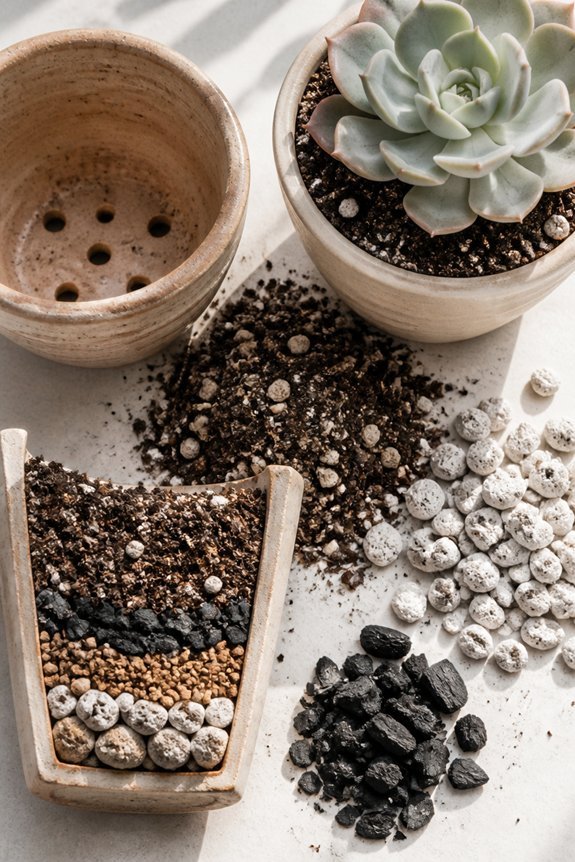
Your soil choice can kill your succulent or keep it thriving. Standard potting soil stays too wet. It drowns roots.
Mix your own instead. Blend regular potting soil with perlite, coarse sand, or pumice. A 1:1 ratio works well. Some growers prefer 2:1 for extra drainage.
These gritty bits create tiny air pockets. Water flows through fast. Roots can breathe.
Your pot matters too. Always use drainage holes. Terracotta pulls moisture away better than plastic. It helps your soil do its job.
Before watering, poke your finger in. Feel dry? Wait another day. Succulents like旱 than wet.
Frequently Asked Questions
How Often Should I Water Succulents in Containers, and Does Container Type Affect Frequency?
Container succulents typically require watering every two to three weeks. Container type notably affects frequency—terracotta drains faster, necessitating more frequent watering, while plastic retains moisture longer. Seasonal changes and soil composition also influence watering schedules considerably.
What Is the Best Temperature Range for Growing Succulents Indoors in Containers?
Succulents thrive indoors in containers when maintained between 50-80°F. They prefer cooler nighttime temperatures around 50-60°F and warmer daytime conditions of 70-80°F. Avoiding temperature fluctuations and frost exposure guarantees ideal growth and plant health.
Can I Use Regular Potting Soil for Succulents, or Do I Need Special Soil?
One should avoid regular potting soil for succulents, as it retains excessive moisture. Instead, growers benefit from using well-draining cactus or succulent-specific soil mixes, which prevent root rot and promote healthy plant development in container environments.
How Do I Know When to Repot My Succulents Into Larger Containers?
One should consider relocating these botanical companions when roots begin their delicate escape through drainage holes or growth noticeably slows. Additionally, if the soil dries excessively fast, upgrading to a slightly larger vessel becomes prudent for ideal plant flourishing.
Which Succulents Are Best for Beginners, and What Container Sizes Suit Them?
Beginners thrive with hardy succulents like jade plants, echeveria, and aloe vera. These require minimal care and root systems suit small to medium containers, typically two to four inches in diameter, allowing proper drainage and growth accommodation.
Conclusion
Selecting the right succulent container is the cornerstone upon which thriving plants are built. Terracotta, concrete, and hanging planters each offer distinct advantages in drainage and aesthetics. Pairing containers with proper soil composition, adequate light, and restrained watering schedules guarantees minimal maintenance. Whether choosing shallow bowls, mixed materials, or self-watering options, gardeners can cultivate healthy succulents that require little intervention while enhancing indoor and outdoor spaces effectively.