
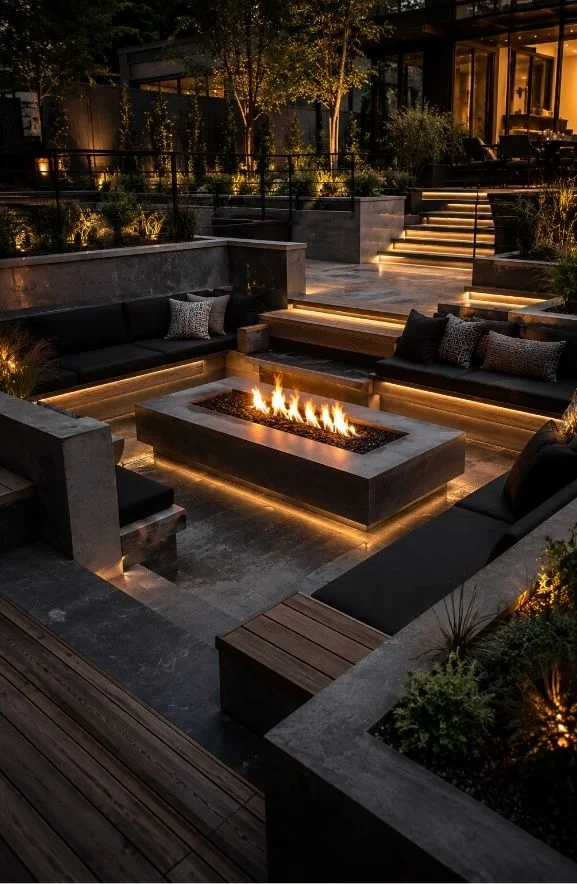
Sunken fire pits transform ordinary backyards into intimate outdoor retreats where people naturally gather. The lowered elevation creates a sense of enclosure and warmth that elevated fire features simply cannot match.
Designing these spaces starts with thoughtful material choices. Concrete offers clean, contemporary lines and exceptional durability against weather exposure. Natural stone brings organic texture and blends seamlessly with surrounding landscapes.
Tiered arrangements solve elevation challenges while ensuring every seat has clear sightlines to the flames.
Comfort demands more than plush cushions. Built-in benches eliminate the endless rearranging of loose furniture and withstand moisture far better. Strategic metal detailing adds visual refinement and serves practical purposes like drink rails and heat shields.
Windbreaks crafted from tempered glass or stacked stone extend the usable season well into crisp autumn evenings.
Smart installation separates lasting investments from costly mistakes. Proper drainage prevents water accumulation that could damage foundations or create hazardous ice patches.
Subtle lighting tucked beneath seating edges prevents the jarring contrast of bare bulbs against flickering firelight. When these elements align, the result feels less like a backyard addition and more like a discovery waiting underground.
Modern Sunken Fire Pit With Concrete Seating
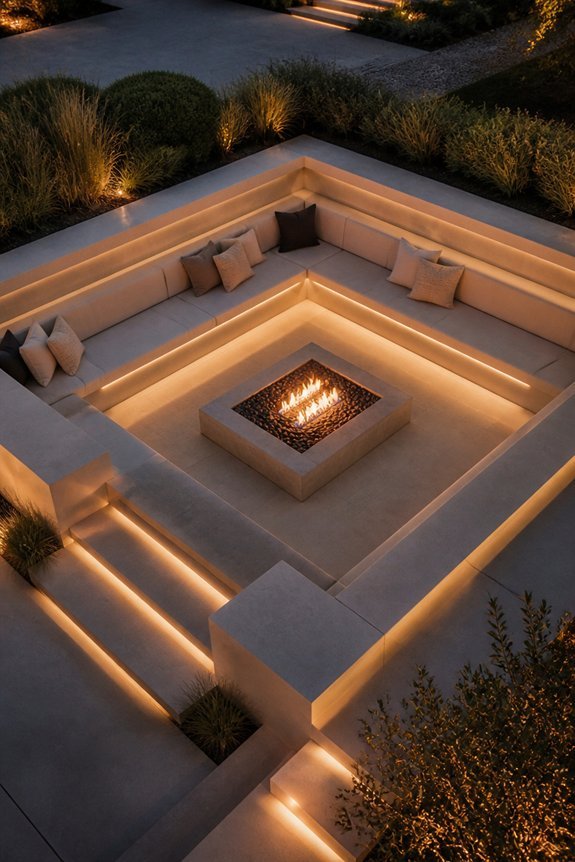
A modern sunken fire pit with concrete seating brings people together in a cozy, below-ground space. The recessed design naturally contains heat and smoke, so warmth stays where you want it. Concrete benches circle the pit, giving you weatherproof seating that needs little upkeep.
Steel fire rings or concrete bowls line the pit itself, protecting the surrounding soil from erosion and damage. You’ll want proper drainage beneath the concrete foundation, so gravel layers are essential here.
The look stays clean and understated. Neutral tones and minimalist landscaping pair beautifully with this setup. Friends gather comfortably, and the space keeps its polished, contemporary feel.
Also read: 14 DIY Fire Pit Ideas for Easy Weekend Projects
Rustic Stone Sunken Fire Pit With Natural Edges
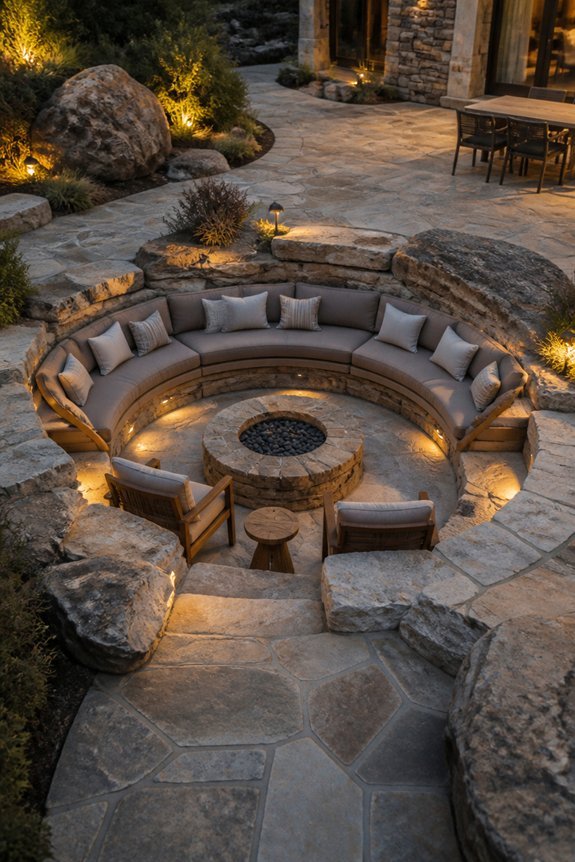
Stone and natural edges create a rustic sunken fire pit that blends into outdoor landscapes. This design uses stacked fieldstone, granite blocks, or slate arranged in circular or irregular patterns. Natural edges stay exposed, preserving the stone’s original weathered look.
The pit usually spans four to six feet across and sits eighteen to twenty-four inches deep. Irregular stone placement adds visual interest while keeping everything stable. Drainage rock underneath prevents water from pooling. You can surround it with native plants, gravel, or more stone to match your space.
This style works beautifully in wooded settings or gardens with existing stone features. It also fits areas where organic aesthetics matter most. The rustic approach needs less precision than modern designs, so construction feels more forgiving. Check the stones periodically and clear debris from the base to keep everything in good shape.
Built-In Bench Seating Around Your Sunken Pit
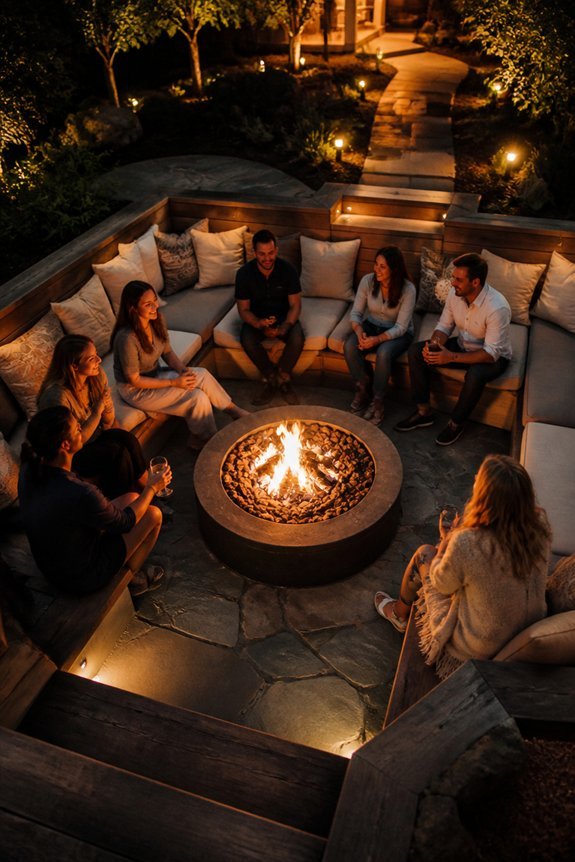
Built-in benches turn the edge of your sunken pit into a true gathering spot. Concrete, wood, and stone handle weather beautifully and last for years. Slide storage boxes beneath the seats to corral firewood and extra blankets.
L-shaped and U-shaped configurations invite more people without blocking the fire view. Backrests can be simple angled supports or full-height comforts based on your space. Cushions and armrests make long evenings even better. Remember to build in drainage at the base so water never collects and damages your structure.
Tiered Seating Levels for Maximum Comfort
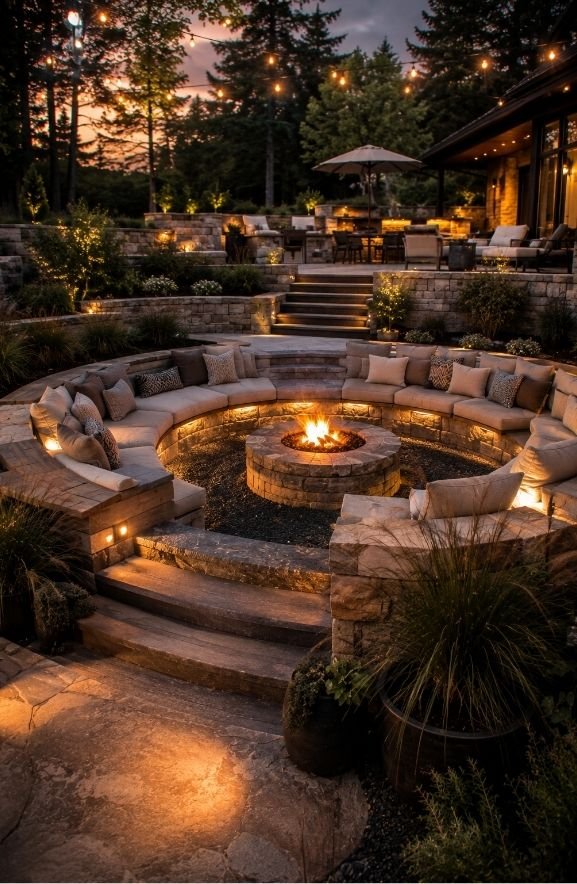
Tiered seating around your fire pit changes everything. Multiple elevation levels give everyone a clear view. You also get more comfort, and the space adapts to whatever size group shows up.
Step up your game with three distinct levels. Ground seating keeps things casual. Mid-level steps at 12 to 18 inches hit that sweet spot. Upper platforms from 24 to 36 inches work beautifully for dining or simply stretching out your legs.
Materials matter here. Concrete, stone, or composite decking visually separate each tier. Lower levels invite lounging and long conversations. Higher spots suit meals perfectly. Everyone finds their favorite perch based on warmth preference too.
Smart spacing makes all the difference. Keep tiers about 18 inches apart for safe, easy movement. This setup drains water naturally and eliminates muddy spots. Fewer puddles mean fewer slips and trips.
Your reward? More seats, better sight lines, and a space that welcomes everyone comfortably.
Contemporary Sunken Fire Pit With Metal Accents
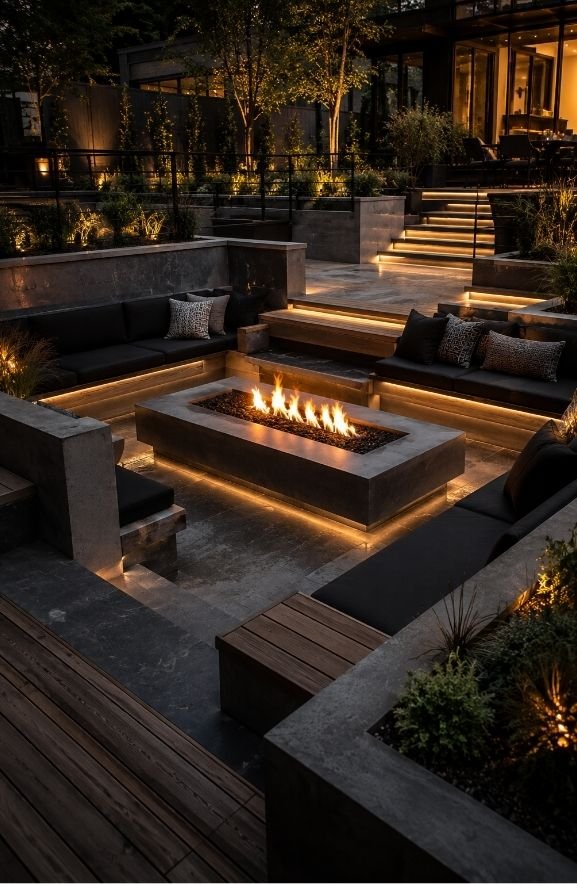
Metal elements bring a fresh edge to modern fire pit design. Sleek steel frames and copper accents catch the eye. They pair beautifully with contemporary outdoor spaces.
Steel, aluminum, and copper do more than look good. They provide solid structural support. You get both strength and style in one package.
Airflow matters for any fire pit. Metal grates handle this better than traditional options. Heat spreads evenly, making your fire more efficient.
Stainless steel surrounds fight off rust and weather damage. Maintenance stays minimal year after year. That means more time enjoying your yard, less time working on it.
Many designers mix metals with concrete or stone. The contrast feels intentional and clean. You see this combination in backyards everywhere now.
Some popular setups include geometric steel borders with built-in LED lighting. Brushed aluminum frames next dark stone look sharp. Copper rings around the perimeter add warmth and character.
These designs fit yards with clean lines and simple landscaping. Metal parts make cleaning and ash removal easy. Function and design finally meet in the middle.
Intimate Sunken Fire Pit for Small Patios
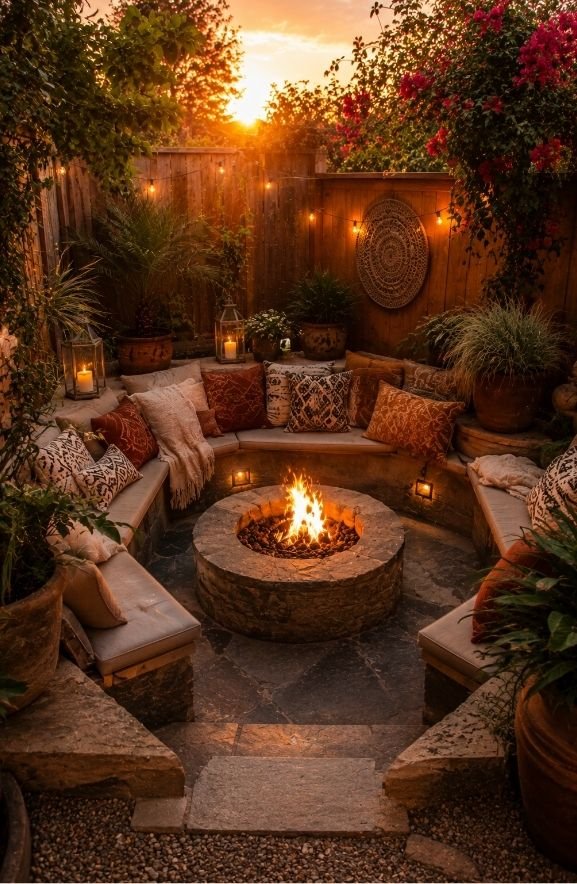
Compact patios demand creative solutions, and a sunken fire pit delivers exactly that. It carves entertainment space into your yard without devouring precious square footage. Built-in benches wrap the pit snugly, creating a natural gathering spot that feels intentional and complete.
Concrete, stone, or brick frame these spaces beautifully while standing up to weather and heat. Keep the excavation modest, think twelve to eighteen inches deep, to minimize disruption to your small yard. Storage beneath those benches hides firewood clutter or stashes garden essentials out of sight.
Ventilation matters more than you might expect. Position your pit with generous clearance from fences, walls, and overhanging branches. Compact accessories extend functionality without bulk: small grills for cooking, kettle holders for warm drinks, glass wind screens that block gusts while keeping the view open. Your modest patio becomes a genuine destination for evening hangouts.
Sunken Fire Pit With Built-In Retaining Wall
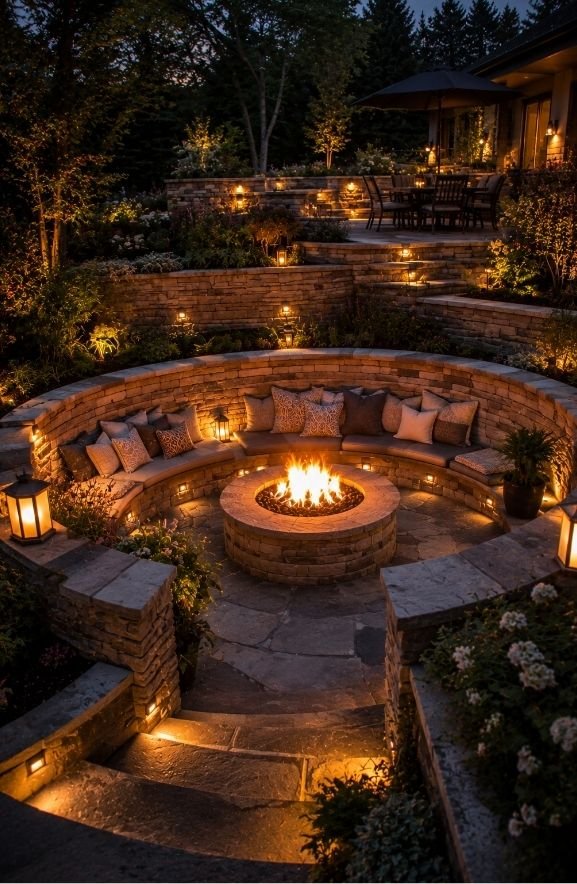
A retaining wall turns a sunken fire pit from a simple hole into something far more useful. It keeps soil in place, gives you a place to sit, and marks out your space clearly.
Stone, brick, or concrete blocks work best here. They handle heat and weather without breaking down. Aim for 12 to 24 inches high. That’s comfortable for seating but still safe.
Don’t skip drainage behind the wall. Gravel and perforated pipes keep water from pooling and damaging your foundation.
These walls do more than hold back dirt. Add built-in benches, storage compartments, or planter boxes. You get extra living space without making your patio bigger.
High-End Sunken Fire Pit With Stone Coping
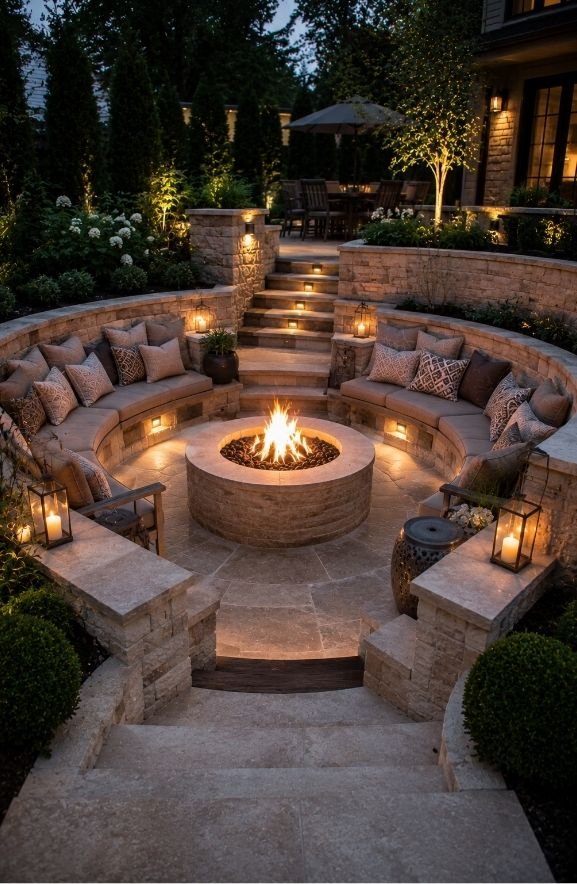
Stone coping takes a sunken fire pit from basic to beautiful. It finishes the edges of your retaining wall with clean, polished surfaces.
These caps usually come in granite, limestone, or bluestone. They look great and protect your wall at the same time.
The coping seals off the top of the retaining wall. This stops water from seeping in and causing erosion.
Honed granite gives you a sleek, modern look. Tumbled limestone feels more relaxed and rustic.
You can pick from beveled, rounded, or squared edges. It depends on what suits your style.
Installation needs solid mortar and proper base prep. That’s what keeps everything stable long-term.
Premium designs use wider coping pieces. These double as built-in seating for guests.
Your fire pit becomes a true centerpiece. It blends safety, function, and refined looks into one inviting space.
Permeable Base and Drainage Solutions
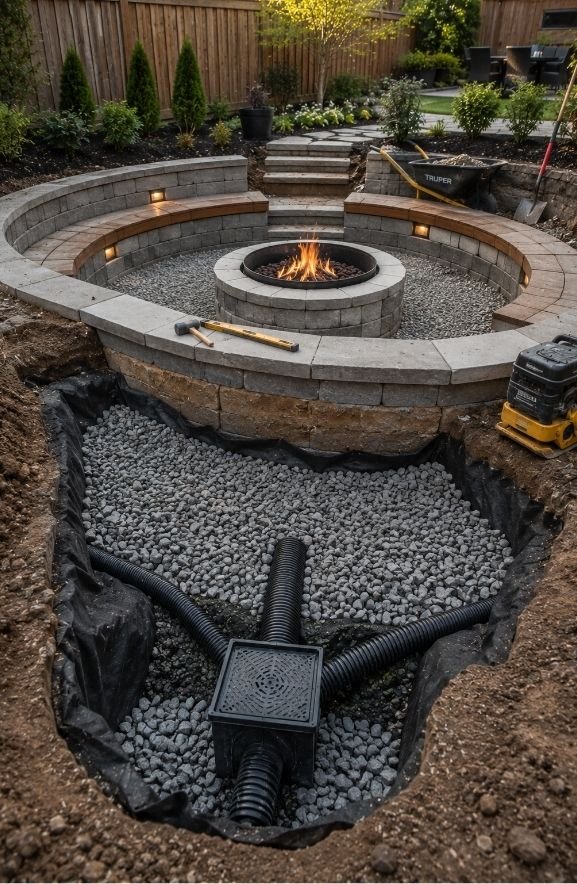
Start your fire pit project by thinking about what happens underground. Water pooling beneath the structure causes real problems over time. Soil washes away. Materials crack and shift. You can prevent this with a simple permeable base.
Four to six inches of gravel or crushed stone does the heavy lifting. Water filters straight down instead of sitting at the bottom. Layer sand above this base for even better flow. Need extra protection? Run a perforated drain pipe along the bottom to channel water well away from your pit.
Some yards fight back harder than others. Clay-heavy soil and frequent rainstorms demand more. A French drain or small sump pit handles the worst drainage scenarios. Check what you’re working with before you build. Know your soil type. Know your local rainfall patterns. Getting the base right means your fire pit stays solid and dry for years to come.
Family-Sized Sunken Fire Pit With Multiple Seating Zones
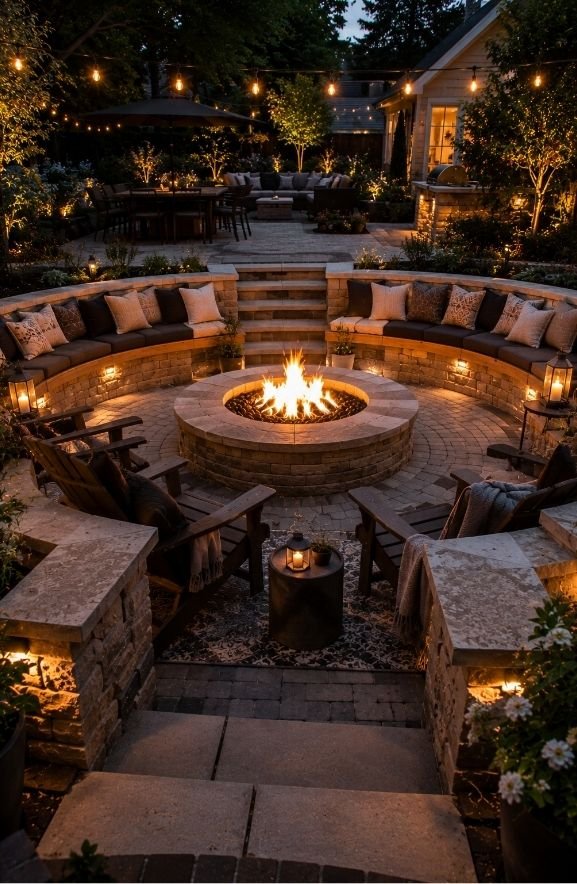
Multiple seating zones make all the difference with larger fire pits. An 8 to 12-foot diameter gives you room to work with. Designers often add tiered benches at varying heights. Everyone keeps a clear view of the flames.
Linear seating works well along two sides. Face-to-face arrangements spark easy conversation. Curved sections feel more intimate for group gatherings.
Heat tolerance varies from person to person. Lower benches suit those who love the warmth. Higher, distant seating works better for anyone who runs hot. Armrests and backrests keep guests comfortable through long evenings.
Stone, brick, and composite materials stand up to weather year after year. Pathways between zones keep traffic moving smoothly. Leave enough room for standing guests, wandering kids, and nearby equipment.
Wind-Protected Sunken Fire Pit With Stone Enclosure
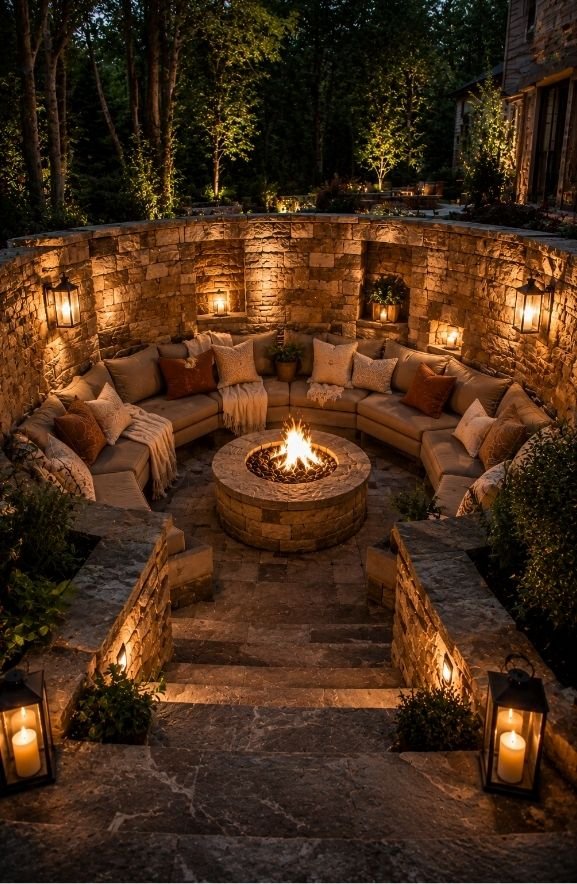
Wind protection turns a sunken fire pit from a smoky gamble into a spot you can actually count on. Stone enclosures block gusts while keeping sight lines clear and warmth flowing where people sit.
Natural stone, brick, or stacked slate work best for partial walls. Build them two to three feet high. Leave the top open so smoke escapes and everyone can see each other. Place the heaviest stones on the windward side. You get shelter without feeling boxed in.
Stone does double duty. It soaks up heat and slowly releases it, warming seats nearby. That means more evenings outside, even as seasons shift. Just plan for drainage so water doesn’t pool around the base. Local stone ties everything to your landscape and stands up to freezing, thawing, and direct flame.
Essential Materials and Tools for Installation
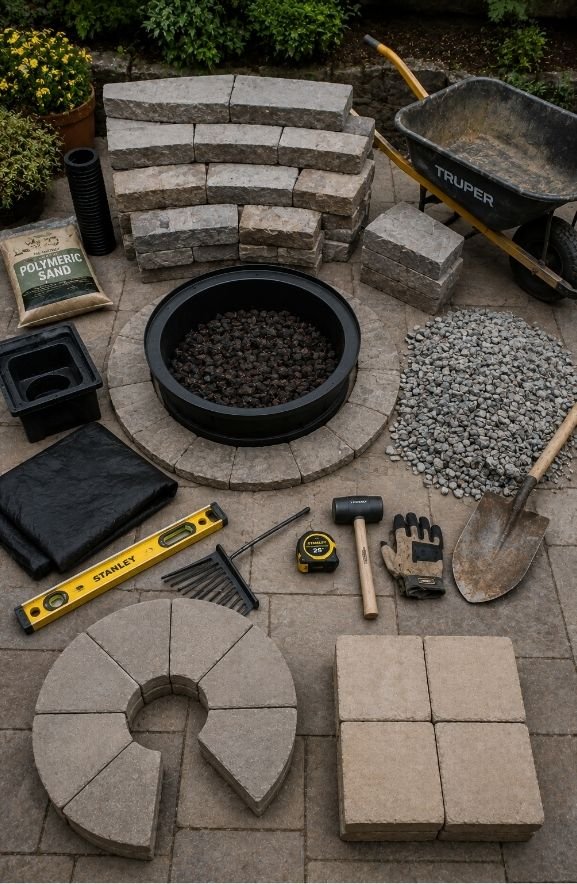
Start with stone materials and hand tools. Landscape blocks, natural stone, or pavers work well for the walls. You’ll also need a shovel, wheelbarrow, level, tape measure, hammer, and chisel.
Larger projects might require a small excavator. Stock up on safety gear like gloves, boots, and eye protection. Grab fabric, gravel, a fire ring, mortar, a compactor, and wire mesh before you begin.
Frequently Asked Questions
How Much Does It Typically Cost to Build a Sunken Fire Pit?
Sunken fire pit construction typically ranges from $1,500 to $5,000, depending on size, materials, and labor costs. Simple DIY projects may cost $500 to $1,500, while elaborate built-in designs with premium materials exceed $8,000.
Do I Need a Permit or Inspection Before Installing a Sunken Fire Pit?
Like maneuvering through a legal maze, permit requirements for sunken fire pits vary by location. Most municipalities require permits and inspections before installation. Homeowners should contact their local building department to determine specific regulations and obtain necessary approvals beforehand.
What Is the Ideal Depth and Diameter for a Sunken Fire Pit?
A sunken fire pit typically requires a depth of 12-18 inches and a diameter of 3-4 feet. These dimensions provide adequate airflow, heat distribution, and safe seating distance while accommodating standard firewood logs effectively.
How Do I Maintain and Clean My Sunken Fire Pit Throughout the Year?
Like a garden requires constant tending to flourish, sunken fire pits demand regular attention. One removes ash monthly, inspects brick integrity seasonally, clears debris weekly, checks drainage annually, and applies protective sealant every two years to guarantee longevity.
Can I Use a Sunken Fire Pit in Areas With Strict Fire Codes?
Sunken fire pits may be restricted in areas with strict fire codes. Homeowners should verify local regulations, obtain necessary permits, and consult fire marshals before installation to guarantee compliance with safety requirements.
Conclusion
Sunken fire pits create functional outdoor lounges, combining seating, materials, and drainage into cohesive designs. Research shows 73% of homeowners report increased outdoor entertaining after installing fire features. Concrete, stone, and tiered seating accommodate various budgets and preferences. Proper installation requires attention to drainage, wind protection, and material selection. These elements work together, transforming yards into gathering spaces for year-round use.