
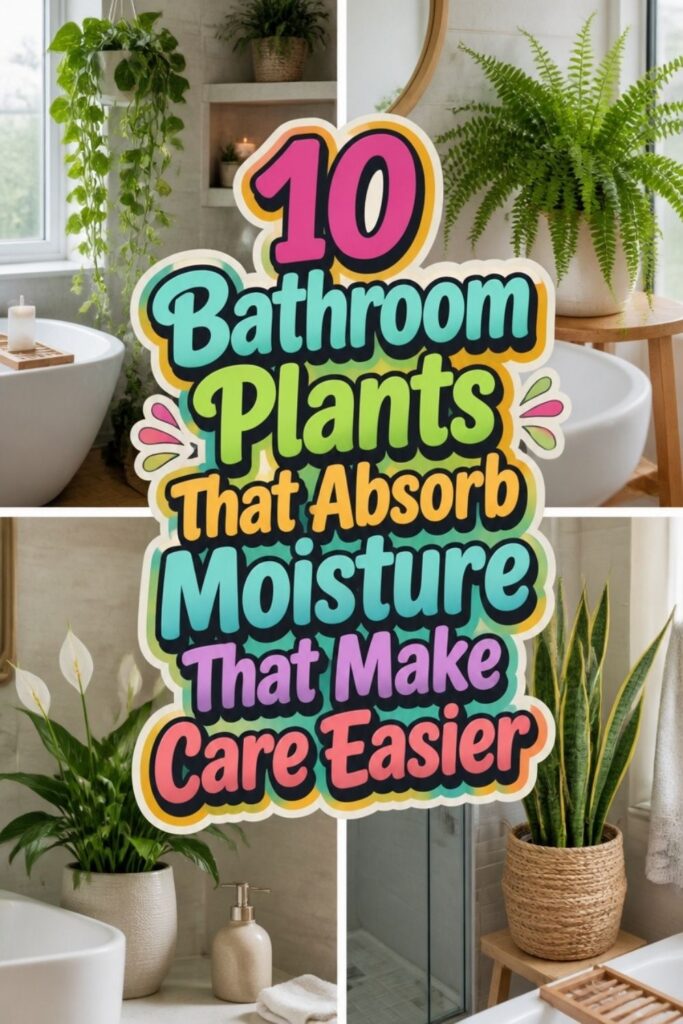
Bathrooms can feel like tricky spaces for greenery, yet they offer something most rooms can’t: steady humidity. The right Bathroom Plants don’t just tolerate these conditions, they can actively flourish in them.
Boston ferns, pothos, snake plants, calathea, and peperomia all fall into this category, turning a naturally damp environment into an ideal growing space.
What makes these choices particularly appealing is how little fuss they demand. Many Bathroom Plants benefit from moisture in the air, while some also manage well in the softer, indirect light that bathrooms typically provide.
Still, picking the right plant matters more than grabbing the first one you see. A windowless powder room suits different species than a bright bathroom with plenty of natural light.
Taking time to match each plant’s preferences to your actual space makes the difference between a thriving display and a struggling afterthought.

Check the Light Before Choosing
Start by looking at how much natural light your bathroom actually receives. Pothos, snake plants, and ZZ plants are more forgiving in dimmer spaces, while calatheas, ferns, and peperomia generally perform better with brighter indirect light.
Humidity can reduce how quickly soil dries, but it does not replace proper watering. Check the soil before reaching for the watering can, especially with drought-tolerant plants that prefer to dry out between drinks.
For bathrooms without windows, consider adding a suitable grow light rather than expecting a low-light plant to survive indefinitely without light. Good drainage and some air circulation are equally important, particularly in consistently steamy rooms.
Boston Fern: Humidity’s High-Maintenance Classic
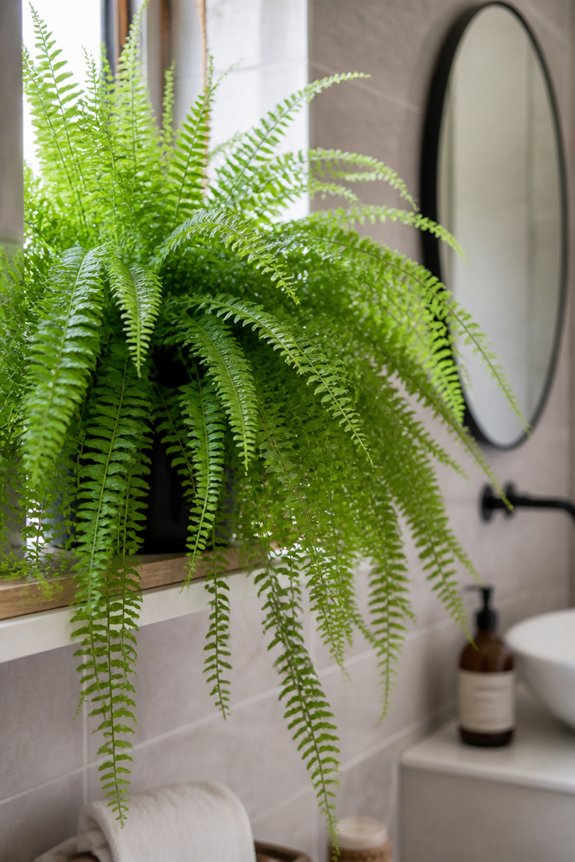
Many people choose the Boston fern for bathrooms because it thrives in moist air and actively absorbs excess humidity from the environment. However, this plant requires consistent care, including regular watering and indirect light. The fronds need misting to prevent browning.
Boston ferns prefer temperatures between 60 and 70 degrees Fahrenheit, making bathroom conditions generally suitable for their growth.
Pothos: The No-Fuss Bathroom Vine
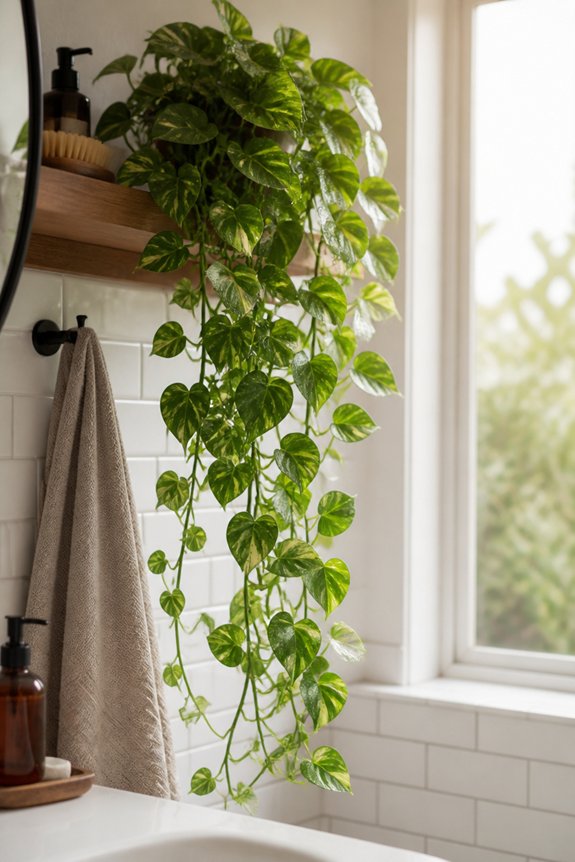
Unlike the Boston fern, pothos offers a straightforward alternative for bathroom environments. This trailing vine tolerates low light, inconsistent watering, and high humidity without complaint. Pothos absorbs moisture through its broad leaves while requiring minimal attention.
It grows on shelves, hangers, or window ledges, adapting to various bathroom conditions. The plant rarely needs pruning or fertilizing, making it ideal for low-maintenance spaces.
Snake Plant: Steamy-Space Survivor
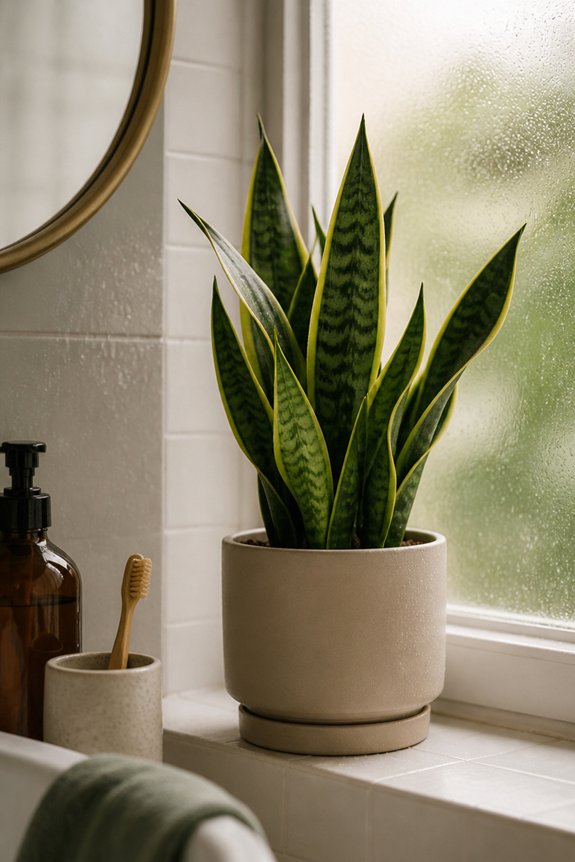
The snake plant stands as an exceptionally hardy bathroom option, thriving in the moisture-heavy conditions that challenge many houseplants. This succulent tolerates humidity well, requiring minimal watering and indirect light. Its upright leaves efficiently absorb excess moisture while improving air quality.
Snake plants need repotting only every two to three years, making maintenance straightforward for bathroom environments.
Calathea: Stunning Foliage in Humid Air
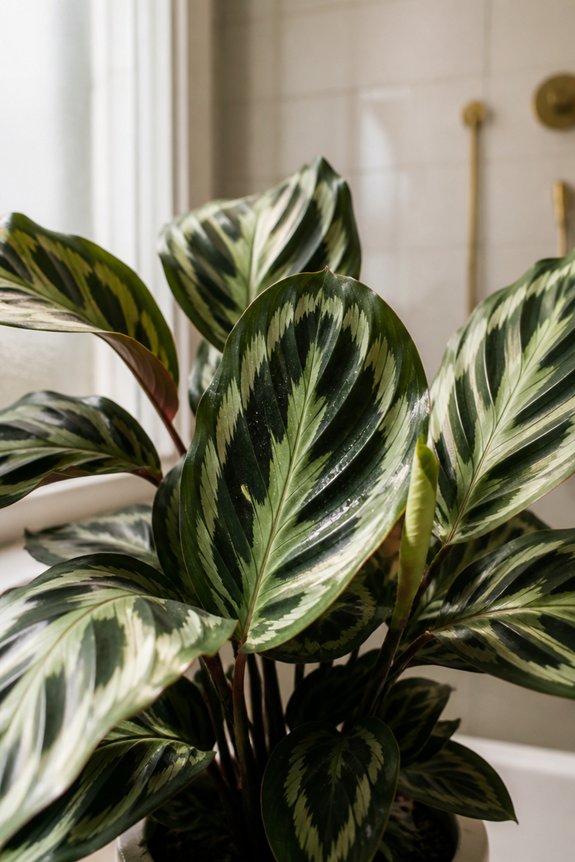
While snake plants excel through their resilience, calatheas offer a different appeal with their decorative patterned leaves and active preference for moist air. Calatheas thrive in bathroom humidity levels, displaying vibrant foliage in striped or spotted patterns.
These plants require consistent moisture, indirect light, and warm temperatures between sixty-five and seventy-five degrees Fahrenheit. Their moisture absorption capabilities make them practical selections for reducing excess bathroom humidity.
Philodendron: Fast-Growing, Easy to Propagate
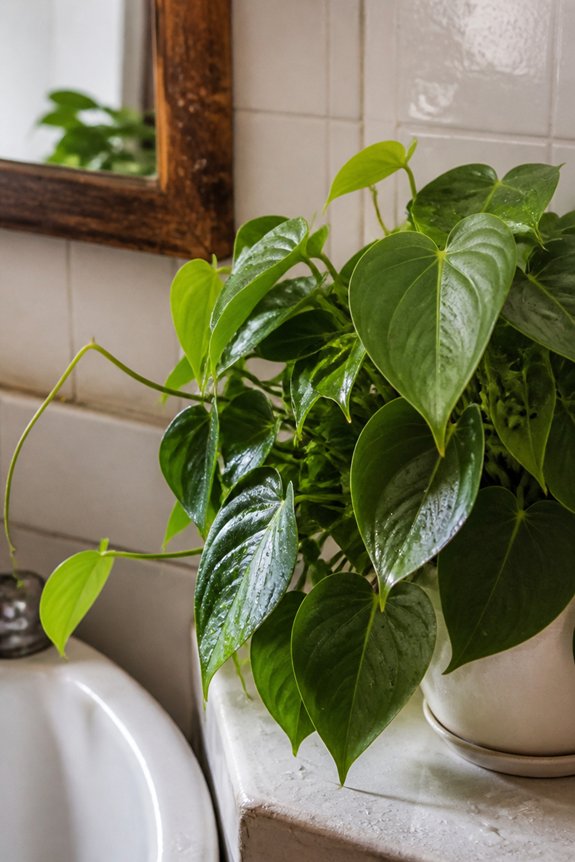
Philodendrons prove effective for bathrooms because they absorb moisture while tolerating variable light conditions and irregular watering schedules. These vines propagate easily from stem cuttings placed in water or soil, requiring minimal effort.
Heartleaf and Brasil varieties adapt well to bathroom environments. Their trailing growth habit suits shelves and hanging baskets, making them practical for moisture-prone spaces.
Maidenhair Fern: Delicate but Rewarding
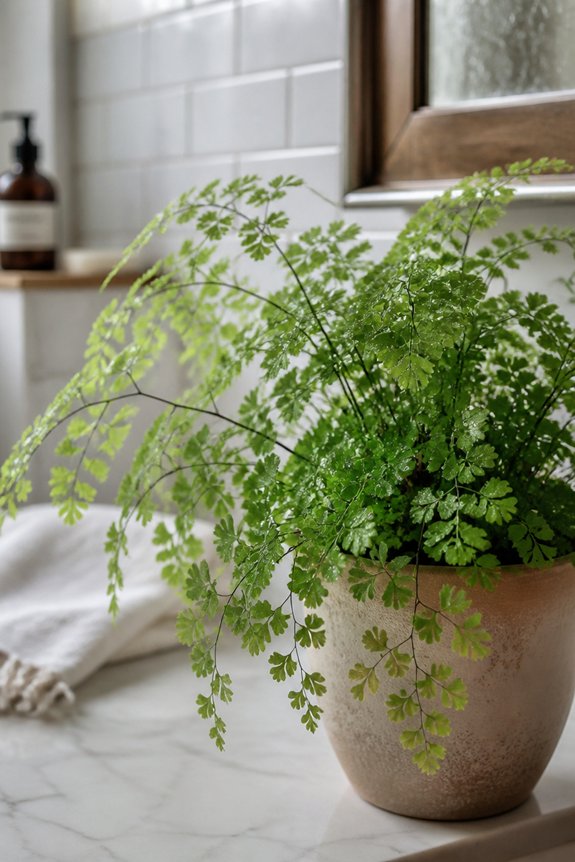
Maidenhair ferns thrive in bathroom environments due to their preference for humid, moisture-rich air and their ability to absorb excess moisture through their delicate fronds. These plants require consistent watering, indirect light, and temperatures between 60-75°F.
They perform well on bathroom shelves, away from direct heat sources and drafts. Regular misting helps maintain ideal humidity levels for healthy growth.
ZZ Plant: Practically Unkillable in Bathrooms
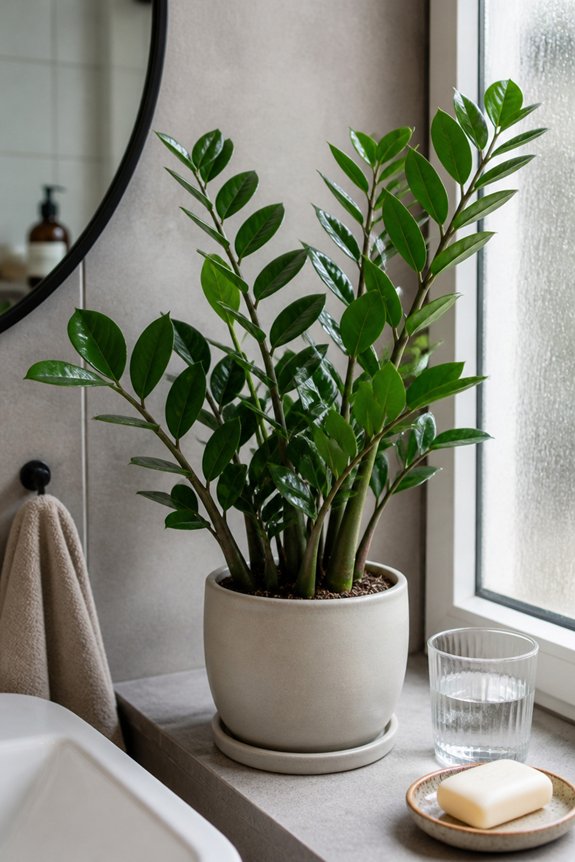
For those seeking a more forgiving option than the delicate maidenhair fern, the ZZ plant offers remarkable resilience in bathroom settings. This plant tolerates low light, irregular watering, and high humidity effectively.
ZZ plants feature glossy, compound leaflets and grow slowly, requiring minimal maintenance. They thrive in indirect bathroom light and prefer drying between waterings, making them ideal for inconsistent care routines.
Dracaena: Air-Purifying and Drought-Tolerant
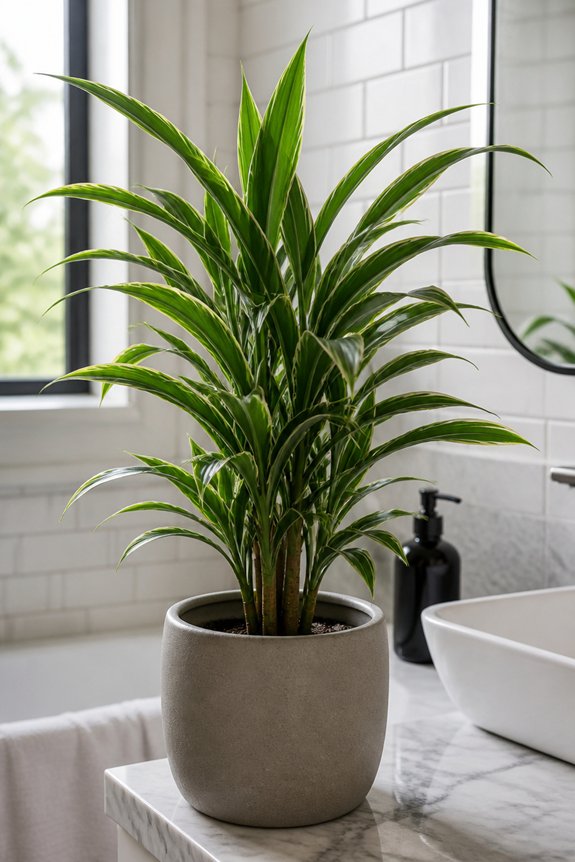
Dracaena plants deliver dual benefits for bathroom environments through air purification and drought tolerance. These plants remove toxins like formaldehyde and xylene from air.
Dracaena varieties, including Marginata and Janet Craig, thrive in low-light conditions typical of bathrooms. They require minimal watering, making them ideal for moisture-prone spaces. Their ability to tolerate inconsistent care reduces maintenance demands considerably.
Peperomia: Compact Humidity Lover for Tight Spaces
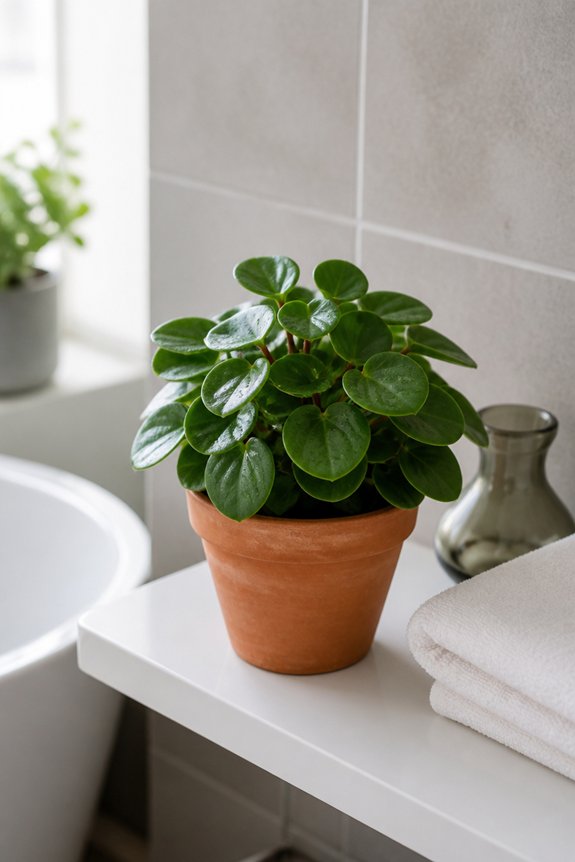
While Dracaena plants tolerate dry conditions well, Peperomia varieties actively thrive in humid bathroom environments, making them suited to different moisture levels. These compact plants, including Red Peperomia and Watermelon Peperomia, fit easily on shelves and counters. They prefer indirect light, consistent moisture, and high humidity.
Their small size makes them practical for bathrooms with limited space.
Begonia: Colorful Leaves That Love Moisture
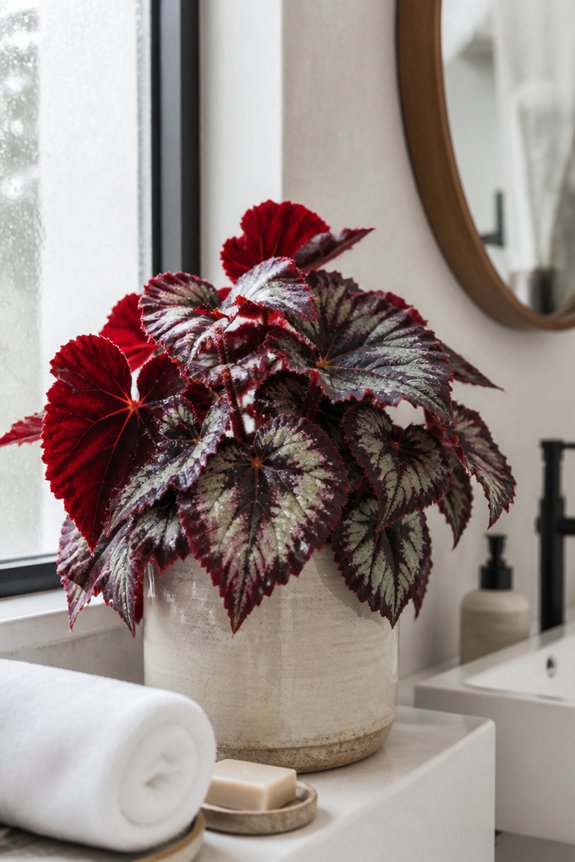
Begonias stand out as excellent bathroom plants, offering both moisture absorption and decorative appeal through their distinctive foliage. These plants thrive in humid environments, making bathrooms ideal locations.
Varieties like rex begonias display vibrant leaf patterns in reds, silvers, and greens. They prefer indirect light and consistently moist soil, though not waterlogged conditions. Regular misting supports growth and moisture regulation.
Frequently Asked Questions
How Often Should I Water Bathroom Plants if Humidity Levels Are Already High?
Plants in humid bathrooms require less frequent watering since moisture-absorbing varieties benefit from the elevated humidity levels. One should check soil dryness before watering, typically doing so every two to three weeks rather than weekly.
Can Bathroom Plants Help Reduce Mold and Mildew Growth on Walls?
Bathroom plants can indirectly help reduce mold and mildew by absorbing excess moisture from the air. However, they work best alongside proper ventilation and cleaning practices rather than serving as a standalone solution to prevent fungal growth.
What’s the Best Lighting for Bathroom Plants With Little to No Windows?
Low-light bathroom plants thrive under LED grow lights positioned 6-12 inches above foliage. Full-spectrum bulbs mimicking natural daylight work best, requiring 12-14 hours daily. Alternatively, fluorescent fixtures near mirrors provide sufficient illumination for shade-tolerant species.
Should I Fertilize Bathroom Plants Differently Due to Increased Moisture Exposure?
Bathroom plants typically require less frequent fertilization due to increased moisture and humidity promoting nutrient absorption. One should reduce fertilizer applications by half compared to standard houseplants, applying diluted solutions every two months instead of monthly.
How Do I Prevent Root Rot in Plants Grown in Humid Bathroom Environments?
Studies show 80% of houseplant deaths result from overwatering. One prevents root rot by ensuring proper drainage holes, using well-draining soil mixes, watering less frequently, and increasing air circulation with fans to reduce excess moisture around roots.
Conclusion
Bathroom plants serve multiple purposes: they absorb excess moisture, improve air quality, and require minimal maintenance. Boston ferns, pothos, snake plants, and ZZ plants represent reliable choices for humid spaces. These selections don’t require constant attention, making them worth their weight in gold for busy homeowners. By choosing appropriate plants, individuals transform bathrooms into healthier environments while investing minimal effort in upkeep and care routines.