
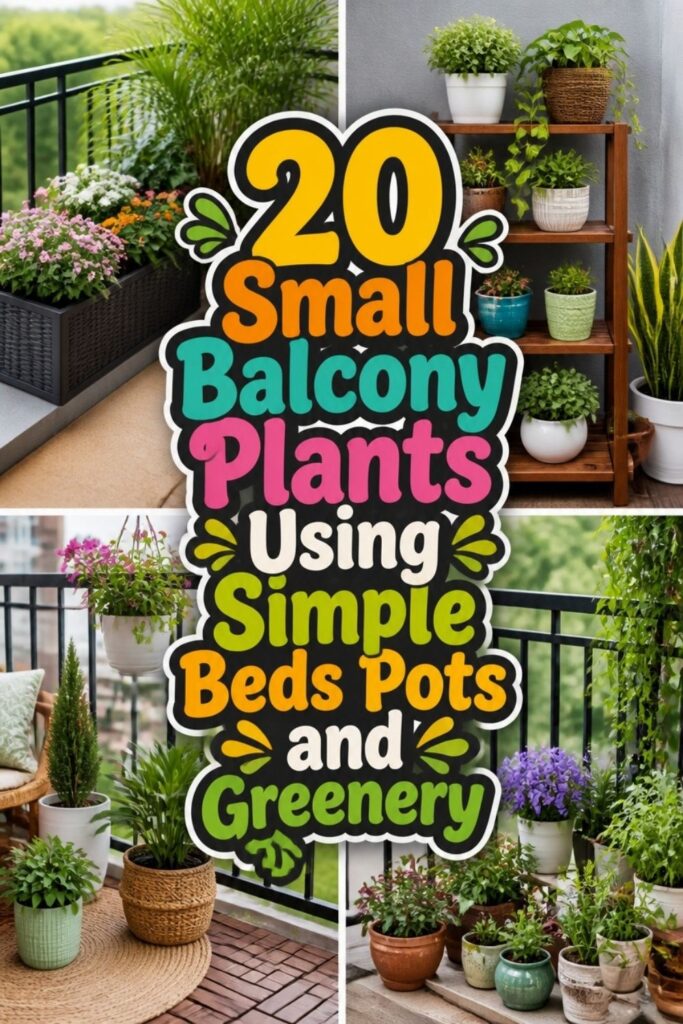
Small balconies might seem limiting, but they offer plenty of room for lush green retreats. Choosing the right Small Balcony Plants can turn a bare outdoor area into a lively mini-garden. Container gardening makes this possible without taking up valuable floor space.
Pothos can trail from elevated shelves, while snake plants add height with their upright leaves. Basil and other herbs fit neatly into compact pots. They also bring fresh greenery and practical value to the balcony.
Success depends on a few basics. Plants need suitable sunlight exposure, proper drainage holes, and a consistent watering routine.
Tiered arrangements are especially useful in tight spaces. They create vertical layers and allow more plants to fit into a small footprint. Hanging pots and railing planters can provide even more growing room.
The best Small Balcony Plants depend on your balcony’s light, space, and unique microclimate. From herbs and foliage plants to flowering annuals, there are options for almost every balcony.
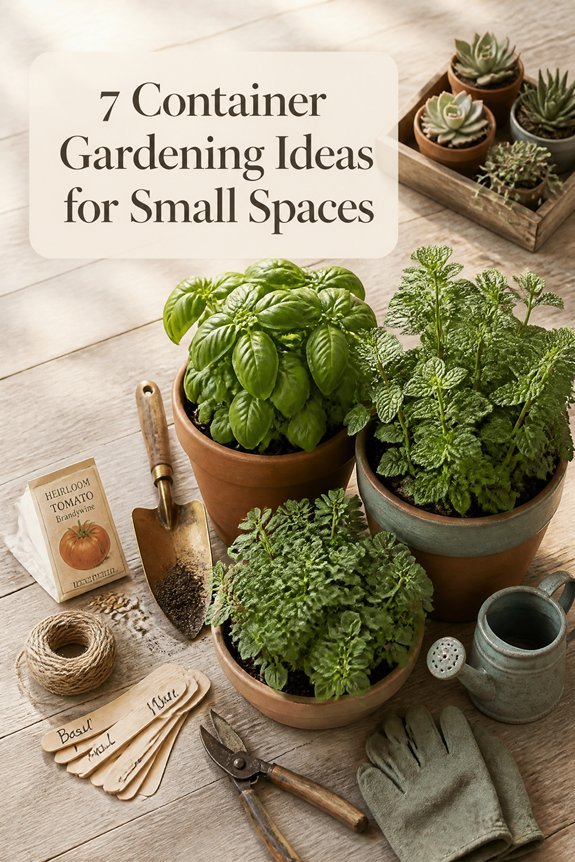
Make Every Inch Work Harder
Start by mapping where sunlight falls across the balcony before arranging your pots. Sunny sections can support herbs and succulents, while shadier corners are better reserved for plants that tolerate lower light.
Use vertical space instead of filling the entire floor with containers. Hanging baskets, tiered stands, and elevated pots let you grow more plants while preserving enough room to move around comfortably.
Keep drainage and watering practical from the beginning. Choose pots with drainage holes, protect the balcony surface with saucers, and group plants with similar moisture needs so routine care stays manageable.
Why Container Gardening Works for Small Balconies
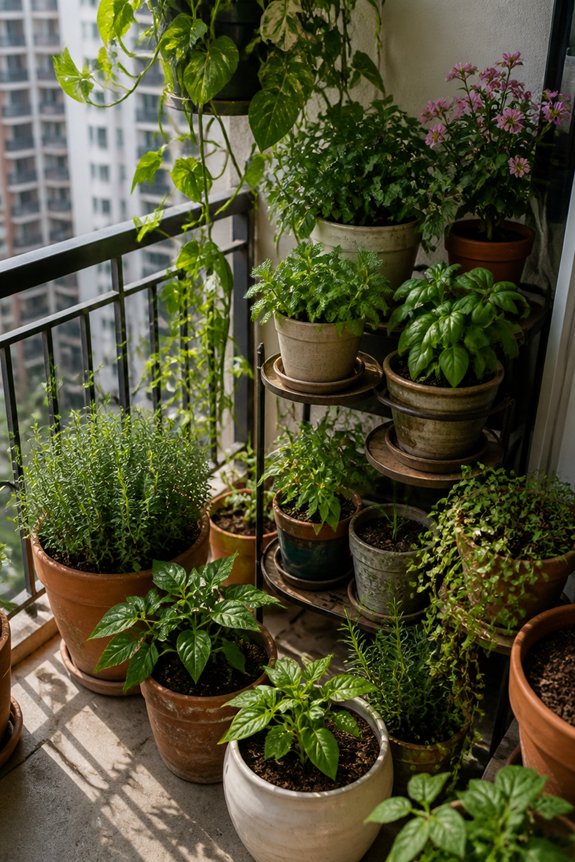
Containers offer a practical solution for growing plants in limited outdoor spaces, allowing balcony gardeners to cultivate herbs, vegetables, and flowers without requiring ground-level garden beds. Pots enable flexible placement, accommodate various plant types, and simplify maintenance tasks.
Gardeners can relocate containers for ideal sunlight exposure, control soil quality directly, and maximize vertical space using tiered arrangements or wall-mounted planters.
Before You Buy: Sunlight, Drainage, and Container Basics
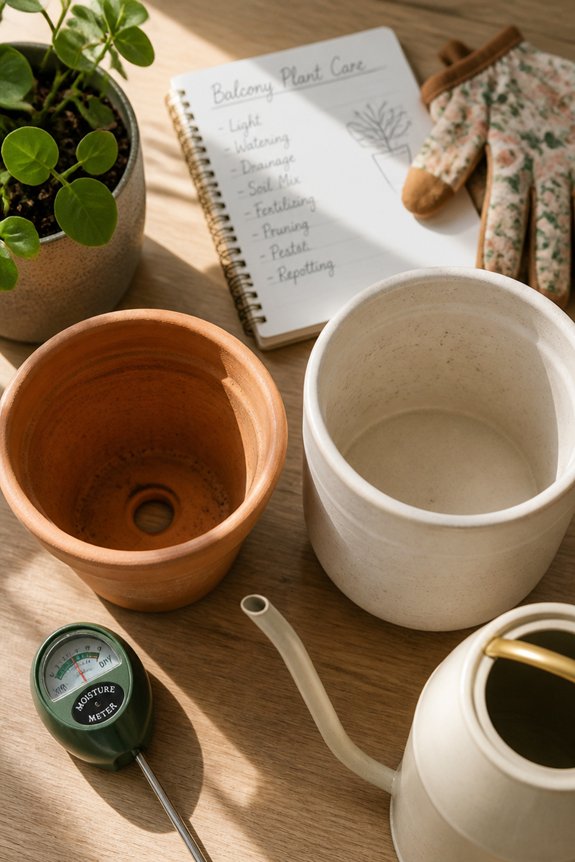
What environmental conditions does a balcony offer before selecting plants and containers? Balconies receive varying sunlight: full sun, partial shade, or full shade, affecting plant choices.
Drainage holes in containers prevent root rot from standing water. Container size matters, as larger pots retain moisture longer. Materials like terracotta, plastic, and ceramic each offer different benefits for plant health and water retention rates.
Watering and Feeding: The Two Rules That Matter Most
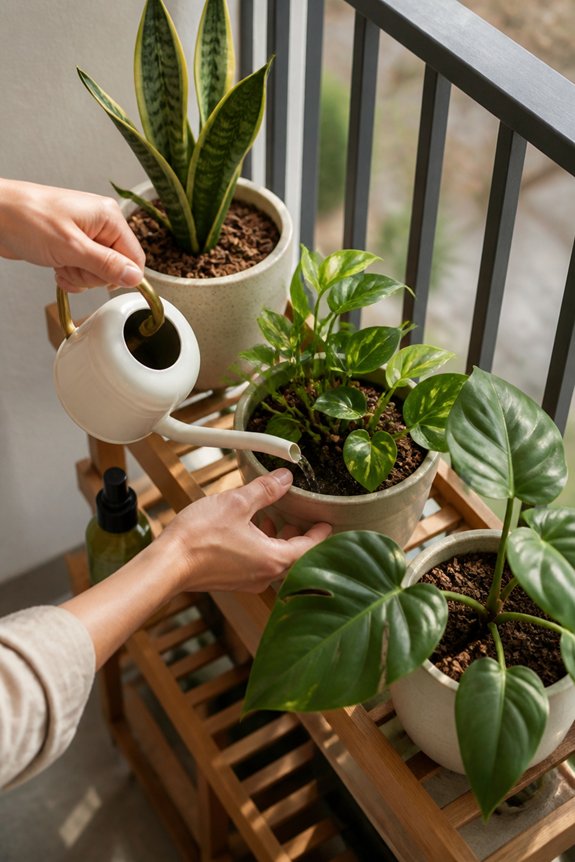
Once the right containers and growing conditions are in place, balcony gardeners must focus on two fundamental practices: proper watering and regular feeding. Water when soil feels dry at the surface, checking daily during warm months. Feed plants every two weeks using balanced fertilizer.
Reduce feeding in winter when growth slows. These consistent routines prevent common problems like wilting and nutrient deficiencies.
Pothos: Trailing Vines for Hanging Baskets
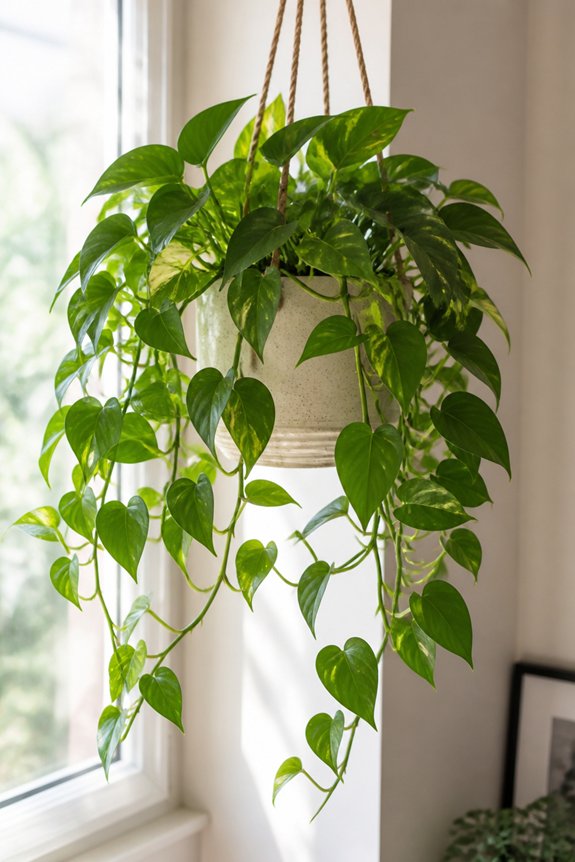
Trailing vines represent an excellent choice for balcony gardeners seeking low-maintenance plants that maximize vertical space. Pothos plants produce long, cascading stems ideal for hanging baskets. They tolerate low light conditions and require infrequent watering.
The vines grow quickly, reaching several feet in length. Pothos adapts well to container gardening and needs minimal feeding during growing seasons.
Snake Plants: Vertical Greenery With Zero Fuss
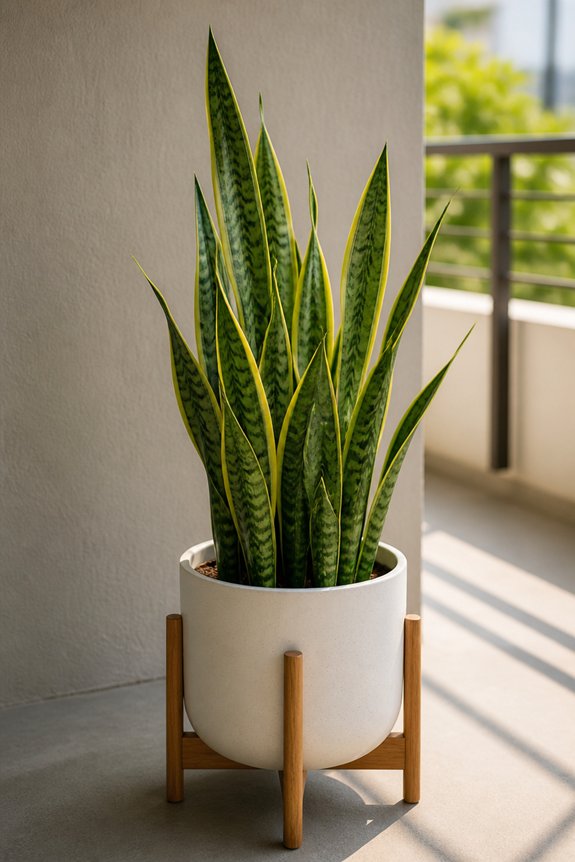
Snake plants stand out as one of the most resilient options for small balconies, requiring minimal attention while providing consistent visual interest. These upright plants tolerate low light and irregular watering.
Varieties like Sansevieria trifasciata grow tall, maximizing vertical space efficiently. Their architectural leaves add structure to balcony arrangements. Snake plants thrive in standard potting soil, containers with drainage holes, and occasional watering when soil dries completely.
ZZ Plant: Survives Neglect and Low Light
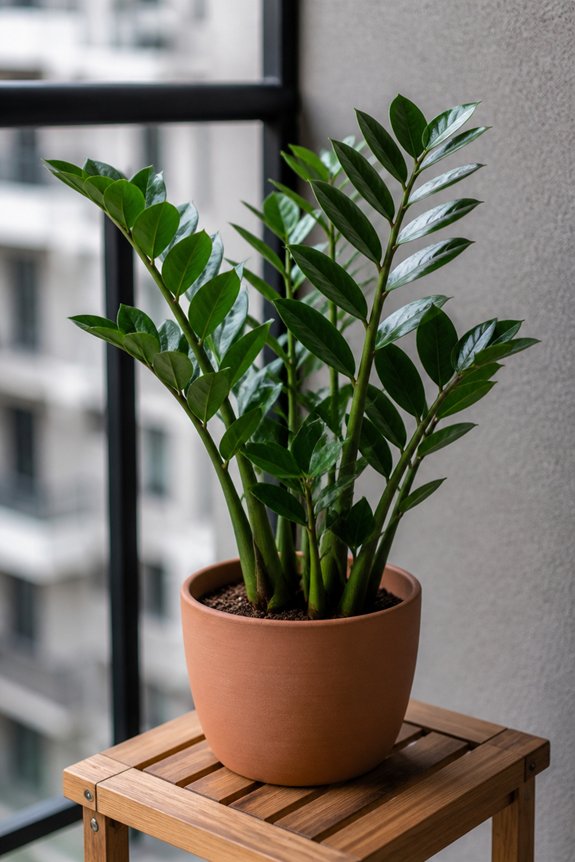
The ZZ plant offers another excellent choice for small balconies, combining durability with minimal care requirements. This plant tolerates low light conditions, irregular watering, and neglect, making it practical for busy balcony gardeners.
ZZ plants grow slowly, require infrequent watering, and thrive in standard potting soil. Their glossy, compound leaves add visual interest while requiring minimal maintenance or attention.
Spider Plant: The Starter Plant for Everyone
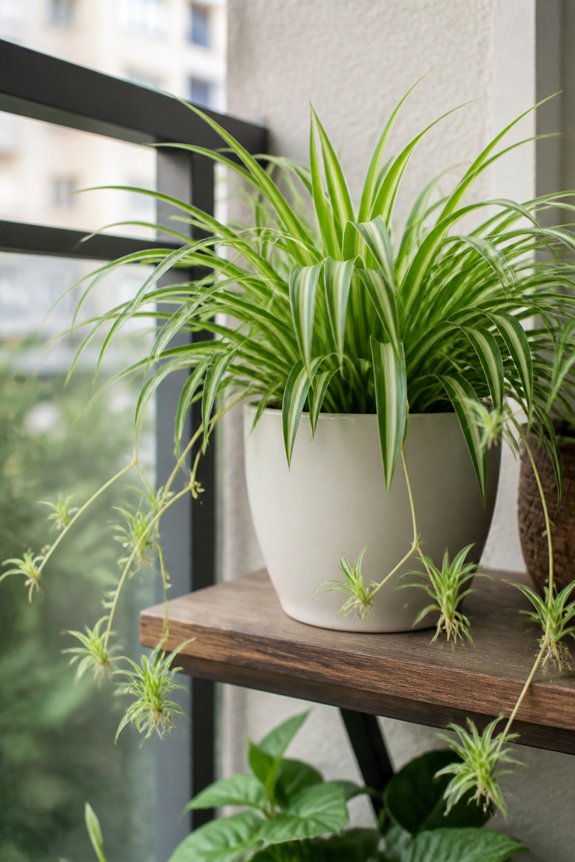
Spider plants stand out as one of the most reliable choices for beginning balcony gardeners. They tolerate inconsistent watering, adapt to various light conditions, and produce trailing foliage that works well in hanging baskets.
Spider plants develop small plantlets, which propagate easily in water or soil. Their low maintenance requirements and forgiving nature make them ideal for novice gardeners establishing initial balcony greenery collections.
Philodendron: Heart-Shaped Leaves for Shaded Balconies
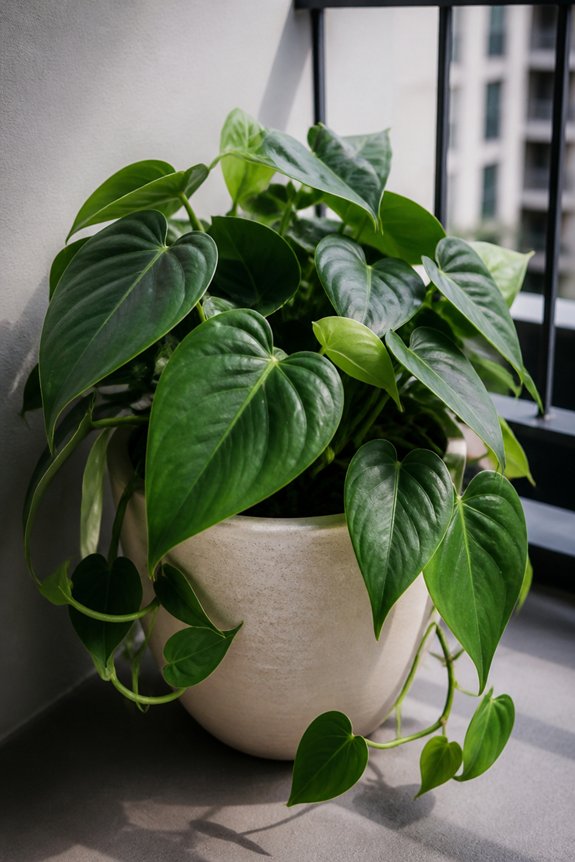
Many philodendrons thrive in low-light conditions, making them suitable for balconies that receive limited direct sunlight. These plants feature distinctive heart-shaped leaves and tolerate neglect reasonably well.
Varieties like Heartleaf Philodendron and Brasil adapt to small containers. Water when soil feels dry, verify drainage holes exist, and rotate the pot monthly for even growth.
Rubber Plant: Bold Foliage for Bright Spaces
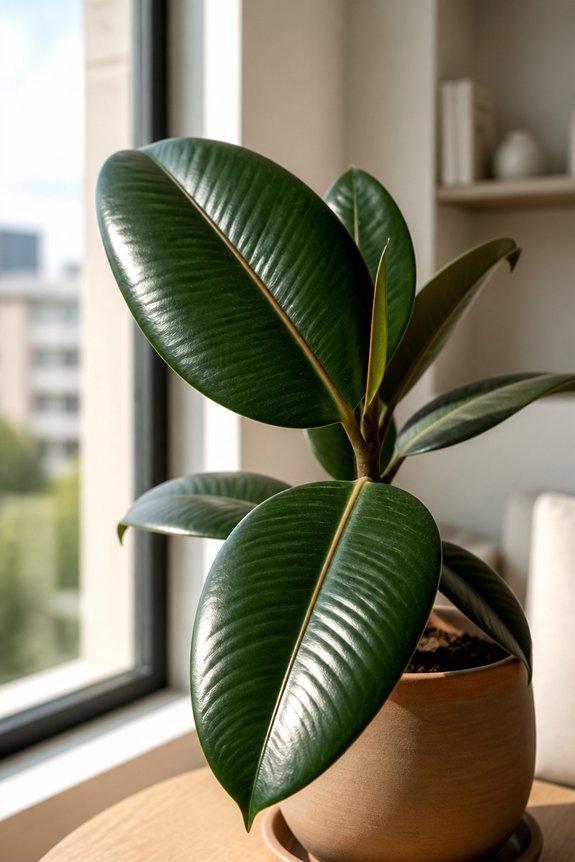
Rubber plants offer striking, glossy foliage that performs well in bright balcony spaces receiving substantial direct sunlight. These plants require minimal maintenance, needing water when soil feels dry and occasional wiping of leaves to remove dust.
They grow slowly in containers, making them suitable for small balconies. Bright, indirect light also works, though direct sun intensifies leaf color and growth.
Dracaena: Tall, Structural Leaves for Modern Spaces
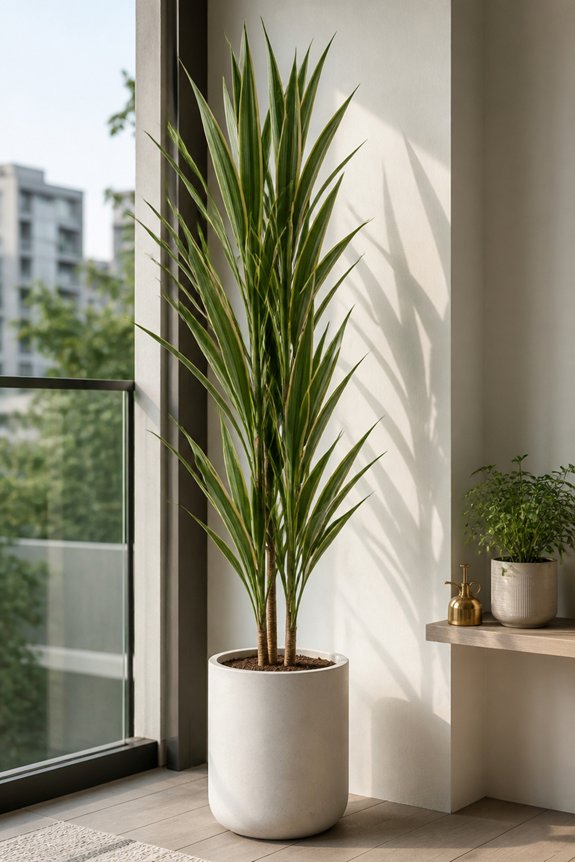
Dracaena plants feature long, narrow leaves that grow upward in striking patterns, making them ideal for modern balcony spaces with limited square footage. These plants tolerate low light conditions and infrequent watering, requiring minimal maintenance.
Popular varieties include Dracaena marginata, with red-edged leaves, and Dracaena fragrans, which offers broader foliage. Both adapt well to container living and vertical growth patterns.
Bamboo Palm: Compact Tropical Option
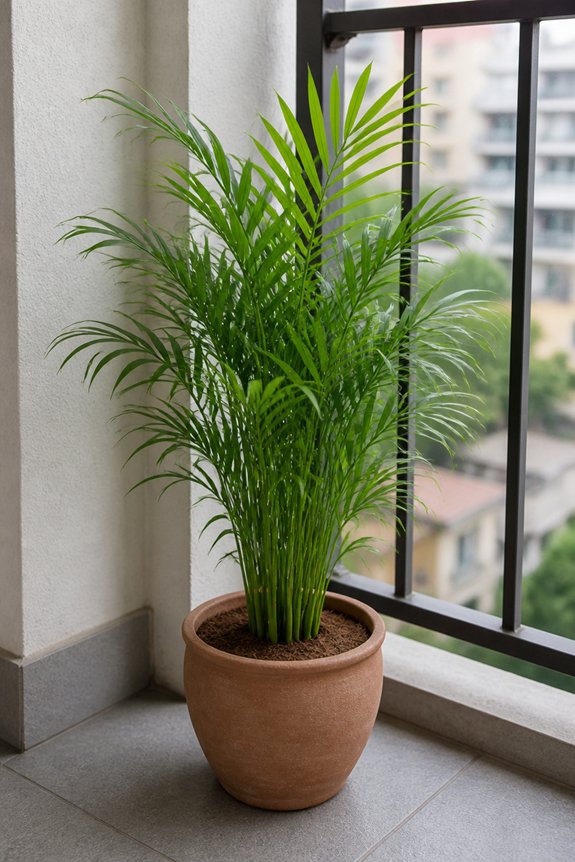
For balcony gardeners seeking a tropical appearance without excessive height, the bamboo palm presents a practical alternative to structural foliage plants. It reaches 4-6 feet, fitting confined spaces effectively.
The plant tolerates low light and irregular watering, making maintenance straightforward. Positioning near windows optimizes growth. Standard pots with drainage holes work well for containment and root health management.
String of Pearls: Delicate Succulents for Hanging Displays
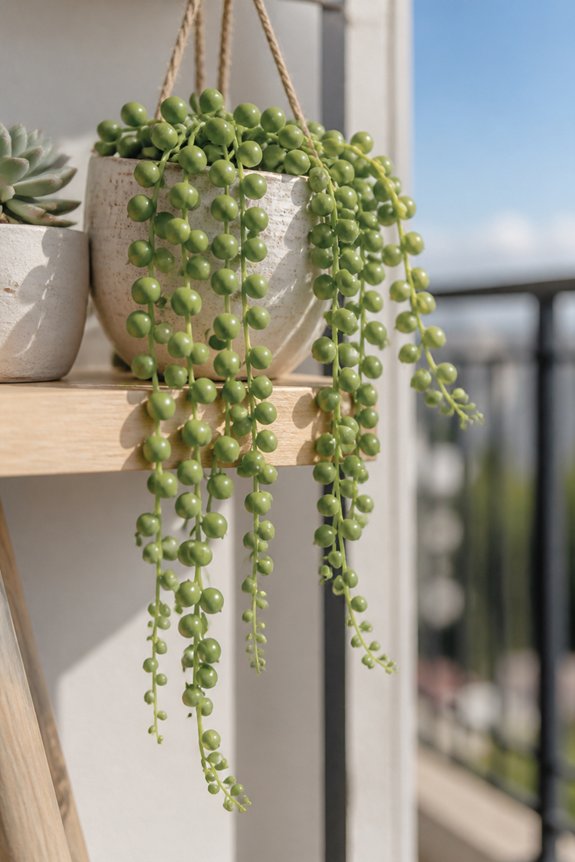
How does a trailing plant with bead-like leaves compare to traditional upright balcony specimens? String of Pearls offers a cascading aesthetic, requiring minimal space. This succulent thrives in bright, indirect light and well-draining soil. Water sparingly, allowing soil to dry between waterings.
Hanging baskets showcase its delicate, pearl-shaped foliage effectively. The plant tolerates neglect reasonably well, making it practical for busy gardeners managing limited balcony areas.
Succulents: Drought-Tolerant Options for Sun
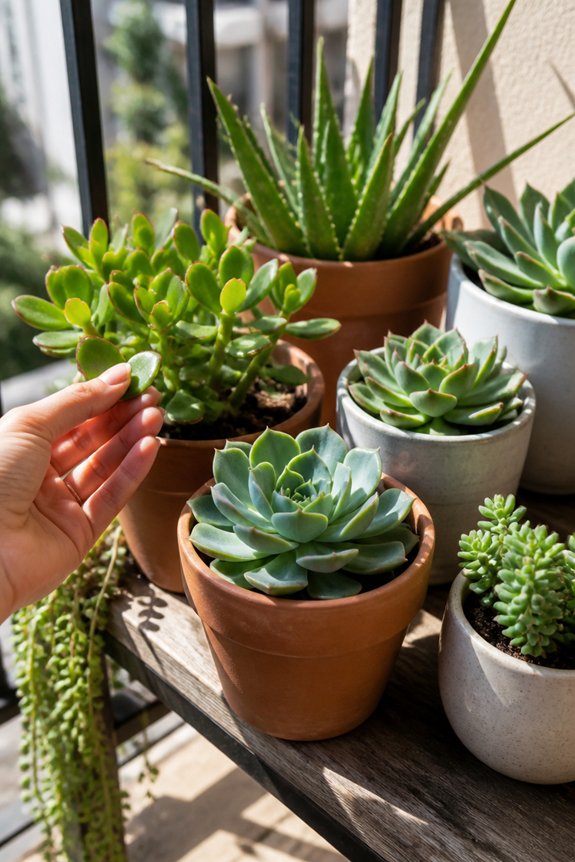
While String of Pearls thrives in indirect light within hanging displays, many succulents demonstrate superior performance under direct sun exposure, making them ideal for bright balcony locations. Jade plants, aloe, and echeveria varieties tolerate intense sunlight and require minimal watering.
These drought-resistant options need well-draining soil, infrequent irrigation, and containers with drainage holes to prevent root rot and maintain healthy growth.
Ferns: Soft Fronds for Low-Light Corners
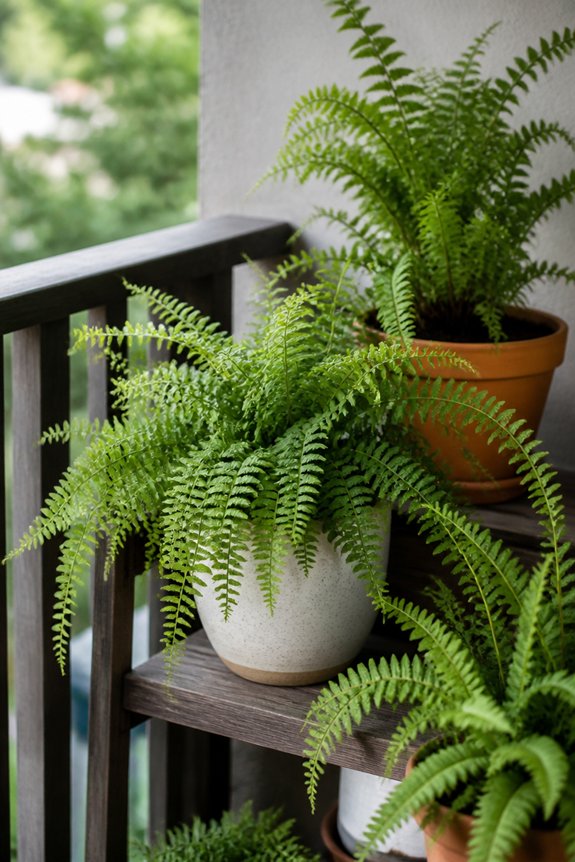
Shaded balcony areas present challenges for sun-loving plants, but ferns flourish in these conditions with their delicate, feathery fronds and preference for indirect light. Boston ferns and maidenhair ferns thrive in low-light corners, requiring consistent moisture and humidity. Placing them near balcony edges without direct sun exposure works well.
These plants soften hardscapes effectively, though they need regular watering to maintain their appearance.
Begonias: Colorful Flowers Without Extra Work
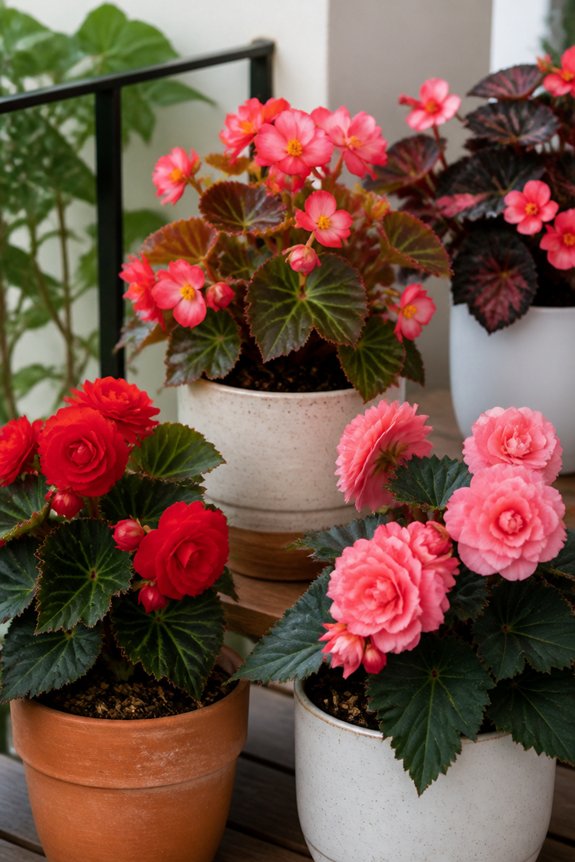
Begonias offer reliable color for small balconies, producing flowers in shades of pink, red, white, and orange with minimal maintenance demands. They thrive in partial shade, requiring moderate watering and well-draining soil.
Wax begonias and tuberous varieties perform well in containers. These plants tolerate inconsistent care, making them suitable for busy gardeners managing limited outdoor spaces.
Mint: Fresh Herbs at Arm’s Reach
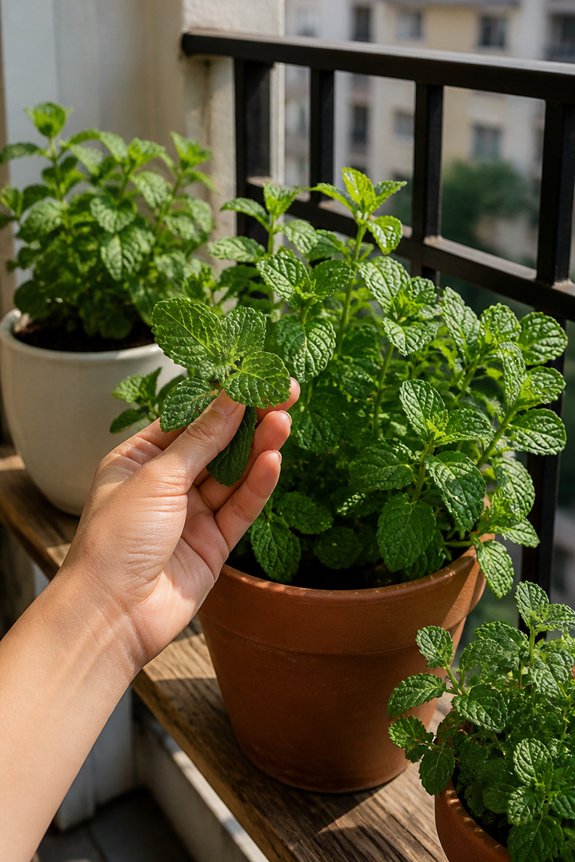
Several mint varieties grow readily in small balcony containers, providing fresh leaves for tea, cooking, and garnishes year-round. Spearmint and peppermint thrive in six-inch pots with drainage holes and potting soil. Place containers in partial shade, water regularly, and pinch back stems to encourage bushier growth.
Mint spreads aggressively, so isolating it in separate pots prevents overgrowth in shared spaces.
Basil: Culinary Green That Doubles as Décor
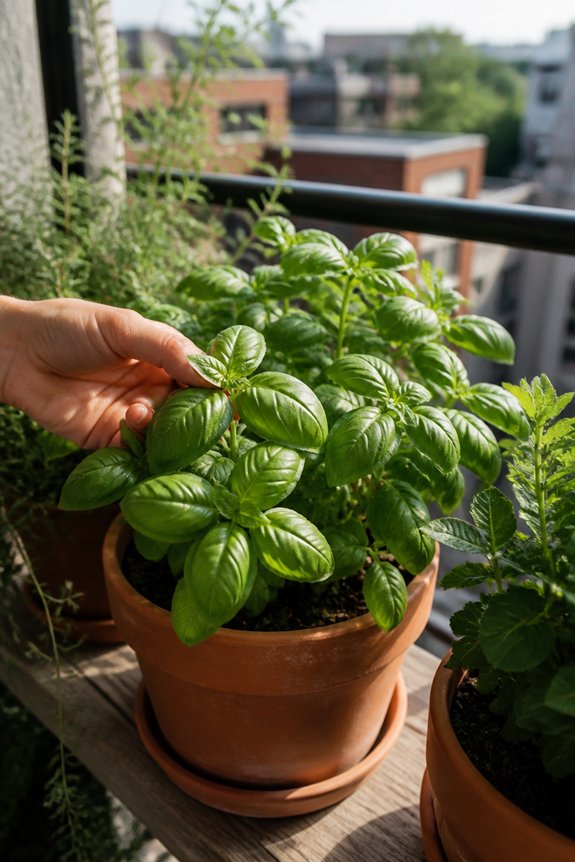
Basil offers both practical culinary value and attractive foliage for small balconies, making it a dual-purpose choice for container gardeners. The plant thrives in six to eight hours of sunlight daily and prefers consistently moist soil.
Sweet basil, Thai basil, and purple basil varieties work well in compact spaces. Regular harvesting encourages bushier growth, improving both appearance and productivity for cooking purposes.
Oregano: Spreading Herb for Cascading Pots
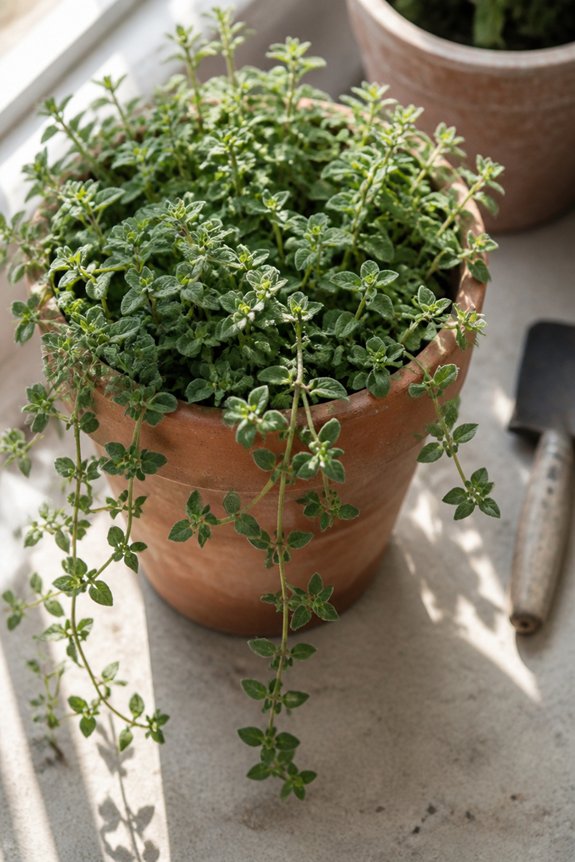
Many gardeners prefer oregano for hanging baskets and trailing containers because of its spreading growth habit and low maintenance requirements. The plant thrives in sunny balcony locations with well-draining soil.
Oregano tolerates dry conditions and requires minimal watering once established. It produces small flowers and aromatic leaves suitable for culinary use. Cascading varieties work particularly well in elevated pots.
Thyme: Ground-Covering Herb in Shallow Containers
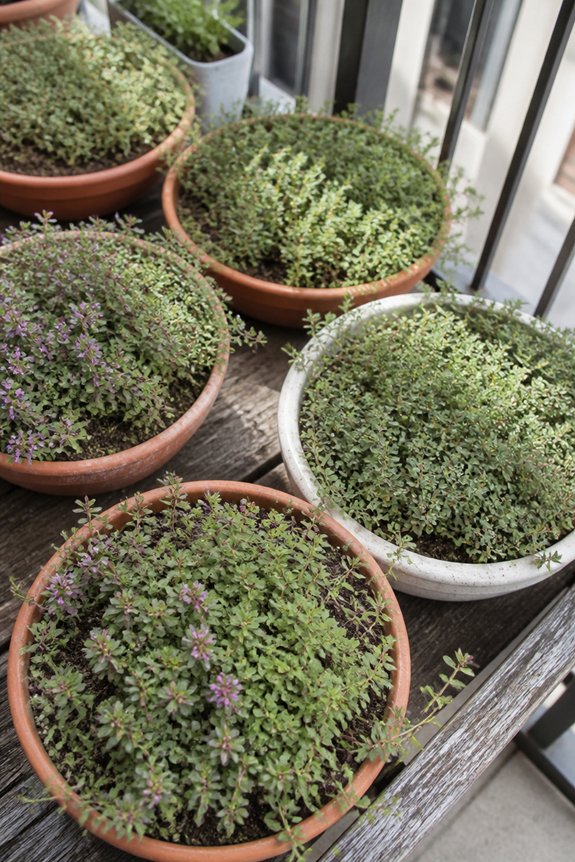
Thyme offers a different approach to balcony gardening, working well in shallow containers rather than hanging baskets like oregano. This ground-covering herb spreads horizontally, making it ideal for wide, low pots. Thyme requires minimal soil depth, around four to six inches.
It thrives in full sunlight and well-draining soil. Gardeners can harvest leaves regularly for culinary purposes without damaging growth.
Lavender: Fragrant Blooms That Attract Pollinators
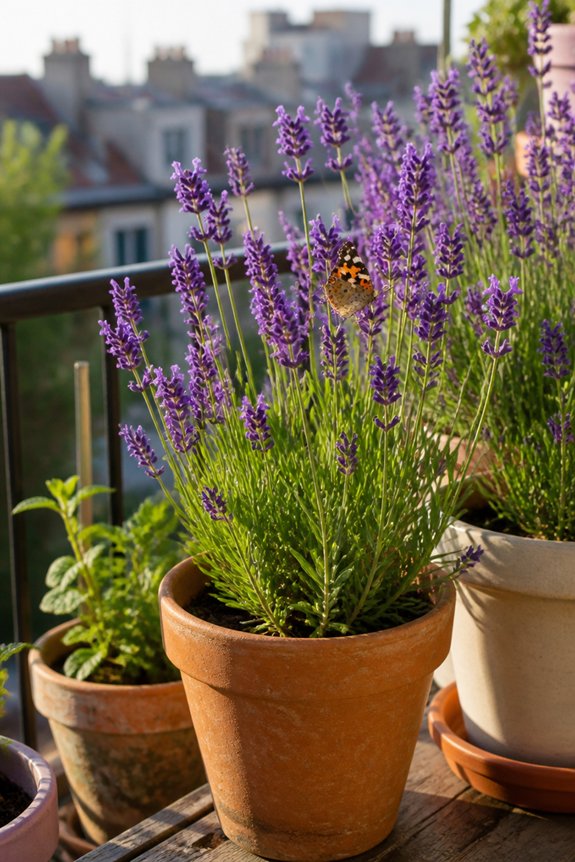
Lavender presents an excellent option for balcony gardeners seeking fragrant plants that support pollinator populations. This perennial thrives in well-draining soil, full sunlight, and containers with drainage holes. English and French varieties adapt well to pot cultivation.
Bees and butterflies visit the purple flower spikes regularly. Lavender requires minimal watering once established, making it low-maintenance for small spaces.
Frequently Asked Questions
How Do I Prevent Pests and Diseases in Small Balcony Container Gardens?
Container gardeners should inspect plants regularly for pest infestations and disease symptoms. They must guarantee proper air circulation, avoid overwatering, and use well-draining soil. Quarantining new plants and applying organic pesticides promptly help maintain healthy balcony gardens.
What’s the Best Potting Soil Mix for Balcony Plants in Containers?
It’s not rocket science—a quality potting mix combines equal parts peat moss or coco coir, compost, and perlite. This blend guarantees proper drainage, aeration, and nutrient retention for thriving balcony container gardens.
Can I Grow Vegetables on a Small Balcony Besides Herbs?
Yes, vegetables thrive on small balconies. Tomatoes, peppers, lettuce, spinach, and radishes grow successfully in containers. One selects compact varieties, guarantees six hours of sunlight daily, and maintains consistent watering. Proper drainage and nutrient-rich soil support productive harvests.
How Often Should I Repot My Balcony Plants as They Grow?
Plants typically require repotting every 12-18 months as they grow. One should move them to containers one size larger when roots become cramped or emerge from drainage holes. Regular inspection guarantees peak balcony plant health.
What’s the Ideal Temperature Range for Balcony Plants During Winter Months?
Studies show that 90% of plant damage occurs during temperature fluctuations below 50°F. Most balcony plants thrive between 50-65°F during winter months. Gardeners should protect sensitive species from frost and maintain consistent temperatures away from cold drafts and wind exposure.
Conclusion
Small balconies remain underutilized spaces, yet the transformation awaits those willing to commit. Container gardening with pothos, snake plants, basil, and lavender creates functional green areas. Proper sunlight exposure, drainage, and watering schedules determine success or failure. The question lingers: will your balcony become a neglected plant graveyard, or a thriving retreat? The answer depends entirely on consistent care and planning.