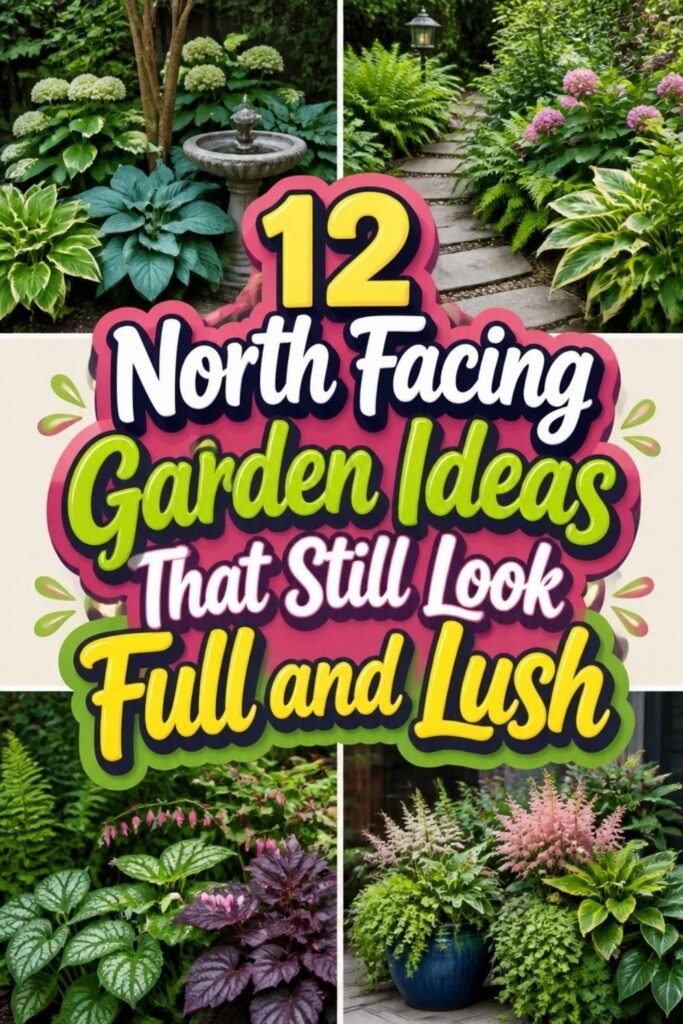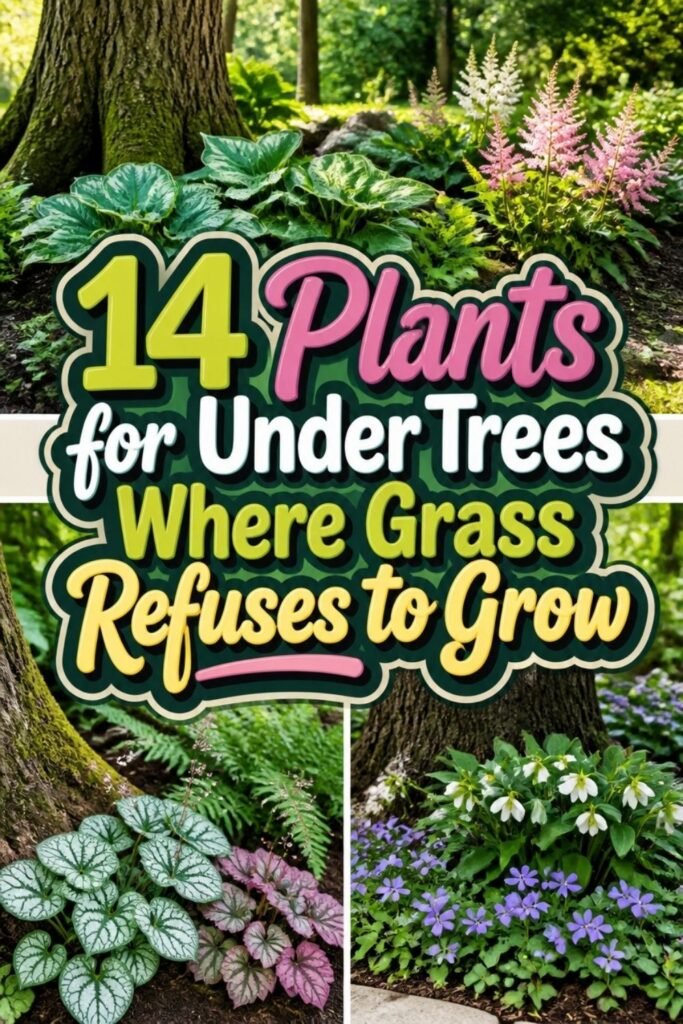
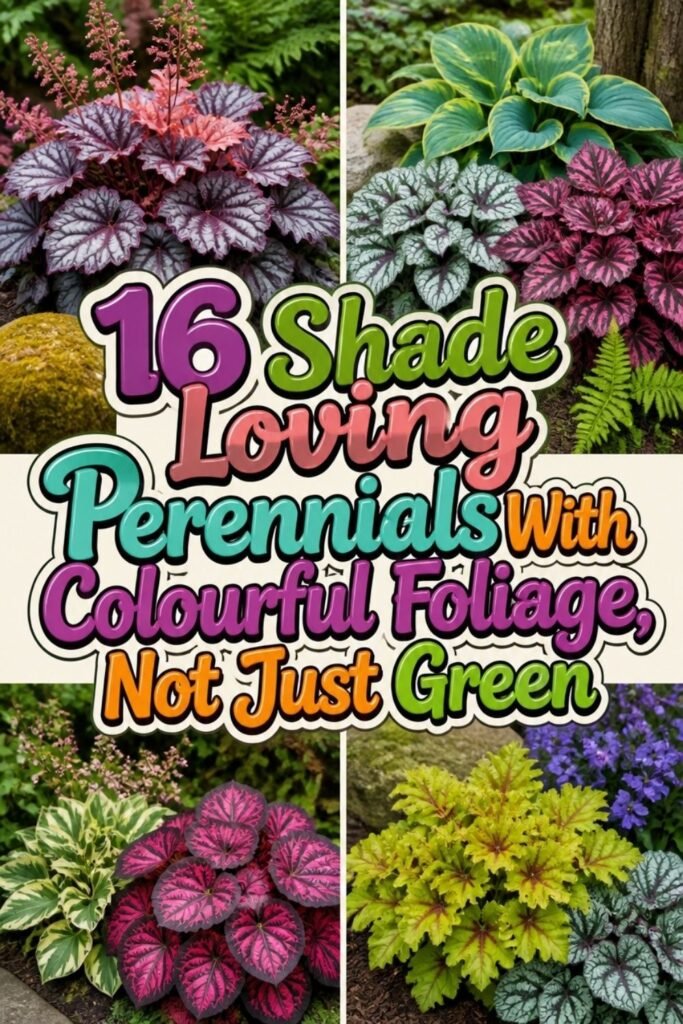
Shaded corners of a garden often get overlooked, yet they hold real potential for striking visual impact. Beyond the usual sea of green, perennials like heuchera blaze with burgundy tones, while hostas unfurl leaves in soft golds and creamy whites. Japanese painted ferns, or athyrium, add silvery overlays that seem to catch even the faintest light. These plants prove that low-light spaces can feel just as intentional and vibrant as sunny borders.
Finding the right match for a dim spot takes some observation. Light conditions shift throughout the day, and what reads as “full shade” beneath a dense oak differs from the dappled glow under a birch.
Soil quality matters too. Rich, loamy beds support different varieties than compacted clay or dry, root-filled ground. Moisture levels complete the picture, with some perennials thriving in damp hollows while others prefer well-drained slopes.
The sixteen varieties selected here address these variables without demanding constant attention. Gardeners working with challenging conditions need not settle for dull or struggling plantings.
Each option brings reliable color through foliage rather than fleeting blooms, ensuring interest from spring through frost. Thoughtful placement turns problematic shade into one of the garden’s most distinctive features.
Why Shade Doesn’t Mean Boring: The Case for Colored Foliage
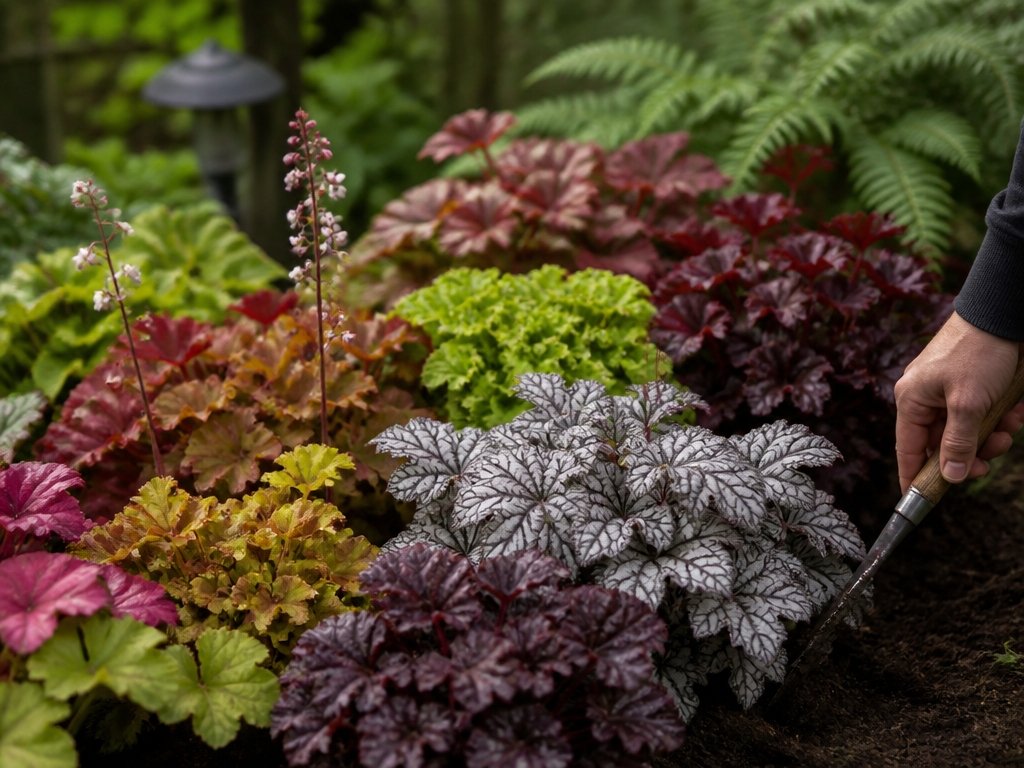
Many gardeners believe that shaded areas offer limited planting options, yet colored foliage plants challenge this assumption by providing visual interest through leaves rather than flowers.
Shade-tolerant perennials like heuchera, with purple or bronze foliage, and hosta varieties, displaying yellow or variegated patterns, deliver consistent color throughout growing seasons. These plants offer reliable, long-lasting visual appeal in dim locations where flowering plants struggle to thrive consistently. Even in low-light spots, some resilient species can handle drought stress by slowing growth and conserving energy. In winter, protecting vulnerable plants from ice damage can help preserve their shape and foliage for the next season.
Understanding Shade: Dappled vs. Dense and Plant Selection
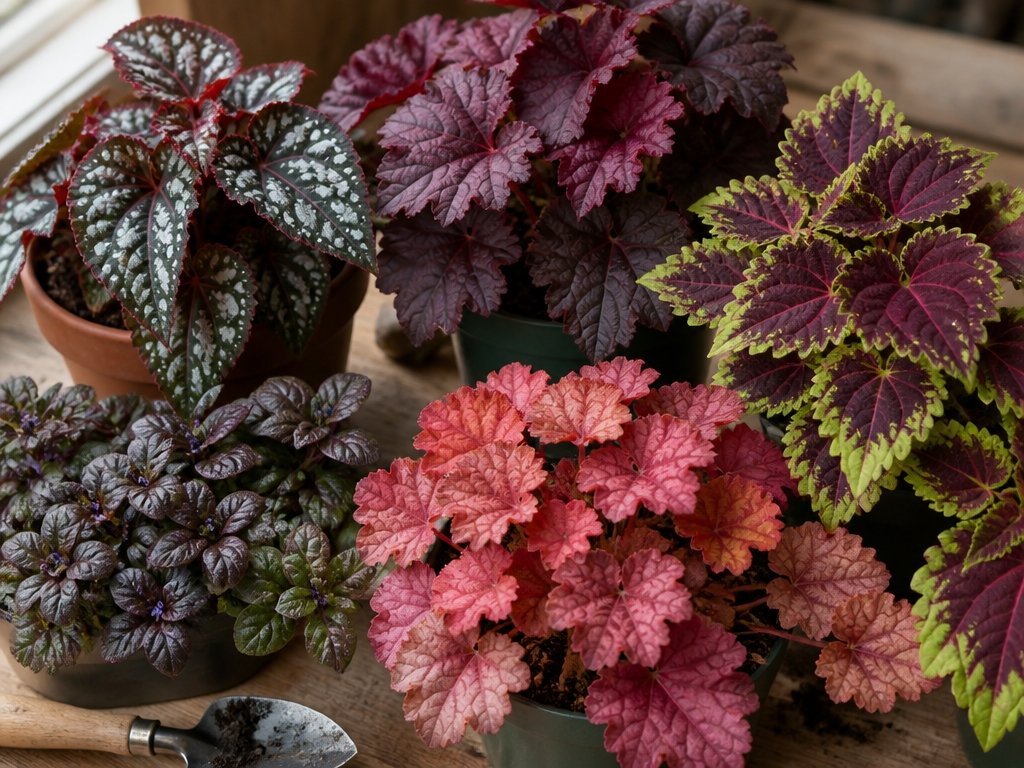
Not all shade functions the same way in a garden. Dappled shade, filtered through tree canopies, receives several hours of indirect sunlight daily. Dense shade, found under thick evergreens or building shadows, gets minimal light.
Plant selection depends on shade type. Hostas and coral bells thrive in dappled conditions. Liriope and epimedium tolerate dense shade better, offering colored foliage options for darker areas.
Soil, Watering, and Feeding Your Shade Perennials
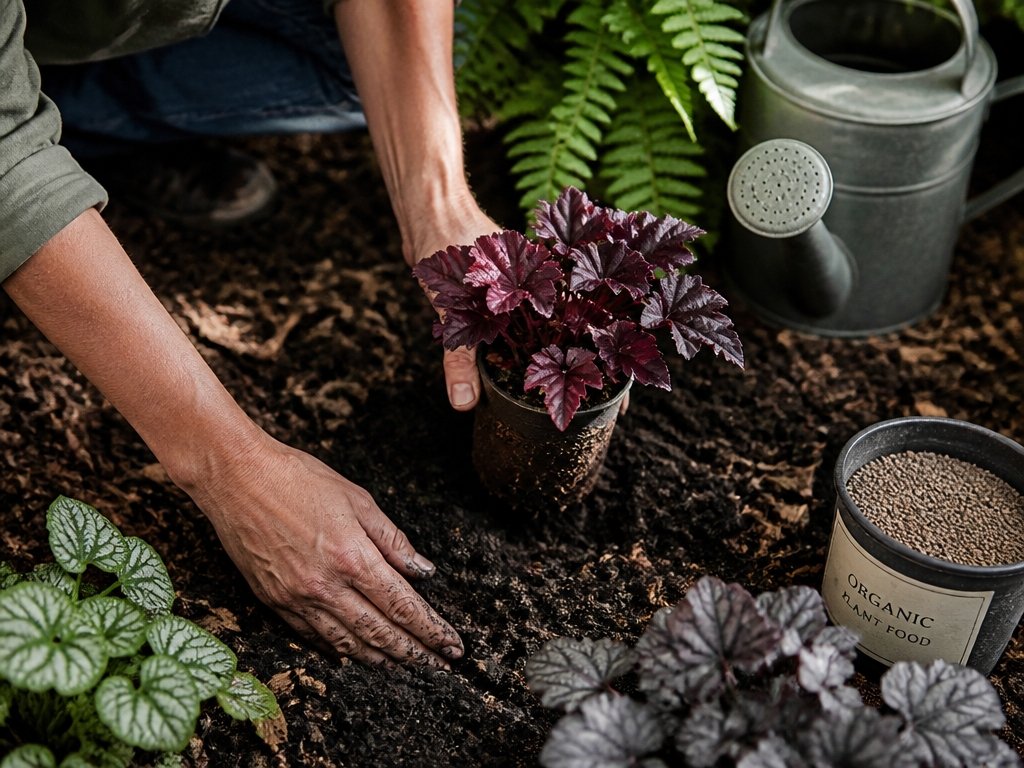
Shade perennials have specific needs for soil composition, moisture levels, and nutrients that differ from their sun-loving counterparts. Rich, organic soil retains moisture better in shaded areas.
Water deeply but less frequently, checking soil moisture regularly. Feed with balanced, slow-release fertilizers in spring. Hostas and ferns particularly benefit from consistent moisture and organic matter amendments for ideal foliage color and growth.
Heuchera: Burgundy and Silver Foliage Stars
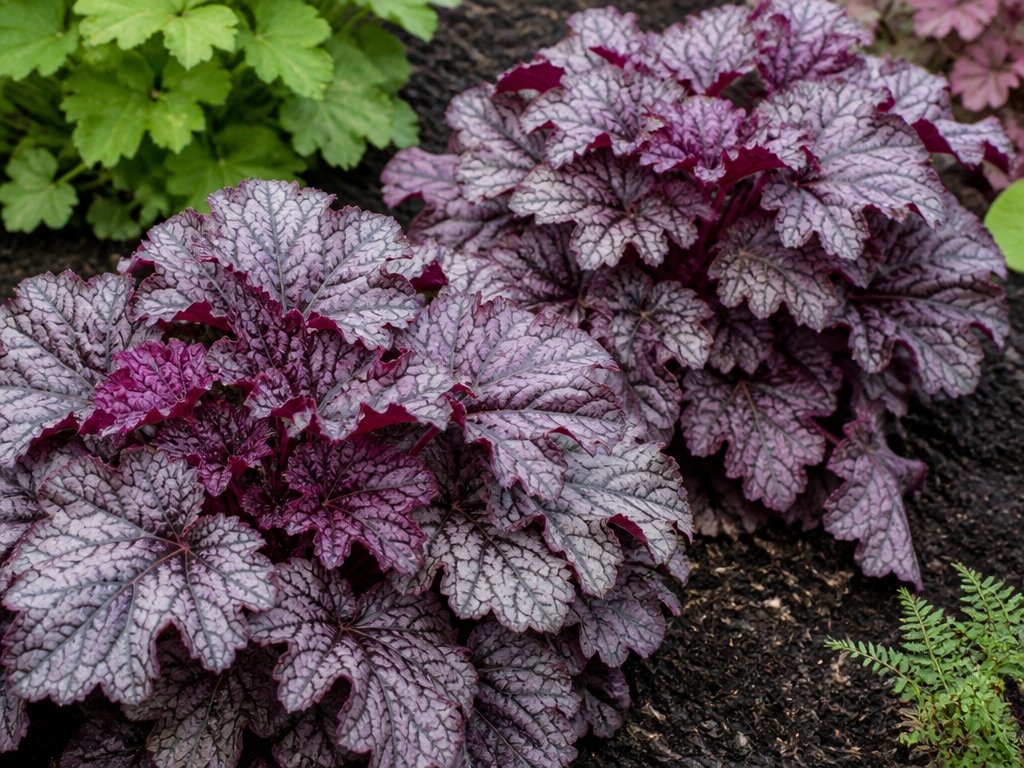
Heuchera plants stand out among shade perennials for their dramatic foliage colors, ranging from deep burgundy to silvery gray, offering visual interest even when flowers are absent.
Popular varieties include ‘Palace Purple’ with deep maroon leaves and ‘Obsidian’ featuring nearly black foliage. These plants thrive in partial shade, requiring consistently moist soil and regular feeding during growing seasons for ideal color development.
Hosta Varieties: Gold, Blue, and Variegated Foliage
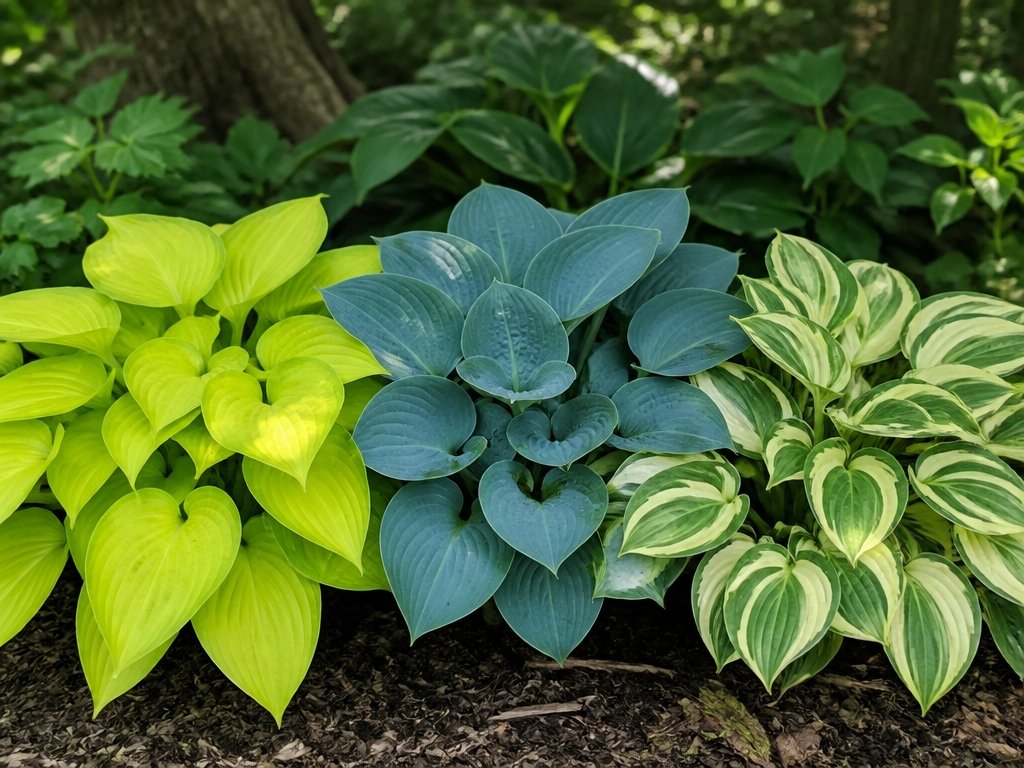
Foliage diversity makes hostas essential shade perennials, offering three main color categories that distinguish them from other woodland plants.
Gold varieties like Sum and Substance provide bright accents. Blue hostas, including Halcyon, display cool-toned leaves. Variegated types feature striped or margined patterns, such as Patriot with white edges.
Each category offers distinct visual contrast for shaded garden spaces.
Coleus: Jewel-Toned Shade Performers
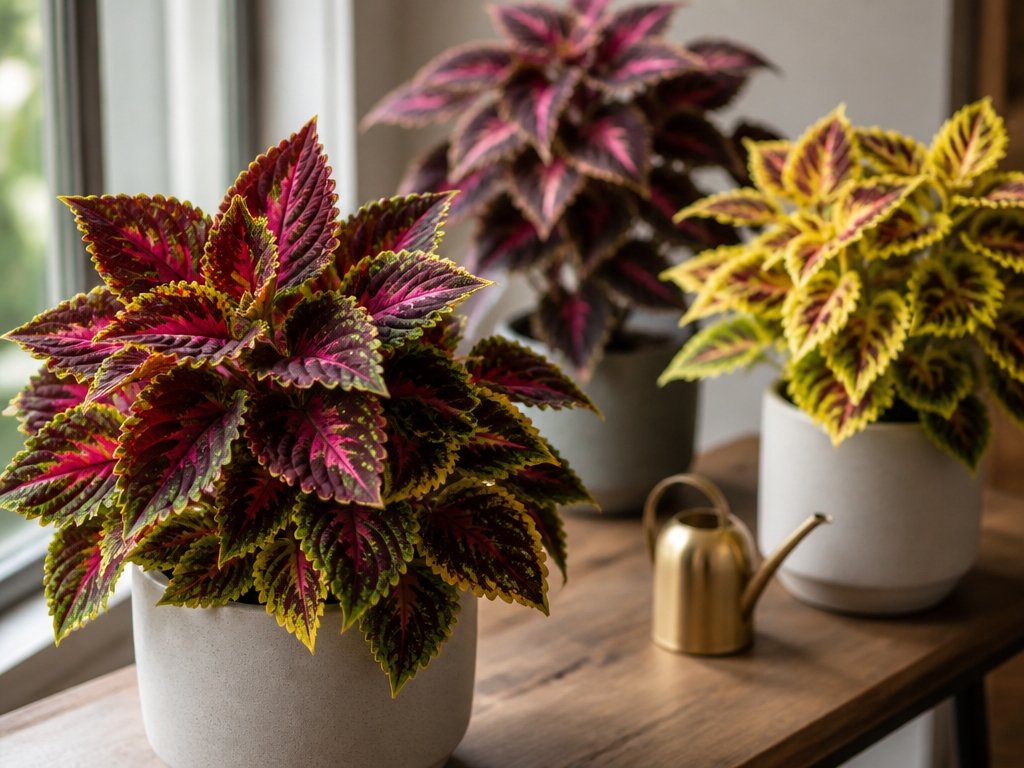
Vibrant leaf colors distinguish coleus as a practical choice for shaded garden areas. These plants display jewel-toned foliage in burgundy, purple, pink, and chartreuse combinations.
Coleus varieties like Black Prince and Wizard Mix thrive in partial to full shade. They prefer consistently moist soil and benefit from regular pinching to encourage bushy growth and prevent flowering.
Brunnera: Silver-Spotted Heart-Shaped Leaves
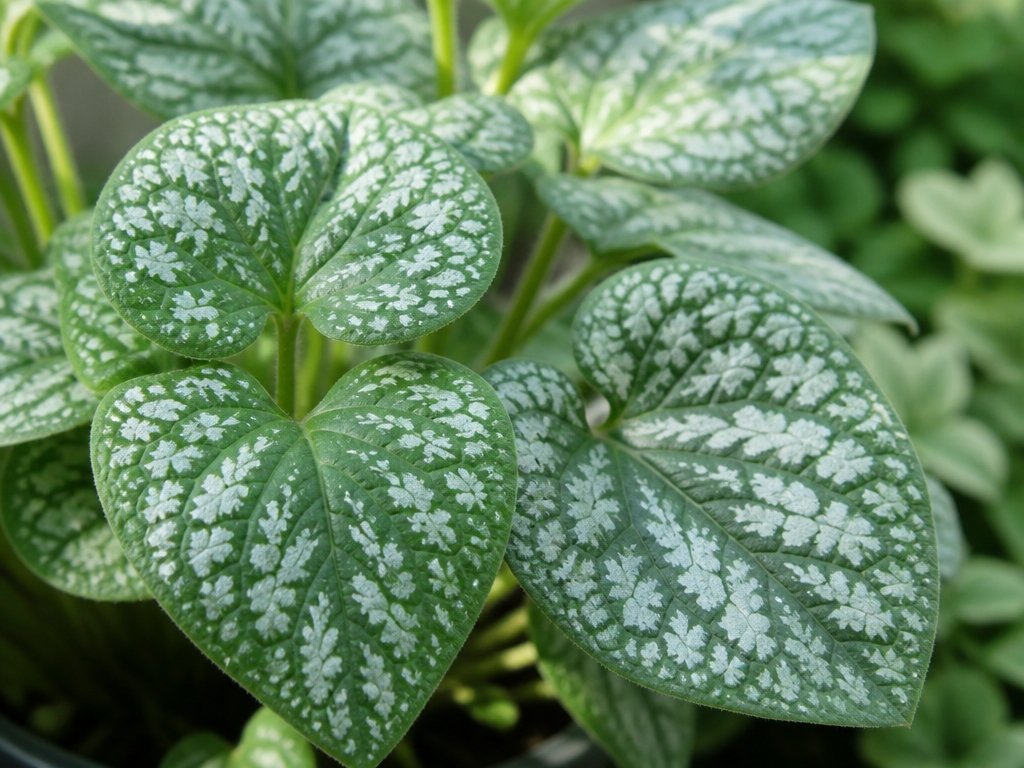
While coleus excels with its bold leaf colors, brunnera offers a different shade garden appeal through its distinctive heart-shaped foliage marked with silver spots and patterns. Brunnera varieties like ‘Silver Heart’ display white markings against green leaves, thriving in partial to full shade.
These perennials tolerate moist soil conditions and produce delicate blue forget-me-not-like flowers in spring, adding textural interest to shaded garden spaces.
Astilbe: Feathery Texture in Warm Tones
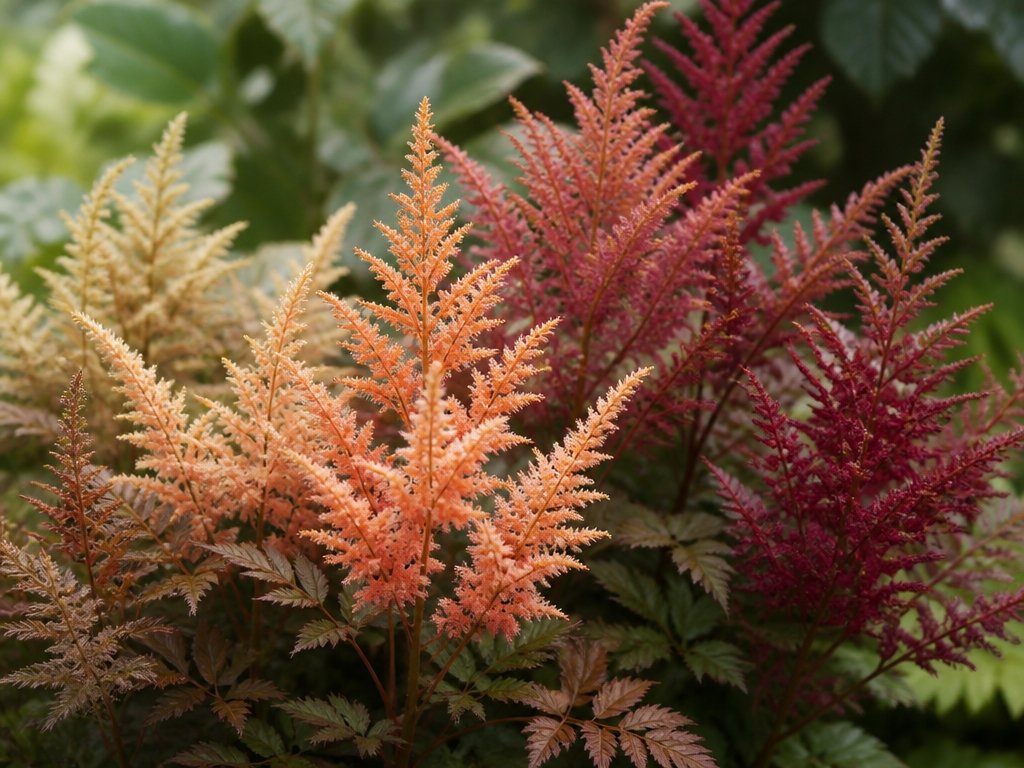
Astilbe plants bring distinctive feathery plumes to shade gardens, displaying colors ranging from soft pink and coral to deep red and white. These perennials thrive in moist, well-draining soil beneath trees and shrubs. Varieties like Fanal produce red flowers, while Deutschland offers white blooms. Astilbe foliage remains attractive throughout growing seasons, providing texture and color interest in shaded woodland settings.
Liriope: Purple-Tinged Grass-Like Foliage
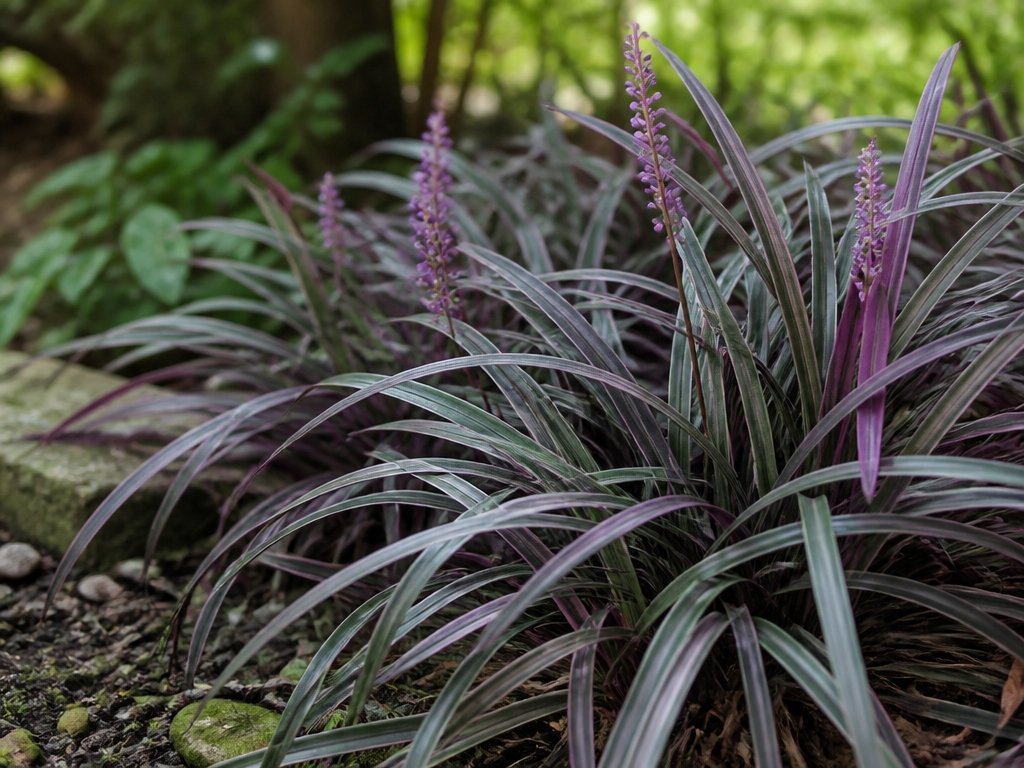
Liriope plants offer an alternative texture to traditional shade perennials, featuring narrow, arching leaves that resemble ornamental grasses in appearance and movement. Their purple-tinged foliage provides color variation throughout seasons.
Liriope muscari, commonly called lilyturf, produces small purple flowers in late summer. Plants reach 12-18 inches tall and spread gradually. They tolerate dry conditions and poor soil, making them reliable for difficult shade areas.
Ajuga: Bronze and Burgundy Ground Cover
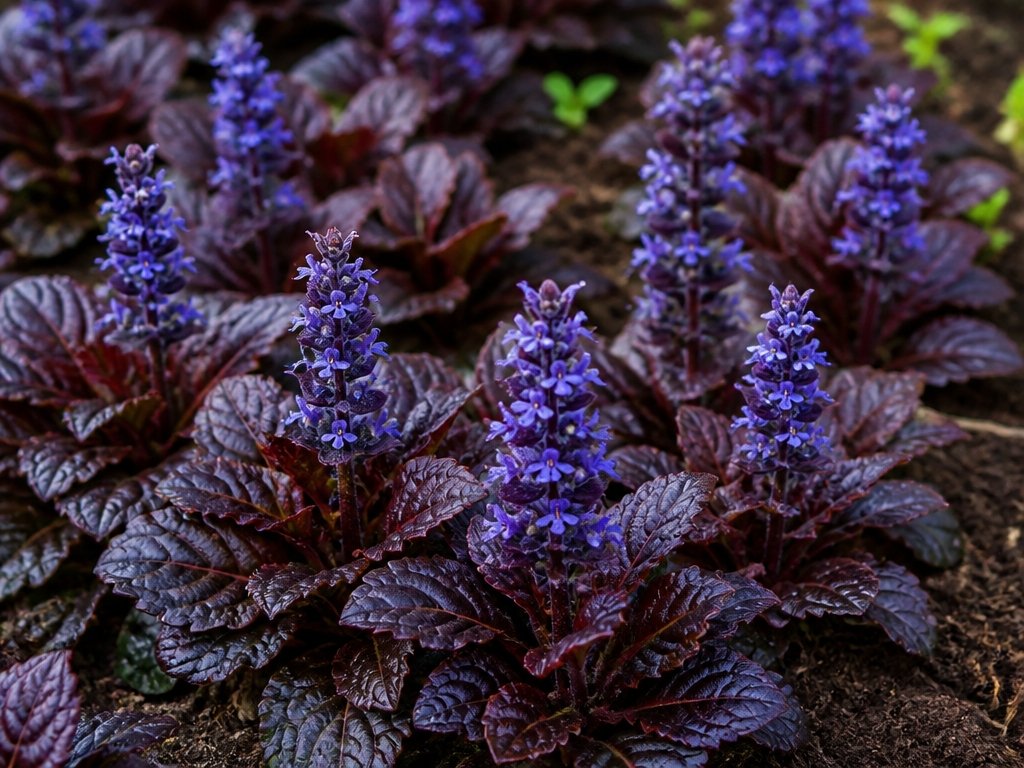
For gardeners seeking low-growing shade plants with distinctive foliage color, ajuga delivers reliable performance in difficult landscape areas. This ground cover produces bronze and burgundy leaves, creating visual interest beneath trees and along borders.
Ajuga spreads through runners, forming dense mats that suppress weeds. Varieties like Atropurpurea and Black Scallop showcase deeper coloration. The plant tolerates poor soil and compacted conditions.
Carex: Sedge Colors From Gold to Copper
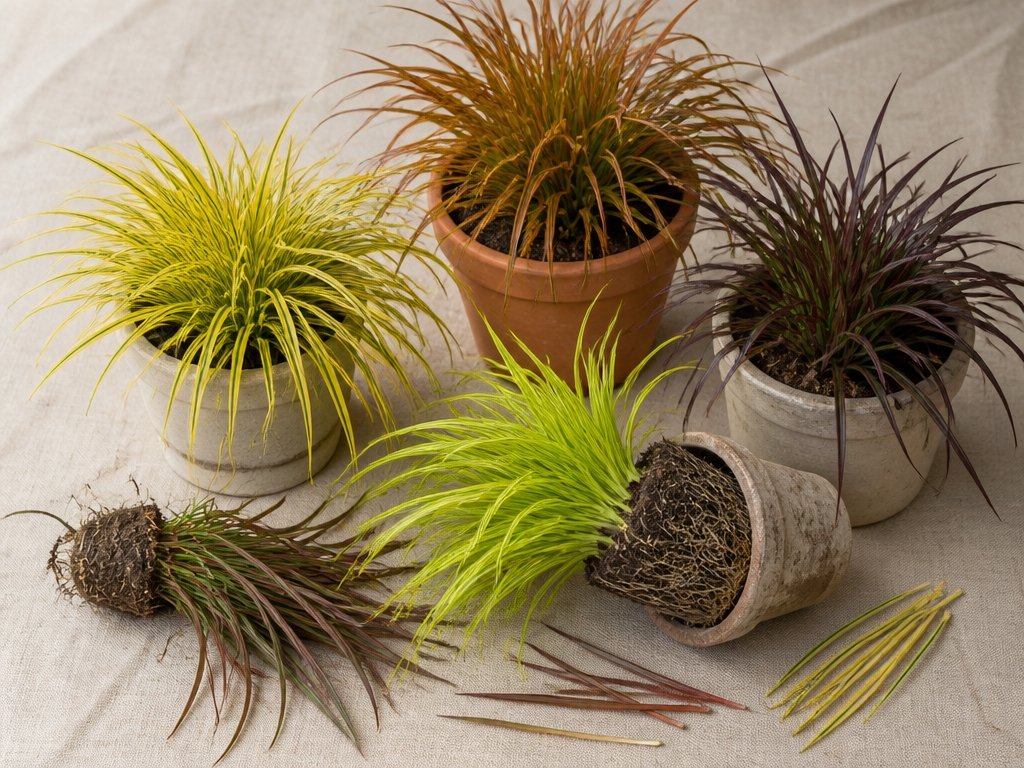
Carex species offer gardeners another option for shade areas, bringing foliage colors that range from bright gold to deep copper tones. Carex oshimensis Evergold produces yellow-edged leaves, while Carex testacea displays reddish-bronze coloring. These sedges tolerate partial to full shade, require minimal maintenance, and spread gradually to fill space.
They work well as ground covers or border plants in woodland gardens.
Tiarella: Chocolate-Marked Delicate Leaves
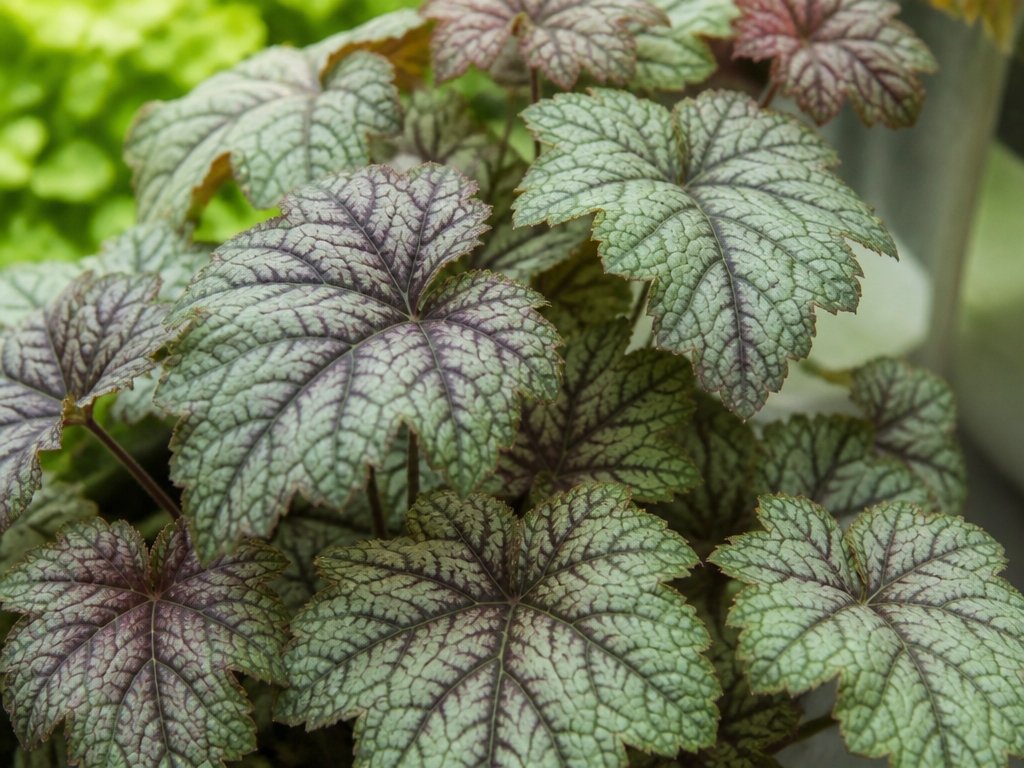
Delicate foliage with distinctive markings defines Tiarella, a shade-loving perennial that gardeners value for its ornamental leaves. The plant produces heart-shaped leaves featuring chocolate-brown markings along the veins, creating visual interest in shaded garden areas.
Tiarella varieties like Brandywine and Iron Butterfly display particularly striking patterns. The foliage remains attractive throughout growing seasons, making Tiarella useful for woodland gardens and shaded borders.
Geranium ‘Bloodred’: Deep Crimson Summer Color
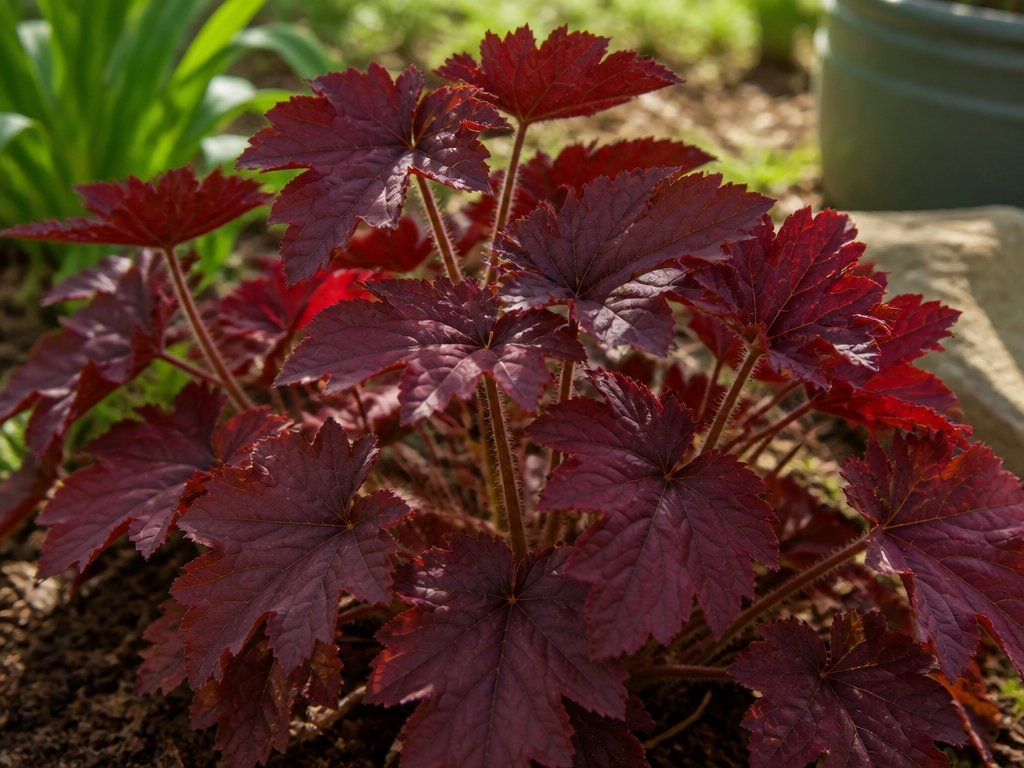
While many shade-loving perennials feature subtle foliage colors, Geranium ‘Bloodred’ stands out for its striking deep crimson flowers that bloom throughout summer months. This hardy perennial thrives in partial shade conditions, reaching heights of twelve to eighteen inches.
The plant produces dense clusters of burgundy blooms above green foliage, providing reliable color during growing seasons without requiring extensive maintenance or special care requirements.
Polygonatum: Variegated Stems and Elegant Arching
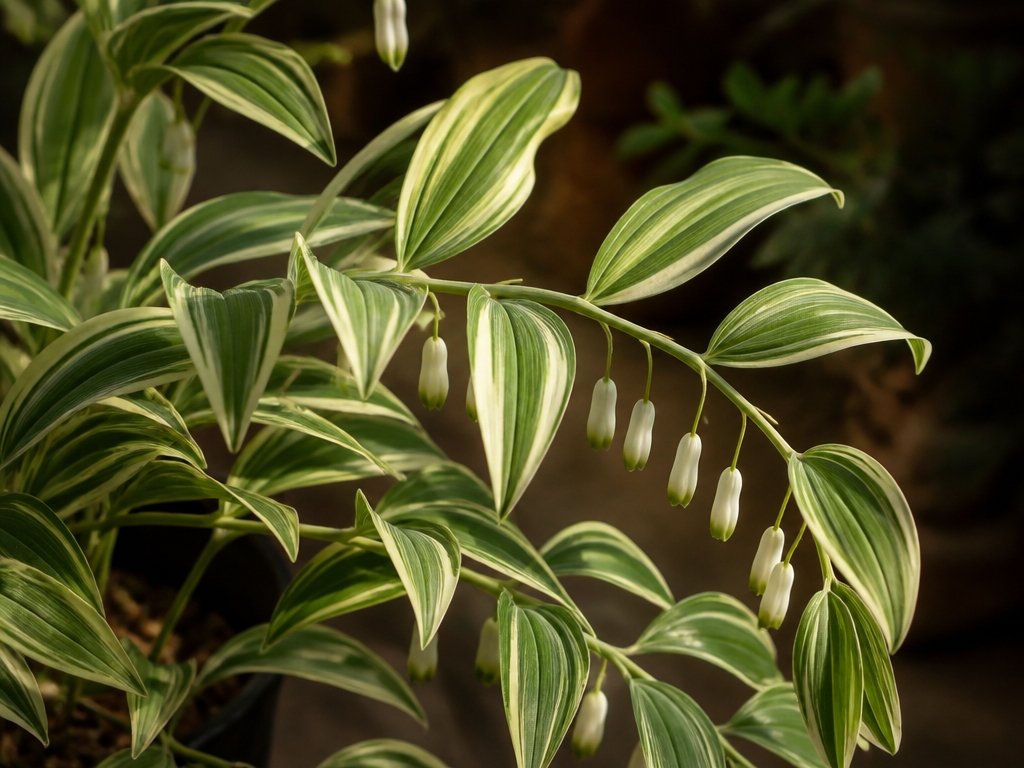
Polygonatum species offer a different appeal than the vivid blooms discussed previously, instead showcasing elegant foliage and graceful form. Polygonatum odoratum ‘Variegatum’ displays white-edged leaves along arching stems, reaching two feet tall. The plant thrives in shade, producing small white flowers beneath foliage.
Its variegated foliage provides season-long color interest in woodland settings and shaded borders.
Pulmonaria: Silver-Spotted Shade Bloomers
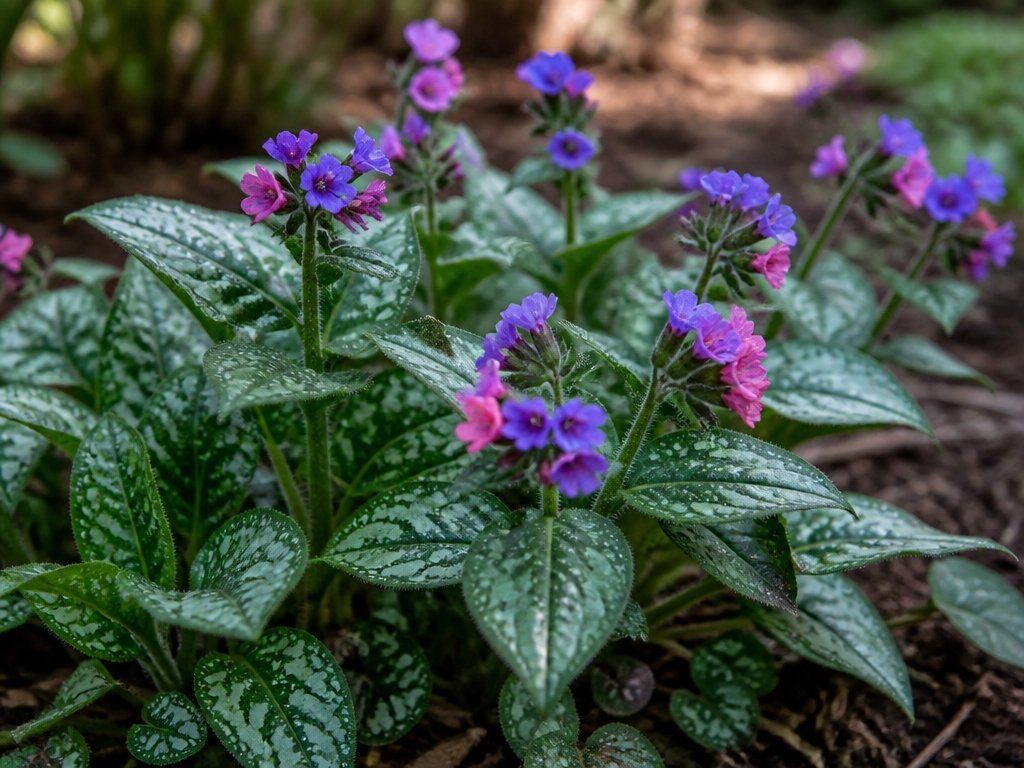
Pulmonaria species bring early spring flowers and distinctive foliage to shaded garden areas. The plants produce silver-spotted leaves in green or burgundy tones, adding visual interest year-round. Pink, blue, or white flowers bloom in spring before deciduous trees fully leaf out.
Pulmonaria saccharata and Pulmonaria officinalis are common varieties. These perennials tolerate dry shade well and spread gradually through woodland gardens and borders.
Athyrium: Ferns With Metallic and Burgundy Tones
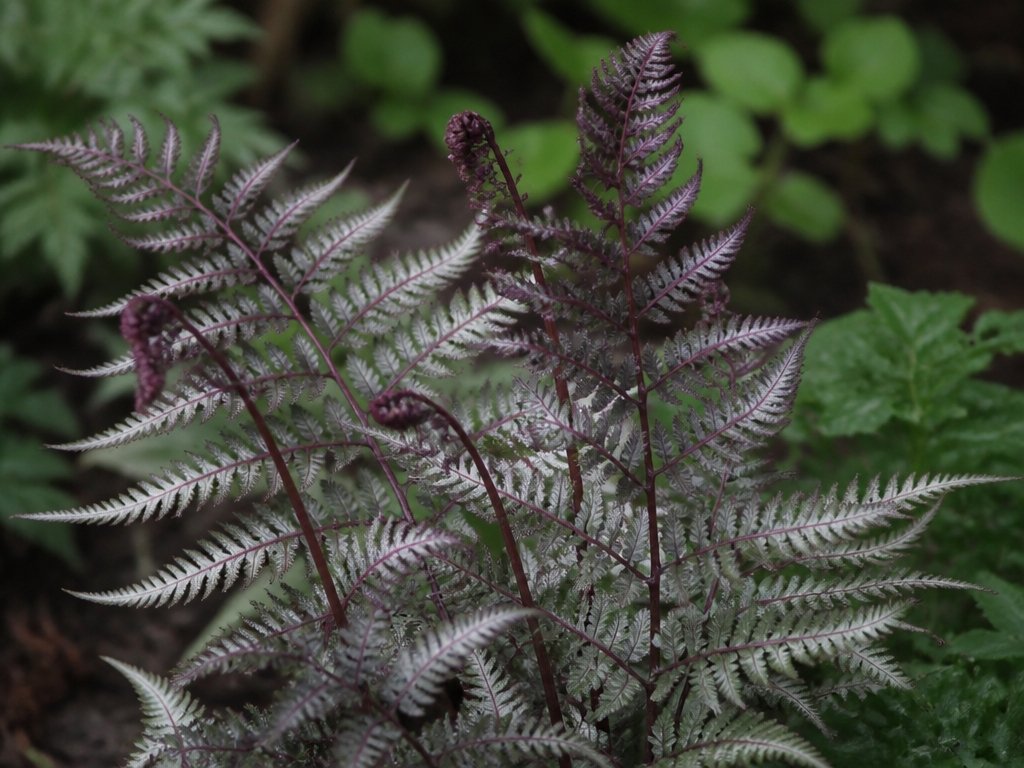
For gardeners seeking foliage with unusual color and texture, Athyrium ferns offer metallic sheens and deep burgundy hues that distinguish them from typical green shade plants. The Japanese painted fern displays silvery fronds with burgundy stems, while the ghost fern presents pale, luminous leaves.
Both varieties thrive in moist, shaded locations and reach modest heights suitable for woodland gardens and shaded borders.
Frequently Asked Questions
How Long Does It Take for Shade Perennials With Colored Foliage to Reach Full Maturity?
Shade-loving perennials with colored foliage typically reach full maturity within two to three years of planting. The exact timeline depends on the specific species, soil conditions, and care provided. Most varieties establish their vibrant foliage coloration during their second growing season.
Can I Grow These Colored Foliage Perennials in Containers on Shaded Patios or Balconies?
Just as sunlight filters through autumn leaves, it finds its way onto shaded patios. Yes, these perennials thrive in containers on balconies, provided adequate drainage exists and moisture remains consistently regulated throughout growing seasons.
What’s the Best Time of Year to Plant Shade-Loving Perennials With Colorful Foliage?
Spring and fall represent ideal planting times for shade-loving perennials with colorful foliage. These seasons provide cooler temperatures and adequate moisture, allowing roots to establish before summer heat or winter frost arrives. Early spring proves particularly advantageous for most varieties.
Do Colored Foliage Perennials Require Different Fertilizers Than Green-Leafed Shade Plants?
Like artists requiring the same canvas primer regardless of paint color, colored foliage perennials need identical fertilizers as green varieties. Both require balanced nutrients—nitrogen, phosphorus, potassium—with no specialized formulations necessary for vibrant leaf pigmentation.
How Do I Propagate or Divide Shade Perennials With Colored Foliage Successfully?
Gardeners divide colored foliage shade perennials in spring or fall by separating root clumps with a sharp spade, ensuring each division contains healthy roots and shoots. They can also propagate through stem cuttings placed in moist soil under indirect light until roots develop.
Conclusion
Shade gardens need not remain monotonously green. Heuchera, hostas, geraniums, polygonatum, pulmonaria, and athyrium deliver burgundy, silver, gold, and variegated foliage. These perennials transform dim spaces through consistent color, persistent texture, and reliable performance. Proper soil preparation, appropriate watering, and adequate feeding support their growth. Gardeners selecting shade-loving varieties with colorful leaves create visually dynamic landscapes, where darkness becomes opportunity rather than limitation.