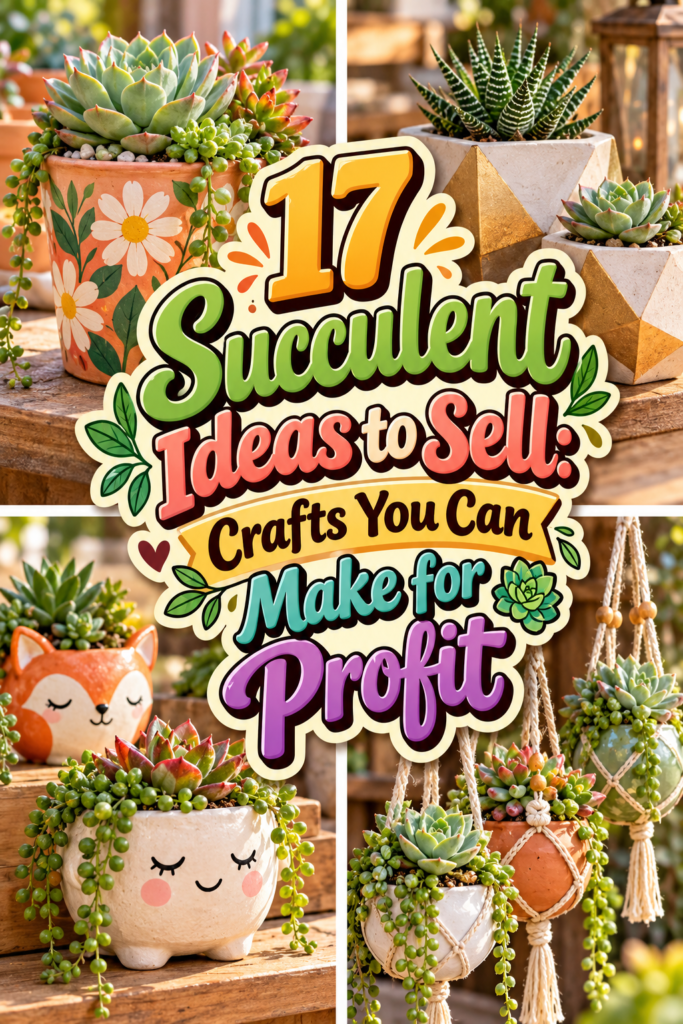
Succulents almost sell themselves. They’re small, sturdy, giftable, and easy to grow more of from a single leaf. That’s why these succulent ideas to sell work so well for anyone with a sunny windowsill and a weekend free. The trick is knowing which crafts shoppers actually reach for, and how to price and package them so you come out ahead.
You’ll find 17 succulent crafts to sell, from painted mini pots and teacup planters for impulse buys to living wreaths and framed succulents that anchor a booth. There are also terrarium kits and cutting bundles built for shipping to online shops, and seasonal sellers like pumpkin toppers and holiday gift boxes.
The practical side is here too. Selling live plants can require a license in some states, every price should cover your time and your losses, and some crafts ship far better than others. Each idea notes which matters most, so you can plan a table or a shop that sells.
1. Painted Mini Pot Succulents for Impulse Buys

Small succulents in painted pots are the backbone of almost every plant booth. They’re what shoppers grab on the way past, the add-on at checkout, and the last-minute teacher gift. Make them in batches. Paint a run of small terracotta pots in two or three colors that look good together, seal the insides, and plant each with an echeveria or haworthia you propagated yourself.
Tie a small kraft care tag to every pot with three facts: bright light, water when dry, and the pot has a drainage hole. That little tag answers the question every buyer is about to ask, and it makes a small plant feel like a finished product. Line the pots up along the front edge of your table where hands can reach them.
⚠️ Check Your State’s Plant Rules
Selling live plants, even at a one-day craft fair, can require a nursery or plant dealer license from your state’s Department of Agriculture. Ask about small-grower exemptions before your first market, and keep any license at your booth.
2. Living Succulent Wreaths

A living wreath stops people in the aisle. Dozens of rosettes packed into a ring of moss look like a piece of art, and they keep growing after the sale.
Soak sphagnum moss, pack it into a wire wreath frame, and wrap it with floral wire to hold the shape. Poke holes with a pencil and tuck in cuttings that have been left to dry for a few days so the cut ends heal. Mix echeverias, sedum, and hens and chicks for color and texture. Then let the wreath root lying flat in bright shade for several weeks before you sell it, so the plants grip the moss instead of falling out on the drive home.
Include a care card that tells buyers to lay the wreath flat to water and hang it again once it drains.
You will need: a wire wreath frame, sphagnum moss, floral wire, a pencil, and succulent cuttings.
3. Thrifted Teacup Planters

Pots can eat into your profit fast. Thrifted teacups and saucers cost far less than new planters, and the mismatched patterns are exactly what makes them sell. A floral cup on its own saucer with a blue-green echeveria and a sprig of trailing sedum reads as a finished gift. That makes it a natural fit for Mother’s Day, bridal showers, and anyone who loves vintage china.
Teacups have no drainage hole, so plant them in a fast-draining cactus and succulent mix and keep each arrangement small. Then be honest on the care card: water sparingly, and pour off anything that pools.
Seller tip: Display the cups on their saucers in a staggered row on a tiered stand. A crowd of mismatched china looks charming, while a single cup on a flat table looks like a yard sale.
4. Wine Cork Magnet Planters

One cork magnet is a novelty. A bowl of twenty by the cash box is a steady little seller, because it’s the item people add without thinking.
Hollowing the cork is an adult job: use a small drill bit or a craft knife to carve a pocket in one end, working slowly so the cork doesn’t split. Glue a strong magnet to the side, add a pinch of cactus and succulent mix, and tuck in a single tiny cutting. Small sedum and baby echeveria rosettes fit best. Tell buyers to mist the cutting lightly and repot it once it outgrows its cork home.
Strong magnets are dangerous if swallowed, so label these “not a toy” and keep the bowl out of reach of little kids at your booth.
5. DIY Terrarium Kits
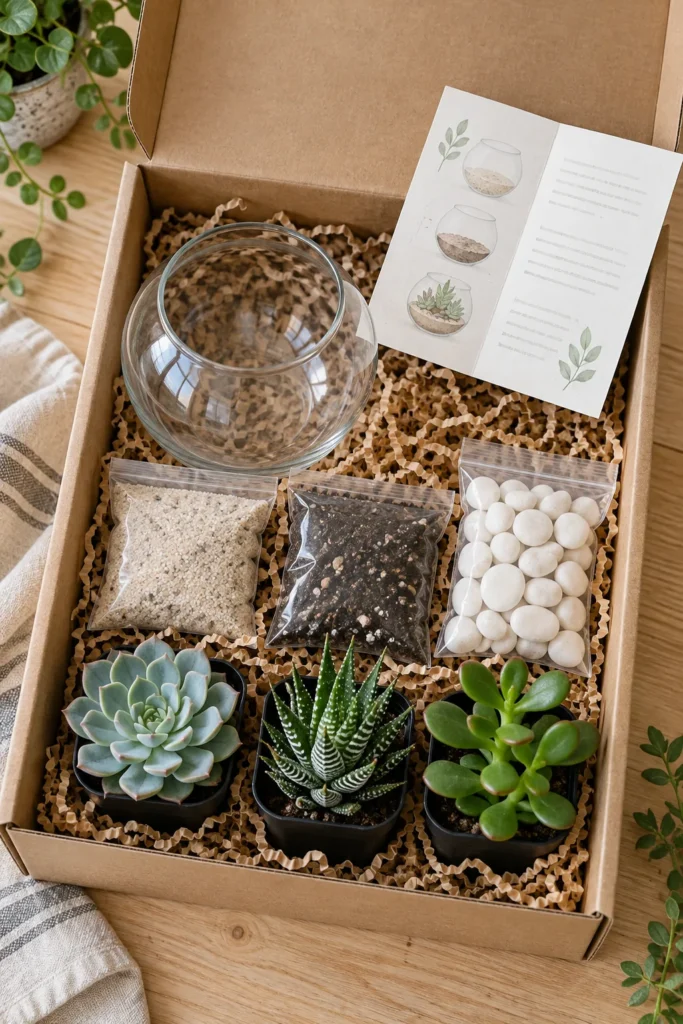
Finished terrariums are lovely at a market table but nerve-racking to ship. A kit solves that. The buyer gets everything in a box and the fun of building it themselves, and you avoid sending a planted glass bowl through the mail.
Pack an open glass bowl, a small bag of pale sand, a bag of gritty cactus and succulent mix, a scoop of pebbles, and two or three small succulents still in their nursery pots. Add a printed step card. Stick with open bowls, since succulents like dry air and closed jars hold too much moisture. Wrap the glass separately in paper and nestle everything in shredded kraft paper so nothing rattles.
Kits sell well as gifts and birthday party activities. These mini succulent terrarium ideas give buyers inspiration for what to build.
6. Trays of Propagated Baby Succulents

The cheapest succulent you’ll ever sell is the one you grew from a single leaf. Gently twist plump leaves off healthy echeveria, ghost plant, and jelly bean plant, and let the ends dry for a few days. Then lay them on top of a tray of cactus and succulent mix. Mist lightly, keep them in bright indirect light, and wait. Over several weeks, tiny roots and rosettes appear at the base of each leaf.
Pot the babies into small plug trays or 2-inch pots once they have roots. Sell them as single “baby” plants, or as a six-pack for people who want to build their own arrangements. These beginner-friendly succulent propagation ideas cover more methods to keep your trays full.
Pricing note: Price for the whole job, not just the leaf. Count the pots, the soil, the weeks of care, your time, and the babies that don’t make it.
7. Wedding and Shower Favor Succulents

A tiny succulent at every place setting is a favor guests actually take home. For a seller, one wedding order can move more plants than a whole day at a market.
Plan these like a small production run. Agree on the number, colors, and delivery date with the client in writing. Start propagating early so you have enough matching plants, and do a sample favor first so the couple can approve the look. Small hens and chicks rosettes in mini white pots, finished with a kraft name tag and a short loop of ribbon in the wedding colors, look polished without being fussy.
Get the look: mini white ceramic pots, hens and chicks, kraft tags, thin satin ribbon, and a fine pen.
8. Felt Faux Succulents
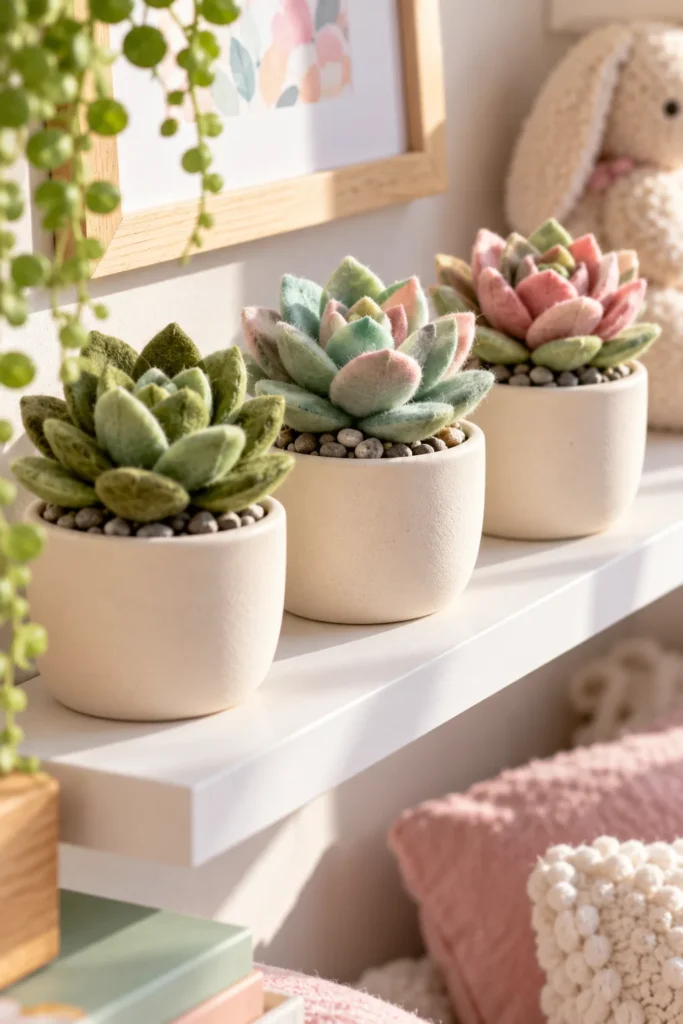
Live plants come with watering, careful shipping, and plant-specific rules. Felt succulents skip all of that. They ship flat in an envelope, never wilt at an outdoor market, and suit buyers who’ve killed every real plant they’ve owned.
Cut petal shapes from wool-blend felt in three or four greens and soft pinks. Pinch the base of each petal with a dot of hot glue, then layer them from large to small to build a rosette. Glue each finished rosette onto a bed of small pebbles inside a mini pot so it looks planted. Make a trio in matching pots and they read as a gift set rather than a craft project.
They work well for offices, dorm rooms, and kids’ bedrooms, anywhere a real plant would struggle with low light.
9. Holiday Succulent Gift Boxes

The ribbon is what turns three plants into a present. Tuck a red-edged jade plant, a silvery ghost plant, and a dark green haworthia into a kraft box lined with shredded paper. Add a care card, close the lid, and tie it with red-and-white baker’s twine. Now it’s a gift someone can hand over without wrapping anything.
That’s the whole appeal at a holiday market. Gift sets tend to outsell single plants in November and December, because shoppers are buying for other people. Have a stack pre-wrapped and ready, so a buyer in a hurry can grab one and go.
Cold-weather note: Many succulents dislike frost. At outdoor winter markets, keep the boxes closed until someone asks to see inside, and don’t leave them in a cold car overnight.
10. Macrame Hanging Planters With Trailing Succulents

A booth full of flat tables wastes the most eye-catching space you have, which is everything above eye level. Hang a few macrame planters from your canopy frame and they become your backdrop and your product at the same time.
Tie simple macrame hangers from natural cotton cord using a basic square knot pattern, or buy plain blanks and dye the tips. Fill each with a lightweight pot planted with string of pearls or burro’s tail, so the trailing strands spill well below the knots. Shoppers spot them from across the market and walk over to see what else you have.
Tie each hanger securely to the frame and keep pots lightweight. A breezy afternoon can send a swinging planter into a neighbor’s booth.
11. Living Succulent Frames

A living frame is the piece that justifies your booth fee. It’s wall art that grows, and it’s the kind of item people buy as a housewarming or anniversary gift.
Remove the glass from a deep shadow box frame. Staple a piece of wire mesh across the back opening, fill the space behind it with damp sphagnum moss and cactus mix, then close it with a backing board. Push dry-ended cuttings through the mesh in a tight, colorful pattern. Let the frame root lying flat in bright shade for several weeks before it goes on the wall, so the plants grip the moss instead of sliding down. These modern succulent wall ideas show buyers how to style one at home.
Get the look: a deep shadow box frame, wire mesh, sphagnum moss, cactus and succulent mix, a staple gun, and assorted succulent cuttings.
12. Driftwood Succulent Planters
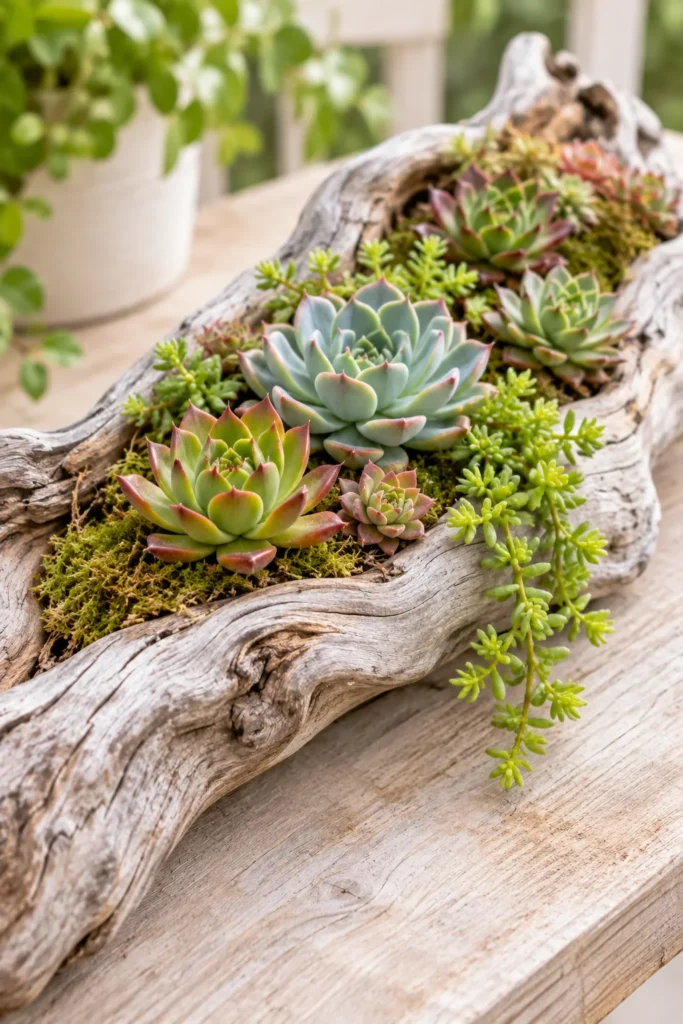
No two driftwood planters are alike, and that’s exactly the selling point. Each one is a one-off that buyers can’t find anywhere else.
Look for pieces with a natural hollow, knot, or crack. Carve the pocket a little deeper if needed, then pack it with damp sphagnum moss and a little cactus mix. Tuck in small rosettes like hens and chicks, a sprig of trailing sedum, and a baby echeveria so the plants look like they grew there on their own. Photograph every piece on its own for online listings, since a single generic photo can’t show what makes each one special.
Sourcing note: Some beaches, parks, and riverbanks don’t allow collecting driftwood. Check local rules first, or buy cleaned pieces from a craft store.
13. Succulent Pumpkin Toppers

Fall markets are full of plain pumpkins. A pumpkin crowned with succulents stands out from every other table and sells from early fall through Thanksgiving.
Skip the carving, since an uncut pumpkin lasts much longer. Brush craft glue over the top around the stem and press on a layer of sphagnum moss. Then glue on cuttings that have had a few days for the ends to dry: echeverias at the center, sedum and hens and chicks filling in around them. White heirloom pumpkins make the greens and pinks glow.
Here’s a selling point worth saying out loud: once the season ends, the buyer can pull the cuttings off and plant them, so the decoration turns into new plants.
14. Bare-Root Cutting Bundles Packed to Ship
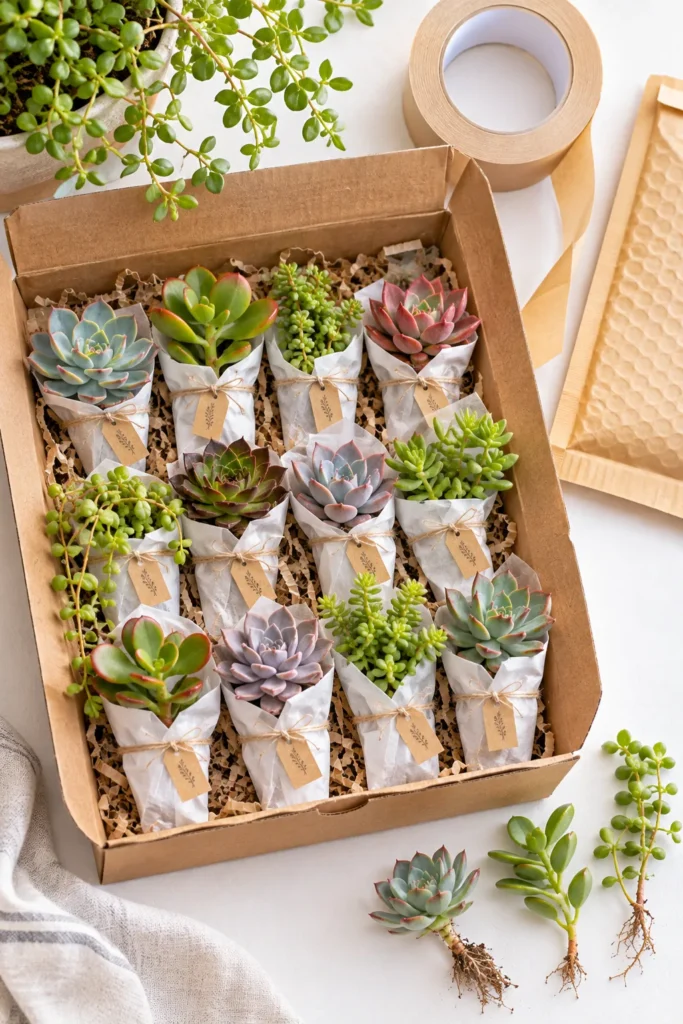
Potted arrangements are tricky to mail, since soil shifts and pots crack. Cuttings are the opposite. Once the cut ends have dried for a few days, they travel well without soil, which makes them a natural fit for an online shop.
Wrap each cutting loosely in paper, label it with its common name, and bundle mixed sets of 10 or 20 in a padded mailer or small box. Ship early in the week so packages don’t sit in a warehouse over the weekend. Some states restrict plants coming in from other states, so check the rules for the places you ship to.
Here’s how the crafts on this list compare for selling in person versus online:
| Craft | Market booth | Online shop |
|---|---|---|
| Painted mini pots | Strong impulse seller | Possible with careful packing |
| Living wreaths and frames | Showpiece, draws a crowd | Risky to ship, better for local pickup |
| Terrarium kits | Good gift item | Ships well when the glass is wrapped |
| Felt succulents | Never wilts outdoors | Ships flat and easy |
| Cutting bundles | Good for gardener shoppers | Best fit for shipping |
15. A Pick-Your-Pot Repotting Bar

People linger at booths where something is happening. A repotting bar gives shoppers a reason to stop. They choose a pot from one shelf and a plant from another, and you pot it up for them on the spot.
Set up one end of your table with a tub of cactus and succulent mix, a scoop, a tray to catch spills, and a stack of paper bags for the walk home. Display a range of pots, from plain terracotta to your painted minis, next to a tray of small succulents. Price each pairing as one bundle so nobody has to do math, and finish each one with a care tag. The custom touch makes it feel worth more than a plant sitting on a shelf.
Booth tip: Lay a waterproof cloth under the bar. Soil spills, and a muddy tablecloth makes the rest of your booth look messy.
16. Succulent Boutonnieres and Corsages

A single small rosette wired onto a lapel lasts through a long wedding day without wilting. That makes succulent boutonnieres a smart add-on for anyone already selling favors.
Push a length of floral wire through the base of a small echeveria rosette and bend both ends down to form a stem. Add a sprig of dusty eucalyptus or a small fern behind it, then wrap the stems together with green floral tape. Finish with a twist of twine or ribbon in the wedding colors. Make them the day before, keep them cool and dry, and include a boutonniere pin with each one.
The bonus for buyers: after the wedding, the rosette can be unwired and potted up as a keepsake. These unique succulent bouquet ideas pair naturally with a boutonniere order.
You will need: small echeveria rosettes, floral wire, green floral tape, eucalyptus sprigs, twine or ribbon, and boutonniere pins.
17. A Crate-Shelf Market Display That Sells Everything Above

Plants lined up flat on a folding table look like a garage sale. The same plants on tiers look like a little shop. A stack of wooden crates is the cheapest way to get there, and it packs flat into the car at the end of the day.
Turn crates on their sides and stack them in a stepped pyramid, two or three levels high, so each shelf sits at a different height. Put the showpieces where people see them from the aisle: living wreaths, framed succulents, and macrame hangers up high. Group the rest by type, with painted minis together, teacups together, and gift boxes together. Keep the small impulse items low and at the front edge, within easy reach.
Display note: Slide a plastic tray under every crate shelf so drips don’t stain the wood. Then weigh the bottom crates down with your heaviest pots so a gust can’t topple the stack.
How to Sell Succulents Without Losing Money
Pretty products don’t guarantee a profit. Run through this list before your first market or listing.
The seller’s checklist
Selling Succulent Crafts FAQ
What succulent crafts sell best?
Small painted pots tend to be the steadiest sellers because they’re quick, affordable impulse buys. Gift sets do well during the holiday market season, and showpieces like living wreaths and frames draw people into your booth. Ideas 1, 9, 2, and 11 cover each type.
Do you need a license to sell succulents?
Often, yes, for live plants. Many states require a nursery or plant dealer license, even for a single craft fair. Contact your state’s Department of Agriculture and ask about small-grower exemptions. Faux crafts like felt succulents usually skip plant-specific rules, but general business permits still apply. This isn’t legal advice, so confirm locally.
How should you price succulent crafts?
Add up everything that goes into each piece: the pot, soil, plant, packaging, care card, your hours, and booth or platform fees. Then allow for plants that die along the way. Bundles like gift boxes and pick-your-pot pairings make pricing simpler for buyers. Ideas 6 and 15 cover both.
Can you ship succulents?
Yes, but some products ship far better than others. Bare-root cuttings and terrarium kits travel well, while planted wreaths and frames are better for local pickup. Wrap each piece, ship early in the week, and check whether the state you’re shipping to restricts incoming plants. See ideas 5 and 14.
Where can you sell succulent crafts?
Farmers markets and craft fairs work well for impulse buys and showpieces. Etsy, Facebook plant groups, and your own website suit kits, cuttings, and made-to-order pieces. Weddings and showers bring larger custom orders for favors and boutonnieres. Many sellers combine a market table with an online shop.
Conclusion
Start small. Pick three or four succulent ideas to sell that you enjoy making, test them at one market or in a small online shop, and watch what moves. Keep the bestsellers, drop what lingers, and add seasonal pieces like pumpkin toppers and holiday gift boxes as the calendar turns. Check your state’s rules, price for your time, and tuck a care card into every sale, because happy plants bring buyers back. When you’re ready to grow your designs, these pretty succulent arrangements are full of fresh combinations. Save this before your next market season.