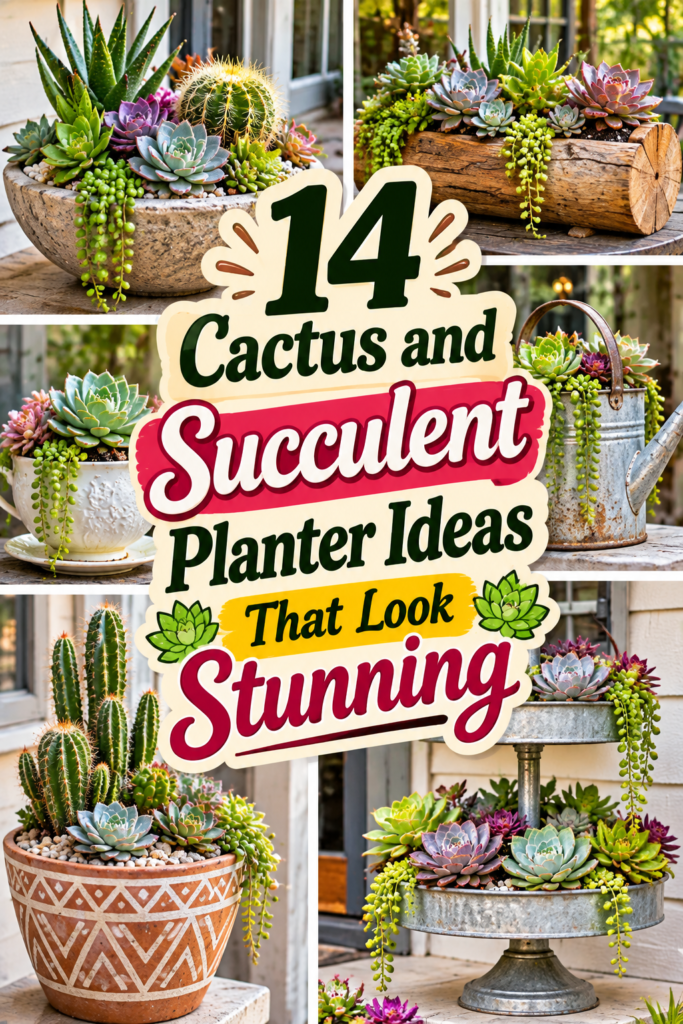
Cacti and succulents are about the easiest plants to keep alive, right up until you put the wrong ones in the same pot. These 14 cactus and succulent planter ideas pair plants that actually get along, so the arrangement looks as good in six months as it does the day you plant it.
You’ll find a wide terracotta dish with a golden barrel cactus and echeveria, and a tall concrete planter layered with aloe and a trailing spiller. There’s also a lithops trough that hides in its own pebbles, and a holiday cactus that blooms right through the season. The planters cover sunny windows, hanging spots, patios, and walls.
Each idea names the pot, the plants, and where it should sit, with plain notes on light, drainage, and watering. If you’ve ever lost a pretty mixed pot to rot or a stretched-out cactus, the pairing guide in idea 4 explains why, and how to sort your plants before you plant.
1. A Wide, Shallow Desert Dish of Barrel Cactus and Echeveria
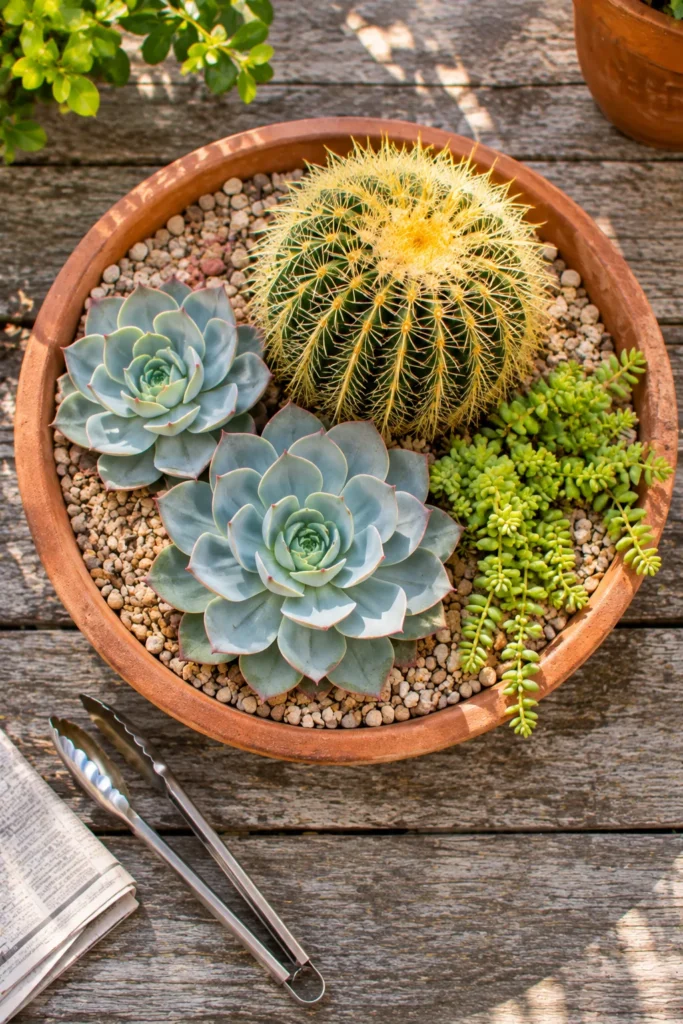
Wide and shallow beats deep and narrow for a mixed planter. Neither cacti nor most succulents have deep roots, and a shallow pot dries out quickly after watering, which both groups prefer.
Set a golden barrel cactus slightly off center in a wide terracotta dish. Tuck two powder-blue echeveria rosettes on the opposite side, then cover every bit of bare soil with tan crushed granite. The round cactus and the flat rosettes repeat the same circle at two different scales, so the cactus and succulent dish garden reads as one design instead of a random mix. It’s the same balancing trick behind most good succulent bowl ideas.
Planting note: Wrap a folded strip of newspaper around the cactus like a collar, or grip it with kitchen tongs, and your fingers never touch a spine. Plant everything at the same depth it sat in its nursery pot.
2. A Tall Concrete Planter with Aloe, Cactus, and a Trailing Spiller
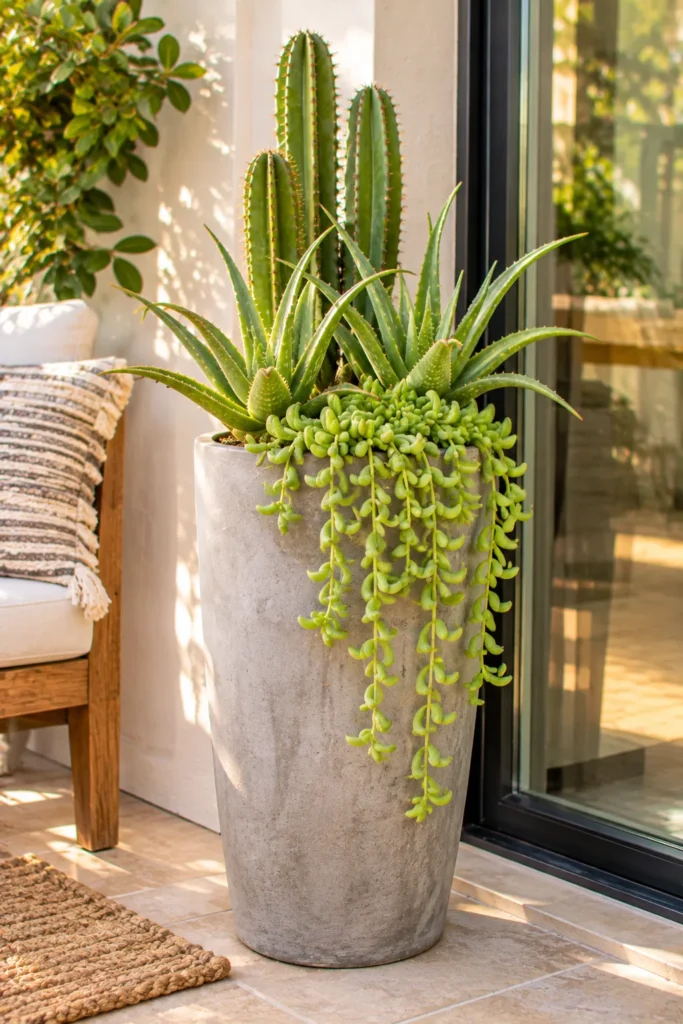
Tall planters look great by a sliding door, but they hold far more wet soil than a cactus wants. The fix is to fill only the top part with gritty cactus mix. Rest a plastic nursery pot upside down in the bottom, or use a planter with a false bottom, so the roots sit high where the soil dries out.
Then build it in layers. A columnar cactus stands at the back for height, two clumping aloes fill the middle, and string of bananas spills over the front rim. The gray concrete makes all three greens look sharper. The vertical, spiky, and trailing shapes give the eye three directions to travel.
Concrete is heavy once planted, so decide where it lives before you fill it.
3. A Matching Trio of Terracotta Pots with Columnar Cacti
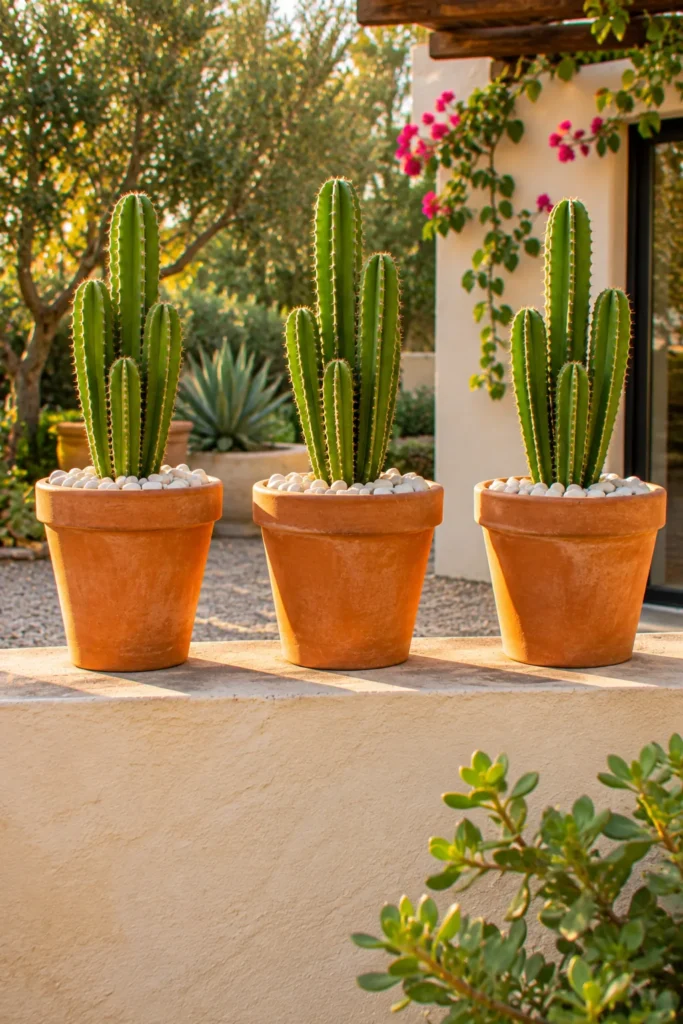
Three matching pots look like a decision. Two look like an accident.
Line up three terracotta pots in the same size along a sunny patio wall or step. Plant the same columnar cactus in each one, and top the soil with white pebbles. Repetition is what makes simple cactus planter ideas like this look designed. Each pot echoes the next, and the pale pebbles make the green columns read clearly from across the yard.
Styling note: Terracotta breathes and dries quickly, which suits cacti better than almost any other pot material. Choose plants in slightly different heights if you want a gentle stepped line. And if your winters freeze, these pots are light enough to carry inside.
4. Sun Lovers in One Pot, Shade Lovers in Another
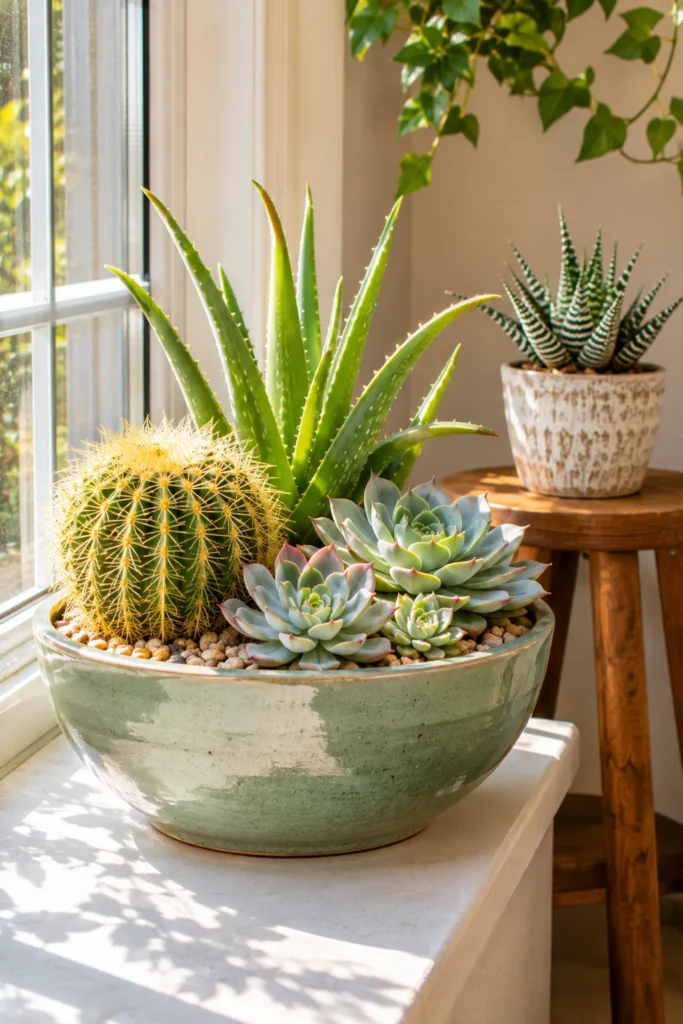
Plenty of mixed cactus and succulent planters fail for one simple reason: the plants in the pot want different things. A golden barrel cactus wants hours of direct sun and bone-dry soil. A haworthia wants bright light without harsh sun. Put them in the same bowl and one of them will always be unhappy.
The answer is to sort by light and water first, then design. Plant golden barrel cactus, aloe, and echeveria together in a glazed bowl right in a sunny window. Set the haworthia in its own small pot a little farther back from the glass. The two pots can still sit side by side and look like a set, while each plant gets the care it actually needs.
| Pot partners | Sun and dry | Bright shade, light water | Bright shade, more water |
|---|---|---|---|
| Plants | Golden barrel cactus, columnar cacti, aloe, echeveria | Haworthia, jade plant, snake plant | Fishbone cactus, holiday cactus, string of pearls |
| Light | Several hours of direct sun | Bright light with little direct sun | Bright, filtered light |
| Water | Only when the soil is completely dry | When the soil is dry, a little less often | When the top of the soil dries |
5. A Hanging Planter of Fishbone Cactus and String of Pearls
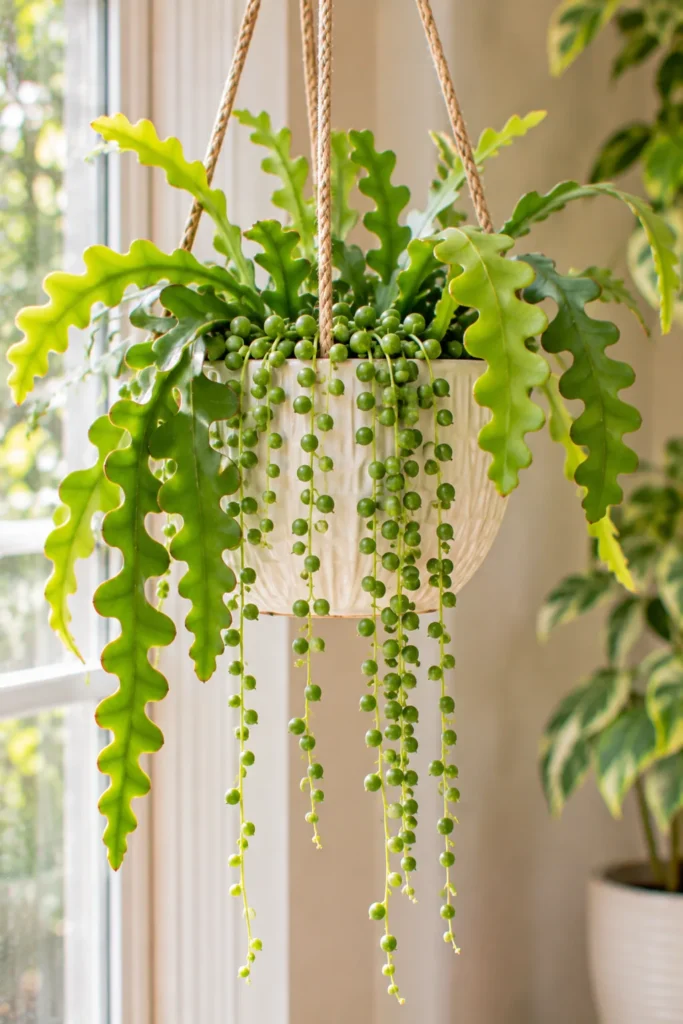
The flat, zigzag stems of a fishbone cactus look like someone cut them out with pinking shears. Hang them beside the round green beads of string of pearls, and the two shapes make each other more interesting.
They also want the same things, which is why this pairing works. Fishbone cactus comes from tropical forests rather than deserts. Like string of pearls, it prefers bright, filtered light and a bit more water than a desert cactus. A white ceramic hanging planter with a drainage hole, hung near an east-facing window, suits both. Fishbone cactus has no sharp spines, so it’s a friendly choice for a spot people walk past.
Water when the top of the soil dries, and let the excess drain fully before you hang the pot back up.
6. A Vintage Enamel Colander Planted with Cacti and Sedum
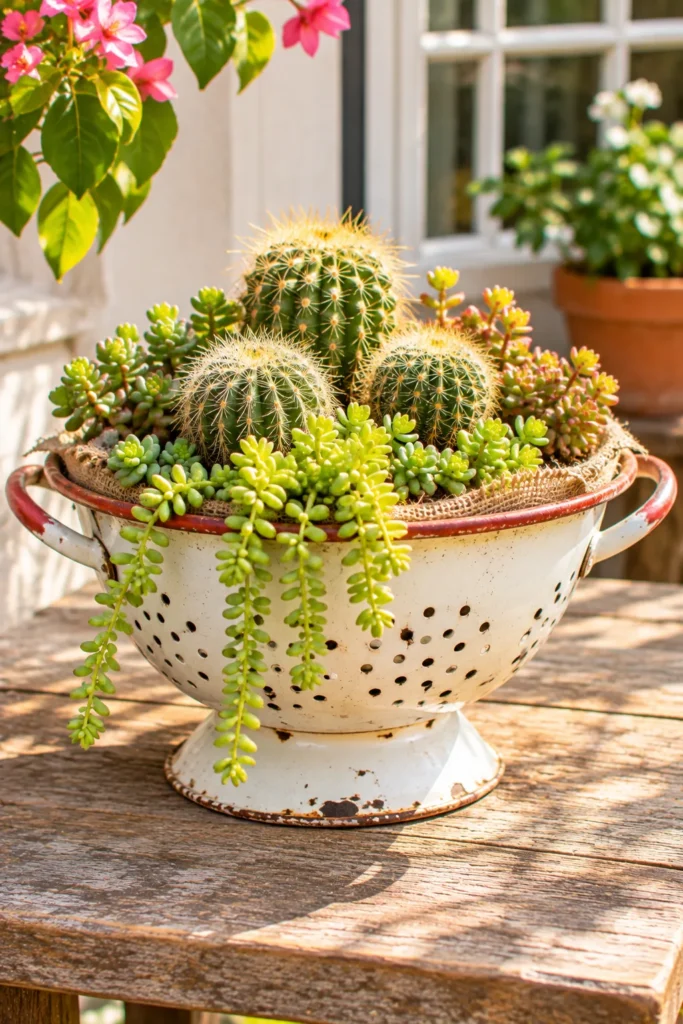
A chipped white enamel colander with a red rim comes with drainage already built in. That’s half the battle with any upcycled planter.
Line the inside with a layer of burlap or landscape fabric so the soil stays put while water still runs through. Fill it with cactus mix, then plant three small round cacti in the center and trailing sedum around the edge to soften the metal rim. On a sunny patio table it looks like a find from a farmhouse kitchen. Indoors, set it on a saucer so the holes don’t drip on the furniture.
You will need: an enamel colander, burlap or landscape fabric, cactus mix, three small round cacti, and trailing sedum.
7. An Open Glass Bowl Desert Scene with Sand Layers
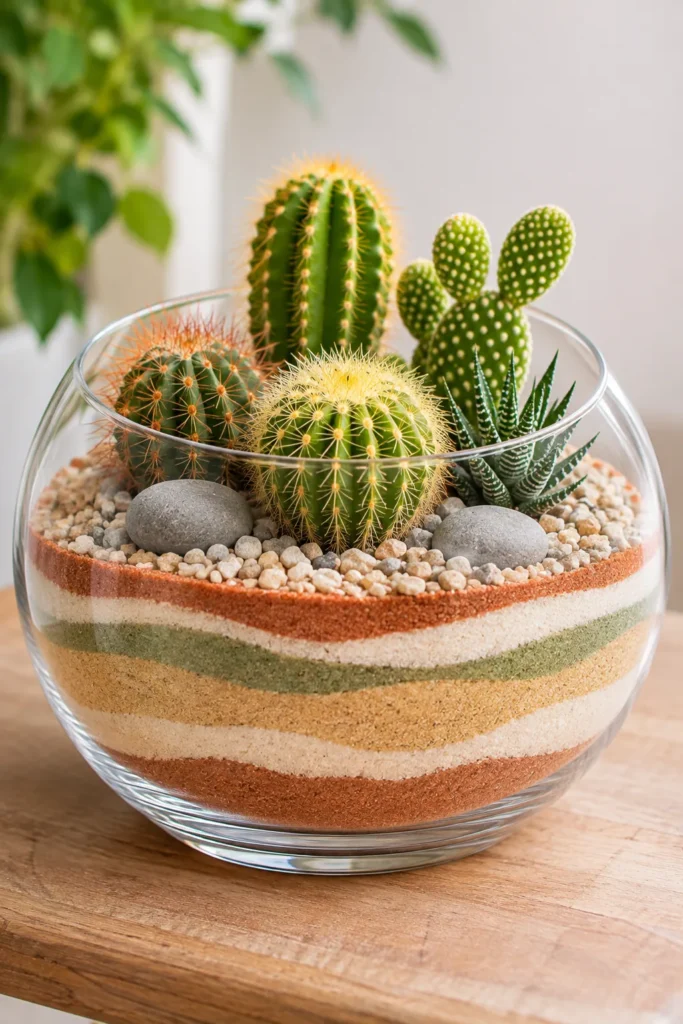
A closed terrarium and a cactus are a bad match, because trapped moisture rots them fast. An open glass bowl gives you the same layered look with the air cacti need.
Pour thin bands of colored sand against the inside of the glass, pressing each layer flat before adding the next. Fill the center with cactus mix and plant three or four mini cacti with a smooth stone or two between them. From the side, you see the stripes. From above, you see a tiny desert. For more layered glass looks, browse these succulent terrarium ideas.
⚠️ Watch Out
Glass bowls have no drainage hole. Add water with a spoon around each plant, just enough to dampen the roots, and never pour until it pools. Keep the bowl out of hot afternoon sun, because glass concentrates the heat and can scorch the plants inside.
8. A Moon Cactus and Purple Echeveria in a Bright Glazed Pot
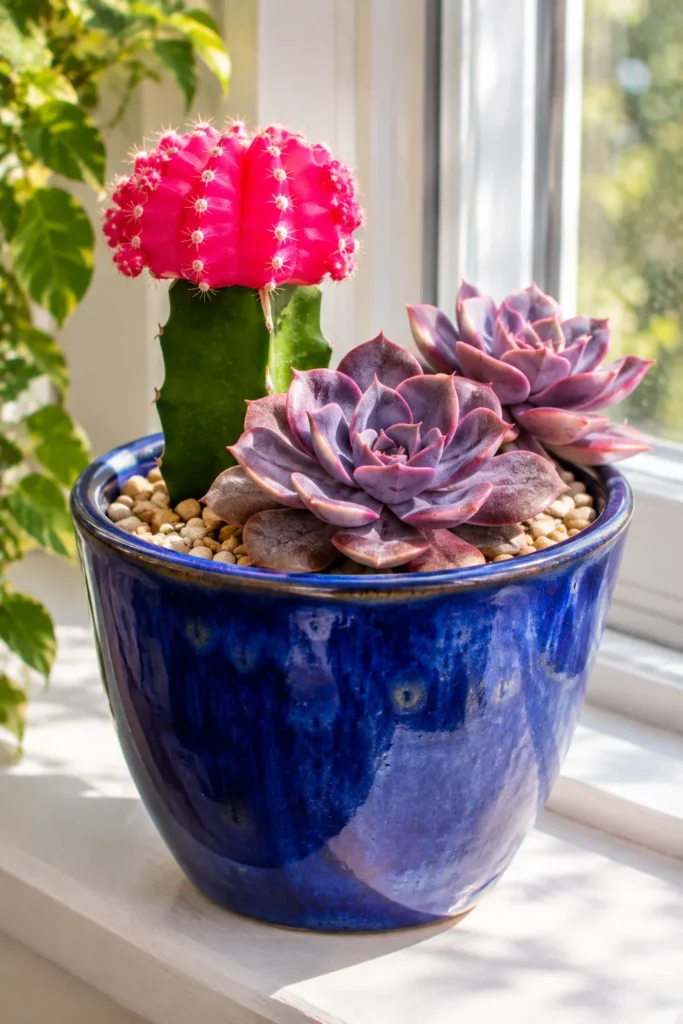
Some planters are about calm. This one is about color. A moon cactus with a hot pink top, a pair of dusky purple echeveria rosettes, and a cobalt blue glazed pot make a mix you notice from across the room. Pink, purple, and blue sit close together on the color wheel, so they look bold without clashing.
Care note: A moon cactus is two plants joined together. The bright top can’t make its own food, so it lives off the green cactus it’s grafted onto. Keep that green stem healthy. Both plants do well with gentle morning sun, which is bright enough for the echeveria to keep its color without scorching the moon cactus.
9. A Framed Living Wall of Rosettes and Mini Cacti
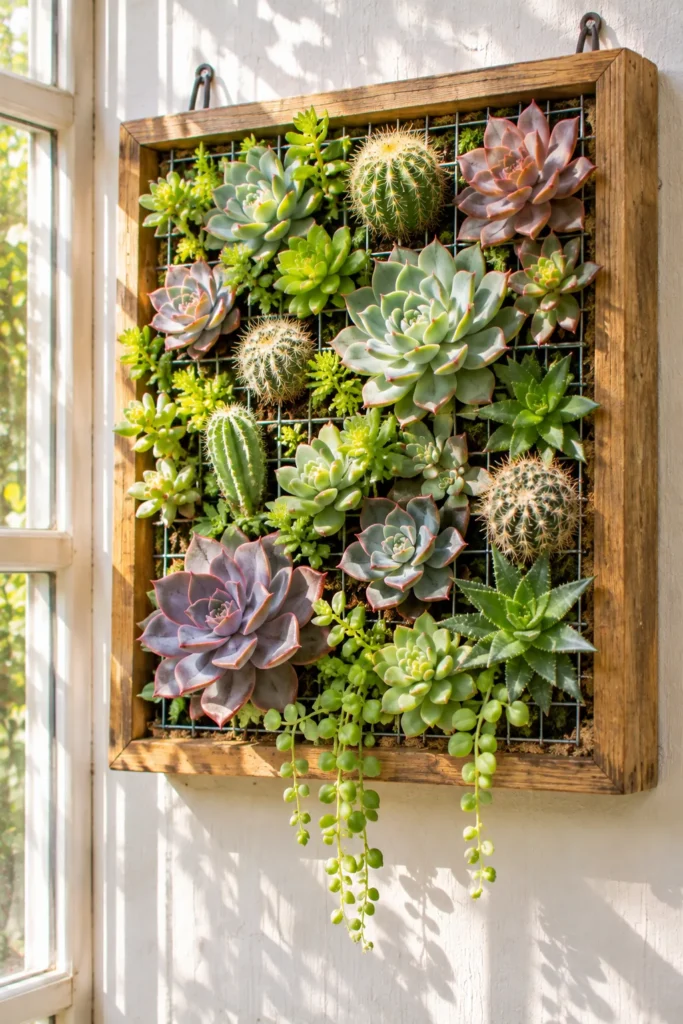
Shelves fill up fast once you start collecting. A shadow box frame faced with wire mesh moves the collection onto the wall, where it hangs like a painting that keeps growing.
Push echeveria rosettes and small rooted mini cacti through the mesh into the cactus mix behind it. Mix round and spiky shapes so the frame has texture from edge to edge. Leave the frame flat in a bright spot for several weeks until the roots grip, then hang it on a wall that gets strong side light from a window. These modern succulent wall ideas show other ways to build the frame.
To water, take it down and lay it flat, then let it drain completely before you hang it again.
10. A Lithops Trough with Matching Pebbles
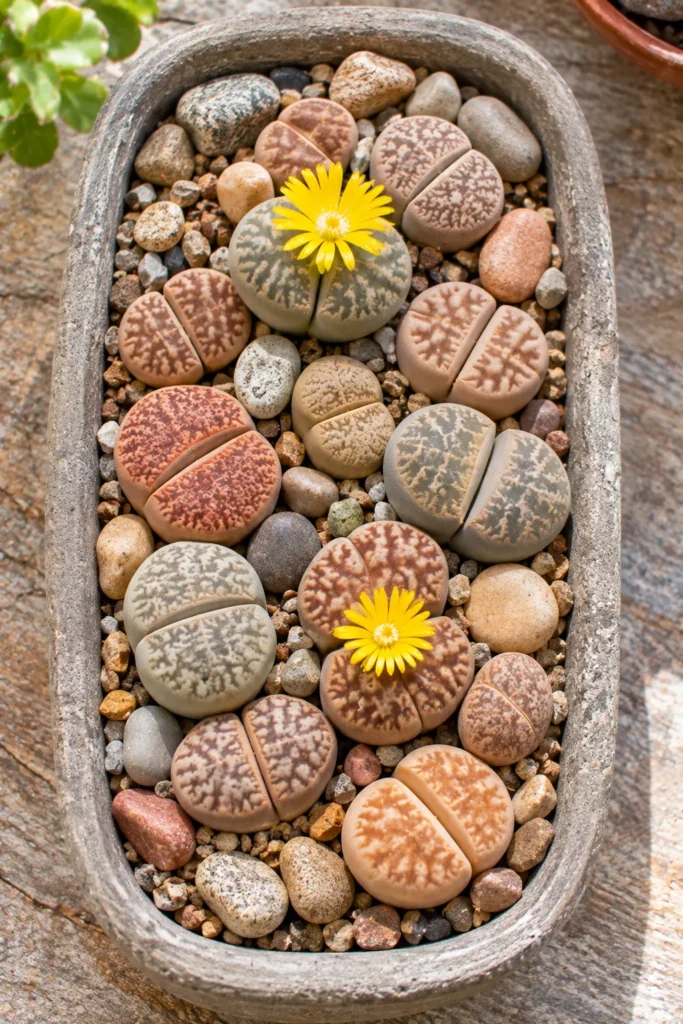
From a step away, a trough of lithops looks like a trough of stones. That’s the whole joke. These “living stones” evolved to blend in with the pebbles around them in the desert.
Plant a tight group of lithops in a shallow trough of very gritty mix. Then top the surface with river pebbles in the same soft grays, tans, and rosy browns as the plants, so visitors have to look twice to find which stones are alive. The only colors that give them away are the yellow or white daisy-like flowers that open in fall.
Lithops need very little water, and less than almost anything else in this list. When a new pair of leaves is growing inside the old shriveling pair, hold off watering completely until the old leaves dry up.
11. A Wooden Stepladder Shelf for a Cactus Collection
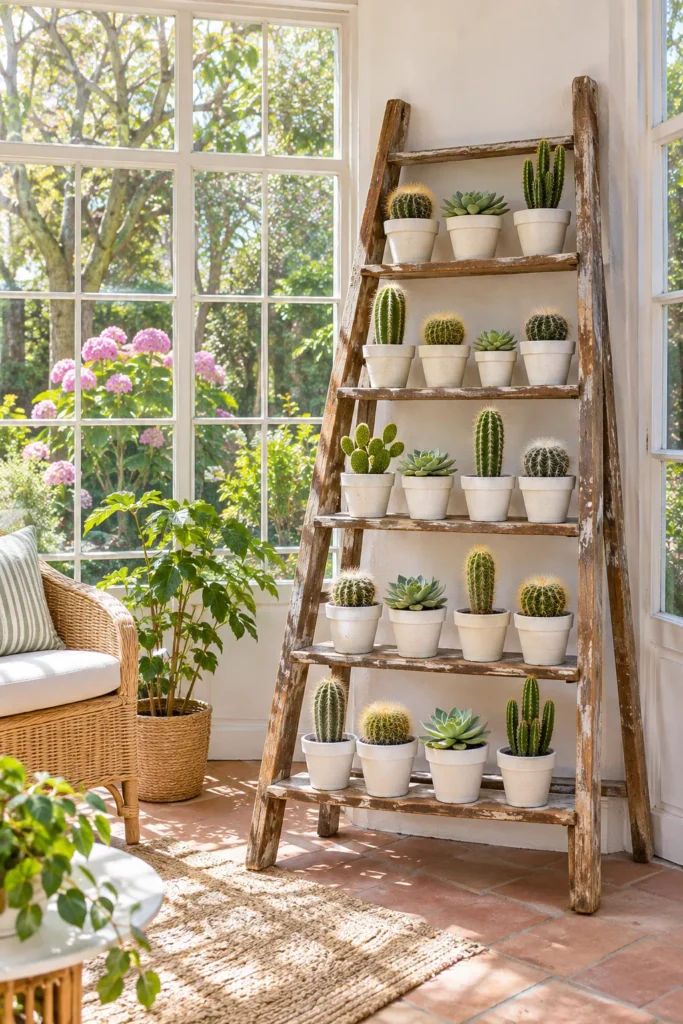
Twenty small pots scattered around a room look like clutter. The same twenty lined up on the steps of an old wooden stepladder look like a collection.
Set the ladder against a wall in a sunroom or a bright, covered patio. Fill each step with a row of small clay pots in one matching finish. Painting them all the same soft white, a project these succulent pot painting ideas cover nicely, is the easiest way to make mismatched secondhand pots look like a set. Mix round barrel cacti, upright columnar cacti, and a few low rosettes, so each step has its own rhythm.
Turn the pots every couple of weeks so the cacti grow straight rather than leaning toward the window.
12. Dark Aeonium and Pale Echeveria in a Black Bowl
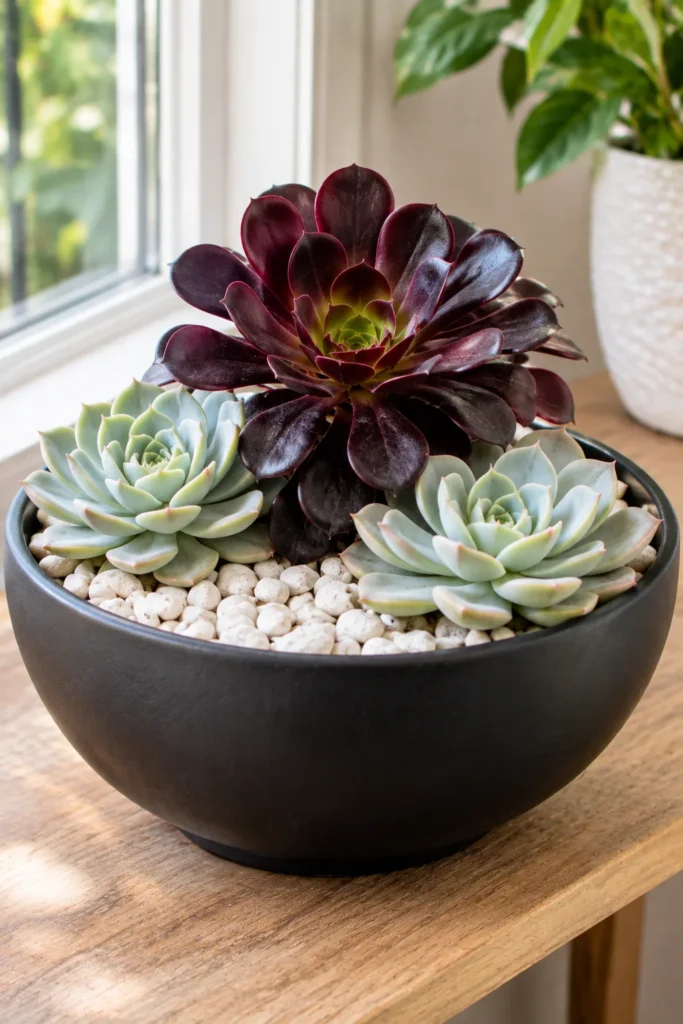
Moody planters get noticed. A matte black ceramic bowl planted with dark purple aeonium in the center, pale silver-blue echeveria on either side, and a layer of white pebbles has more contrast than almost any other combination you can buy.
The dark rosettes look nearly black against the pale ones. The white pebbles make the black bowl look sharper still. It’s a planter that suits a modern console table or a sunny patio side table equally well.
Aeoniums rest in hot summer weather, so don’t panic if the rosettes close up tight and drop a few lower leaves. They open again when it cools down.
Get the look: a matte black ceramic bowl with a drainage hole, one dark purple aeonium, two pale echeveria, white pebbles, and cactus mix.
13. A Sunny Windowsill Trough with a Winter Grow Light
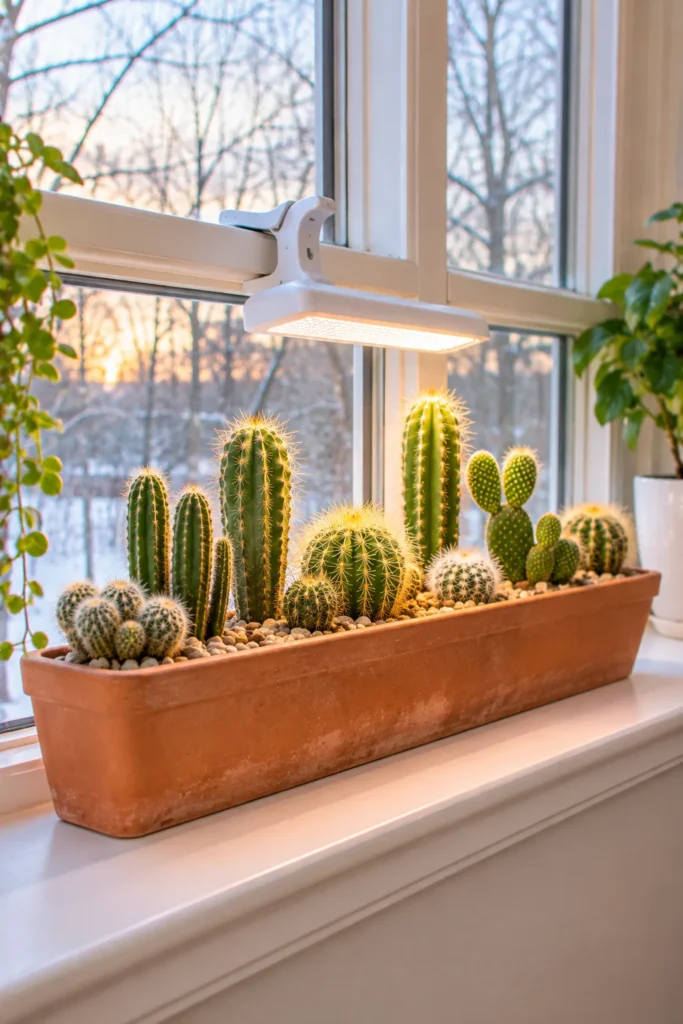
Short winter days are hard on indoor cacti. With too little light, they stretch thin and pale toward the glass and never shrink back. A sunny windowsill trough with a little extra light in winter keeps them compact.
Plant a long, narrow trough with a row of columnar cacti and small barrel cacti, and set it on the brightest windowsill you have. Through the darker months, clip a small LED grow light above the trough and run it for part of each day. Turn the trough every week or so, and water far less in winter, when most cacti are resting. It’s one of the most practical indoor cactus garden ideas, because the setup keeps working all year.
14. A Blooming Holiday Cactus in a Footed Bowl
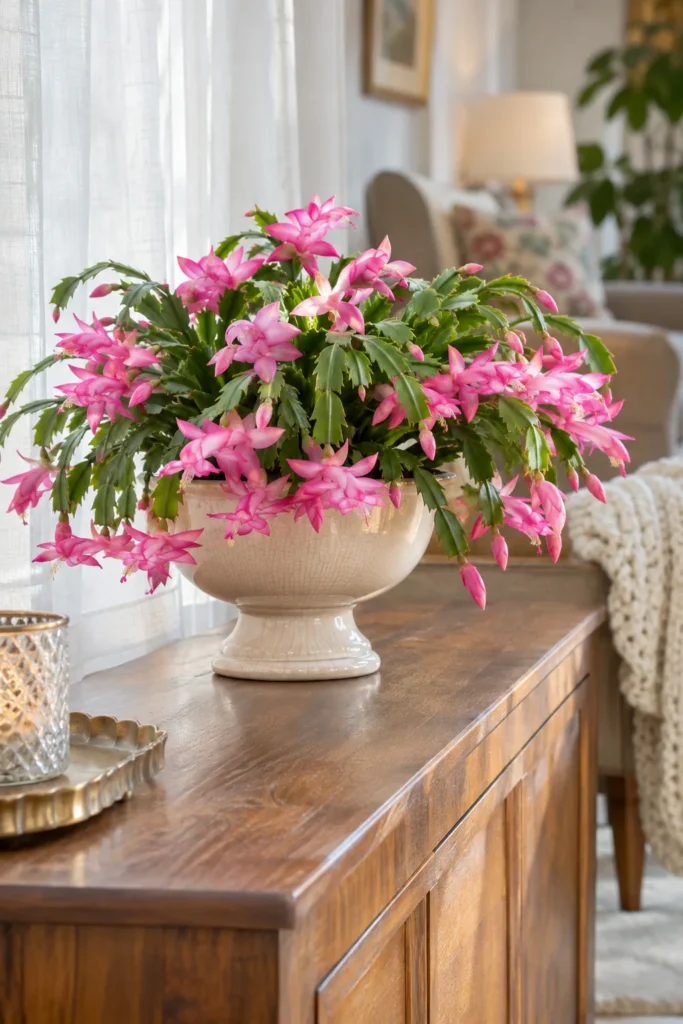
Right about now, holiday cacti start opening their pink, red, and white flowers. A single plant in a footed ceramic bowl on a sideboard makes an easy centerpiece through the season.
Despite the name, a holiday cactus doesn’t belong in the same pot as the desert cacti above. It comes from tropical forests, where it grows in the branches of trees. It prefers bright, filtered light and more regular water, and it would struggle in the baking sun a golden barrel loves. Once the buds form, keep it in one place, since sudden moves and drafts can make the buds drop.
Light: several hours of direct sun.
Water: only when the soil is completely dry.
Pot partners: aloe, echeveria, other desert cacti.
Light: bright, filtered light, out of harsh sun.
Water: when the top of the soil dries.
Pot partners: fishbone cactus, string of pearls.
How to Plant Cactus and Succulents Together
Every planter above follows the same short routine, whatever the pot looks like:
- Sort the plants first, so everything in one container wants the same light and water.
- Choose a wide, shallow pot with a drainage hole.
- Plant in gritty cactus mix at the depth each plant grew in its nursery pot. Use tongs or a newspaper collar for anything spiny.
- Finish with a top layer of gravel or pebbles, put the pot in the light it needs, and water only when the soil is fully dry.
The four steps below sum it up.
The mixed planter routine
Sort the plants
Group by light and water before you think about looks.
Pick the pot
Wide, shallow, and always with a drainage hole.
Plant with care
Gritty cactus mix, nursery depth, tongs for spines.
Finish and wait
Top with gravel, then water only when the soil is dry.
Cactus and Succulent Planter FAQ
Can you plant cactus and succulents together?
Yes, as long as they share the same light and water needs. Desert cacti pair well with aloe and echeveria, since all three want strong sun and dry soil. Shade-tolerant succulents like haworthia, and forest cacti like holiday cactus, need their own pots. Idea 4 sorts the common pairings.
What kind of pot is best for cactus and succulents?
A wide, shallow pot with a drainage hole works best for most mixed planters. Terracotta dries fastest and suits desert cacti. Glazed ceramic and concrete hold moisture longer, which helps in very hot spots. Skip self-watering pots, since these plants want their soil to dry out between drinks.
Should you put rocks in the bottom of a cactus planter?
You don’t need to. A drainage hole and a gritty cactus mix do the real work of moving water out of the pot. A layer of rocks at the bottom only takes up space the roots could use. Put pebbles on top instead, as a finishing layer.
How often should you water a mixed cactus and succulent planter?
Water when the soil is completely dry, then water deeply until it runs out the bottom. That’s fairly often in summer heat and far less in winter, when most cacti rest. Water the soil, not the leaves, and empty the saucer so the pot never sits in water.
Can cacti grow in a terrarium?
Only in an open one. A closed lid traps humidity, and cacti rot quickly in damp air. An open glass bowl works if you water with a spoon and keep it out of hot afternoon sun. Idea 7 shows how to layer one with colored sand.
Conclusion
The best cactus and succulent planters start before anything goes in the pot. Sort your plants by light and water, pick a wide pot with a hole in the bottom, and the design gets easy from there.
After that, it comes down to a few habits: gritty mix, a gravel top layer, water only when the soil is dry, and extra light when winter days get short. Most succulent planter ideas fail on care rather than looks, and every combination here was chosen so the plants inside actually get along.
Save this list for the next time you come home from the garden center with a tray of tiny pots and no plan.