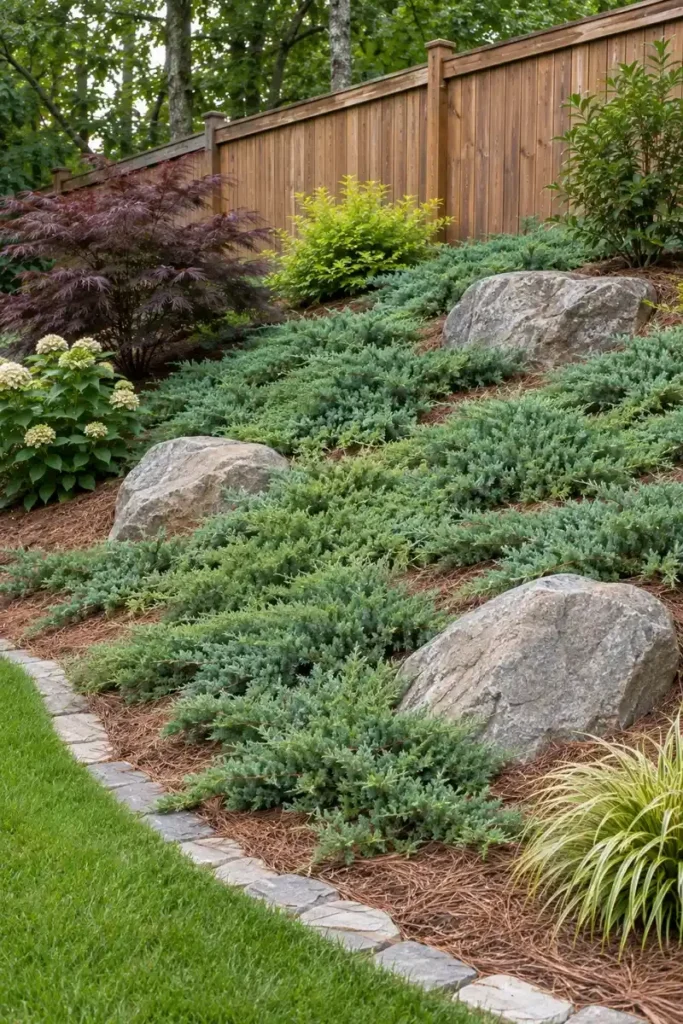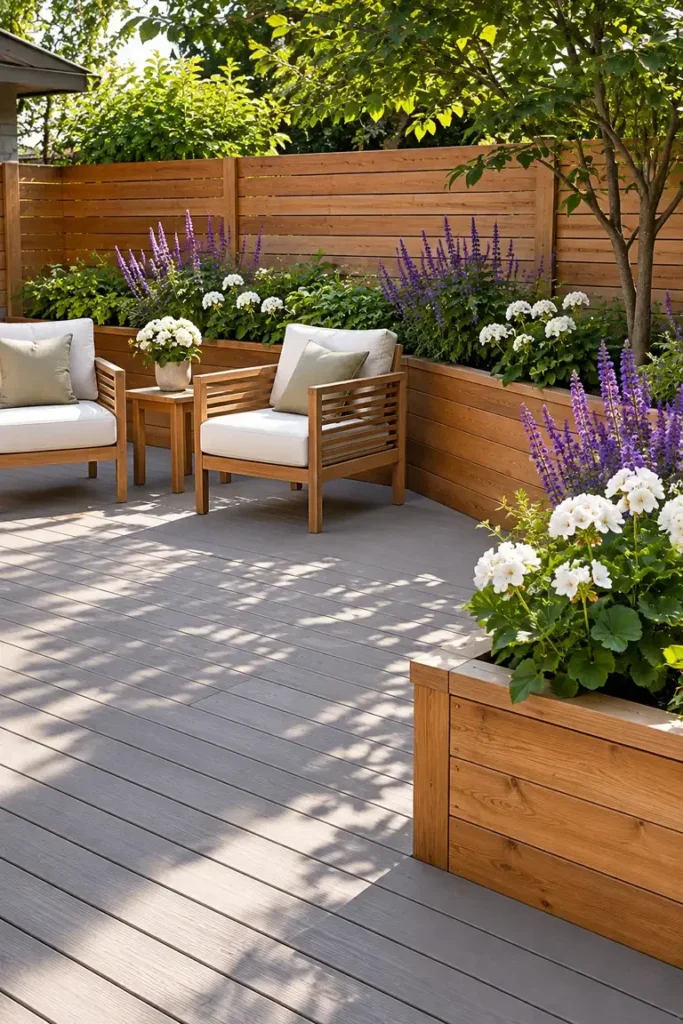
Stand at the curb and look at the strip of ground where your house meets the lawn. On most homes it holds a row of tired shrubs pressed against the siding, a thin line of mulch, and a downspout doing its best to wash everything away. The best front yard flower bed ideas start right there, because that bed is the frame around the whole house.
Every idea below is a foundation bed, planted along the front wall rather than out in the middle of the lawn. You will find layered beds built on boxwood and hydrangeas, shade plantings for a north facing wall, tough mixes for a hot south side, and small trees that soften a hard corner. There are fixes for the awkward parts too: the AC unit, the dry strip under the eaves, and the windows that keep disappearing behind shrubs.
Each idea names the plants, explains why the combination works, and gives you one move to copy. Pick the one that suits your wall, your light, and how much weeding you are willing to do.
QUICK WALL CHECK
What is the front of your house working with?
Before You Dig a Flower Bed Along the House
Before you buy a single plant, spend a day watching that wall and note when it gets sun. Check that the soil slopes away from the foundation, and call 811 so buried utility lines get marked before you dig. Work a few inches of compost into the soil, and plant shrubs at least half their mature width from the siding. Keep the strip right against the wall for rock, not roots, and the rest of the bed has room to grow.
1. The Classic Front Yard Flower Bed: Boxwood, Hydrangea, Catmint
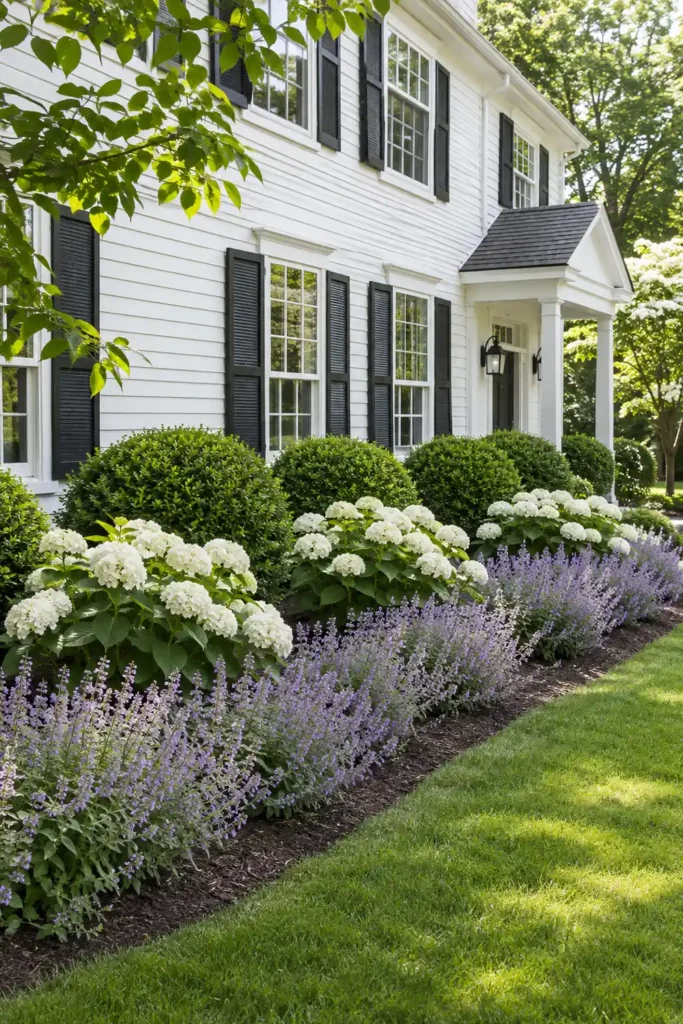
Three rows, three jobs. Rounded boxwood shrubs line the back of the bed, set a few feet off the foundation so they frame the house without rubbing the siding. White mophead hydrangeas fill the middle row in groups of three. A soft ribbon of purple catmint runs along the front edge where the lawn starts.
Boxwood is the steadiest of the front yard shrubs that look expensive because it stays green in January, so the bed never goes bare when the hydrangeas drop their leaves. Catmint blooms for weeks and flops just enough over the mulch to soften the line. Mopheads like morning sun and afternoon shade, which makes this layout a good fit for an east facing front.
Get the look: rounded boxwood, white mophead hydrangeas, purple catmint, dark shredded hardwood mulch, a two story house with white trim.
2. A Cottage Flower Bed Spilling Against White Clapboard
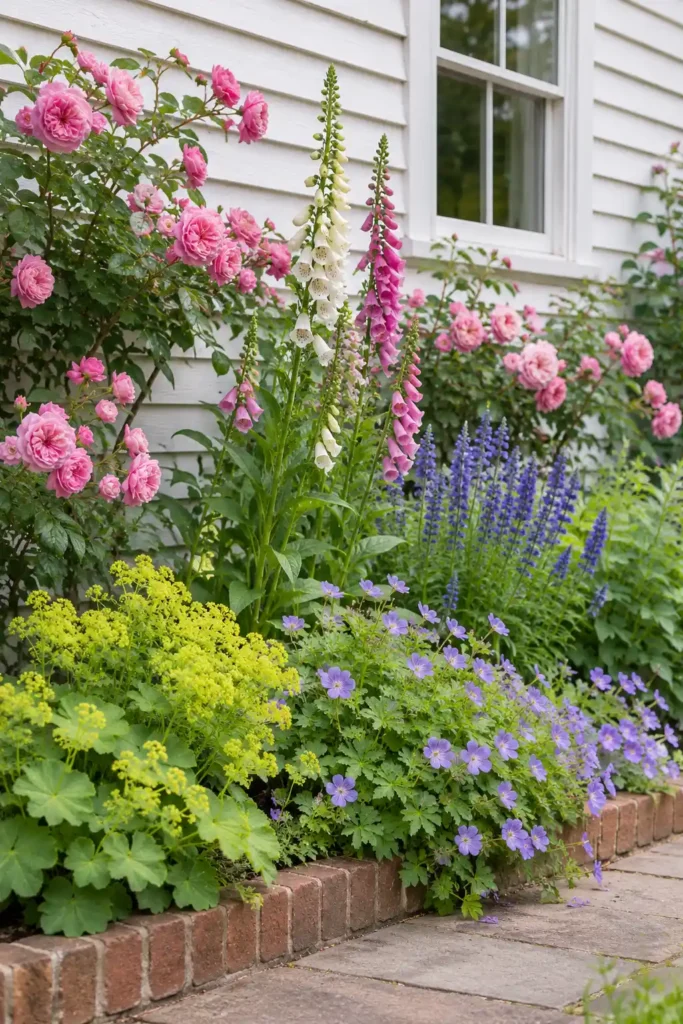
Pink shrub roses leaning toward white clapboard siding do most of the talking here. The pale wall works like a blank backdrop, so every bloom reads clearly from the street. Tall foxgloves and spikes of blue salvia rise between the roses. Lady’s mantle and low hardy geraniums spill over a brick edge onto the front walk in early summer.
Cottage beds look loose, but they only stay charming when the edge is crisp. The brick border tells the eye that the abundance is on purpose. Repeat the same handful of plants along the whole front of the house so it reads as one planting, not a plant collection.
Garden note: Foxgloves are biennials, so let a few go to seed and they will fill gaps next year. If you have pets or small kids, check a reliable pet safety list before planting them.
3. Pull the Bed Out With a Deep Curve and Steel Edging
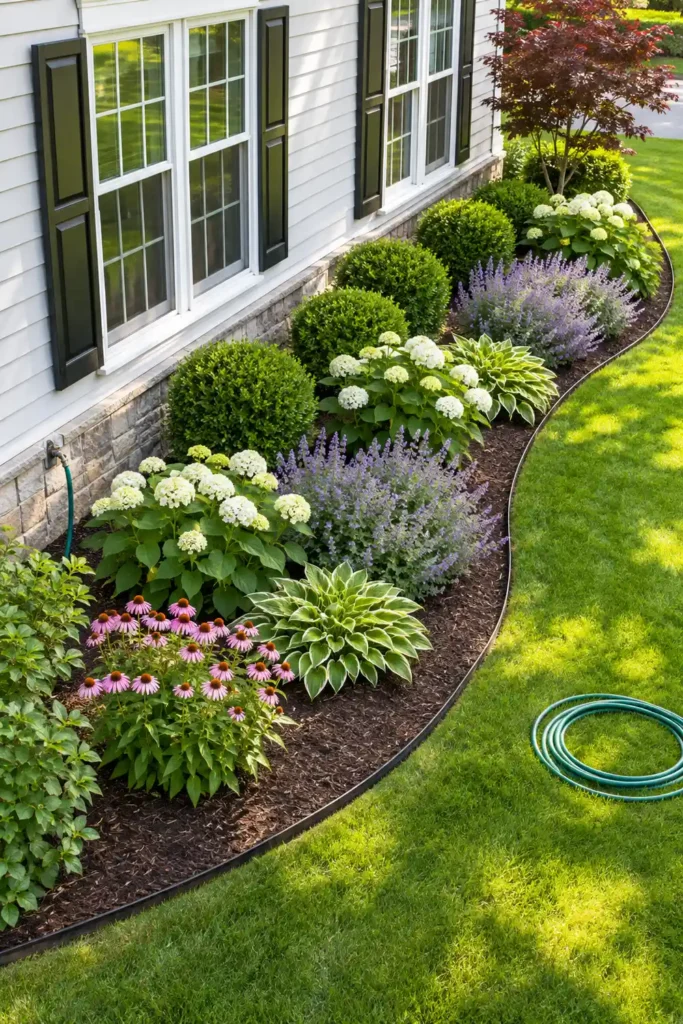
Most builder beds are a skinny strip of mulch hugging the foundation. Shrubs crowd the siding, the house looks perched on a ledge, and there is no room for layers. The fix is to pull the front edge out into the lawn. A common designer rule of thumb for foundation planting is a bed six to eight feet deep for a two story house, a little shallower for a single story.
Lay a garden hose on the grass to test a long, lazy curve before you cut anything. Gentle swoops are easier to mow around than tight wiggles. Black steel edging then holds the line, which keeps the lawn out of the mulch and makes the whole bed look finished. No budget for steel? A spade-cut edge, recut each spring, does the same visual job.
The extra depth also leaves a strip at the back for reaching windows and spigots.
4. Hostas, Ferns, and Coral Bells for a North Facing Wall
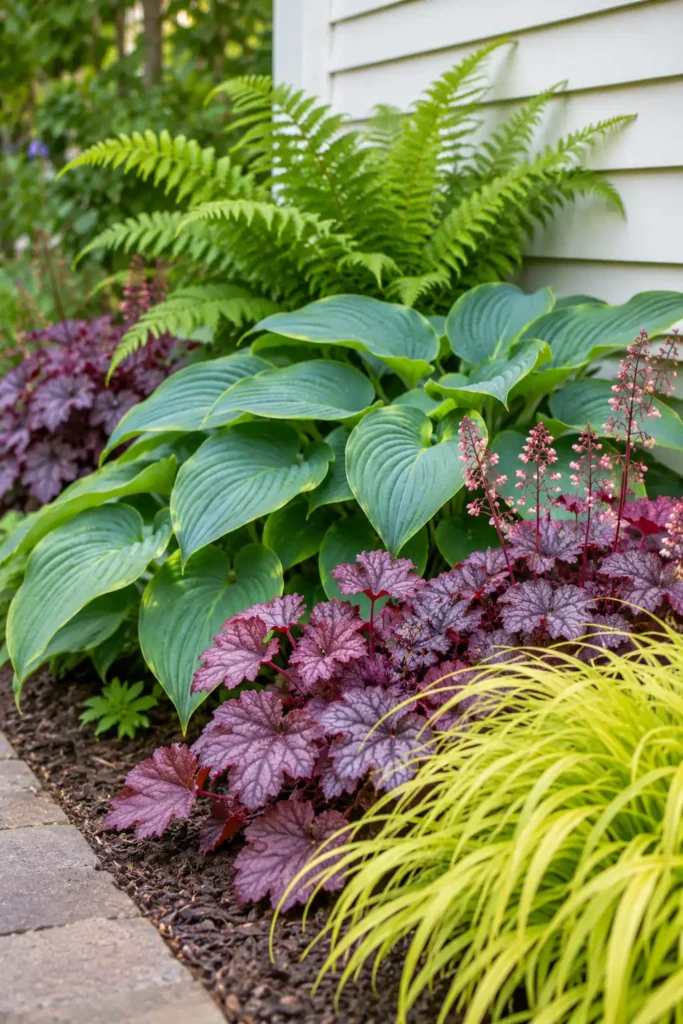
Plant sun lovers along a north facing wall and you get thin stems leaning toward the street. Plant for leaves instead and the shade becomes the whole point. Big blue-green hostas anchor the middle of this bed, and lacy ferns fill the back against the foundation. Purple coral bells and gold Japanese forest grass trace the front edge.
The gold grass bounces light into the darkest corner, and the purple coral bells make the hostas look even bluer. Give each hosta room for its full mature width when planting hostas, since they look sparse the first year and fill in fast after that.
Care tip: Hostas disappear completely in winter, so mark their spots before you mulch in fall. In deer country, lean harder on ferns, which deer usually leave alone.
5. A Blue and White Palette That Suits Gray Siding
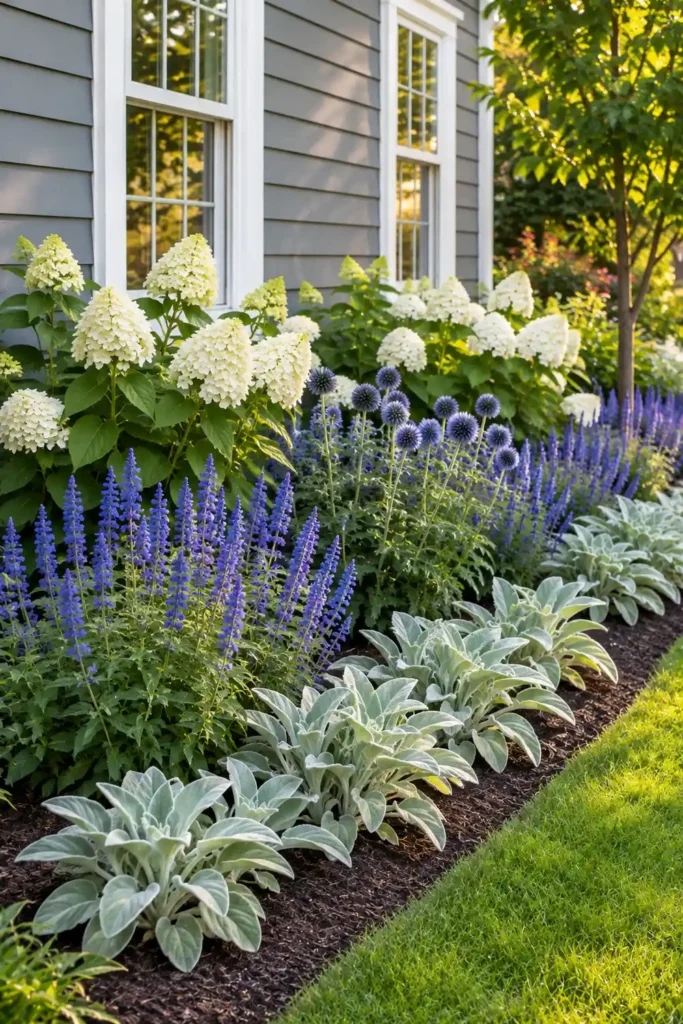
Gray siding makes an easy backdrop, as long as the flowers follow a plan. Here the plan is two colors only. White panicle hydrangeas stand near the wall, with long drifts of blue salvia and blue false indigo in front of them. A low edge of silvery lamb’s ear ties the whole bed back to the siding. The cool gray makes the blue look deeper, and the white blooms pick up the white window trim, so the house and the bed look like they were designed together.
Plant each color in drifts of five or seven instead of dotting single plants around, because drifts read clearly from the street. Have a red brick house instead? Swap in a warm palette of gold, rust, and burgundy, which flatters brick the way blue flatters gray.
6. Lavender and Sedum That Stay Below the Windowsill
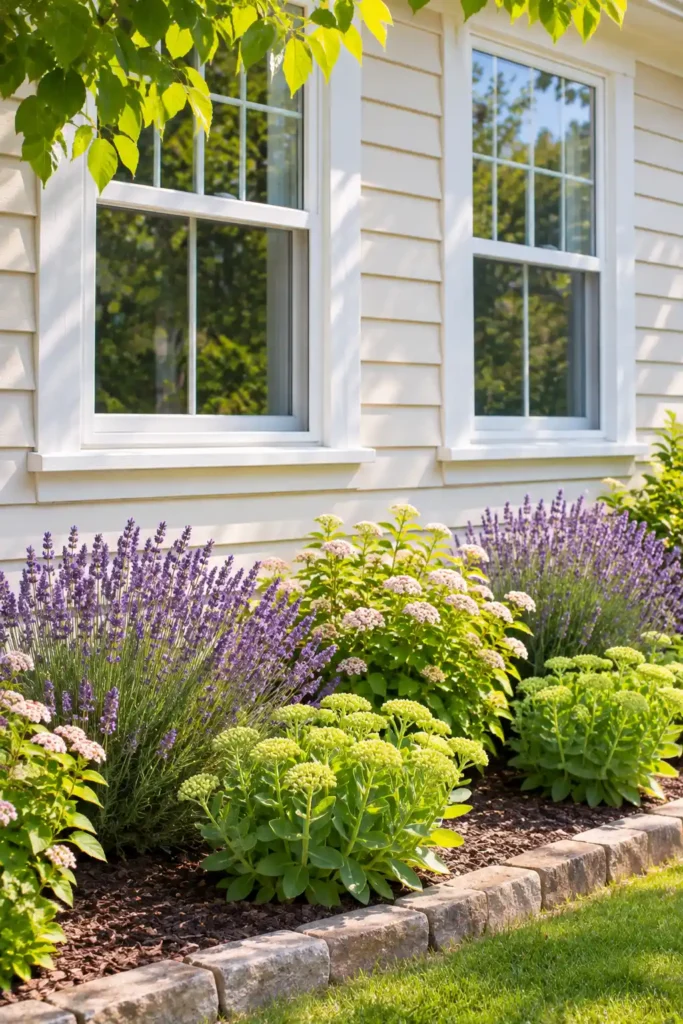
A shrub that looked tidy at the garden center can swallow a front window in three summers. The fix is to buy for mature height, not pot size. Under these bungalow windows, mounds of English lavender alternate with dwarf spirea, and upright sedum fills in along the front. All three stay well below the sill, so the windows stay clear and the house keeps its face.
Read the tag for mature height and width before you buy, and save anything taller for the wall space between windows. Lavender wants full sun and sharp drainage, so keep it away from the downspout. Shear English lavender lightly after it blooms so it stays mounded instead of turning woody.
Bonus: sedum’s rusty seed heads stand all winter, right where you see them from the couch.
7. A Raised Fieldstone Bed for a Brick Ranch House
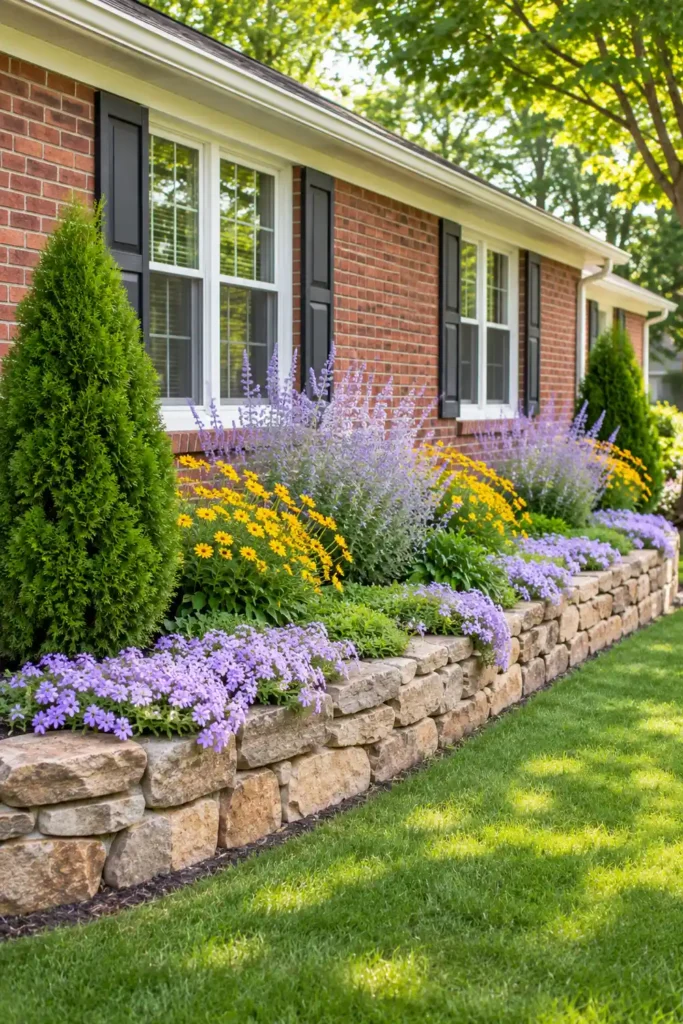
Rough tan fieldstone, dry stacked two or three courses high, changes how a long brick ranch sits on its lot. The stone repeats the earthy tones of the brick, and the extra height gives a low roofline something to rise toward. Inside the wall, fresh soil lets dwarf arborvitae, yellow coreopsis, and airy Russian sage thrive even where the ground underneath is hard clay. Creeping phlox softens the top course and spills over it in spring.
Keep the back of the bed a short step away from the house, so soil never piles against the siding or rises above the foundation line. The ground should still slope away from the wall. A low edging wall like this is a weekend project. Anything taller, or anything holding back a slope, is a job for a professional.
8. A River Rock Drip Strip Between the Wall and the Flowers
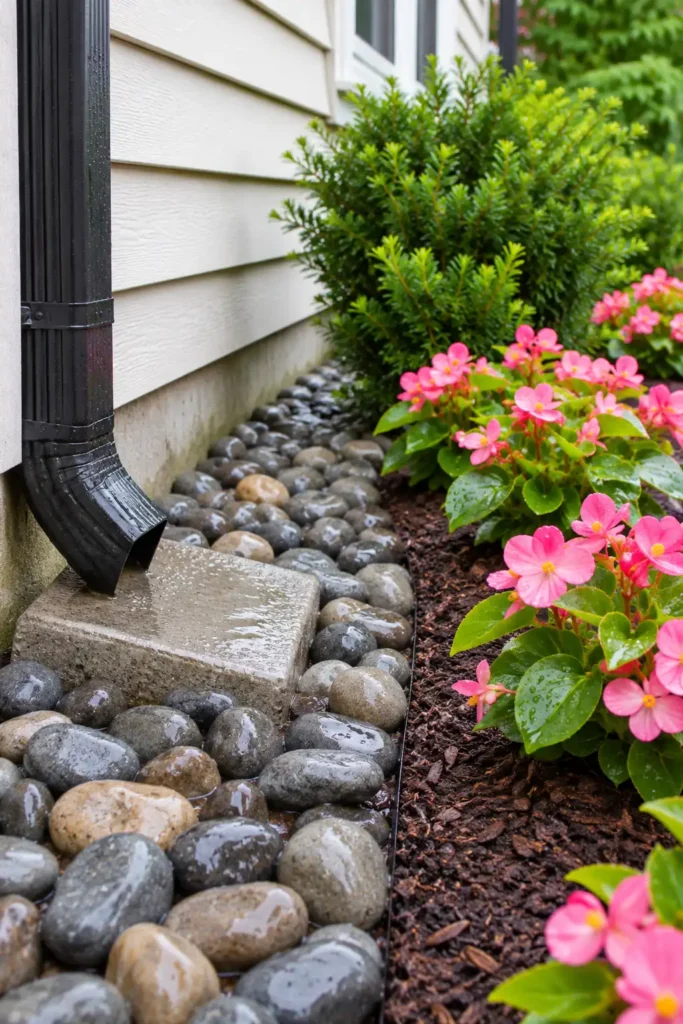
Look at the ground right under the eaves and you will usually find two problems: mud splashed onto the siding and plants that never get rained on. The roof overhang leaves a dry strip, and the downspout floods that same strip in a storm. A band of smooth gray river rock along the foundation fixes both, because water drains through it and nothing splashes back.
Rock goes against the house and mulch goes where the plants are. Here a black downspout empties onto a flat concrete splash block, the river rock runs the length of the wall, and pink wax begonias sit in dark mulch in front of a row of dwarf yews, just past the drip line where rain reaches them. The clean seam between rock and mulch reads as a deliberate border from the street.
Lay river rock or gravel right against the foundation and start your plants past the drip line.
Check that the soil slopes away from the house, and point downspouts onto a splash block or extension.
Piling wood mulch or soil up against the siding, where it holds moisture against the wall.
Planting thirsty flowers in the dry strip under the eaves and wondering why they wilt.
9. Yarrow, Anise Hyssop, and Grasses for a Hot South Facing Wall
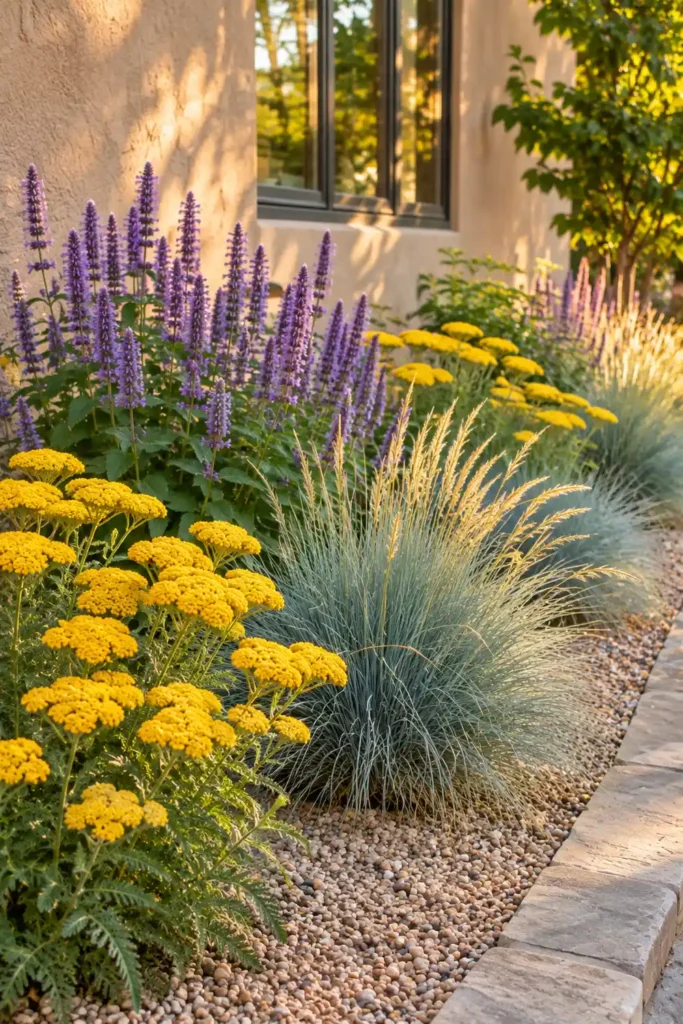
Petunias on a south facing wall need water every evening and still look tired by August. Yarrow and anise hyssop shrug off the same spot. The wall soaks up afternoon sun and throws the heat back at the bed, so this planting uses only tough plants that like it dry. Flat golden yarrow, purple spikes of anise hyssop, and steel-blue clumps of blue oat grass grow in pale pea gravel against warm beige stucco.
The gravel keeps the plants’ crowns dry and reflects light up into the grasses, which glow when the sun drops low. Water deeply while the plants settle in during their first season, then let the soil dry out between drinks. For more plants that take this kind of heat, start with these drought tolerant perennials for full sun.
Get the look: golden yarrow, purple anise hyssop, blue oat grass, pea gravel mulch, a beige stucco wall.
10. A Native Pollinator Bed With Coneflowers and Bee Balm
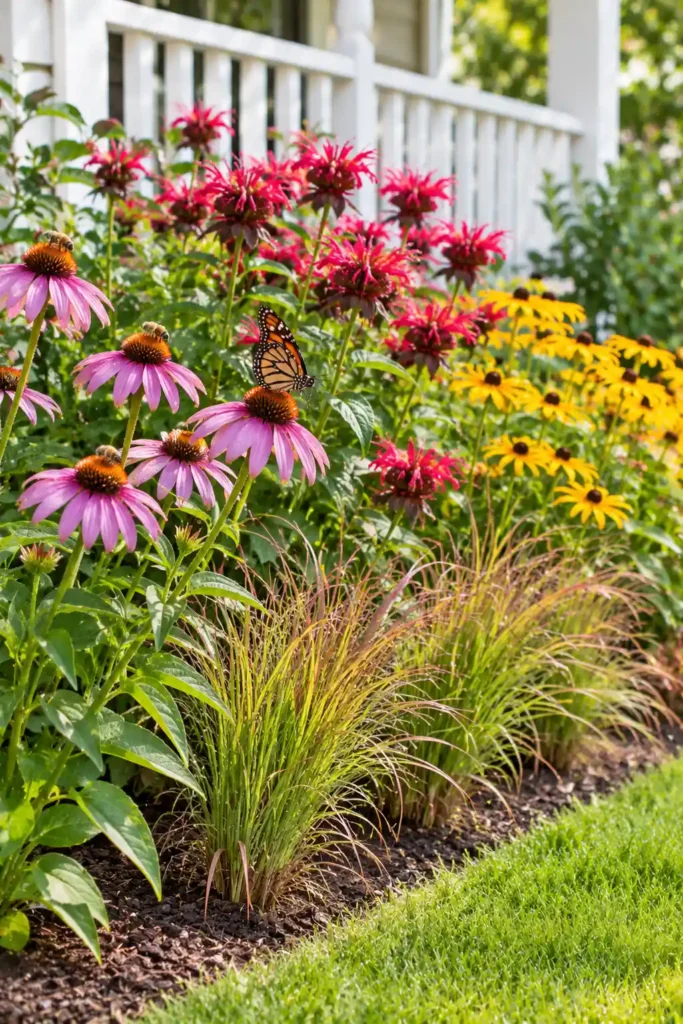
Native flowers can look wild in a front yard, so give them a frame. In the sunny bed below this farmhouse porch railing, purple coneflower, red bee balm, and golden black-eyed Susans grow in loose drifts. A row of little bluestem grass runs along the front, and a crisp mowed lawn edge holds it all in place. Bees and butterflies work the flowers all summer. The tidy edge tells the neighbors this is a garden, not a gap in the mowing.
Grower’s Note: Leave the seed heads standing over winter for the birds and the texture, then cut everything back in early spring. Bee balm spreads and can get powdery mildew in crowded beds, so give it space and divide it every few years.
11. Matching Urns and Boxwood Pairs Framing the Front Steps
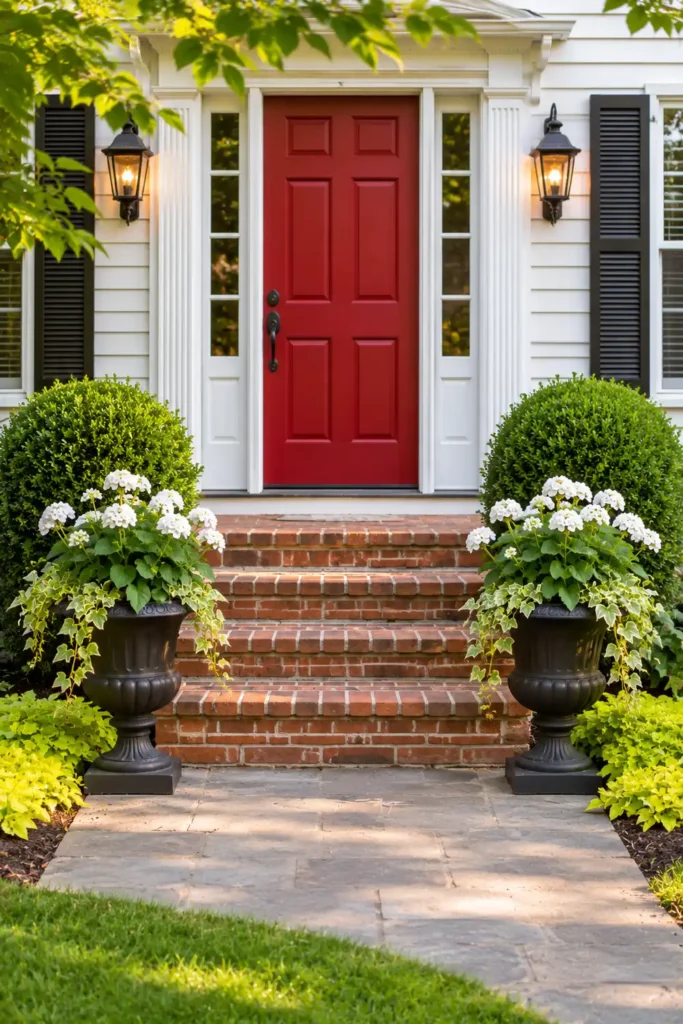
A red front door gets twice the attention when two black cast iron urns stand at the bottom of the brick steps. Each urn holds white geraniums with trailing ivy spilling over the rim. Behind each one sits a clipped boxwood ball, and low drifts of chartreuse creeping Jenny run out from there along the foundation of the colonial house.
Symmetry works at the entry because the front door is already the center of the house, so mirroring both sides pulls the eye straight to it. Keep the rest of the bed calmer so the entry stays the one formal moment, which is the trick behind most welcoming front yard entrances. Water the urns more often than the bed, since pots dry out much faster than ground soil.
12. A Narrow Flower Bed Along the House and Front Walk
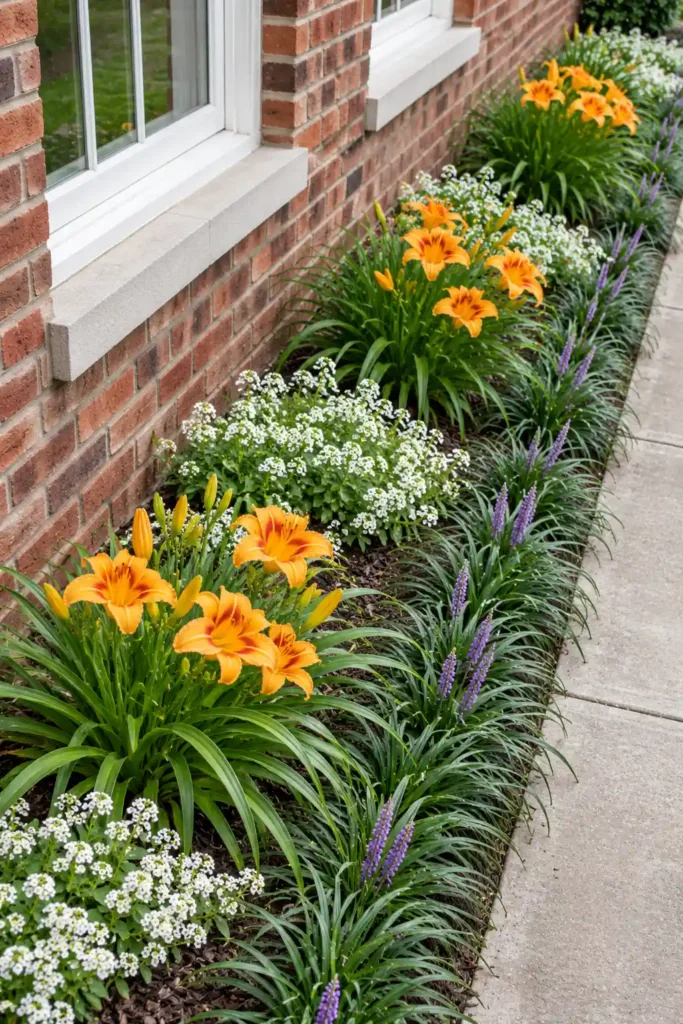
Some houses leave only a slim strip between the front walk and the wall, with no room for layers. The answer is rhythm. Along this brick townhouse, clumps of dwarf daylilies repeat at even spacing down the strip. A border of dark green liriope lines the walkway edge, and white sweet alyssum fills the spaces between. The repeating clumps read as one clean line from the curb, which makes a tight space look planned instead of cramped.
Skip shrubs in a strip this narrow. They outgrow it within a few seasons and end up pressing against the siding, while low perennials stay where you put them. No ground strip at all? A row of matching window boxes under the front windows does the same job.
13. Ornamental Grasses That Hide the AC Unit, Not Block It
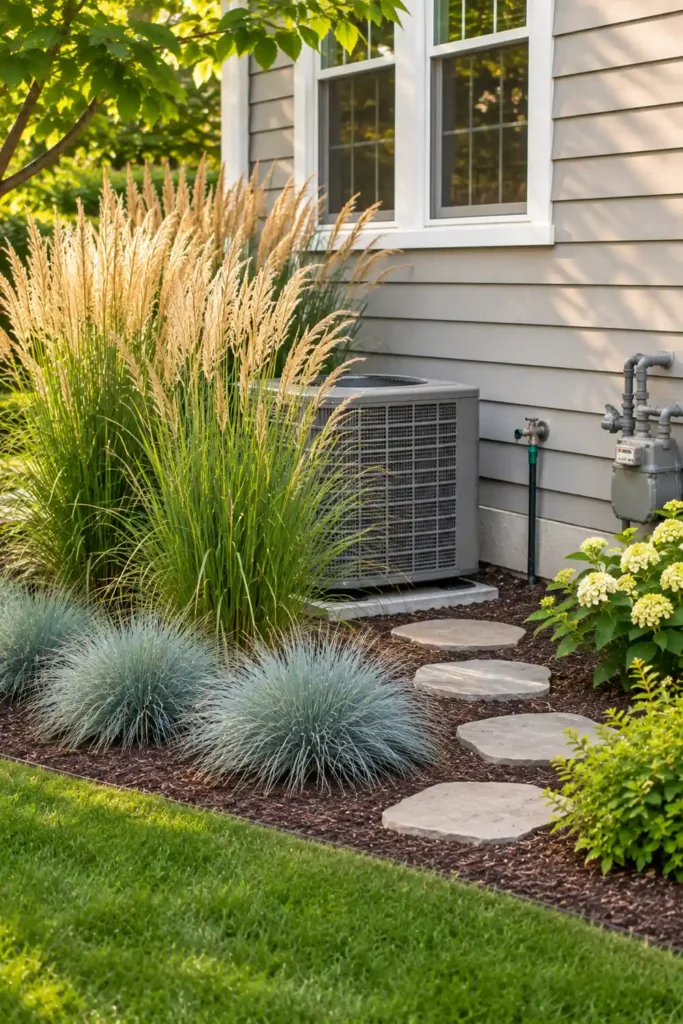
The AC unit, the gas meter, and the hose bib often sit right along the front of the house, and none of them is going anywhere. A loose curve of upright feather reed grass around the condenser hides the gray metal box from the street without walling it in. Low cushions of blue fescue fill the front, and a few flat stepping stones lead through the bed to the unit and the spigot.
The grasses sway in the breeze, so the eye follows the movement instead of landing on the box. Leave one side open for airflow and service visits.
Garden Tip: Check the unit’s manual for how much clear space it needs, and keep plants far enough from a gas meter that a technician can reach it easily. Cut the grasses back in late winter, before new growth starts.
14. A Multi Stem Serviceberry That Softens the House Corner
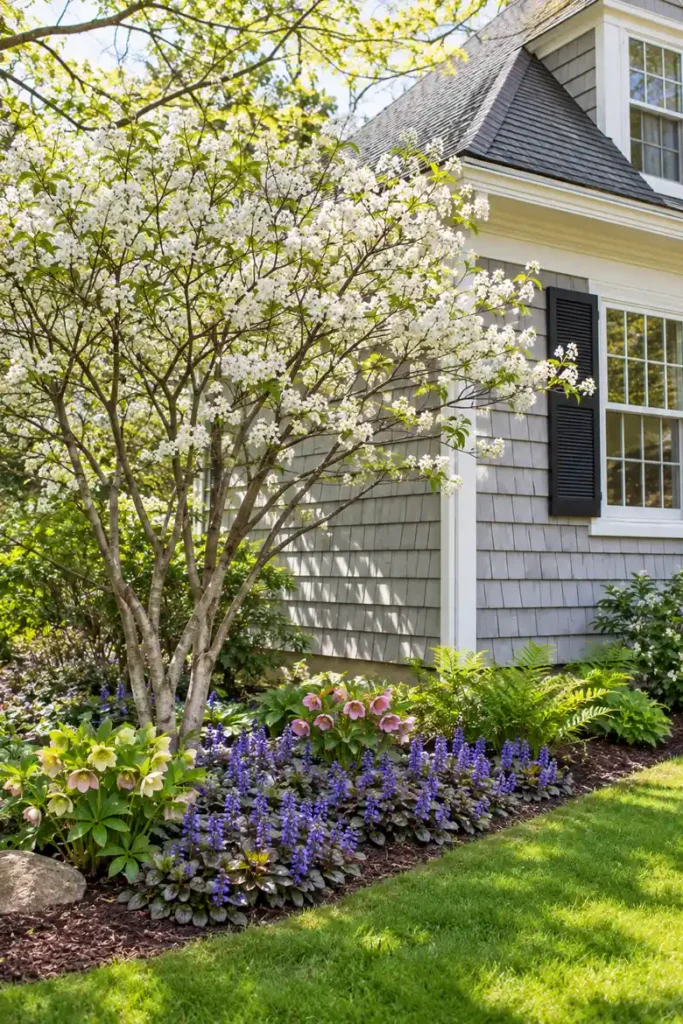
Smooth gray stems on a multi stem serviceberry break up the hard vertical line where two walls meet, which no row of shrubs can do. Planted well out from the corner of this gray shingled Cape Cod, the small tree overlaps the edge of the house from the street without crowding the roof. Under it, a carpet of purple-blue ajuga and a few hellebores handle the shade its canopy casts.
The serviceberry earns its spot all year: white spring flowers, berries the birds strip in early summer, orange fall color, and silvery stems in winter. Check the tag for its mature spread and plant at least half that distance from the wall. If ajuga struggles with the roots, these plants for under trees are built for dry shade.
Small trees go at the corners, not the middle, so the front door stays the star.
15. Dwarf Evergreens With Pockets for Seasonal Color
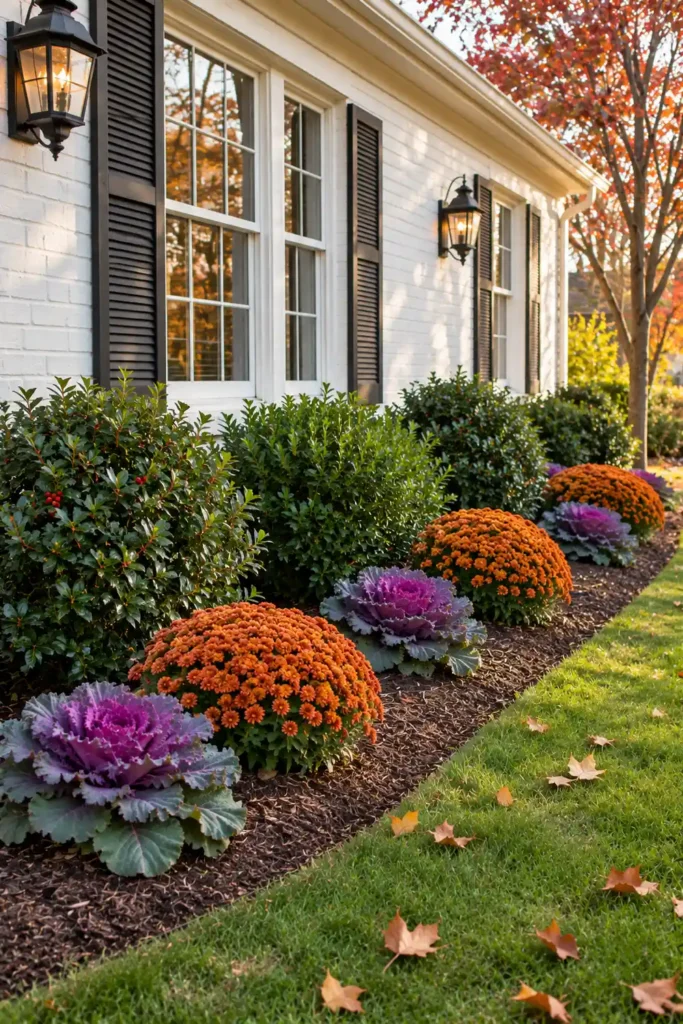
Most of this bed never changes, and that is why it always looks good. Rounded dwarf holly and dark green inkberry form a permanent backbone along the foundation of a white painted brick house, with three open pockets left near the front edge. In fall those pockets hold rust mums and purple ornamental kale. The evergreens keep the shape all year, so the annuals only have to bring color, and replanting three pockets takes an afternoon instead of a weekend.
Come spring, swap in pansies, then bright zinnias for summer. If you want red berries on the holly, plant a male holly somewhere nearby, since most female hollies need one to set fruit.
You will need: dwarf holly, inkberry, shredded bark mulch, rust mums, purple ornamental kale.
How to Plant Front Yard Flower Beds Against the House
Most flower bed ideas in front of a house succeed or fail on the same few moves, and every idea above uses them. Give the bed more depth than feels natural and keep a dry strip of rock against the wall. Build it in three layers, from evergreens at the back to low spillers at the edge. Repeat plants in drifts of odd numbers so the bed reads as one design from the street. Check mature heights before you buy anything for the space under a window.
The foundation bed formula
Front Yard Flower Bed FAQ
How far from the house should a flower bed be?
The bed itself can run right up to the foundation, but the plants should not. A common rule of thumb is to plant shrubs at least half their mature width from the wall, and to keep a strip of rock along the foundation itself. Ideas 3 and 8 show both moves.
What is the best low maintenance flower bed in front of a house?
Evergreen shrubs at the back, plus a few tough perennials in front, take the least work. The evergreens carry the shape all year, and the perennials come back on their own. Ideas 1, 9, and 15 follow this pattern. Shredded bark or gravel mulch cuts down on weeding.
What can I plant in a shade flower bed in front of my house?
Plant for leaves instead of flowers. Hostas, ferns, coral bells, and Japanese forest grass all handle shade and give you color through foliage, as idea 4 shows. For a corner under a tree, try ajuga and hellebores from idea 14, or browse these shade garden ideas.
Should I put mulch or rock around my house?
Use both. Rock belongs in the strip right against the foundation, where it drains well and stops mud from splashing the siding. Mulch belongs where the plants grow, because it holds moisture and feeds the soil as it breaks down. Idea 8 shows how the two meet.
How do I keep a front flower bed looking good in winter?
Give the bed an evergreen backbone and leave some seed heads standing. Holly, inkberry, and boxwood keep it green, while sedum and coneflower seed heads add texture after frost. Ideas 6, 10, and 15 all carry through the cold months.
Conclusion
A good foundation bed does quiet work. It ties the house to the ground, frames the front door, and still looks finished when the flowers take a break. Start with the bones: enough depth, a rock strip at the wall, and evergreens at the back. Then layer in flowers that suit your light, hostas on the shady side and yarrow on the hot one. Of all the front yard curb appeal upgrades, this one pays off every time you pull into the driveway. Save these front yard flower bed ideas for the first warm weekend you can get outside with a shovel.