

Brown plants have quietly become a favorite among indoor gardeners who want something different without the hassle. Their muted, earthy tones bring warmth to any space while asking very little in return.
Take Tradescantia Pallida, for instance. Its deep purple-brown leaves trail beautifully from hanging baskets and forgive the occasional missed watering.
Philodendron Micans offers something similar with its velvety bronze-green foliage that seems to glow in soft light.
Syngonium Bronze rounds out this trio with arrow-shaped leaves in rich chocolate hues.
All three tolerate low light and inconsistent care, making them ideal for busy households or beginners still learning the ropes.
Choosing between them comes down to personal preference and available space. Each brings its own character to a room, whether cascading from a shelf or climbing a small trellis.

Choose for Tone and Placement
Start by deciding where the plant will sit and how much room it has to grow. Trailing varieties such as Tradescantia Pallida or Philodendron Micans suit shelves and hanging pots, while compact plants like Peperomia Rosso work better on desks, side tables, or narrow ledges.
Light still matters even with adaptable brown plants. Most perform best in bright to moderate indirect light, while harsher direct sun can fade or damage their distinctive bronze, burgundy, and chocolate tones.
Keep watering simple by checking the soil first. Many of these plants prefer to dry slightly between waterings, while moisture-loving varieties such as Calathea and Fittonia need more consistent attention.
Tradescantia Pallida: Brown Plant That Thrives on Neglect
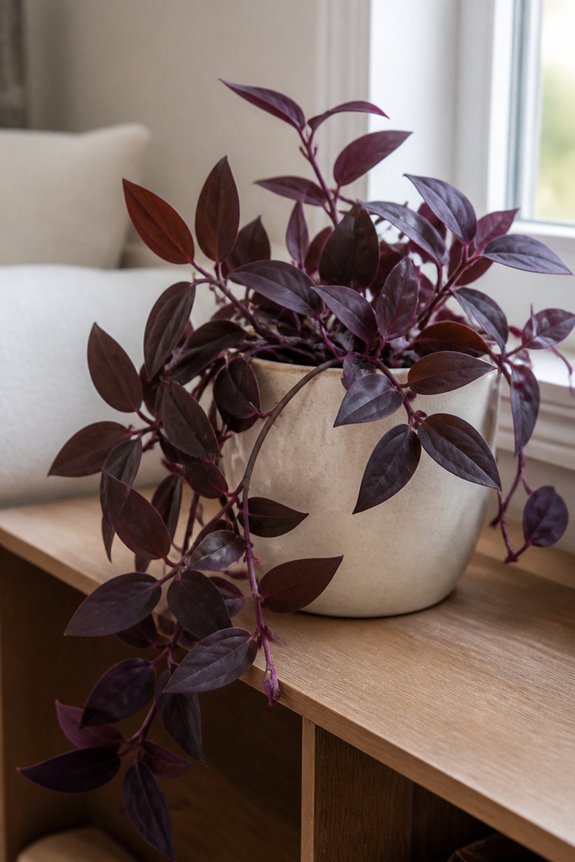
Tradescantia pallida, commonly known as purple heart or wandering Jew, stands out among houseplants for its remarkable tolerance of poor conditions. This plant requires minimal water, indirect light, and occasional pruning.
It grows in various soil types and adapts to different temperatures. Brown or purple foliage develops under stress, adding visual interest without demanding special care or attention from owners.
Philodendron Micans: Copper-Bronze Foliage for Low-Light Spaces
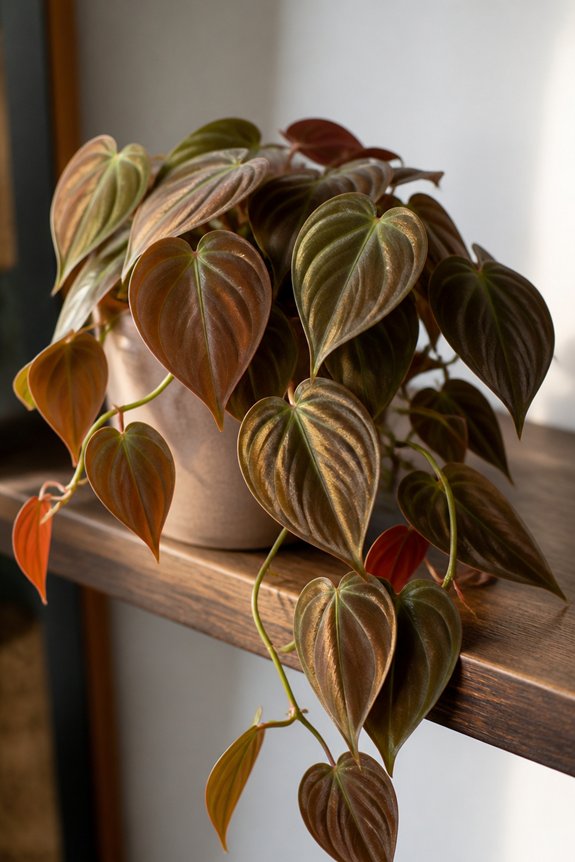
While many houseplants struggle in dim environments, Philodendron micans thrives in low-light conditions, making it suitable for offices, bathrooms, and interior rooms without windows. The plant displays copper-bronze foliage that shifts in appearance depending on light exposure.
It requires minimal watering, infrequent fertilizing, and tolerates irregular care schedules. Trailing growth patterns make it ideal for hanging baskets or shelves in spaces with limited natural light.
Peperomia Rosso: Compact Brown-Red Leaves for Tight Apartments
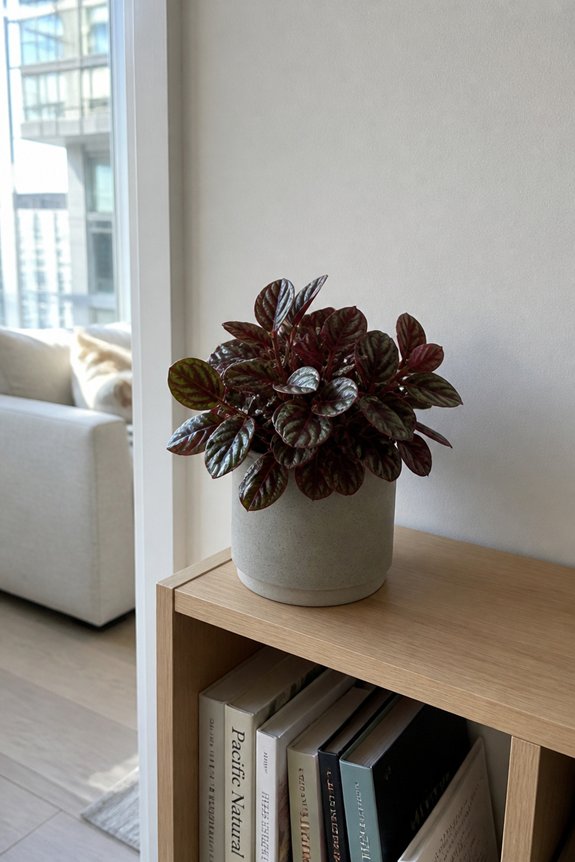
For apartment dwellers with limited floor space, Peperomia rosso offers a compact alternative to larger trailing plants like the philodendron micans. This plant features deep red and brown leaves, reaching only 12 inches tall.
It tolerates low to moderate light, requires water when soil feels dry, and grows slowly, making it suitable for shelves and desks without frequent maintenance.
Hoya Pubicalyx: Burgundy Leaves That Store Water
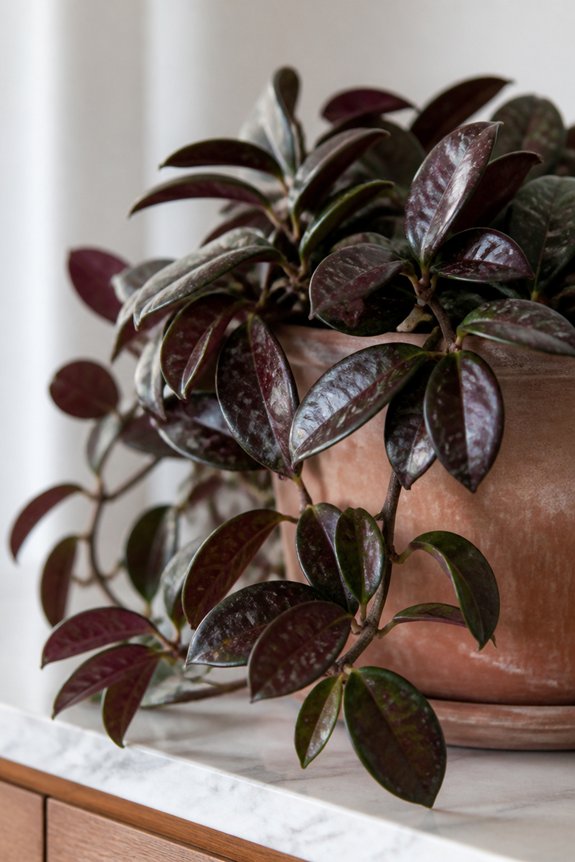
Many gardeners appreciate Hoya pubicalyx for its thick, waxy burgundy leaves that serve a practical purpose: water storage. This succulent plant tolerates irregular watering and low light conditions, making it suitable for various indoor environments.
The trailing vines produce small, fragrant flowers. Hoya pubicalyx requires well-draining soil and minimal fertilizer, reducing maintenance demands for busy plant owners.
Syngonium Bronze: Russet Tones Throughout Every Growth Stage
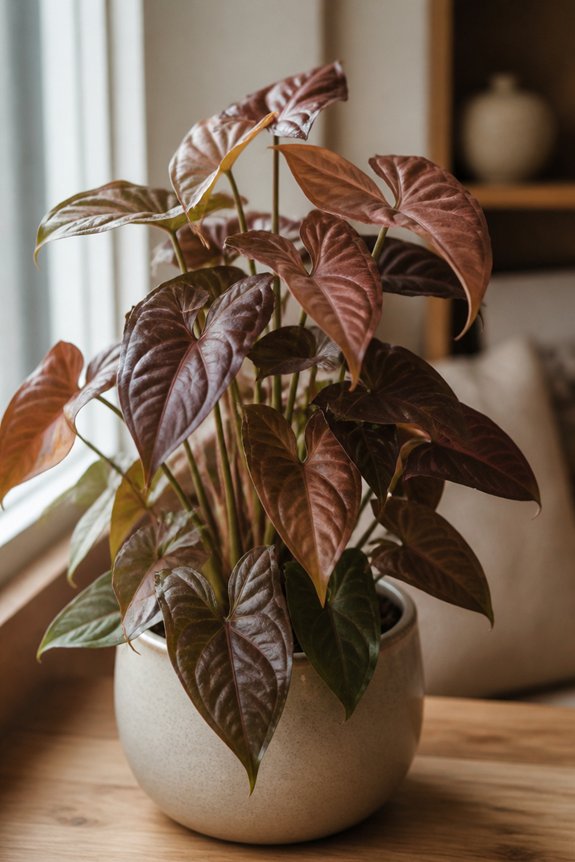
Syngonium Bronze displays russet and burgundy tones that remain consistent from new growth through maturity. This plant tolerates low to moderate light and irregular watering.
The vining stems grow well on poles or trellises. Bronze varieties adapt to average indoor humidity and temperatures, requiring minimal fertilizer during growing seasons.
Calathea Orbifolia: Silvery Leaves With Subtle Brown Backs
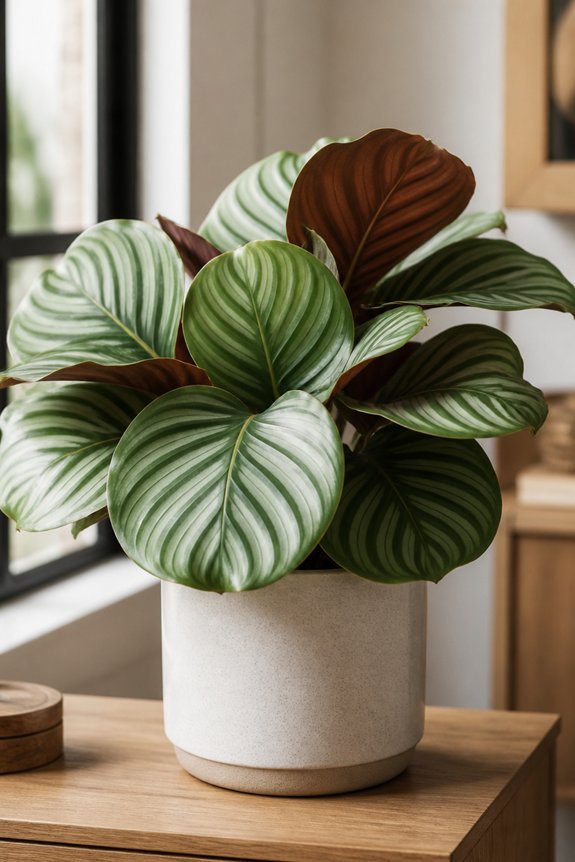
Calathea Orbifolia presents striking silvery-green leaves with distinctive brown undersides, creating visual contrast on each frond. This plant tolerates moderate indirect light and prefers consistent moisture without waterlogging.
It thrives in humid environments, making bathrooms suitable locations. Brown leaf edges indicate low humidity or inconsistent watering. Regular misting and well-draining soil support healthy growth with minimal intervention required.
Alocasia Frydek: Bronze Reverse for Maximum Drama
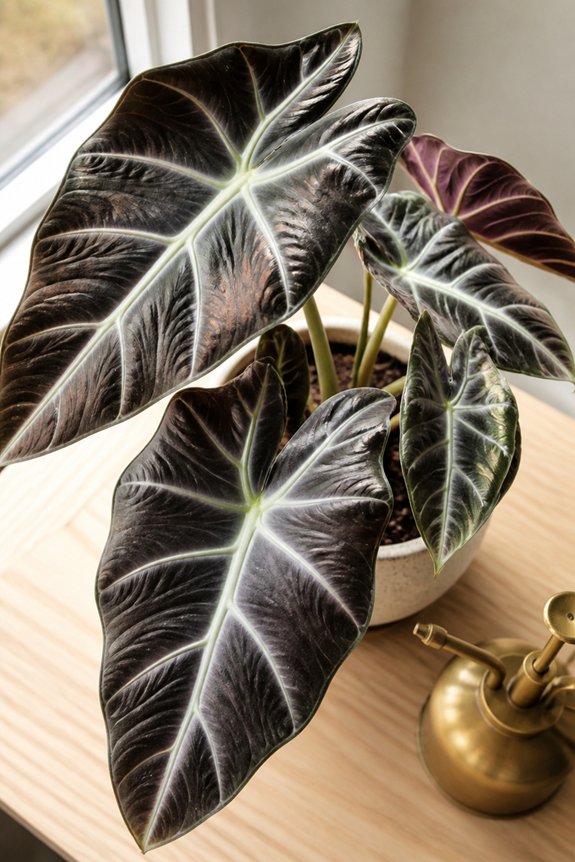
Alocasia Frydek commands attention through dramatic foliage, featuring deep green velvet leaves with striking bronze or copper-colored undersides. This plant prefers bright, indirect light and consistent moisture without waterlogging. It thrives in humid environments, making bathrooms suitable locations.
The bronze reverse becomes more pronounced under proper lighting conditions, enhancing visual interest without demanding intensive maintenance routines.
Stromanthe Sanguinea: Burgundy-Backed Brown Plant for Dry Conditions
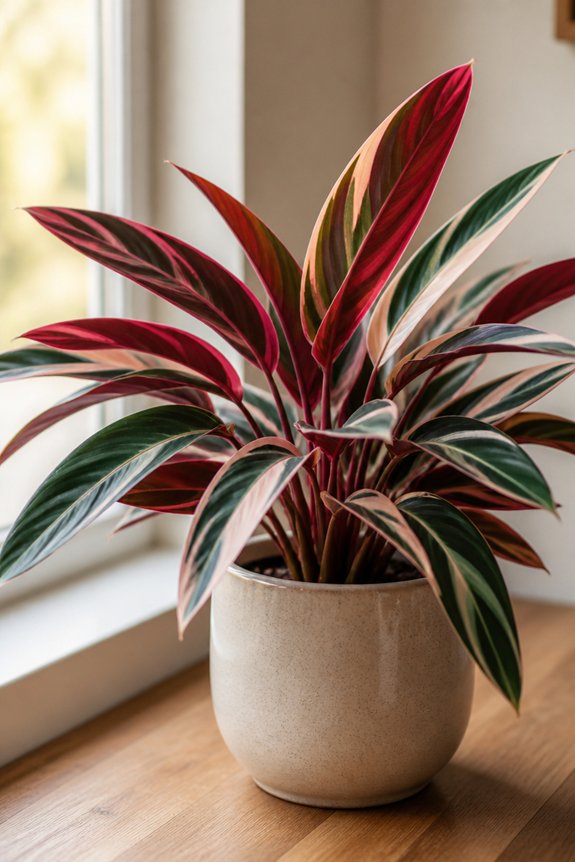
Burgundy undersides distinguish this tropical foliage plant, offering visual contrast through deep green tops and rich brown-red leaf reverses. Stromanthe sanguinea tolerates dry indoor conditions better than many houseplants, requiring moderate indirect light and occasional watering.
The plant reaches two to three feet tall indoors. Brown leaf edges indicate underwatering, while yellow leaves suggest overwatering or poor drainage.
Begonia Rex: Mahogany Patterns Without Humidity Fussing
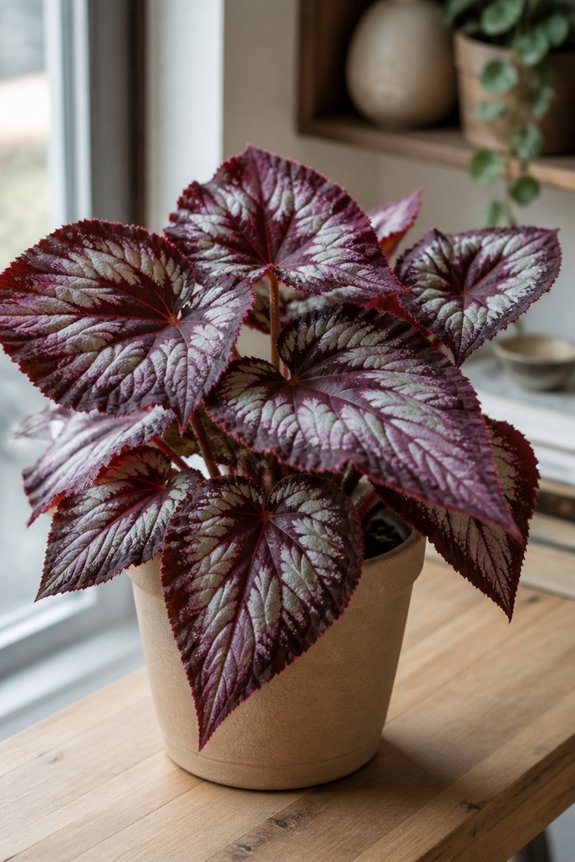
How does a houseplant display striking mahogany and silver patterns while thriving in average indoor humidity? Begonia Rex accomplishes this through its distinctive foliage, which features deep burgundy undersides and metallic markings on upper leaves.
The plant prefers bright, indirect light and consistently moist, well-draining soil. It tolerates typical household conditions without demanding supplemental humidity, making it practical for standard indoor environments.
Scindapsus Exotica: Silver-Flecked Brown Leaves for Trailing Display
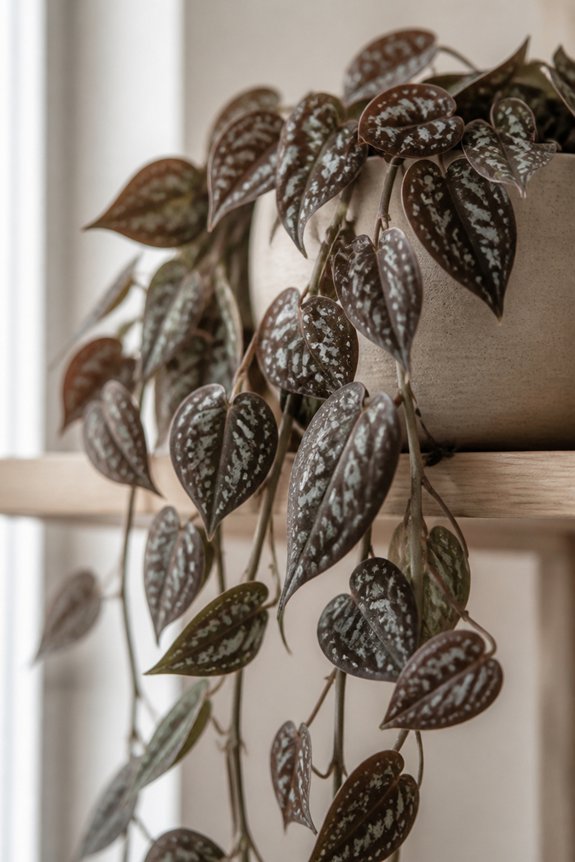
Scindapsus Exotica presents an alternative to traditional upright houseplants through its trailing growth habit and distinctive leaf coloring. The plant features silver-flecked brown leaves, creating visual interest as it cascades from shelves or hanging containers.
It tolerates low to moderate light conditions and requires minimal watering. Soil should dry between waterings, preventing root rot issues common in overwatered specimens.
Anthurium Clarinervium: Burgundy Veins on Deep Foliage
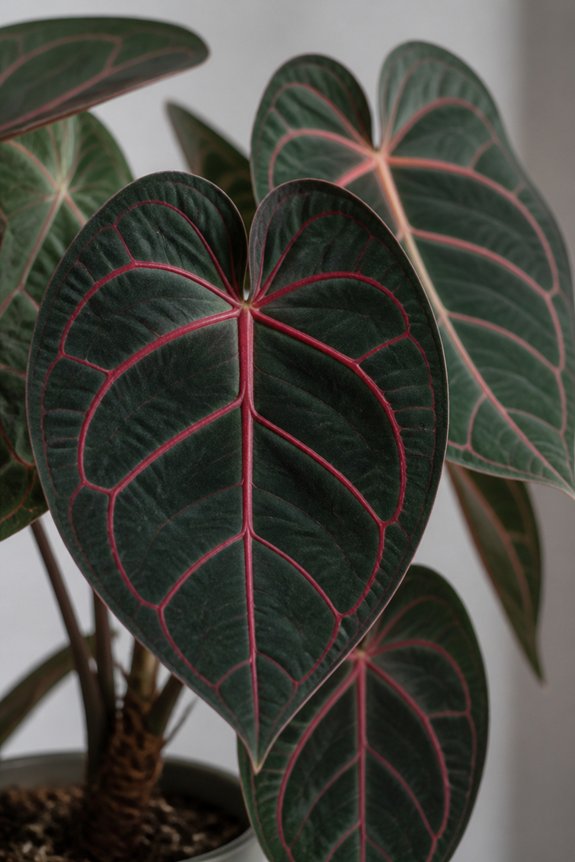
Anthurium Clarinervium stands out among brown-foliaged houseplants due to its deep, velvety leaves marked by striking burgundy veins. This plant prefers bright, indirect light and consistent moisture without waterlogging.
It thrives in humid environments, making bathrooms or kitchens suitable locations. The burgundy vein pattern remains most visible under proper lighting conditions. Regular misting and well-draining soil support healthy growth and leaf development.
Fittonia Verschaffeltii: Brown-Veined Beauty Tougher Than Expected
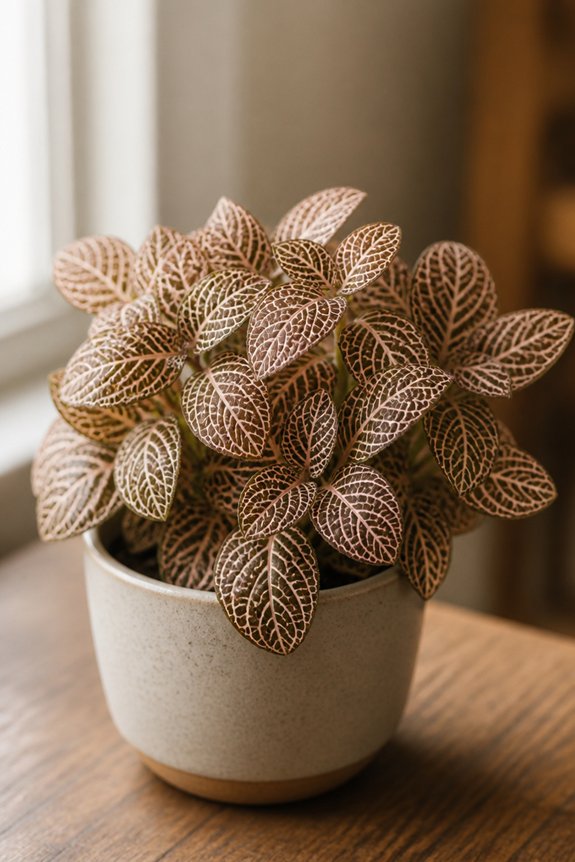
Despite its delicate appearance, Fittonia Verschaffeltii proves more resilient than many gardeners expect. The plant features intricate brown or red veins against green leaves, creating visual interest indoors. It prefers bright, indirect light and consistently moist soil.
Brown leaf edges indicate underwatering. Fittonias recover quickly from neglect, making them suitable for casual plant owners seeking low-maintenance brown-toned foliage.
Frequently Asked Questions
How Often Should I Water Brown Plants, and What Signs Indicate Overwatering?
Brown plants typically require watering when soil feels dry to the touch, usually every 7-10 days. Overwatering signs include yellowing leaves, soft stems, and mold growth. These plants thrive in slightly drier conditions than green varieties.
Can These Brown Plants Tolerate Direct Sunlight, or Do They Prefer Indirect Light?
One might assume brown plants thrive in shadowy corners, yet most actually tolerate direct sunlight quite well. They prefer bright, indirect light conditions, though many varieties adapt to partial shade. Direct sun exposure should remain moderate to prevent leaf damage.
What Is the Ideal Temperature Range for Growing These Brown-Foliaged Varieties Indoors?
Most brown-foliaged varieties thrive in temperatures between 65-75°F (18-24°C). They prefer consistent conditions away from cold drafts and heat sources. Nighttime temperatures should remain above 55°F to prevent stress and guarantee healthy growth.
How Do I Propagate These Brown Plants to Expand My Collection Affordably?
Why wouldn’t someone want to multiply their brown-foliaged plants inexpensively? One can propagate through stem cuttings placed in moist soil, leaf cuttings for certain varieties, or division during repotting. These methods require minimal equipment, making affordable collection expansion entirely achievable.
Are Any of These Brown Plants Toxic to Pets Like Cats or Dogs?
Most brown-foliaged plants are non-toxic to cats and dogs. However, specific toxicity varies by species. Pet owners should verify individual plant varieties with veterinary resources before bringing them home to confirm household safety.
Conclusion
Brown plants offer visual variety, requiring minimal maintenance, care, and attention from owners. These varieties, including Tradescantia Pallida, Hoya Pubicalyx, and Begonia Rex, adapt well to different lighting conditions, spaces, and household environments. Why wait to add these resilient options to indoor areas? Selecting brown plants provides an accessible way to enhance décor while managing plant care responsibilities effectively, making them practical choices for beginners and experienced gardeners alike.