

Coffee grounds and jade plants have a relationship that requires some careful thought. These succulents actually prefer slightly acidic to neutral soil, so a little acidity isn’t automatically harmful. The real concerns center on moisture retention and concentration of nutrients.
Fresh grounds cling to water far too aggressively for drought-loving jade plants. Soggy soil around those thick, water-storing roots invites fungal problems and rot that can quickly kill your plant. Even used grounds need proper drying before any consideration of use.
Some gardeners work with composted grounds instead of fresh ones. Adding small amounts to mature compost allows the material to break down and mellow, reducing both acidity and moisture risks. This creates a gentler amendment that won’t shock sensitive roots.
The safest approach treats coffee grounds as an occasional supplement rather than routine care. Mixing thoroughly dried, used grounds into potting soil at a ratio of one part grounds to four parts soil offers a conservative starting point.
Watching your plant closely afterward helps spot any signs of distress before damage becomes severe.
Can You Use Coffee Grounds on Jade Plants?
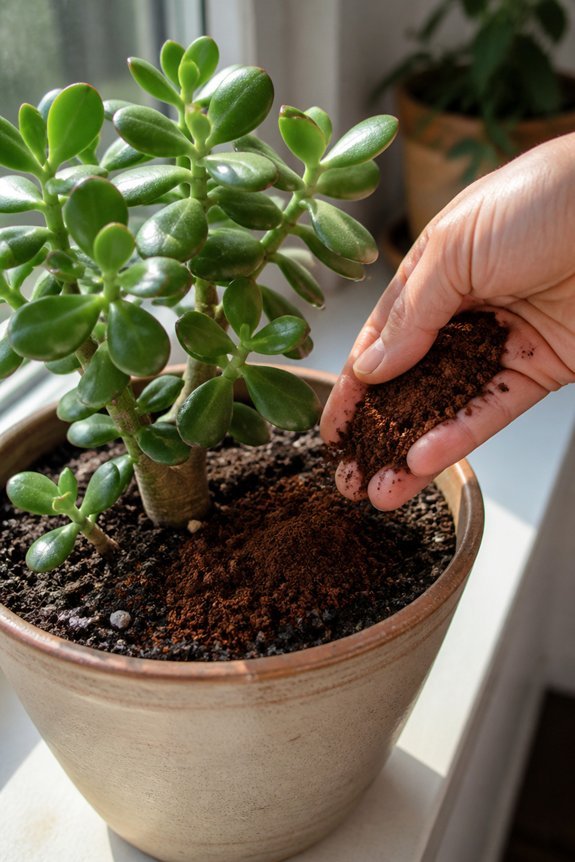
Coffee grounds can work for jade plants, but only if you use them right. The method matters. Try mixing them into potting soil, adding them to compost, or sprinkling small amounts around the base.
Your jade needs nitrogen, potassium, and magnesium. Coffee grounds have all three. Too much of a good thing causes trouble, though.
Fresh grounds are acidic. Jade plants like neutral to slightly alkaline soil, so acidic conditions stress them out. Moldy grounds bring fungal problems you don’t want.
Stick to dried, cooled grounds. Mix a small handful into soil when you repot. Jades are light feeders, so once monthly during growing season is plenty. This keeps nutrients balanced and your plant happy.
Also read: Why Is My Indoor Plant Soil Not Drying
Why Coffee Grounds Backfire With Succulents
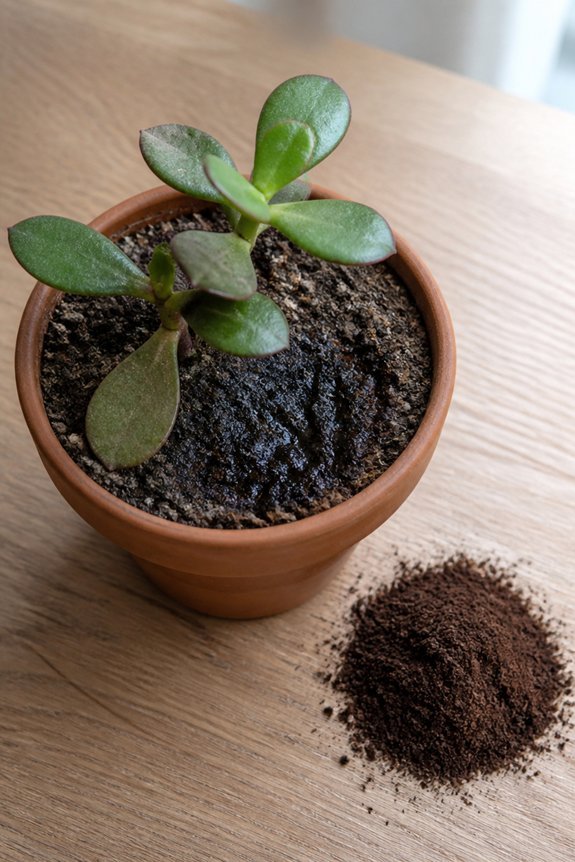
Succulents store water in their leaves and stems. They need soil that drains fast and stays fairly dry between waterings.
Coffee grounds hold onto moisture. That creates real problems for jade plants and their relatives. The grounds pack down over time. Your soil stops draining well, and root rot becomes much more likely.
There’s another issue too. Coffee grounds slowly make soil more acidic as they break down. Jade plants like neutral to slightly acidic soil, around 6.0 to 6.5 pH. Too much acidity blocks nutrient uptake, especially calcium and magnesium.
Coffee grounds also bring tannins and other organic compounds into the mix. These can actually slow root growth. For jades specifically, that extra moisture alone rules coffee grounds out entirely.
Stick with standard cactus or succulent mixes instead. They give you proper drainage without any of these headaches.
The Nitrogen Boost: What Coffee Grounds Actually Offer
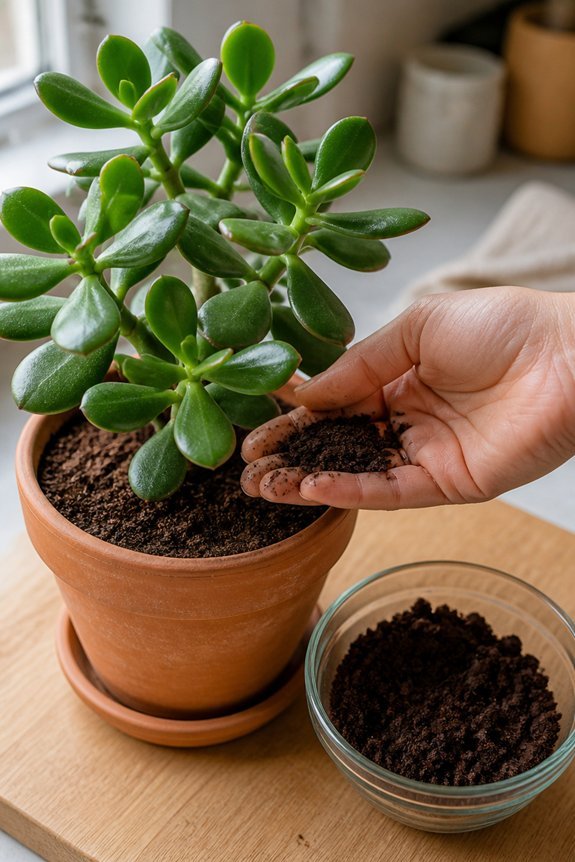
Coffee grounds do bring something valuable to the table: nitrogen. This nutrient fuels healthy leaves and strong stems. It also helps build chlorophyll, which keeps foliage green and powers photosynthesis.
As grounds break down, they release nitrogen slowly. Think of it as a time-release vitamin for your soil.
Still, let’s keep expectations realistic. Coffee grounds contain only 2-3% nitrogen by weight. They complement your fertilizing routine, not replace it. Tomatoes, roses, and annuals respond well to this gentle boost. Succulents? Not so much.
For jade plants specifically, the trade-off doesn’t work in your favor. Any nitrogen you gain gets cancelled out by acidity and excess moisture. Your jade prefers things drier and more neutral.
What Coffee Grounds Do to Your Soil
Coffee grounds change your soil in three key ways. They bump up acidity, lock in moisture, and wake up microbes.
The pH drops as grounds break down. Jade plants actually like slightly acidic soil, so this works in your favor. But here’s the catch. Grounds hold water like a sponge, and jade plants hate wet feet. Too much moisture rots their roots.
Bacteria and fungi love fresh organic matter. They multiply fast when coffee grounds arrive. These tiny helpers unlock nutrients so roots can absorb them. Your jade gets a meal of carbon and nitrogen without harsh chemicals.
Use a light hand with application. Mix a thin layer into just the top inch of soil. This keeps things dry enough for your plant. Never pile grounds against the stems or roots. Concentrated spots can burn and harm your jade.
Safe Methods: Composting vs. Direct Application
You’ve got two solid options here. Composting is the safer bet. It takes time, sure. But those grounds break down into stable nutrients over weeks or months. Acidity drops. Salt buildup becomes a non-issue around the roots.
Direct application is quicker but trickier. Sprinkle grounds on soil and you risk compaction. Water might not soak in. The soil can turn too acidic. And too much nitrogen? That burns delicate roots easily.
Mix grounds with leaves, grass clippings, and kitchen scraps instead. This dilutes their strength. Once fully broken down, blend that compost into your potting soil. For jade plants, add it during repotting every two to three years. Simple and effective.
Is Your Jade Plant Suffering? How to Tell
Start by checking the leaves. Yellow or brown patches usually mean trouble. The culprit is often too much water, blocked drainage, or hungry soil.
Wilting tells its own story. It might come from drowning roots or thirsty ones. Soft, mushy roots scream rot. That one needs fast action.
Leaves falling off? Your plant felt a temperature shock or got unreliable waterings. Slow growth and pale leaves hint at dim light or tired soil. Those brown spots could be fungi or tiny invaders.
Watch coffee grounds around jade plants. Used wrong, they spike acidity or clog drainage holes. Peek at your plant weekly. Leaves, stems, soil surface. Catch issues while fixes still work.
Better Fertilizer Alternatives for Jade Plants
Start by checking your soil. Healthy jade plants need the right foundation before you feed them.
Balanced fertilizers work best. Look for 10-10-10 formulas with equal nitrogen, phosphorus, and potassium. Apply them during spring and summer only.
Succulent-specific options are even better. They have lower nitrogen, so your plant grows compact and strong. No lanky stems here.
Always dilute commercial products to half-strength. This simple step prevents salt buildup that jade roots hate.
Organic choices give you peace of mind. Fish emulsion and seaweed extract feed gently. Bone meal strengthens roots with phosphorus. A little compost mixed in releases nutrients slowly over time.
Feed every two weeks in warm months. Then stop completely in winter. Your jade needs that rest period.
Test your soil once in a while. Catching nutrient gaps early keeps your plant thriving for years.
Frequently Asked Questions
How Often Should I Apply Coffee Grounds to My Jade Plant for Best Results?
Coffee grounds should be applied to jade plants sparingly, approximately once every three months. They work best when mixed into soil rather than sprinkled on top. This approach provides mild nitrogen enrichment without overwhelming the plant’s delicate root system.
Can Used Coffee Grounds From Espresso Machines Be Applied Differently Than Drip Coffee?
Espresso grounds differ from drip coffee grounds in moisture content and particle size. Espresso grounds are wetter and more compact, requiring additional drying before application. Drip grounds can be applied more directly to soil around jade plants.
Will Coffee Grounds Affect the pH Level of My Jade Plant’s Potting Soil?
Coffee grounds do lower soil pH, making it more acidic. Jade plants prefer neutral to slightly acidic soil, so modest amounts won’t harm them. However, excessive application could create overly acidic conditions that stress the plant.
How Long Does It Take to See Results After Applying Coffee Grounds?
A million years could pass before dramatic transformations occur. Generally, gardeners observe subtle improvements in soil structure and nutrient availability within two to four weeks of applying coffee grounds. However, significant growth changes typically become visible after two to three months.
Can I Mix Coffee Grounds With Other Organic Materials for Jade Plants?
Yes, coffee grounds can be mixed with other organic materials for jade plants. Combining them with compost, peat moss, or coconut coir creates a balanced, nutrient-rich soil amendment that improves drainage and aeration while providing beneficial nutrients.
Conclusion
Jade plants benefit from coffee grounds‘ nutrients yet suffer from their acidity, creating a contradiction requiring careful handling. Fresh grounds harm soil drainage and pH balance, while composted grounds offer safer nutrient delivery. Rather than risking root rot with coffee applications, jade plants thrive better with balanced succulent fertilizers, occasional diluted liquid feeds, or well-draining potting soil amendments specifically formulated for their needs.