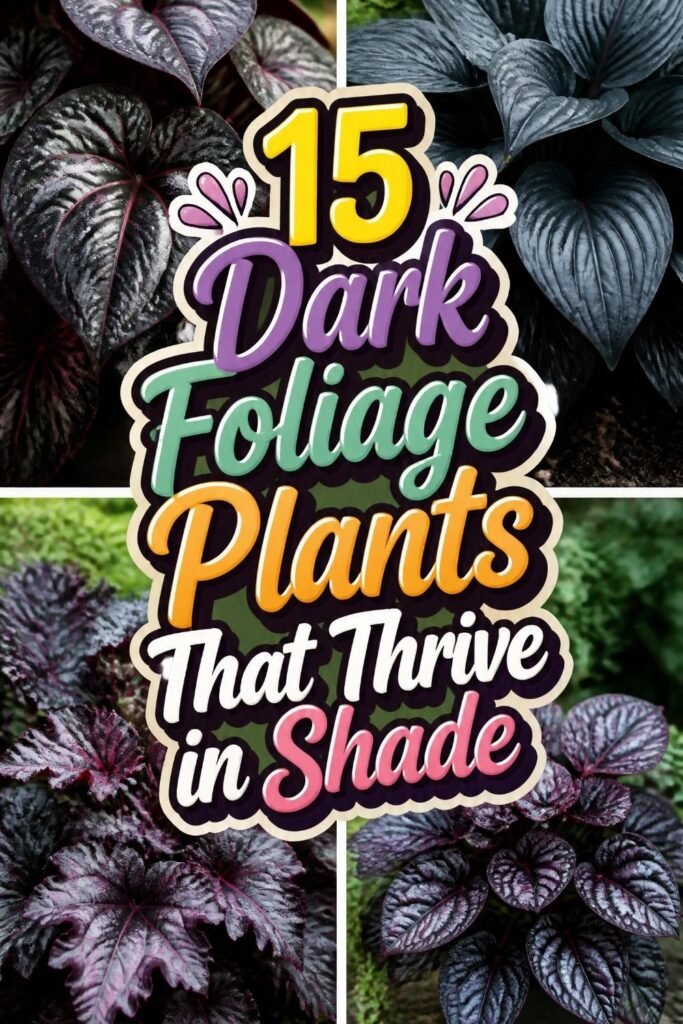
Shaded garden corners often feel like a challenge, but dark foliage plants turn that limitation into an asset. Deep burgundy and near-black leaves absorb what little light filters through, creating pockets of visual intrigue where ordinary greenery would simply fade into shadow.
Heuchera and Coral Bells deserve particular attention for their remarkable color range. Their ruffled leaves shift from chocolate brown to plum purple depending on the season, offering something worth noticing even on overcast days. Ajuga spreads reliably across difficult ground, its dark rosettes knitting together to form a living mulch that suppresses weeds and holds soil in place.
Maintenance rarely becomes burdensome with these varieties. Once established, they tolerate dry spells and compete well against encroaching weeds. A quick trim of spent flower stalks keeps them looking tidy through summer, though many gardeners leave the delicate blooms for pollinators.
The real magic emerges when you combine several dark-leaved species in one area. Pairing the upright habit of Heuchera with Ajuga’s creeping form creates layers of texture and depth.
Silver or chartreuse accents from shade-tolerant companions can punctuate these darker tones, though restraint matters—too much contrast and the moody atmosphere dissolves entirely.
Heuchera: Deep Burgundy Leaves Year-Round
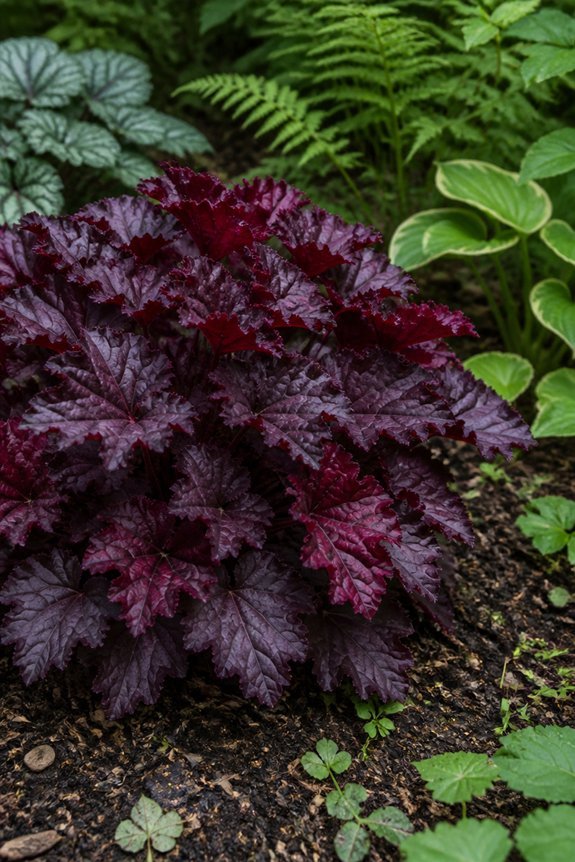
Because heuchera plants retain their dark coloring throughout the year, they serve as reliable foliage anchors in shaded garden spaces. Varieties like Palace Purple and Obsidian display deep burgundy to nearly black leaves. These perennials reach twelve to eighteen inches tall, prefer moist soil, and require minimal maintenance. They pair well with hostas and ferns in woodland gardens.
Ajuga Reptans: Spreading Ground Cover With Dark Purple Foliage
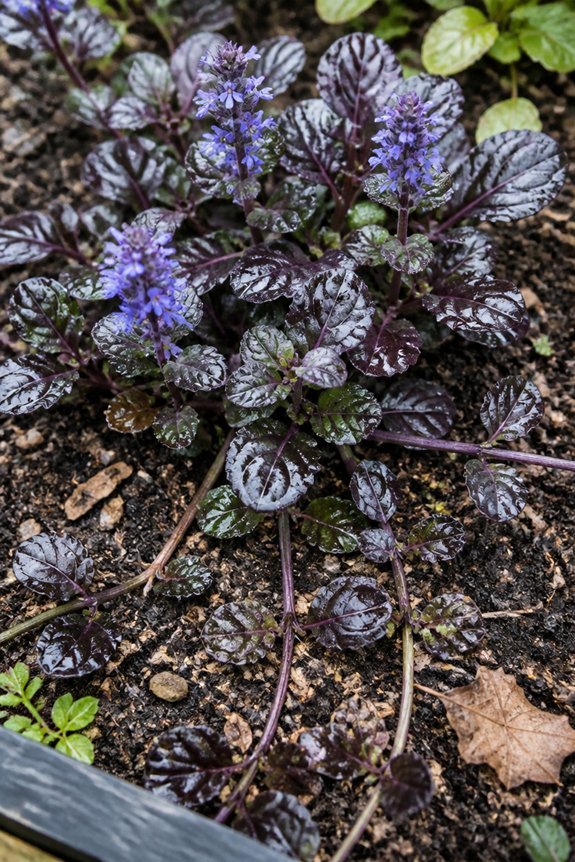
Ajuga reptans spreads across shaded ground as a low-growing ground cover, typically reaching four to twelve inches in height. Its dark purple foliage provides year-round visual interest in woodland gardens and beneath trees. The plant produces blue or purple flower spikes during spring months.
Ajuga reptans tolerates poor soil conditions, requires minimal maintenance, and spreads readily through runners, making it suitable for erosion control on slopes.
Coral Bells: Nearly Black Varieties for Maximum Drama
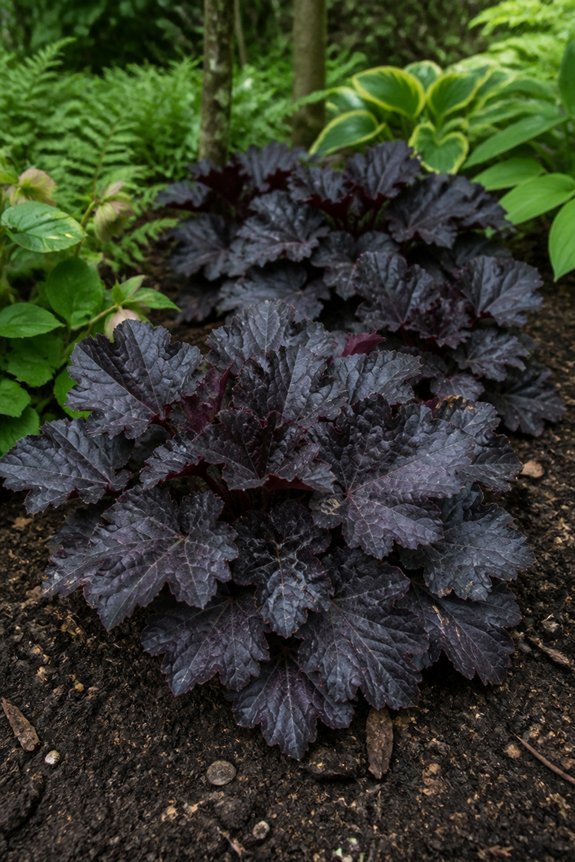
Several coral bell cultivars display foliage so dark it appears nearly black, creating striking visual contrast in shaded garden spaces. Popular varieties include Black Beauty, Obsidian, and Palace Purple. These plants produce small flowers on tall stems, though gardeners primarily value them for their dramatic leaf color.
Coral bells tolerate partial to full shade and prefer moist, well-draining soil.
Coleus: Shade-Loving Foliage With Burgundy and Chocolate Tones
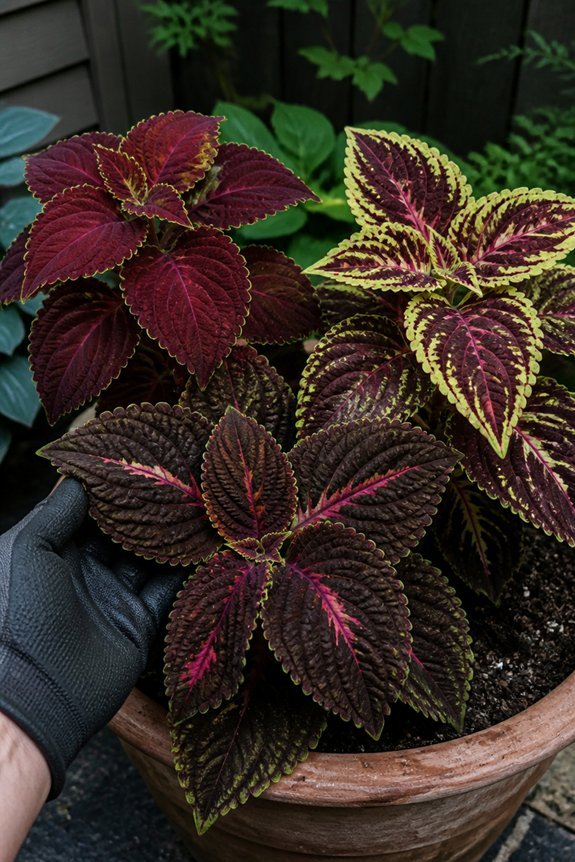
While coleus plants are commonly grown for their colorful leaves, many varieties excel in shaded environments with burgundy and chocolate tones that rival the drama of coral bells. Varieties like Burgundy Wine and Chocolate Mint display deep, rich coloring.
Coleus prefers moist soil, indirect light, and regular pinching to maintain compact growth. These plants tolerate partial to full shade effectively.
Brunnera: Silver-Speckled Leaves Against Deep Green Backgrounds
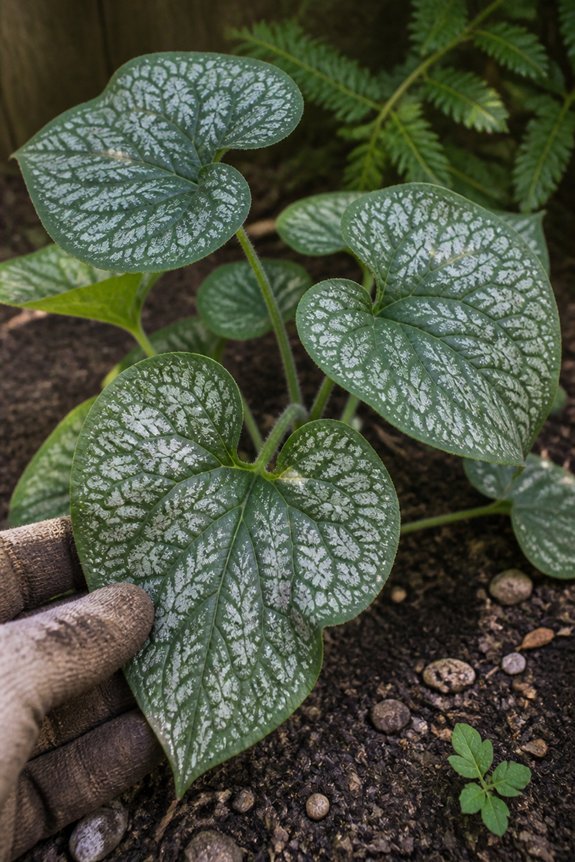
Brunnera plants display distinctive silver-speckled leaves set against deep green backgrounds, creating a striking contrast in shaded garden spaces. These perennials thrive in partial shade with consistent moisture. The variegated foliage remains visible throughout growing seasons.
Brunnera macrophylla Jack Frost and Silver Heart varieties showcase particularly prominent silver markings. Plants reach 12-18 inches tall, offering textural interest in woodland gardens and shaded borders.
Astilbe: Fern-Like Dark Foliage With Delicate Plumes
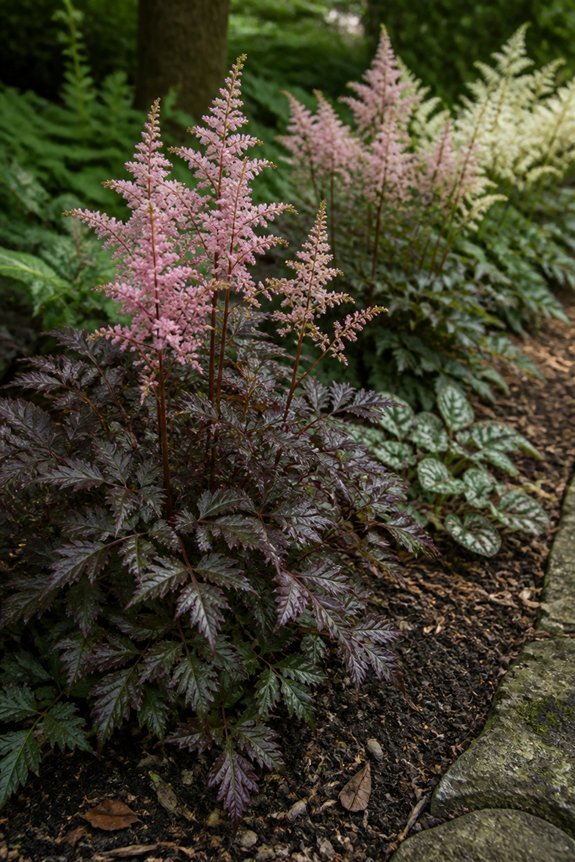
Astilbe plants offer another compelling option for shade gardens, featuring fern-like dark foliage that contrasts beautifully with delicate, feathery plumes rising above the leaves. These perennials thrive in moist, well-draining soil and partial to full shade conditions.
Popular varieties include Deutschland with white flowers, Fanal with red plumes, and Bridal Veil displaying pale pink blooms. Astilbe reaches heights between one and four feet, depending on the cultivar selected.
Liriope: Dark Variegated Grassy Texture
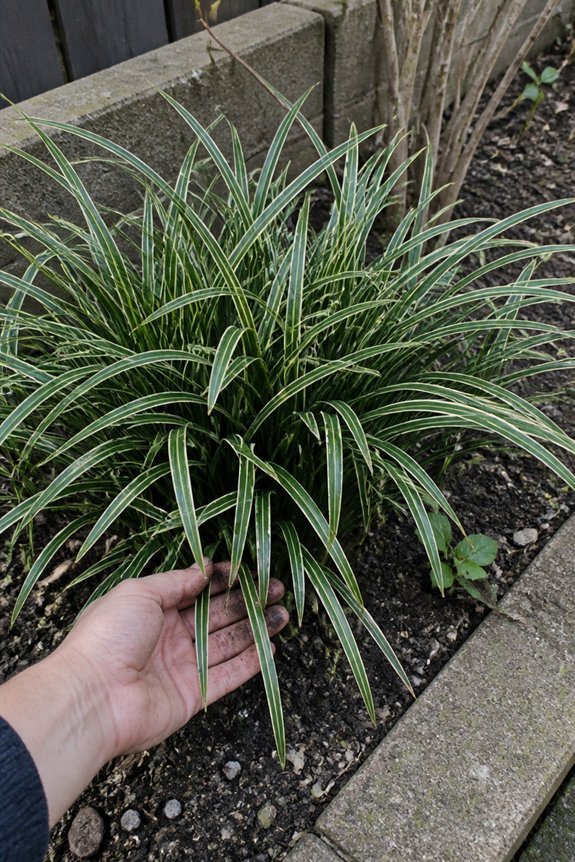
For gardeners seeking ground cover with distinctive dark foliage and textural appeal, liriope presents a practical solution for shaded areas. The plant displays dark green, variegated leaves with a grass-like appearance. Liriope tolerates poor soil conditions, requires minimal maintenance, and adapts well to woodland environments.
Purple flower spikes emerge in late summer, providing additional visual interest throughout the growing season.
Carex: Shade-Loving Sedges With Near-Black Leaves
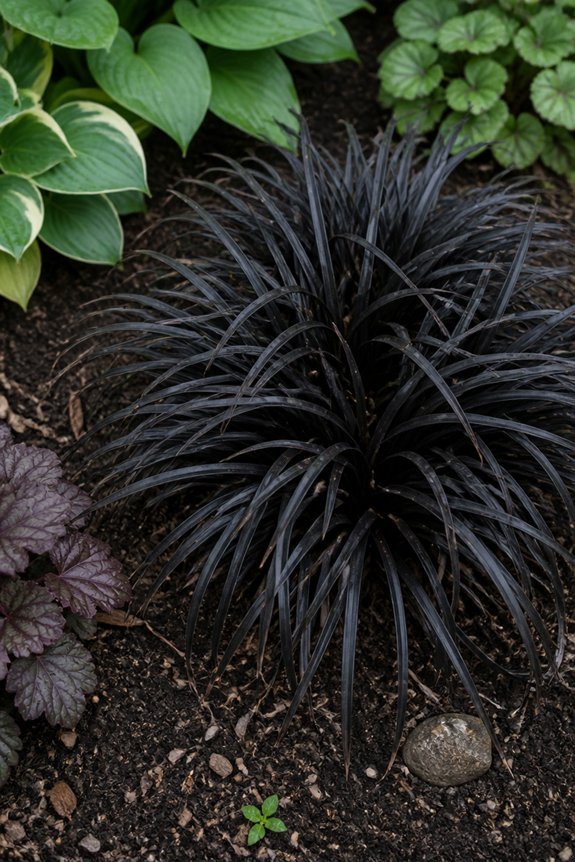
Several carex species produce exceptionally dark foliage that performs well in shaded garden spaces. Carex oshimensis and Carex phyllocephala offer near-black leaves, creating dramatic contrast in woodland gardens.
These sedges tolerate poor soil, moisture fluctuations, and deep shade. They grow slowly, requiring minimal maintenance once established. Height ranges from six to eighteen inches depending on variety and growing conditions.
Sarcococca: Glossy Dark Shrub With Fragrant Blooms
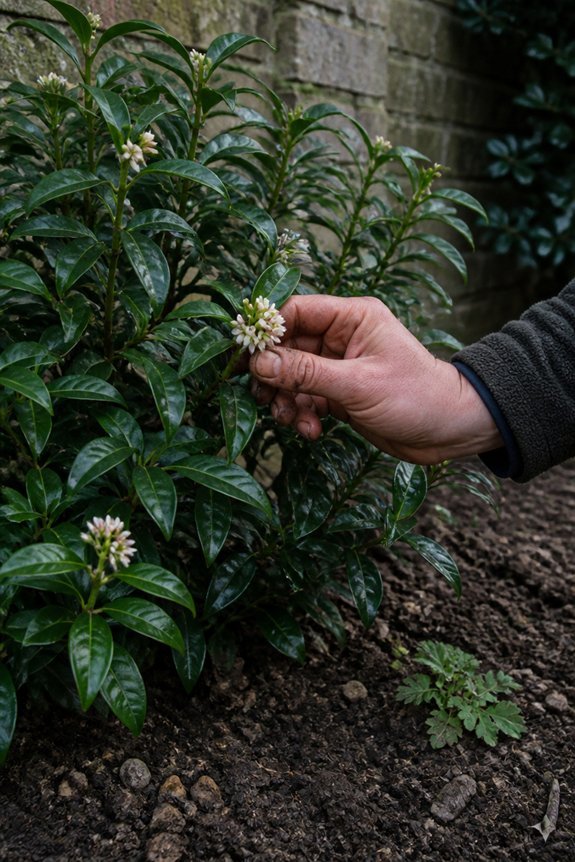
Sarcococca shrubs offer an alternative to sedges for gardeners seeking dark foliage in shaded areas. These evergreen plants display glossy, deep green leaves and produce small, fragrant white flowers in winter.
Sarcococca confusa and Sarcococca humilis are common varieties. They tolerate dense shade, require minimal pruning, and reach three to five feet tall, making them suitable for woodland gardens and shaded borders.
Fatsia Japonica: Bold Dramatic Foliage
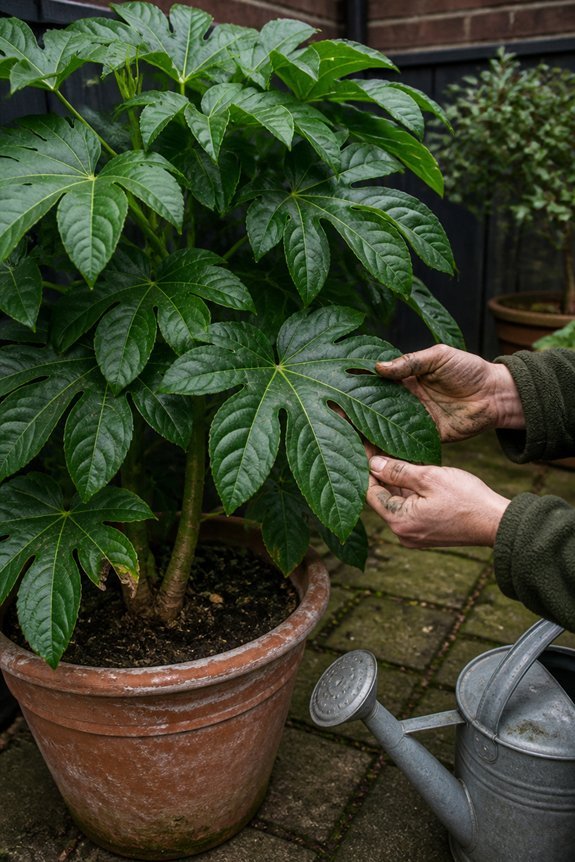
While sarcococca provides refined, glossy leaves in shade, Fatsia japonica delivers bolder visual impact through its large, deeply lobed foliage. This evergreen shrub produces hand-shaped leaves reaching twelve inches across, creating dramatic architectural interest.
Fatsia japonica tolerates partial to full shade and prefers moist, well-draining soil. It reaches six to eight feet tall, making it suitable for specimen planting or screening purposes in shaded garden areas.
Helleborus: Winter Bloomers With Dark Leathery Foliage
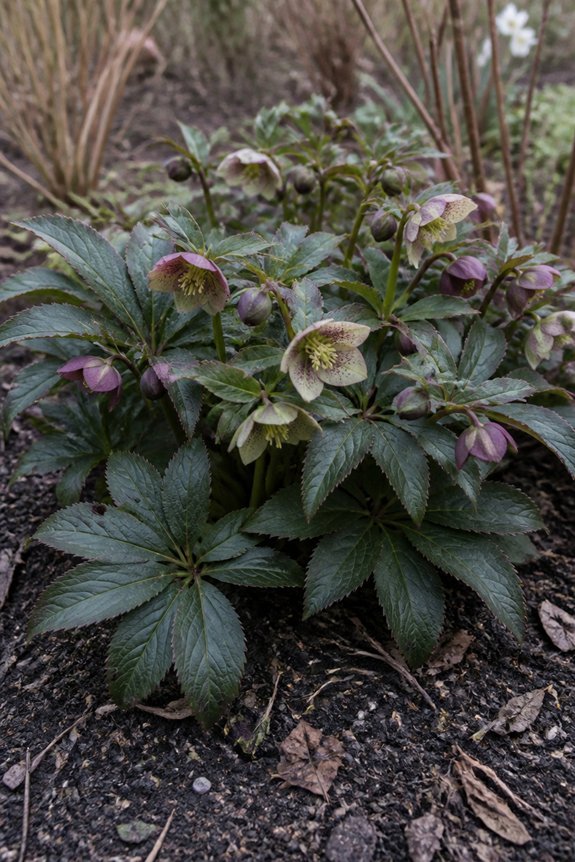
Helleborus plants offer reliable dark foliage and winter flowers in deeply shaded garden spaces. These perennials display leathery, evergreen leaves in deep green or purple tones.
Helleborus niger, or Christmas rose, produces white blooms during cold months. Helleborus argutifolius features lighter green foliage with nodding flower clusters. Both varieties tolerate poor soil and dense shade, requiring minimal maintenance once established in appropriate growing conditions.
Tiarella: Burgundy-Veined Foamy Bells for Moist Shade
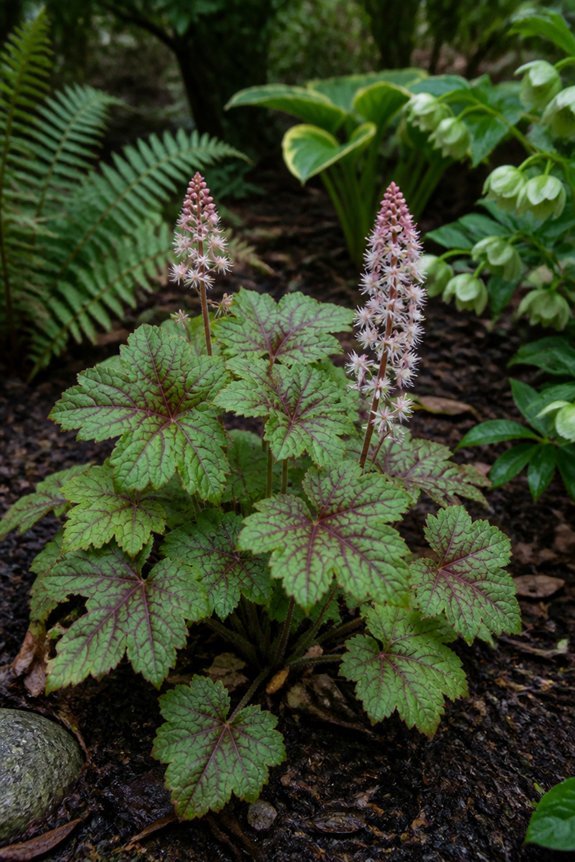
Elegance defines Tiarella plants, which display distinctive burgundy-veined foliage and produce delicate flower clusters in shaded, moist garden areas. These low-growing perennials reach 6-12 inches tall, spreading gradually across woodland settings.
Tiarella polyphylla and Tiarella cordifolia varieties perform well in consistently moist soil with organic matter. They require minimal maintenance once established and tolerate dense shade effectively. Like other shade-tolerant perennials, they adapt well to low-light conditions with proper moisture management.
Ophiopogon: Nearly-Black Grasslike Leaves
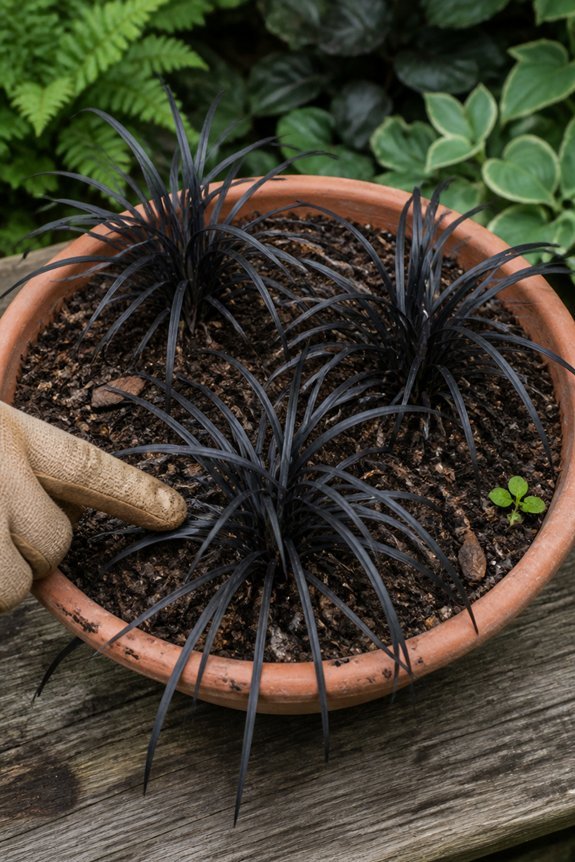
Many gardeners select Ophiopogon plants for their striking, deep purple-to-black foliage that creates dramatic contrast in shaded spaces. These grasslike perennials grow slowly, reaching 12 inches tall, and spread through underground runners.
Ophiopogon planiscapus ‘Nigrescens’ displays the darkest leaves available. The plants tolerate poor soil and dry conditions once established, requiring minimal maintenance in woodland settings or shaded borders.
Disporum: Japanese Native With Deep Green Arching Stems
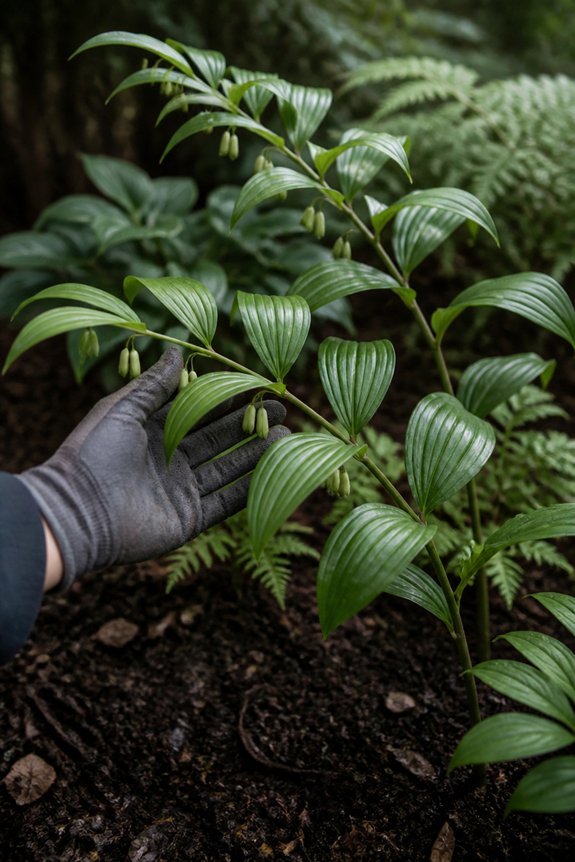
Disporum offers gardeners another option for deep-colored foliage in shaded areas, though with a different growth habit than Ophiopogon. This Japanese native produces arching stems with deep green leaves, creating an elegant, layered appearance.
Disporum thrives in moist, well-draining soil beneath trees or in woodland settings. The plant reaches two to three feet tall, making it suitable for mid-level border positioning in shade gardens.
Combining Dark Foliage Plants for Maximum Visual Impact
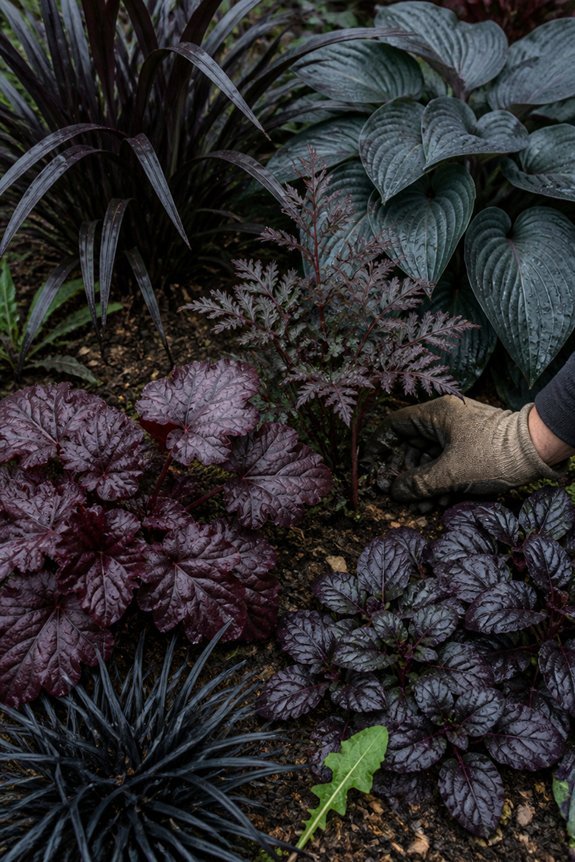
When layering multiple dark-foliaged plants together, gardeners can create depth and visual interest in shaded spaces. Combining Disporum with hostas, ferns, and heuchera produces varied textures and heights. Darker varieties like Black Beauty heuchera contrast with lighter green ferns.
Spacing plants at different levels, front to back, enhances the layered effect. This approach maximizes visual complexity in limited light conditions.
Frequently Asked Questions
How Often Should I Water Dark Foliage Plants in Shaded Garden Areas?
Dark foliage plants in shaded areas typically require watering once or twice weekly, depending on soil moisture and humidity levels. One should check soil regularly and water when the top inch feels dry, adjusting frequency based on rainfall and season.
What Soil pH Do Dark Foliage Plants Prefer for Optimal Growth and Color?
Dark foliage plants generally prefer slightly acidic to neutral soil, typically ranging from pH 6.0 to 7.0. This range optimizes nutrient availability and supports vibrant coloration. Some varieties tolerate pH levels between 5.5 and 7.5, though specific preferences vary by species.
Can Dark Foliage Plants Be Grown Indoors Under Artificial Lighting Conditions?
Yes, dark foliage plants can be successfully cultivated indoors under artificial lighting. They require full-spectrum LED or fluorescent lights positioned appropriately to simulate natural conditions, ensuring adequate photoperiods of twelve to sixteen hours daily for ideal growth and pigmentation maintenance.
How Do I Propagate Dark Foliage Plants for Expanding My Shade Garden?
One can propagate dark foliage plants through stem cuttings, leaf cuttings, or division. Stem cuttings root readily in moist soil or water. Division works best during spring growth. Layering branches encourages rooting before separation, expanding collections efficiently.
Which Dark Foliage Plants Are Toxic to Pets and Children?
Like a beautiful rose concealing thorns, several shade-loving dark foliage plants pose hidden dangers. Caladiums, philodendrons, and dieffenbachias contain calcium oxalates causing oral irritation and swelling in pets and children if ingested.
Conclusion
Dark foliage plants effectively transform shade gardens, though success depends on consistent moisture and soil quality. Heuchera, Ajuga, and Ophiopogon provide reliable color and texture year-round. Combining varieties with different leaf shapes, sizes, and burgundy, purple, or near-black tones creates visual depth. Research suggests these plants reduce maintenance while preventing erosion. Strategic placement near architectural elements maximizes dramatic impact in low-light landscapes.