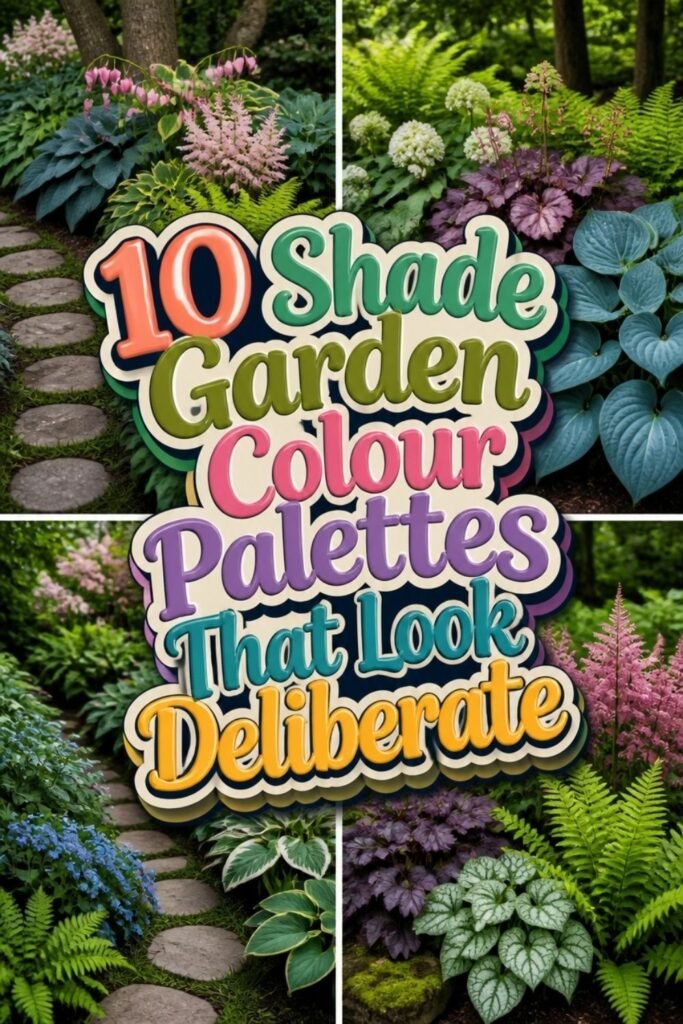
Shade gardens often get dismissed as afterthoughts, spaces where leftover plants go to survive. Yet the real challenge lies in seeing darkness as a canvas rather than a limitation. When approached with intention, these dim corners reward gardeners with some of the most sophisticated color combinations possible.
Silver foliage becomes luminous in low light, catching what little sun filters through canopy gaps. Jewel-toned blooms—deep plums, sapphire blues, and emerald greens—read richer where bright colors would simply fade. White flowers perform an almost magical function, creating focal points that seem to glow against shadowed backdrops. Variegated leaves add rhythm and texture where solid masses would flatten into visual monotony.
Ten distinct approaches emerge from understanding these interactions. Some palettes lean into cool serenity, layering blues and silvers for a moonlit effect. Others embrace contrast, pitting chartreuse against burgundy for unexpected drama in hidden corners.
Each strategy transforms the shade garden from a problem to solve into a deliberate design statement.
Jewel Tones and Deep Purples
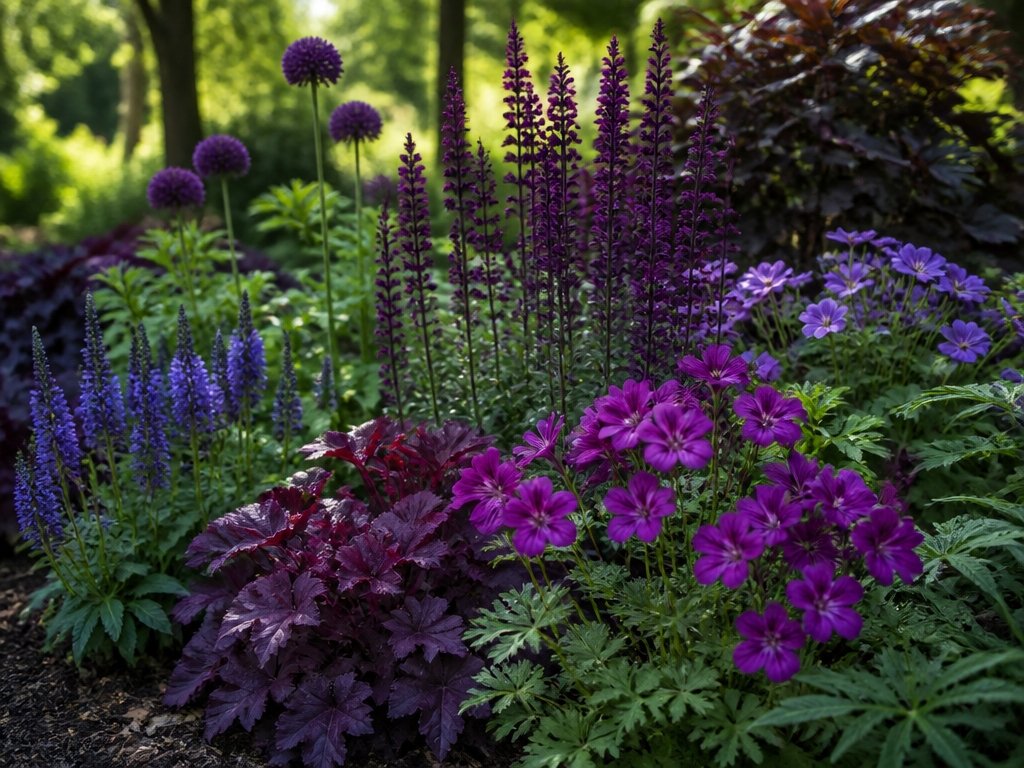
When designing a shade garden, jewel tones and deep purples create visual depth and richness without requiring direct sunlight. Hostas with purple foliage, heuchera varieties, and ajuga groundcover provide consistent color. Complementary plants include hellebores, coral bells, and liriope.
These darker hues absorb light, making spaces appear more intimate. Layering multiple purple shades prevents monotony and establishes visual interest throughout the garden.
Silver Foliage With Soft Pastels
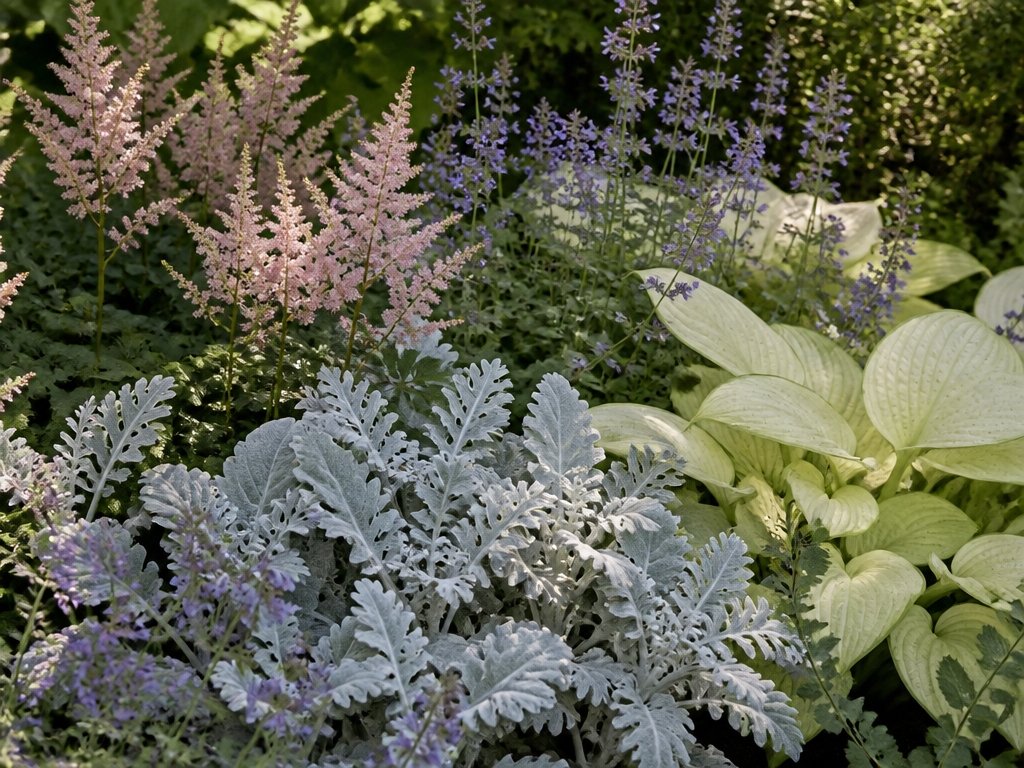
Silver foliage paired with soft pastels offers a practical solution for brightening shade gardens without relying on direct sunlight. Plants like dusty miller, artemisia, and senecio provide silvery leaves that reflect available light.
Pairing these with pale pink astilbe, lavender hostas, or cream-colored brunnera creates balanced compositions. The silver tones enhance pastel flowers, making them appear more luminous in dim conditions without harsh contrast.
White and Cream: Brightening Deep Shade
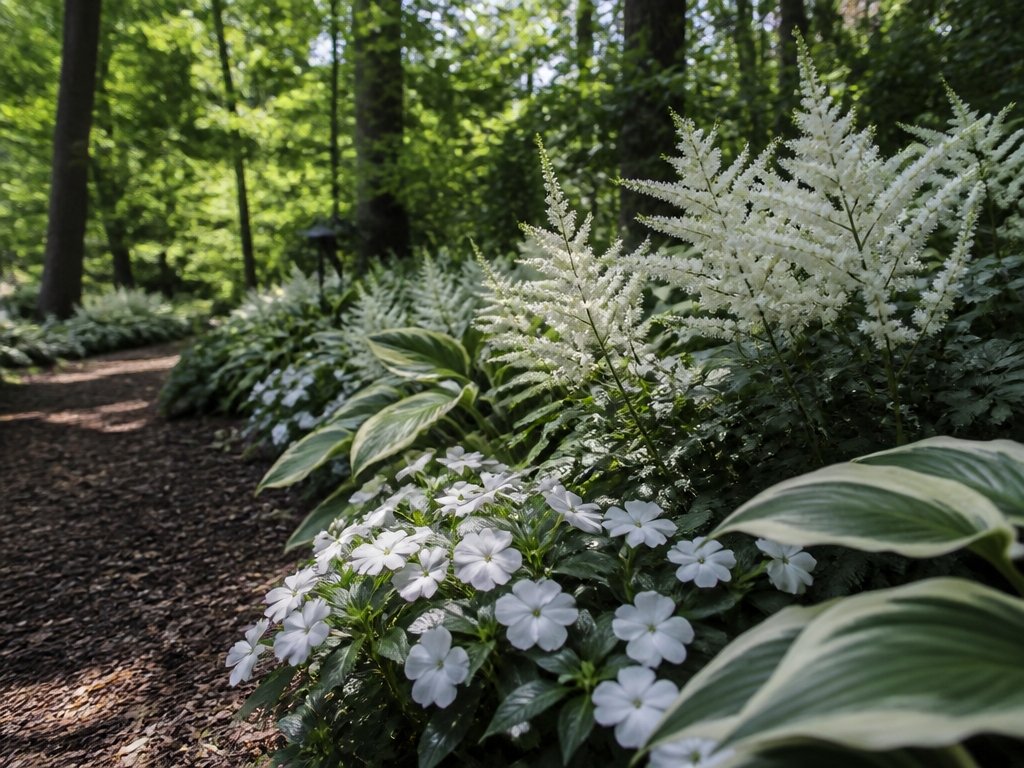
White and cream flowers serve as powerful light reflectors in shade gardens, where they capture and bounce available light more effectively than any other color. Hostas with white edges, astilbe varieties, and bleeding heart cultivars brighten dark corners. Hydrangeas and hellebores in cream tones create focal points beneath tree canopies.
These pale blooms visually expand small spaces, making shadowed areas feel more open and accessible.
Burgundy, Plum, and Chocolate Brown
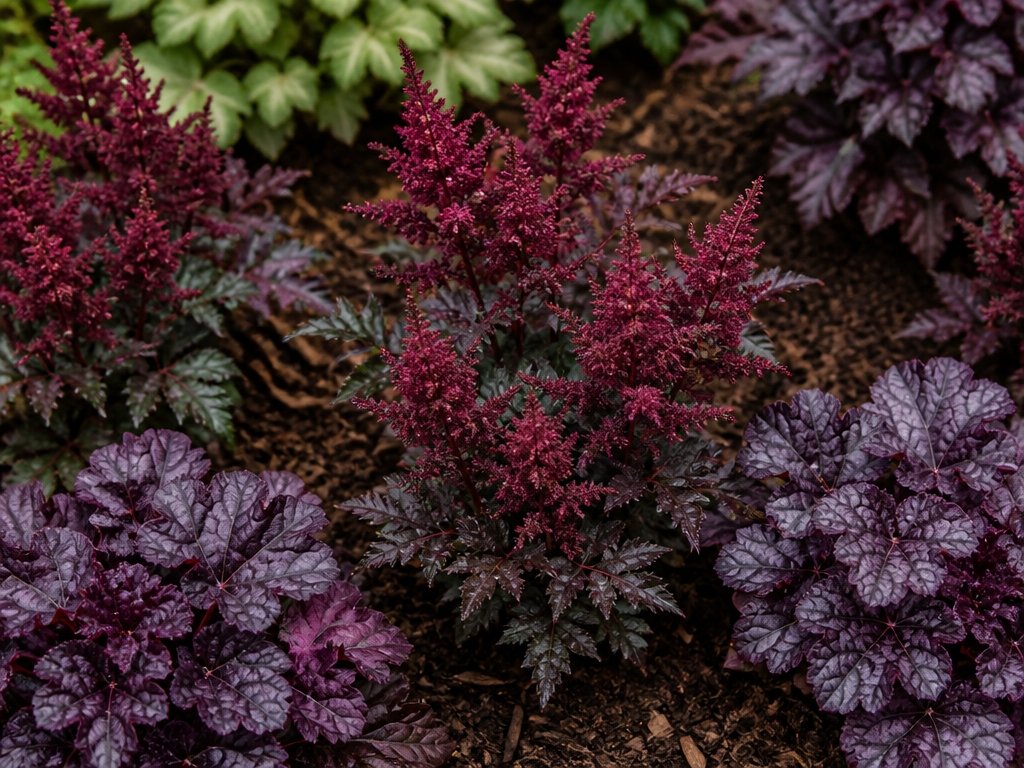
Dark jewel tones offer a practical contrast strategy for shade gardens, creating depth and visual interest where lighter palettes might feel flat. Burgundy hostas, plum heuchera, and chocolate brown sedges provide year-round structure.
These colors absorb light rather than reflect it, making foliage appear rich and defined. The combination works well with silver-leafed plants, creating balanced compositions in consistently shaded areas.
Coral and Peach With Variegated Leaves
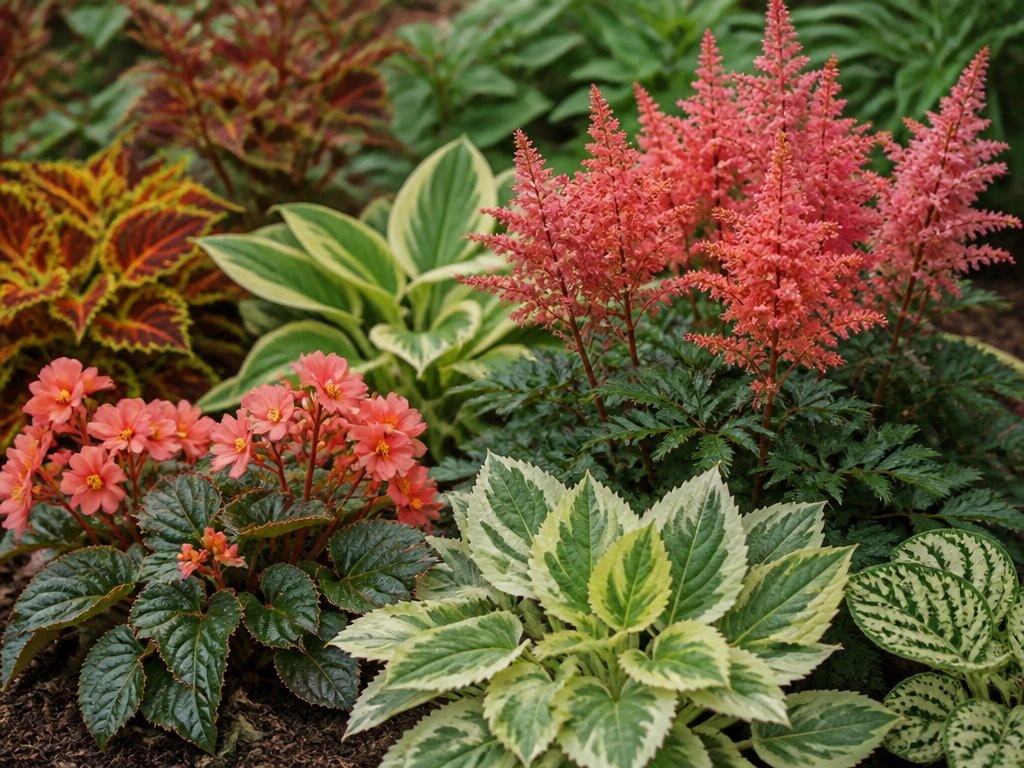
While dark jewel tones create depth through light absorption, warmer hues like coral and peach function differently in shade gardens by offering brightness without requiring full sun exposure. Variegated foliage plants, including coleus and heuchera varieties, amplify these warm colors through contrasting leaf patterns.
The combination of coral flowers with cream or gold-striped leaves creates visual interest, establishing a cohesive palette that brightens shaded areas effectively.
Blue-Gray and Dusty Pink
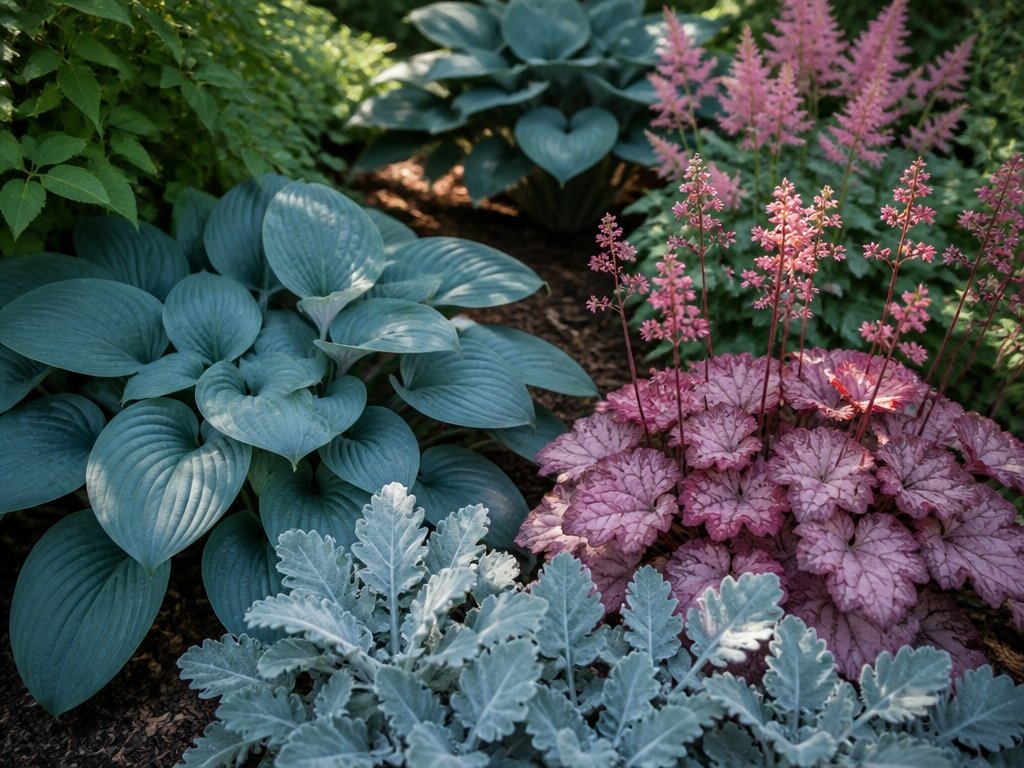
As shade deepens in garden spaces, blue-gray and dusty pink create a sophisticated, cool-toned palette that complements low-light conditions. Hostas with blue-gray foliage pair effectively with astilbe in soft pink tones. Pulmonaria varieties offer mottled blue-gray leaves alongside delicate flowers.
This combination reduces visual heaviness in shaded areas while maintaining color interest throughout seasons without excessive maintenance demands.
Black Mondo Grass With Bright Chartreuse
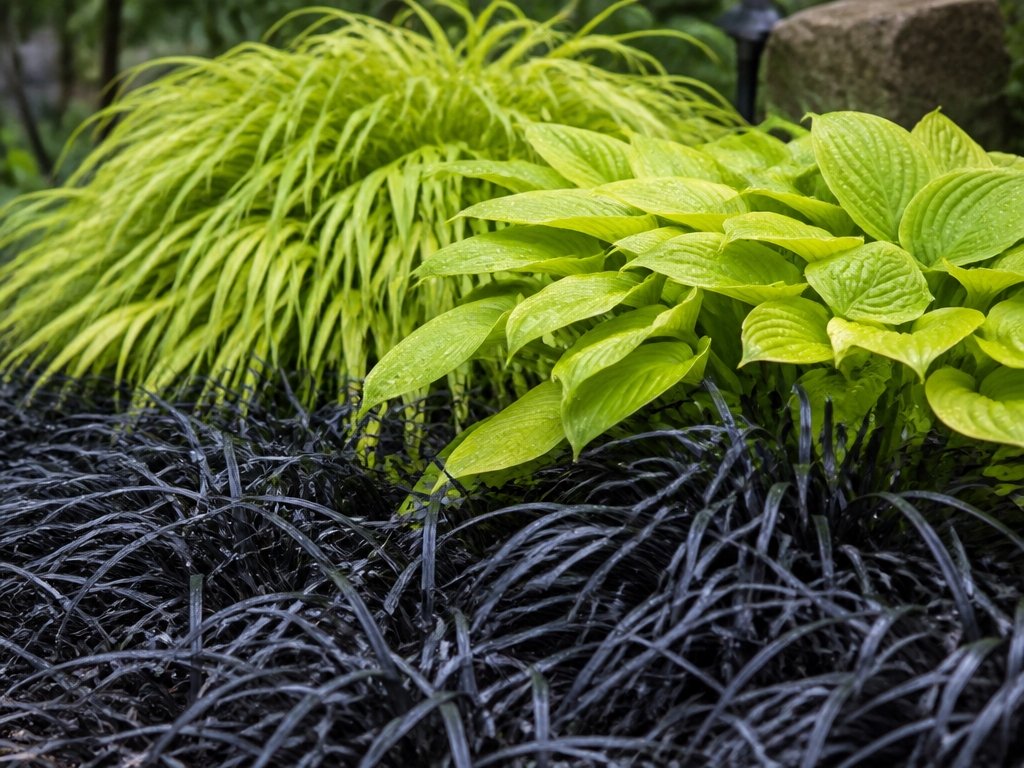
Black mondo grass paired with bright chartreuse foliage creates a high-contrast palette that energizes shaded garden spaces. The dark, nearly black grasslike blades provide visual weight and depth.
Chartreuse plants like Hosta Sum and Substance or golden Duranta offer luminous brightness against the darkness. This combination establishes clear visual separation, making small shade gardens appear larger and more intentionally designed.
Gold and Blue Hostas
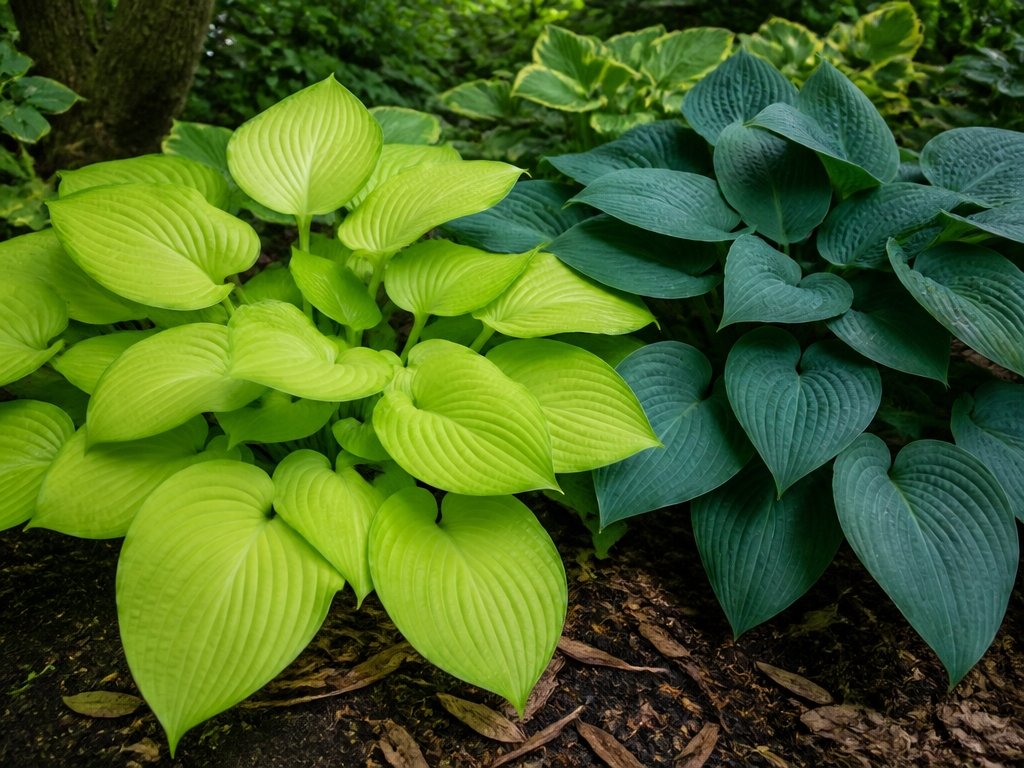
Complementary hosta varieties offer a balanced approach to shade garden color schemes. Gold-leafed hostas, such as Sum and Substance, provide warm tones that brighten darker areas. Blue hostas, including Blue Angel, contribute cool, muted depths.
Pairing these contrasting varieties creates visual interest through color opposition. The combination establishes deliberate, cohesive garden composition without requiring additional plants. In larger shade areas, taller accents can also help define distinct zones while keeping the palette cohesive. For best results, plant them in well-drained soil to help prevent waterlogging.
Ferns With Silvery Accents and Blush Blooms
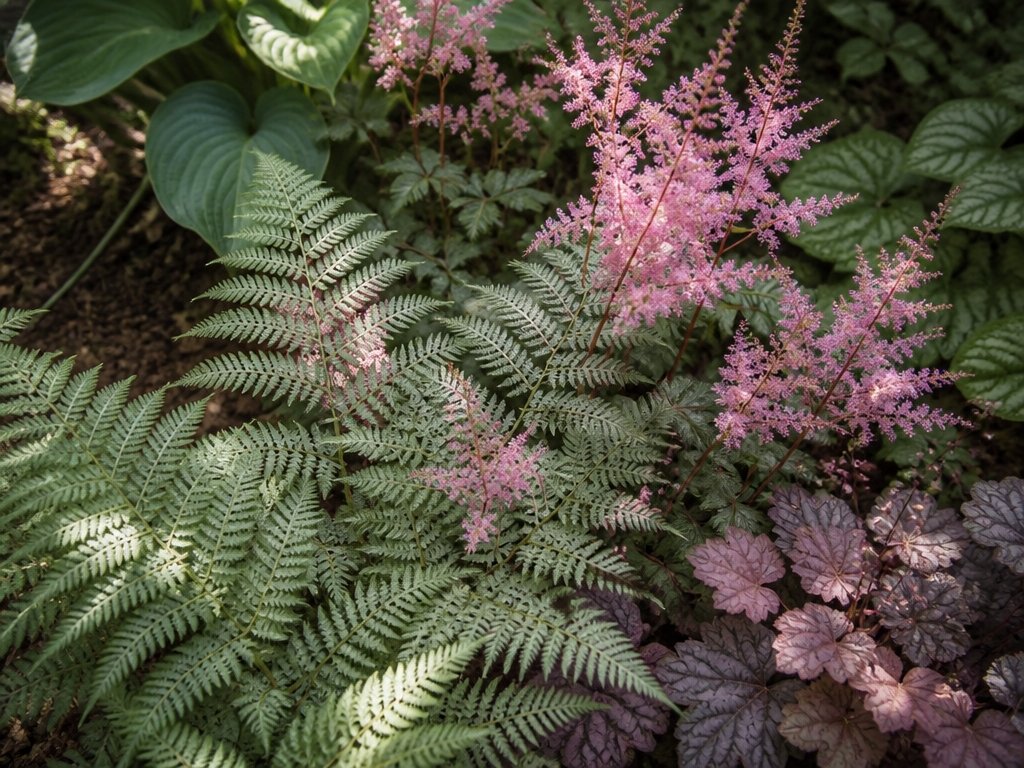
Many shade gardeners rely on ferns to add texture and movement to darker spaces, particularly when selecting varieties with silvery foliage or pale pink flowers. Japanese painted ferns display grayish fronds, while astilbe produces feathery plumes in blush tones. These plants thrive in moist soil with filtered light, creating cohesive garden compositions through their complementary colors and fine textures.
Graphite and Yellow: Modern Shade Palettes
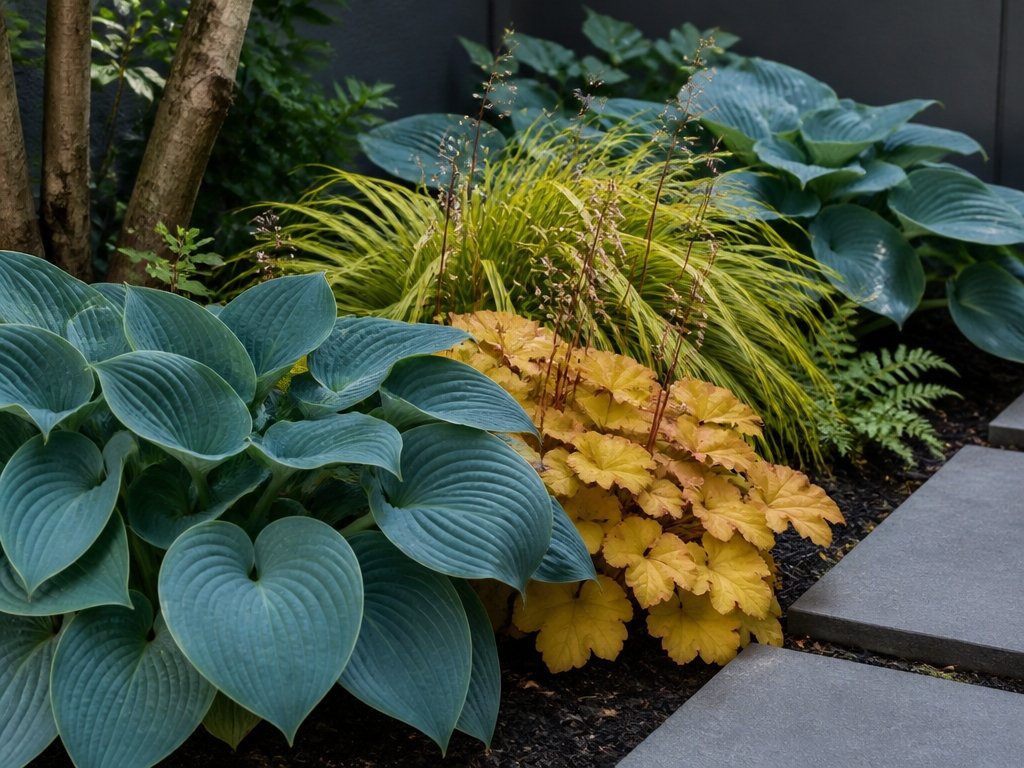
Dark foliage plants paired with bright yellow accents create striking visual contrast in shaded garden spaces. Hostas with chartreuse leaves, golden sedges, and yellow-leafed Japanese forest grass provide luminous focal points.
Pairing these with dark heuchera, black mondo grass, or deep purple coral bells establishes modern sophistication. This palette functions effectively in low-light conditions while maintaining visual interest through strategic color placement and texture variation.
Frequently Asked Questions
How Much Sunlight Do Shade Garden Plants Actually Need to Thrive?
Shade garden plants typically require two to four hours of indirect sunlight daily to thrive. Some species tolerate dappled light beneath tree canopies, while others flourish in deeper shade with minimal direct sun exposure, depending on their specific botanical needs.
What’s the Best Soil Preparation for Establishing a Successful Shade Garden?
Ironically, one must dig deeper—quite literally—to succeed where sunlight fails. Shade gardeners should amend soil heavily with organic matter, ensuring excellent drainage and pH balance. This foundation transforms seemingly barren earth into thriving plant habitat.
How Often Should I Water Plants in Shaded Areas Compared to Sun?
Shade plants typically require less frequent watering than sun-exposed varieties since reduced evaporation occurs in shadier conditions. Gardeners should monitor soil moisture carefully, watering only when the top inch feels dry, as overwatering becomes a significant concern in shaded environments.
Which Shade-Tolerant Plants Offer Year-Round Color and Seasonal Interest?
Studies show 60% of gardens contain shaded areas. Shade-tolerant plants like hellebores, coral bells, and Japanese maples provide consistent color through seasons. Evergreen ferns, variegated hostas, and winter-flowering cyclamen guarantee visual interest throughout the year.
Can I Use Shade Garden Color Palettes in Partially Shaded Transitions?
Yes, shade garden color palettes work effectively in partially shaded changes. Designers can adapt these schemes by incorporating plants tolerating both sun and shade, adjusting foliage brightness, and using lighter colors to bridge sunlit and shadowed areas seamlessly.
Conclusion
Shade gardens benefit from deliberate color planning, using jewel tones for depth, silver foliage for brightness, and white blooms for light reflection. Burgundy and plum provide structure, while coral and peach add warmth. Gold hostas, black mondo grass, and chartreuse create contrast. Ferns with silvery accents soften spaces. Graphite and yellow offer modern appeal. Strategic palette selection transforms dim areas into functional, visually coherent outdoor spaces.