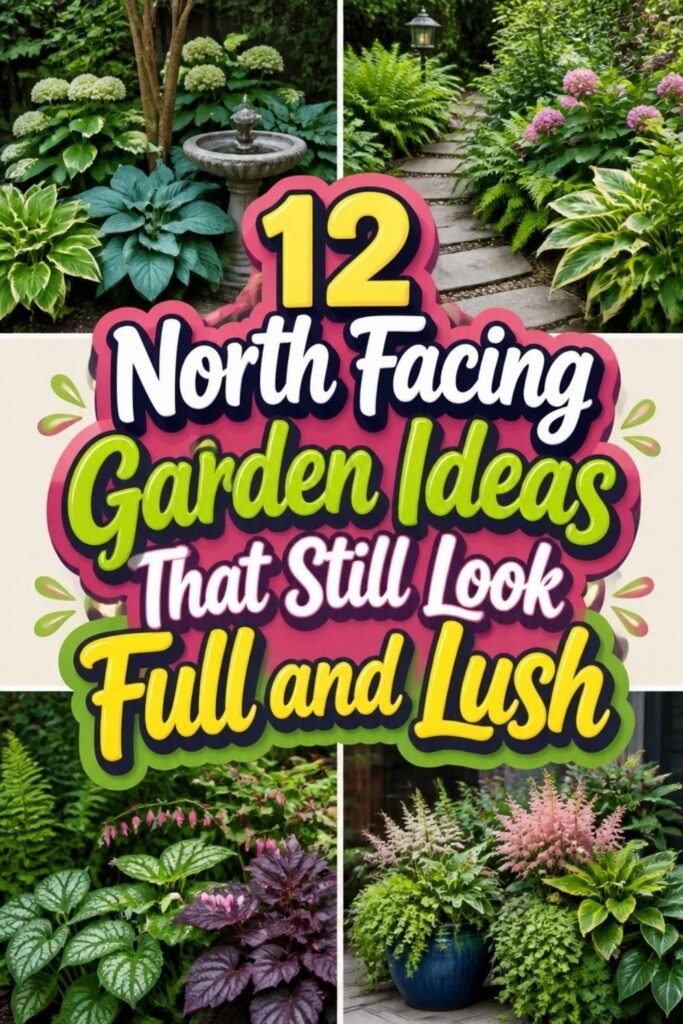

Shady backyards might seem like a hurdle at first, but they invite a completely different kind of gardening. A woodland approach turns that dim corner of your property into something intentional and lush. The key is working with the shade rather than fighting against it.
Hostas, ferns, and hellebores are the quiet workhorses of this style. They ask for little sun and give back layers of texture and color across the seasons. Once established, these plants create the dense, grounded feel that defines a true woodland setting.
Building upward matters just as much. A layered canopy of understory trees and shrubs, perhaps dogwoods or redbuds, adds height without blocking what little light filters through.
Below them, winding paths of mulch or stepping stones keep the space walkable and draw visitors deeper into the garden.
The difference between a thriving woodland garden and a forgotten corner often comes down to planning. Ground covers like wild ginger or foamflower fill the gaps and suppress weeds naturally.
With the right arrangement, even the shadiest yard becomes a cool, green retreat that feels miles away from the rest of the world.
Start With Shade-Loving Plants as Your Foundation
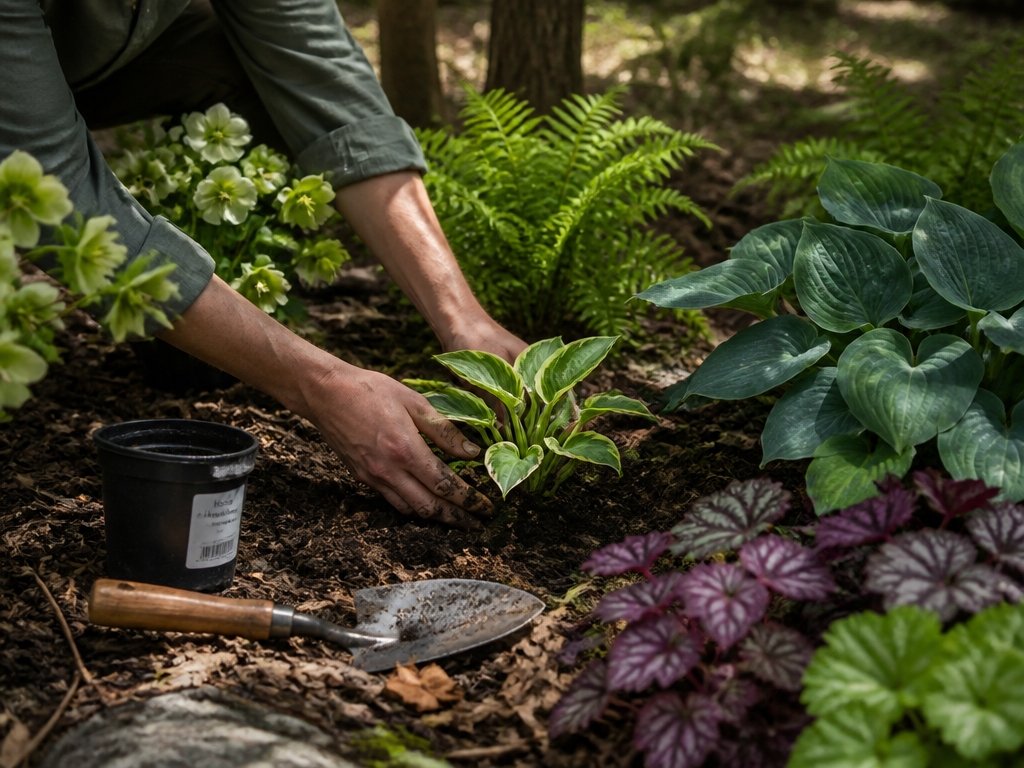
When creating a woodland garden in a shady backyard, selecting appropriate plants forms the essential base for the entire design. Hostas, ferns, and hellebores thrive in low-light conditions. Shade-tolerant groundcovers like ajuga and lamium spread across bare soil.
Woodland shrubs such as rhododendrons and mountain laurel provide structure. These foundational plants tolerate moisture levels and filtered sunlight typical of shaded areas.
Build a Three-Layer Canopy: Trees, Understory, and Ground Cover
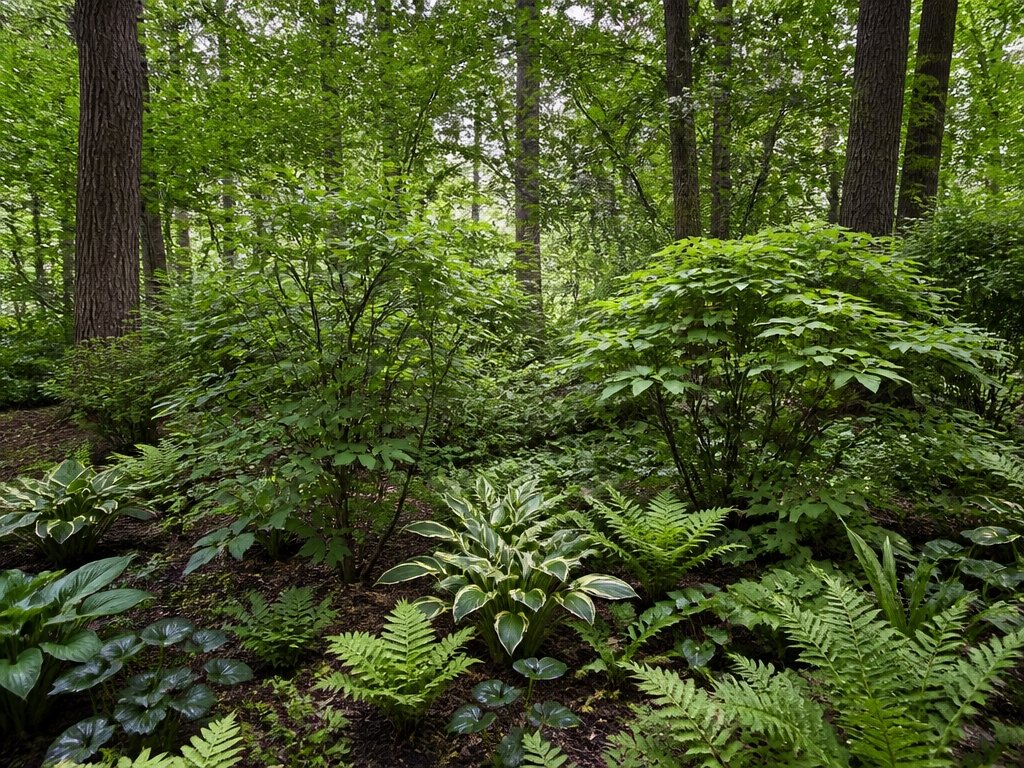
A successful woodland garden relies on layering plants at different heights to mimic natural forest structure. The canopy consists of tall trees like oaks and maples. The understory includes shrubs such as dogwood and rhododendron. Ground cover plants, including hostas and ferns, complete the layers.
This arrangement provides shade, moisture retention, and habitat for woodland species.
Choose Ground Covers and Moss to Eliminate Bare Soil
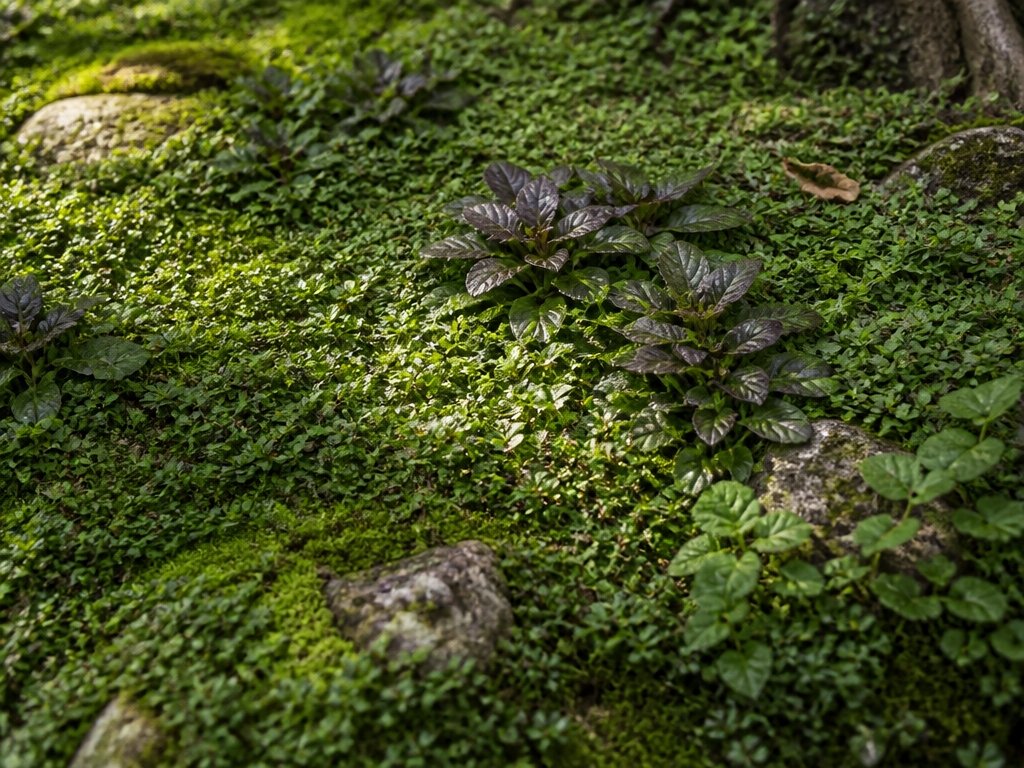
Bare soil in woodland gardens invites weeds, promotes erosion, and disrupts the forest floor aesthetic that makes these spaces functional and visually cohesive. Ground covers like pachysandra, ajuga, and creeping thyme suppress weeds while stabilizing soil.
Moss varieties thrive in shade and moisture, requiring minimal maintenance. Together, these plants create a unified understory layer that mimics natural forest conditions.
Incorporate Shade Ferns for Graceful, Feathery Texture
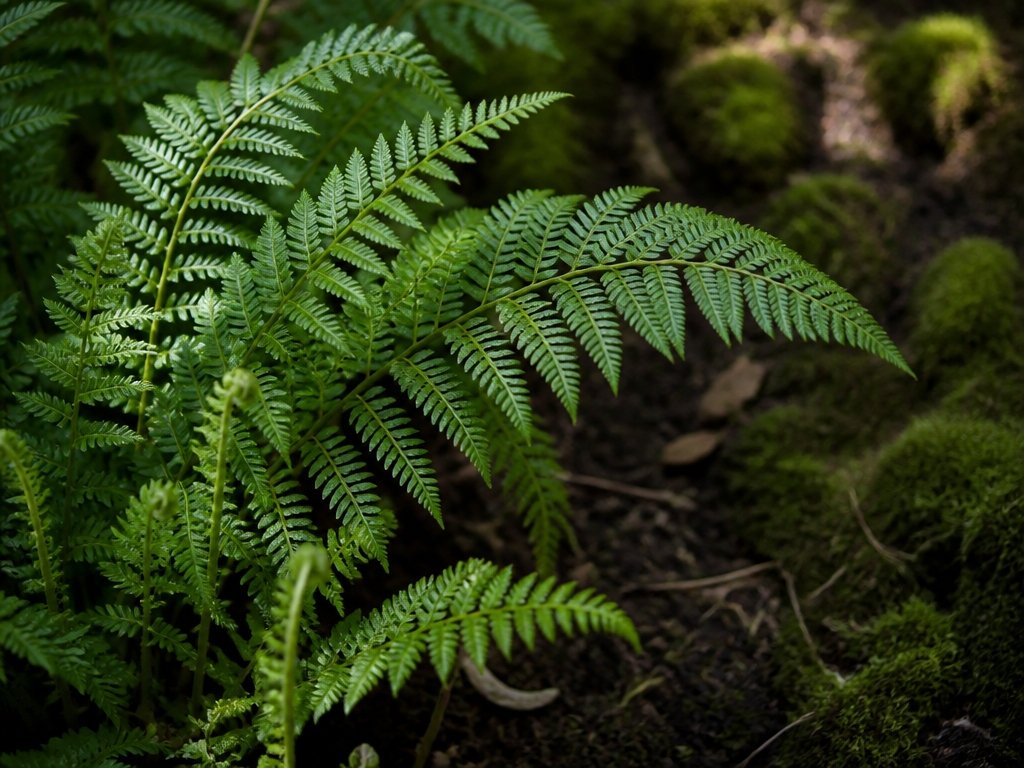
While ground covers and moss establish the foundation of a woodland garden’s understory, ferns add vertical interest and textural variety to the layered planting scheme. Lady ferns, Christmas ferns, and ostrich ferns thrive in shade with minimal maintenance.
Their delicate, feathery fronds contrast with broader-leaved plants, creating visual depth. Ferns prefer moist, well-draining soil rich in organic matter.
Add Shade Hostas for Bold Foliage and Structure
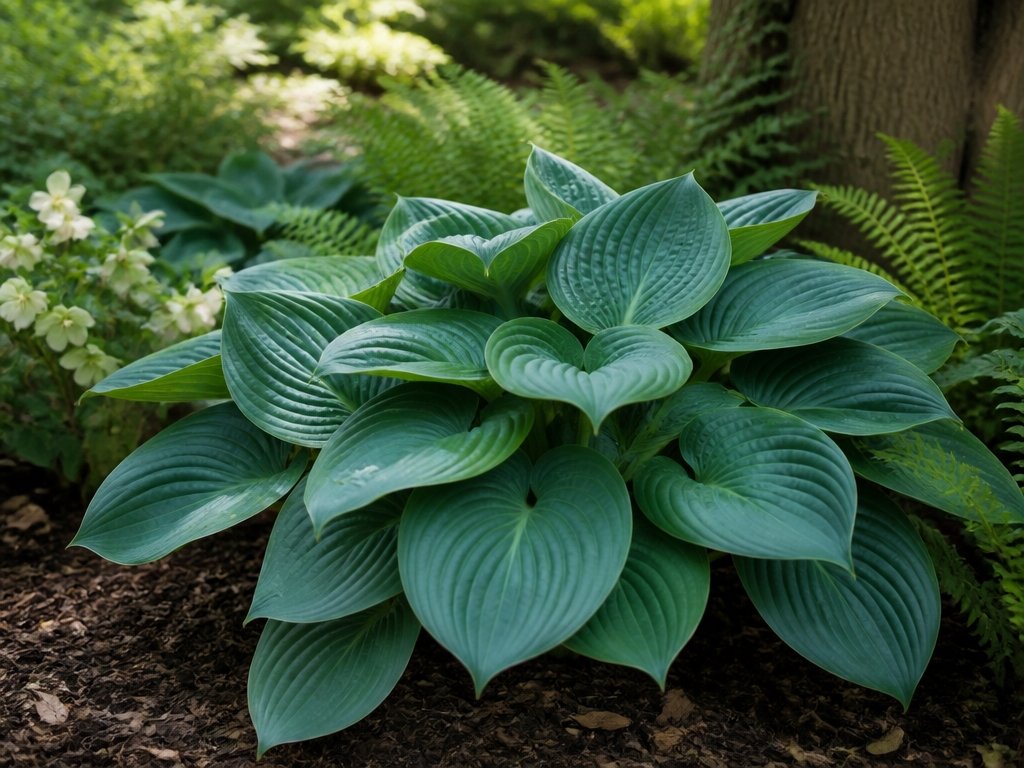
Hostas serve as excellent structural plants in woodland gardens, offering large, architectural leaves that contrast sharply with the delicate fern fronds discussed previously. Popular varieties include Sum and Substance, Blue Angel, and June. These perennials thrive in shade, requiring minimal maintenance.
Plant hostas in clusters for visual impact, spacing them according to mature size. Their bold foliage provides year-round garden structure and definition.
Use Shade Hellebores for Year-Round Color and Interest
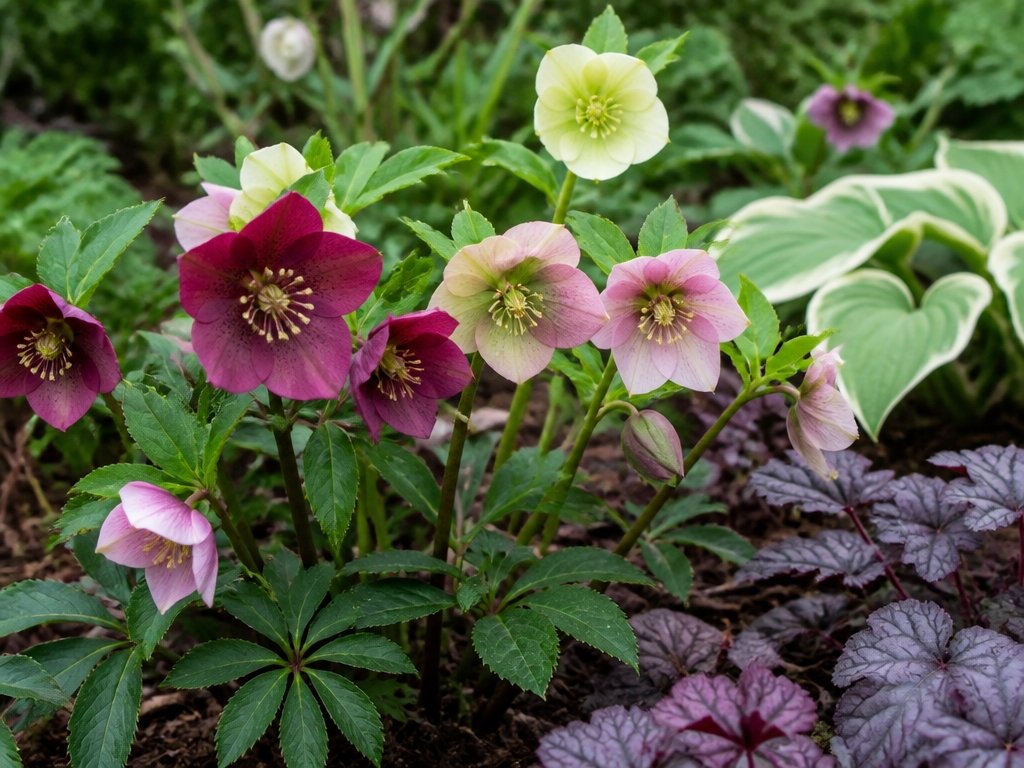
When winter arrives and most shade plants fade, hellebores deliver reliable blooms in shades of purple, pink, white, and green. These evergreen perennials flower from late fall through spring, providing consistent garden interest during dormant seasons.
Hellebores tolerate deep shade, poor soil, and neglect, making them ideal for woodland settings. Plant them beneath trees or along shaded borders for dependable seasonal color.
Select Shade-Tolerant Shrubs as Your Garden’s Backbone
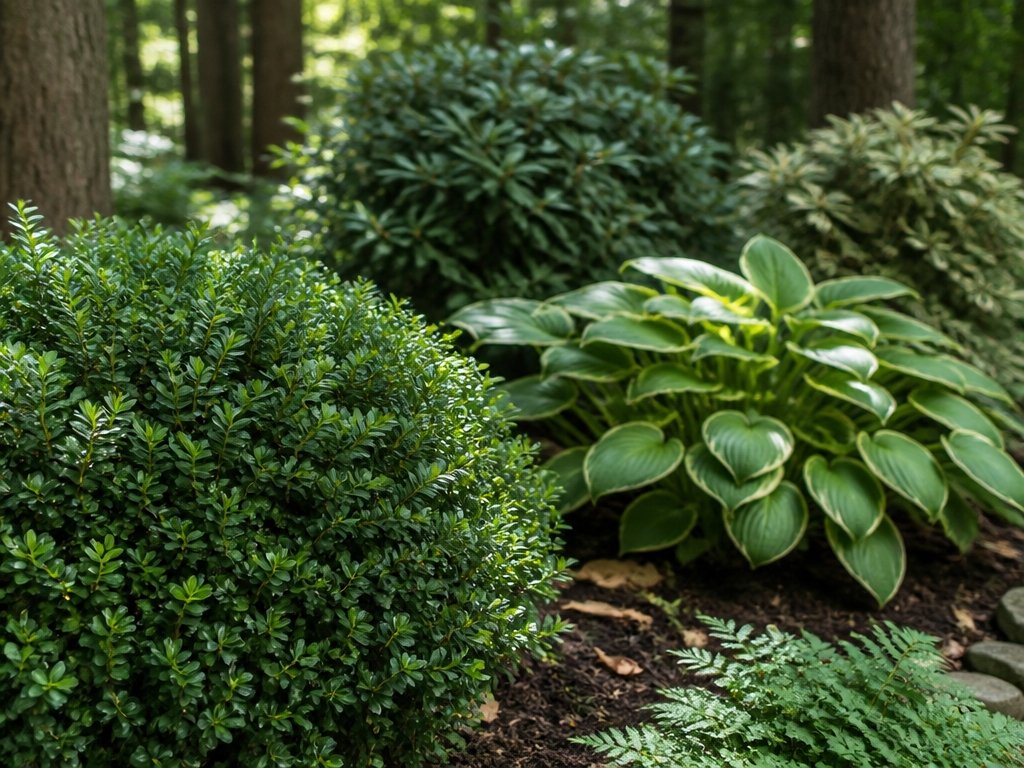
Because woody plants form the structural foundation of woodland gardens, choosing shade-tolerant shrubs becomes essential for creating a layered, year-round landscape. Boxwood, viburnum, and holly provide reliable structure, dense foliage, and seasonal interest. These shrubs establish the garden’s framework, supporting smaller perennials and ground covers beneath.
Select varieties based on mature height and spread, ensuring they complement the canopy layer above.
Plant Shade Wildflowers That Bloom Spring Through Fall
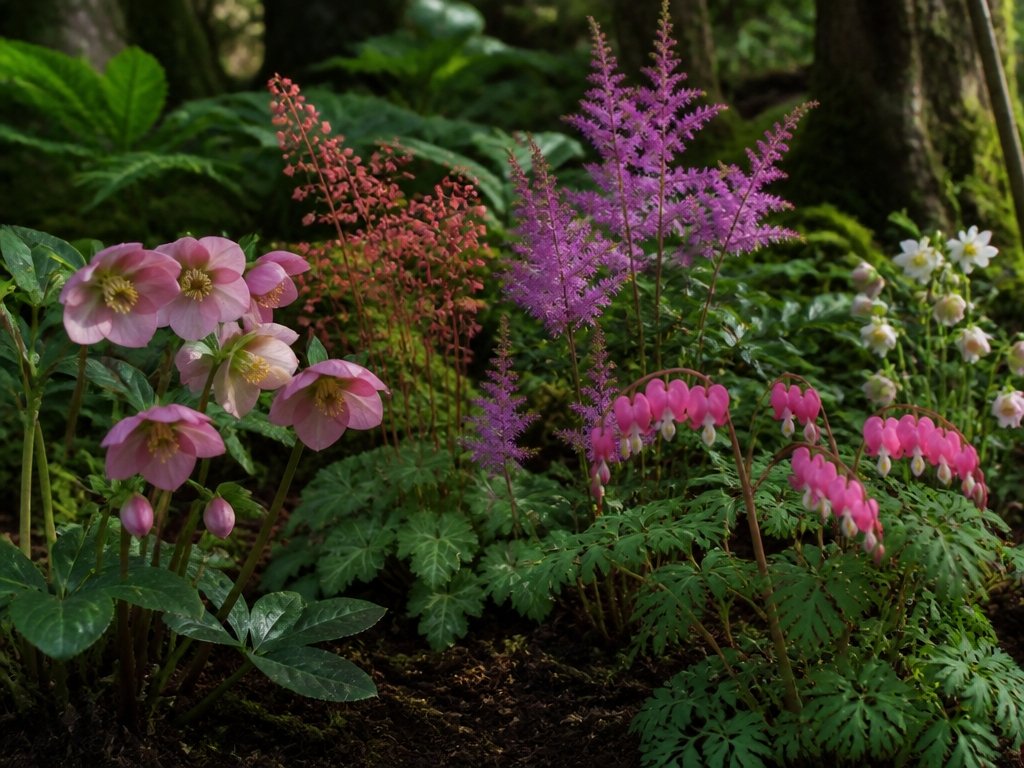
While shrubs provide the garden’s framework, shade wildflowers add color and seasonal variety throughout the year. Trillium, bleeding heart, and woodland phlox bloom in spring. Summer brings coral bells and astilbe. Fall favorites include autumn fern and hellebores.
These plants thrive under tree canopies, requiring minimal maintenance while extending blooms across multiple seasons. If you do prune nearby shrubs, winter protection can help reduce frost damage and support recovery.
Build Natural Pathways: Stone, Gravel, and Mulch Choices for Shade
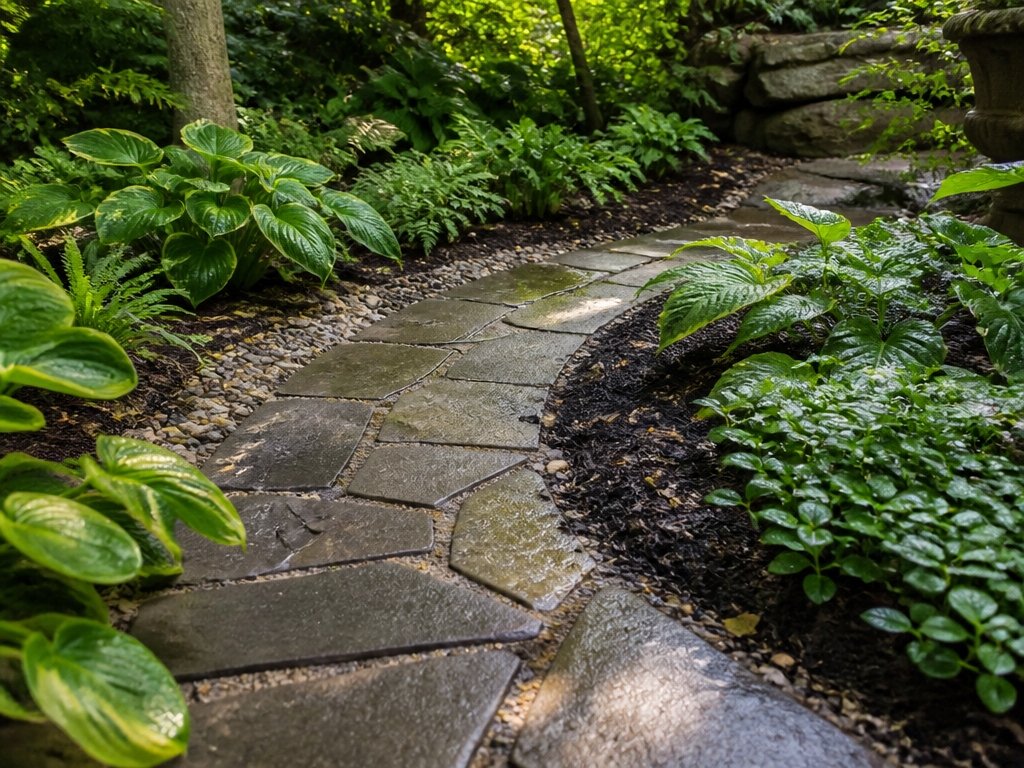
Pathways guide visitors through woodland gardens while protecting soil and plants from foot traffic. Stone stepping stones, wood chips, and shredded bark offer natural options. Gravel provides drainage in wet areas. Mulch, including pine needles and leaf litter, suppresses weeds.
Each material blends seamlessly into forest environments. Selection depends on moisture levels, budget, and aesthetic preferences specific to individual gardens.
Let Fallen Leaves Work as Mulch and Wildlife Shelter
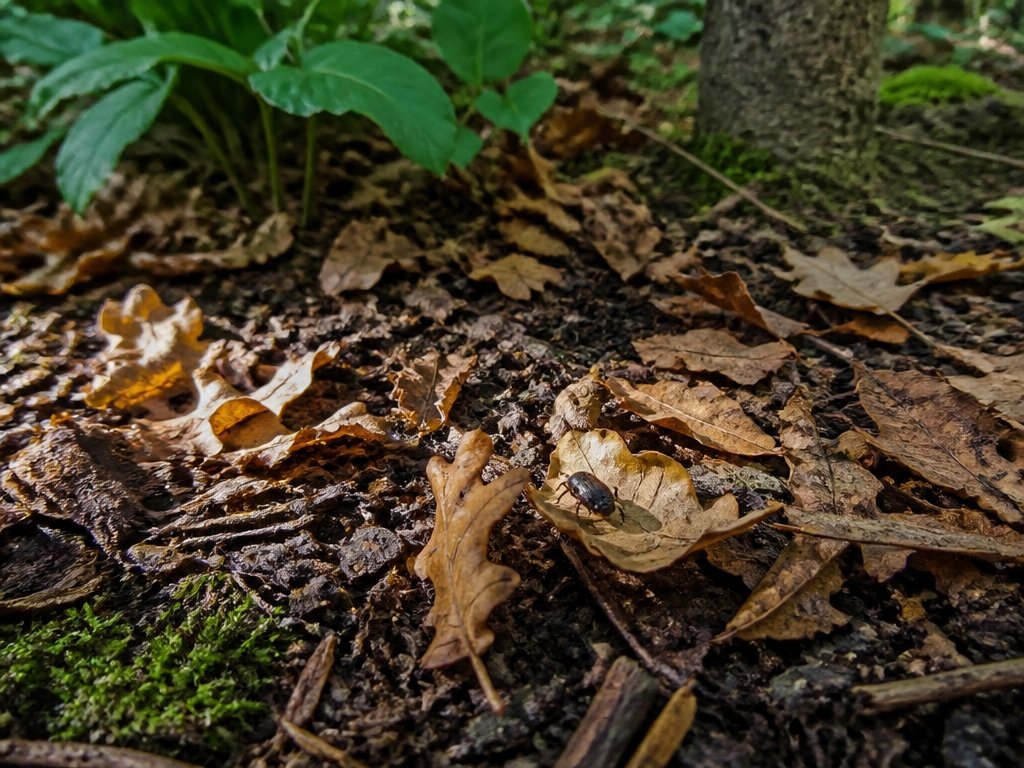
Fallen leaves offer dual benefits in woodland gardens, functioning as both protective mulch and habitat for beneficial insects, soil organisms, and small wildlife. Leaving leaves in place suppresses weeds, retains soil moisture, and gradually decomposes into nutrient-rich humus. Beetles, millipedes, and salamanders shelter beneath leaf layers.
In spring, rake leaves from planting areas to prevent fungal issues while maintaining them in garden borders and tree bases.
Maintain Your Shade Garden Year-Round: Seasonal Tasks
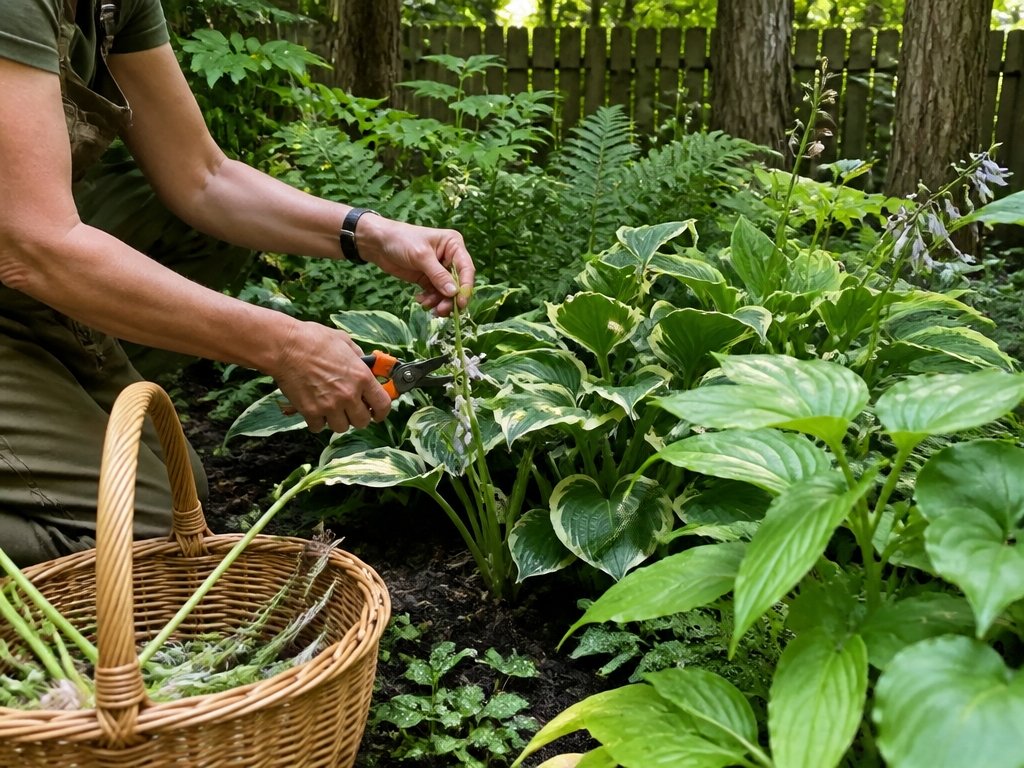
Successful woodland gardens require consistent attention throughout the year, with different tasks becoming priorities as seasons change. Spring involves planting shade-tolerant perennials and removing winter debris. Summer demands regular watering during dry spells. Fall requires leaf collection for mulch layering.
Winter offers planning time for garden improvements and structure assessment. Each season presents specific maintenance needs supporting long-term garden health.
Add Subtle Lighting to Enjoy Your Woodland Garden After Dark
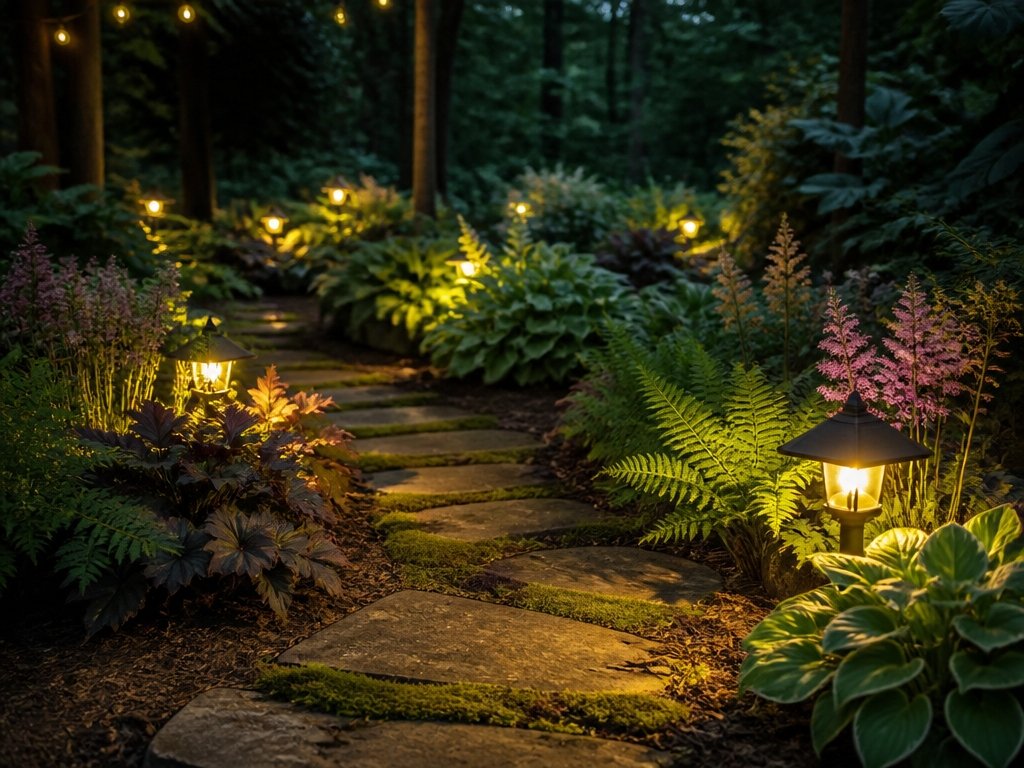
How can gardeners extend their enjoyment of shaded woodland spaces into evening hours? Subtle lighting enhances woodland gardens without overwhelming natural aesthetics.
Solar path lights along walkways provide safe navigation. Uplighting positioned near tree trunks creates depth and shadow effects. String lights draped overhead between branches offer ambient illumination. LED spotlights directed at focal plants highlight foliage textures and colors effectively.
Frequently Asked Questions
How Do I Improve Soil Quality in a Shady Woodland Garden?
Gardeners can enhance woodland soil by incorporating leaf mold, compost, and organic matter to increase nutrients and drainage. Regular mulching with decomposing leaves naturally enriches the soil while maintaining moisture levels essential for shade-loving plants.
What Budget Should I Allocate for Creating a Woodland Garden?
Research indicates that woodland gardens require 30-40% less maintenance than traditional landscaping. Budget allocation typically ranges from $500-$2,000 depending on garden size, soil amendments, and plant selection. Initial investment covers plants, mulch, and soil improvement materials.
How Long Does It Take for a Woodland Garden to Mature?
A woodland garden typically requires three to five years to establish its foundational structure. Full maturity, including dense canopy development and understory establishment, generally takes ten to fifteen years or longer depending on tree species selected and growing conditions.
Can I Add Water Features Like Ponds or Streams to Shade Gardens?
Like jewels nestled in velvet shadows, water features thrive in shaded woodland gardens. Yes, ponds and streams flourish there, creating serene ecosystems. Shade-loving plants such as hostas and ferns surround these features beautifully, while reduced evaporation maintains water quality effortlessly.
How Do I Deal With Existing Tree Roots When Planting Shade Gardens?
One should work around established roots by selecting shallow-rooted plants and amending soil above them. Careful hand digging, adding mulch layers, and choosing shade-tolerant species that compete minimally for nutrients helps guarantee successful planting around existing trees.
Conclusion
Creating a woodland garden requires layering shade plants, establishing pathways, and managing seasonal debris. Hostas, ferns, hellebores, and ground covers form the garden’s backbone, while moss and fallen leaves reduce maintenance needs. Proper canopy structure supports wildlife while enhancing year-round visual interest. Isn’t a low-maintenance garden that thrives in shade worth the initial planning effort? Strategic design transforms unused backyard space into a functional, attractive retreat.