

ZZ plants are famously tolerant of low light, but this resilience has its limits. When left in dim corners for too long, they begin stretching desperately toward any available light. The result is sparse, uneven growth with stems that grow long and thin rather than full and upright.
Moving your plant to a brighter spot is the first step toward recovery. Bright, indirect light works best – think near an east-facing window or a few feet back from south or west exposures. Direct afternoon sun can scorch the leaves, so some filtering is wise. Gradual adjustment helps prevent shock if the plant has been in darkness for months.
Pruning becomes necessary once the stretching has already happened. Cut back the leggiest stems to just above a leaf node, which encourages bushier new growth from the base. Those removed stem cuttings can actually root easily in water or soil, giving you bonus plants while you reshape the original.
Prevention matters just as much as correction. Rotating the pot every few weeks ensures even light exposure on all sides.
Watching for early signs of stretching – smaller new leaves or stems bending toward windows – lets you adjust conditions before major intervention becomes necessary.
The Root Cause: How Low Light Creates Leggy Growth
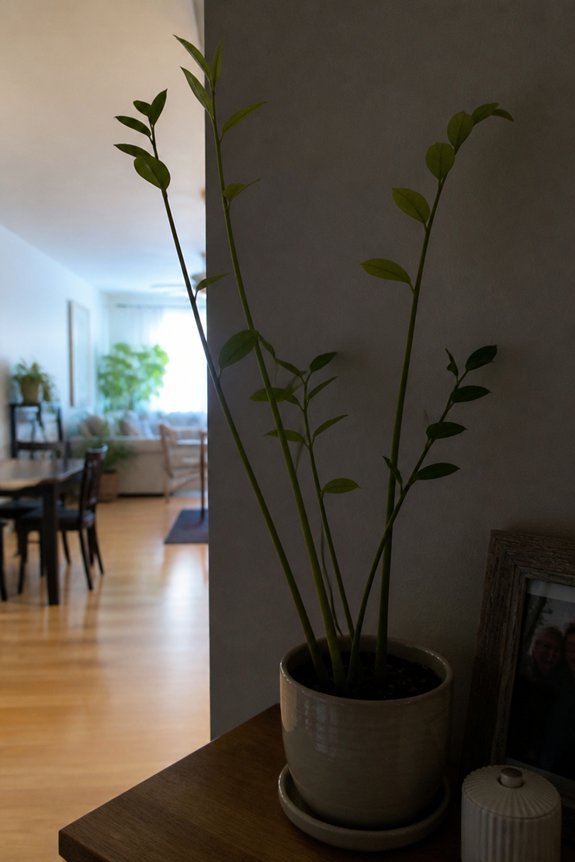
ZZ plants love bright, indirect light. Without it, they get tall and spindly fast.
Move your plant too far from a window or stick it in a dark corner. Watch what happens. The stems stretch upward. The leaves shrink and space out. This is etiolation. Your plant is literally reaching for any light it can find.
Corners, windowless rooms, and artificial-only lighting set this up perfectly. The plant pours everything into vertical growth. Leaf development gets ignored. Photosynthesis struggles. Stems turn weak and thin.
Ignore it, and you’ll end up with a gangly, unhealthy plant. The good news? You can fix this.
Also read: How to Care for Peace Lily Indoor
Check Your Plant’s Light Levels
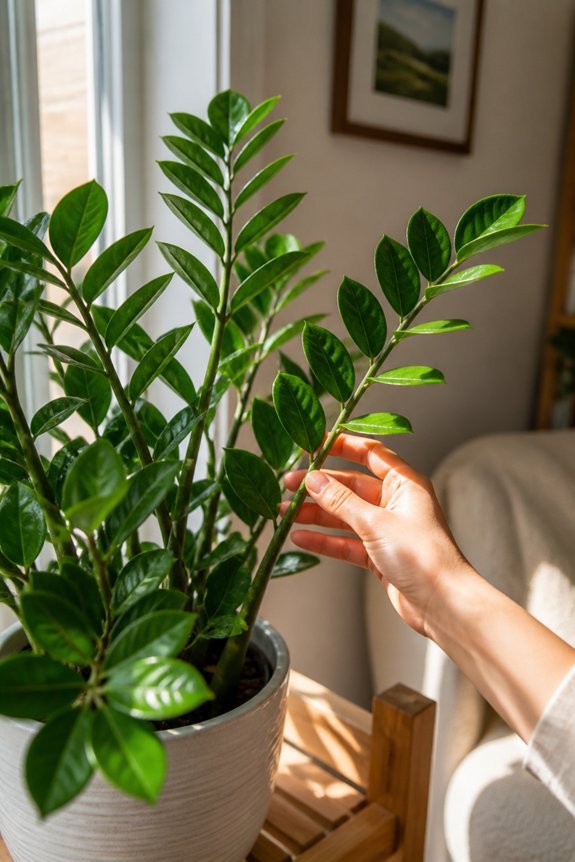
Time to figure out what your plant is actually working with. Grab your phone or a light meter and let’s see what’s happening in your space.
ZZ plants like bright, indirect light. Too much direct sun burns the leaves. Too little makes them stretch out and get leggy.
Start by watching how light moves through your room during the day. Check which windows are nearby and what direction they face. North windows give the least light. South and west windows pack the most punch.
A light meter helps you get specific. Your ZZ wants about 50 to 100 foot-candles. Below that? Time to move things around. Slide the pot closer to a brighter window. Or grab a grow light to fill the gap.
Move Your ZZ Plant to Brighter Light
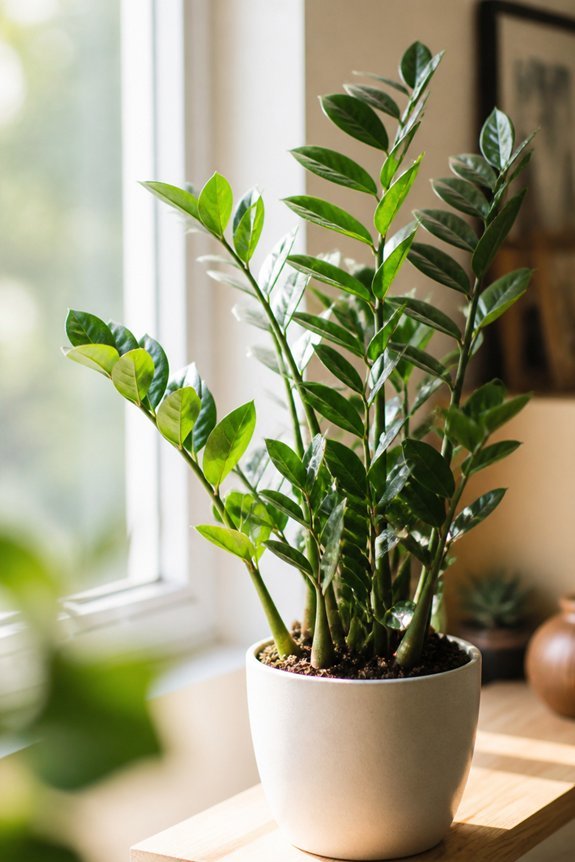
Moving a leggy ZZ plant to brighter light is the fastest fix. Most plants perk up quickly once they get what they need.
North or east-facing windows are your safest bet. They deliver steady, gentle light all day without scorching leaves.
South-facing spots work too, but hang sheer curtains to soften those harsh afternoon beams. Direct sun can do more harm than good here.
ZZ plants survive in dim corners, yet they only thrive with proper light. You’ll notice real change within weeks of relocating yours. Stems firm up. Gaps between leaves shrink. Fresh growth comes in thick and strong.
Aim for 75 to 150 foot-candles if you have a light meter handy. No meter? Trust your eyes and your plant’s response.
Rotate the pot every two weeks so all sides grow evenly. Neglect this and you’ll end up with a lopsided companion.
Prune Your Leggy ZZ Plant for Fuller Growth
Pruning works hand in hand with better lighting to give your leggy ZZ plant a fuller, bushier shape. Take out the longest stems. This nudges the plant to push new growth lower down on the stalks that stay behind.
Grab some clean, sharp scissors or pruning shears. Snip each stem just above a leaf node. That’s the little bump where leaves meet the stalk. This small cut steers the plant’s energy toward branching instead of shooting upward.
Clear away any dead or yellowing leaflets from healthy stems too. These tired bits drain resources without adding anything back.
Pruning also thins out crowded areas. More breathing room means better airflow. And better airflow keeps pests and diseases at bay.
Space out your pruning sessions. Give the plant a few weeks to recover between cuts. A little and often beats one big chop every time. Your ZZ will reward you with denser, lusher foliage.
Propagate ZZ Plant Cuttings From Leggy Stems
Those leggy stems you just cut back? They are not waste. They are your future plants.
ZZ plants root easily from stem cuttings. You can also use single leaflets, though stems work faster. Both methods need the same basics: airy soil, steady moisture, and bright indirect light. Keep things warm, around 65-75°F.
Snip stems into sections with several leaflets still attached. Pop them into well-draining potting mix. Rooting hormone helps, but you can skip it. Check soil moisture regularly. Soggy conditions kill cuttings fast.
New roots usually show within a month or two. You will not see much happening above ground at first. That is normal. Patience pays off here.
Leaflets take longer but cost nothing extra. press them horizontally into moist soil and wait. Small tubers form first, then shoots emerge months later.
Either way, you gain free plants from every pruning session. No extra materials needed. Just time and a warm spot on your shelf.
Repot Your ZZ Plant for Better Development
Your rooted cuttings are ready for bigger quarters. Choose a pot just one to two inches wider than the current container. This prevents waterlogged soil from suffocating the young root system. Always check for drainage holes at the bottom, since standing water triggers root rot quickly.
Spring and early summer offer the ideal window for this move. Your ZZ plant is already in growth mode and will adjust without stress. Fill the new container with cactus mix or regular soil cut with perlite for sharp drainage. Settle the plant gently into fresh soil and pack it lightly around the roots. You will soon see thicker stems and compact growth replacing any sparse, leggy branches.
Keep Your ZZ Plant Full and Bushy
Pinching back your ZZ plant works wonders for a fuller look. Just remove the top leaflets or stem tips. This simple trick wakes up dormant buds below and sends energy outward instead of upward.
Regular pruning keeps things tidy and dense too. Cut older, leggy stems right at the base. New growth will pop up from lower areas, filling out the plant naturally.
Light matters more than you might think. Bright, indirect light helps your ZZ grow thicker and bushier. Dim corners lead to stretched, sparse stems over time.
Feed your plant during spring and summer. A balanced fertilizer once a month supports steady, compact growth. Skip the heavy feeding in fall and winter when growth naturally slows down.
Frequently Asked Questions
How Long Does It Take to See New Growth After Moving a ZZ Plant?
A ZZ plant typically displays visible new growth within two to four weeks after being moved to a new location. However, the timeline depends on light conditions, temperature stability, and overall plant health. Some specimens may take up to six weeks.
Can I Use the Leggy Stems for Propagation if They’re Already Very Tall?
Ironically, the very problem one seeks to fix becomes the solution. Yes, tall leggy stems work excellently for propagation. One simply cuts them into sections with at least one leaflet each, then roots them in soil or water, transforming lanky growth into thriving new plants.
What’s the Ideal Pot Size When Repotting a Leggy ZZ Plant?
One should select a pot only one to two inches larger in diameter than the current container. This prevents excess soil moisture retention while providing adequate room for root establishment and support of the plant’s structure.
Should I Fertilize My ZZ Plant While It’s Recovering From Legginess?
Studies show ZZ plants require fertilizing only once quarterly during growing seasons. One should avoid fertilizing while the plant recovers from legginess, as excess nutrients stress weakened specimens. Resume regular feeding once new, compact growth emerges consistently.
Will a Leggy ZZ Plant Ever Look Full Again Without Complete Pruning?
A leggy ZZ plant cannot naturally fill in bare lower stems without pruning. However, strategic cutting encourages bushier growth from dormant nodes, allowing the plant to develop a fuller appearance over time.
Conclusion
Fixing a leggy ZZ plant requires patience, as results take weeks, not days. Many owners worry pruning will damage their plants, but removing long stems actually stimulates bushier growth. By increasing light exposure, trimming excess growth, and propagating cuttings, owners transform sparse plants into fuller specimens. Proper drainage and spacing between tasks support recovery, ensuring the ZZ plant develops into a dense, healthy houseplant over time.