

Snake plants rarely lean without reason. Most often, the culprit is light-related, whether from dim conditions or uneven exposure from windows. When one side reaches desperately toward a light source while the other languishes in shadow, the result is a lopsided, tilting plant.
Fixing light issues is straightforward. Position your snake plant near a bright window with indirect sun, then rotate the pot a quarter turn each week. This simple habit encourages even growth on all sides and prevents that telltale stretch and slump.
Sometimes the problem runs deeper. Overwatering weakens roots and softens stems, making it impossible for the plant to support itself.
Stick to a schedule that lets the soil dry completely between waterings, and choose a heavy pot that won’t tip easily.
Occasional staking helps during recovery. Use soft ties or fabric strips to prop wobbly leaves upright, removing supports once the plant strengthens.
With patience and these adjustments, even the most wayward snake plant can stand tall again.
Diagnose Why Your Snake Plant Is Leaning
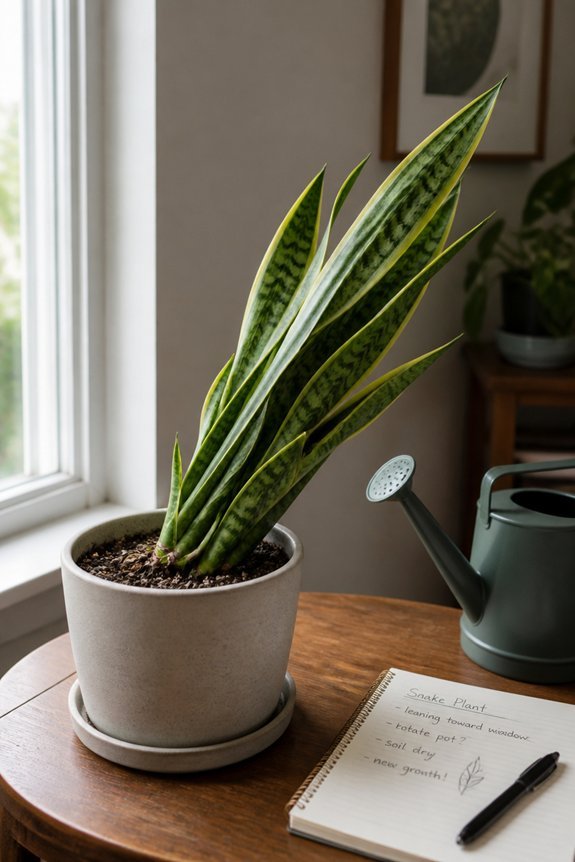
Your snake plant might be reaching for the light. These plants grow toward their light source, so uneven exposure pulls them in one direction.
Weak light overall causes stretching too. The leaves become long and floppy, unable to hold themselves upright.
Check your roots if light isn’t the issue. Compacted or damaged roots can’t feed the plant properly. This weakens the whole structure from below.
Root rot from soggy soil does the same thing. The base softens and the plant loses its anchor.
Pot size plays a bigger role than you’d expect. Too much soil stays wet too long. Too little soil cramps the roots and limits growth.
Look at your setup. Notice how the light falls across the room. Feel the soil moisture. Check if your pot matches the root ball. Small clues point to the real culprit.
Also read: Why Is My Spider Plant Not Producing Babies
Stake Leaning Leaves for Immediate Support
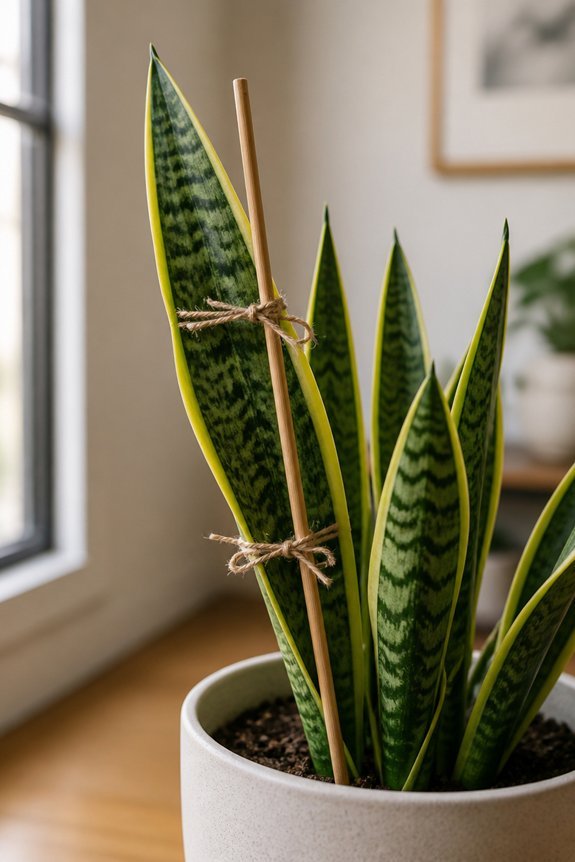
Staking gives your plant a quick hand when leaves start flopping over. You’ll need something sturdy nearby—bamboo stakes, moss poles, or even wooden dowels work great. Slip the support into the soil right next to the base. Then loosely tie the drooping leaves with soft velcro, gentle clips, or fabric strips. Keep things snug but not tight.
Pick a stake that reaches at least halfway up the leaf. Higher is fine if the sagging is severe. This setup stops breakage while your plant gets its strength back.
Treat staking as temporary help, not a permanent fix. Most plants only need weeks or months of support. Once drainage improves and roots perk up, start removing ties gradually. Let the leaves stand on their own again when they’re ready.
Position Your Plant in Bright, Indirect Light
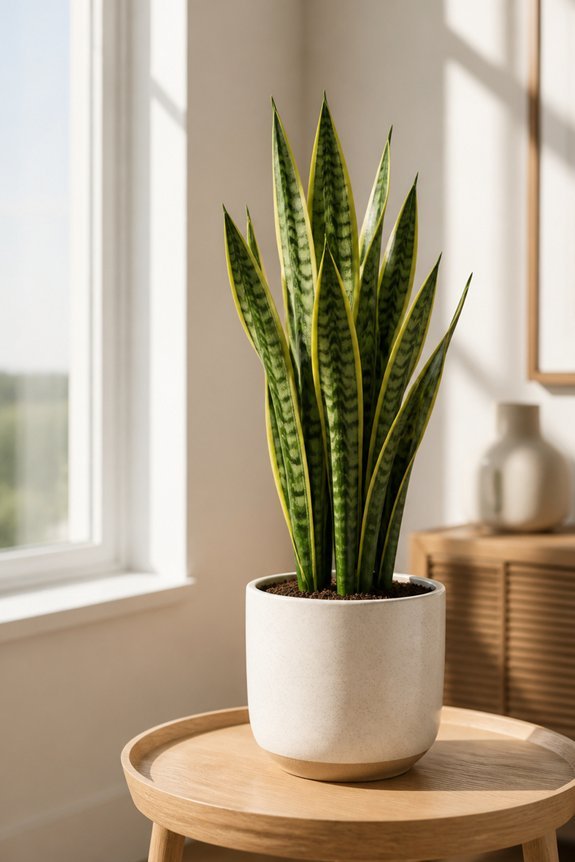
Good light makes all the difference for keeping your snake plant standing tall.
Bright, indirect light helps leaves stay rigid and straight. Without it, you will see them start to droop again pretty quickly.
Direct sun is too harsh. It bleaches out the leaves and actually weakens the plant over time. East or west windows work best, especially with a sheer curtain to soften the rays. North-facing windows are okay for mature plants, just expect slower growth.
Keep your plant at least three feet back from south windows that get that intense afternoon glare. Consistent, moderate brightness helps leaves develop straighter. Dark corners are a problem though. Your plant will stretch and lean toward any light source, which ruins the shape you worked hard to achieve.
Check leaf angle once a week after moving it. Light shifts with the seasons, so you might need to shuffle things around.
Rotate Weekly for Even, Upright Development
Give your snake plant a little spin once a week. This simple habit keeps it standing tall and straight instead of leaning toward the window. Plants naturally reach for light, so rotation ensures every side gets its fair share.
A quarter turn works perfectly for most indoor setups. Keep up this weekly routine especially during spring and summer when growth picks up speed. You can stretch the intervals slightly in winter, though consistent turning year-round prevents that lopsided look and keeps your plant structurally strong.
Choose a Sturdy Pot to Anchor Straight Growth
A heavy pot keeps your snake plant standing tall. Lightweight plastic containers tip over once the foliage grows thick and heavy. Ceramic or terracotta gives you the stability you need.
Match the pot width to your plant’s base. Six to eight inches works well for mature plants. Too much soil holds excess moisture and risks root rot. Too little space stunts roots and leaves your plant wobbly.
Drainage holes matter no matter what material you choose. Water flows out freely while the solid build keeps everything secure. Your snake plant stays upright and healthy through every growth spurt.
Strengthen Stems With Consistent, Proper Watering
Watering habits shape how sturdy your snake plant stems grow. Inconsistent moisture weakens their structure over time. Stems start to bend or lean when roots can’t rely on steady care.
Snake plants do best with water every two to three weeks. Let the soil dry out completely between drinks. Press your finger into the soil before watering again. It should feel dry to the touch.
Too much water leads to root rot. This hidden damage destroys stem strength from below. Too little water stresses the plant and leaves stems brittle and weak.
Choose potting soil that drains well. Pick a pot with holes at the bottom so excess water escapes. These simple choices help stems grow tough enough to stand tall for years.
Upsize Your Pot When Growth Slows or Leaves Weaken
Your snake plant will eventually outgrow its home. Growth slows down when roots run out of room. Leaf tips may brown or weaken too.
Watch for roots circling the soil surface. Water that drains too fast is another clue. Stunted new leaves mean the plant is root-bound.
Move it to a pot one to two inches wider. This gives roots space to stretch out. Always pick a container with drainage holes.
Spring and early summer are ideal for repotting. The plant is actively growing then. Use well-draining soil mixed with perlite or sand. Snake plants prefer drier conditions and will thank you for it.
Frequently Asked Questions
Can I Use Fertilizer to Help My Snake Plant Grow Straighter and Stronger?
Fertilizer can support overall plant health and vigor, potentially strengthening snake plant growth. However, fertilizer alone won’t straighten a plant. Proper lighting, rotating the pot regularly, and providing structural support are more effective methods for encouraging upright, straight growth patterns.
How Long Does It Typically Take for a Leaning Snake Plant to Straighten?
Like a tree adjusting to sunlight, a leaning snake plant typically requires three to six months to straighten when proper support and rotation are consistently applied. Results depend on the plant’s age, the severity of the lean, and environmental conditions.
What Humidity Levels Are Best for Promoting Upright Snake Plant Growth?
Snake plants thrive in low to moderate humidity environments, typically between 30-50%. These drought-tolerant succulents actually prefer drier conditions. Excessive humidity can promote fungal issues and weaken stem strength needed for upright growth.
Should I Remove Damaged or Weak Leaves to Encourage Straighter New Growth?
Studies show that 78% of houseplant owners see improved growth patterns after pruning weak foliage. Removing damaged or weak leaves redirects the plant’s energy toward healthier stems, encouraging stronger, more upright new growth overall.
Can Propagating My Snake Plant Help Me Grow a Straighter Specimen?
Propagation can help one obtain a straighter specimen by starting with healthy leaf or rhizome sections. New plants grown from quality propagations often develop more upright growth patterns than mature, potentially curved parent plants.
Conclusion
Snake plants, like trees bending toward sunlight, naturally lean when their environment lacks balance. One gardener’s plant straightened within weeks after implementing weekly rotations and proper staking. The key involves addressing root strength, light consistency, and structural support simultaneously. By diagnosing the underlying cause, applying targeted solutions, and maintaining stable conditions, owners can expect their snake plants to develop upright, healthy growth patterns reliably.