
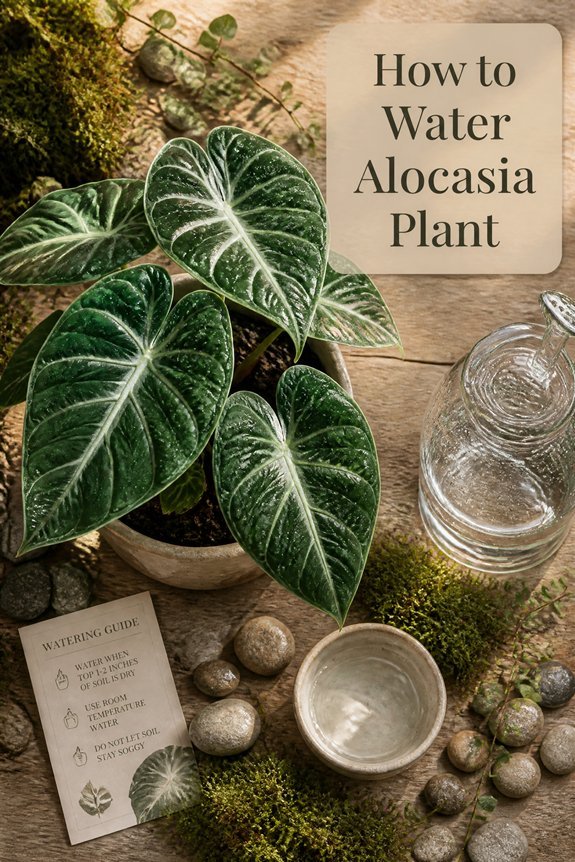
Finding the right watering balance for Alocasia plants takes a bit of attention, but it’s far from complicated. These tropical beauties prefer soil that stays lightly moist rather than soggy or bone dry. Sticking your finger about an inch into the potting mix gives you the best indication of when it’s time to reach for the watering can.
During spring and summer, expect to water more frequently as active growth kicks in. The plant drinks up moisture quickly in warmer months, sometimes needing attention twice a week depending on your home’s conditions.
Come fall and winter, growth naturally slows down, so you can ease off and let the soil dry out a bit more between drinks.
A few simple habits go a long way toward preventing the headaches that plague many Alocasia owners. Root rot and yellowing leaves almost always trace back to overwatering, so when in doubt, waiting a day or two rarely hurts.
Watching how your specific plant responds matters more than following any rigid calendar.
Check Soil Moisture Before Watering
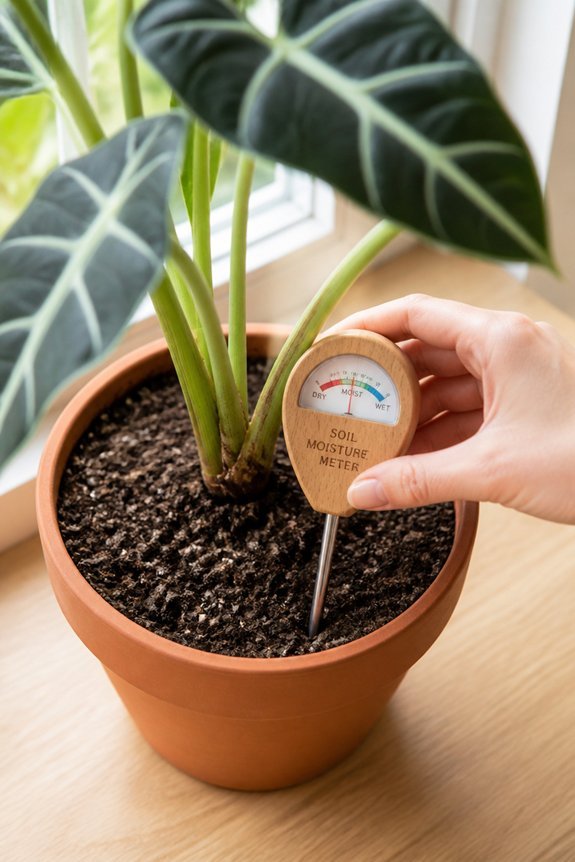
Check the soil before you grab that watering can. Stick your finger about an inch into the dirt near the base. Feel dryness? Time to water. Still damp? Give it a few more days.
A moisture meter works great too. It gives you a clear number instead of guesswork. Alocasia likes steady moisture, but soggy soil spells trouble. Root rot sets in fast when you overdo it. Your watering schedule will shift based on pot size, soil mix, humidity, and the season. Pay attention to your plant, and you’ll get the rhythm down.
Water When the Top 1–2 Inches Feel Dry
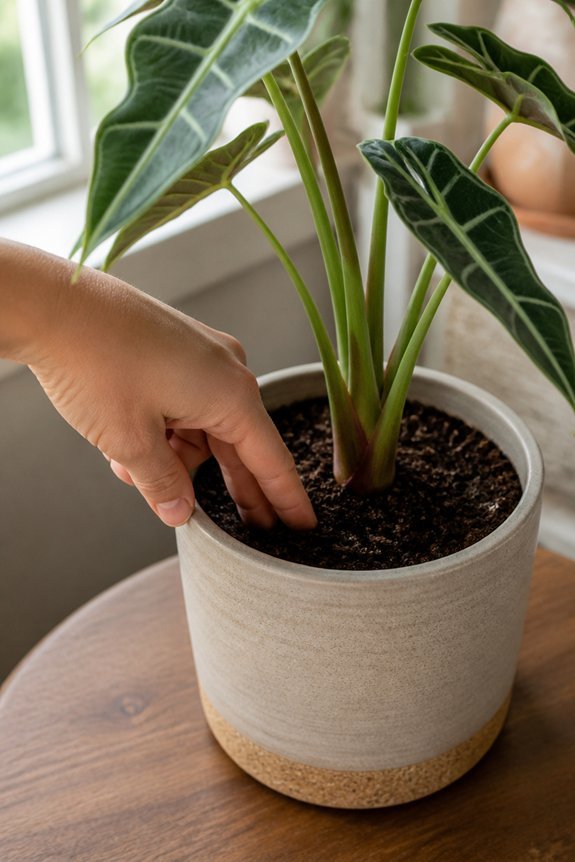
The finger test works well for Alocasia watering. Stick your finger into the soil about one to two inches deep. When that top layer feels dry, it’s time to water.
Alocasia plants like moist soil, but not soggy conditions. That dry zone at the top is your best signal. Check it regularly to avoid both underwatering and overwatering.
Your pot size and soil type change how fast things dry. Small pots dry out quicker than big ones. Sandy soil drains faster than clay mixes. Temperature, humidity, and light also play a role. Keep checking to stay on top of your plant’s needs.
Choose the Right Water Type
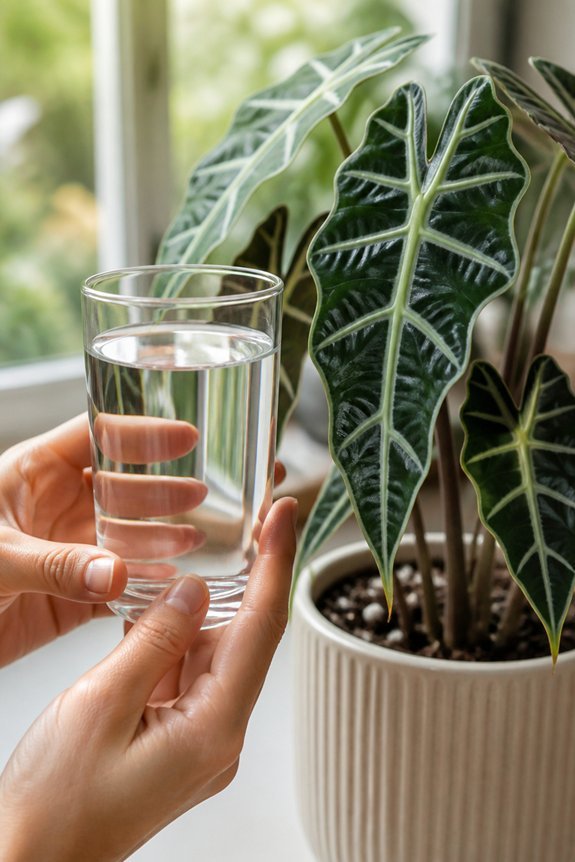
Alocasia plants can be picky about their water. You’ll get the best results using distilled or rainwater. These don’t contain the chemicals and minerals found in tap water.
Tap water often has chlorine, fluoride, and other additives. Over time, these build up in the soil and can harm your plant’s roots and leaves.
Don’t have distilled water around? Let tap water sit in an open container for a full day. This gives the chlorine time to evaporate. Filtered water works well too.
Room-temperature water is key. Aim for 65–75°F. Cold water will shock the roots. Hot water stresses the plant. Stick with consistent water types to keep growing conditions stable.
Adjust Watering Frequency by Season
Your Alocasia grows differently depending on the time of year. That means its thirst changes too.
Spring and summer are busy seasons for this plant. It’s putting out new leaves and stretching toward the sun. Check the soil every few days. Water when the top inch feels dry, usually every 5-7 days. Keep it moist but never soggy.
Things slow down come fall. Growth takes a back seat. You can ease up to every 10-14 days. Let the soil dry out more between drinks.
Winter is rest time. Your Alocasia basically naps. Water drops to once every 2-3 weeks. Too much now invites root rot and fungus. Less is truly more.
Watch your soil year-round. Your home’s heating, light levels, and pot size all shift the schedule. Trust your fingers more than the calendar.
Spot Overwatering and Underwatering Signs
Even perfect schedules can slip up, and your Alocasia will tell you when they do. Watch for yellow leaves, soft stems, and that telltale musty smell. These scream overwatering. The soil stays soggy too long. Brown spots with yellow rings might pop up.
Underwatering looks different. Crispy brown edges are the first clue. Leaves wilt even with good light. The soil shrinks from the pot sides and turns rock hard. Sometimes leaves just drop off entirely.
Both stresses harm your plant in similar ways. So poke your finger two inches down to check actual moisture. This simple check clears up any confusion. Then tweak your watering based on what you find. Your Alocasia bounces back fast with the right fix.
Optimize Your Setup for Proper Watering
The right container and soil combination forms the foundation for consistent watering. Alocasia plants need containers with drainage holes. Excess water must escape to prevent root rot.
Terracotta pots work well. They let soil dry between waterings. Plastic containers hold moisture longer.
Soil composition matters too. Mix potting soil, perlite, and orchid bark. This creates an airy medium that drains properly. It keeps necessary moisture without trapping water around roots.
Placement affects watering needs. Plants near bright, indirect light dry faster than those in dim corners. Humidity levels change evaporation rates. Grouping plants together raises ambient humidity. This may reduce how often you need to water.
These elements work together for healthy moisture management.
Fix Root Rot, Yellow Leaves, and Brown Tips
Watering mistakes cause most Alocasia problems. Root rot happens when soil stays too wet. Yellow leaves point to poor drainage. Brown tips come from uneven watering.
Root rot sets in when soggy soil makes roots decay. This stops nutrients from reaching your plant. Yellow leaves often mean waterlogged soil or blocked drainage holes. Brown tips appear when the plant swings between too wet and too dry.
Fix root rot by repotting in fresh, well-draining soil. Cut away damaged roots with clean scissors. Water only when the top inch of soil feels dry. Check that your pot has proper drainage holes. A moisture meter helps you track soil conditions accurately. Your plant should bounce back within weeks.
Frequently Asked Questions
How Often Should I Water My Alocasia Plant During Winter Months?
During winter months, one should water their alocasia plant less frequently than in growing seasons. The plant requires watering only when the top inch of soil feels dry, typically every two to three weeks, depending on environmental conditions and humidity levels.
Can I Use Tap Water Directly From the Faucet for My Alocasia?
Like a filter protecting delicate machinery, treatment matters for plant health. One should not use tap water directly, as chlorine and minerals harm alocasia. Filtered, distilled, or rainwater proves superior, allowing the plant to thrive without chemical accumulation damaging its sensitive foliage.
What Is the Best Time of Day to Water an Alocasia Plant?
Early morning watering is ideal for alocasia plants. This timing allows moisture to be absorbed before afternoon heat increases evaporation rates. Morning watering also reduces fungal disease risks by enabling foliage to dry naturally throughout the day.
How Do I Know if My Alocasia Needs Water Without Checking Soil?
Like a wilting flower in a vase, an alocasia communicates thirst through drooping leaves and a slightly lighter pot weight. One should observe leaf texture—they become less firm and glossy when dehydrated, signaling it’s time to water.
Should I Mist My Alocasia Leaves in Addition to Watering the Soil?
Yes, misting alocasia leaves benefits the plant. It increases humidity, removes dust, and mimics the tropical environment these plants prefer. Misting should complement regular soil watering, not replace it. Perform misting two to three times weekly for ideal results.
Conclusion
Watering an Alocasia plant resembles tending a delicate balance scale. One side holds moisture, the other holds air; tip too far either way, and the plant falters. The gardener becomes a careful guardian, checking soil regularly, adjusting seasons, and reading warning signs like yellowing leaves or soft roots. Success requires consistency, observation, and patience—not perfection, but steady attention to the plant’s shifting needs throughout the year.