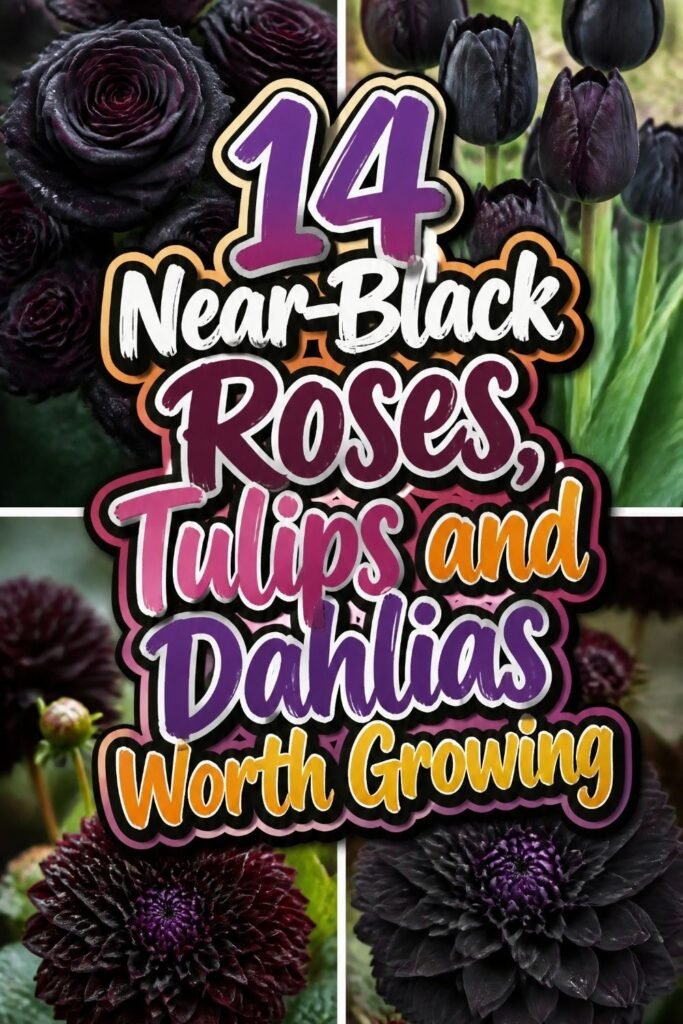
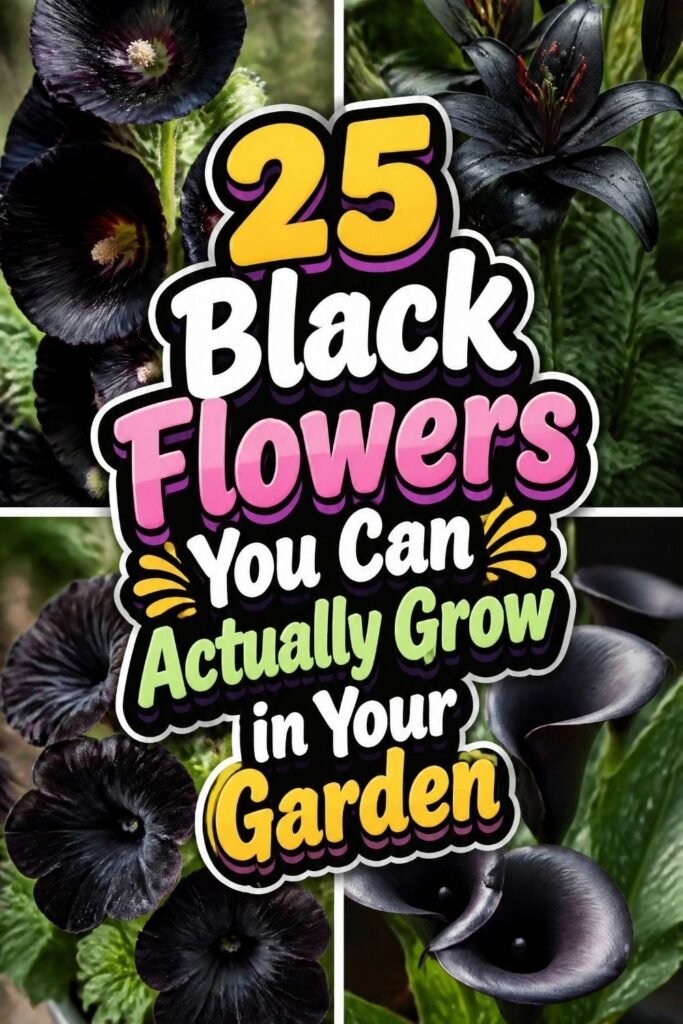
Dark flowers bring unmatched drama to any garden space. True black petals remain elusive in nature, yet deep burgundies, rich purples, and dark crimson shades create that coveted effect. Gardeners seeking this aesthetic gravitate toward varieties like midnight petunias, velvety dahlias, and near-black roses that catch the eye against lighter foliage.
Growing these striking blooms requires attention to seasonal timing. Most dark-flowered species prefer well-draining soil and consistent moisture without waterlogging. Pollinators flock to these plants surprisingly well, drawn by their nectar rather than their unusual coloration. Success depends heavily on matching each variety to its preferred growing window.
A few standout choices deserve special mention. Black scabiosa floats above borders on wiry stems, while dark hollyhocks tower with old-fashioned charm.
Smaller options like deep purple violas work beautifully in containers. Each type carries specific needs regarding sunlight exposure and winter hardiness that determine long-term performance.
What “Black” Flowers Really Are (And Why You Can Grow Them)
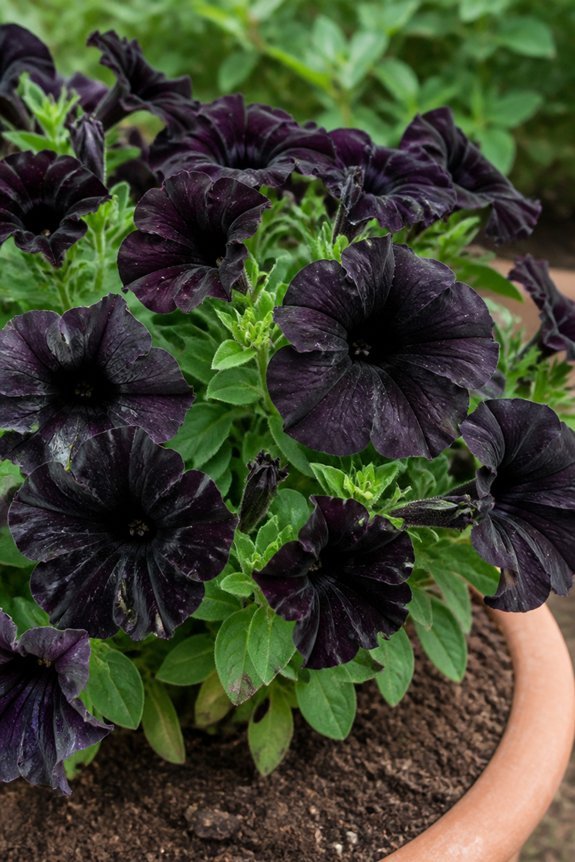
True black flowers do not exist in nature, since plants cannot produce the pigment required for pure black coloration.
What gardeners call black flowers are actually deep purples, dark reds, or dark browns. Examples include black petunias, black dahlias, and black hollyhocks. These dark varieties result from high anthocyanin pigment concentrations.
Gardeners can successfully cultivate these flowers using standard growing methods.
Black Petunias: Velvety Drama in Annual Beds
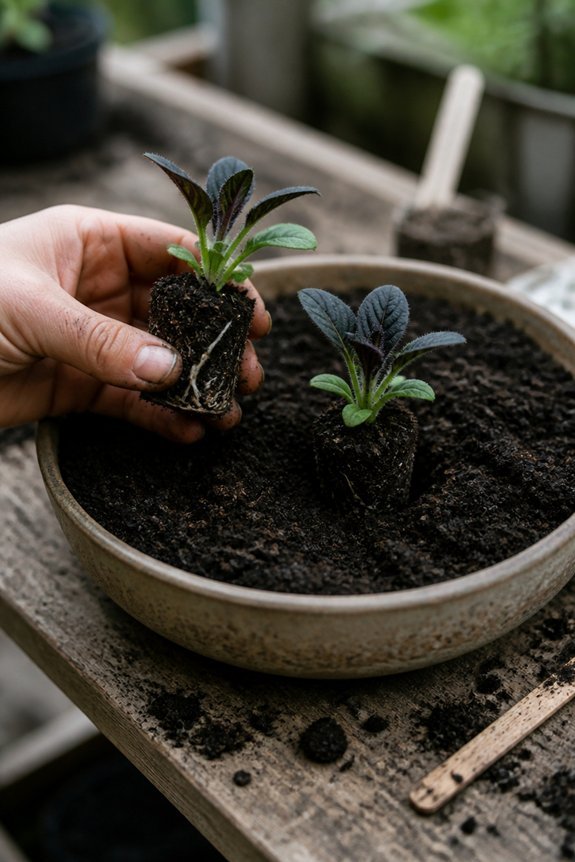
Black petunias exemplify the dark flower varieties discussed previously, offering gardeners a dramatic option for annual beds and containers. Varieties like ‘Black Velvet’ and ‘Black Pearl’ display deep purple blooms appearing nearly black in low light.
These petunias thrive in full sun, require regular deadheading for continuous flowering, and prefer well-draining soil. They complement lighter-colored plants effectively.
Black Dahlias: Elegant Centerpieces for Cutting Gardens
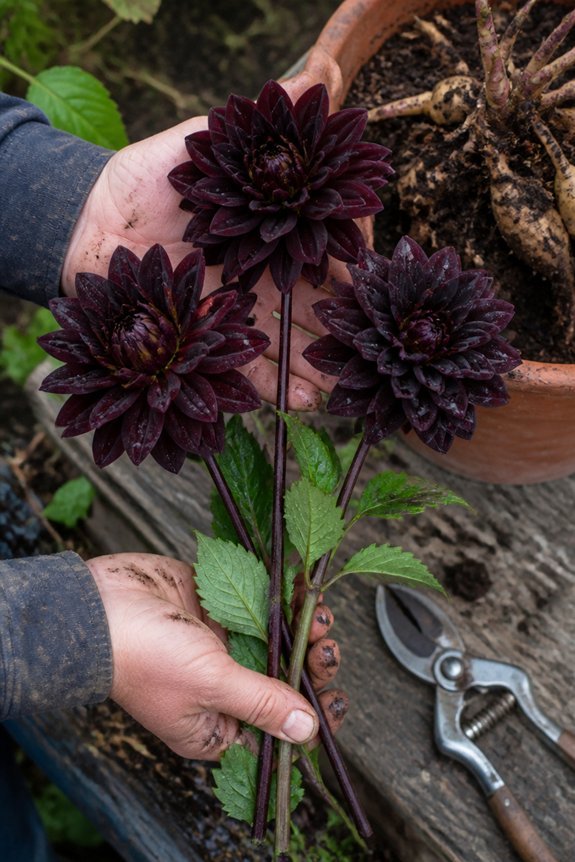
Dahlias with dark, nearly black petals represent a sophisticated choice for gardeners who cultivate flowers specifically for arrangements. Varieties like Mystic Merlin and Black Barberry produce long stems suitable for cutting.
These flowers bloom from midsummer through fall, requiring full sun, well-draining soil, and regular deadheading. Their dramatic coloring complements mixed bouquets effectively.
Black Hollyhocks: Tall Focal Points With Victorian Charm
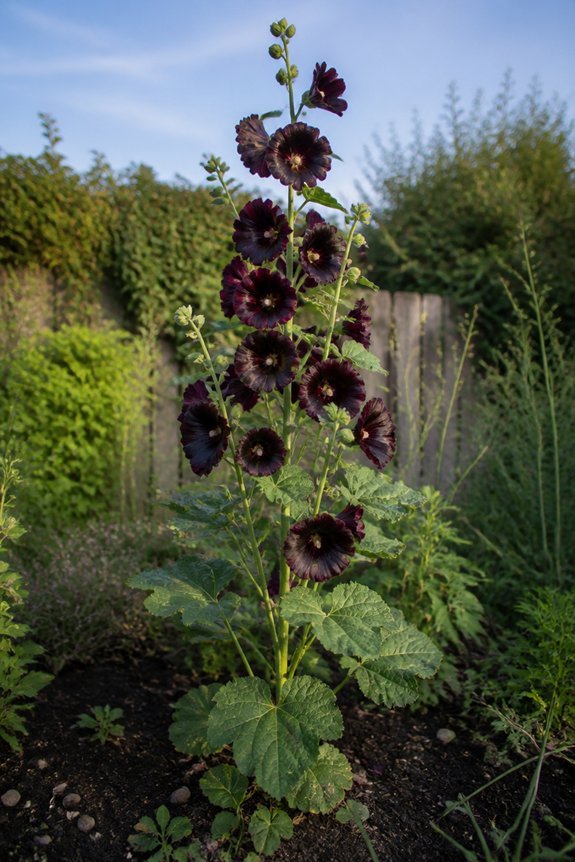
Hollyhocks with nearly black petals offer gardeners a striking vertical element, reaching heights of five to eight feet and creating dramatic garden backdrops. These flowers bloom in mid to late summer, displaying dark burgundy or near-black blooms along tall stalks.
Gardeners plant them in full sun locations with well-drained soil. They attract pollinators and require minimal maintenance once established in suitable conditions.
Black Roses: The Ultimate Luxury Dark Bloom
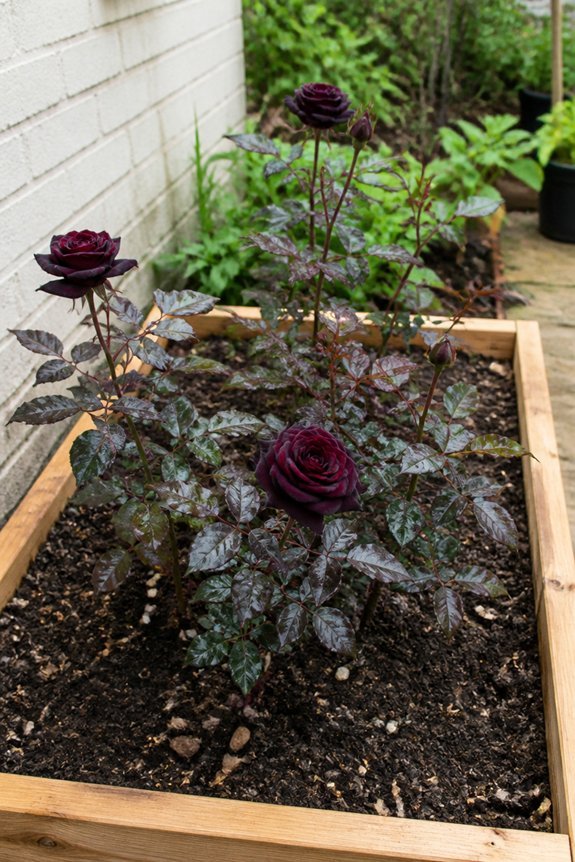
While most garden roses display reds, pinks, or whites, truly black roses represent one of horticulture’s most sought-after varieties, prized for their deep coloring and rarity. Varieties like ‘Black Baccara’ and ‘Black Magic’ offer deep burgundy petals that appear nearly black.
These roses require full sunlight, well-draining soil, and regular pruning. They command higher prices than standard roses due to their rarity and specialized cultivation demands.
Black Tulips: Spring Sophistication That Turns Heads
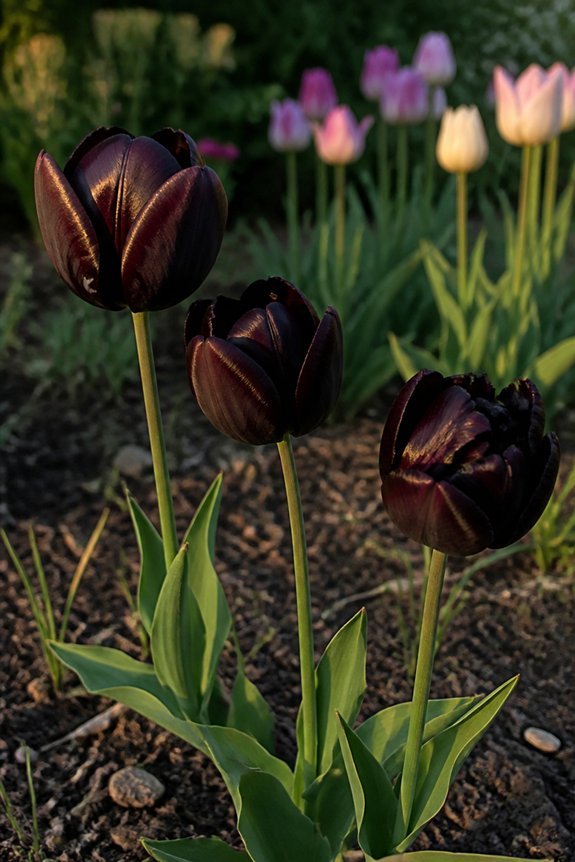
Black tulips offer gardeners a striking alternative to traditional spring bloomers, delivering dark petals in shades of deep purple and near-black that stand out in garden beds.
Varieties like ‘Queen of Night’ and ‘Black Parrot’ thrive in well-drained soil and full sunlight. Plant bulbs in autumn for spring flowering. These tulips require minimal maintenance once established, making them practical choices for garden designs seeking sophisticated, dark color palettes.
Black Pansies: Easy Edging Plants for Borders and Containers
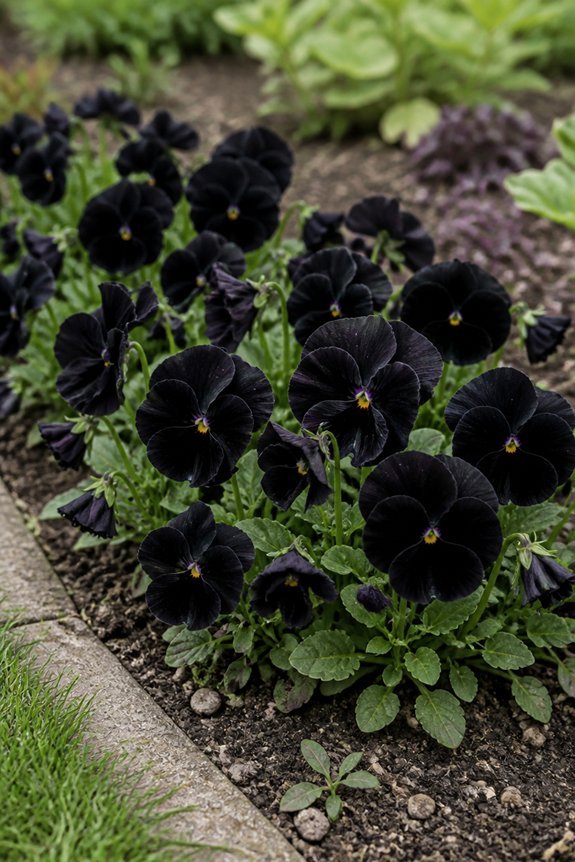
Pansies in deep black and dark purple shades offer gardeners another option for adding dark tones to spring gardens, though they function quite differently from tulips.
Black pansies work well as edging plants along borders and in containers. They tolerate partial shade, bloom reliably for months, and require regular deadheading to maintain flowering. These hardy annuals provide affordable, low-maintenance color options for various garden settings.
Black Sweet Potato Vine: Dark Foliage for Black Flower Gardens
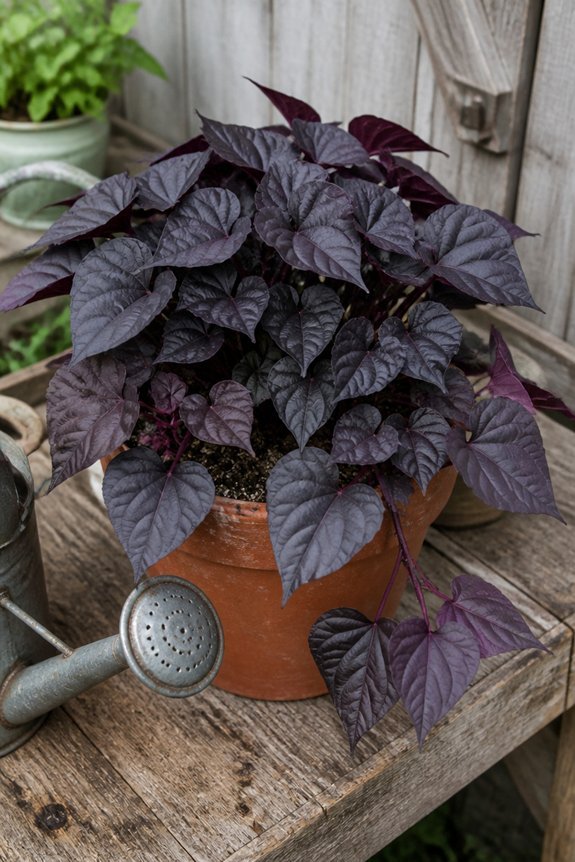
Ornamental sweet potato vines with dark purple or black leaves provide a complementary foliage option for gardens featuring black flowers. These vines grow vigorously, trailing along borders and containers. Varieties like Blackie offer deep, nearly black foliage that contrasts well with lighter blooms.
They tolerate partial shade, require regular watering, and prefer warm temperatures during growing seasons.
Black Sunflowers: Unexpected Darkness in a Cheerful Genus
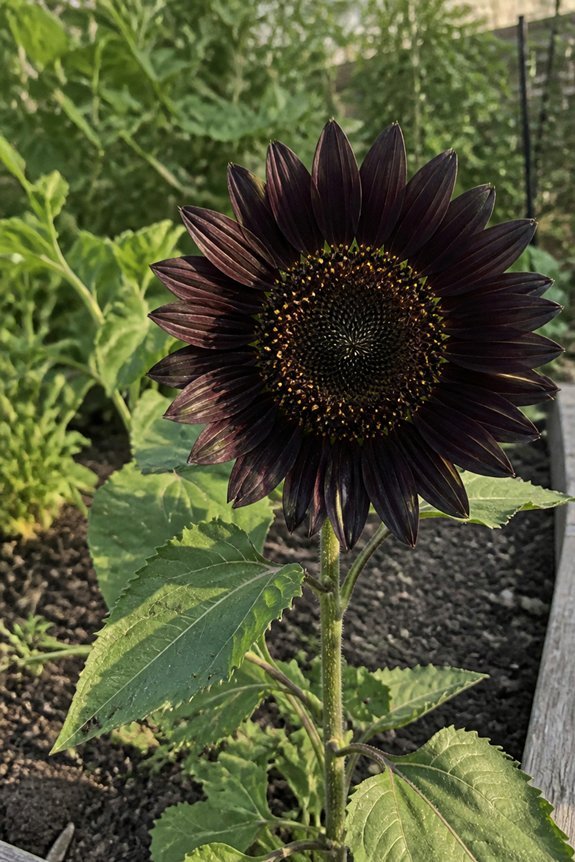
While most sunflowers display bright yellow or golden petals, several varieties produce dark burgundy, deep brown, or nearly black blooms that create striking visual contrasts in gardens. Varieties like Moulin Rouge and Chianti produce these darker tones.
These sunflowers require standard growing conditions: full sun, well-draining soil, and regular watering. They reach heights of four to six feet, making them suitable for borders or cut arrangements.
Black Snapdragons: Gothic Spires for Cottage Gardens
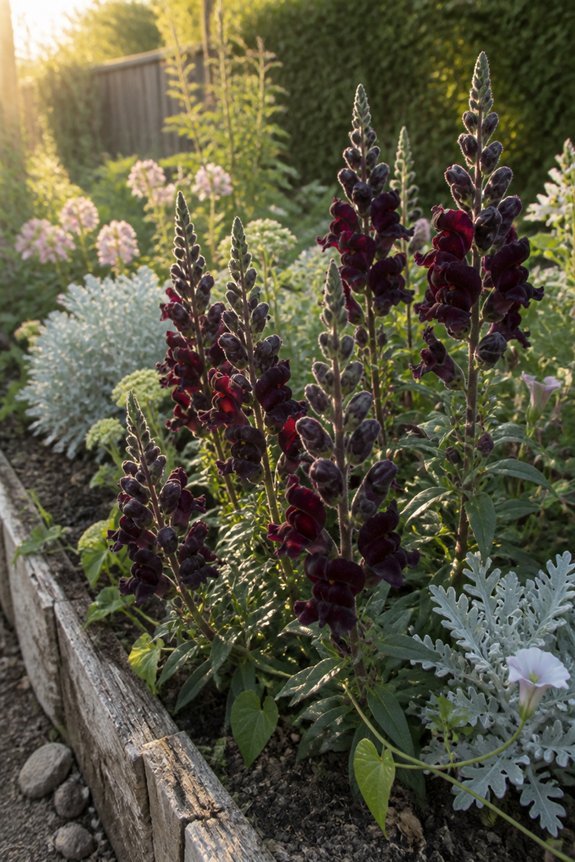
Selective breeding produces varieties like Black Prince and Black Night, which display deep burgundy flowers appearing nearly black. These tall perennials thrive in full sunlight, well-draining soil, and cooler climates. They reach heights of two to three feet, creating dramatic vertical accents in cottage garden borders and cutting arrangements.
Black Cosmos: Airy Texture With Dramatic Coloring
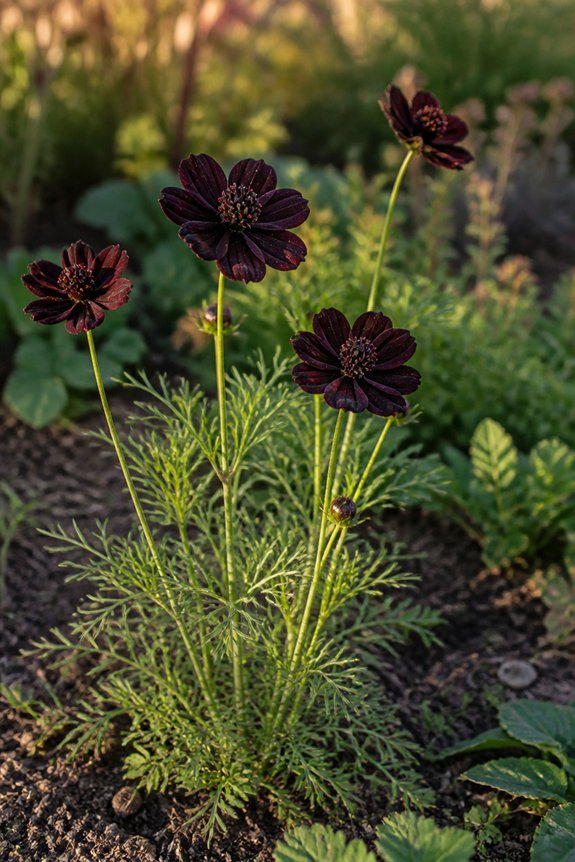
Black cosmos offers gardeners a different aesthetic approach than the rigid vertical forms of snapdragons, instead providing feathery foliage and delicate daisy-like blooms in deep maroon and near-black hues. These plants reach two to three feet tall and prefer full sun with well-draining soil.
They bloom from midsummer through fall, attracting pollinators while requiring minimal maintenance once established in garden beds.
Black Marigolds: Compact Options for Small Spaces
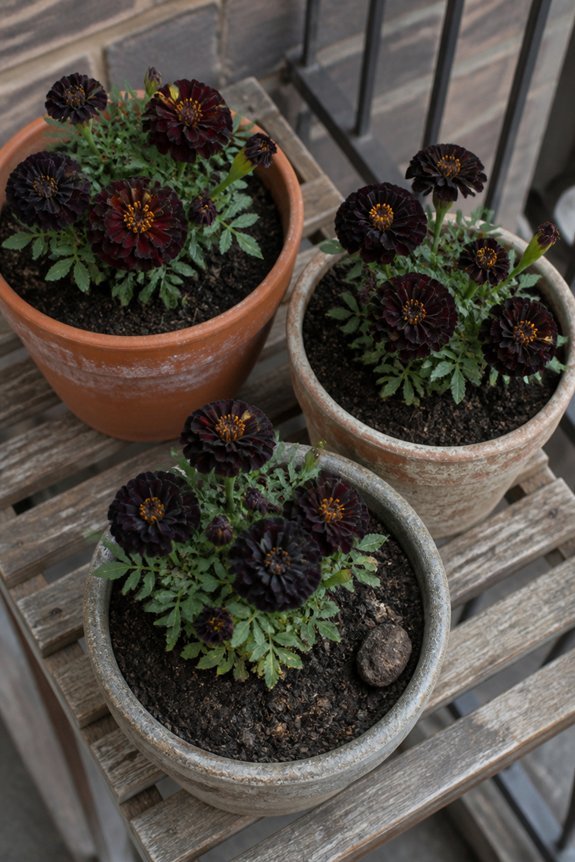
For gardeners with limited space, marigolds in deep burgundy and near-black shades offer a practical solution. Varieties like Durango Black and Bolero grow 12-18 inches tall, fitting containers and small beds easily. These compact plants produce abundant blooms, requiring full sun, well-draining soil, and regular deadheading.
Black marigolds tolerate heat and drought conditions effectively.
Black Calla Lilies: Architectural Elegance for Focal Arrangements
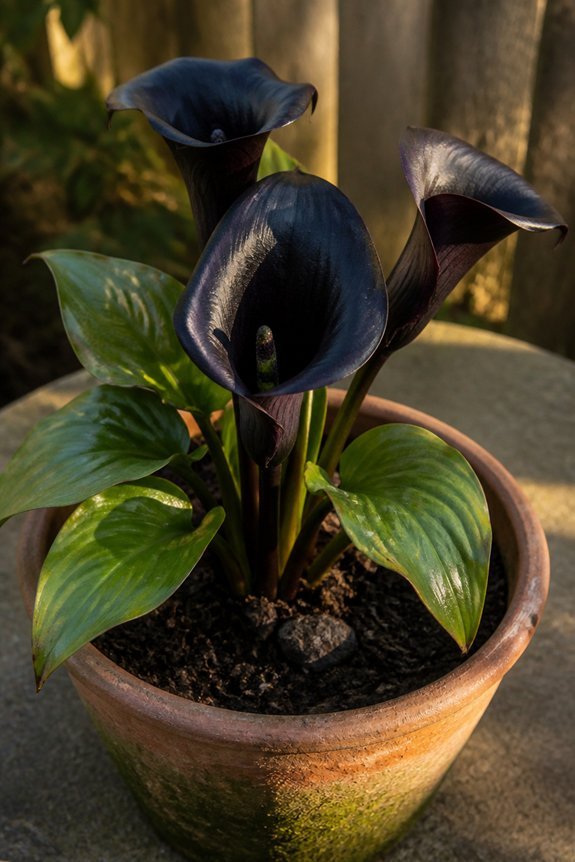
While compact marigolds serve practical purposes in confined garden spaces, calla lilies present a different aesthetic approach through their distinctive, sculptural blooms. Black varieties, including Black Beauty and Black Star, feature elegant, funnel-shaped flowers that work effectively as focal points in arrangements. These plants require well-draining soil, consistent moisture, and partial shade conditions.
Their dramatic form commands attention in garden compositions and cut flower displays.
Black Violas: Miniature Dark Blooms for Tight Plantings
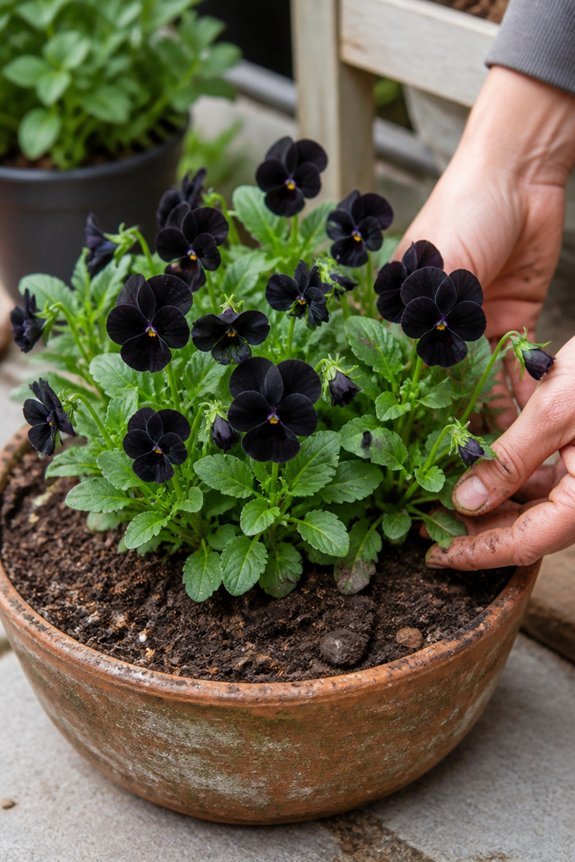
Unlike the architectural drama of calla lilies, violas offer compact growth and abundant flowering suitable for confined planting areas.
Black viola varieties, including Black Prince and Bowles Black, produce small, delicate petals in deep purple-black tones. These plants thrive in cool seasons, bloom continuously with deadheading, and tolerate partial shade.
Violas work well in containers, borders, and rock gardens where space remains limited.
Black Hellebores: Your Garden’s Winter Star
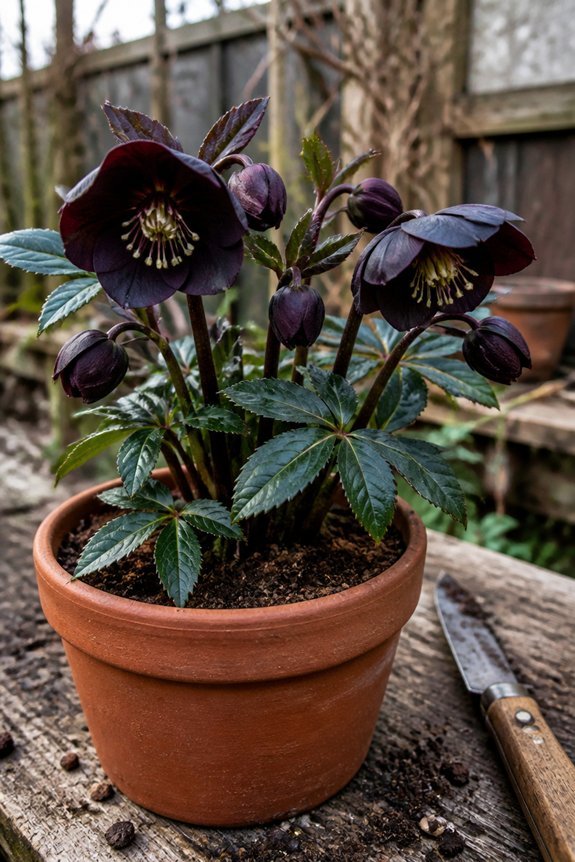
Winter gardens benefit from hellebores, plants that bloom when most flowers remain dormant. These perennials produce flowers in deep purple, burgundy, and near-black varieties throughout cold months.
Hellebores tolerate shade and moist soil conditions. They require minimal maintenance once established.
Common varieties include Helleborus niger and Helleborus orientalis, which flower reliably from December through March in most climates.
Black Lisianthus: Ruffled Petals With Florist-Quality Drama
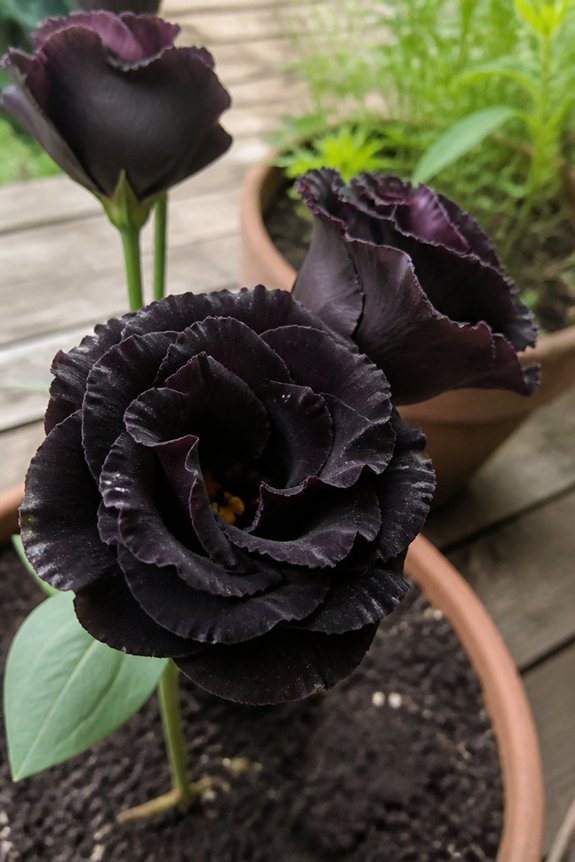
For gardeners seeking drama beyond winter bloomers, black lisianthus offers ruffled petals and sophisticated color that rival professional floral arrangements. These tender annuals thrive in warm conditions, requiring consistent moisture, well-draining soil, and bright indirect light.
Black lisianthus typically flowers mid-summer through fall, producing long-lasting blooms suitable for cutting. They demand patience, as seeds germinate slowly, making nursery starts a practical option for most gardeners.
Black Iris: Tall, Bearded, and Strikingly Exotic
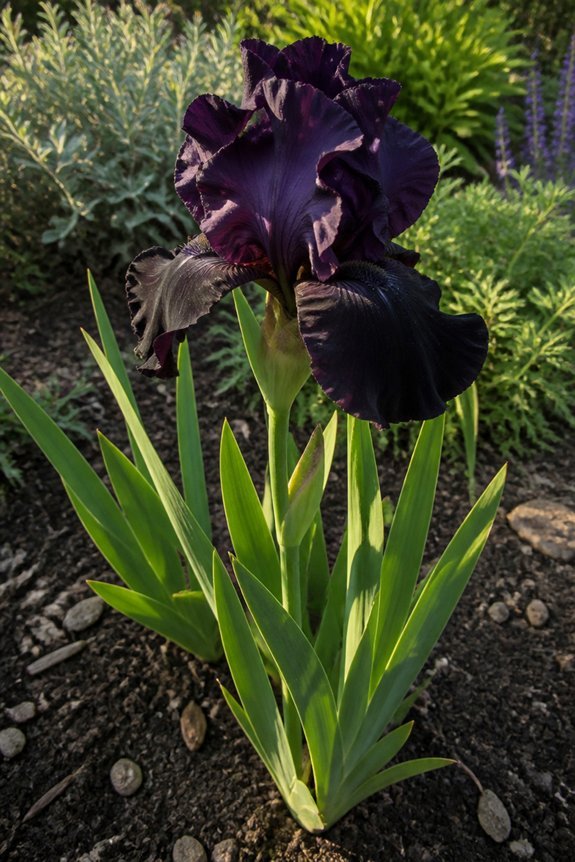
Black iris varieties, particularly the tall bearded types, deliver striking visual impact through deep purple and near-black coloration, velvety texture, and dramatic form. These perennials reach 28-40 inches tall and prefer well-draining soil, full sun, and dry conditions. Popular cultivars include ‘Superstition’ and ‘Before the Storm,’ which bloom in late spring.
They require minimal maintenance once established and tolerate poor soil effectively.
Black Zinnias: Heat-Tolerant Workhorses for Hot Climates
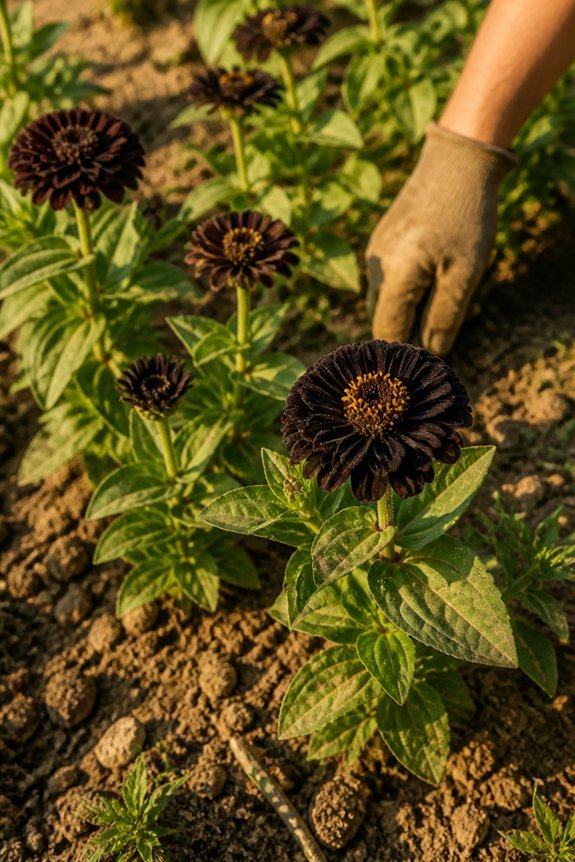
Many gardeners in warm regions turn to zinnias for reliable summer color, and black varieties offer particularly striking options for landscape design. Black zinnias tolerate heat well, require minimal water once established, and bloom continuously from summer through fall. Varieties like Black and White and Benary’s Giant produce dark burgundy flowers.
These plants attract pollinators and work effectively in borders, containers, and cut flower arrangements.
Black Carnations: Long-Lasting Blooms for Cutting Gardens
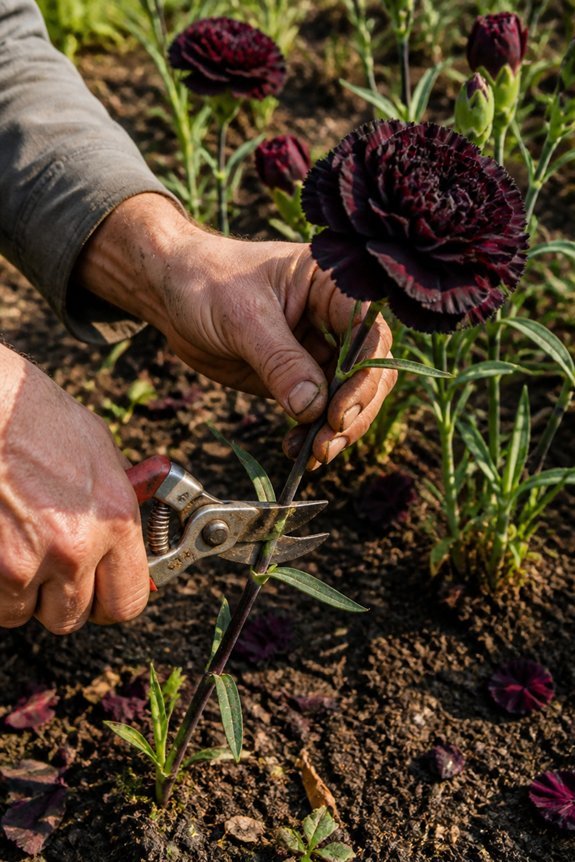
Carnations with dark burgundy or nearly black petals offer significant advantages for gardeners who cut and arrange flowers. These blooms last two to three weeks in a vase, longer than many alternatives.
Varieties like ‘Black Magic’ and ‘Black Beauty’ thrive in full sun and well-draining soil. They tolerate poor conditions, require minimal maintenance, and produce multiple stems per plant for frequent harvesting.
Black Bachelor’s Buttons: Cottage Garden Charm in Deep Tones
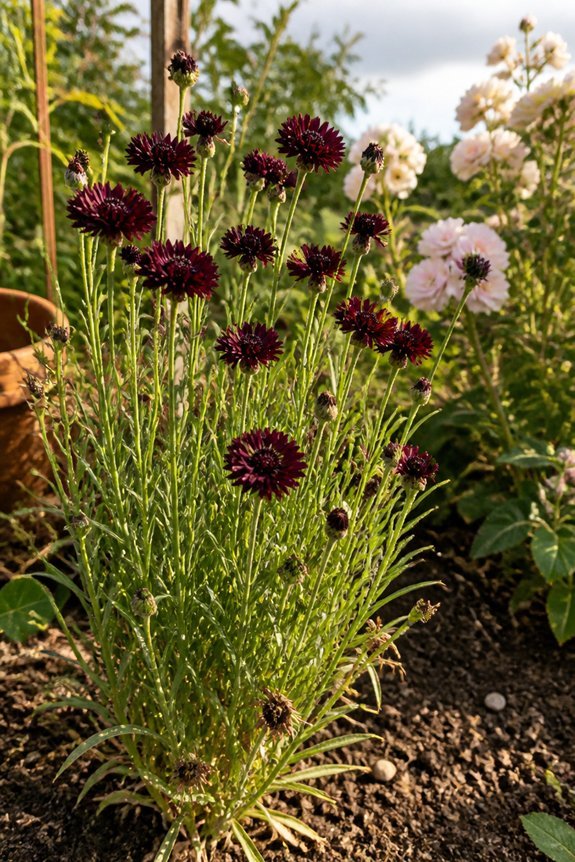
While bachelor’s buttons traditionally bloom in bright blues and pinks, the darker varieties offer a distinct aesthetic for cottage garden settings. The deep purple and near-black cultivars grow reliably in full sun, reaching 24 to 36 inches tall. They attract pollinators, tolerate poor soil, and reseed readily.
Cut flowers last approximately one week in arrangements, making them practical for both garden display and indoor use.
Black Morning Glories: Climbing Coverage With Moody Appeal
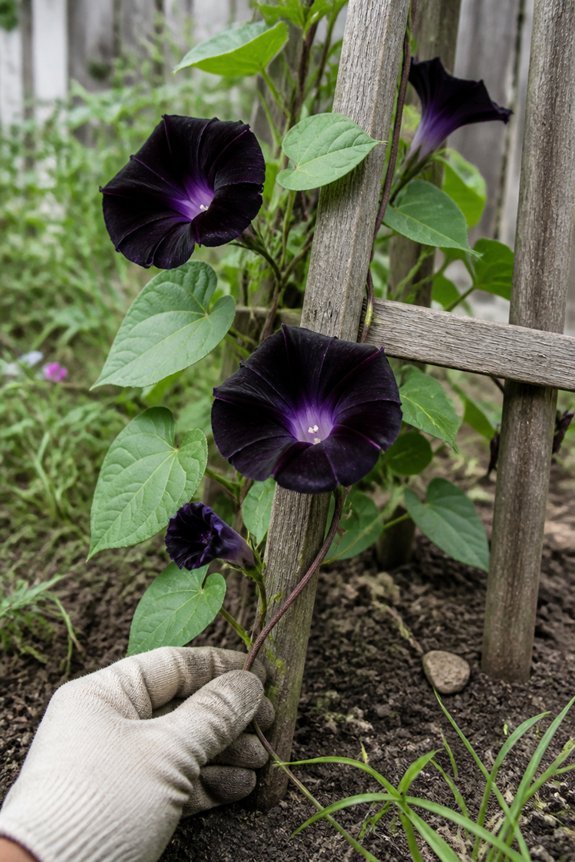
Black morning glories produce dark purple or near-black flowers that climb vertical surfaces, offering dense foliage coverage for trellises, fences, and arbors. These vines grow quickly and tolerate various soil conditions.
They require full sunlight and regular watering during establishment. Varieties like Ipomoea purpurea ‘Nigra’ perform reliably in most climates, blooming from summer through fall.
Black Scabiosa: Pincushion Flowers for Pollinators
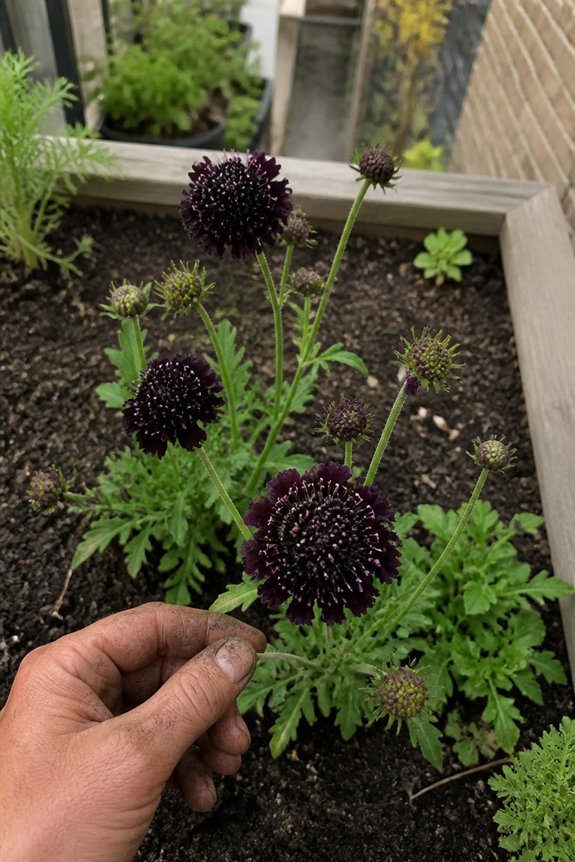
Scabiosa atropurpurea ‘Blackberry’ produces deep burgundy or nearly black pincushion flowers that attract bees, butterflies, and other pollinators to gardens. These plants grow 24 to 36 inches tall, preferring full sun and well-draining soil. They bloom from summer through fall, offering reliable color during peak pollinator seasons.
Deadheading spent flowers encourages continued blooming throughout the growing period.
Black Dianthus: Fragrant Blooms in Compact Forms
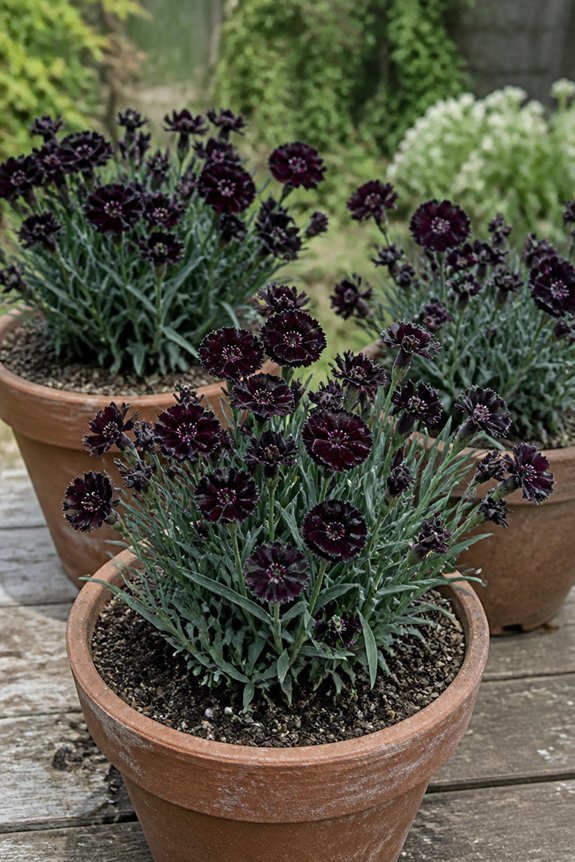
For gardeners seeking black flowers in smaller spaces, Dianthus varieties offer an alternative to tall pincushion plants. Black Dianthus cultivars, such as Perfuma Black and Sooty, produce fragrant blooms on compact stems.
These plants reach 12-18 inches tall, fitting well in borders and containers. They prefer full sun, well-draining soil, and moderate water. Blooms appear throughout summer months with deadheading.
Black Geraniums: Reliable Performers for Containers and Beds
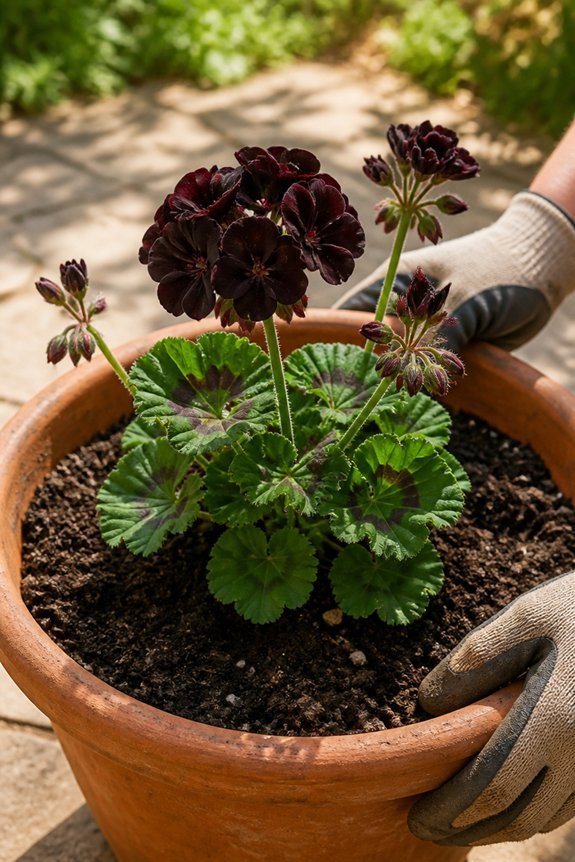
Geraniums with dark foliage and deep crimson-black flowers represent a reliable choice for gardeners working with containers and garden beds. Varieties like ‘Black Beauty’ and ‘Mourning Bride’ tolerate variable conditions, require minimal maintenance, and produce consistent blooms throughout growing seasons.
These plants adapt well to partial shade, standard soil, and regular watering schedules, making them practical options for both experienced and beginning gardeners.
How to Keep Black Flowers Blooming All Season
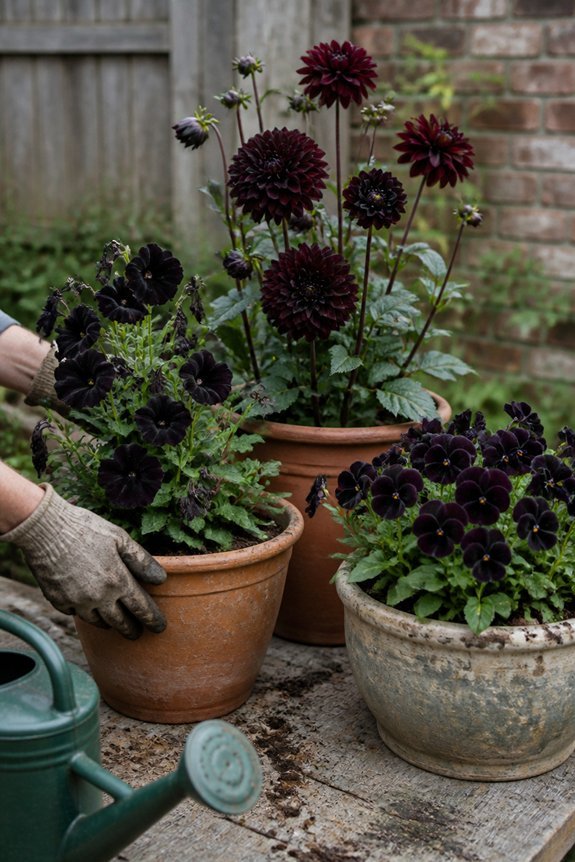
Maintaining consistent blooms throughout the growing season requires attention to several key factors: deadheading spent flowers, providing adequate sunlight, and following proper feeding schedules.
Black geraniums and petunias benefit from regular removal of faded blooms, which redirects energy toward new flower production. These plants need six to eight hours of direct sunlight daily. Balanced fertilizer applied every two weeks sustains vigorous flowering throughout summer and fall.
Frequently Asked Questions
Do Black Flowers Attract Fewer Pollinators Than Traditionally Colored Flowers?
Black flowers do attract fewer pollinators compared to traditionally colored blooms. Their dark pigmentation absorbs rather than reflects light, making them less visually prominent to bees and butterflies seeking nectar-rich sources in gardens.
How Do I Photograph Black Flowers to Show Their True Beauty?
Photographers should use diffused lighting to capture black flowers’ subtle details and textures. Positioning flowers against lighter backgrounds creates contrast, while macro lenses reveal intricate patterns. Shooting during overcast conditions or golden hour prevents harsh shadows that obscure their natural beauty.
Can I Successfully Grow Black Flowers in Containers Indoors Year-Round?
One can successfully cultivate black flowers in containers indoors year-round by providing adequate artificial lighting, maintaining consistent temperatures between 65-75°F, ensuring proper humidity levels, and selecting varieties like black petunias or black dahlias suited for container growth.
What Soil Amendments Help Intensify the Darkness of Black Flower Petals?
Soil scientists suggest sulfur and iron supplements considerably strengthen the saturation of black flower petals. Acidic amendments and organic materials modify the plant’s pigment production, enabling enriched ebony coloration. Regular applications refine results remarkably.
Are Black Flowers More Susceptible to Pests and Diseases Than Other Varieties?
Black flowers are not inherently more susceptible to pests and diseases than other varieties. Their vulnerability depends on the specific cultivar and growing conditions rather than petal pigmentation. Proper care and maintenance determine disease resistance.
Conclusion
Black flowers function like dark stones in a garden’s mosaic, each one anchoring its surroundings through contrast and depth. Black petunias, dahlias, roses, and scabiosa serve as garden sentinels, drawing eyes inward while supporting pollinators. Gardeners who cultivate these varieties discover that consistent watering, proper sunlight, and deadheading sustain blooms throughout seasons. These flowers transform ordinary beds into sophisticated displays, proving that darkness creates visual weight and structure in landscape design.