A gray, salt-bleached branch picked up on a beach walk usually ends up on a shelf doing nothing. Plant a few succulents into its curves and it becomes something guests ask about. That’s the appeal of the best driftwood succulent planter ideas: the wood brings the shape, and the plants bring the life.
The 17 ideas below cover the house and yard. There are long centerpieces for the dining table, wall pieces hung like paintings, a rope-hung planter for the porch, and a stump of hens and chicks for the garden. Each one comes with the step that makes it work, such as drilling shallow pockets, hiding a liner pot for drainage, or gluing cuttings onto sphagnum moss. You’ll also see which echeverias, sedums and trailing succulents suit each spot, with honest notes on how long bare-root pieces last.
No beach nearby? A weathered cedar log or a fallen branch works too, as long as you clean it first.
QUICK SPOT CHECK
Where will your driftwood live?
How to Pick the Right Driftwood
Look for wood that’s fully dry, feels solid when you press a thumbnail into it, and has at least one natural dip, crook or hollow for plants to sit in. A piece with one flat side sits steady on a table without wobbling. Pale, silvery wood shows off green and blue rosettes best, while darker wood suits pink and red succulents. Whatever you bring home, clean it first with the checklist in idea 15.
1. A Long Driftwood Centerpiece Down the Dining Table
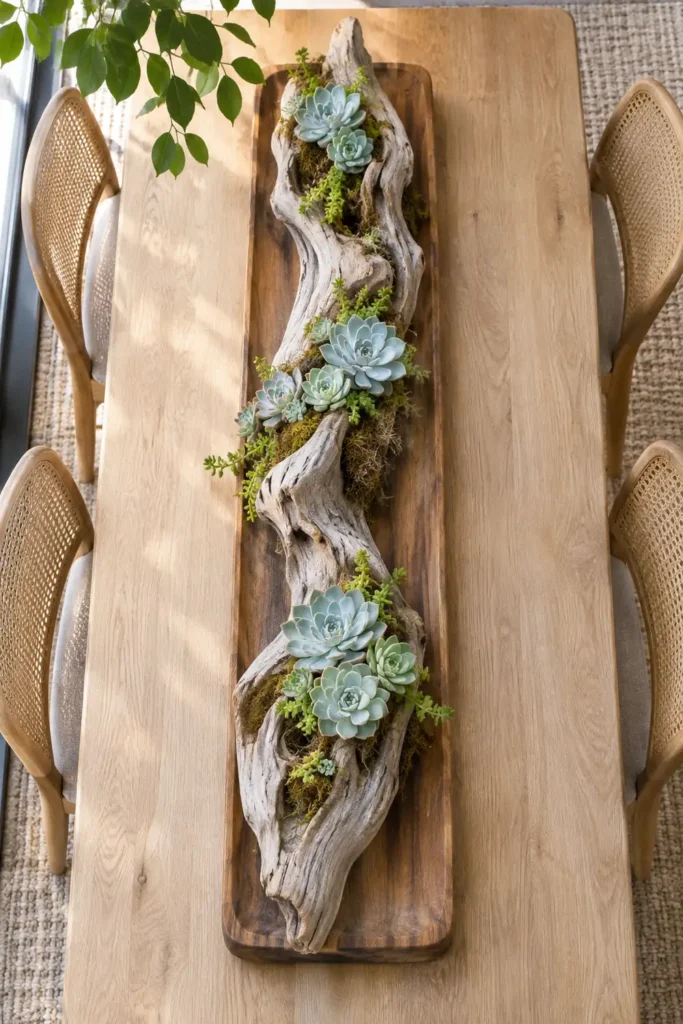
A long, low piece of driftwood running down the middle of the dining table gives you a centerpiece that never blocks a face across the table. Plant tight clusters of pale blue green echeveria rosettes in the natural dips along the top. Tuck small sedum around them and pack damp sphagnum moss into the gaps so everything stays put. Leave bare stretches of silvery wood between the clusters. That empty wood is what makes a driftwood succulent centerpiece look like sculpture instead of a crowded planter.
Easy Decor note: set the piece on a long wooden tray or a few felt pads so damp moss never touches the tabletop. Most dining tables don’t get enough light for succulents, so move the centerpiece to a sunny window between dinners. You’ll find more ideas for the table in these succulent centerpieces.
2. Wall-Mounted Driftwood as Living Art Above a Console
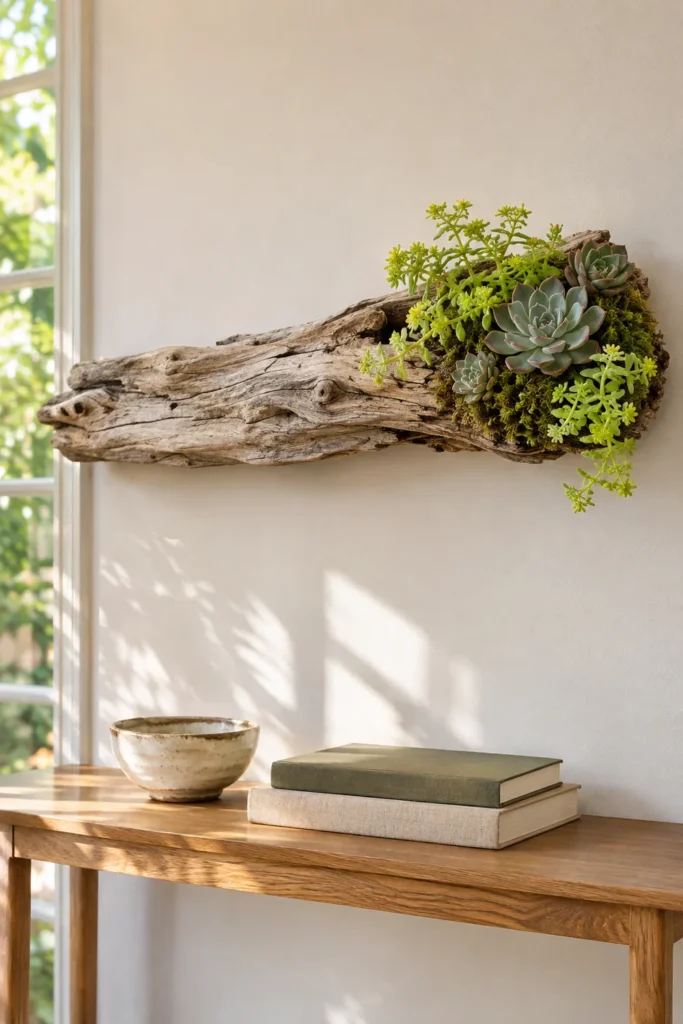
Cover every inch of a driftwood board with plants and it looks like a craft fair booth. Plant one end and leave the rest bare, and it reads as art. Hang a flat piece of driftwood at eye level above a console table, the way you’d hang a painting. Then cluster the plants toward one end in a group of three or five, with green sedum and a few small echeverias. The bare wood gives the eye somewhere to rest, and the plants give it something to land on.
Driftwood gets heavier once the moss is wet, so hang it with sturdy D-rings and wall anchors rated well above its dry weight. A wall near a bright window keeps the rosettes tight and colorful. To water it, lift the piece down, mist it in the sink, and let it drip dry before rehanging.
3. A Rope-Hung Driftwood Planter on a Covered Porch
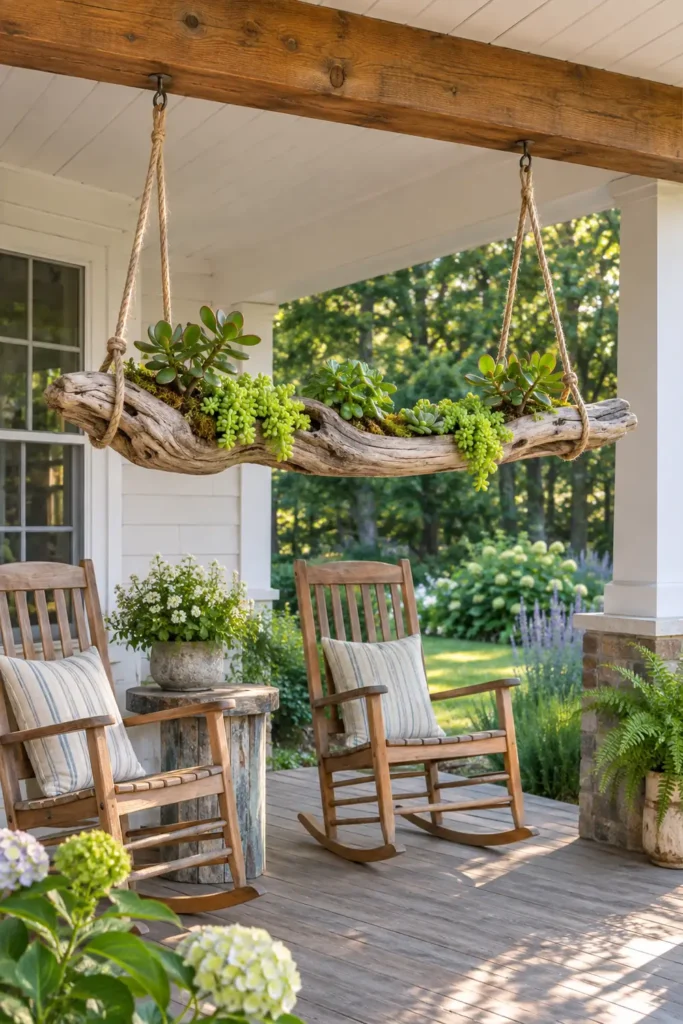
A covered porch with no floor space left still has empty air under the ceiling. Hang a long piece of driftwood level from two lengths of natural jute rope and plant its hollows with sedum and jade cuttings. Now the plants sit at eye level where everyone sees them on the way in. The porch roof keeps heavy rain off, while the open sides still give the bright light succulents need.
A hanging driftwood planter dries out fast in wind and summer heat, so check the moss every few days in hot weather and water when it feels dry an inch down. Screw the ceiling hook into a solid porch beam, not just the thin ceiling boards. Hanging it also keeps the plants above curious pets, but check any plant you choose on a pet safety list before you rely on that. Bring it indoors before the first frost.
4. A Hidden Liner Pot Inside a Driftwood Cradle
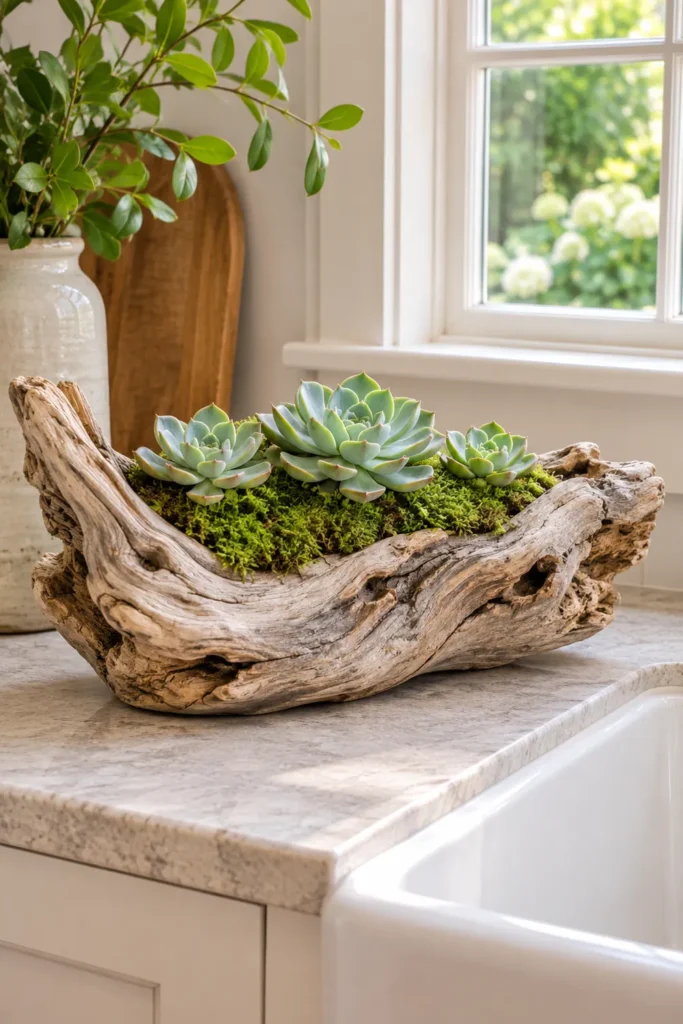
Most driftwood planters have a drainage problem nobody mentions. Water poured into a hollow in solid wood has nowhere to go, so roots sit wet and the wood starts to rot. The fix is a hidden liner. Find a piece with a cavity deep enough to hold a small plastic nursery pot. Plant the succulents in that pot with cactus and succulent potting mix, tuck it into the hollow, and cover the rim with sheet moss so the pot disappears.
To water, lift the pot out, soak it in the sink, let it drain completely, and set it back. The wood stays dry and the plants get real soil. It’s the same reasoning behind whether indoor plants need drainage holes.
You will need: a driftwood piece with a deep hollow, a plastic nursery pot that fits inside it, cactus and succulent potting mix, two or three small echeverias, a handful of sheet moss.
5. Natural Hollow Driftwood Filled With Soil and Rosettes
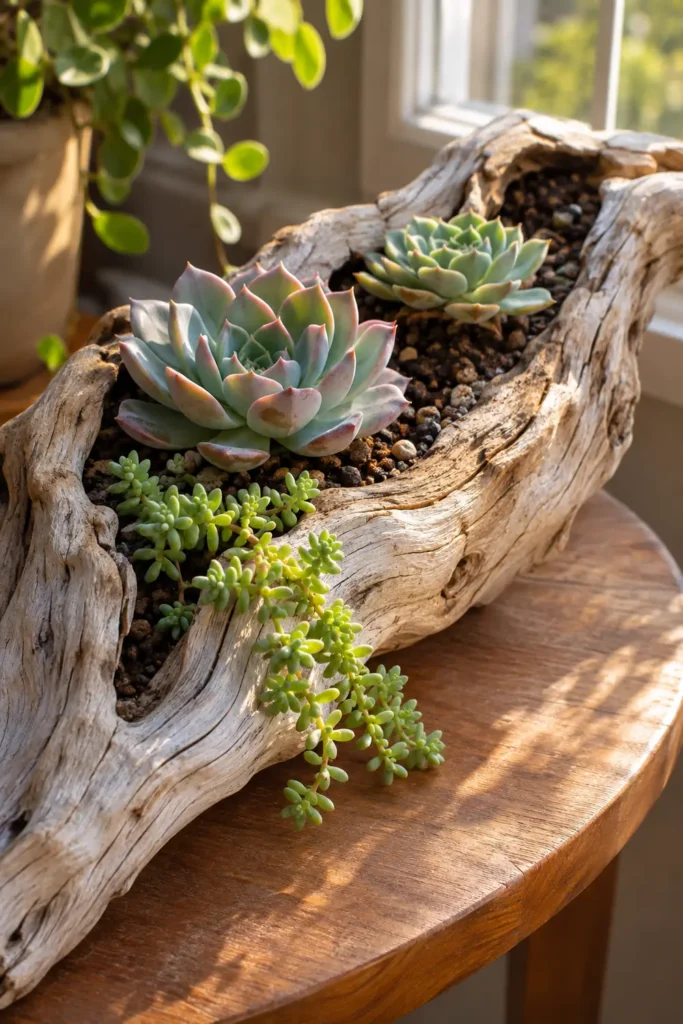
A deep knot hole or a split channel running along a piece of driftwood is a planter the sea already carved. Use that cavity instead of drilling a new one. Line the bottom with a thin layer of sphagnum moss, fill the rest with cactus and succulent potting mix, and plant two or three echeveria rosettes with a trailing stem of sedum spilling over the lip. Set it on a side table by the brightest window and the pale wood frames the plants the way a mat frames a print.
Soil makes this version last. Bare-root plants on glued moss look good for a few months, while succulents rooted in real mix can keep growing for years. If the wood is thick enough, drill one small drainage hole at the lowest point of the hollow. If not, water sparingly with a squeeze bottle.
6. Burro’s Tail Trailing Off a Mantel Driftwood Piece
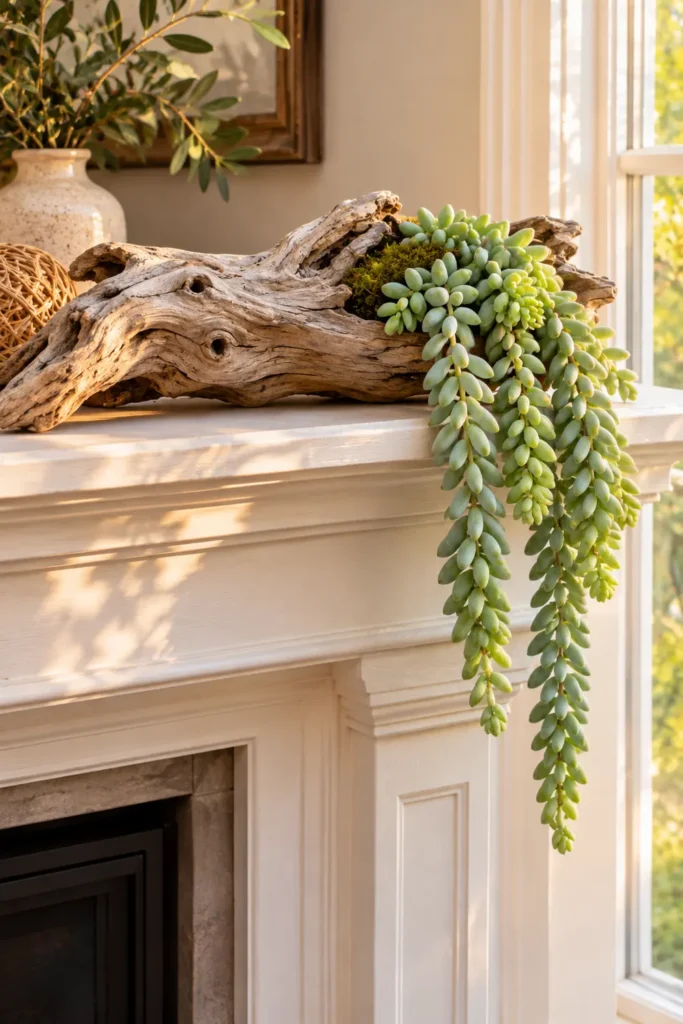
Burro’s tail is the succulent to reach for when a mantel needs some softness. Its thick, rope-like stems of plump blue green leaves hang straight down. Plant one at the end of a long piece of driftwood and the stems spill over the mantel edge, softening its hard line.
Burro’s tail drops leaves if you so much as brush past it, so plant it once and leave it alone. Keep it at the end of the mantel that’s closest to a sunny window, because it stretches and fades in dim light. If you use the fireplace, keep the dry moss and wood well back from the firebox opening. Fallen leaves aren’t wasted, either. These donkey tail succulent ideas cover rooting them into new plants, since donkey tail is another name for the same succulent.
7. Drilled Pockets in a Driftwood Plank for a Row of Echeverias
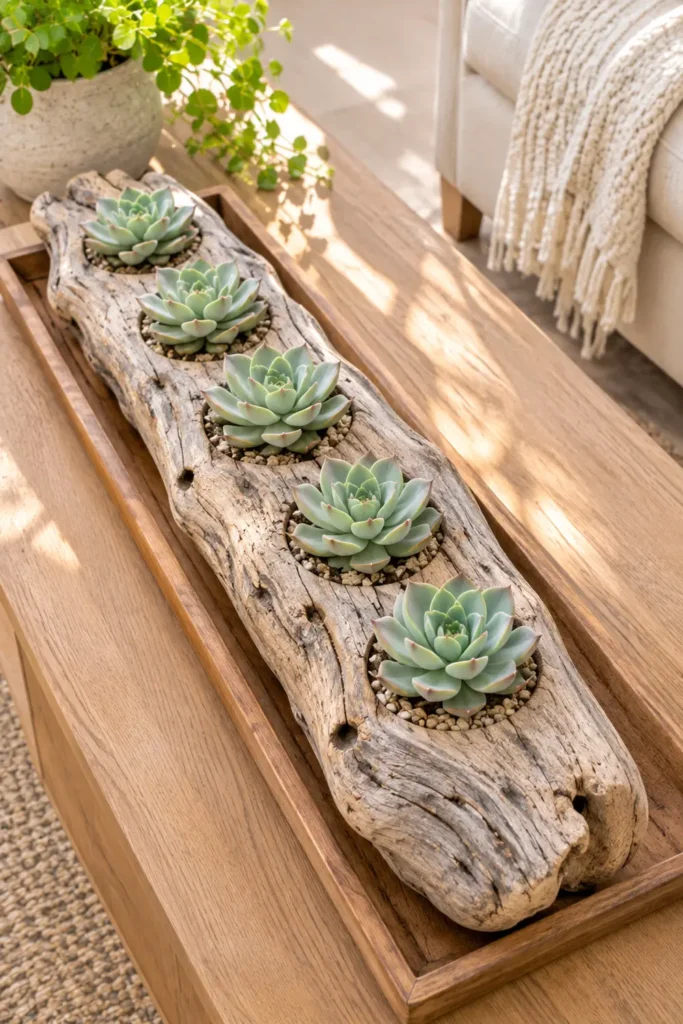
Plant a flat driftwood plank with five different succulents and it looks busy. Plant it with five of the same pale blue echeveria and it looks deliberate, because repeating one rosette creates a calm rhythm, like beads on a string. That’s the simplest answer to how to plant succulents in driftwood when the piece has no natural holes.
Clamp the plank down, wear safety glasses, and drill five shallow pockets with a wide paddle bit, spaced along the grain. A succulent needs only a little root room, so a pocket that’s too deep just swallows the plant. Drill a narrow drainage hole through the bottom of each pocket, then fill it with cactus and succulent potting mix and plant. Set the plank on a coffee table close to a window, with a slim tray underneath to catch drips.
8. Air Plants and Succulents on Bleached Driftwood
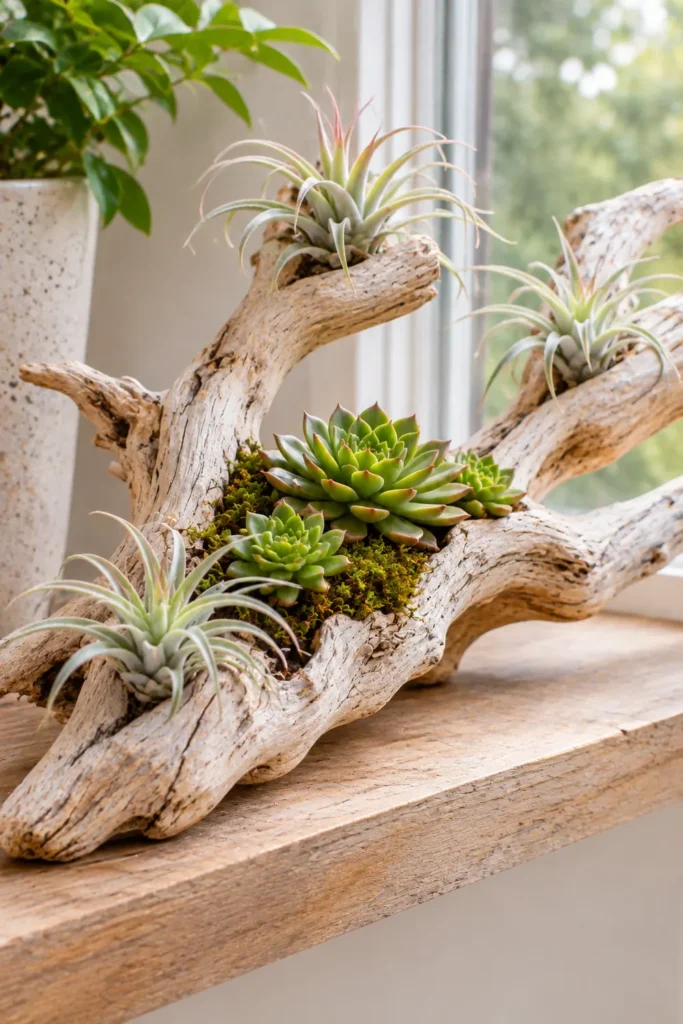
Air plants and succulents look good together on pale, sun-bleached driftwood, but they want opposite watering. Air plants like a regular soak. Succulents like their roots to dry out between drinks. Plant them in separate zones and you can care for both. Pack a moss pocket at the center of the wood with green echeverias. Then wedge silvery air plants into the bare crooks and forks out on the branches, without glue, so they lift right out.
Every week or so, take the air plants off for a quick soak in the sink. Shake them dry and leave them upside down until they’re fully dry before putting them back. Water the succulent pocket only when the moss feels dry.
| Air plants on driftwood | Succulents on driftwood |
|---|---|
| Attach: wedge into a crook or wire loosely, no moss over the base | Attach: plant in a moss or soil pocket |
| Water: soak or mist regularly, then dry upside down | Water: only when the moss or soil feels dry |
| Light: bright, mostly indirect | Light: bright, with some direct sun |
| Watch for: rot when the base stays wet after soaking | Watch for: stretched, pale rosettes in low light |
9. Upright Driftwood Living Sculpture on a Stone Base
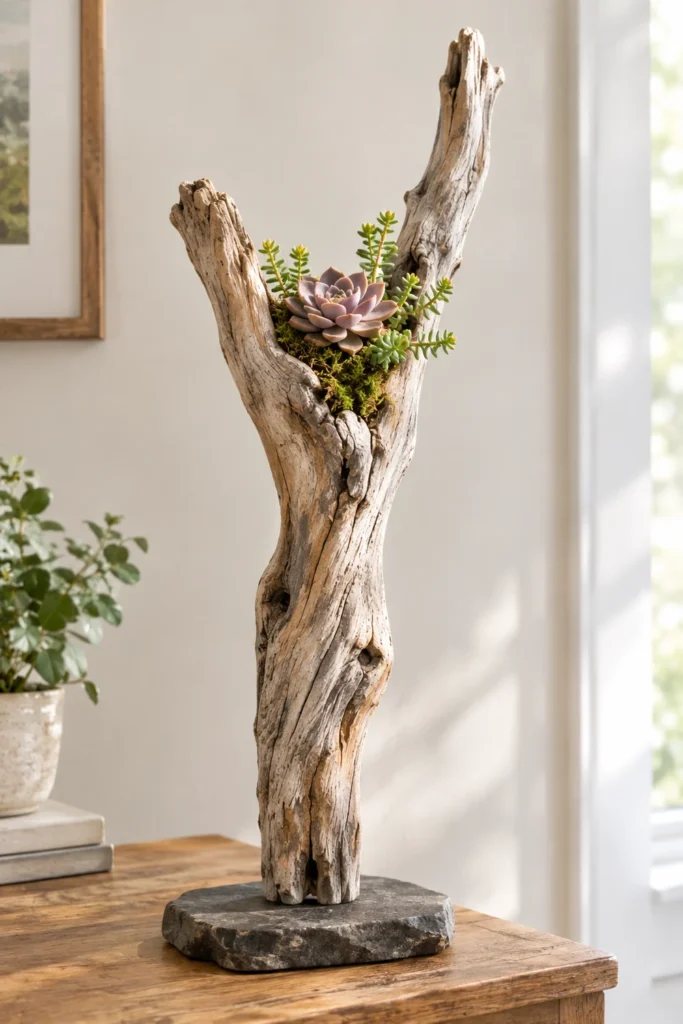
Lay a piece of driftwood flat and it’s a planter. Stand it on end and it becomes a sculpture. Look for a branching piece with a natural fork about two-thirds of the way up. Mount it upright on a heavy slate or stone base, and plant only the crook of the fork. A single dusty pink echeveria and a few stems of sedum tucked into a moss pocket are plenty. The tall bare wood above and below the plants does the rest, because empty space is what makes a gallery piece feel calm.
To mount it, drill a hole into the bottom of the driftwood and into the base, then set a steel pin in both with epoxy. A wide, heavy base keeps the piece from tipping if a pet or a child bumps it. An entry table next to a bright window shows it off from every side.
10. A Garden Corner Stump Planted With Hens and Chicks
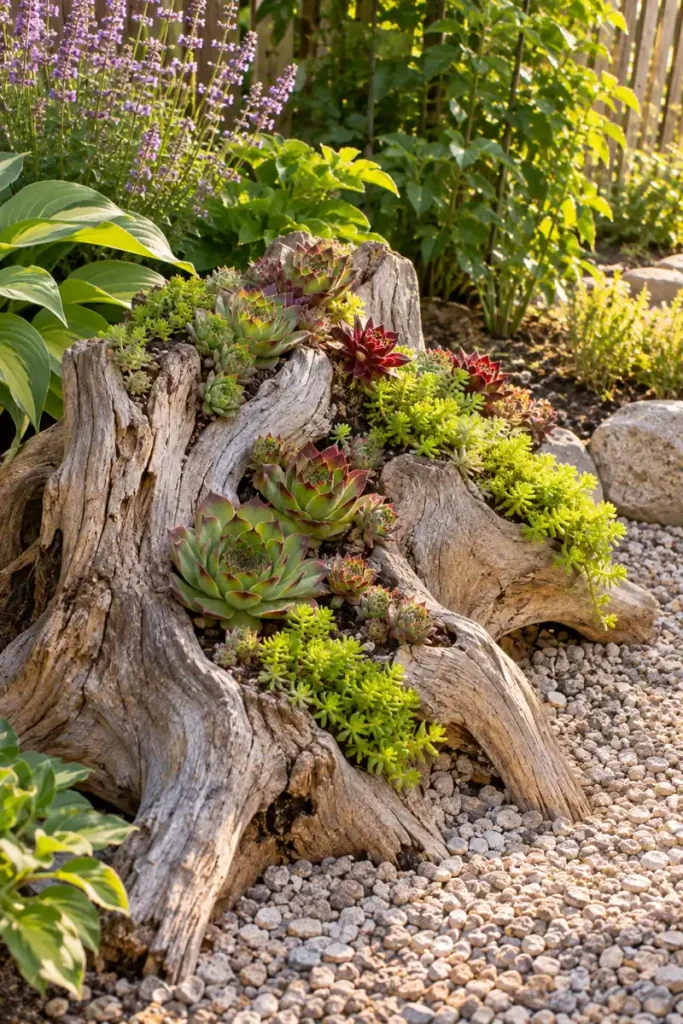
A big weathered driftwood stump in the corner of a sunny garden bed gives a flat planting area some height. It makes sense year round once hens and chicks move into its cracks. Pack the hollows and crevices with a gritty mix of cactus soil and fine gravel, then press in hens and chicks along with a few mats of low sedum. As a rule of thumb, both handle frost and come back each spring. The hens send out baby chicks that fill the gaps on their own.
Planting note: set the stump on a bed of gravel rather than bare soil, because constant contact with wet ground speeds up rot. Outdoor wood still breaks down slowly over the years, and the plants soften that aging nicely. If your winters run harsh, these cold climate succulent garden ideas list more tough picks.
11. A Moss-and-Glue Cascade for Solid Driftwood
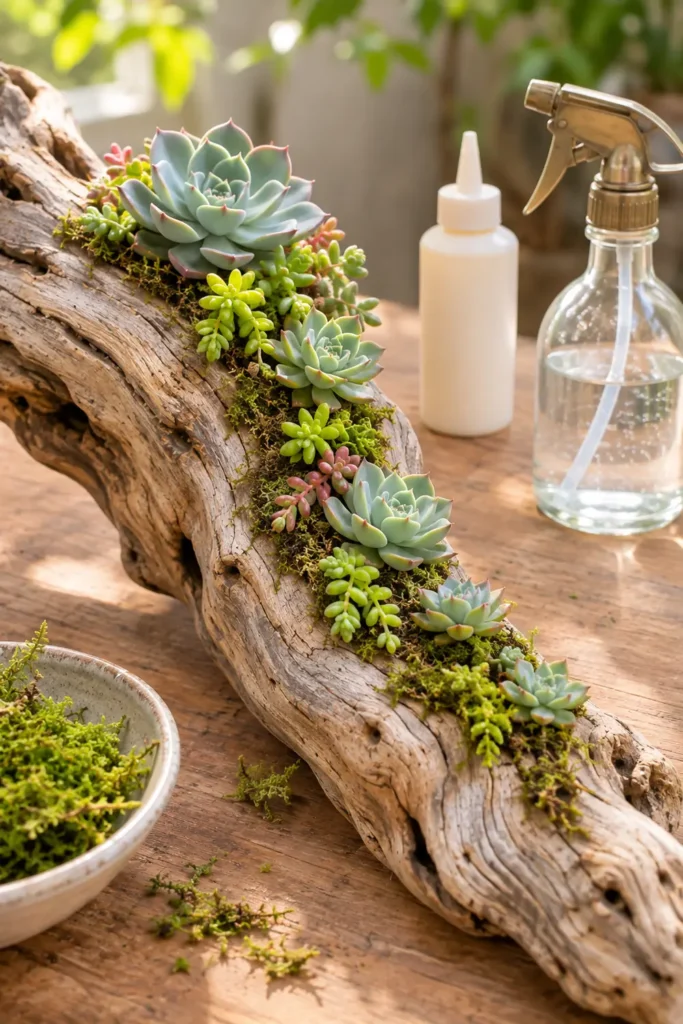
A solid piece of driftwood with no holes can still carry a waterfall of succulents. Glue damp sphagnum moss along the top curve with floral glue, which is made for live plants. Then fix bare-root succulents and cuttings onto the moss with small dabs, largest rosettes first and smaller ones packed in around them. Run them down the wood’s natural curve so they look like they’re spilling over the edge. Wait a few days, then mist whenever the moss feels dry.
Be honest with yourself about this one. Bare-root arrangements usually look their best for a few months, not years. Many cuttings do root into the moss, and when they start to stretch, you can move them into soil and refresh the piece.
You will need: a solid piece of driftwood, sphagnum moss, floral glue, echeveria and sedum cuttings, a spray bottle.
12. Faux Succulents on Driftwood for a Dim Bathroom
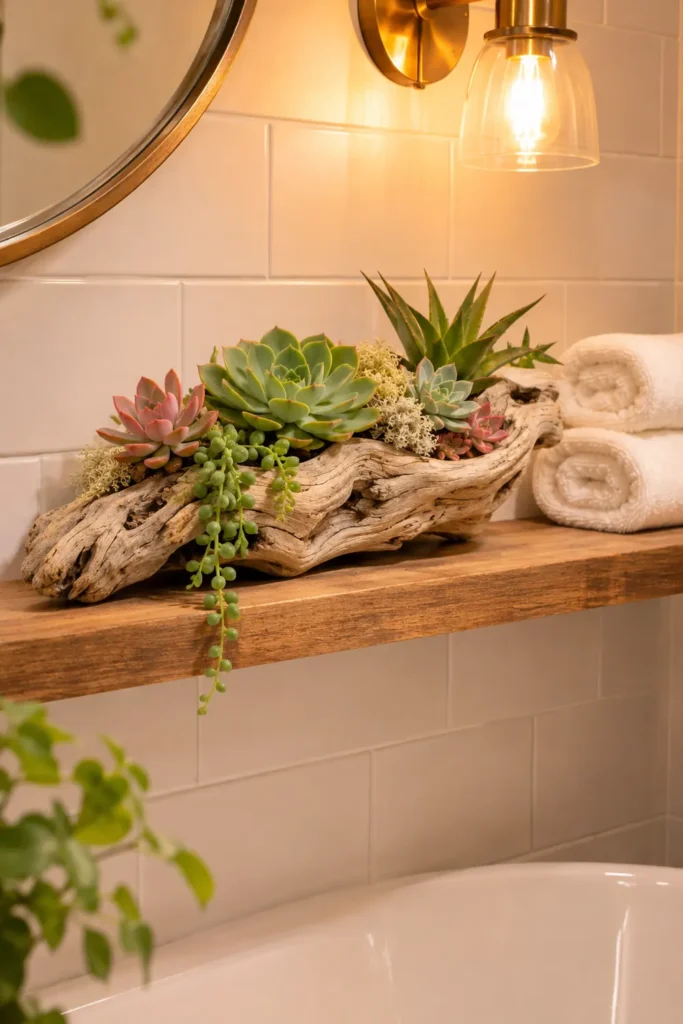
A windowless bathroom will kill a real succulent within weeks, however good your intentions. Faux succulents don’t care about the dark or the steam, so a driftwood piece on the shelf above the tub can look fresh all year. The trick is making them believable. Choose matte faux succulents in mixed sizes and soft, dusty colors, because shiny plastic and identical rosettes give the game away. Glue them to the wood with a multi-surface craft glue and tuck in a little preserved reindeer moss around the bases. Leave plenty of bare wood showing, just as you would with live plants.
Wipe the leaves with a soft, dry brush every few weeks, since dust is the one thing that makes faux plants look fake.
13. Driftwood Rising From a Wide Terracotta Bowl Garden
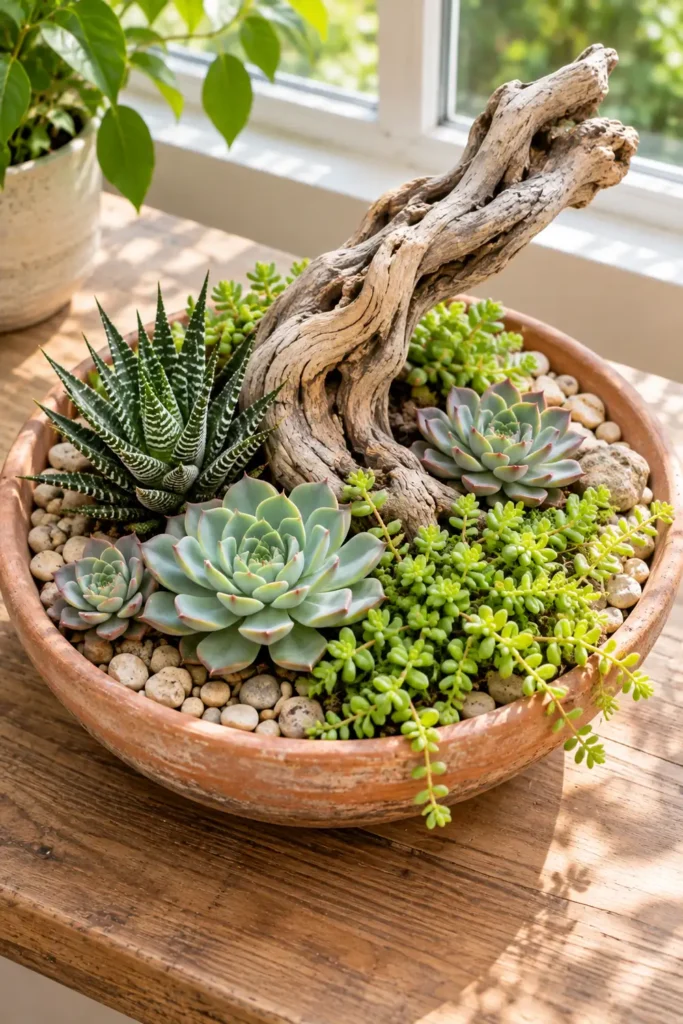
One short, twisted piece of driftwood set at an angle in a wide terracotta bowl turns a plain succulent bowl into a small landscape. The wood does the sculptural work, and the soil does the growing. Plant striped haworthia, small echeveria rosettes, and a creeping groundcover sedum around its base. Top-dress the mix with pale pebbles so the gray wood stands out. This is the easiest driftwood succulent arrangement to keep alive, because it’s really an ordinary container with a drainage hole.
Push the driftwood a few inches into the cactus mix so it stays put, and choose a dense, well-dried piece, since the buried end stays damp. Terracotta breathes and dries out quickly, which suits succulents. Haworthia also tolerates a slightly dimmer east window better than most. For more shallow-container combinations, browse these succulent bowls ideas.
14. Coastal Shelf Driftwood With Shells and Sea Glass
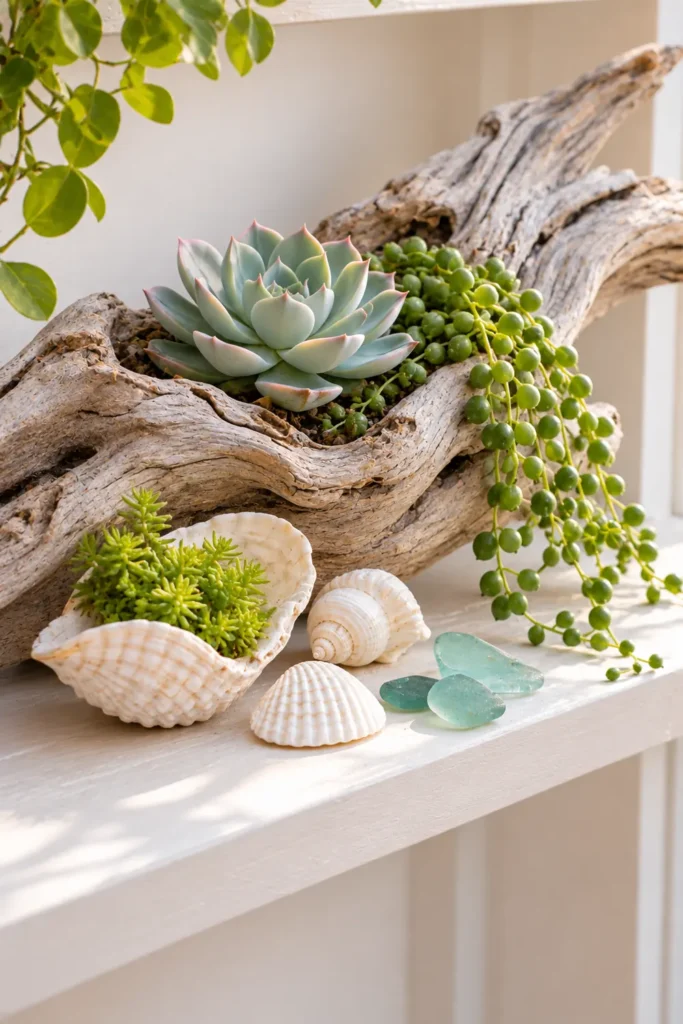
One silvery piece of driftwood, three white shells, and a few bits of soft aqua sea glass make a shelf look like a beach house. Add a starfish, a fishing net, and a sign that says “beach” and it looks like a souvenir shop. Keep the coastal pieces few and quiet. Plant the driftwood’s hollow with a pale blue echeveria and let a strand of string of pearls trail toward the shells. Tuck one small sedum into the largest shell as a tiny planter.
Rinse anything from the beach in fresh water first, since salt left on the wood harms succulent roots. Rules on taking driftwood, shells, and sea glass vary a lot, and many parks and protected beaches don’t allow it, so check before you collect. Craft stores sell all three if the rules say no.
15. A Cedar Log Stand-In When There’s No Beach Nearby
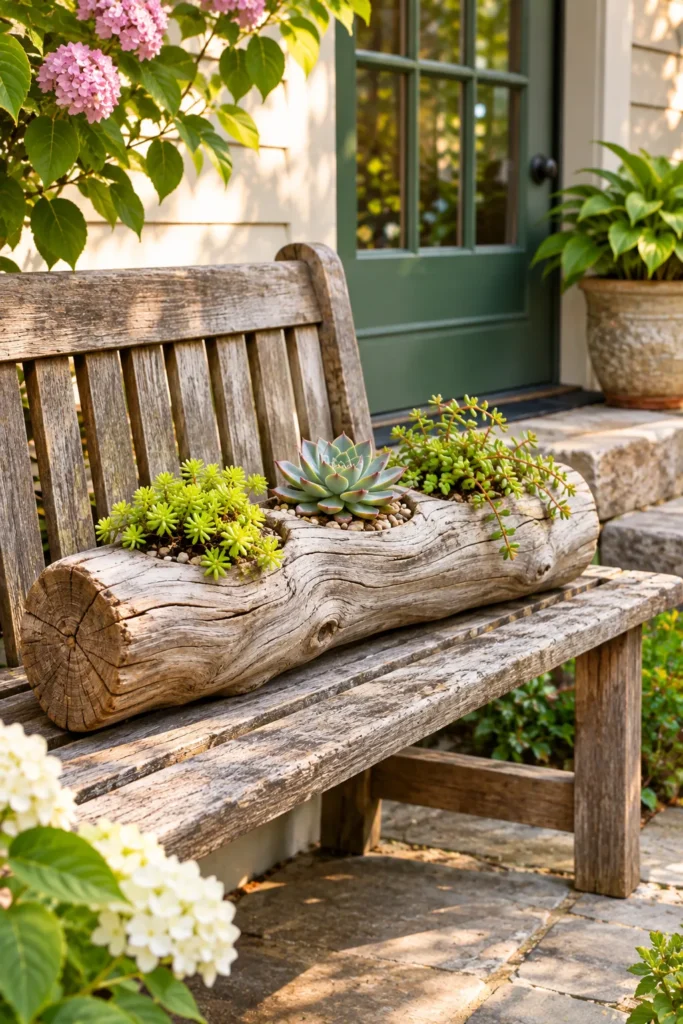
No beach nearby doesn’t mean no driftwood look. A weathered cedar log or a fallen branch from your own yard gives the same silver, grainy character. Cedar also resists rot better than most woods. Drill two or three shallow pockets along the top, plant them with sedum and a small echeveria, and set it on a garden bench by the back door.
Prep note: any found wood needs cleaning before it comes near a living room. Skip the oven-baking method you’ll see online, because putting dry wood in a hot oven is a fire risk.
Before any found wood comes indoors
16. A Windowsill Trio of Mini Driftwood Planters
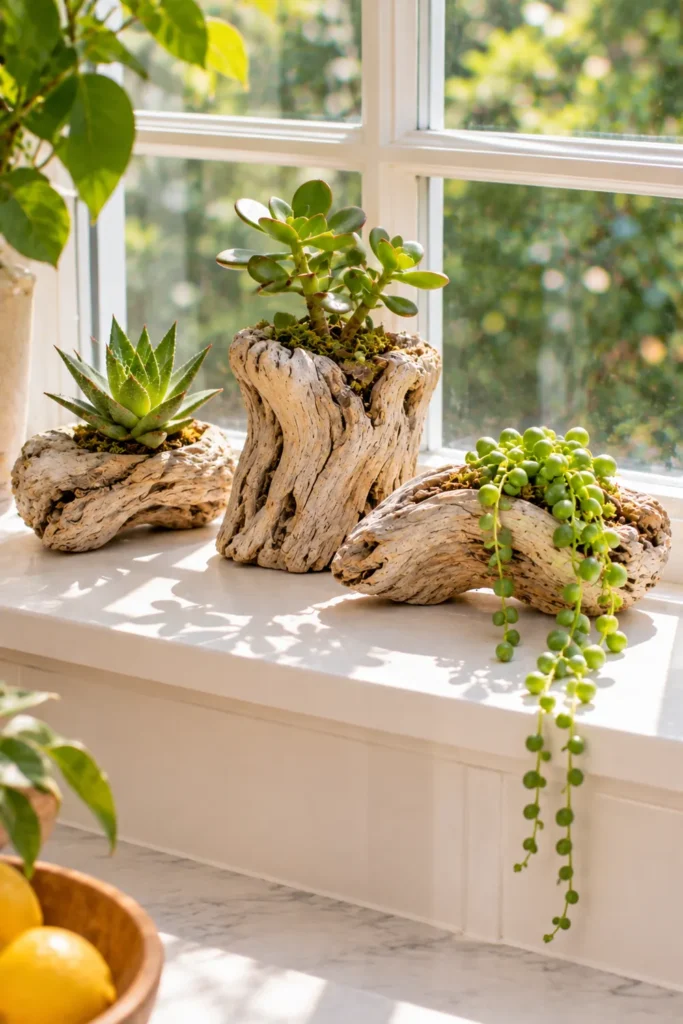
Three small driftwood pieces lined up on the sunniest windowsill in the house look like one designed grouping, not three separate crafts. Vary their lengths and put the tallest in the middle so the eye travels up and back down. Give each piece just one plant. Try a stubby jade cutting, a small aloe, and a strand of string of pearls trailing over the sill edge. Repeating the same pale wood ties three different plants together.
A south or west window gives these the strong light they want. Window glass gets cold on winter nights, though, so slide the trio back a few inches when frost is in the forecast.
Get the look: three small driftwood pieces in different lengths, a jade cutting, a small aloe, a trailing string of pearls, a sunny kitchen windowsill.
17. A Christmas Driftwood Succulent Centerpiece With Pinecones
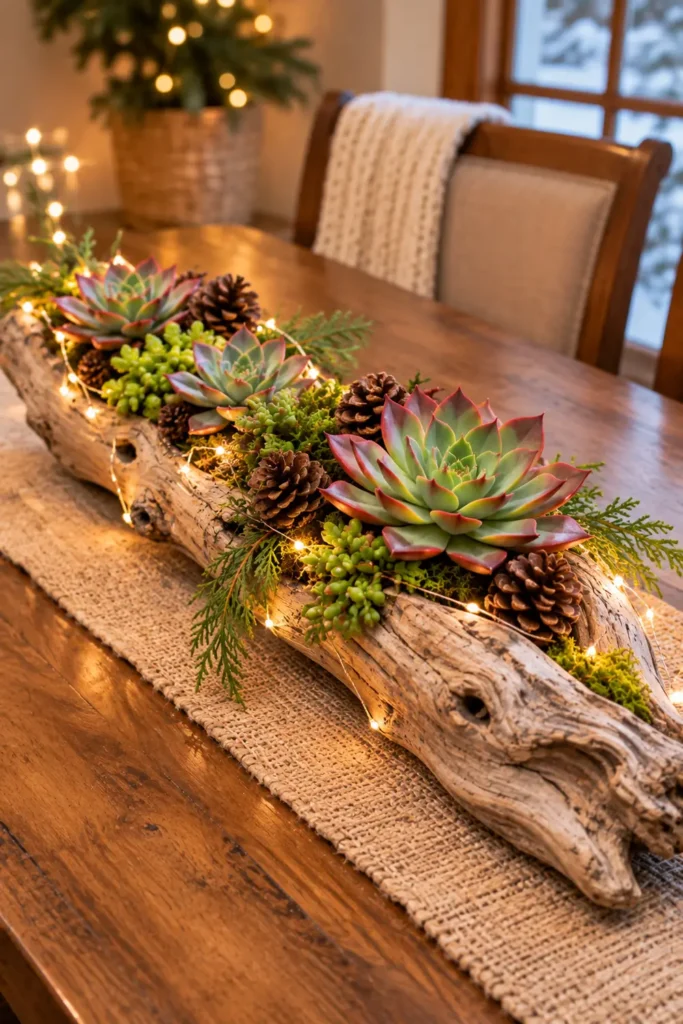
A long piece of driftwood makes a holiday centerpiece that feels lighter than the usual pine garland. Plant the dips with red-edged echeverias and green sedum for a Christmas color pairing that looks natural. Then tuck small pinecones and short sprigs of fresh cedar between the plants. Wind a strand of warm white, battery-powered fairy lights loosely along the wood so the table glows without any open flame.
Host tip: build it two or three days before the party so the plants settle and you can fix any gaps. If you want candles too, keep them in glass hurricanes well away from the dry moss and greenery. After the holidays, pull out the cedar and pinecones and the piece goes back to being an everyday centerpiece. For more festive pairings, see these Christmas succulent arrangement ideas.
How to Plant Succulents in Driftwood So It Looks Like Art
Every piece in this list follows the same few rules.
- Leave at least half the wood bare. The empty grain is what makes the piece read as art.
- Group plants in threes or fives. Run them along the wood’s natural curve instead of in straight lines.
- Use soil when you want it to last. Soil keeps a piece going for years, where glued moss lasts months.
- Give it a way to drain. Use a drilled hole or a hidden liner pot.
- Put it in the brightest spot you have. Even a well-styled driftwood succulent planter fades in a dim corner.
Driftwood Succulent Planters: Common Questions
How often should you water succulents on driftwood?
Water only when the moss or soil feels dry. As a rough rule, that means every week or two indoors and more often outdoors in summer heat. Shallow moss pockets dry out faster than a pot of soil. Pieces with a hidden liner, like idea 4, can be watered the normal way in the sink.
What are the best succulents for driftwood planters?
Small rosette and trailing succulents work best because they need very little root room. Echeveria, sedum, haworthia, jade cuttings, and hens and chicks fill pockets well, while burro’s tail and string of pearls make good trailers. For outdoor pieces in cold winters, stick with hens and chicks and hardy sedum, as in idea 10.
Will driftwood rot with succulents planted in it?
Yes, slowly, especially wherever the wood stays wet. Indoors, a well-dried piece that’s watered sparingly can last for years. Outdoors, set it on gravel instead of soil. Use a hidden liner pot or drilled drainage holes so water never pools inside the wood, as in ideas 4 and 7.
Are real or faux succulents better for a driftwood planter?
Real succulents are better anywhere with bright light, because they grow, change color and root into the wood over time. Faux succulents make more sense in a windowless bathroom or a dim corner, as in idea 12. There’s a fuller comparison in this look at natural plants vs artificial.
Conclusion
Driftwood and succulents work because each makes up for what the other lacks. The wood brings age, shape and texture, and the plants bring color and growth. The best driftwood succulent planter ideas keep that balance: plenty of bare grain, a few well-chosen rosettes, and enough light and drainage to keep them going.
Start with one piece. A plank on the coffee table or a trio on the windowsill teaches you how your plants drink and grow, and the bigger wall pieces come easier after that. Keep an eye out on your next walk by the water or in the woods, and check the rules before you carry anything home.
Save this for the next time you find a piece of wood worth keeping.