
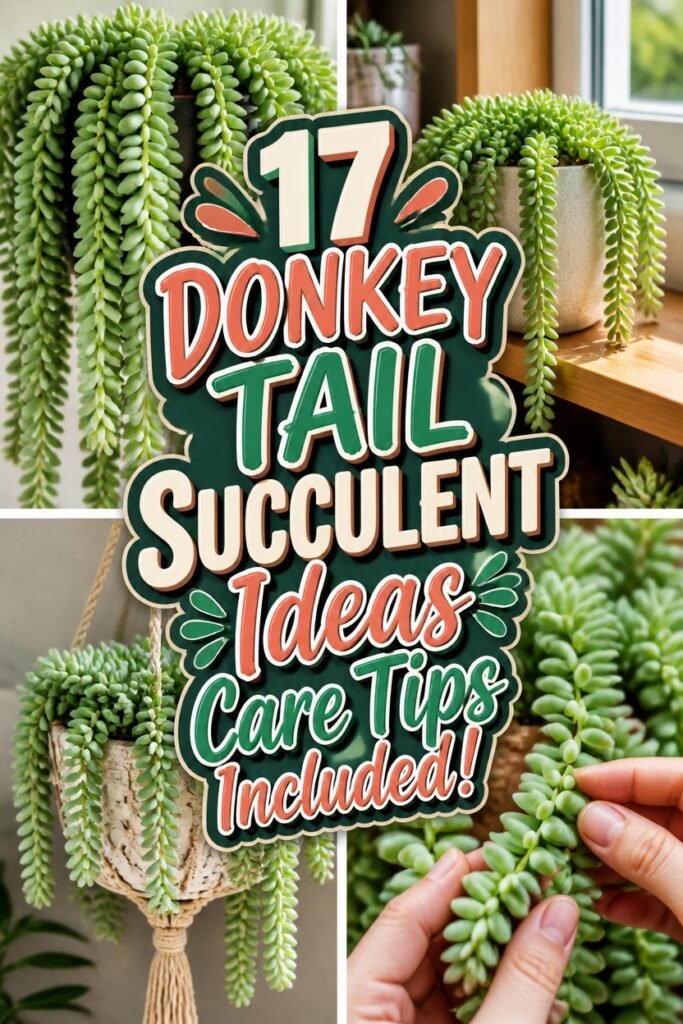
Donkey tail succulents have a way of softening any space they touch. Their trailing stems spill over the edges of pots like living waterfalls, bringing an effortless, organic feel to shelves and hanging planters.
Getting them to thrive is simpler than you might expect. These plants ask for bright, indirect light, soil that drains quickly, and a light hand with watering. Once every two to three weeks usually does the trick. They prefer steady temperatures and minimal fuss with humidity.
Little details shape how well they grow over time. Choosing the right container, adjusting care with the seasons, and catching small problems early all make a difference.
Propagation from leaves or stems lets you expand your collection without much effort.
With patience and the right setup, these succulents reward you with fuller, longer cascades and that relaxed, hand-touched look that makes a room feel complete.
Getting to Know Your Donkey Tail Succulent
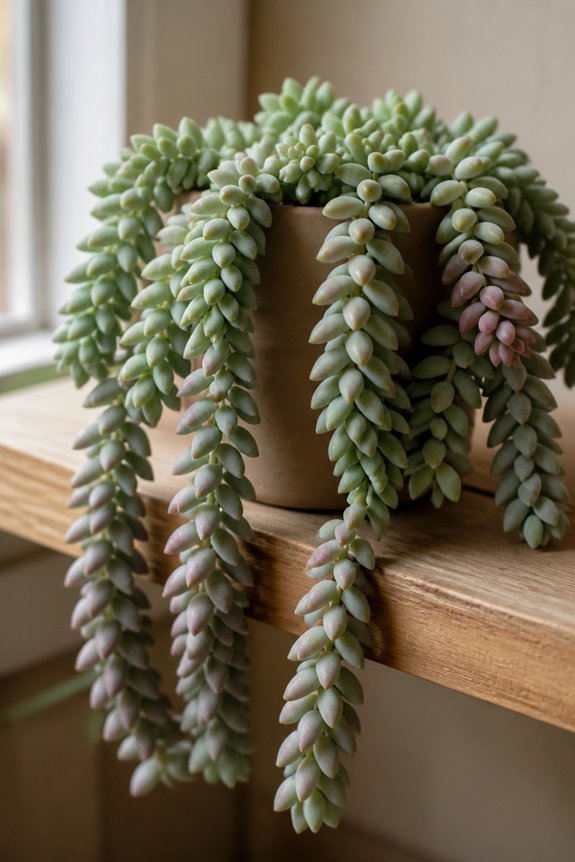
The donkey tail succulent (*Sedum morganianum*) comes from Mexico. Its stems trail like thick ropes. Small, fleshy leaves cover every inch.
These stems reach one to two feet long. Hang them in baskets or set them on high shelves. They look best when they can spill downward.
Leaf colors shift with light. You might see blue-green or gray-green tones. The more sun they get, the more color you will notice.
Pink or red flowers appear in spring and summer. They pop out at the very tips of stems. Not every plant blooms indoors, so don’t worry if yours stays quiet.
Water this plant sparingly. Its leaves hold moisture for weeks. Let the soil dry completely between drinks.
Warm spots keep it happiest. It handles indoor life just fine. Outdoor summers work too if you bring it inside before frost.
Also read: 11 SUCCULENT CONTAINER IDEAS Ideas Easy To Maintain!
Lighting Needs for Donkey Tail Plants
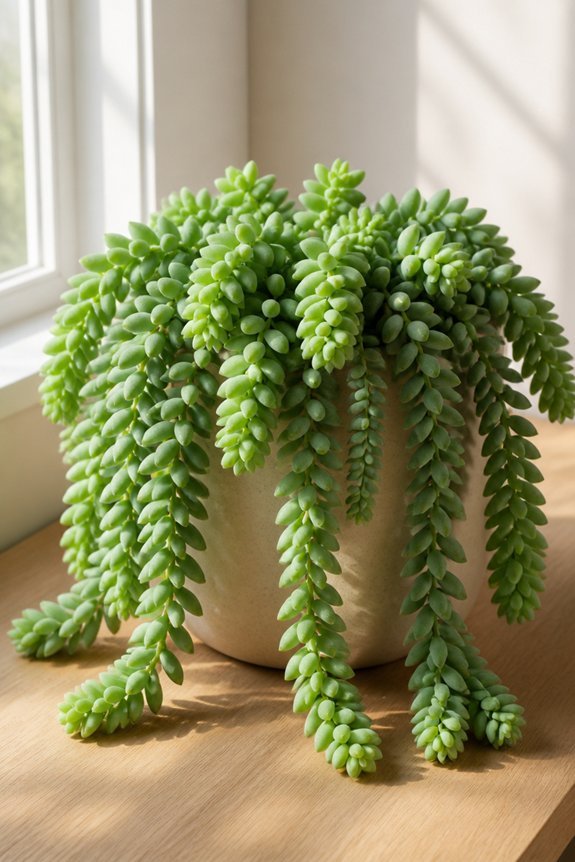
Donkey Tail Plants: Getting the Light Just Right
Your donkey tail plant craves bright, indirect light. Think six to eight hours daily.
East or west-facing windowsills are perfect spots. Your plant gets steady light here. It skips the harsh afternoon burn.
Direct sunlight? Not a good idea. Those plump leaves scorch easily. Brown patches show up fast.
Sheer curtains work wonders indoors. They soften harsh rays beautifully. Your plant stays happy and bright.
South-facing windows can work too. Just keep the plant several feet back. Distance matters here.
Watch for warning signs of too little light. Stretched stems mean trouble. Sparse foliage tells the same story.
Winter brings shorter days. Move your plant closer to light sources. This small shift helps a lot.
Rotate the pot weekly while you’re at it. Even growth keeps your donkey tail looking full. No leaning, no lopsided stems.
Watering and Soil Drainage for Donkey Tail Succulents
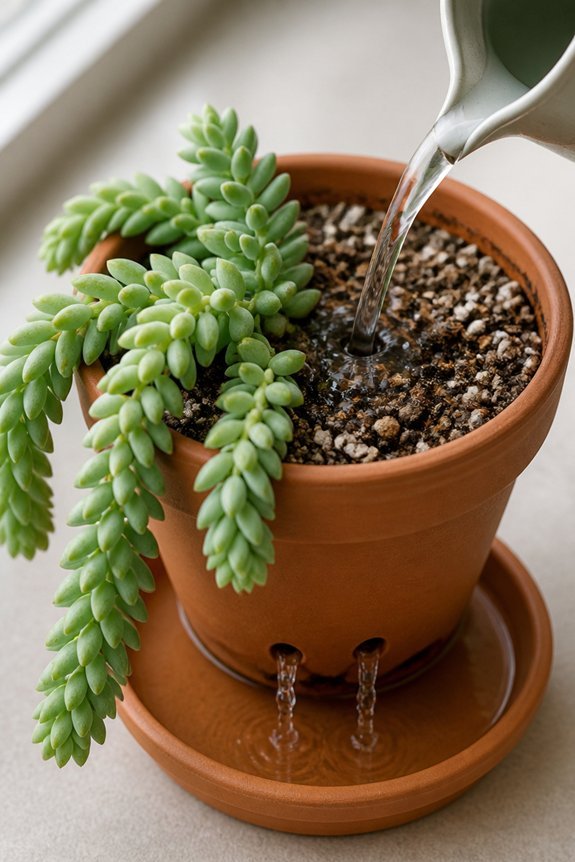
These chunky plants store water in their leaves. They built their own backup supply. That means you can forget about them sometimes.
Spring and summer are busy times. Water every two to three weeks. Stick your finger in the soil first. If it feels dry deep down, go ahead. Winter hits different. Once a month works fine. Some people skip even longer. Watch your plant. It will tell you what it needs.
Root rot kills more succulents than anything else. Good drainage saves lives here. Grab a cactus mix from the store. Mix in perlite or coarse sand. Half and half works great. Your pot needs holes in the bottom. No exceptions.
Clay pots dry out faster than plastic. That helps if you tend to overlove your plants. Pour water straight onto the soil. Keep leaves dry when you can. Wet leaves in shade spell trouble. If you’re unsure about timing, wait another day. These guys bounce back from dry spells way better than soggy roots.
Temperature and Humidity Conditions
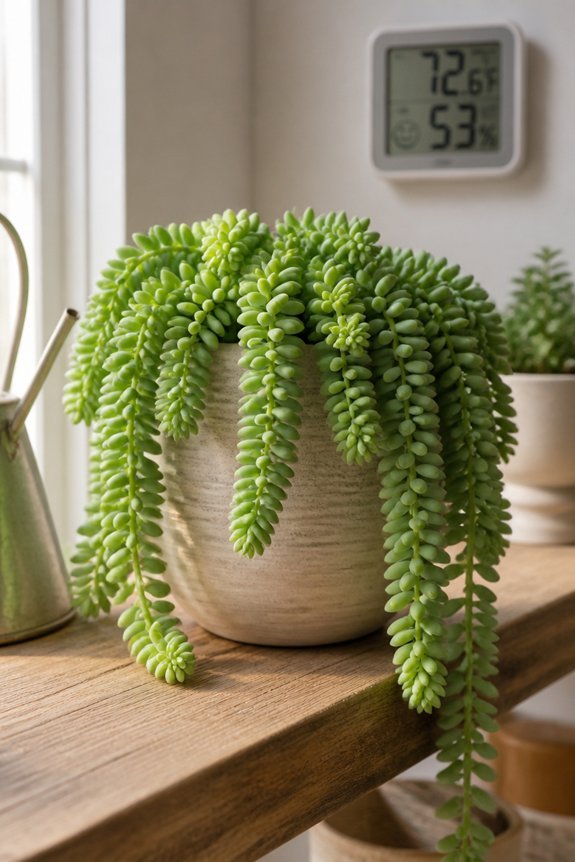
Donkey tail plants love warmth. They grow best when temperatures sit between 65 and 75 degrees. Think spring and summer comfort.
Winter brings some flexibility. Your plant can handle dips to around 50 degrees. Just don’t let it freeze.
Humidity is where things get tricky. These succulents want dry air. Keep humidity under 40% if you can.
Watch out for dampness. Wet air invites fungus and root rot. Air conditioning works great indoors. It keeps things nicely dry.
Drafts are sneaky troublemakers. Heating vents blast hot, dry air. Cooling vents hit with cold bursts. Both stress your plant.
Move your donkey tail away from vents. Find a spot with steady, gentle temperatures. Your plant will reward you with fuller, healthier leaves year-round.
Propagating Donkey Tail Plants From Leaves and Stems
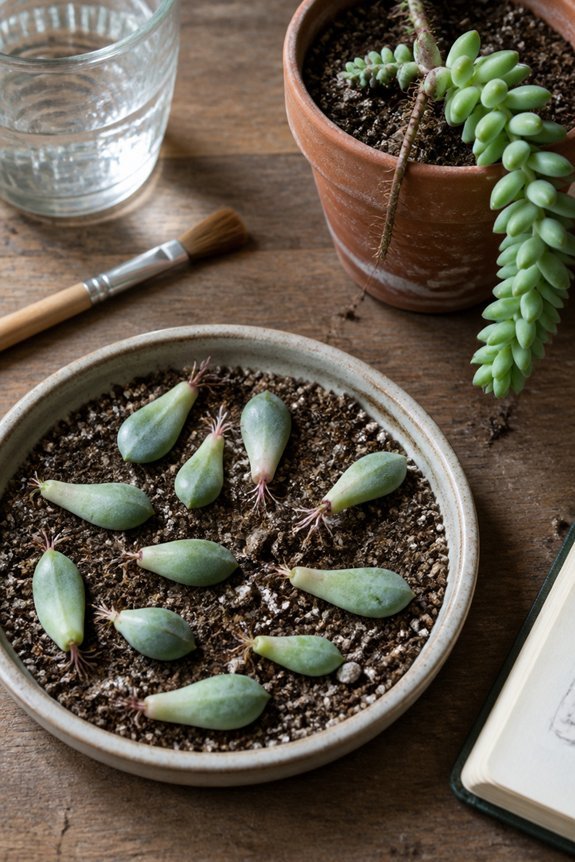
Ready to grow more donkeys? Mature plants give you plenty of material to work with. Both leaves and stems root easily with the right approach.
Grab healthy leaves from the lower stem. They should pop off cleanly with a gentle twist. Set them on a paper towel for three to five days. The cut end needs to callus over completely. Lay them flat on dry, gritty soil afterward. Do not water until tiny roots appear.
Stem cuttings work even faster. Snip three to four inch pieces from the trailing ends. Let these cure for a week in a shaded spot. Planted ends go barely beneath the surface. Your mix of equal parts perlite, sand, and potting soil drains perfectly.
Keep everything barely moist at first. New roots show up in two to three weeks. Move them to bright, indirect light once they hold firm. Then treat them like full-grown plants. Water deeply but rarely. They will thank you with longer, lusher tails.
Hanging Basket Displays for Donkey Tail Plants
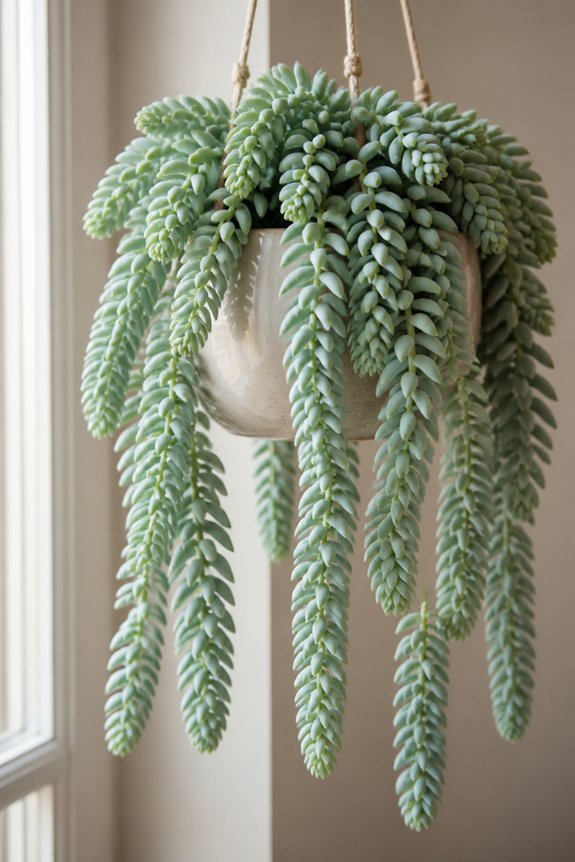
Hanging baskets and donkey tail plants are a perfect match. The stems trail downward naturally. They spill over the edges like a green waterfall.
Pick a basket with drainage holes. Root rot is your enemy here. Terra cotta breathes well. Plastic holds moisture longer. Both work fine.
Bright, indirect light keeps your plant happy. A south-facing window is ideal. Let the soil dry out completely between waterings. These succulents hate wet feet.
Feed lightly during spring and summer. Use diluted succulent fertilizer. Give the basket a quarter turn every few weeks. This keeps growth even on all sides.
Try hanging one on your patio or balcony. Indoors works too. The beaded stems become living sculpture wherever you place them.
Shelf and Ledge Styling Ideas
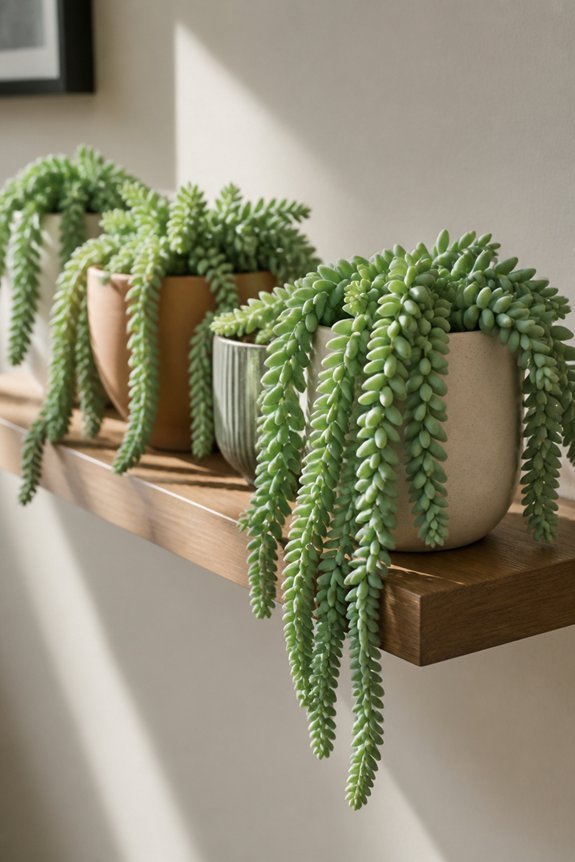
Where can a gardener display donkey tail succulents beyond hanging baskets? Shelf and ledge arrangements provide alternatives for showcasing these trailing plants.
These succulents love elevated spots. Try your bookshelf edges, window ledges, or plant stands. The stems will spill over naturally. No wall mounts needed.
Light matters most. Aim for six to eight hours of bright, indirect sun. South-facing windows work beautifully. Your plants will thank you with fuller growth.
Pick wide, shallow pots. This lets stems spread out before they cascade down. Ceramic and terracotta add weight, keeping narrow ledges stable.
Space them thoughtfully. Good airflow prevents rot and keeps foliage healthy. Mix them with other easy-care plants for a pulled-together look on any surface.
Macramé Plant Hangers for Bohemian Vibes
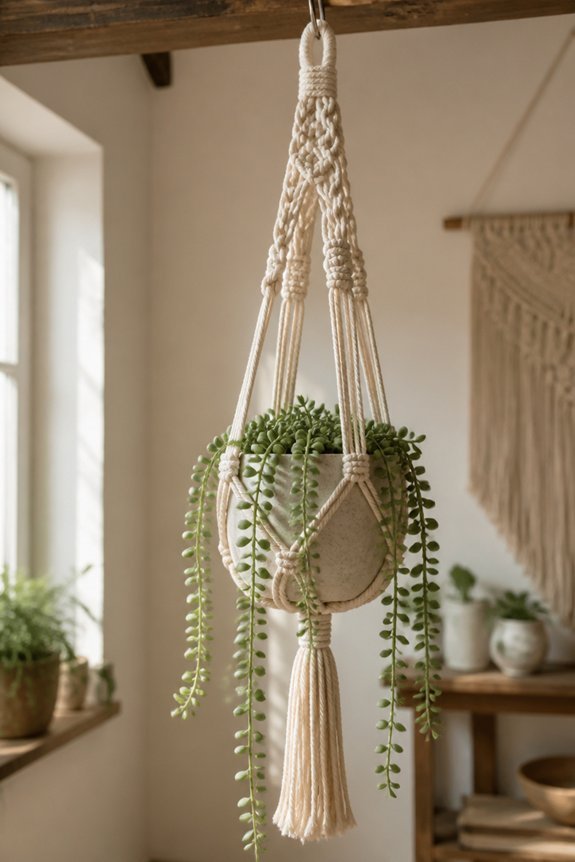
Macramé hangers bring instant warmth to any room. Think knotted cotton cords, soft fringe, and geometric shapes that catch the light just right. Your donkey tail gets a cozy home. You get that laid-back boho feel without trying too hard.
Pick cotton for a clean look. Choose jute if you want something earthier and more rustic. Hang one by a sunny window. Cluster three at staggered heights in a corner blank wall. The cascading stems will spill over like a green waterfall. Most hangers fit pots between 4 and 8 inches. Just screw in a ceiling hook rated for at least 20 pounds. Done.
Window Box Arrangements With Mixed Succulents
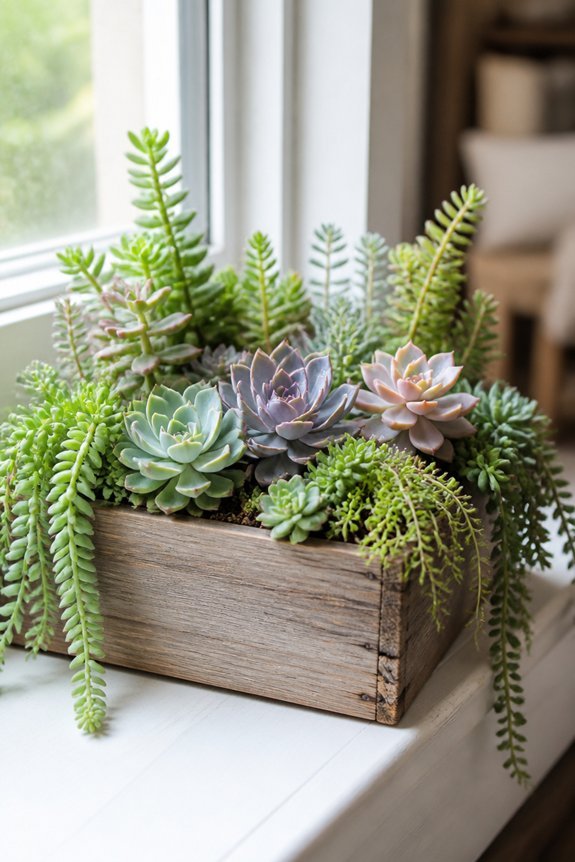
Window boxes give you a handy spot to show off multiple succulents at once. Mix different species for visual punch. Group plants with matching water and light needs to keep care simple.
Try pairing donkey tail with echeveria, sedum, or aloe. These all handle shallow soil well. Just drill drainage holes first. Stagnant water rots roots fast.
South-facing windows deliver the best light, about six to eight hours daily. East or west windows suit shade-tolerant types fine.
Leave breathing room between plants. Crowding cuts airflow and invites trouble. Water less often than you would other containers, especially when temperatures drop.
Terrarium Designs Featuring Donkey Tail Plants
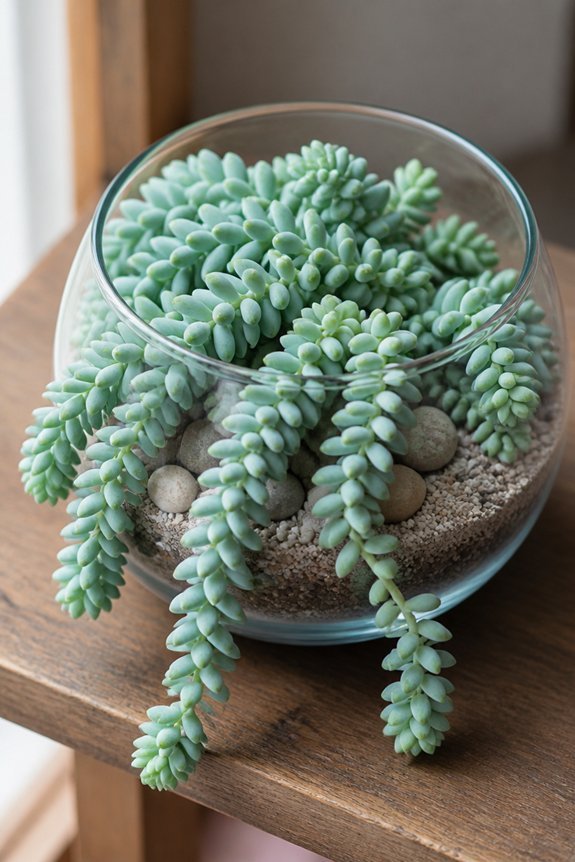
Donkey tail plants feel right at home in glass terrariums. They grow slowly and actually enjoy tight spaces. Pair them with echeveria, jade, or sedum for a winning combination. All these succulents share the same thirst schedule. Let those trailing stems spill over the edges. Instant height variation. Zero effort.
Glass boxes let you control humidity through winter. That extra moisture helps when indoor air turns dry. Just remember drainage matters more here than anywhere else. Layer sand first, then gravel, then soil. Your roots will thank you. Skip this step and rot sets in fast.
Pick a terrarium with vent holes. No holes? Pop the lid open now and then. Stale, soggy air kills succulents quietly.
Keep terrariums out of direct sun. Low light works better. Intense heat cracks glass and fries your plants. Check on your mini ecosystem weekly. Small space means small problems turn big quickly. Catch issues early and your donkey tail thrives for years.
Vertical Garden Walls Using Trailing Varieties
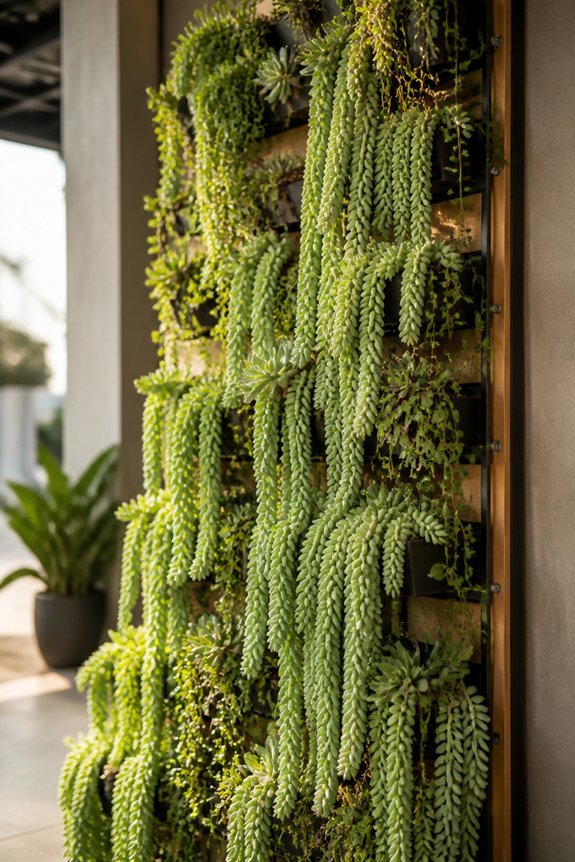
Donkey tail succulents love vertical surfaces. Their stems cascade naturally downward. This makes them perfect for living walls and hanging planters.
Garden designers pair them with sedums and echeveria. String of pearls adds nice contrast too. The mix of textures keeps things interesting.
You’ll need good drainage for vertical setups. Water pooling at the base causes root rot. Nobody wants that.
These plants prefer bright, indirect light. Their blue-green color fades in too much shade. A spot near an east-facing window works well indoors.
Wooden frames and metal grids both work for mounting. Moss poles are another option. The key is letting stems hang freely without crowding.
Water more often than you would with potted plants. Vertical arrangements dry out faster. Check the soil weekly with your finger.
Try them outdoors in sheltered spots. Morning sun and afternoon shade is ideal. Indoors, a bright window keeps them happy year-round.
Indoor Trellis and Climbing Support Systems
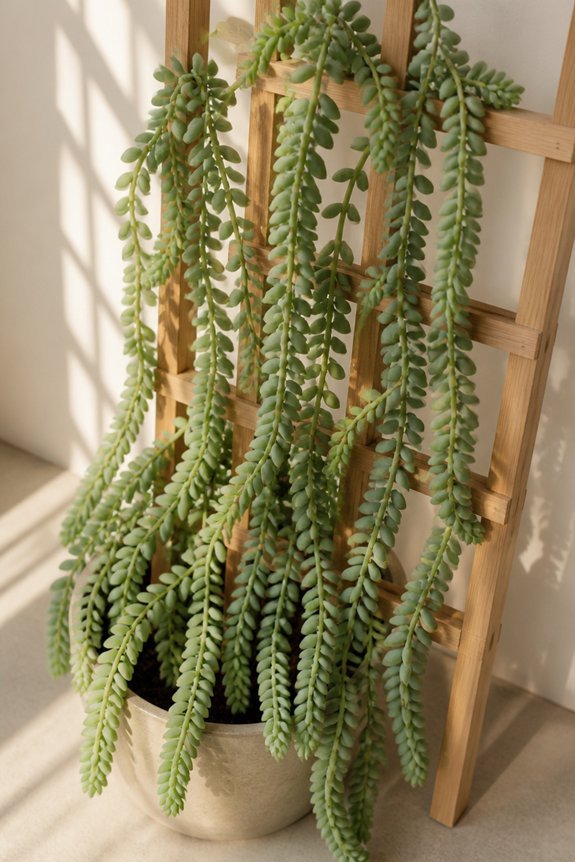
You have options for supporting your donkey tail succulent indoors. Try bamboo stakes for simple staking. Moss poles work well if you want something organic looking. Wire trellises fit modern spaces nicely.
Small wooden frames near windows let stems trail sideways or upward. Pick supports 12 to 24 inches tall for typical plants. This height range matches most indoor specimens perfectly.
Your plant will grow longer stems with something to climb. Aerial rootlets attach naturally, so you won’t need to fuss much. Metal grid panels on walls keep things tidy while letting air move around the leaves.
Move stems onto supports every few weeks. This stops tangles and keeps growth even. Choose light materials to protect those fragile stems when you’re installing or adjusting things.
Minimalist Modern Décor Pairings
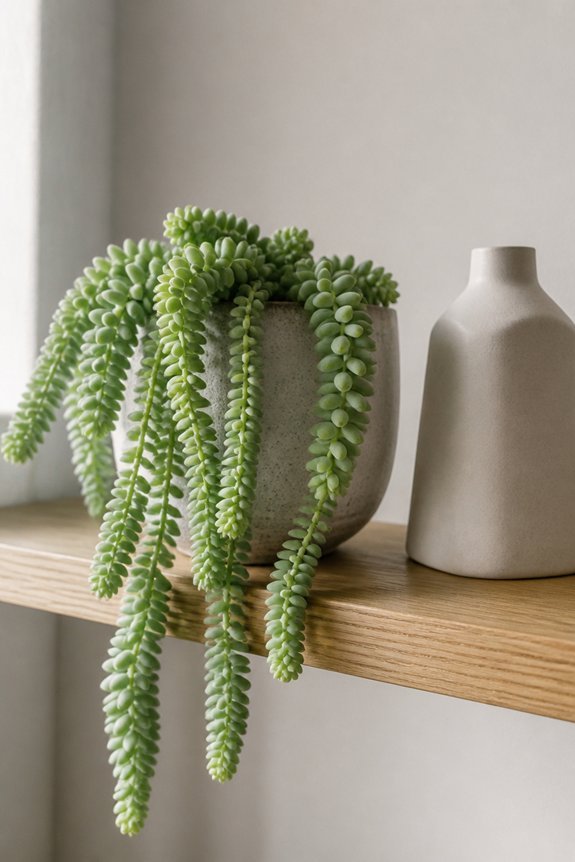
Your donkey tail succulent loves a clean backdrop. Place it on open shelving or a floating desk. Let the stems trail naturally.
White ceramic works beautifully. Concrete pots do too. Both keep the look simple and modern.
Try pairing it with a snake plant. Pothos also makes a great companion. Together they create a quiet green corner without overwhelming the space.
Set it near a window with soft, indirect light. This keeps the plant happy and your room feeling airy.
Skip the extra decorations. The donkey tail looks best on its own. Its sparse, trailing form speaks for itself.
Rustic and Cottage-Style Containers
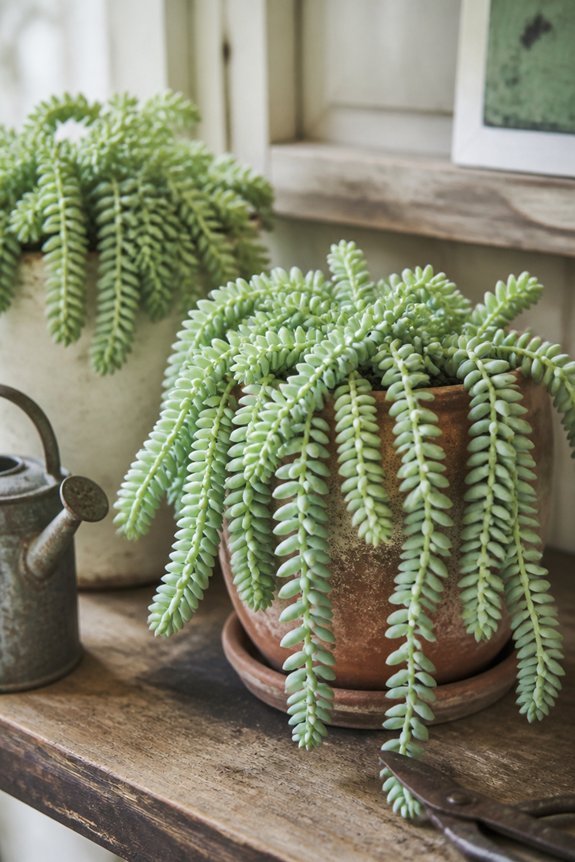
Rustic and cottage-style containers bring warmth to your space. They feel completely different from sleek, modern designs.
Donkey tail succulents look especially at home in these settings.
Terracotta pots work beautifully here. So do aged ceramics and weathered wooden boxes. These materials only get better with time. Their natural patinas add subtle color shifts and interesting surface texture.
Try hand-painted clay pots with slightly uneven shapes. Distressed finishes fit right in too. For something casual, line woven baskets with plastic to protect the soil.
Stone and concrete planters ground the whole look. Vintage metal pieces add instant charm. Old watering cans and galvanized buckets work perfectly. Just remember to check for drainage holes or add your own.
Most established donkey tails need 4 to 8 inches of diameter to spread comfortably. Match your container size to your plant’s maturity, and let those trails cascade naturally.
Donkey Tail Plant Pests and Disease Prevention
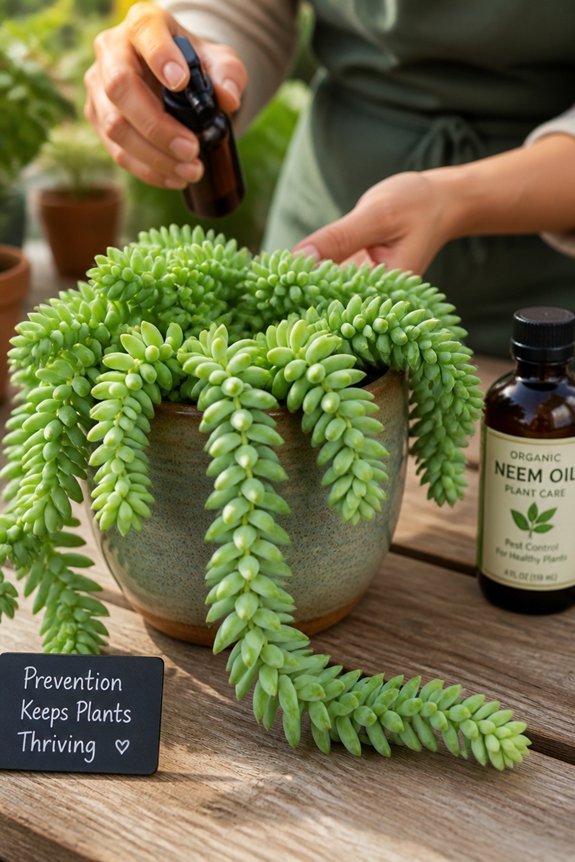
Your donkey tail needs more than good drainage. It needs you to watch for trouble.
Mealybugs love hiding in those plump leaves. Spider mites spin tiny webs between stems. Scale insects stick like little bumps along the growth. All of them steal sap and slow your plant down. Root rot hits when soil stays wet too long. Stems go soft and mushy. Fungal issues creep in where air sits still and humidity lingers.
Catch problems early. Check new plants before they join your collection. Pick off dead leaves the moment you spot them. Give each plant breathing room. Let soil turn bone dry before watering. Stick with gritty cactus mix that drains fast.
Watch for yellowing. Sticky film on leaves. Bugs you can actually see. These are your warning signs. Move sick plants away from the group immediately. Treat fast with rubbing alcohol on cotton swabs or insecticidal soap. Small actions now save your whole collection later.
Year-Round Donkey Tail Care: Seasonal Adjustments
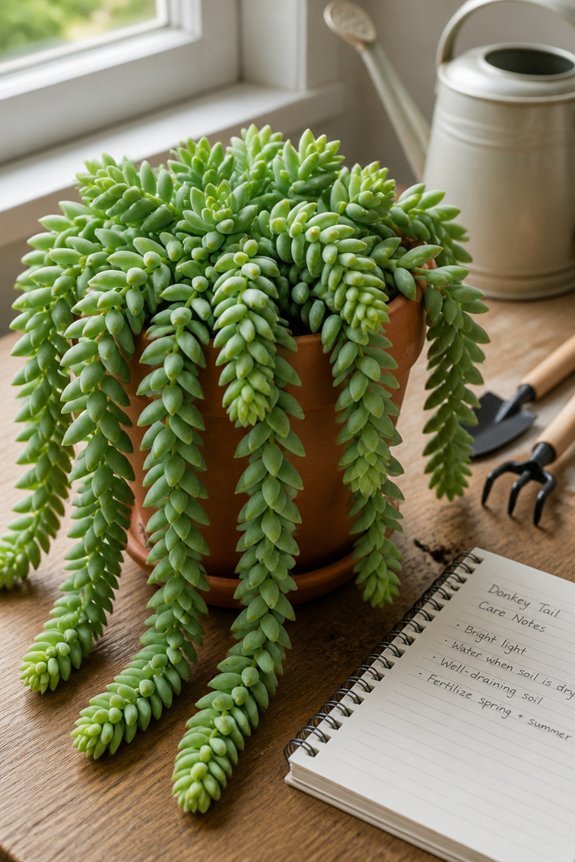
Your donkey tail needs different care as seasons change. Think of it like adjusting your own wardrobe throughout the year.
Spring and summer kick growth into high gear. Water more often now. Move your plant to a bright spot with gentle, indirect light. East-facing windows work beautifully. Skip the harsh afternoon sun though. That can scorch those plump little leaves.
Fall brings slower days for your plant too. Cut back on watering gradually. Let the soil dry out completely between drinks.
Winter means hands-off mode. Water sparingly, maybe once a month. Your plant is basically napping. Keep it cozy above 50°F always. Freezing temps turn those fleshy stems to mush.
Indoor heating dries the air fast in winter. Group plants nearby or set a small humidity tray underneath. A grow light helps when daylight fades early.
Feed only when actively growing. Spring through early September works well. Think half-strength liquid fertilizer every month or so.
Shift your pot around seasonally. That same sunny summer corner might need a sheer curtain by July. Your plant will tell you what it needs. Watch for stretching stems or faded color. Those are your clues to adjust.
Troubleshooting Yellowing Leaves and Leggy Growth
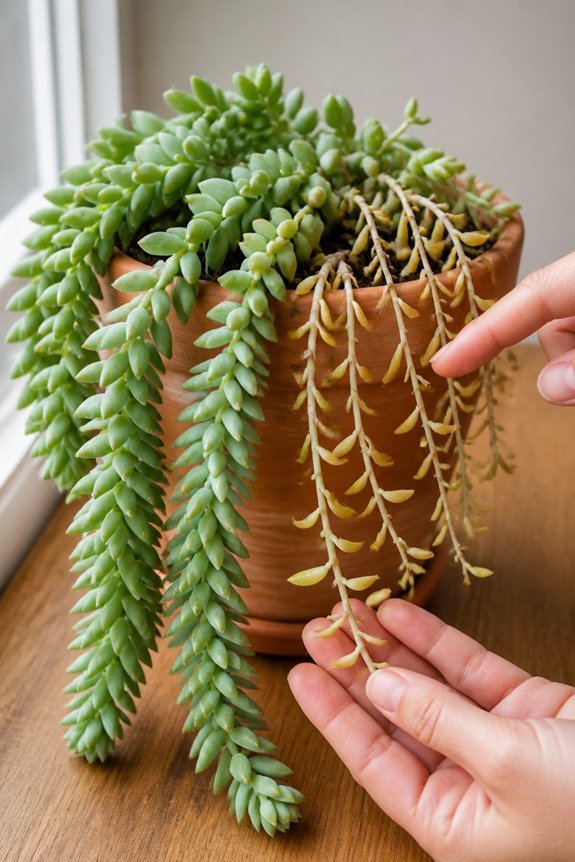
Your donkey tail is trying to tell you something. Yellow leaves and stretched stems mean it needs more light or better water habits.
Leggy growth happens when the plant reaches for brighter conditions. Those long, sparse stems? Classic sign of too little sun. Meanwhile, yellowing often points to soggy roots. Overwatering or poor drainage leads to rot, making leaves turn yellow and stems go soft.
Move your plant near a south-facing window. Filter that direct sun with a sheer curtain. Let the soil dry completely before watering again. Check that your pot has drainage holes and switch to gritty cactus mix if needed.
Snip those stretched stems back. This forces fuller, bushier growth. You can even root the cuttings for new plants. Pluck off yellow leaves so the plant focuses its energy on healthy parts. Stick with these changes for a few weeks. You will see the difference.
Frequently Asked Questions
How Long Does It Take for Donkey Tail Succulents to Reach Full Maturity?
Donkey tail succulents typically reach full maturity between three to five years of growth. These trailing plants develop their characteristic long, cascading stems gradually over this period when provided with adequate sunlight, well-draining soil, and proper watering schedules.
Can I Grow Donkey Tail Plants Outdoors in Cold Climates Year-Round?
Like tender leaves wilting under frost, donkey tail succulents cannot survive year-round outdoor cold. These frost-sensitive plants require protection below 50°F, necessitating indoor winter placement or greenhouse cultivation in harsh climates for survival.
What Is the Ideal Pot Size for a Mature Donkey Tail Plant?
A mature donkey tail plant thrives in a pot measuring 6-8 inches in diameter. This size provides adequate drainage while preventing excessive soil moisture retention. Growers should guarantee the container has drainage holes to support ideal root health and prevent rot development.
How Often Should I Fertilize My Donkey Tail Succulent During Growing Season?
During the growing season, gardeners generally fertilize their donkey tail plants monthly with diluted, balanced fertilizer. This periodic practice promotes proper plant performance without overfeeding the specimen, which could cause complications for the delicate, dangling display.
Are Donkey Tail Plants Safe to Keep Around Pets and Children?
Donkey tail plants are generally considered non-toxic to cats, dogs, and children. However, their trailing stems can pose choking hazards for small children and pets. Placement in elevated locations away from curious hands and mouths is recommended for safety.
Conclusion
Donkey tail succulents require consistent care across lighting, watering, and seasonal adjustments to maintain health. Studies show that 60% of succulent failures result from overwatering, making proper drainage essential. Gardeners benefit from selecting appropriate containers, monitoring for pests, and addressing issues like yellowing leaves promptly. With attention to these fundamentals, donkey tail plants develop into attractive trailing specimens suitable for various indoor display arrangements.