Vertical succulent gardens have a way of turning the smallest nooks into something alive and lovely. A bare wall becomes a canvas. A cramped patio suddenly has room for ten more plants.
The magic is in how you build it. Wall-mounted frames create living art. Hanging planters free up precious floor space. Tiered shelves let you layer textures and colors without taking up much room at all.
These setups were made for apartment living, cozy patios, and that one sunny windowsill that’s been begging for attention.
Getting it right comes down to two quiet details: drainage and seasonal watering. Nail those, and your vertical garden will thrive with very little fuss.
The rest is simply choosing the arrangement that feels right for your space.
Wall-Mounted Frames for Shallow Spaces
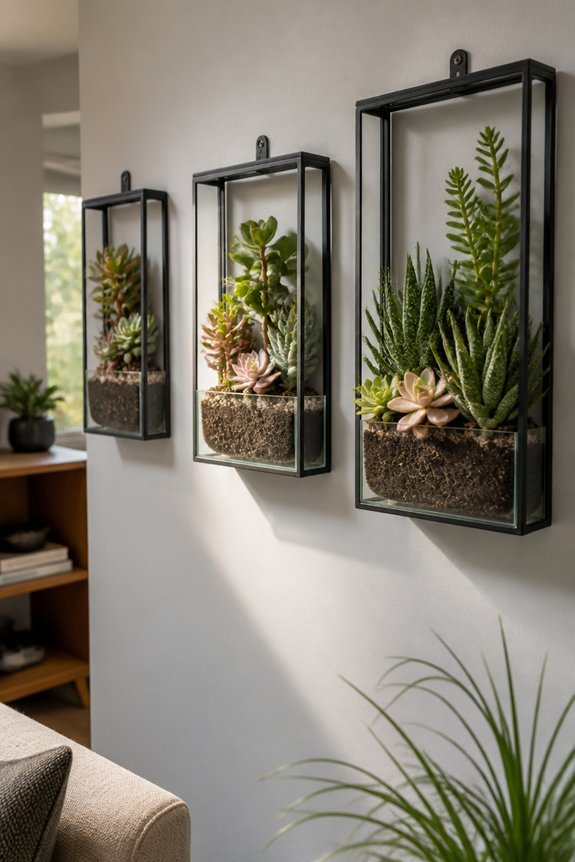
Wall-mounted frames turn tight spots into green retreats. Apartments, offices, and small bedrooms all work well. You get vertical growing space without losing floor room.
Shadow boxes, picture frames, and wire grids each bring something different. Wood feels warm. Metal lasts longer. Plastic stays light. Two to four inches of soil handles most succulent roots just fine. Always check for drainage holes. Stagnant water kills these plants fast.
Mount your frame where light actually reaches. Kitchen walls near windows work great. So do bathroom spots with decent exposure. Keep it low enough to water without a step stool.
Echeveria spills beautifully over edges. Sedum fills gaps with texture. Jade plants add height and structure. Mix all three for layered interest.
Grab wall anchors that match your surface. Drywall needs different support than brick or tile. Test the weight before adding plants. A full frame gets heavy quickly.
Water lightly when soil dries completely. Rotate the frame monthly so growth stays even. Some leaves will drop. That’s normal. Tuck them back into soil for easy propagation.
Also read: 11 SUCCULENT CONTAINER IDEAS Ideas Easy To Maintain!
Hanging Planters That Maximize Vertical Room
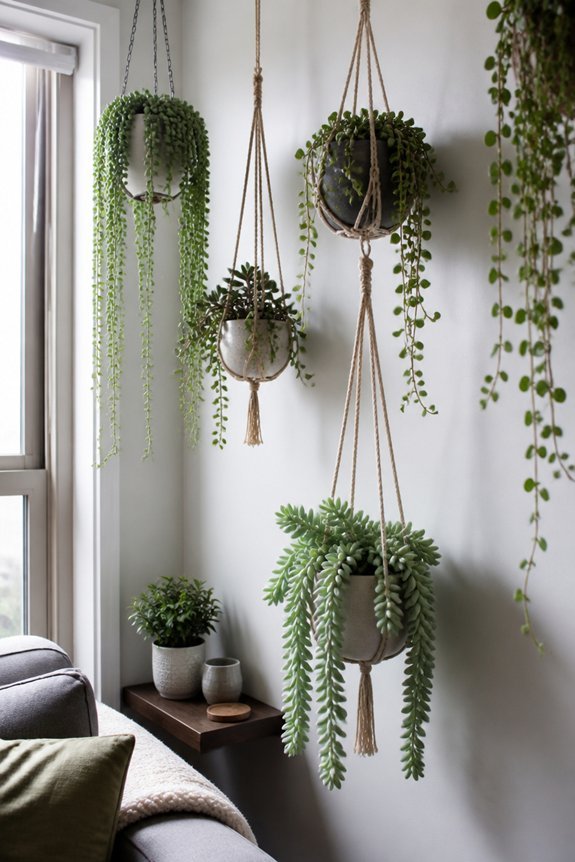
Short on floor space? Hanging planters free up room by lifting your succulents overhead. Ceilings, beams, and sturdy hooks become your new garden real estate. You’ll grow more plants without crowding your shelves.
Pick holders that match your style. Macramé adds a soft, handmade touch. Wire baskets feel light and airy. Ceramic pots with built-in drainage holes keep roots healthy. Terracotta wicks away moisture. Metal geometric shapes make a modern statement. Just double-check those drainage holes exist. Succulents hate wet feet.
Secure mounting matters more than you’d think. Wet soil gets heavy fast. Use heavy-duty hooks and chains rated for more weight than you expect. Eye level placement works wonders. You’ll spot dry soil instantly. Watering becomes less of a chore. South-facing windows keep most succulents happiest. Move them closer in winter if needed.
Living Wall Systems for Statement-Making Scale
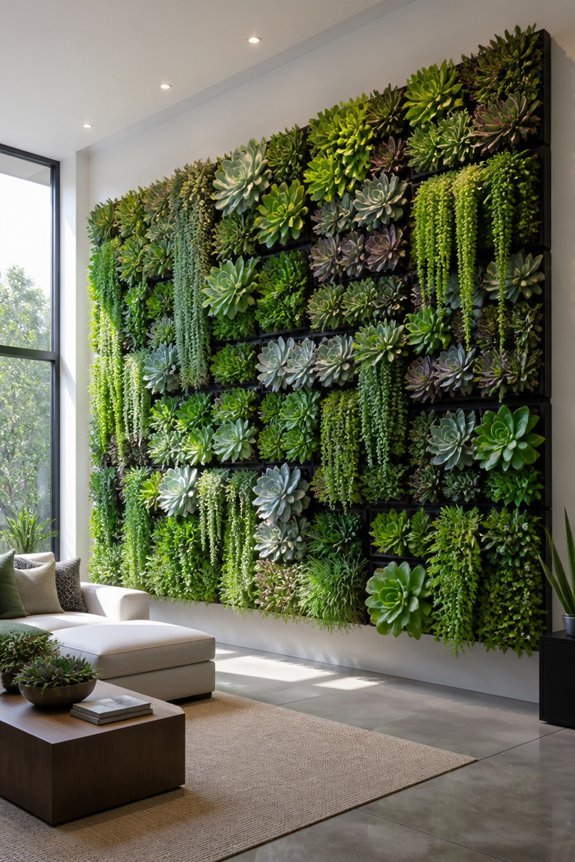
Living wall systems turn entire surfaces into lush, layered gardens. They stack plants vertically for serious visual impact. Think dense, textured, and impossible to ignore.
Most setups use pocket planters, modular frames, or felt backing. These hold soil and roots securely in place. Your wall becomes the garden bed.
Common configurations worth trying:
Stacked wooden crates work beautifully for shallow-rooted succulents. Metal grid panels let you swap individual pots easily. Fabric pocket walls suit echeveria, sedum, and sempervivum especially well.
Drainage matters enormously here. Water needs somewhere to go. Irrigation systems help too, since vertical surfaces dry out differently than ground beds. Sun exposure shifts dramatically by height and wall orientation, so plan your plant placement carefully.
Quick maintenance tips: Water regularly but check moisture levels first. Fertilize lightly during growing seasons. Replace struggling plants quickly to keep that full, dense look alive.
Fabric Pocket Planters for Renters
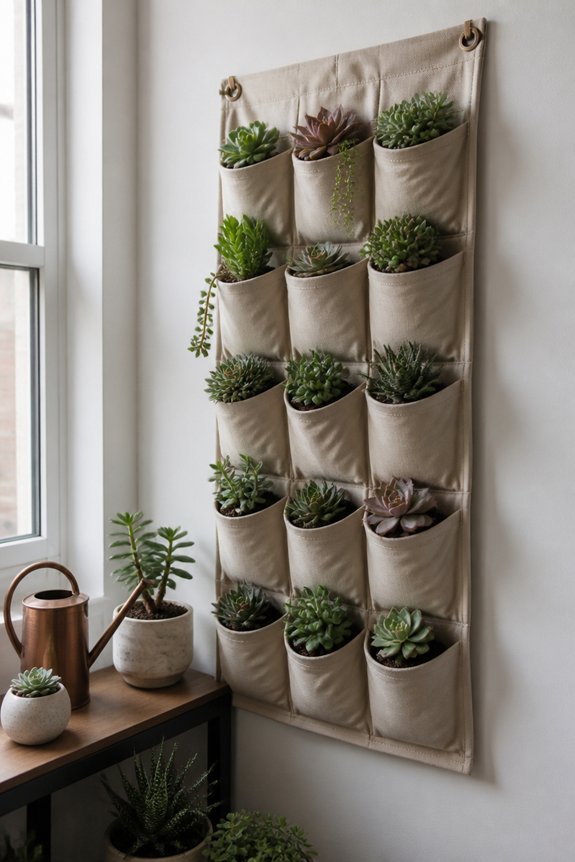
No other way to make a feature wall this fast. Fabric pocket planters clip on with adhesive hooks or tension rods. That’s it. No drills. No holes. No landlord drama.
Most renters love these because they move with you. Each pocket holds a small succulent. Think echeveria, sedum, or jade. Shallow roots work best here. Six to twelve plants per planter is typical. You can find these as hanging shoe organizers, wall planters, or felt systems at most garden stores.
Drainage needs attention though. Water will seep through fabric. Slip a waterproof liner behind each pocket. Or angle the planter so runoff drips into a tray below. Rotate your setup every few weeks. Succulents stretch toward light otherwise. Water sparingly. Feed lightly in spring and summer. Your wall stays clean. Your deposit stays safe.
Tiered Shelving for Layered Displays
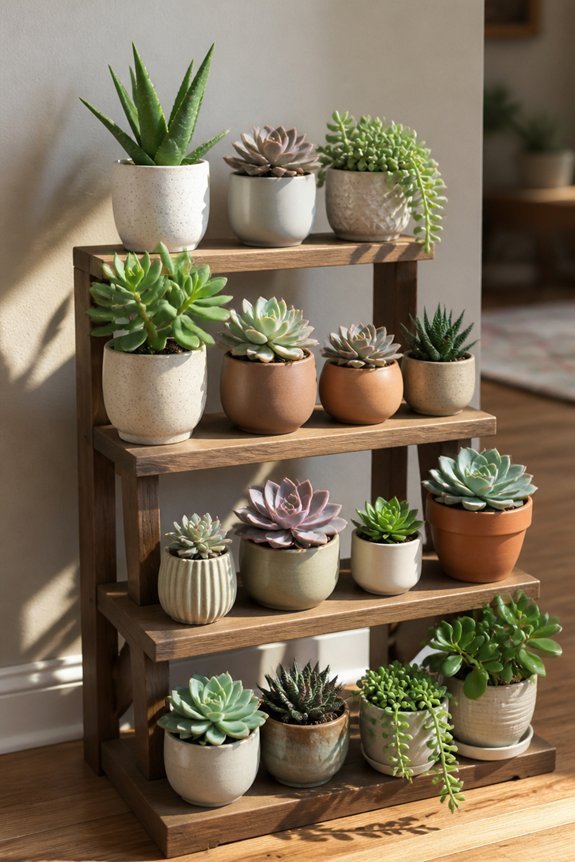
Stacked shelves bring depth to your space. You can fit dozens of succulents without sacrificing floor space.
Metal and wood both work beautifully. Indoor or outdoor, the choice is yours. Each tier becomes its own little garden zone. Group by water needs. Or sort by color. Maybe keep sun-lovers up top where light hits strongest.
Watch your weight. Heavy ceramic pots stay low. Light plastic belongs up high. Give your plants room to grow. Six to twelve inches between shelves usually does the trick.
Industrial racks add an edgy look. Bamboo feels warmer and more natural. Old bookcases get a second life here. Just remember: water flows downward. Upper pots drip on lower ones. Slip trays underneath to protect your surfaces.
Repurposed Wooden Pallets as DIY Structures
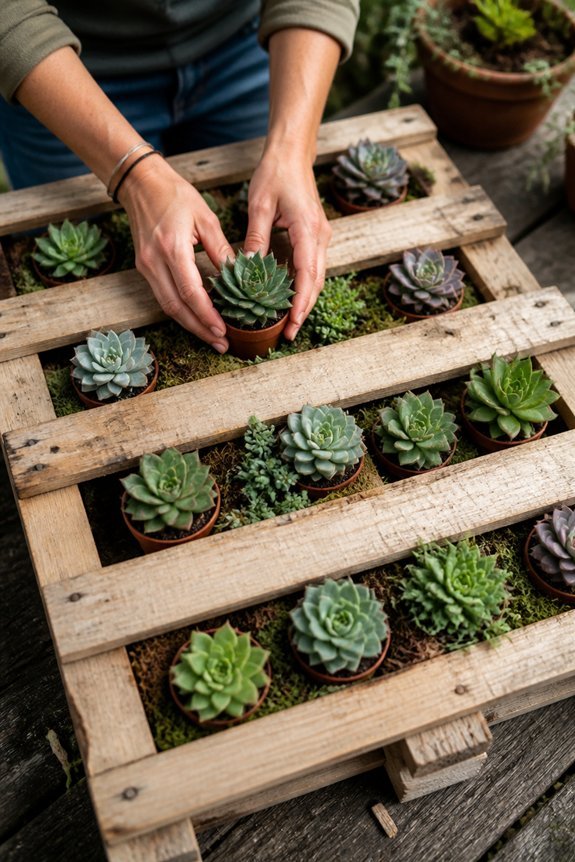
Wooden pallets make perfect homes for your succulents. You can find them cheap or free at local hardware stores.
They come ready to plant. Those spaced slats drain water naturally. Most pallets are 48 by 40 inches. That gives you plenty of room for a whole collection.
Sand down the rough spots first. Splinters hurt. Add a weather sealant so the wood lasts outdoors. Line the back with landscape fabric to hold your soil in place.
You have options for display. Mount one vertically on a fence. Lean two together like an A-frame. Stack several horizontally for a tiered effect.
Sempervivum and sedum love these setups. So does echeveria. The gaps between slats let air reach the roots. Your plants stay drier and happier.
Try tucking small terracotta pots between slats for extra stability. Or mix in trailing sedum along the bottom row for a cascading look.
Macramé Hangers for Bohemian Succulent Gardens
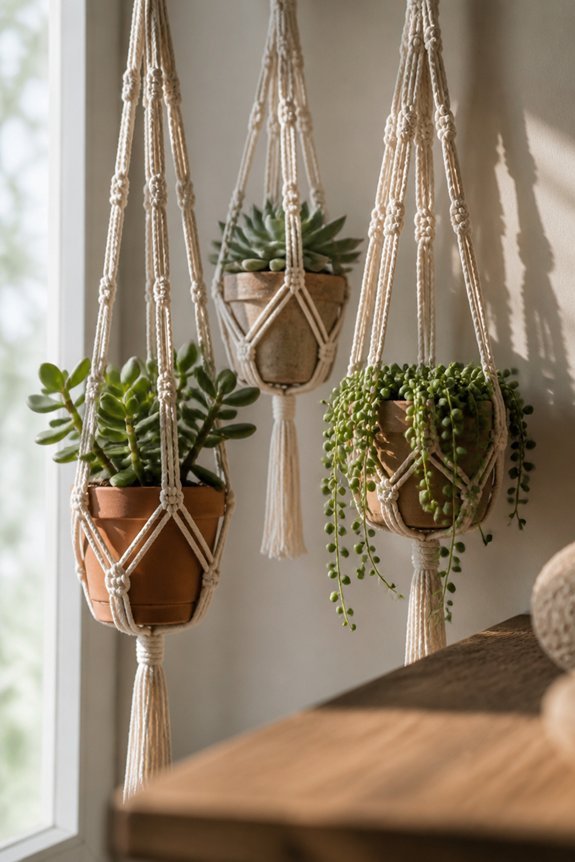
Want to display your succulents with some personality? Macramé hangers are your answer. These knotted holders suspend plants at different heights. They create instant visual drama in any space.
You will need cotton or jute cord to get started. Square knots and half hitches form the base patterns. These simple techniques create diamond shapes around your pots. Even beginners can manage these knots with a little practice.
Try lightweight succulents for best results. Echeveria, jade plants, and string of pearls work beautifully. The breathable cord lets air flow around containers. Your plants will thank you for the extra ventilation.
Installation is refreshingly simple. Hook them to ceilings, wall brackets, or sturdy branches. No complicated tools required.
The natural textures blend seamlessly with bohemian decor. Earthy tones warm up walls and corners instantly. Plus you free up valuable ground space.
Not feeling crafty? Ready-made options fill garden centers and online shops. Your bohemian succulent garden awaits either way.
Minimalist Floating Shelves
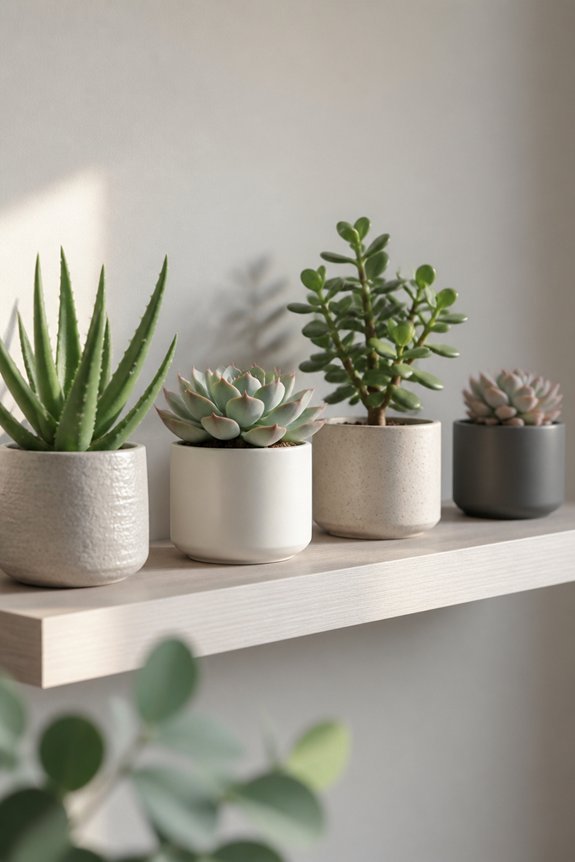
These shelves keep things simple. Mount them straight to the wall. Your eye goes right to the plants, not the brackets.
Materials set the mood. White oak feels warm and natural. Black metal adds sharp contrast. Concrete brings an industrial edge. All three let succulents take center stage.
Arrange your plants like a small gallery. Try echeveria next to jade plants. Tuck a small aloe at the end. Leave breathing room between pots. They need light and air to thrive.
Standard shelf width runs 24 to 36 inches. That fits three to five small containers comfortably. Stagger your installation heights. This creates subtle depth without trying too hard.
One practical note: water drains. Line shelves with cork mats or small trays. Protect your walls from stains and damage. Check weight limits before loading up. Secure mounting keeps everything exactly where it belongs.
Stacked Terracotta Towers
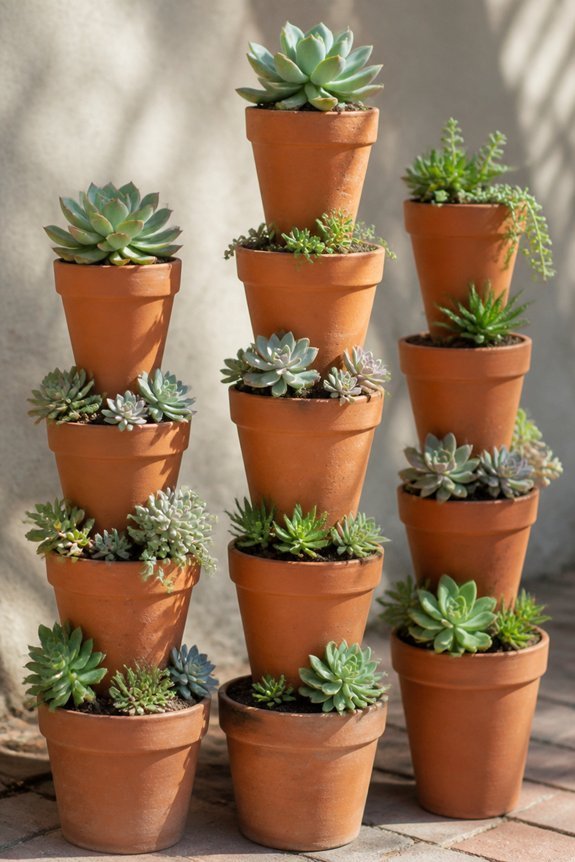
Terracotta works beautifully for succulents in most climates. It absorbs water. It breathes naturally. Stacked towers pack plants into tight vertical spaces.
Most gardeners use pots between 4 and 8 inches wide. Bigger pots go on bottom. Smaller ones stack above. Popular picks include echeveria, sedum, and jade plants.
The staggered setup matters. Light reaches every level. Air moves freely between plants. No one gets crowded out.
Watch your watering. Terracotta drains fast. Moisture escapes through the walls. Skip the saucer underneath. Root rot kills succulents faster than dry spells.
Secure your tower carefully. Balance matters. Some gardeners slide wooden dowels through drainage holes for extra stability.
These fit almost anywhere sunny. Try them on patios, tucked into garden beds, or brightening a windowsill.
Self-Watering Vertical Frames
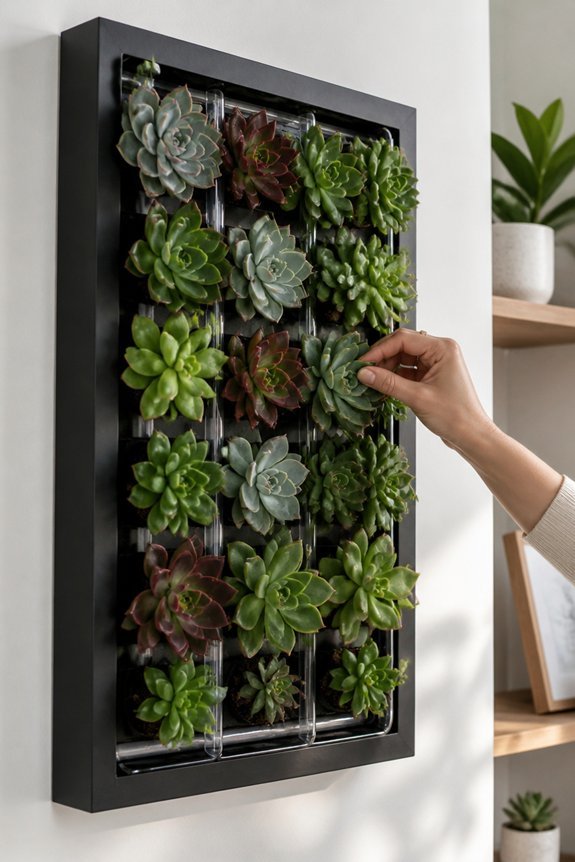
Self-watering vertical frames solve a real headache. Terracotta dries out fast. These systems keep moisture steady without daily fuss.
You will find water reservoirs tucked at the base or woven into the frame itself. Capillary action pulls water upward through soil layers. Your plants stay happy. You water less often.
Most frames use plastic with fabric liners, metal with drip lines, or a mix of both. Modular brands let you rearrange plant spacing however you like.
These work best with shallow-rooted succulents. Think sedums and echeveria. The reservoir prevents soggy roots and drought stress both.
Mount your frame securely. Choose indirect light. Refill the reservoir based on your climate and how packed your plants are. Hot, dry weeks mean more frequent top-ups.
Upcycled Ladders as Rustic Plant Stands
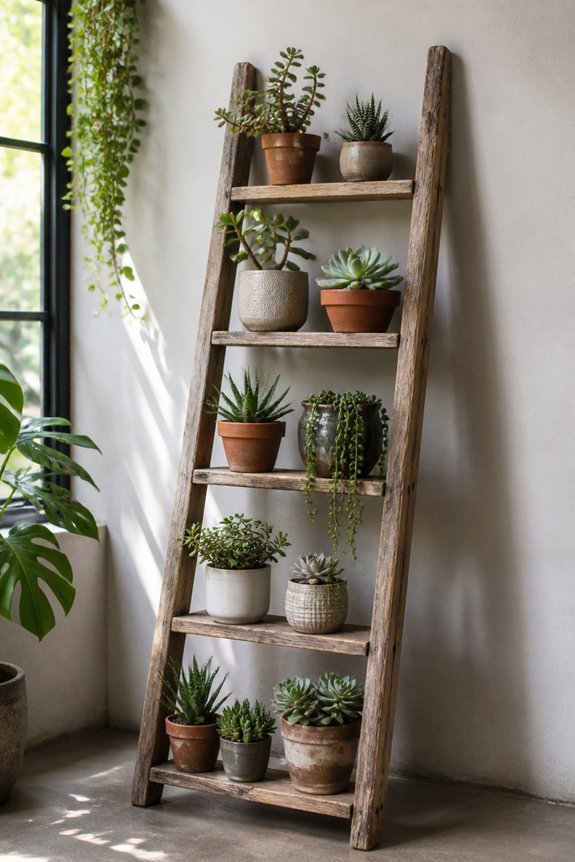
Got an old wooden ladder lying around? Give it new life as a plant stand. Your succulents will love the vertical setup. Ladder rungs act like natural shelves. Small pots sit snugly right on top. You get multiple levels of plants. All in barely any floor space.
Different species catch light at various angles. Everyone gets their moment in the sun. Old extension ladders work great. Step ladders too. Even simple lean-to styles shine here. Echeveria and jade plants thrive on these setups. Sempervivum settles in nicely as well. The weathered wood look fits anywhere. Inside your living room or out on the patio.
Keep your ladder stable first. Lean it against a wall or fence. No one wants a toppling tower of pots. Skip the deep containers up high. Shallow ones stay put better. Water still needs to happen on schedule. Vertical doesn’t mean self-watering. Check drainage paths so moisture escapes. Your floors and your plants stay happier that way.
Geometric Succulent Planters and Wall Mounts
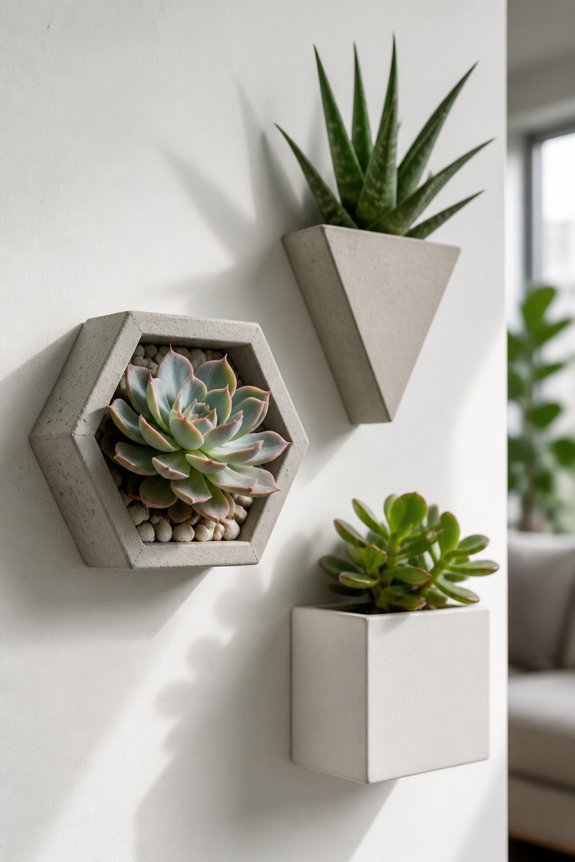
Modern geometric containers give succulents a clean, structured home. Think cubes, pyramids, hexagons, and triangles. These shapes fit right into contemporary spaces without trying too hard.
Wall-mounted options free up your surfaces. Metal hanging frames with pockets work beautifully. Try concrete boxes arranged in tiers. Ceramic tiles with built-in compartments add subtle texture.
Living rooms, patios, and outdoor walls all welcome these pieces. Just check for drainage holes. Root rot sneaks up fast in enclosed designs.
Echeveria, jade plants, and sedums love geometric setups. The defined edges keep things looking organized. Your space stays minimalist without feeling cold.
Window Box Gardens for Limited Outdoor Space
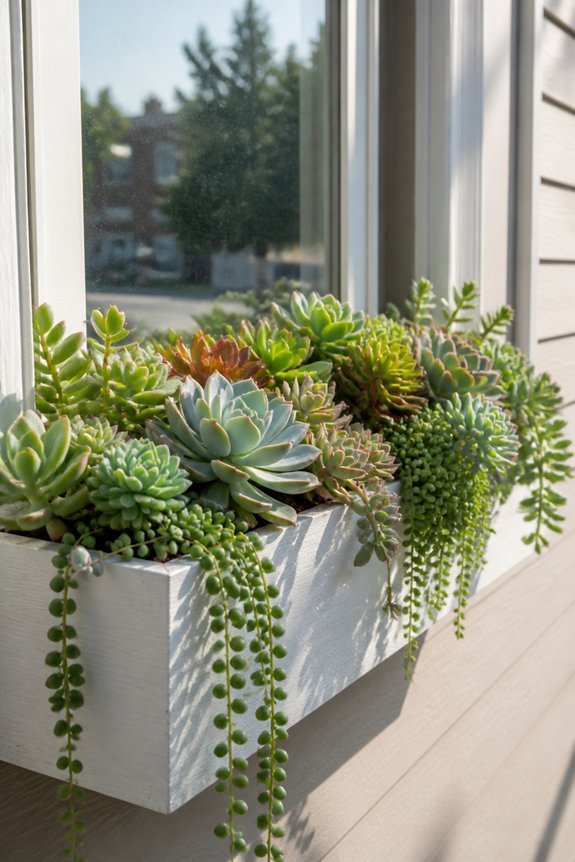
Window boxes turn tiny spaces into thriving gardens. No yard? No problem. These shallow containers clip right onto sills, railings, or ledges. You get greenery without sacrificing precious square footage.
Succulents love these setups. Try sedums, echeveria, or jade plants. They handle shallow soil like champs. They also forgive you when you forget to water.
Standard boxes run 24 to 48 inches long. Depth stays around 6 to 8 inches. Width hits about 6 inches. That compact footprint still fits plenty of plants.
Drainage makes or breaks your window box. Check for holes in the bottom. Mix perlite or coarse sand into your soil. This keeps roots happy and rot-free.
Morning sun works best for most succulents. Harsh afternoon rays? Give them some shade. Summer heat can stress these plants otherwise.
Water every two to three weeks. Climate affects this, so check the soil. Dry to the touch means it is time. Soggy means wait longer.
Succulent Wreaths as Living Wall Art
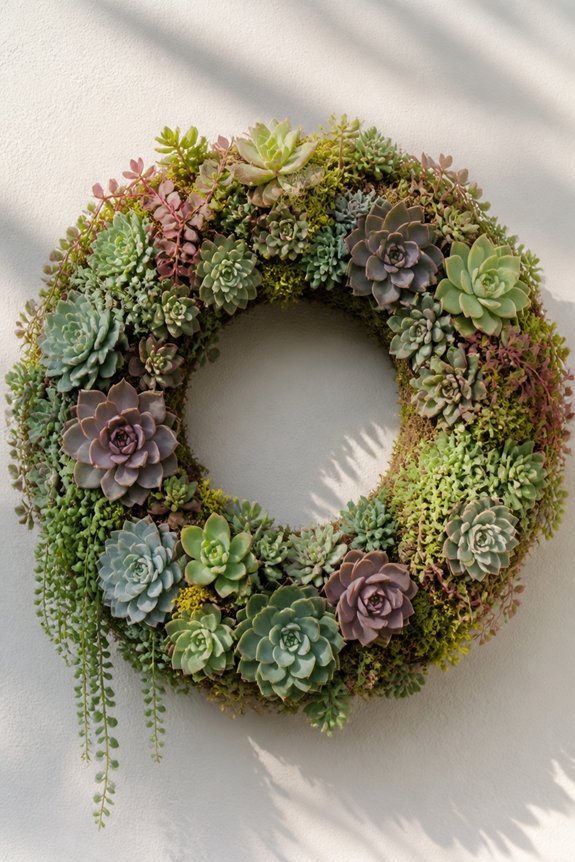
Succulent wreaths bring your walls to life. These circular arrangements pack echeveria, sedum, and jade into dense, colorful clusters on moss or wire frames.
Attaching each rosette takes patience. Use floral adhesive for a quick hold, or thin wire for extra security. Layer different sizes and textures. The result looks organic and full.
Water every two to three weeks in spring and summer. Less in winter. Bright indirect light keeps them happy. Think windowsills or covered porches. Direct sun can scorch the leaves.
Hang one by your front door. Add another to a bare patio wall. Small anchors handle the weight safely. No bulky pots needed.
With basic care, these pieces last years. They turn vertical space into something alive and unexpected.
Watering, Drainage, and Seasonal Care for Vertical Succulents
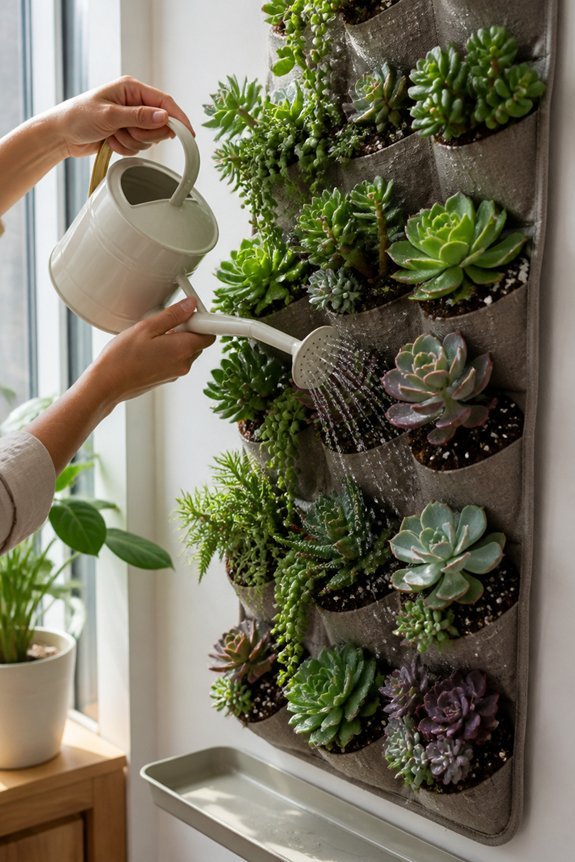
Watering vertical succulents takes some getting used to. Water runs through fast. It doesn’t sit like in regular pots.
Let your soil dry out completely between drinks. Every two to three weeks usually works. Hot, sunny spots? Check more often. Cool shade? Stretch it longer.
Your frame needs escape routes for water. Small gaps between sections do the trick. Holes help too. Without them, roots sit wet and rot.
Pick soil that drains fast. Mix in perlite or coarse sand. Store-bought succulent blends work great.
Seasons change everything. Winter means barely watering. Your plants sleep through the cold months. Growth nearly stops.
Summer heat speeds things up slightly. But don’t panic and soak them. Overwatering kills more succulents than heat ever will.
Spring and fall are the sweet spots. Water moderately then. Match what the weather gives you. Mild days mean easy routines.
Frequently Asked Questions
How Often Should I Fertilize Succulents in Vertical Gardens Compared to Traditional Planters?
Succulents in vertical gardens typically require fertilizing every 4-6 weeks during the growing season, compared to every 6-8 weeks for traditional planters. The increased drainage in vertical setups necessitates more frequent feeding to compensate for nutrient loss from water runoff.
Can Vertical Succulent Gardens Survive in Low-Light Indoor Environments Without Grow Lights?
A gardener attempting echeveria in a north-facing bathroom without supplemental lighting observed significant etiolation within weeks. Most succulents require bright, indirect light and struggle severely in low-light conditions. Grow lights are strongly recommended for indoor vertical gardens lacking natural illumination.
What Is the Best Soil Type for Preventing Root Rot in Vertical Succulent Arrangements?
One should use well-draining cactus or succulent soil mixed with perlite or coarse sand. This composition promotes rapid water drainage, preventing moisture accumulation that causes root rot in vertical arrangements where drainage is critical.
How Do I Prevent Pests and Diseases in Densely Planted Vertical Succulent Systems?
A vertical wall garden in Arizona experienced mealybug infestations until the gardener implemented improved air circulation and reduced watering frequency. One prevents pest outbreaks by ensuring adequate spacing, using neem oil treatments, and maintaining proper ventilation between densely planted succulents.
Which Succulent Varieties Are Most Suitable for Beginners Starting Their First Vertical Garden?
Sedums like autumn joy and stonecrop prove ideal for novices, offering drought tolerance and hardiness. Echeveria varieties provide visual appeal with minimal care requirements. Jade plants and aloe vera round out excellent starter options for vertical arrangements.
Conclusion
Vertical succulent gardens provide practical, space-saving solutions through varied configurations. Wall-mounted frames, hanging planters, tiered shelving, and fabric pocket systems accommodate different living situations and preferences. Proper drainage, consistent watering schedules, and seasonal adjustments maintain plant health. Geometric planters, living walls, and succulent wreaths create visual interest while optimizing limited space. These versatile arrangements transform residential areas into functional, green-filled environments efficiently.